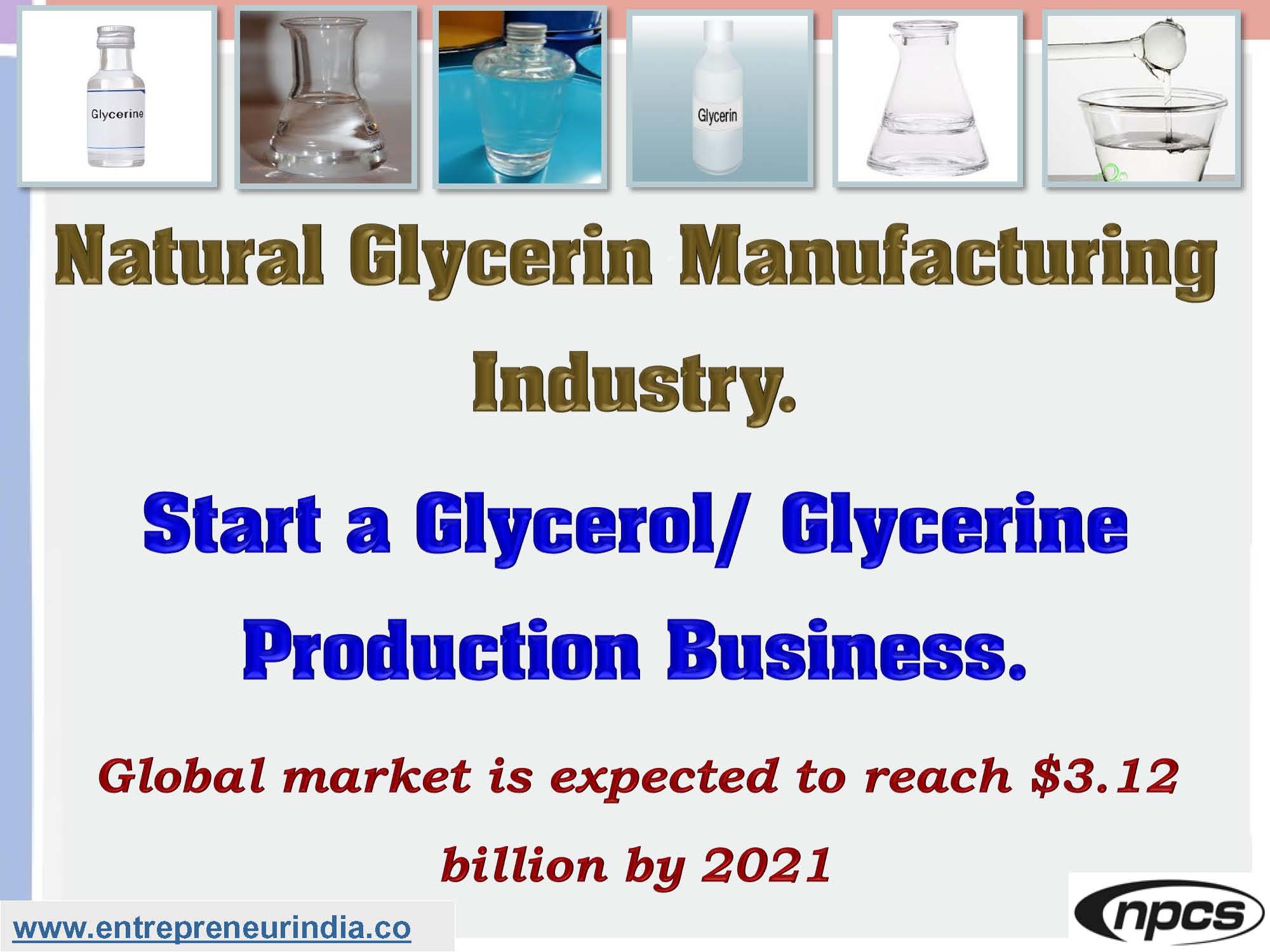
The Natural Glycerin Manufacturing Industry is steadily gaining momentum worldwide as consumer preferences shift toward sustainable, plant-based, and biodegradable ingredients. Glycerin, also known as glycerol, is a colorless, odorless, and sweet-tasting liquid with vast industrial applications. It is commonly used in pharmaceuticals, cosmetics, food, and personal care products. Derived primarily from natural fats and oils through hydrolysis, saponification, or transesterification, natural glycerin is an eco-friendly alternative to synthetic versions. With clean-label demand rising across markets, the Natural Glycerin Manufacturing Industry presents a profitable and future-ready opportunity for manufacturers and green-tech entrepreneurs.
What is Natural Glycerin?
Natural glycerin is obtained from plant oils such as coconut oil, soybean oil, or palm oil. It is a by-product of soap and biodiesel production. In the Natural Glycerin Manufacturing Industry, this crude glycerin is purified to obtain high-grade natural glycerin with a purity of 95% or higher.
This substance is highly hygroscopic (retains moisture), making it ideal for moisturizing products in personal care. It also serves as a solvent, sweetener, and preservative in food and pharmaceutical applications. The industry’s commitment to sustainability is aligned with the increasing demand for natural ingredients in global supply chains.
Industrial Applications of Natural Glycerin
The Natural Glycerin Manufacturing Industry supports a wide range of sectors through its multi-functional properties:
Pharmaceuticals: Used as a solvent and emollient in syrups, suppositories, and capsules
Cosmetics and Skincare: Included in moisturizers, soaps, lotions, and shampoos for hydration
Food Industry: Acts as a humectant, sweetener, and preservative in baked goods and beverages
Tobacco Industry: Used in the processing of tobacco to maintain moisture content
Paints and Coatings: Helps improve the spreadability and smooth finish
E-liquids: Used in vape juice formulations as a carrier liquid
With such widespread uses, the Natural Glycerin Manufacturing Industry ensures sustained demand across global markets.
Manufacturing Process Overview
The production process in the Natural Glycerin Manufacturing Industry typically involves:
Feedstock Collection
Vegetable oils like coconut, palm, or soybean oil are procured. These oils are rich in triglycerides.Hydrolysis or Transesterification
Oils are treated with water or alcohol in the presence of catalysts, breaking them into fatty acids and glycerin.Crude Glycerin Separation
Glycerin is separated from the fatty acids or esters. This crude form contains impurities like salts, methanol, and water.Purification
Crude glycerin is purified using vacuum distillation, ion exchange, or activated carbon to obtain pure, pharmaceutical-grade glycerin.Testing and Packaging
The final product is tested for moisture, color, and purity before being packed in drums or bulk containers.
This end-to-end process ensures that the Natural Glycerin Manufacturing Industry delivers a product that meets the highest safety and quality standards.
Equipment and Machinery Required
To establish a unit in the Natural Glycerin Manufacturing Industry, you will need:
Oil tanks and pre-treatment systems
Reactors for hydrolysis or transesterification
Separation units (gravity settlers or centrifuges)
Distillation columns
Activated carbon filters or ion-exchange systems
Drying and vacuum systems
Quality control lab equipment
Packing machines and bulk filling units
Automation and PLC-based control systems can increase efficiency and reduce contamination risk.
Infrastructure and Setup Needs
A medium-sized Natural Glycerin Manufacturing Industry unit requires around 8,000 to 15,000 sq. ft. of built-up area. The layout should accommodate:
Raw material storage
Process area (reactors, separators, purifiers)
Utility section (boiler, chillers, vacuum pumps)
Quality lab
Packaging and dispatch
Office and maintenance rooms
Additionally, the facility should follow GMP guidelines if serving pharmaceutical or cosmetic clients.
Raw Material Sourcing
The raw materials used in the Natural Glycerin Manufacturing Industry are:
Vegetable Oils (coconut, palm, soybean)
Methanol or Ethanol (for transesterification)
Catalysts (alkaline or acid-based)
Activated carbon or resin (for purification)
Water (deionized for washing stages)
Many units tie up with biodiesel manufacturers or soap producers to source crude glycerin at lower costs and purify it for higher margins.
Licensing and Legal Requirements
To legally operate in the Natural Glycerin Manufacturing Industry, the following licenses are needed:
MSME/Udyam Registration
Pollution Control Board Consent
Factory License
FSSAI License (for food-grade glycerin)
Drug License (for pharmaceutical-grade production)
ISO Certifications (such as ISO 9001, ISO 22716 for cosmetics)
Hazardous Waste Authorization (if methanol is used)
For export purposes, a valid IEC (Import Export Code) and compliance with REACH/USP/BP standards are essential.
Investment and Financial Outlook
Setting up a natural glycerin unit requires:
Small-Scale Plant: ?30–50 lakhs
Medium-Sized Unit: ?1.5–2.5 crores
Large Integrated Plant: ?5 crores and above
Profit margins in the Natural Glycerin Manufacturing Industry range from 20–35%, especially for pharma and cosmetic-grade glycerin. The demand is robust, and recovery of investment typically occurs within 2–3 years if operated efficiently.
Market Demand and Buyers
The Natural Glycerin Manufacturing Industry caters to a large and diverse market, including:
Cosmetic manufacturers (lotions, creams, soaps)
Pharmaceutical firms (syrups, capsules)
Food processing companies
FMCG brands
Industrial adhesive and lubricant manufacturers
Vape and e-liquid producers
Exporters in Europe, the USA, and Southeast Asia
Many buyers prefer long-term contracts, especially for high-purity glycerin, offering recurring revenue for manufacturers.
Scope for Diversification
To expand within the Natural Glycerin Manufacturing Industry, entrepreneurs can explore:
Value-added Glycerin Products: Like glycerol esters, emulsifiers
Customized Grades: Pharma, cosmetic, food, and industrial
Integrated Units: Soap and biodiesel production alongside glycerin
Certified Organic Glycerin: For premium and export markets
Contract Manufacturing: For global cosmetic and pharma brands
As demand for clean-label and vegan ingredients continues to rise, this industry presents tremendous diversification potential.
Conclusion
The Natural Glycerin Manufacturing Industry is a thriving, sustainable, and profitable segment of the bio-based chemical market. With its application spanning diverse sectors, from personal care to industrial processing, the demand for natural, high-purity glycerin is expected to grow. Establishing a manufacturing unit with efficient processes, quality certifications, and a focus on high-value buyers can deliver strong returns. Entrepreneurs seeking a green, future-ready business should strongly consider investing in this sector.
Niir Project Consultancy Services
An ISO 9001:2015 Company
106-E, Kamla Nagar, Opp. Spark Mall,
New Delhi-110007, India.
Email: npcs.ei@gmail.com , info@entrepreneurindia.co
Tel: +91-11-23843955, 23845654, 23845886, 8800733955
Mobile: +91-9811043595
Website: www.entrepreneurindia.co , www.niir.org