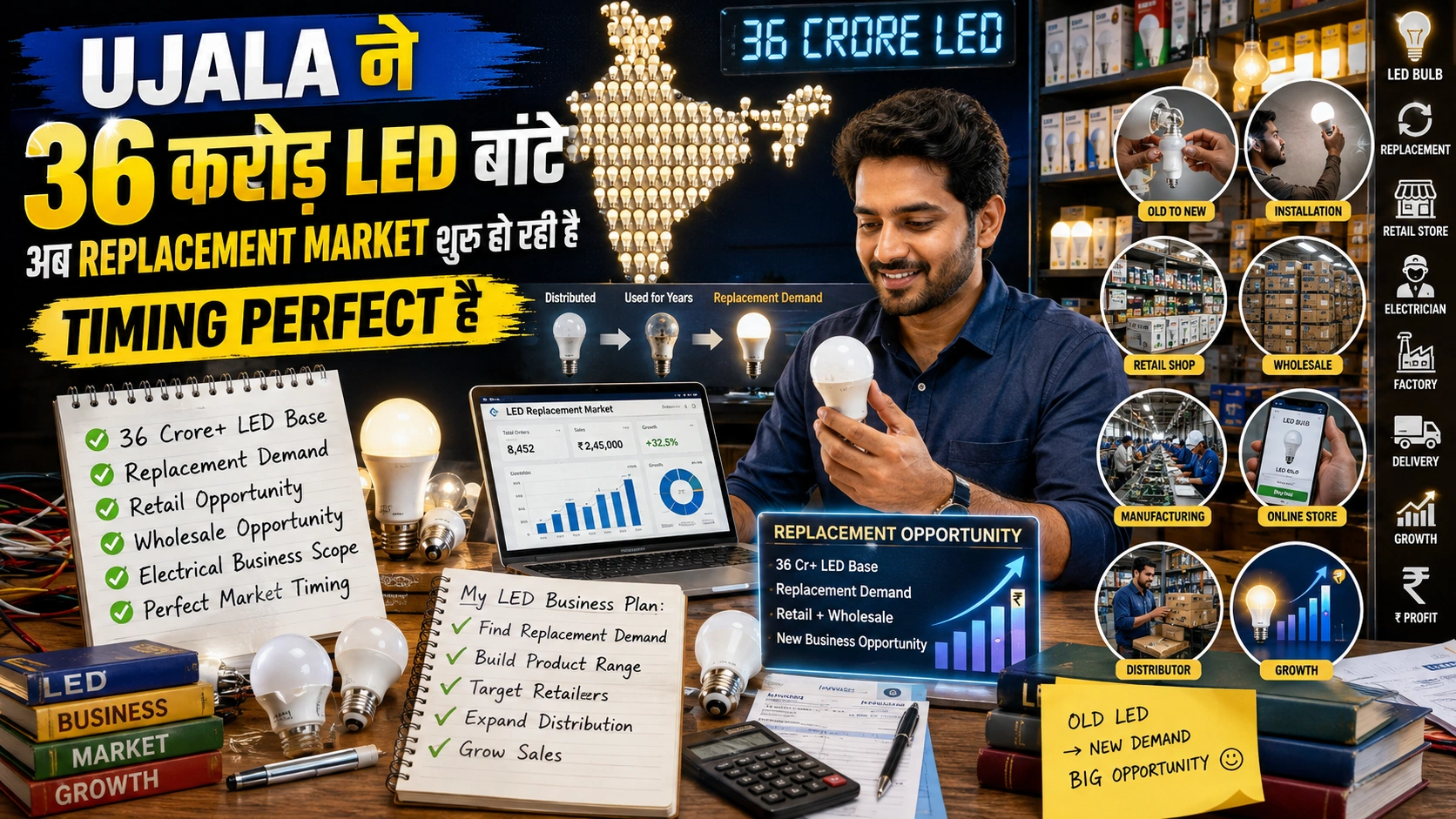
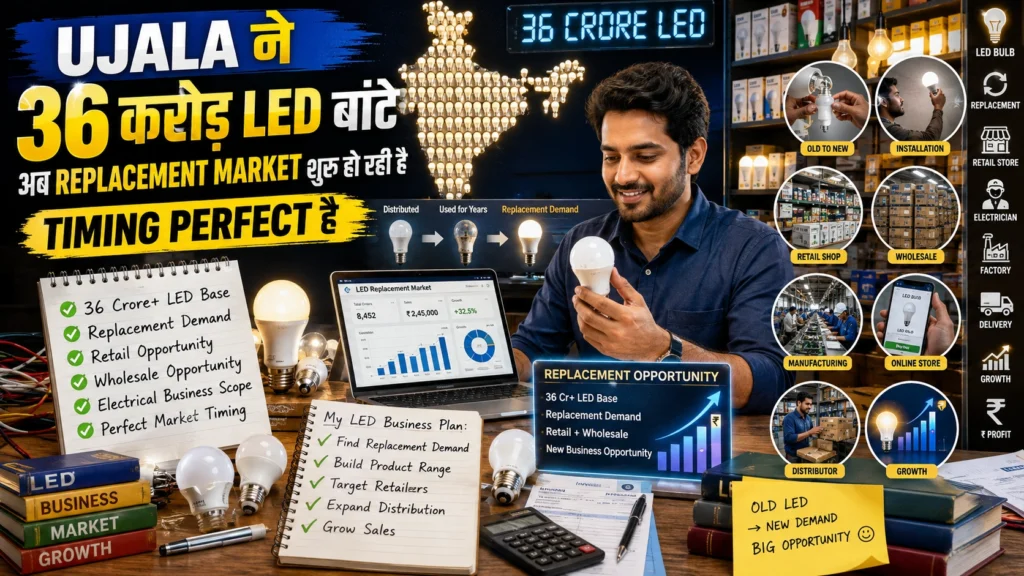

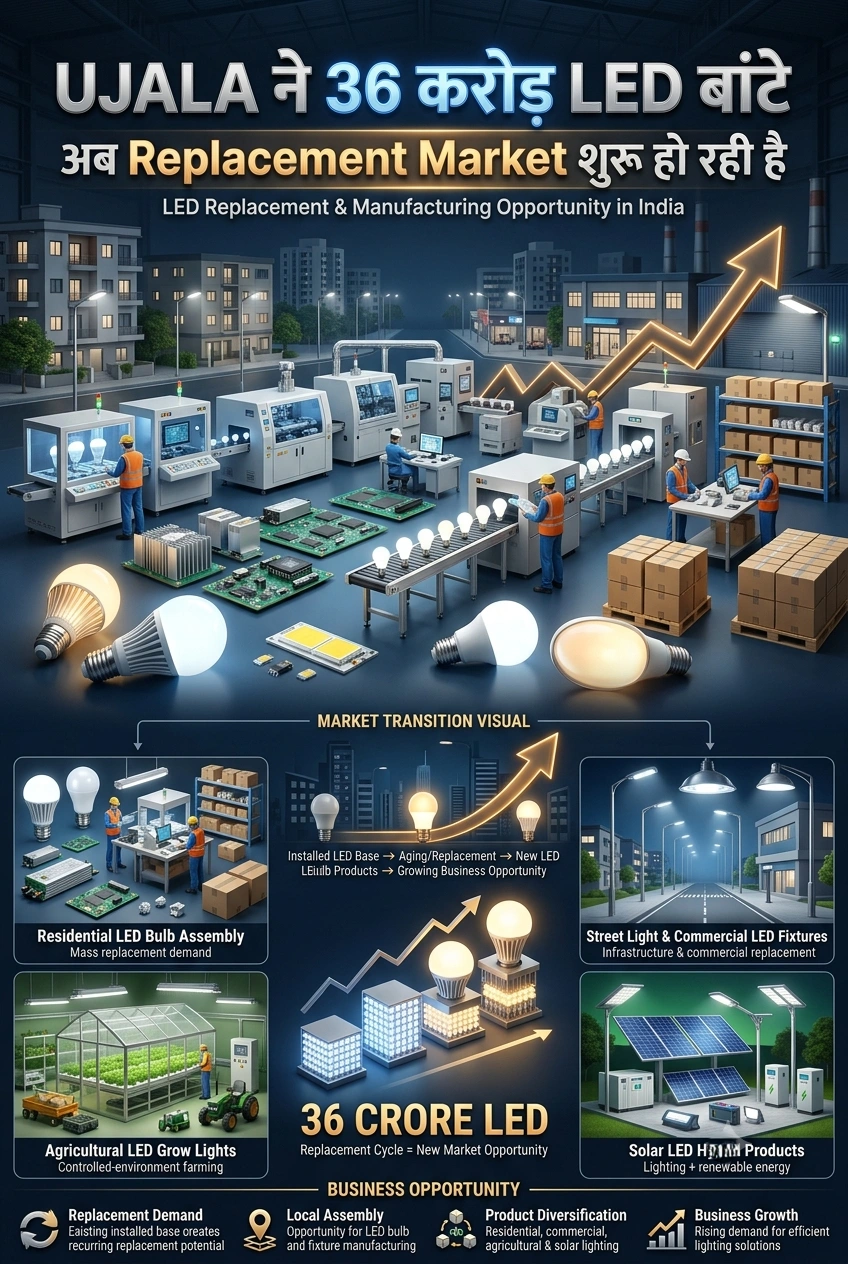
LED Bulb Manufacturing Business India में IBEF Electronics India के अनुसार, India का electronics market $150 billion+ का है। UJALA Official Portal की scheme ने LED penetration dramatically increase की है — India अब world का largest LED market है। PIB UJALA Scheme के अनुसार, UJALA ने 36 crore+ LED bulbs distribute किए हैं। DPIIT Electronics PLI scheme LED component manufacturing को incentivize कर रही है। Invest India Electronics में electronics manufacturing को Make in India का pillar बताया गया है। World Bank Energy India report में India की energy efficiency progress में LED transition का crucial role है।
इस article में LED Bulb Manufacturing Business India में की complete guide दी जाएगी — setup process, financing, market strategy और government support के साथ।
India में यह sector unprecedented growth पर है। Ministry of MSME Schemes के through MSME financing और World Bank India Industry report में India के industrial growth में इस sector का critical role documented है।
Get Detailed Project Report (DPR): LED Light Bulbs, Tubes, Fittings, Spotlights and Wall Lights Projects
Market Size और Growth Opportunity
यह sector India के fastest growing manufacturing businesses में से एक है। Domestic demand strong है और export potential भी excellent है। Government support, growing consumer demand और import substitution push — तीनों factors मिलकर इस business को ideal बनाते हैं।
Invest India MSME के अनुसार, इस sector में MSME units को priority financing मिलती है। Small और medium entrepreneurs के लिए market entry का यह सही समय है।
सरकारी Support और Schemes
Ministry of MSME Schemes के under इस sector के businesses को PMEGP (25-35% subsidy), MUDRA loan और CGTMSE guarantee scheme का लाभ मिलता है। Application process: Udyam registration → DPR preparation → bank application।
State-specific incentives भी available हैं। Industrial policy के under land, power और infrastructure में concessions। Additional central schemes sector-specific हैं — APEDA, DPIIT, Ministry of Commerce के माध्यम से।
Related Article: LED Bulb Manufacturing Plant in India: Investment, Machinery & Business Opportunities
Business Ideas — Detailed Analysis
1. Residential LED Bulb Assembly
9W, 12W, 18W — standard residential bulbs India की highest volume segment है। Assembly cost ₹35-45/unit, retail ₹80-120/unit।
BIS IS 16102 certification mandatory है। Component sourcing: LED chips, drivers, aluminum heat sinks — from Delhi और Shenzhen wholesale markets।
यह business segment profitability के लिए proven है। Raw material sourcing, quality control और consistent delivery — ये तीन success factors हैं।
2. Street Light और Commercial LED Fixtures
Municipal tenders और industrial clients के लिए high-power fixtures। B2B model with larger margins। GeM portal पर government procurement।
Minimum unit investment ₹50-80K। Monthly output 200-500 fixtures। Revenue potential ₹3-8 लाख/month।
यह business segment profitability के लिए proven है। Raw material sourcing, quality control और consistent delivery — ये तीन success factors हैं।
Access Complete Business Plan: LED Street Light Assembling
3. Agricultural LED Grow Lights
Indoor farming और greenhouse sector में growing demand। Premium product — ₹2,000-15,000 per unit।
Specialty spectrum LEDs urban farming revolution को drive कर रहे हैं।
यह business segment profitability के लिए proven है। Raw material sourcing, quality control और consistent delivery — ये तीन success factors हैं।
4. Solar LED Hybrid Products
Solar panel + LED combination road lights, garden lights। Off-grid areas में massive demand।
PIB UJALA Scheme और MNRE दोनों solar LED को support करते हैं।
यह business segment profitability के लिए proven है। Raw material sourcing, quality control और consistent delivery — ये तीन success factors हैं।
Check Out This Recommended Book: Solar PV Power and Solar Products Handbook
Financial Planning
Investment analysis: Basic unit ₹50,000-₹1 लाख से शुरुआत possible है। PMEGP से 25-35% subsidy effective investment reduce करती है। MUDRA loan working capital provide करती है।
Revenue projections: Month 1-6: ₹30,000-₹1 लाख (client building phase). Month 7-12: ₹1-3 लाख (established phase). Year 2+: ₹3-8 लाख (scale-up phase). Break-even typically 8-12 months।
Profitability drivers: Product mix optimization, bulk buying, quality consistency और repeat clients। Higher margin products पर gradually shift करें।
Marketing और Client Acquisition
B2B marketing में industry associations, trade directories और referral network most effective हैं। B2C में online platforms, social media और local retail important हैं। GeM portal पर registration government procurement access देता है।
Consistent quality और reliable supply chain से repeat business और referrals generate होते हैं। Satisfied clients से testimonials collect करें।
Explore proven business ideas with high success potential
Import-Export Opportunity
APEDA Export Data के through export channels available हैं। IEC code DGFT से, relevant Export Promotion Council registration, और quality certification से export ready हो सकते हैं। Per unit export realization domestic से 1.5-3x होती है।
MSME Success Stories
कई Indian entrepreneurs ने इस sector में शुरुआत ₹50,000-₹1 लाख से की और आज lakhs earn कर रहे हैं। Consistent quality, strong client relationships और strategic expansion इनकी success का formula है।
Government schemes का सही उपयोग — PMEGP subsidy, MUDRA loan, MSME Technology Centre training — ने entrepreneurs को faster scale up में help किया है।
Conclusion
यह manufacturing business sector India की growth story का important chapter है। Government support, market demand और technology advancement तीनों favorable हैं। अभी शुरू करें — Udyam registration, market research और पहली manufacturing unit।