
A consultant’s view of where sustainability policy meets real profits in Indian waste recovery.
India produces large amounts of agricultural, municipal and industrial waste every year. While much of this waste is still burned or buried, it contains economic value. The discrepancy between what is wasted and what can be recovered is where biomass and waste recycling business ideas are valuable. Current policy promotes circular economy and buyers of recovered materials continue to grow.
This article looks at the sector from the perspective of a project consultant. It will examine demand and real schemes, and 5 practical business routes, and chart out trade openings and Indian success stories.
Why Waste Recycling Is a Strong Business to Enter
Cheap Raw Material and Rising Demand
The economics of recycling are compelling. Raw material is plentiful and cheaper. Demand for recycled materials tends to rise as environmental regulations tighten and brands commit to using recycled material. Therefore, a well-managed unit enjoys low-cost input and rising revenue.
Current government mandates on waste processing and extended producer responsibility encourage companies to use recycled materials, creating institutional demand that can be served by small-time founders.
Policy Tailwinds Are Strong and Durable
Swachh Bharat, regulations on plastic waste, and biomass energy targets all promote this sector. Consequently, the founder aligns with policy rather than fighting it. The Ministry of Environment, Forest and Climate Change and Ministry of New and Renewable Energy both offer scheme guidance for waste-based businesses.
Government Policies and Incentives
Support is multi-layered and practical. Swachh Bharat Mission funds waste processing infrastructure, while biomass energy schemes under MNRE encourage pellet and briquette production. Plastic waste regulations mandate recycling, creating institutional demand.
Founders should register on Udyam for MSME credit. Pollution compliance runs through the Central Pollution Control Board and early clearances avoid disruption. State-level support also helps; Maharashtra’s environment portal provides project guidance for waste-based ventures.
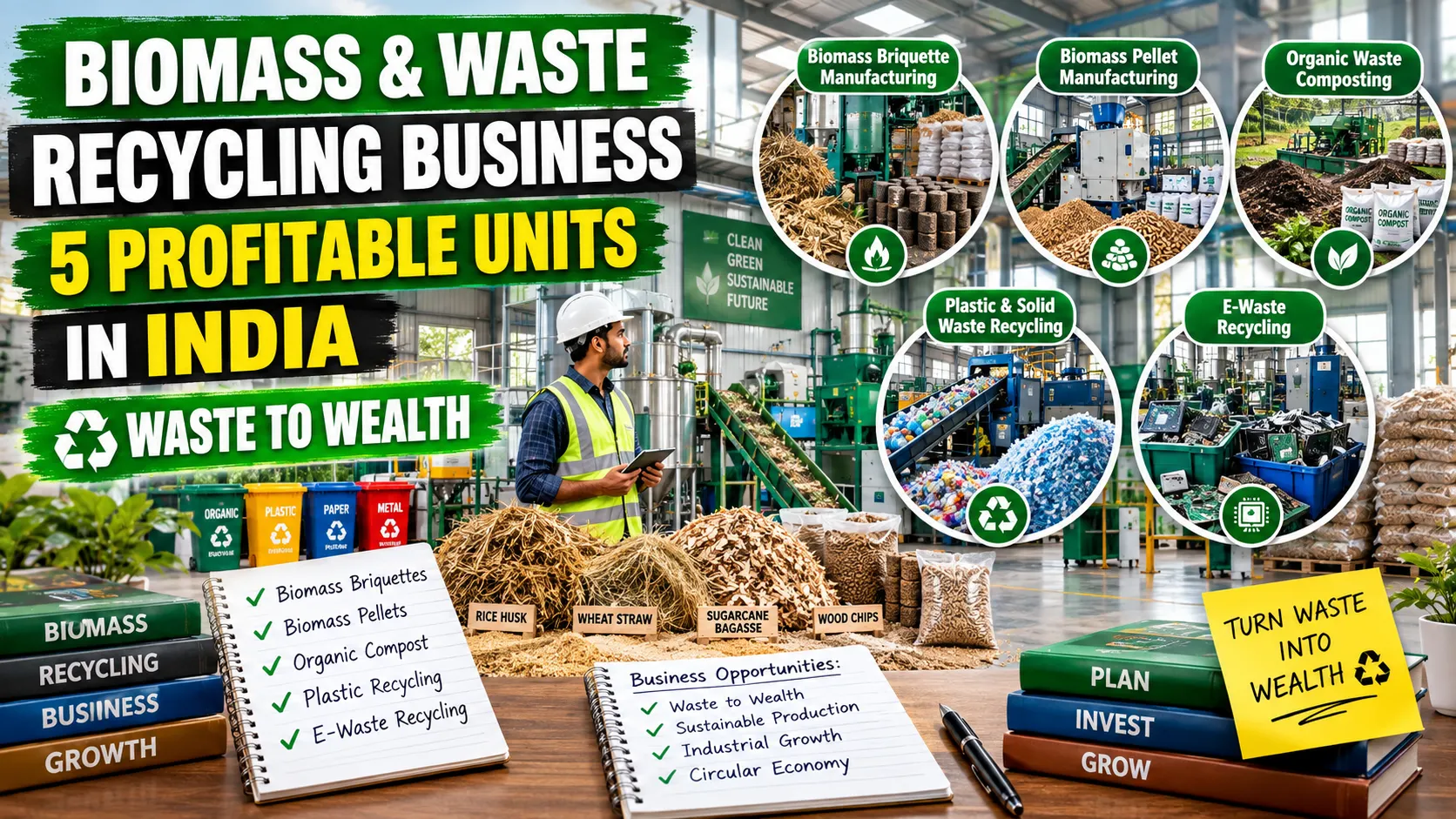
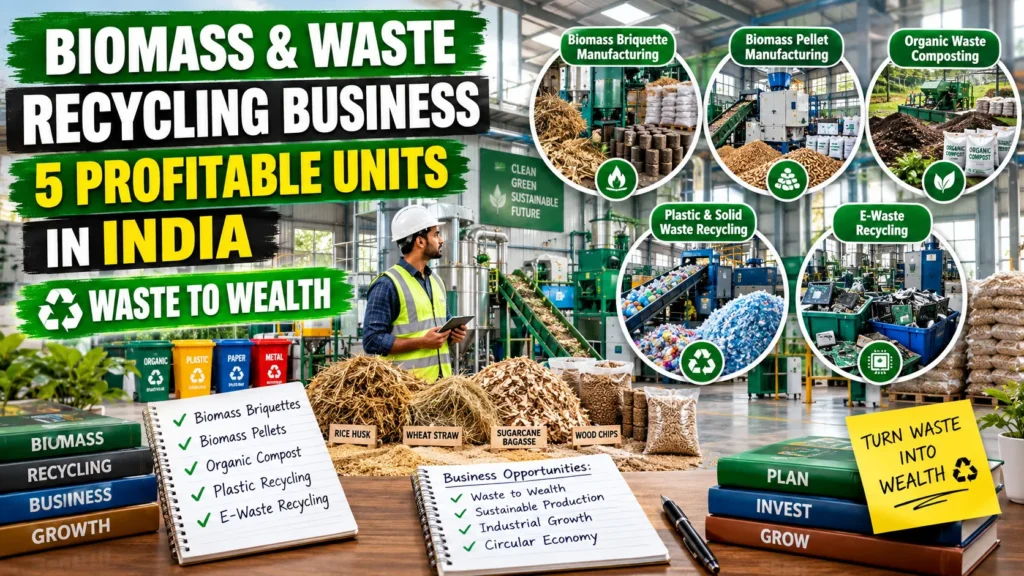
5 Biomass and Waste Recycling Business Ideas for Startups
Idea 1 — Biomass Briquettes and Pellets
Agricultural residue, sawdust, and crop waste can be compressed into briquettes or pellets that can be used as industrial fuel. Since industrial buyers are looking for cheaper and cleaner energy, demand is strong. A founder benefits from low-cost raw material and a clear buyer base of boilers and kilns. Consistent calorific value and moisture content drive buyer trust. Local sourcing of biomass will keep costs predictable. Furthermore, export markets in Europe and Asia seek biomass fuel, providing a second revenue channel. A briquette or pellet unit that can combine good quality with good sourcing logistics can grow steadily as energy demand and environmental regulations encourage buyers to move towards cleaner fuel.
Idea 2 — Plastic Waste Recycling
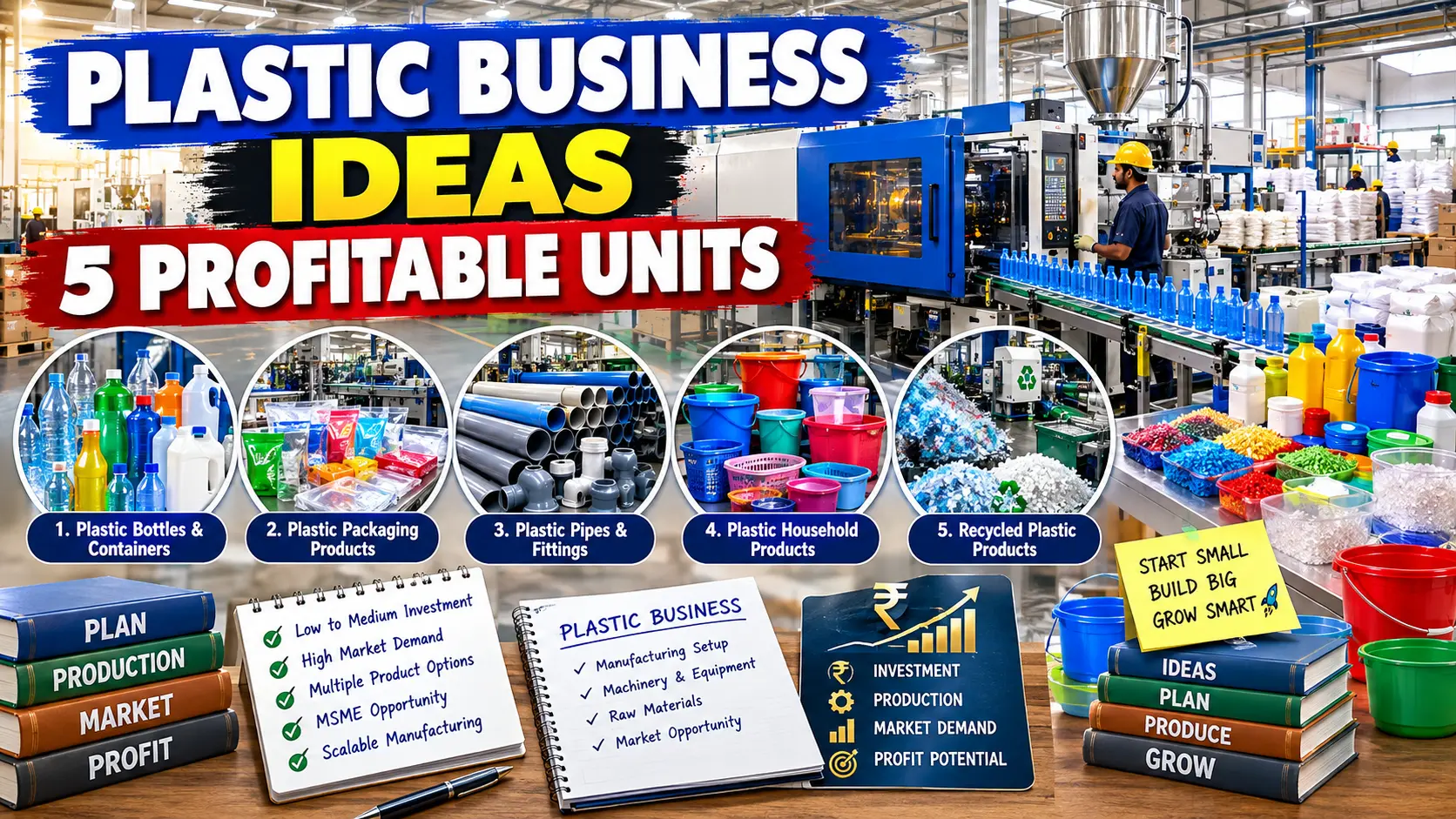
Post-consumer plastic is ample, and brands are now mandated to use recycled material. A founder who collects, sorts, and processes plastic waste into usable granules is serving a market where demand outweighs supply. Since raw material is cheap, margins are healthy despite competitive pricing. Buyers include manufacturers of pipes, packaging, and moulded goods. Environmental regulations add to demand durability. Furthermore, EPR rules push consumer goods companies to secure recycled-content supply chains, opening institutional contracts. A plastic recycling unit that can maintain consistent output quality and reliable collection networks can grow steadily with the burgeoning circular economy.
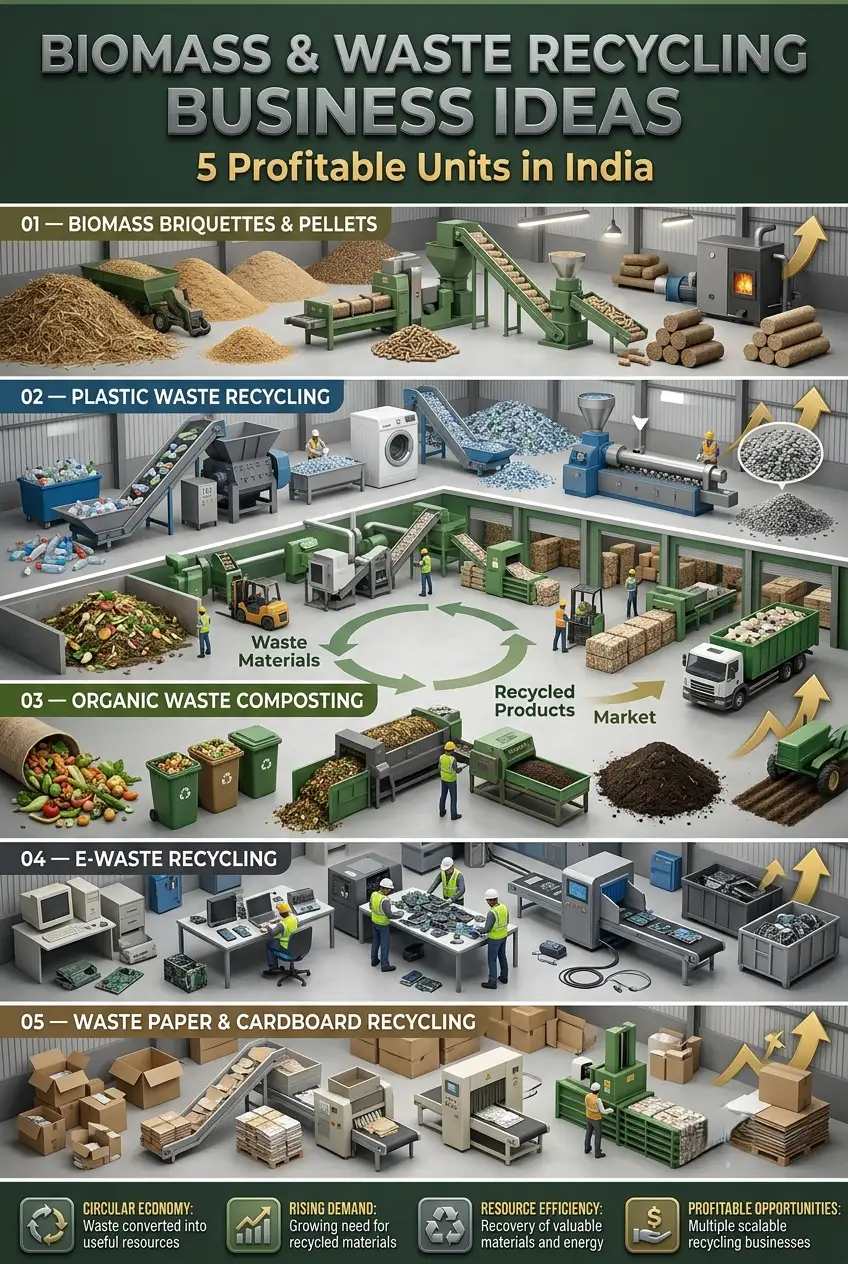
Idea 3 — Organic Waste Composting
Food waste, agricultural residue, and municipal organic waste can be processed to produce compost and organic fertiliser. Farmer demand for affordable soil conditioners is strong and institutional demand from municipalities keep growing. Since raw material is free or cheap, input is low. A founder can start at a small scale and expand as supply contracts develop. Consistent quality and nutrient content of compost drives buyer trust among farmers and distributors. Furthermore, organic farming norms now prefer compost over chemical inputs, opening premium markets. A composting unit that can combine reliable processing with farmer education can build durable demand across agricultural regions.
Idea 4 — E-Waste Recycling
As smartphones, laptops, and appliances are upgraded, India generates tremendous amounts of e-waste. Formal recycling is far below need. A founder who sets up a certified e-waste facility taps a regulatory-backed and growing market. Since precious metals and reusable components have value, revenue comes from processing fees and materials. Certification and compliance matter most since buyers require documented disposal. Starting with a defined waste stream builds expertise. Additionally, corporate and institutional clients need compliant disposal partners, offering steady B2B demand. A certified e-waste unit is an essential service provider in a sector where formal capacity is still scarce.
Idea 5 — Waste Paper and Cardboard Recycling
Waste paper and cardboard streams are large, and mills always need recycled fibre. Since new paper production is costly, recycled input is commercially attractive. A founder who collects, sorts, and bales waste paper can serve mills directly. Consistent bale quality and reliable supply will build lasting relationships. Local collection networks are the key asset since being close to waste sources cuts cost. Furthermore, sustainability commitments by paper brands strengthen recycled-fibre demand. A paper recycling unit that can combine organised collection with reliable bale quality can grow steadily, building durable supply relationships with paper and board mills across the region.
Import-Export Opportunity Analysis
Trade flows open up trade opportunities for waste-sector founders. Recycled plastics, paper bales, and biomass pellets flow in international trade. Indian founders who can produce export-quality material can access global buyers, particularly in Europe and South-East Asia, where there is high demand for recycled content.
Export readiness requires consistent quality and documentation. The DGFT provides export guidance. Consequently, a unit built for quality from the start can serve both domestic mills and international buyers. This dual-channel approach will steady revenue through domestic market fluctuations.
Indian MSME Success Stories Worth Studying
Attero Recycling, led by Nitin Gupta, built a leading e-waste recycler through technology and certified processes. Its founders saw the regulatory opportunity early and built compliance as a competitive moat. The lesson is that doing things properly in waste recycling becomes a genuine advantage.
Several biomass energy MSMEs across Punjab and Maharashtra grew by organising farm-residue collection and supplying boilers reliably. Similarly, paper recycling units adjacent to industrial clusters built strong positions through consistent supply. For new founders, the message is uniform: organise supply, maintain quality, and let policy and brand commitments drive growing demand.
About NPCS
We at Niir Project Consultancy Services (NPCS) offer professional consulting for the development of Market Survey cum Detailed Techno-Economic Feasibility Reports (DPRs) for new industries or businesses. Our reports contain detailed manufacturing processes, market research and demand analysis, process flow diagrams, product mix and capacity planning, machinery and raw material details, and complete project financials with profitability analysis. Our aim is to assist entrepreneurs in assessing feasibility, profitability, and long-term scalability before investing.
NPCS has published a comprehensive printed reference book on biomass and waste recycling, covering technology, market analysis, investment parameters, and manufacturing processes in detail — the printed book: Recycling Business Handbook: Industrial and Agricultural Waste Processing
For a detailed techno-economic Project Report on establishing a manufacturing business in this sector — including plant economics, machinery lists, financial projections, and applicable government incentives — the NPCS Project Report: Biomass Briquettes from Bio Waste — Manufacturing Plant, Detailed Project Report, Profile, Business Plan, Industry Trends, Market Research, Survey, Manufacturing Process, Machinery, Raw Materials, Feasibility Study, Investment Opportunities
Conclusion
Waste recycling and biomass recovery offer founders a unique combination of low raw-material costs, strong policy support, and growing buyer demand. The sector rewards those who see compliance as a moat and quality as a promise. Therefore, the winners are those who can organise supply, maintain consistent output, and align with the circular economy trend. A detailed feasibility report will map demand, logistics, and profitability before investment.
Your Investment Deserves the Right Opportunity
Every serious investment begins with choosing the right sector and the right business model. With hundreds of industrial opportunities available across India’s manufacturing and clean-energy landscape, making the most informed choice is critical. Niir’s Startup Selector tool helps entrepreneurs, MSMEs, and investors identify the most suitable business opportunities based on their investment capacity, location, and interests — so your capital is directed toward a venture with the strongest fit and potential. Explore your best-fit business opportunity today.