
Establishing Own Electrolytic Manganese Dioxide (EMD) Manufacturing Startup
What is electrolytic manganese dioxide? A high-quality product called electrolytic manganese dioxide manufacturing is made by combining electrolysis with chemical processes. It is a specific type of manganese dioxide that is created by an electrolytic method, guaranteeing excellent purity and reliable quality. A naturally occurring mineral called manganese dioxide has been used for many years in a variety of industries. However, the electrolytic method used to produce EMD raises the bar for manganese dioxide synthesis substantially. Manufacturers can create a product with greater performance and reliability by applying this novel technique. EMD can be used for a variety of purposes, making it a flexible option for producers across industries. Also, it is frequently used in the manufacture of batteries, where it improves battery performance and lifespan. It also aids in fertiliser production since it increases fertiliser effectiveness and encourages higher crop yields. EMD is also used in the production of chemicals, where it improves the performance of numerous chemicals. Related Business Plan: ELECTROLYTIC MANGANESE DIOXIDE Uses and Application Electrolytic manganese dioxide manufacturing has numerous industrial applications. Its main application is in the production of batteries, especially alkaline and zinc-carbon batteries, where it serves as a trustworthy cathode material to ensure long-lasting and effective battery operation. The remarkable electron-storing and transmission capability of EMD substantially improves battery performance. Additionally, EMD serves as a catalyst in water treatment procedures for the oxidation-based removal of pollutants. Additionally useful in the construction of ceramics and electronics, its stability, conductivity, and catalytic abilities. Overall, electrolytic manganese dioxide manufacturing is shown to be a versatile material that is essential for manufacturing, energy storage, and environmental management. Read Similar Article: Analysing the Feasibility of Electrolytic Manganese Dioxide (EMD) Business Production Method of Electrolytic Manganese Dioxide Electrolysis and chemical reactions are combined in a properly designed process to produce electrolytic manganese dioxide manufacturing, a high-quality product. The earth’s raw manganese dioxide ore must be extracted as the initial step in the manufacturing process. After that, the ore is processed to get rid of impurities and make pure manganese dioxide. The electrolytic technique is subsequently used to purify the manganese dioxide. An electric current is used to electrolyse a manganese dioxide-containing solution. Manganese dioxide is then deposited on the electrode as a result of a chemical reaction. Also, the electrolytic method guarantees the high purity and consistent quality of the finished product. Benefits of Using Electrolytic Manganese Dioxide in Manufacturing Benefits of Manufacturing Using electrolytic manganese dioxide manufacturing. When utilised in manufacturing procedures, electrolytic manganese dioxide (EMD) has many advantageous properties. EMD is first and foremost known for its excellent purity and consistent quality, which guarantees dependable and high-performance production materials. As a result, there are fewer errors and less wastage, which raises production and efficiency. EMD can also be applied in a variety of industries, improving the performance of goods like batteries, fertiliser, and chemicals. EMD can help producers create higher-quality products that satisfy consumer demand, ultimately raising customer happiness and assisting in the attainment of production goals. EMD’s cost-effectiveness is a big advantage as well. Compared to conventional processes, the electrolytic process utilised in EMD manufacture enables efficient manufacturing at a cheaper cost. Also, the fulfilment of production goals can be further expedited by reinvesting this cost savings in increasing production capacity. Read our Books Here: Chemical Technology (Organic, Inorganic, Industrial), Fine Chemicals Market Demand for Electrolytic Manganese Dioxide: By 2029, the electrolytic manganese dioxide market is projected to be worth USD 3698.59 million. How quickly is the market for electrolytic manganese dioxide growing? During the forecast period of 2022 to 2029, the market for electrolytic manganese dioxide manufacturing is expected to expand at a CAGR of 8.40%. Because EMD is one of the most often utilised cathode materials for lithium manganese primary batteries, supercapacitors, and alkaline batteries. Rechargeable batteries made of lithium, sodium, and magnesium ions frequently contain it. In addition, EMD has a low cost of manufacture, is environmentally friendly, has a high redox potential, can operate at high rates, performs better relative to performance over a wide temperature range, and has a long storage life. NPCS (Niir Project Consultancy Services) Businessmen and entrepreneurs might benefit from obtaining detailed reports from NPCS (Niir Project Consultancy Services), and they soon recognize this through resource sales. Following are few justifications for purchasing NPCS report: Detailed Market Analysis NPCS reports include market research reports to understand market size, growth rates, and demand and supply volumes of the particular special area, as well as the analysis of key players. Feasibility Studies Derived feasibility studies or reports on how doable are those projects enable potential investors to ascertain if they have an opportunity/exist together with the returns and risks involved. Industry Trends and Forecasts NPCS Reports enables the stakeholders to recognize some emerging trends along with potential upcoming forecasts, which can facilitate an organization in their strategic decision-making. Technological Insights File reports under technological insights to show how new technologies impact a specific sector. Regulatory Framework Understanding the regulatory background of an industry or market will be a key variable for business planning. The NPCS reports, provide all the details relating to formulating regulations and possible modifications. Competitive Landscape NPCS reports further describes the competitive landscape within an industry which includes top comprehensive company profiling of leading players and analysis of each player such as a company overview, revenue shares, market forecast. SWOT Analysis These reports include SWOT (Strengths, Weaknesses, Opportunities and Threats) analysis relative to the sector to make clear for investors how those factors will help in gaining or losing more from this sector. Investment Guidance NPCS reports are perfect reason for the entrepreneurs wishing to know more about facets of the industry and for fresh assays, buyers and other interested parties in it. Business Planning Having a business plan in place is a must for establishing or advancing an existing venture. RPCS market research reports cover forecasts, sales, strategies, and market share to help you understand your business. Tailored Information Furthermore, it allows for specific requirements related
How to Setup Lithium Ion Battery
Setting up a lithium-ion battery assembly line is a critical task for manufacturers looking to capitalize on the growing demand for electric vehicles, consumer electronics, and energy storage systems. As industries shift toward electrification, lithium-ion batteries are becoming the backbone of innovation. In this article, we provide a comprehensive and detailed roadmap to setting up a modern, efficient, and automated lithium-ion battery production line. Understanding the Lithium-Ion Battery Assembly Line A lithium-ion battery assembly line is a complex sequence of manufacturing stages where individual battery cells are transformed into fully functional battery packs. Each segment of this line contributes to ensuring battery performance, safety, and reliability. The core objective of this setup is to reduce human error, improve quality, and maximize production throughput through automation. Here’s a detailed breakdown of the key components and processes involved. Visit this Page for More Information: Start a Business in Lithium-Ion Battery Production Key Components of a Lithium-Ion Battery Assembly Line 1. Battery Cell Production Unit This is the foundation stage of the assembly line. In this unit: Lithium-ion cells are manufactured or assembled. The electrolyte is injected, and the cells are sealed under vacuum. Each cell undergoes initial formation and capacity grading to ensure conformity with technical specifications. 2. Electronic Component Integration Here, essential circuitry and protection systems such as: Battery Management Systems (BMS) Temperature sensors Connectors and fusesare integrated. This stage ensures safe operation and longevity of the battery pack. 3. Cell Wrapping and Insulation Process Cells are grouped, insulated, and wrapped using heat-shrink sleeves or high-temperature tapes. Proper insulation minimizes the risk of short circuits and enhances pack durability. Related Business Plan: Lithium Ion Battery (Battery Assembly) Step-by-Step Procedure to Set Up a Lithium-Ion Battery Assembly Line Step 1: Define Production Requirements Begin by establishing your desired battery specifications: Voltage (e.g., 48V, 72V) Capacity (e.g., 50Ah, 100Ah) Chemistry (e.g., NMC, LiFePO4)This helps you determine the number of cells per module and per pack. Step 2: Procure Equipment and Materials Gather all necessary resources, including: Lithium-ion cells Welding machine (spot welder or laser welder) Battery management systems Protective casings Testers and chargers Step 3: Layout Design for the Assembly Line Design a layout that includes: Material receiving and inspection zone Cell arrangement and welding zone BMS installation area Testing and quality control Final packaging and dispatch Use automated conveyors and robotic arms where possible to optimize material handling. Automated Processes in a Lithium-Ion Battery Assembly Line Battery Cell Grouping and Welding Cells are sorted by voltage and impedance. Spot welding or ultrasonic welding is used to connect cells in series or parallel. Robotic arms ensure precision and consistency. Installation of BMS and Other Components BMS is installed and connected to each cell group via balance wires. Ensure thermal sensors are attached correctly to monitor heat. Battery Testing and Quality Control Functional testing is carried out to verify voltage, current, internal resistance, and temperature tolerance. CT (Current-Temperature) testing and electrical stress testing are mandatory. All data is logged into a cloud-base monitoring system. Packaging and Final Inspection Battery packs are enclose in protective casings (plastic or aluminum). Barcode labels are printed for tracking and warranty purposes. Final inspection confirms visual and functional integrity. Supporting Processes: Management and Maintenance Production Planning Efficient scheduling of tasks helps meet demand without overloading equipment. Quality Assurance Dedicated QA stations monitor every stage for compliance with ISO and IEC standards. Maintenance Preventive and predictive maintenance plans ensure: Minimal downtime Longer equipment life Consistent output quality Read Similar Articles: BATTERY PROJECTS Advanced Features in Modern Assembly Lines Integrated Battery Charging Systems: Charge cells using constant-current, constant-voltage (CC-CV) protocols. Automated Testers: Use DC/AC testers to simulate real-world load conditions. Smart Diagnostics: Systems with AI-based predictive analytics to flag potential issues before failure. Related Feasibility Study Reports: Lithium Ion Battery (battery Assembly) Example of a Lithium-Ion Battery Assembly Line Setup Use Case: 48V 100Ah LiFePO4 battery for EVs. Cell Sorting & Matching – 16 cells selected and matched for consistency. Welding – Laser welded using automatic fixture. BMS Installation – 16S BMS with temperature sensors installed. Charging & Testing – Battery charged to 100%, tested for voltage output, IR, and thermal performance. Packaging – Enclosed in aluminum case with vents. Labeling & Dispatch – QR-coded labels for tracking. Read our Books Here: Battery Production, Recycling, Lithium Ion, Lead-Acid Batteries Critical Safety Measures in Assembly Lines Fire suppression systems (e.g., clean agent systems) Emergency stop switches along the conveyor line Temperature-controlled rooms to handle volatile reactions ESD (Electrostatic Discharge) flooring and gear Conclusion Establishing a lithium-ion battery assembly line is both a strategic and operationally demanding task. With growing market demand and the push for sustainable energy solutions, investing in automation, safety, and quality will ensure long-term success. By following this step-by-step guide, manufacturers can build a line that is not only efficient and cost-effective, but also scalable and globally competitive. Visit the page Select and Choose the Right Business Startup for You for sorting out the questions arising in your mind before starting any business and know which start-up you can plan. Click here to send your queries/Contact Us See More Links: NIIR PROJECT CONSULTANCY SERVICES, DELHI An ISO 9001:2015 Company ENTREPRENEUR INDIA 106-E, Kamla Nagar, Opp. Mall ST, New Delhi-110007, India. Email: npcs.ei@gmail.com info@entrepreneurindia.co Tel: +91-11-23843955, 23845654, 23845886 Mobile: +91-9097075054, 8800733955 Website: https://www.entrepreneurindia.co Contact Us
Manufacturing Lithium-Ion and Lead-Acid Batteries
The global energy landscape is rapidly transforming, and battery manufacturing is at the heart of this evolution. Among all types of batteries, Lithium-Ion and Lead-Acid batteries dominate the market, fueling everything from electric vehicles to renewable energy storage and UPS systems. The rise in demand for efficient energy storage solutions has made battery manufacturing a lucrative and future-ready business opportunity for investors, entrepreneurs, and industrialists. Lithium-Ion and Lead-Acid Batteries Manufacturing Business India Lithium-Ion battery manufacturing involves advanced materials and automation to ensure compact, lightweight, and high-capacity power sources, ideal for EVs and mobile electronics. On the other hand, Lead-Acid batteries remain indispensable for applications such as automotive starter batteries, inverters, forklifts, and backup systems. Both segments have their unique market demand, manufacturing requirements, and regulatory considerations, making this sector a strategic blend of innovation, sustainability, and scalability. Understanding the Market Potential of Battery Manufacturing In recent years, the global battery industry has experienced explosive growth, especially with the surge in electric vehicle (EV) adoption, renewable energy expansion, and portable electronic devices. As governments push for green energy transitions, incentives, and bans on internal combustion engines, battery production is becoming a national priority in many countries. Key Market Drivers: EV Boom: The electric mobility wave is expected to drive Lithium-Ion battery demand to 3,000+ GWh by 2030. Energy Storage Systems (ESS): Renewable energy integration requires scalable and efficient battery solutions. Telecom and Backup Power: Industries and consumers increasingly rely on inverter and UPS systems, traditionally powered by Lead-Acid batteries. Smart Devices and IoT: Lithium-Ion technology powers modern gadgets, from smartphones to drones. India, with its Make-in-India initiative and support for battery manufacturing units, presents an excellent environment to invest in this growing sector. Visit this Page for More Information: Start a Business in Lithium-Ion Battery Production Types of Batteries and Their Industrial Applications 1. Lithium-Ion Batteries These are rechargeable batteries with high energy density, lightweight design, and long cycle life. Applications include: Electric vehicles (2W, 3W, 4W) Consumer electronics (laptops, phones, wearables) Solar and wind energy storage Power tools and drones 2. Lead-Acid Batteries These are time-tested, cost-effective, and reliable for: Automotive starter batteries Backup power (UPS and inverters) Industrial equipment (forklifts, cranes) Grid stabilization and emergency systems Related Business Plan: Battery Projects Step-by-Step Process of Battery Manufacturing 1. Lithium-Ion Battery Manufacturing Process Raw Materials: Cathode material: Lithium Cobalt Oxide (LCO), Lithium Iron Phosphate (LFP), or NMC Anode material: Graphite Electrolyte: Lithium salt in organic solvent Separator: Polyethylene or polypropylene Binder, conductive agents, and casing materials Read Similar Articles: See Our Battery Projects Manufacturing Steps: Electrode Preparation: Mixing active material, binder, and solvent to form slurry. Coated onto metal foils and dried. Cell Assembly: Stacked or wound electrodes with separators placed in casings. Electrolyte Filling: Filling the cell with a precise amount of electrolyte. Formation and Testing: Initial charging to activate materials, followed by performance testing. Battery Packaging: Cylindrical, pouch, or prismatic cell types sealed for final use. Automation, clean rooms, and strict environmental control are essential to ensure safety and quality. Related Feasibility Study Reports: Battery Projects 2. Lead-Acid Battery Manufacturing Process Raw Materials: Lead alloy for plates Dilute sulfuric acid (electrolyte) Separators (PVC or polyethylene) Battery containers and covers Manufacturing Steps: Grid Casting: Grids are formed using lead alloys. Pasting: Active material is pasted onto grids. Curing and Drying: Plates are dried and cured to strengthen material adhesion. Formation: Initial charging in sulfuric acid bath to activate plates. Battery Assembly: Plates inserted into containers, separators placed, electrolyte added. Charging and Testing: Final charging followed by load, discharge, and quality tests. Lead recycling and emission control systems are crucial due to the toxic nature of raw materials. Read our Books Here: Read Our Books & Databases Machinery and Equipment Required For Lithium-Ion Batteries: Electrode mixing and coating machines Slitting and calendaring equipment Pouch/cell winding and stacking units Electrolyte filling stations Vacuum drying ovens Battery testing systems Battery management system (BMS) integration For Lead-Acid Batteries: Grid casting machines Plate pasting and curing ovens Acid filling tanks Welding and sealing machines Formation tanks Battery testing and grading systems Investing in semi-automatic or fully automated lines enhances precision, safety, and output. Click here to send your queries/Contact Us Regulatory Compliance and Safety Standards Battery manufacturing involves chemicals and electrical hazards. Thus, adhering to the following standards is critical: ISO 9001 and ISO 14001 for quality and environmental management BIS certification for Indian market compliance Pollution Control Board clearance Factory Act regulations for worker safety International certifications (UL, CE, RoHS) for export viability Advanced fire control, explosion-proof systems, and waste management infrastructure must be implemented to maintain operational safety. Investment, ROI, and Profit Margins Setting up a battery manufacturing plant requires significant capital, but returns are equally promising. Estimated Costs: Lithium-Ion plant (small-scale): ?3–5 crore Lead-Acid battery plant (small-scale): ?1.5–2.5 crore Operating Costs: Raw materials, skilled labor, utility bills, maintenance, and licensing Profit Margins: Lithium-Ion: 20%–35% Lead-Acid: 15%–25% With a scalable model and consistent demand, ROI can be achieved in 2–3 years. Opportunities for Expansion and Export The government of India offers incentives under FAME II, PLI schemes, and State-level subsidies for setting up battery units. Export potential is strong in: Southeast Asia Africa Middle East European Union (with compliance certifications) Diversifying into Battery Pack Assembly, Battery Recycling, and Energy Storage Systems (ESS) can further multiply business revenue. Environmental and Sustainability Considerations Sustainable manufacturing practices are no longer optional. Here’s how you can align: Recycle lead from old batteries using eco-friendly methods Use water-based binders for lithium-ion battery slurry Install solar panels for plant operations Dispose of chemical waste responsibly Incorporate green logistics and carbon-neutral practices Consumers and international partners increasingly prefer environmentally conscious brands. Conclusion: Powering the Future with Battery Manufacturing The battery manufacturing business, particularly in Lithium-Ion and Lead-Acid technologies, offers a high-growth, future-proof, and scalable venture for new-age entrepreneurs. With growing energy demands, e-mobility trends, and green mandates, entering this sector now can establish a strong industrial foothold for decades to come. From energy independence to circular economy participation, the
Recycling of Lithium Ion and Lead-Acid Batteries
The recycling of lithium-ion batteries has become a crucial topic in today’s energy and environmental landscape. As the world shifts towards electric vehicles (EVs), renewable energy storage systems, and portable electronics, the demand for lithium-ion batteries has skyrocketed. However, this rapid growth has also created a massive waste management and resource scarcity challenge. With the average life of a lithium-ion battery ranging from 5 to 10 years, millions of batteries will soon reach their end-of-life phase. Recycling them not only helps recover valuable metals like lithium, cobalt, and nickel but also reduces environmental pollution and dependency on virgin raw materials. The global lithium-ion battery recycling market is projected to reach USD 18 billion by 2030, highlighting its immense growth potential and importance. Read our Books Here: Battery Production, Recycling, Lithium Ion, Lead-Acid Batteries Understanding Lithium-Ion Batteries and Their Components A lithium-ion battery typically contains a complex mix of chemicals and components that include: Cathode (Lithium Cobalt Oxide, NMC, or LFP) Anode (Graphite or Silicon) Electrolyte (Lithium salts in organic solvents) Separator Aluminum and Copper foils Each of these materials can be either hazardous or valuable, making battery recycling a process that must be both safe and economically viable. 1. Why Is Recycling Lithium-Ion Batteries Important? a. Environmental Impact Improper disposal of lithium-ion batteries can lead to soil and water contamination due to the presence of toxic metals. Burning or landfilling them poses serious health risks and contributes to environmental degradation. b. Resource Recovery Materials like cobalt, lithium, manganese, and nickel are finite and concentrated in a few countries. Recycling helps reduce dependence on mining and lowers geopolitical and supply chain risks. c. Energy Savings Extracting metals from used batteries consumes significantly less energy compared to traditional mining. For instance, recycled lithium requires up to 90% less energy than newly mined lithium. d. Cost Reduction in Battery Manufacturing Recycled materials can be reused in new batteries, lowering production costs and supporting a more circular economy in the EV and electronics industries. Read Similar Articles: Battery Projects 2. Types of Lithium-Ion Battery Recycling Techniques There are three primary methods used in the recycling of lithium-ion batteries: a. Pyrometallurgy (High-Temperature Smelting) Batteries are incinerated to recover metals like cobalt, nickel, and copper. Lithium and aluminum are usually lost in the slag. Simple but energy-intensive and less environmentally friendly. b. Hydrometallurgy (Chemical Leaching) Uses acid or base solutions to dissolve metals from shredded batteries. Offers high recovery rates of lithium, cobalt, manganese, and nickel. More environmentally sustainable but complex to operate. c. Direct Recycling Recovers and rejuvenates the cathode and anode materials without breaking them into elemental forms. Preserves battery structure and composition. Emerging technology with great promise for cost-effectiveness and efficiency. 3. Stages in the Lithium-Ion Battery Recycling Process Collection & Transportation Batteries are collected from EVs, consumer electronics, and energy storage systems. Proper labeling and handling are essential due to fire risk. Discharging & Dismantling Batteries are safely discharged to prevent thermal runaway. Modules are dismantled into cells and components. Mechanical Processing Crushing and shredding to separate plastic, metal casings, and “black mass” (active material). Chemical Processing Black mass is chemically treated to extract lithium, cobalt, nickel, and manganese. Purification & Precipitation Metals are purified and converted into battery-grade salts (e.g., lithium carbonate, cobalt sulfate). Reuse in Battery Manufacturing The recovered materials are supplied to battery makers to produce new lithium-ion cells. 4. Applications of Recycled Battery Materials EV Battery Production: Recycled materials like cobalt and lithium are reused to manufacture new EV batteries. Consumer Electronics: Batteries in phones, laptops, and tablets can incorporate recycled anode/cathode material. Energy Storage Systems: Recycled components are used in grid-level or industrial battery systems. Related Feasibility Study Reports: Battery Projects 5. Global Players in Lithium-Ion Battery Recycling Several companies and startups around the world are leading the way in battery recycling innovation: Company Country Specialty Redwood Materials USA Hydrometallurgy & direct recycling Li-Cycle Canada Closed-loop battery recycling Umicore Belgium Pyrometallurgy-based metal recovery Attero Recycling India Hydrometallurgical recycling of e-waste and batteries Glencore Switzerland Metal recovery and supply chain integration India has seen growing participation in this sector, especially with government mandates on EV battery recycling and producer responsibility. 6. Government Regulations and Policies in India The Government of India is actively promoting battery recycling through: Battery Waste Management Rules 2022: Mandates Extended Producer Responsibility (EPR) for manufacturers and importers. FAME-II Policy: Indirectly boosts recycling by pushing EV adoption. PLI Scheme for Advanced Chemistry Cells (ACC): Encourages circularity and integration of recycled materials in cell production. Import restrictions on used batteries to protect domestic recyclers and promote local collection networks. 7. Challenges in Lithium-Ion Battery Recycling Despite its importance, recycling lithium-ion batteries faces several obstacles: Lack of collection infrastructure across cities and towns Non-standardized battery chemistries complicating recycling processes Safety hazards due to flammable electrolytes and thermal instability High cost of recycling compared to virgin material in some cases Low consumer awareness and improper disposal habits Innovations in reverse logistics, AI-based battery classification, and eco-friendly solvents are being developed to address these issues. 8. Opportunities and Future of Battery Recycling a. Urban Mining Used batteries will become a significant source of critical materials, allowing “mining” in cities rather than natural habitats. b. Second-Life Applications Before full recycling, many batteries from EVs can be repurposed for solar storage, telecom towers, and backup systems. c. Green Economy and Circular Value Chain Battery recycling contributes directly to India’s Net Zero 2070 goal and reduces dependency on imports for strategic minerals. d. Startup Ecosystem Growth Recycling startups in India like Metastable Materials, Ecoloop, and ACE Green Recycling are creating scalable, clean technologies and attracting VC funding. Conclusion The recycling of lithium-ion batteries is no longer an option—it’s a necessity. As global consumption of lithium batteries continues to surge, establishing a robust, safe, and economically viable recycling ecosystem is the key to sustainability. India, with its rapid EV adoption, favorable policy environment, and growing tech capabilities, is uniquely positioned to lead in battery circularity. Entrepreneurs, startups, investors, and policymakers must
Handbook on Production, Recycling of Lithium Ion and Lead-Acid Batteries
Battery recycling has emerged as a critical component of sustainable energy management in the 21st century. As the use of batteries grows exponentially across industries—from electric vehicles (EVs) and renewable energy storage to consumer electronics—so does the need for efficient and eco-friendly recycling methods. Among the most widely used batteries are lithium-ion and lead-acid batteries. This Battery Recycling Handbook: Lithium-Ion & Lead-Acid provides in-depth insights into how industries recycle these batteries, the technologies they use, the environmental impacts they cause, and the economic value they generate when properly reclaimed. Importance of Battery Recycling Environmental Protection The improper disposal of lithium-ion and lead-acid batteries can lead to serious environmental damage. These batteries contain toxic metals such as lead, cadmium, and lithium that can contaminate soil and groundwater. Recycling mitigates these risks and reduces the need for raw material extraction. Resource Recovery Recycling allows valuable materials such as lead, lithium, cobalt, and nickel to be recovered and reused. This reduces the pressure on mining resources and supports the circular economy. Regulatory Compliance Governments worldwide have introduced regulations mandating the safe disposal and recycling of batteries. Non-compliance can result in hefty penalties and damage to a company’s reputation. Battery Types: Lithium-Ion vs. Lead-Acid Lithium-Ion Batteries Manufacturers use lithium-ion batteries in laptops, mobile phones, electric vehicles, and renewable energy storage systems. These batteries offer high energy density and lightweight properties. Composition Lithium Nickel Cobalt Graphite Electrolytes Applications Electric Vehicles (EVs) Solar Energy Storage Consumer Electronics Lead-Acid Batteries Lead-acid batteries are among the oldest and most reliable battery technologies. They are most commonly found in automotive engines, backup power supplies, and industrial applications. Composition Lead plates Sulfuric acid electrolyte Plastic casing Applications Automobiles UPS systems Industrial forklifts Lithium-Ion Battery Recycling Process Step 1: Collection and Transportation Used batteries are collected from households, businesses, and recycling centers. Proper packaging is crucial to prevent short circuits or leakage during transit. Step 2: Discharging and Dismantling Before processing, batteries are fully discharged to eliminate residual charge, which can be hazardous. They are then manually or mechanically dismantled to separate the casing, electronics, and battery cells. Step 3: Mechanical Separation Crushing and shredding machines break down battery cells into smaller components. Operators then separate plastics, metals, and active materials using techniques like sieving, magnetic separation, and flotation. Step 4: Hydrometallurgical Processing This involves the use of chemical solvents to dissolve and extract metals like lithium, cobalt, and nickel. The process then purifies the solution and recovers the metals through precipitation. Step 5: Pyrometallurgical Processing An alternative method involving high-temperature smelting, which helps recover valuable metals but consumes more energy compared to hydrometallurgy. Lead-Acid Battery Recycling Process Step 1: Collection and Inspection Lead-acid batteries are collected, visually inspected for damage or leakage, and sent to recycling plants. Step 2: Breaking and Separation Batteries are placed in a hammer mill or shredder. The broken parts are passed through water tanks where lead, plastic, and acid components separate based on density. Step 3: Lead Recovery The lead components are melted in furnaces and refined to remove impurities. Recovered lead is then molded into ingots for reuse. Step 4: Acid Neutralization Sulfuric acid is neutralized using lime or converted into sodium sulfate, a compound used in laundry detergents and glass manufacturing. Step 5: Plastic Recycling The plastic casing is cleaned, shredded, and melted to form plastic pellets, which can be used to manufacture new battery casings or other plastic items. Challenges in Battery Recycling Safety Risks Both lithium-ion and lead-acid batteries pose fire and explosion hazards if not handled correctly during recycling. Technological Complexity Lithium-ion batteries have complex chemistries, making it difficult to develop a universal recycling process. Each battery type may require different treatments. Economic Viability Recycling lithium-ion batteries is currently more expensive than extracting raw materials. Innovations and government incentives are essential to make recycling profitable. Informal Sector Practices In many developing countries, unregulated, informal sectors recycle batteries, exposing workers to hazardous conditions and causing environmental pollution. Opportunities and Innovations Second-Life Applications Companies can repurpose some lithium-ion batteries for second-life use in low-demand applications like solar storage systems before recycling them. Advanced Sorting Technologies Companies are developing AI and robotic systems to improve sorting efficiency and reduce manual labor in battery recycling facilities. Closed-Loop Recycling Companies are investing in closed-loop systems and reusing recycled materials to manufacture new batteries, which reduces dependency on virgin materials. Global Regulations and Policies Europe The EU’s Battery Directive mandates recycling targets and extended producer responsibility (EPR). New policies aim to boost recycling rates of lithium-ion batteries. United States The U.S. Environmental Protection Agency (EPA) encourages battery recycling through partnerships and public awareness programs. However, federal regulations are still evolving. India India’s Battery Waste Management Rules (2022) require producers and recyclers to register and report their activities, ensuring compliance and safe practices. Economic Impact of Battery Recycling The global battery recycling market reached over $11 billion in 2023 and will grow exponentially as electric vehicle adoption increases. Lithium-ion and lead-acid battery recycling is not just a sustainability practice—it is a billion-dollar industry offering employment, innovation, and a solution to resource scarcity. How Businesses Can Contribute Implement Take-Back Programs Companies can set up battery take-back schemes to encourage responsible disposal among consumers. Partner with Certified Recyclers Working with licensed recycling firms ensures compliance with environmental laws and proper handling of hazardous waste. Educate Employees and Customers Creating awareness about safe battery disposal methods can amplify recycling rates and build brand reputation. Conclusion The Battery Recycling Handbook: Lithium-Ion & Lead-Acid emphasizes the urgent need to implement efficient and responsible recycling systems for two of the most widely used battery types. With proper processes in place, we can recover valuable resources, reduce environmental impact, and transition toward a circular energy economy. As the demand for batteries continues to rise, so too does our responsibility to manage their end-of-life sustainably. Whether you are a business, policymaker, or individual, understanding and participating in battery recycling is a step forward toward a cleaner, greener future. Visit the page Select and Choose
Lithium Ion Battery Pack is the future of energy storage.
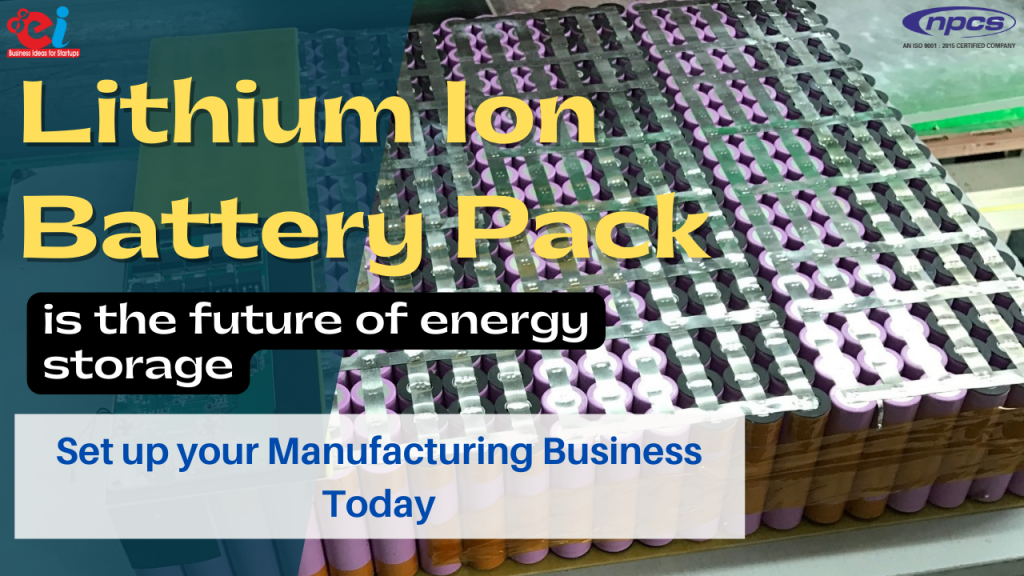
Introduction to the Lithium-ion Battery Business In an era where clean energy and sustainable transport are dominating global discourse, the Lithium-ion battery has emerged as a central element of the green revolution. From electric vehicles (EVs) to solar energy storage systems and consumer electronics, the demand for reliable, high-density batteries is soaring. Entrepreneurs and investors are tapping into this explosive market, finding immense potential in launching a Lithium-ion battery pack business. Why Start a Lithium-ion Battery Pack Business? The global shift towards renewable energy and electrification has opened up a multi-billion-dollar market. According to industry projections, the Lithium-ion battery market is expected to surpass $250 billion by 2030. This rapid growth is fueled by: Electric Vehicle (EV) boom Grid-scale renewable energy storage Portable electronics and mobile computing Industrial applications in robotics, drones, and tools By entering the Lithium-ion battery pack business, you align with future-ready technologies while contributing to sustainable development. Understanding Lithium-ion Battery Packs A Lithium-ion battery pack is a combination of several individual lithium-ion cells configured and managed with Battery Management Systems (BMS). These packs are designed to provide high energy density, lightweight form factor, longer lifespan, and rapid charging—key requirements for today’s electronic and automotive needs. The typical components of a battery pack include: Cell Module: Individual lithium-ion cells arranged in a specific series-parallel configuration Battery Management System (BMS): Circuitry that monitors and controls charge-discharge functions Cooling System: Keeps the temperature within safe limits Packaging: Ensures safety and protection during use and transport Market Analysis and Target Sectors Before setting up a business, it’s crucial to analyze demand across sectors: Automotive (EV): EVs require large-capacity battery packs, making this the largest consumer market. Renewable Energy Storage: Residential and commercial solar setups increasingly rely on Lithium-ion batteries. Telecom and Data Centers: Require uninterrupted power, opening a niche for high-performance battery packs. Consumer Electronics: From smartphones to laptops, there’s consistent demand for compact, long-lasting batteries. Industrial Equipment: Power tools, drones, AGVs, and robotics use tailored Lithium-ion battery packs. Step-by-Step Guide to Start a Lithium-ion Battery Pack Business 1. Conduct a Detailed Feasibility Study Before making an investment, conduct a thorough feasibility report covering: Market demand and future trends Initial capital requirement Supply chain logistics Regulatory approvals and compliance Technical know-how Use insights from this study to craft a viable business plan. 2. Legal Registration and Certifications To operate legally and ensure product trust, secure the following: Company registration under relevant local or national laws BIS certification (India), UL/CE marks (international) Pollution Control Board approvals Fire and Safety compliance Patent and intellectual property for proprietary designs (if applicable) 3. Investment and Financial Planning Starting a Lithium-ion battery pack manufacturing unit can be capital-intensive. Here’s a breakdown: Small-scale setup: ?25–50 Lakhs (for manual/semi-automatic operations) Medium to large-scale: ?1–5 Crores (fully automated line with testing labs) Funds should cover machinery, raw materials, skilled labor, licenses, branding, and marketing. 4. Setup of Manufacturing Facility Location selection should ensure proximity to raw material suppliers, ease of transport, and regulatory compliance. Key facility zones: Assembly Line: Cell arrangement, welding, and pack formation Testing Lab: Cycle testing, thermal management validation R&D Section: For design innovations and performance improvement Packaging Unit: Safe and standardized packing for transport Procure high-quality machinery for cell sorting, spot welding, BMS integration, and laser cutting. 5. Sourcing Raw Materials and Components Your supply chain should be reliable and quality-driven. Essential components include: Lithium-ion cells (18650, 21700, pouch cells, prismatic cells) BMS circuits Nickel strips and busbars Welding and housing materials Cooling foams or phase-change materials Tie-ups with international cell manufacturers (e.g., Samsung SDI, LG Chem, CATL) can ensure consistent supply. 6. Designing the Battery Pack Product differentiation comes from how you design the pack. Focus on: Custom voltage/current requirements Thermal management efficiency Modular and scalable design Integrated IoT monitoring systems Offer OEM/ODM solutions for startups and EV companies to gain market entry. 7. Battery Testing and Quality Assurance Safety and performance define your brand. Invest in quality testing protocols: Voltage and capacity tests Short-circuit and overcharge protection Thermal runaway prevention Life cycle and deep discharge testing Use advanced software to log test data and integrate it into the product’s warranty system. 8. Sales and Marketing Strategy A strong go-to-market strategy is key to success in the Lithium-ion battery pack business: B2B channels: Partner with EV startups, solar EPCs, and OEMs B2C platforms: Sell via e-commerce or through your own branded website Government tenders: Bid for energy storage and rural electrification projects Exhibitions & trade shows: Present your tech at expos to attract industrial clients Utilize digital marketing tools such as SEO, PPC ads, LinkedIn campaigns, and email newsletters. 9. After-Sales Support and Recycling Provide long-term support through: Warranty and repair services Remote monitoring tools AMC contracts for bulk users Recycling and disposal programs for end-of-life batteries Establish your reputation by promoting sustainable Lithium-ion battery solutions. Challenges in the Lithium-ion Battery Industry High competition and price sensitivity Dependency on imported cells (especially in India) Regulatory complexity and certification delays Risk of fire or thermal runaway if poorly designed Environmental concerns around mining and disposal Overcome these challenges with innovation, reliable sourcing, and world-class engineering. Future Opportunities in the Lithium-ion Battery Sector The future holds immense promise for businesses in this space: Solid-state batteries: Emerging tech with even better energy density Second-life battery reuse: Repurposing EV batteries for solar storage Battery swapping stations: Especially for 2-wheeler and 3-wheeler segments Domestic cell manufacturing: Under PLI (Production Linked Incentives) in India Export market: Growing demand in Africa, Southeast Asia, and Latin America Innovate continually and stay informed about market trends and government policies. Conclusion Starting a Lithium-ion battery pack business today positions you at the forefront of the energy revolution. By combining advanced technology, a solid manufacturing setup, and strategic marketing, your business can tap into one of the most lucrative and future-proof industries. With the right execution, your venture can contribute significantly to global electrification and sustainability goals. Lithium-ion batteries are more than just a trend—they’re the power source of the future. Visit the
Project Report on Battery Recycling Plant | Recycling of Lithium Ion Battery
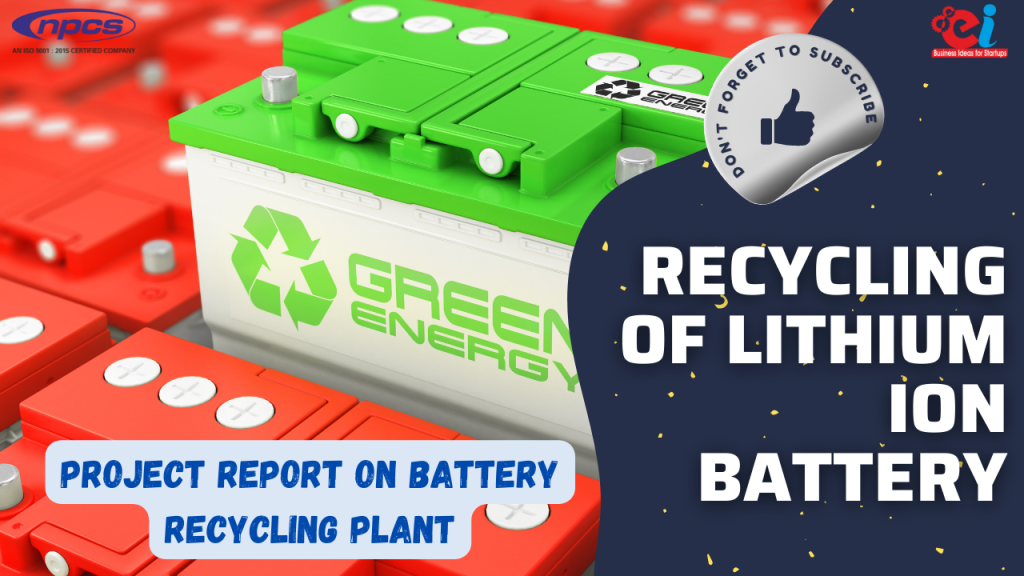
As the world aggressively shifts toward electrification, the role of lithium-ion battery recycling becomes paramount. With electric vehicles (EVs), portable electronics, and renewable energy systems consuming a staggering number of lithium-ion batteries every year, the challenge of managing spent batteries has emerged as both a critical concern and a lucrative opportunity. This article provides an in-depth project report for setting up a lithium-ion battery recycling plant, exploring every vital detail from technology to profitability. Global Demand for Lithium-ion Battery Recycling The consumption of lithium-ion batteries is expected to exceed 3,000 GWh by 2030, largely driven by EV adoption, solar power storage, and increased digitization. However, most of these batteries are discarded after their lifecycle, contributing to e-waste. Recycling them not only recovers valuable metals like lithium, cobalt, and nickel but also supports sustainable manufacturing and reduces dependency on volatile mining operations. Governments and international organizations are now enforcing stricter rules around battery recycling. India, for instance, implemented the Battery Waste Management Rules, 2022, which mandate Extended Producer Responsibility (EPR) and hold manufacturers accountable for recycling spent batteries. Why Invest in a Lithium-ion Battery Recycling Plant? Setting up a lithium-ion battery recycling plant is more than a business—it’s an essential part of a green, circular economy. Here’s why this industry offers high potential: High Profit Margins: Recovered metals can be sold at competitive prices, reducing the cost of sourcing virgin materials. Policy Support: Governments are offering subsidies, tax exemptions, and technology support for green ventures. Environmental Necessity: Improper disposal leads to soil and groundwater contamination, posing ecological threats. Job Creation: Establishing a plant creates jobs across multiple disciplines including engineering, logistics, safety, and R&D. Resource Independence: It reduces the need for importing critical minerals from unstable or monopolized markets. Comprehensive Business Model Overview To run a profitable lithium-ion battery recycling unit, we need a well-structured business model involving material sourcing, advanced processing, logistics, and market linkages. Below is a detailed breakdown of each component: Raw Material Sourcing Channels Lithium-ion batteries come from various sources, including: Electric Vehicles (EVs): EV manufacturers and fleet operators produce a significant quantity of battery waste. Consumer Electronics: Mobile phones, laptops, and tablets have short battery life cycles. Industrial Applications: UPS systems and telecom towers contribute industrial-scale battery waste. E-waste Collection Drives: Municipalities, recyclers, and NGOs often run collection programs. Partnerships with vehicle dealerships, e-waste aggregators, and OEMs are essential to maintain a constant supply. Location and Infrastructure Requirements A strategically located plant near industrial zones or transportation hubs reduces logistical costs. Key infrastructure includes: Battery Discharging Units: For safe energy drainage from batteries. Crushing and Shredding Machines: Mechanical processing units to break down battery packs. Sorting and Separation Units: Equipment to segregate metals and non-metals. Chemical Processing Tanks: For hydrometallurgical or pyrometallurgical recovery. Effluent Treatment Plants (ETPs): Mandatory for treating wastewater and chemical discharge. Storage Areas: Secured storage for hazardous materials and recovered metals. A medium-sized plant that processes 10,000 tons per year typically requires a 20,000 sq. ft. space and demands an investment between ?15–25 crores.. Detailed Process Flow of Battery Recycling The core steps in the recycling of lithium-ion batteries include: Collection and Transportation: Batteries are collected, labeled as hazardous, and transported under safe conditions. Discharging: Remaining charge is safely drained to avoid fires or explosions. Mechanical Dismantling: Batteries are opened to access the internal cell components. Crushing and Sorting: Cells are crushed and materials are separated into plastics, metals, and electrode materials. Thermal Processing (Pyrometallurgy): High-temperature processing to extract cobalt, nickel, and copper. Chemical Processing (Hydrometallurgy): Acid leaching and solvent extraction to isolate lithium, cobalt, and other rare elements. Material Purification: Refinement of extracted metals to make them battery-grade. Lithium-ion battery recycling plants may also include advanced direct recycling methods, which aim to retain cathode materials in usable form. Though still developing, these methods promise higher recovery efficiency and lower environmental impact. Technology and Equipment Required Key technologies include: Automated Sorting Lines Thermal Chambers Acid Leach Reactors Solvent Extraction Columns Induction Furnaces Advanced Control Systems Dust & Emission Control Units Automation not only improves safety and output but also ensures compliance with regulatory standards. Regulatory and Legal Considerations Running a battery recycling plant requires strict compliance with environmental and safety regulations. Approvals must be obtained from: State Pollution Control Boards (SPCB) Central Pollution Control Board (CPCB) MoEFCC Directorate of Industrial Safety and Health (DISH) Hazardous Waste Handling Rules Additionally, the business must register under the Battery Waste Management Rules and obtain EPR authorization. Operational Team and HR Requirements A successful recycling plant will need: Process Engineers Chemical Analysts Environmental Scientists Machine Operators Safety Managers Logistics Coordinators Training programs should be implemented to manage hazardous material handling, fire safety, chemical exposure, and environmental protection. Costs and Financial Projections Estimated cost components for a medium-scale plant: Land & Infrastructure: ?5–8 Crores Machinery & Equipment: ?7–10 Crores Licensing & Compliance: ?1–2 Crores Working Capital: ?3–5 Crores Break-even period: Generally achievable within 3–5 years, depending on capacity utilization and market access. Revenue Generation and Market Scope Key revenue streams: Sale of recovered cobalt, lithium, nickel, copper Scrap sale of plastic and aluminum casings Service fees for battery collection and processing Carbon credits and green subsidies Given that cobalt trades at over $30,000 per ton and lithium around $20,000 per ton (2025 estimates), profitability can be significant. Global buyers include battery manufacturers, EV companies, and metal refineries. Environmental and Social Impact Lithium-ion batteries contain electrolytes and heavy metals that can pollute soil, air, and water. Proper recycling prevents: Groundwater contamination Airborne toxin release Mining-related deforestation Worker exposure to carcinogens Recycling also contributes to UN Sustainable Development Goals (SDGs), particularly in climate action, clean energy, and responsible production. Market Trends and Future Outlook Automation: Use of AI for material detection and robotic dismantling. Urban Mining: Cities becoming hubs for battery recovery from e-waste. Policy Evolution: India is expected to impose stricter EPR compliance from 2026. Battery Passport: Future regulations may require digital tracking of battery components for traceability. Companies entering the lithium-ion battery recycling market today can capitalize
Production of Lithium Ion Battery (LiFePO4) | Business Plan
The production of lithium ion battery (LiFePO4) has rapidly become one of the most lucrative and future-ready industries in today’s clean energy revolution. As electric vehicles (EVs), renewable energy storage systems, and portable electronics see exponential growth, LiFePO4 batteries are gaining popularity due to their safety, stability, and longevity. Unlike other lithium-based chemistries, lithium iron phosphate batteries offer superior thermal stability and longer life cycles, making them ideal for diverse applications. Entrepreneurs and manufacturers exploring sustainable and high-growth sectors must seriously consider entering the production of lithium ion battery (LiFePO4) for long-term profitability and global relevance. Visit this Page for More Information: Start a Business in Lithium-Ion Battery Production Market Demand and Scope of Lithium Ion Battery (LiFePO4) Production The increasing adoption of electric mobility and solar power storage is fueling the production of lithium ion battery (LiFePO4) across global markets. The demand is expected to skyrocket in the coming decade, with governments, industries, and consumers seeking greener alternatives to fossil fuels. The compound annual growth rate (CAGR) for lithium iron phosphate batteries is projected to exceed 20% globally. India, China, the U.S., and Europe are investing heavily in battery production facilities, positioning LiFePO4 batteries as a key pillar of their clean energy roadmaps. Read Similar Articles: Battery Projects Why LiFePO4 is the Preferred Battery Chemistry When comparing various lithium-ion battery types, LiFePO4 offers numerous advantages: Enhanced Safety: LiFePO4 batteries are more chemically stable and less prone to overheating or explosion. Longer Life Cycle: They can endure up to 2000–3000 charging cycles without significant capacity loss. Environmental Safety: Contains no cobalt, reducing ethical and environmental concerns. Cost Efficiency: While the initial cost is slightly higher, the longer lifespan and reliability lower long-term costs. These factors make LiFePO4 the most suitable option for electric vehicles, power tools, energy backup systems, and home solar storage. Watch other Informative Videos: Electrical, Electronic Industries and Power Projects Key Raw Materials and Components To begin the production of lithium ion battery (LiFePO4), manufacturers must secure the following raw materials and components: Lithium Iron Phosphate (LiFePO4) as cathode material Graphite or Carbon for the anode Electrolyte Solution (typically lithium hexafluorophosphate in organic solvent) Separator Films (polyethylene or polypropylene-based) Aluminum and Copper Foils as current collectors Battery Casing (aluminum, stainless steel, or polymer enclosures) These materials are combined in a highly controlled production environment to maintain safety, consistency, and efficiency. Step-by-Step Manufacturing Process The production of lithium ion battery (LiFePO4) includes the following critical stages: Material Preparation: Powdered cathode and anode materials are mixed with binders and solvents to form a slurry. Coating: Slurries are coated onto respective metal foils and dried in large ovens. Electrode Cutting: Coated sheets are cut into appropriate sizes for cell assembly. Cell Assembly: Layers of cathode, separator, and anode are stacked or wound (for cylindrical cells). Electrolyte Filling: The electrolyte is injected into sealed cells inside a dry room. Formation & Aging: Cells are charged/discharged multiple times to stabilize the battery chemistry. Testing & Packing: Each cell undergoes capacity, voltage, and safety testing before being packed into modules or packs. Automation and clean-room environments are essential for consistent quality and efficiency in this high-precision process. Related Report: E- Vehicle, E-Rickshaw Machinery and Equipment Required Setting up a plant for the production of lithium ion battery (LiFePO4) requires investment in the following machinery: Slurry Mixers and Coating Machines Roll Press and Electrode Slitting Machines Stacking or Winding Machines Electrolyte Filling Equipment Battery Sealing and Formation Units Testing and Grading Systems Battery Management System (BMS) Integration Tools The scale of the machinery depends on whether you aim for small-scale assembly or full-fledged cell manufacturing. Investment and Plant Setup The capital required for setting up a LiFePO4 battery production facility varies depending on size and automation level. A semi-automated small-scale unit may cost ?5–10 crore (~USD 600K–1.2M), while a fully automated large-scale plant may exceed ?100 crore (~USD 12M+). Key factors affecting cost include: Import vs. domestic sourcing of equipment Availability of skilled technicians Power supply and clean-room requirements Compliance with environmental and safety regulations Government subsidies and startup grants are often available for EV battery or clean energy initiatives. Licensing and Regulatory Compliance For setting up a production unit for lithium ion battery (LiFePO4) in India or abroad, you must comply with: Pollution Control Board clearance Fire and electrical safety approvals ISO 9001 and ISO 14001 certifications BIS (Bureau of Indian Standards) or equivalent regulatory certifications Import/export licenses (for raw materials and machinery) Additionally, your product must meet international safety and performance standards such as UN38.3, IEC 62133, and RoHS directives for global distribution. Applications and Target Markets LiFePO4 batteries serve various high-growth markets: Electric Vehicles (2W, 3W, and 4W) Solar Energy Storage Inverter and UPS Systems Telecom Backup Units Medical Devices Marine and Aviation Sectors Consumer Electronics By customizing cell sizes and energy capacity, manufacturers can cater to diverse industries both domestically and internationally. Challenges in LiFePO4 Battery Production While the production of lithium ion battery (LiFePO4) offers excellent growth prospects, challenges include: Dependency on imported lithium and other critical minerals High initial setup costs Rapidly evolving technology and demand for R&D Need for temperature and humidity-controlled environments Battery recycling and end-of-life management However, with long-term planning, these obstacles can be turned into competitive advantages. Sustainability and Future Outlook The future of the production of lithium ion battery (LiFePO4) is aligned with global trends in sustainability, decarbonization, and energy independence. Ongoing research is enhancing battery density, recycling efficiency, and integration with AI-driven Battery Management Systems. Governments are supporting local production with tax benefits, import duty cuts, and PLI (Production-Linked Incentive) schemes. By investing early and focusing on quality, startups and manufacturers can play a pivotal role in India’s and the world’s green energy revolution. Conclusion In today’s climate-conscious economy, the production of lithium ion battery (LiFePO4) stands at the intersection of innovation, necessity, and sustainability. With growing applications across transportation, renewable energy, and digital infrastructure, LiFePO4 battery manufacturing presents a high-potential, future-oriented business opportunity. By understanding the technical, financial, and
Business Plan of Lithium Ion Battery
A well-structured lithium ion battery business plan is the first step toward building a profitable and future-ready venture in the energy storage sector. With the global shift toward electric mobility, renewable energy, and portable electronics, lithium-ion batteries have become the backbone of modern technology. They are essential for electric vehicles (EVs), solar power systems, smartphones, power banks, medical devices, and more. Due to their high energy density, longer lifespan, and efficient charging capacity, lithium-ion batteries are now the preferred choice across industries. Entrepreneurs entering this space must have a strategic business plan that covers technology, investment, manufacturing, market analysis, and compliance to succeed. Visit this Page for More Information: Start a Business in Lithium-Ion Battery Production Market Scope and Demand Potential The demand for lithium-ion batteries has surged worldwide, with India, China, the US, and Europe leading the market. The rise of electric vehicles, government policies supporting clean energy, and increasing solar power adoption have made the lithium ion battery business plan a top priority for investors and startups. India alone aims to install large-scale EV charging infrastructure and localize battery production to reduce dependency on imports. This opens opportunities for both small- and large-scale manufacturers. According to market forecasts, the global lithium-ion battery market is expected to surpass USD 180 billion by 2030, making this business model highly scalable and future-proof. Related Business Plan: Start Assembling of Lithium Ion Battery (Battery Assembly) Selecting the Business Model There are various entry points in a lithium ion battery business plan—from assembling battery packs to full-fledged cell manufacturing, or even B2B supply and recycling. Battery pack assembly is a cost-effective and less R&D-intensive starting point, ideal for startups. Cell manufacturing, while more capital-intensive, allows for better margins and export potential. Another lucrative model is offering custom battery solutions for niche sectors like drones, medical devices, and industrial tools. Your business plan should define the exact model based on your funding, technical capabilities, and market access. Watch Video: How to Start Assembling of Lithium Ion Battery (Battery Assembly) Site Location and Infrastructure Choosing the right location is critical for setting up a lithium-ion battery unit. Industrial zones with proximity to ports, automotive hubs, or solar OEMs are ideal. Infrastructure must include controlled manufacturing environments, dry rooms for cell handling, fire safety systems, and reliable electricity supply. Your lithium ion battery business plan should also account for future expansion, warehousing, and R&D facilities, especially if scaling toward cell or module manufacturing. Related Feasibility Study Reports: Battery Projects, Automobile Batteries, Lead Acid Battery, Lithium Battery, Lithium-Ion (Li-Ion) Battery, Maintenance Free Rechargeable Battery, Battery Recycling, Battery Plate, Battery Separator Machinery and Technology The success of a lithium ion battery business plan depends on investing in the right machinery and technology. For battery pack assembly, essential equipment includes spot welders, BMS testing units, cell graders, pack housing tools, and safety testers. For cell manufacturing, advanced machinery like electrode coaters, calendaring machines, electrolyte fillers, and formation chambers are required. Ensuring automation, quality control, and adherence to global standards is key for long-term success. Read our Books Here: Books and Database Raw Material Sourcing Raw materials are the foundation of battery performance. Key components include lithium, cobalt, nickel, manganese, graphite, electrolytes, separators, and protective casings. Most of these materials are imported, especially lithium salts and cobalt. Your lithium ion battery business plan should focus on building relationships with verified suppliers from China, Australia, Chile, and African countries. Local recycling and material recovery can also reduce costs and enhance sustainability. Read Similar Articles: Battery Projects Licensing and Regulatory Compliance Manufacturing lithium-ion batteries involves safety and environmental risks, so several licenses and approvals are mandatory. You’ll need a business registration, factory license, pollution control clearance, fire safety NOC, and BIS certification. If your business involves exports or strategic energy storage for defense or government use, additional compliance is needed. Including a strong legal and certification strategy in your lithium ion battery business plan will build investor and partner confidence. Battery Management System (BMS) Integration A smart and safe Battery Management System (BMS) is crucial for preventing overcharging, overheating, and balancing battery cells. Most battery pack businesses either source BMS from established vendors or develop proprietary systems. Adding BMS design capability adds value and margin. Your lithium ion battery business plan should highlight how BMS integration will differentiate your product in terms of safety, durability, and performance. Branding and Target Markets The lithium-ion battery market is primarily B2B, catering to sectors like EVs, telecom, solar, and consumer electronics. However, branding still plays a role in building trust. Emphasize certifications, local support, customizations, and safety records. You can also explore OEM partnerships, distributorships, and e-commerce for retail batteries like power banks or laptop replacements. A well-defined customer acquisition strategy is essential in any lithium ion battery business plan. Financial Planning and Cost Structure Capital requirement depends on scale. A battery pack assembly unit might need ?50 lakh to ?3 crore in India, while full-scale cell manufacturing can cost ?50–100 crore. Costs include land, building, machinery, manpower, raw material inventory, and marketing. Government subsidies, loans under schemes like PLI (Production-Linked Incentive), and MSME support can ease the burden. A good lithium ion battery business plan includes financial projections, break-even analysis, pricing strategy, and profit forecasts over 3–5 years. Human Resources and Technical Expertise Hiring skilled engineers, technicians, and safety officers is essential. Battery chemistry is complex, and mistakes can lead to safety hazards. Continuous training and onboarding of battery specialists, electronics engineers (for BMS), and quality control professionals will ensure product reliability. Your lithium ion battery business plan should include an HR framework that emphasizes innovation, safety, and operational excellence. Sustainability and Recycling Battery waste is a growing concern. Including recycling and second-life applications (e.g., energy storage from used EV batteries) gives your business a green edge. You can partner with recyclers or set up your own recovery unit. Highlighting eco-friendly disposal, reduced carbon footprint, and compliance with extended producer responsibility (EPR) in your lithium ion battery business plan will position your brand
Set up a Lithium Ion Battery Assembling Plant. Most Profitable Business of Li-ion Battery Assembling.
With the global push for clean energy, electric mobility, and renewable power storage, the lithium-ion battery industry has emerged as a pivotal force shaping the future. From powering smartphones and laptops to electric vehicles (EVs) and solar power grids, these batteries play a central role. As demand surges, entrepreneurs are finding lucrative opportunities in setting up lithium-ion battery assembling plants. This article serves as a detailed guide on how to start a successful venture in this booming sector. Understanding the Lithium-Ion Battery Assembling Business Before diving into business planning, it’s vital to understand what a lithium-ion battery assembling plant entails. Unlike manufacturing every component from scratch, assembling refers to sourcing battery cells, battery management systems (BMS), and other key materials and assembling them into final battery packs. These battery packs can vary in application—from small power banks to large EV batteries and solar inverters. This makes the business more accessible since it requires lower capital investment than full-scale cell manufacturing, while still yielding significant margins and scalability. Market Opportunity for Lithium-Ion Battery Assembly India’s battery market is rapidly expanding, driven by the growing adoption of electric vehicles, the need for grid energy storage, and the increased use of portable electronics. According to research, India’s lithium-ion battery market is expected to grow at a CAGR of over 20% by 2030. Major government initiatives like the FAME II policy and Production Linked Incentive (PLI) schemes further support the ecosystem. Furthermore, as the world gradually phases out fossil fuels, the dependency on lithium-based energy storage will only multiply. Early movers in this segment stand to benefit from first-mover advantages, strong brand establishment, and long-term contracts with OEMs. Key Segments in the Lithium-Ion Battery Assembly Business 1. Cell Procurement Most assemblers source lithium cells from global suppliers, especially from China, South Korea, or local manufacturers in India. The choice depends on cost, quality, and application requirements. 2. Battery Management System (BMS) The BMS is a critical component responsible for safety, performance optimization, and extending battery life. It controls parameters like voltage, current, temperature, and state-of-charge. 3. Pack Design and Assembly This includes mechanical design, thermal management, wiring harnessing, and assembling cells into modules and packs. Automation and robotics can streamline this process at scale. 4. Testing and Quality Control Rigorous testing—thermal cycling, voltage checks, load tests—is crucial to ensure safety and consistency, especially for automotive and grid applications. Steps to Start a Lithium-Ion Battery Assembling Plant Step 1: Market Research & Business Plan Start by identifying your target market—will you cater to EV manufacturers, solar companies, telecom industries, or consumer electronics? Each segment has different power, form factor, and lifecycle requirements. Your business plan should cover: Target market & product applications SWOT analysis Estimated investment & ROI Competitive landscape Sales & distribution channels Risk mitigation strategies Step 2: Legal Registration & Compliance Register your business as a Pvt Ltd, LLP, or proprietorship firm, and acquire necessary licenses: Udyog Aadhaar (MSME registration) GST Registration Pollution NOC from the State Pollution Control Board Factory License BIS Certification (especially for end products) Also, ensure compliance with battery waste management and e-waste handling norms under CPCB guidelines. Step 3: Location & Infrastructure Choose a location with good power supply, transportation access, and adequate space (minimum 3000–5000 sq. ft. for small-scale assembly). Industrial zones or special economic zones (SEZs) may offer incentives. Infrastructure requirements include: Cleanroom/ESD safe environment HVAC & ventilation Safety equipment & fire control Assembly lines & testing labs Storage for cells and hazardous components Step 4: Equipment & Machinery Setup Depending on the scale, your lithium-ion battery assembly line may include: Cell grading machines Spot welding machines Battery pack testers BMS programmers Ultrasonic welders Heat shrink tunnels Laser printers for brandingYou may source these machines locally or import them from established vendors in China, Taiwan, or Germany. Step 5: Raw Material Sourcing Essential materials include: Lithium-ion cells (cylindrical, pouch, prismatic) BMS units Nickel strips & connectors ABS/metal casings Thermal management materials Wires, connectors, and insulationBuild partnerships with certified suppliers to ensure continuity, quality, and price efficiency. Step 6: Hiring and Workforce Training Technical skills are essential in this business. Hire technicians, quality engineers, R&D experts, and assembly workers. Train your team in: Battery chemistry and safety BMS programming Quality inspection standards (ISO, ARAI, etc.) Handling lithium cells safely For scale, explore automation to reduce dependency on manual labor and improve consistency. Step 7: Branding, Marketing & Distribution Develop a strong brand focused on performance, safety, and customization. Your marketing strategy may include: OEM partnerships Exhibiting at EV expos and green energy summits Digital marketing, SEO, and LinkedIn outreach Distributors and system integrator channelsDevelop prototypes, conduct field trials, and collect performance data to build credibility. Investment and Cost Breakdown A small-scale lithium-ion battery assembly unit may require ?50 lakh to ?1.5 crore (USD 60,000 to 180,000), depending on the production capacity and automation level. Here’s a sample breakdown: Component Approximate Cost (INR) Machinery & Equipment ?20–30 lakh Raw Material Inventory ?15–25 lakh Factory Setup & Infrastructure ?10–20 lakh Licenses and Certification ?2–5 lakh Manpower & Initial Salaries ?3–5 lakh Marketing & Branding ?2–3 lakh Total ?50 lakh to ?1.5 crore Government schemes under SIDBI, NSIC, and PLI can help reduce this initial burden through subsidies, low-interest loans, or capital grants. Challenges in the Lithium-Ion Battery Business 1. Supply Chain Dependency Most lithium-ion cells are imported, making your business susceptible to currency fluctuations and import policies. 2. Safety Risks Improper handling or defective BMS units can lead to fires or explosions. Ensure rigorous testing and quality controls. 3. Competition & Pricing Pressure The market is becoming competitive, with big players offering cheaper battery packs at scale. Differentiation through quality and customization is key. 4. Recycling and Environmental Norms Battery recycling and disposal laws are becoming stricter. Partner with certified recyclers and maintain reverse logistics systems. Future of the Lithium-Ion Battery Industry The future of the lithium-ion battery sector looks incredibly bright, particularly in India. With plans to phase out ICE vehicles by 2030, strong EV adoption, and