
Water Purification Business for Rural India: A Low-Cost, High-Impact Industrial Opportunity
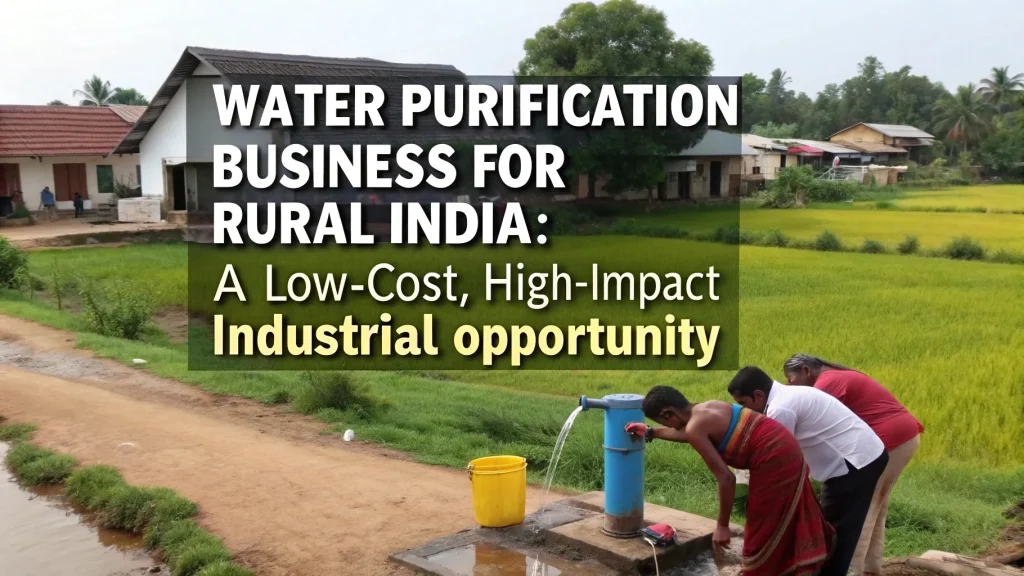
The Urban-Rural Divide in Drinking Water Access The division between urban and rural areas in India is evident in one area: the availability of clean drinking water by the Water Purification Business. While cities have sophisticated municipal systems in place, a large proportion of rural India relies on untreated groundwater, ponds, or hand pumps that are heavily contaminated with chemicals, bacteria, and heavy metals. Due to this, waterborne diseases continue to be one of the leading causes of illness and mortality in these regions. This situation does, however, present a significant chance for economic advancement. There is a rising need for convenient and economical options for water purification. For entrepreneurs and small to medium enterprises (SMEs) keen on entering the manufacturing arena, the region of rural India offers an unparalleled opportunity that combines low investment, high impact, and long-term growth potential. This situation transcends business considerations alone. The social impacts—improved public health, community progress, environmental conservation, and tapping into a blossoming market—are equally compelling. Market Demand and Industry Landscape The packaged and purified water industry in India has for so long been dominated by urban consumers as the packaged and purified water industry in India was dominated by urban consumers. This shift is now surging. With the increase of rural awareness, health concerns post-COVID-19, and government initiatives like Jal Jeevan Mission, rural households are prioritizing trusted water purification systems. Estimates from NITI Aayog suggests more than 600 million people in India face high to extreme water stress, the majority of which comes from rural regions. Furthermore, the World Health Organization indicates that 21% of the communicable diseases in India can be attributed to the consumption of unsafe water. Considering the scale, the business opportunity becomes even more apparent: over 180 million rural households, most of which do not have tap water or access to purified water systems. This creates an urgent need as the public health, the environment, and the economy are all simultaneously at risk. This indicates that the rural water purification market has the potential to experience rapid growth. Related: How to Start a Manufacturing Business of Flavored Drinking Water Forecasting Market Size: Anticipated Changes in the Next 5 Years The market for water purification solutions for the rural centers, including filtration units, community plants, and household kits, is anticipated to expand further and reach even greater heights with the support of innovation, government policies, and increased public and private partnerships. Predicted Expansion: Rural Water Purification Industry in India Year Predicated Market Size (? Crore) Annual Growth Rate Primary Influencers 2025 ?1,540 Cr – Cleansing COVID related health issues, water necessity 2026 ?1,930 Cr 25.3% Jal Jeevan Mission NGO initiatives aim at clean water and sanitation 2027 ?2,520 Cr 30.6% Increase in tech-adapted solar water-powered units 2028 ?3,240 Cr 28.6% CSR involvement coupled with adoption in rural areas 2029 ?4,160 Cr 28.3% Campaigns for rural health alongside local production These forecasts signify not only an emerging market but also highlight its fundamental importance, wherein the driving force remains need-based rather than lavish spending. Incentives for Potential Investors in the Market The Business of Water Purification lines up very well with the aspirations of budding entrepreneurs today. It presents the unique intersection of low startup cost, localized production, social return on investment, and predictable cashflow. Especially beginners or smaller players in the industry will appreciate the wide range of products available, such as solar-powered portable water plants and even simple gravity-based water filters. This sector is far removed from cumbersome heavy industries because there is quick prototyping and low-skill production completion within region-specific arrangements. Additionally, this is a business that welcomes collaboration with NGOs, the CSR arms of corporations, self-help groups, and government agencies, all of whom are looking for collaborators to achieve their rural water accessibility objectives. Manufacturing Water Purification Systems: Building a Scalable Rural Ready Product Rural water purification system engineering is not about fancy equipment but about efficiency, strength, and economical approaches. Solutions need to be rugged, low-maintenance, able to operate without electricity (in most cases), and must adhere to basic water safety requirements. The manufacture of community or household scale water purifiers includes the following stages: Design & Prototyping The initial step is picking a technology that is suitable for the geography in question. For regions with high TDS levels or excessive fluoride, a reverse osmosis (RO) design would be essential. While, in other situations, ceramic and activated carbon gravity filtration would suffice. This stage entails CAD modeling, pilot testing, and field verification. Entrepreneurs have the option to license models available or partner with R&D institutions for affordable designs. Component Sourcing The main components are filter cartridges (of carbon, UF, ceramic, or RO membranes), valves, water tanks, plastic casings, connectors, and sometimes even UV lamps or solar panels. These parts can be obtained from industrial suppliers in India or wholesale centers like Bhagirath Palace in Delhi and the industrial hubs of Ahmedabad. Assembly Line Operations The purifiers are assembled in a semi-automated or manual line, depending on the business scale. Casing molding, cartridge fitting, sealing, pressurization, and packaging are some of the steps in the workflow. Most units are lightweight and do not require heavy-duty fabrication. Quality Control and Testing Each unit must undergo basic water testing, especially microbial removal capability, TDS, and structural integrity. Sales to government bodies and NGOs are more credible with certification from NABL-accredited labs. Branding and Packaging Branding is crucial to sales in rural areas as purchases are made based on trust and visual representation. Local language instructions, pictorial guides for ease of use, and contact numbers for help lines should be provided. This alongside long-lasting eco-friendly materials enhances the perception of these products. Related: Business Opportunities in Water Sector in India Opportunities and Models for Business Development As a market, Rural India has several subdivisions. Each region has its own water problems, arsenic in Bengal or fluoride in Andhra Pradesh. Customization is an even more important aspect of business than advertising. Catering solutions
Why has the demand for bottled water increased?
The demand for bottled water has witnessed an extraordinary rise in recent years, becoming one of the fastest-growing segments in the global beverage industry. Consumers around the world are increasingly shifting toward bottled water as their preferred source of hydration, owing to concerns about tap water quality, convenience, health consciousness, and evolving lifestyle preferences. According to market research, the global bottled water market is expected to exceed $400 billion by 2030, reflecting strong and consistent consumer demand. In urban centers, rural areas, and even tourist destinations, bottled water is now seen not just as a necessity, but as a trusted, safe, and premium product. This upward trajectory in the demand for bottled water has spurred massive investments from FMCG giants, startups, and MSMEs alike. In many regions, bottled water has overtaken carbonated drinks, thanks to its perceived purity, minimal additives, and alignment with wellness trends. Visit this Page for More Information: Start a Business in Water Industry Understanding the Surge in Bottled Water Demand The steady growth in the demand for bottled water is driven by a complex blend of health, social, and environmental factors. Consumers are more informed than ever about contaminants in municipal water supplies and are willing to pay for a safer, more reliable alternative. Related Business Plan: Water Industry Health and Safety Concerns about Tap Water One of the primary reasons for the increased demand for bottled water is public distrust in the quality of tap water. In developing nations, infrastructure for water purification may be outdated or insufficient, leading to contamination with bacteria, heavy metals, or chemicals. In urban areas too, aging pipelines and industrial pollution contribute to inconsistent water quality. Consumers prefer bottled water as it offers tested and sealed protection, ensuring safety from waterborne diseases. Read Similar Articles: WATER INDUSTRY (DISTILLED WATER) Lifestyle Changes and On-the-Go Convenience As the pace of life accelerates, especially in urban and semi-urban regions, convenience becomes a key consideration. Bottled water offers a grab-and-go solution for hydration, available everywhere—from supermarkets to roadside vendors, gyms, offices, and airports. Its portability and easy availability have made it the preferred option for working professionals, students, travelers, and fitness enthusiasts. Click here to send your queries/Contact Us Increased Awareness of Hydration and Wellness Another major factor behind the surging demand for bottled water is the increasing public awareness of the importance of hydration. Modern consumers associate bottled water with fitness, detox, and beauty. Influencers, health coaches, and medical experts continue to advocate drinking 2–3 liters of water a day, further reinforcing bottled water’s presence as a daily essential. Moreover, many brands now offer mineral-rich, alkaline, spring, and flavored water, catering to niche health-conscious segments, which has expanded bottled water’s appeal beyond basic hydration. Related Feasibility Study Reports: Packaged Drinking Water With Pet Glasses (250 Ml) Rising Disposable Incomes and Urbanization The growth of middle-class income and urban living across countries like India, China, Brazil, and Indonesia has contributed significantly to the demand for bottled water. With higher spending power, consumers are willing to pay for premium bottled water, especially those with added minerals or enhanced filtration processes. Urban dwellers often have limited access to clean drinking water in workplaces, transit points, or rented homes, making bottled water a reliable and practical choice. Read our Books Here: Packaging Industry Tourism, Travel, and Outdoor Events Tourism and outdoor activities are key contributors to bottled water consumption. Tourists, especially international travelers, tend to avoid local tap water and rely entirely on packaged drinking water. Similarly, large-scale outdoor events, festivals, sports tournaments, and adventure activities see heightened bottled water sales due to lack of infrastructure for clean drinking water. This seasonal and event-based consumption has been a consistent booster for the bottled water industry globally. Brand Trust and Aggressive Marketing The bottled water industry has seen aggressive marketing and branding campaigns that emphasize purity, origin (Himalayan, spring, glacial), and health benefits. As a result, customers view bottled water not just as water, but as a lifestyle choice. Premium bottled water brands also cater to the luxury segment, with glass bottles, designer packaging, and curated mineral blends. This premiumization has further increased the perceived value and demand for bottled water. Environmental and Recyclable Packaging Innovations Contrary to earlier years when plastic use was a concern, the industry has responded with eco-friendly packaging solutions. Brands are investing in biodegradable bottles, recyclable plastics, and refillable packaging systems. These innovations reassure environmentally conscious consumers and help reduce guilt associated with single-use plastic, further boosting the demand for bottled water. Support from Government Regulations and Certification Stringent quality norms, BIS certifications (in India), and global safety standards have built consumer confidence in bottled water. Government approval and mandatory labeling also make it easier for consumers to verify purity levels, mineral content, and safety parameters. Additionally, water vending kiosks and public-private partnerships in tier-2 and tier-3 towns are increasing access to affordable bottled water in rural markets. Pandemic Influence and Post-COVID Precautions The COVID-19 pandemic led to increased health hygiene awareness, resulting in a spike in packaged water sales. Consumers avoided using shared water dispensers or public fountains, shifting preference to sealed bottled water. Even post-pandemic, this cautious behavior has persisted in schools, hospitals, airports, and workplaces. Conclusion The rapid rise in the demand for bottled water reflects a blend of modern consumer expectations: health, safety, convenience, and lifestyle. This surge is expected to continue, driven by innovation in packaging, expansion into rural markets, and increasing preference for healthier alternatives to sugary beverages. For businesses and investors, the bottled water industry presents a lucrative, stable, and scalable opportunity aligned with global wellness trends. Click here to send your queries/Contact Us Reasons for Buying NIIR Report: Our research report helps you get a detailed picture of the industry by providing an overview of the industry along with the market structure and classification. Our report provides market analysis covering major growth driving factors for the industry, the latest market trends and the regulatory framework of the industry. Our Report provides an analysis and
Start Your Own Water Park, Amusement Park Business
In a country like India, where the summer sun dominates a major part of the year, a water park is more than just a luxury—it’s a booming business opportunity. The growing population, increasing disposable income, and people’s desire for unique recreational experiences have fueled the rise of amusement and water parks across both urban and semi-urban areas. Starting a successful water park is not just about slides and swimming pools; it involves detailed planning, significant investment, safety considerations, and a strong customer experience strategy. If you are passionate about the entertainment industry and dream of launching a venture that brings joy to thousands while yielding great profits, this complete guide to launching a successful water park business is tailored for you. Why a Water Park is a Profitable Business Opportunity India’s climate plays a crucial role in the success of water parks. With a long summer season in most parts of the country and a rising middle class looking for fun getaways, demand is high. Families, school trips, college groups, and tourists are constantly on the lookout for places to cool off and enjoy leisure time. A successful water park taps into this demand, providing a space for enjoyment, socializing, and recreation. Additionally, the tourism industry in India is expanding rapidly. State governments are increasingly promoting recreational activities to enhance domestic tourism. Water parks, especially those located near tourist hotspots or large cities, benefit greatly from this trend. Moreover, with the introduction of better infrastructure like highways, metro rail, and affordable travel options, accessing water parks is now easier than ever. Step-by-Step Guide to Starting a Successful Water Park 1. Conduct Market Research Before investing in your dream project, conduct detailed market research. Study existing water parks in your region, their pricing, facilities, crowd patterns, and customer feedback. Determine what people love and what they wish was better. Identify your target audience—families, teens, tourists, schools—and understand their expectations. Also, analyze the demographics, climate, and seasonal footfall in your proposed location. For instance, places like Maharashtra, Gujarat, Rajasthan, Tamil Nadu, and Delhi-NCR see huge crowds during summers. A successful water park finds its niche and serves an unmet need in its specific location. 2. Choose the Right Location Location can make or break a water park business. Ideally, your park should be close to a major city or tourist attraction but still far enough to afford large land space. Look for areas with good road access, ample parking, and potential for expansion. A minimum of 4–10 acres is typically needed, depending on your planned scale. Ensure the land has access to abundant water supply and reliable electricity. Zoning laws and environmental clearance should be checked thoroughly before purchase. A successful water park is located where it’s both visible and accessible. 3. Develop a Business Plan and Budget A clear business plan is essential. Outline your investment, expenses, revenue model, and break-even timeline. Include sections like: Capital expenditure (land, rides, construction, licenses) Operational costs (staff salaries, maintenance, electricity, insurance) Revenue sources (entry tickets, food courts, merchandise, lockers, special packages) Marketing budget Contingency fund Starting a mid-size successful water park can cost anywhere between ?5 crore to ?25 crore, depending on scale and theme. Many entrepreneurs also explore partnerships or bank loans. ROI typically starts showing after 2-3 years with proper planning. 4. Design the Park Layout & Attractions Consult professionals or experienced architects who specialize in amusement park design. Safety and fun should go hand-in-hand. Your layout should offer: Kids’ zone with shallow pools and smaller slides Wave pools and lazy rivers Thrill rides like vertical drops, tube slides, mat racers Rain dance area Food courts and seating zones First aid and restrooms Changing rooms and lockers Design with easy movement in mind. Ensure pathways are non-slippery, shaded, and accessible to all. A successful water park combines creative aesthetics with solid engineering and guest comfort. 5. Licensing and Legal Formalities You’ll need several licenses and approvals before opening, including: Trade license from local municipal authority Fire safety certificate Pollution control board clearance (for water usage and discharge) Public liability insurance GST registration Building and safety compliance Also, draft proper terms and disclaimers for customers. A legally compliant successful water park reduces future risk and ensures smooth operations. 6. Procure High-Quality Equipment Invest in international-standard water slides and filtration systems. Partner with companies known for durable, safe, and creative water park equipment. Make sure to: Test all rides before opening Train staff on operating procedures Install backup power systems Use water-saving and recycling technologies A successful water park is one that guests can trust for hygiene and safety. 7. Hire Skilled Staff The backbone of your park is its staff. You’ll need: Lifeguards with CPR training Water slide operators Maintenance crew Cleaners and sanitation team Ticketing and customer service staff Security guards Invest in regular training programs. Staff should be polite, alert, and trained to handle emergencies. A successful water park prioritizes both fun and safety through its team. 8. Plan an Attractive Marketing Strategy Start marketing well before launch. Use the following strategies: Social media campaigns with teasers Influencer visits and reviews School/college tie-ups Hoardings and banners in city areas Opening discounts and family packages Radio ads and local promotions Offer loyalty cards or memberships for repeat visitors. Online ticketing should be easy and accessible. Remember, a successful water park keeps the buzz alive even after the grand opening. 9. Ensure Safety and Cleanliness Clean water, hygienic food, and safe rides are non-negotiable. Water testing should be done regularly. Food vendors should maintain hygiene standards. Daily checks of ride bolts, water levels, and safety barriers are crucial. Have a medical room with a trained professional on-site. Install CCTVs across the premises. Signage should guide guests on age/height restrictions, pool depth, and emergency exits. A successful water park builds customer trust through visible safety measures. 10. Offer Additional Services and Revenue Streams To maximize profits and guest satisfaction, include: Photography booths Merchandise shops (swimwear, goggles, t-shirts) Private cabanas or VIP zones Birthday
Biological Treatment of Organic Waste, Tomato Waste Water Treatment.
Sustainable waste management is a growing concern in today’s rapidly industrializing world. With rising environmental consciousness and regulatory pressures, industries are exploring innovative methods to utilize organic waste. One promising area lies in the recycling of tomato and fish waste. These two seemingly unrelated waste streams hold immense potential for creating value-added products and contributing to a circular economy. Combined with jute-based oxalic acid recovery, this integrated approach not only addresses waste but also offers viable industrial raw materials for diverse applications. Innovative Pathways for Tomato & Fish Waste Recycling Tomato waste, comprising peels, seeds, and pulp residues from processing industries, is rich in nutrients and bioactive compounds. On the other hand, fish waste—consisting of bones, skin, scales, and offal—abounds in proteins, oils, and minerals. Recycling these organic waste types has become a sustainable practice with multiple downstream benefits, including biofertilizer production, animal feed, biogas generation, and extraction of high-value compounds. Tomato Waste Utilization India, being one of the largest producers of tomatoes, generates significant volumes of tomato waste. During the processing phase—whether for ketchup, puree, or canned products—a substantial amount of peels and seeds are discarded. These residues can be a source of lycopene, a powerful antioxidant used in nutraceuticals and cosmetics. Additionally, dietary fibers and natural colorants can be extracted from tomato waste for use in food additives. Another innovative solution involves converting tomato waste into biofertilizers. The high organic content makes it ideal for composting. Fermentation of tomato waste in anaerobic digesters produces biogas (methane), which can be used for electricity or heat. The residue from the digester can further serve as nutrient-rich compost for farming. Fish Waste Recycling Techniques Fish waste recycling is a booming industry in coastal and inland fish-processing hubs. The waste is rich in calcium, collagen, and omega-3 fatty acids. Technologies like enzymatic hydrolysis help extract fish protein hydrolysates, which are used in sports nutrition, animal feed, and pharmaceuticals. Fish oil is another by-product with high market demand in the health supplement industry. Fish bones and scales are valuable for chitin and chitosan extraction—biopolymers used in medical, textile, and packaging industries. Moreover, like tomato waste, fish waste is a potent feedstock for biogas generation. Fish silage production, where waste is treated with acids and enzymes, results in high-protein animal feed, particularly for poultry and aquaculture. Combined Bio-Conversion and Zero-Waste Strategies By integrating tomato and fish waste, several bio-conversion pathways can be optimized. When co-digested in anaerobic digesters, the carbon-rich tomato residues and nitrogen-rich fish waste balance each other, improving biogas yields. The residual slurry can be fortified with micronutrients to enhance soil health and crop yield. This co-recycling approach also aligns with “zero-waste” policies promoted under India’s Swachh Bharat Abhiyan and international frameworks like the UN’s Sustainable Development Goals. Municipalities, food processing industries, and fish markets are now increasingly exploring public-private partnerships to implement such recycling solutions. Role of Jute-Based Oxalic Acid Recovery An exciting parallel development involves jute-based oxalic acid recovery. Jute, a biodegradable and abundant agro-waste in eastern India and Bangladesh, has high cellulose content. This makes it a potential source for producing oxalic acid through oxidation techniques. Oxalic acid is a versatile organic acid widely used in pharmaceuticals, cleaning agents, and dyeing industries. Oxalic acid can be recovered from jute waste using oxidants like nitric acid or through green chemistry processes using hydrogen peroxide and catalysts. This value addition not only reduces dependency on synthetic oxalic acid but also promotes the circular utilization of agro-waste. Industrial Applications and Market Outlook The market for recycled products from tomato and fish waste is rapidly expanding. Lycopene from tomato skin commands high prices in nutraceuticals. Fish-derived collagen and gelatin are replacing bovine alternatives in the cosmetic industry due to fewer ethical concerns. Similarly, biogas plants using food and fish waste are being promoted under India’s SATAT scheme (Sustainable Alternative Towards Affordable Transportation). Oxalic acid, once derived synthetically, can now be obtained from jute processing waste, providing an eco-friendly alternative. Jute-based oxalic acid is being tested for use in biodegradable polymers, electronics cleaning agents, and textile processing. Economic Viability and Investment Potential For startups and MSMEs, tomato & fish waste recycling presents a cost-effective business model. Low-cost raw material, government subsidies under waste-to-wealth schemes, and growing demand for bio-based products contribute to its profitability. Technologies for enzymatic hydrolysis, composting, and anaerobic digestion are becoming affordable and modular, making it easier for small-scale industries to adopt them. Similarly, jute-based oxalic acid recovery can be integrated into existing jute processing mills, reducing operational costs. Pilot projects in West Bengal and Bangladesh have shown promising returns by extracting oxalic acid for use in local dyeing units and chemical industries. Environmental Benefits and Circular Economy Impact Recycling tomato and fish waste prevents the release of methane and other greenhouse gases from landfills. It also addresses issues of marine pollution due to improper fish waste disposal. The bio-products generated replace synthetic and fossil-fuel-based alternatives, thereby reducing the overall carbon footprint. Jute, being naturally biodegradable, reinforces the concept of a circular economy when its waste is converted into industrial oxalic acid. This system creates a closed-loop model where agro-industrial waste is converted into valuable raw materials, completing the product lifecycle sustainably. Research & Development Opportunities Universities and biotech startups are exploring advanced fermentation methods, microbial digestion, and enzymatic treatments to improve yields in tomato & fish waste recycling. Genetic engineering of microbial strains used in digestion, for example, is being researched to enhance lycopene and protein recovery. Similarly, green chemistry methods to produce oxalic acid from jute with minimal environmental impact are under trial. Use of ionic liquids and metal catalysts in jute hydrolysis is a frontier area with potential for scaling. Government Support and Policy Framework The Indian government supports organic waste processing through initiatives like the National Bio-Energy Mission and Pradhan Mantri Matsya Sampada Yojana (PMMSY). Financial assistance is available for establishing waste-processing units, biogas plants, and composting facilities. For oxalic acid recovery, industries using jute biomass are eligible for incentives under the “Agro Residue Utilization” policies.
Water Park- How to Open Water Park Detailed Project Report
India’s rising temperatures, growing urban population, and expanding middle class have fueled the popularity of water parks as a lucrative entertainment business. From metro cities to tier-2 towns, the demand for family-oriented leisure activities is on the rise, making this the perfect time to explore the idea of setting up a water park in India. With careful planning, the right location, and strategic marketing, a water park can become a high-footfall destination and a steady revenue-generating enterprise. Planning a Water Park in India – Infrastructure, Investment, and Business Strategy Starting a water park in India involves multiple aspects—land acquisition, legal permissions, capital investment, design and layout, equipment purchase, staffing, and marketing. Below is a comprehensive breakdown of what it takes to start and successfully run a water park business in India. 1. Market Potential and Demand Analysis Before launching a water park in India, it is vital to evaluate the market potential. The country’s tropical climate creates a natural demand for water-based recreation, especially during the summer months (March to June). Additionally, rising disposable incomes and lifestyle changes are pushing families and youth to seek unique experiences. Urban clusters like Mumbai, Delhi NCR, Pune, Bengaluru, Chennai, Hyderabad, Ahmedabad, and Jaipur already house some successful examples, indicating both scope and competition. To stand out, it is essential to offer not just thrill rides but also facilities like wave pools, lazy rivers, kids’ zones, food courts, and event spaces. Themed zones or hybrid parks (amusement + water) can attract even more footfall. See Also: Detergent Business 2. Ideal Location and Land Requirements Location is a key success factor. A water park in India should be easily accessible via major highways or public transport systems. Ideally, the land should be located within 25–40 km of a major city or tourist destination to attract urban weekend visitors as well as tourists. Land required for a medium-sized water park typically ranges from 5 to 15 acres. In addition to rides and pools, you’ll need space for: Parking lots Ticket counters Locker and changing rooms Landscaping Staff quarters Cafeteria/restaurants Administrative offices Water availability and power supply are crucial. The site must be surveyed for availability of utilities and drainage systems. 3. Legal Compliance and Licenses Starting a water park in India entails several approvals and licenses: Land conversion certificate (for agricultural to commercial use) Environmental clearance from Pollution Control Board Water usage and borewell permission Business registration (as LLP, Private Limited, or Proprietorship) Fire safety and structural safety certificate Trade license from the local municipal authority Food license (FSSAI) for operating restaurants or kiosks GST registration Insurance (public liability, employee safety, fire) Hiring a legal consultant can speed up the compliance process and avoid delays in project execution. 4. Project Cost and Investment Breakdown Setting up a water park in India involves significant upfront investment, but returns are strong over time if managed well. A medium-scale park can cost between ?15 crore and ?40 crore depending on scale, theme, and imported equipment. Investment Headings: Land purchase/lease: ?3–10 crore (location dependent) Construction (pools, rides, amenities): ?5–12 crore Water rides & machinery: ?4–10 crore (slides, wave generators, etc.) Filtration, pumps, plumbing systems: ?1–2 crore Furniture, lockers, uniforms: ?50 lakh–1 crore Marketing & branding: ?50 lakh Legal fees & licenses: ?20–30 lakh Working capital (for 6–12 months): ?1–2 crore 5. Design and Ride Planning The success of a water park in India depends heavily on the guest experience. Partnering with experienced designers or international consultants can help in maximizing land use, visitor flow, and safety. Rides and zones can be divided by age group and thrill level: High thrill: Free-fall slides, tornadoes, and loop rides Family attractions: Lazy river, wave pool, and rain dance zone Kids’ area: Shallow pools, animal-themed slides, splash pads Dry zones: Food courts, souvenir shops, event lawns Ensure use of non-slip materials, shade structures, ample restrooms, and aesthetic landscaping. 6. Water Management and Sustainability Water conservation is a major concern. Recirculating systems and high-efficiency filtration units can reduce water consumption significantly. Rainwater harvesting, groundwater recharge pits, and solar heating systems also boost eco-sustainability. In areas with water scarcity, it is critical to use closed-loop systems that recycle and treat pool water. A well-managed water park in India can maintain quality with 80–90% recycled water and minimize wastage. 7. Staffing and Management You will need to recruit staff across departments: Lifeguards and ride operators Security and housekeeping Maintenance engineers Ticketing and customer care staff F&B (food and beverage) team Marketing and administrative team Staff training is crucial to maintain safety, hygiene, and customer satisfaction. Regular drills and refresher training sessions must be part of SOPs. 8. Revenue Models and ROI A water park in India earns through multiple revenue streams: Entry tickets (day passes, seasonal passes) Food and beverage sales Merchandise and souvenir stores Locker and costume rentals Parking charges Event bookings (corporate events, school trips, birthday parties) On average, a well-performing park can recover initial investment in 5–7 years. Peak seasons (April to June, and festive holidays) can see high footfalls, contributing to a large share of annual revenue. To boost off-season traffic, consider: Hosting theme days or concerts Partnering with local schools/colleges Offering combo passes with nearby attractions Creating indoor attractions to run during monsoons 9. Marketing and Promotions Promotion is key for the success of a new water park in India. A digital-first approach combined with local offline strategies works best: Social media campaigns with influencer tie-ups YouTube or Instagram reels showcasing thrilling rides Discounts for early birds and group bookings Hoardings and newspaper ads in nearby cities SEO and local listings on Google Maps Tie-ups with tour operators, cab services, and hotels Launching with a grand opening event can create buzz and attract media attention. 10. Challenges to Address While the business is promising, there are challenges: High seasonal variation in footfalls High initial capital and ongoing maintenance cost Safety risks if SOPs are not followed Managing water quality and hygiene Rising competition in urban areas Successful entrepreneurs overcome these through smart
Water and Air Effluents Treatment Technologies
Industrial growth has brought both convenience and pollution. With increasing environmental regulations and global sustainability goals, industries are now focusing more on Air & Water Effluent Treatment. These solutions help manage harmful emissions and wastewater discharge, turning pollutants into usable resources or ensuring their safe disposal. Moreover, advanced treatment systems can reduce environmental penalties and enhance brand value by showcasing a commitment to eco-responsibility. As industries aim to meet environmental standards while optimizing operations, efficient air and water treatment processes are no longer optional—they’re essential for a sustainable future. Air & Water Effluent Treatment | Waste to Energy Guide The need for efficient effluent treatment technologies is greater than ever. Whether dealing with airborne contaminants or liquid waste, modern treatment systems are designed to clean, recycle, or repurpose pollutants. Many facilities are now incorporating waste-to-energy (WTE) solutions, converting waste into heat, electricity, or usable by-products. Let’s explore the technologies and processes driving this transformation. See Also : Copper Wire Understanding Air Effluent Treatment Air effluent includes gaseous emissions from factories, power plants, refineries, and chemical units. These emissions contain pollutants like SOx, NOx, VOCs, and particulate matter that harm air quality and public health. Primary air treatment techniques include: Electrostatic Precipitators (ESPs): Remove fine particles using electrical charges. Scrubbers: Use liquid sprays to absorb gases and particulates. Cyclone Separators: Use centrifugal force to separate heavier particles from air streams. Activated Carbon Filters: Trap VOCs and odors through adsorption. Thermal Oxidizers: Burn off hazardous pollutants at high temperatures. Moreover, real-time air monitoring systems ensure that emissions remain within permissible limits, improving regulatory compliance and environmental impact. Water Effluent Treatment Process Air & Water Effluent Treatment systems work hand-in-hand, especially in sectors like textiles, pharmaceuticals, tanneries, and food processing where both air and water are polluted during production. The typical stages in water effluent treatment include: Preliminary Treatment: Removal of large solids using bar screens and grit chambers. Primary Treatment: Sedimentation tanks allow heavier solids to settle. Secondary Treatment: Biological processes like activated sludge or trickling filters remove organic matter. Tertiary Treatment: Advanced processes like membrane filtration, UV disinfection, and activated carbon ensure final polishing. Sludge Management: Digestion, dewatering, and disposal of biological waste. Moreover, treated water can be reused for landscaping, cleaning, or cooling operations, significantly reducing freshwater consumption. Technologies Driving Waste-to-Energy (WTE) Incorporating WTE methods into Air & Water Effluent Treatment helps transform environmental burdens into opportunities for energy generation. Common WTE technologies include: Anaerobic Digestion: Organic sludge is broken down in the absence of oxygen, producing biogas which can generate electricity. Gasification: Converts solid waste into syngas for power generation. Incineration with Energy Recovery: Burns waste at high temperatures to produce steam and electricity. Landfill Gas Recovery: Captures methane from decomposing waste in landfills. Moreover, using waste to create energy reduces operational costs and lowers greenhouse gas emissions, making the treatment process financially and environmentally sustainable. Industrial Applications Air & Water Effluent Treatment is applicable across numerous industries: Textiles & Dyeing Units: Remove dyes, chemicals, and heavy metals from wastewater before release. Chemical Manufacturing: Treat volatile organic compounds and acidic vapors through scrubbing and filtration. Food Processing Plants: Manage organic waste and odor emissions while recycling process water. Pulp & Paper Mills: Reduce BOD, COD, and suspended solids in wastewater; filter fine particulates in flue gases. Pharmaceutical Units: Treat complex organic compounds and ensure zero liquid discharge (ZLD) compliance. Moreover, these plants benefit from cleaner operations, fewer environmental fines, and improved public trust. Benefits of Integrated Effluent Treatment Systems Modern treatment systems offer multiple advantages: Environmental Compliance: Meet local and international discharge and emission standards. Cost Efficiency: Reduced water bills and energy costs with reuse and energy recovery. Resource Conservation: Reuse of treated water and recovered heat or energy. Enhanced Reputation: Demonstrates corporate social responsibility and commitment to sustainability. Operational Safety: Minimizes risks related to toxic discharges or airborne pollutants. Moreover, integrated systems reduce complexity by combining air and water treatment units into a single operational framework. Challenges in Implementation Despite the benefits, industries often face obstacles in adopting Air & Water Effluent Treatment: High Initial Investment: Advanced treatment technologies can be capital-intensive. Space Constraints: Setting up large treatment systems requires significant real estate. Skilled Manpower: Trained staff are essential for operation, monitoring, and maintenance. Waste Disposal: Managing secondary waste like sludge and spent filters can be challenging. Changing Regulations: Adapting systems to evolving environmental laws demands constant upgrades. However, government subsidies, technical consulting, and modular systems are making adoption easier for small and medium enterprises. Government Policies and Incentives Many governments, including India’s, are actively promoting effluent treatment through: Pollution Control Board Norms: CPCB mandates specific effluent discharge limits for various sectors. Incentives for ZLD Systems: Subsidies and tax rebates are available for industries adopting zero liquid discharge. Environmental Clearance Requirements: New factories must present a detailed ETP (Effluent Treatment Plant) and air treatment strategy. Public-Private Partnerships (PPP): Encouraging joint efforts for setting up Common Effluent Treatment Plants (CETPs). Moreover, international organizations support cleaner production through carbon credits and environmental grants. Future of Air & Water Effluent Treatment The future looks promising, with several technological innovations on the horizon: IoT and AI Integration: Real-time monitoring, predictive maintenance, and automated reporting. Modular ETP/ATP Units: Scalable systems for small units and remote facilities. Energy-Positive Plants: Facilities that generate more energy from waste than they consume. Hybrid Technologies: Combining biological, chemical, and physical treatments for higher efficiency. Circular Economy Models: Recycling waste into input materials for other industrial processes. Moreover, increased consumer awareness and ESG (Environmental, Social, and Governance) mandates are compelling industries to treat waste not as a burden, but as a resource. Read More :E-Waste Recycling Conclusion With rising pollution levels and stricter environmental norms, Air & Water Effluent Treatment has become vital for sustainable industrial growth. From traditional methods to waste-to-energy innovations, these systems offer a practical path to eco-friendly and efficient operations. Moreover, the future promises even smarter and greener solutions that will help industries comply with regulations while maximizing their environmental and economic performance. Investing