
Udyam Registration 2026: Step-by-Step Guide, Business Ideas and Common Rejection Reasons

Guide for Udyam Registration 2026 in India, Government Incentive, and Business ideas it unlocks Thousands of good business opportunities in India languish at the paper stage every year. It is not because of the weakness of the product or the absence of the market, but because the founder didn’t get to Udyam registration or the application was rejected on a technicality. It is a real waste as Udyam registration takes less than 30 minutes for most of the applicants, is free of cost and is the only document required to avail priority-sector loans, government tenders, tax benefits and a host of other subsidies. This guide explains the steps to be taken, why applications are rejected and how concrete business ideas that make sense from a business perspective and are supported by current government policies, incentives and market demand can be registered immediately. Why Udyam Registration Deserves Your Attention Right Now Small and medium enterprises are the backbone of the manufacturing and services base in India. However, a considerable proportion of them still remain unregistered, thus losing the benefits of collateral-free loan facilities, access to GeM tenders and protection from delayed payments. The Ministry of MSME has been trying its best to narrow this gap, most recently through an increase of investment and turnover limits for MSME classification. This one action catapulted a number of growing businesses back into the MSME category and all the associated advantages. If you’re a first-generation entrepreneur or a business owner who wants to formalise your business, the time is right. Priority lending norms, credit guarantee cover and interest rate support are all linked to Udyam status. In the meantime, buyers have become more inclined to go for the registered MSME vendors as the statutory obligation of paying the tax within 45 days of the bill becomes a liability for the large companies to pay the MSME dues sooner or lose the tax deduction. That’s just one of the best incentives to enroll early—and it has gone unpublicized. Understanding MSME Classification Before You Apply Before you approach the registration form, have an awareness of your category. The classification of the business is based on two factors: investment in plant and machines or equipment and annual turnover. They both need to be met and if either exceeds a limit then your enterprise is upgraded to the next category. Investment is calculated as the original cost and not depreciated cost and export turnover is not included in the turnover calculation, in reality an incentive for export-oriented units. MSME Category Investment Limit (Plant & Machinery/Equipment) Annual Turnover Limit Typical Business Examples Micro Enterprise Up to ₹2.5 crore Up to ₹10 crore Home-based food units, small job-work workshops, boutique manufacturing Small Enterprise Up to ₹25 crore Up to ₹100 crore Auto-component units, packaged food plants, plastic processing units Medium Enterprise Up to ₹125 crore Up to ₹500 crore Mid-sized chemical plants, engineering goods exporters, textile mills Table 1: Revised MSME classification thresholds as per MSMED Act Government Policies and Incentives Supporting Udyam-Registered Businesses The Udyam registration is not just a single scheme; it’s a package of schemes. Upon registration, an enterprise can avail of credit from banks with priority sector credit norms and collateral free loans as well as avail of government procurement opportunities from GeM. The base registration is followed by several schemes. Credit Guarantee Cover Through CGTMSE The Credit Guarantee Fund Trust for Micro and Small Enterprises provides collateral free credit guarantee cover for eligible unit up to ₹10 crore. This is a good thing for founders with a viable project, but without property to offer as security, as banks lend based on the guarantee instead of on personal collateral. Production Linked Incentive and Sector Schemes The PLI scheme for electronics, pharmaceuticals, textiles, food processing, specialty steel, and other sectors is still in operation. Eligibility is different across sectors but it is mostly targeted at higher production volumes and the opportunity for the MSMEs is actually in filling in the PLI-anchor supply chains as ancillary and component suppliers. Prompt Payment Protection Under Section 43B(h) This is one incentive that the founder overestimates. If the buyer fails to pay the registered Micro or Small enterprise after 45 days, he/she is not entitled to claim the expense as a tax deduction. In reality, this has led to a much more careful approach by large corporates in clearing MSME invoices as the tax liability of a delayed invoice is real money that is on their books. State-Level Subsidies and Single-Window Clearances Apart from the central benefits, most of the State Industrial policies impose their own subsidy, exemption from stamp duty and power charge on the unit which has a valid Udyam certificate. You should definitely check your industry department portal in your respective state and also the Invest India national portal as the eligibility criteria and percentage of subsidy and the application period vary from state to state. Udyam Registration: Step-by-Step Process The process runs entirely online through the official Udyam Registration portal, and there is no government fee at any stage. Anyone asking you to pay for registration is not the official channel. Step 1: Keep Your Documents Ready Aadhaar number of proprietors, managing partner or authorised signatory, PAN of the business and GST information (if applicable) are required. There’s no need to upload any physical documents – most of the data is pulled straight from linked government databases. Step 2: Visit the Udyam Portal and Choose Your Applicant Type For the new entrepreneurs not registered on the portal or those who are new to the previous EM-II system or UAM system, the option will be available on the portal. People who already have a Udyog Aadhaar are advised to avail of the option for its migration, rather than fresh filing. Step 3: Verify Aadhaar and Enter PAN Fill the Aadhaar and the complete name as mentioned on the Aadhaar card and verify with OTP. This is one of the most frequent mistakes and even a spelling error could
India–Czech Republic: High-Growth Manufacturing Business Ideas in Machine Tools, Industrial Automation & Precision Engineering
India Czech Republic Manufacturing A Strategic Industrial Corridor Taking Shape India and the Czech Republic are seldom found one and a half sentences back from each other in the business discussions. However, this two-way exchange might just be some of the most interesting manufacturing business opportunities today for entrepreneurs looking for real, fundable and globally accessible business ideas. The two nations have a shared history in sectors that are at the core of the global manufacturing economy such as machine tools, precision engineering, hydraulics, castings and advanced automation. The Embassy of India in Prague states that bilateral trade has reached a figure of US$ 4 billion, from less than US$ 86 million in 1993. This isn’t a trivial tweak. It’s a structural change and it represents that the industrial complementarity of the two economies has gone beyond diplomatic niceties to genuine commercial flows. This moment is not something to take lightly for a startup founder, MSME investor, or an industrial project planner. The Czech Republic has over 40 years of experience in precision manufacturing, not only in CNC machining, forging, hydraulics, environmental technology, but also in electrical power machinery. India offers scale, cost competitiveness, an ever-improving engineering talent pool and a growing domestic market with its increasing sophistication. Both countries can develop a strong two-way supply chain that will be beneficial to manufacturers and investors on both sides. The Embassy of India, Prague is very active in documenting this increasing industrial connection which can be very useful for entrepreneurs. In this article we will discuss specifically which sectors, the policy landscape, ideas for business projects and the trade dynamics make the India–Czech manufacturing corridor a meaningful project to develop? Related Article: How to Start a Fasteners and Precision Parts Manufacturing Export Business in India Why This Industrial Sector Deserves Your Attention Now The world of manufacturing is constantly evolving. The disruptions in the supply chain, geopolitical realignment and the “China Plus One” procurement strategy has compelled European industrial buyers to diversify their procurement aggressively. India has become one of the biggest beneficiaries of this change, especially in the areas of capital goods, precision components, casting, forging and automation in the industrial sphere. The other side of the coin, however, is the Czech economy, which is very engineering oriented. Its manufacturing sector features world-class skills in CNC machine tools, hydraulic & pneumatics, surface engineering, welding technology and Industry 4.0 integration. Czech companies offer technical expertise that is required by Indian manufacturers to enter into international markets. The cost efficiency and the size of Indian companies offer a number of advantages that Czech companies need to globally compete. The Numbers Behind the Opportunity India is already the 2nd largest producer of castings in the world. The turnover of the foundry industry alone is about US$ 20 billion and the exports are nearly US$ 3.54 billion. India Foundry Market is expected to post a CAGR of 10.30% to cross the US$ 31.77 billion mark by 2029. Data published by the IBEF shows that engineering industry makes up 27% of the total factories in the industrial sector in India and 63% of all foreign collaborations in the country. The India machine tool market is another indicator. One such indicator of the gaps in domestic manufacturing capacity is the quantum of import of machine tools which has crossed the ₹40,000 crore mark in a recent fiscal year. These gaps are opportunities for business investment by entrepreneurs who are able to establish import substitution or technology transfer businesses with a Czech business entity. In addition, Czech businesses are investing into India. India has attracted more than 37 Czech companies, such as Škoda Auto, Doosan Škoda Power and Bonatrans, who have invested over US$ 283m in the country. A significant partnership between Tata AutoComp and the Czech rail parts maker Škoda Group is another example of Czech trust in India’s manufacturing capabilities. This is the place in which a fresh entrepreneur can move with a thoroughly prepared feasibility plan. Government Policies and Incentives Supporting This Opportunity The bilateral manufacturing opportunity is viable for startups and MSMEs in India and Czech Republic due to robust policy frameworks. The policy momentum is strong on the Indian side. Production Linked Incentive (PLI) Scheme Now implemented in 14 critical sectors of industry, the PLI scheme has already attracted ₹2 lakh crore investment and incured incremental production of more than ₹18.7 lakh crore. The scheme has directly and indirectly generated more than 12.6 lakh jobs till September 2025. Strategic PLI beneficiaries are those in the capital goods and engineering industries that feed directly into the machine tools and automation industries discussed in this article. As an entrepreneur, you can have a steady and high demand pipeline by matching your project with the PLI connected anchor units. Please refer to Press Information Bureau, Government of India for more details. National Capital Goods Policy and Make in India A dedicated policy has been announced by the government namely National Capital Goods Policy for the machine tools and industrial equipment industry. It aims to boost value addition, cut imports and make India a global hub for capital goods manufacturing. Union Minister HD Kumaraswamy, at the event of IMTEX 2025, assured this would pave the way for innovation and help in cutting India’s reliance on imported precision machines. The Indian machine tool industry is expected to achieve a revenue of US$ 3.8 billion by 2030. Make in India initiative by DPIIT will continue to allow 100% FDI under the Automatic route for manufacturing of capital goods and machine tools. No licensing requirements for industry, no impediments to technology import agreements, and no foreign equity restrictions in most sectors involved. Investors looking into this path should utilise the Make in India portal. Get Detailed Insights from This Book: Our Books MSME Schemes and Credit Support The Ministry of MSME has a slew of support programs for small manufacturers, including the Credit Guarantee Fund Trust for Micro and Small Enterprises (CGTMSE), which offers collateral-free loans worth up
The Government Will Pay 35% of Your Factory Setup Cost. Most People Don’t Know.
Government Pays 35% Factory Cost India has one of the world’s most untapped pool of manufacturing business ideas and startup capital, and a significant portion of it is from the Government. Thousands of entrepreneurs are investing their savings, borrowing from relatives or borrowing money on high interest rates to establish a factory and do not know that the Prime Minister’s Employment Generation Programme (PMEGP) provides up to 35% of the project costs as a direct capital subsidy. This works out to be a sum of ₹17.5 lakh of free government money for a manufacturing unit, valued at ₹50 lakh. However, many of the first-generation entrepreneurs have either never heard of it, or think they can’t be part of it. This article explains how the scheme works, who’s eligible to use it and which manufacturing business ideas have the greatest potential for success — with the government lining up on your side. Why Manufacturing Remains the Smartest Business Entry Point in India India is on the verge of witnessing the biggest change in decades for the manufacturing sector. The government has bitten off more than it can chew: it has set itself the ambitious target of increasing the contribution of manufacturing to GDP from 17% to 25%. All its policies, from tax breaks to investments in infrastructure, are geared toward this goal. This is an unusual confluence of circumstances: high demand, government support, export opportunity, and lower competition for the entrepreneur and investor. Additionally, the Make in India initiative has been successful in not only securing investments in Indian supply chains but also in creating and expanding premium procurement chains involving domestic component manufacturers. This means that the window of opportunity for a first-generation manufacturer has been greater than ever before. The initial cost of setup in the factory is still competitive. Availability of raw material is good. The domestic middle class keeps on consuming manufactured goods faster than any other economy in the world. Furthermore, with import substitution becoming a national priority, the government is actively encouraging local production under various overlapping schemes. If an entrepreneur really grasps this policy stack, he can significantly reduce his actual capital requirement by 35% to 50% prior to manufacturing even the first unit. Government Policies That Can Fund 35% of Your Manufacturing Business Setup PMEGP – The 35% Capital Subsidy You Are Missing The Prime Minister’s Employment Generation Programme (PMEGP) is the flagship programme for manufacturing start-ups in India. It is the direct capital subsidy offered by Khadi and Village Industries Commission (KVIC), Ministry of MSME, for 15% to 35% of the project cost. The general category entrepreneurs in urban areas get 15% and the special category entrepreneurs (women, SC/ST, minorities, ex-servicemen, differently abled) in rural areas get 35% of the subsidy. Manufacturing Businesses – The maximum eligible project cost is ₹50 lakh. Importantly, the funding from the applicant represents a small percentage (5-10%) of the total project cost. The remaining amount is financed by the bank. This translates to a capable businessman can establish a manufacturing business with ₹50 lakh with a mere investment of ₹2.5 lakh of his own funds. The bank finances ₹30 lakh and the government finances ₹17.5 lakh. That’s a capital efficiency ratio that hardly any private investment structure can beat. Production Linked Incentive (PLI) Scheme for Scale Businesses The Production Linked Incentive (PLI) Scheme provides performance-based financial incentives of up to 14 key sectors with 4% to 6% of incremental sales over a fixed base year for the entrepreneurs who are willing to scale up. PLI covers sectors like electronics, pharmaceuticals, food processing, textiles, automobiles and specialty steel. As of November, of the previous reported year, invested amount in committed PLI projects was ₹1.61 lakh crore which resulted in production and sales of around ₹14 lakh crore, and generated direct and indirect employment creation of 11.5 lakh. CLCSS and CGTMSE – Technology and Credit Support The Credit Linked Capital Subsidy Scheme (CLCSS) offers a capital subsidy of 15% on institutional finance received for technology upgradation in 51 specified sub-sectors with a maximum limit of ₹1 crore. At the same time, the Credit Guarantee Fund Trust for Micro and Small Enterprises (CGTMSE) has been introduced to provide collateral-free loans of up to ₹5 crore to MSMEs, which is a significant benefit for first-generation entrepreneurs who may not have an asset base. Manufacturing Business Ideas for Startups: High-Profit Units You Can Start With PMEGP 1. Food Processing and Packaging Unit Among all the business ideas in India, food processing is still one of the most resilient and least volatile businesses. The food processing industry has continued to grow in India, and the Ministry of Food Processing Industries is keen to encourage new food processing units by offering several capital and grant schemes. A start-up unit for grinding spices, milling pulses or manufacturing packaged snacks can be set-up in a project cost of Rs 30 lakh – Rs 50 lakh which falls within the project manufacturing limit of PMEGP. The operational economics are also favourable for the entrepreneur as there is a ready availability of raw materials, a developed distribution system and increasing demand for Indian food products in foreign markets. This is one of the financially most approachable avenues in manufacturing for the women entrepreneurs who start rural food processing units receiving the full subsidy of 35% under PMEGP. Get Detailed Project Report (DPR): Food & Beverage Packaging 2. Agarbatti (Incense Stick) and Dhoop Manufacturing The manufacture of agarbatti is one of those few business ideas, where the demand is huge in the country, export market is good and the government is encouraging production in the country. India is the world’s major importer as well as exporter of incense products. The SFURTI Scheme (Scheme of Fund for Regeneration of Traditional Industries) is particularly supporting the agarbatti clusters with infrastructure and technology support. The cost of setting up a basic mechanised agarbatti unit is in between ₹10 lakh to ₹20 lakh, which is perfect for first-time entrepreneurs to avail
India-Oman CEPA: New Export Opportunities for MSMEs in Manufacturing & Business
India Oman CEPA Export Opportunities A Trade Agreement That Changes the Manufacturing Math Trade pacts do not generally evoke excitement in the minds of MSMEs. Most of them are framed in bilateral diplomacy and not in terms of any practical business ideas for manufacturers/exporters on the ground. The India-Oman Comprehensive Economic Partnership Agreement (CEPA), however, is unique — and the difference is significant to anyone who operates or is considering a manufacturing unit in India. The CEPA was signed by India and Oman in a strategic setting. Oman is located at the mouth of the Arabian Sea, part of the Gulf Cooperation Council (GCC) trade corridor and is actively diversifying its economy from hydrocarbons. This deal is a boon to Indian manufacturers and exporters, especially MSMEs as they gain access to a high-income and import-dependent market on preferential tariffs. The timing coincides with India’s own desire to expand its exports of goods massively. This treaty is beneficial to several business sectors — processed foods, Pharma, Engineering Goods, Chemicals, Textiles and Handicrafts. In this article, we examine which sectors have the best export prospects for the MSMEs and what government initiatives can help magnify those benefits, and how Indian MSMEs can capitalise on the Oman corridor for long-term export success. Why the India-Oman Trade Corridor Is Gaining Strategic Importance Oman is not a big economy in the world. It is a strategic one, though. The country imports almost 80% of its food, most of its industrial raw materials and increasing amounts of its manufactured products. Such reliance leads to a permanent market for foreign suppliers. Traditionally, India has been a main source of imports for Oman, especially in the areas of Food Products, Textiles, Engineering Goods, and Construction Materials. The CEPA is an agreement that formalises and strengthens this relationship. The CEPA between India and Oman encompasses thousands of product lines as per the Ministry of Commerce and Industry, Government of India. The biggest advantage for India’s exporting companies is the gradual removal of customs duties on a host of manufactured products. This directly helps the price competitiveness, the main problem of Indian SME exporters in the Gulf countries where Chinese and SE Asian competition is dominating the market. Oman is also a re-export point to the wider GCC region outside of tariffs. A manufacturing company which develops a distribution chain up into Oman effectively places itself to distribute into Saudi Arabia, United Arab Emirates, Kuwait, Bahrain and Qatar. The corridor’s multiplier effect is the reason why the area is seriously considered by people monitoring business growth through exports. Related Article: India-Oman CEPA: The Trade Gateway Every Indian Exporter Has Been Waiting For Government Policies and Incentives Supporting MSME Exporters India has put together an effective package to facilitate Indian manufacturers from entering the export markets. These schemes work better under the CEPA framework as the pricing difference at the destination is decreased through preferential tariffs. Below are the most relevant policies for MSME exporters for Oman: MSME Export Promotion Schemes Small manufacturers directly get financial relief from Interest Subvention Scheme, Credit Guarantee Fund Trust for Micro and Small Enterprises (CGTMSE) and the Ministry of MSME’s ZED (Zero Defect Zero Effect) Certification Programme. Export-oriented units (EOU) are supported in a way that is very advantageous for an MSME with collateral-free credit of ₹2 crore provided by the CGTMSE. RoDTEP: Duty Refund for Exporters The Remission of Duties and Taxes on Exported Products (RoDTEP) scheme is implemented by Directorate General of Foreign Trade (DGFT) that will refund embedded taxes that exporters are unable to claim elsewhere. RoDTEP provides a 1–4% extra margin on FOB value for manufacturing industries such as processed foods, pharma, engineering goods, etc. which are some of the best beneficiaries of RoDTEP. That is a minimal amount but on an annual export order worth of ₹5 crore it’s ₹ 5 – 20 lakh of direct savings. ECGC and Export Credit The Export Credit Guarantee Corporation of India (ECGC) offers a risk cover to exporters who have dealings with foreign buyers. ECGC coverage is highly beneficial for new MSME exporters, who are entering into the market of Oman, as it reduces the risk of non-payment. It is coupled with post-shipment credit lines by the partner banks, which makes it possible even for an exporter with a turnover of ₹1-5 crore. Learn more at ECGC. PLI and Sector-Specific Incentives The PLI Scheme applies to 14 sectors such as food processing, pharmaceuticals, textiles, advanced chemistry cells, specialty chemicals, etc. for larger manufacturing plays. The PLI offers incentives of up to 20% on incremental production to MSMEs. When PLI is combined with preferential access to CEPA, a strong cost competitiveness can be gained. State-Level Export Incentives There are a few incentives available for export-oriented manufacturers in several states of India. Both Invest Rajasthan and Gujarat Industrial Development Corporation (GIDC) provide subsidy on land, power and infrastructure for MSMEs establishing export units. There are also MSME export promotion policies for Tamil Nadu, Karnataka and Maharashtra. Entrepreneurs should check with various state industrial development corporations to determine the best mix of central and state incentives. Manufacturing Business Ideas for MSMEs Under the India-Oman CEPA The CEPA brings concrete benefits to a number of manufacturing and export sectors. Specific business ideas are presented below that can be taken as action points by MSME entrepreneurs who wish to either start or expand their manufacturing businesses with the main export markets in Oman. 1. Processed and Packaged Food Products Oman is a net importer of food. The tariff concession in CEPA can have substantial benefits for Indian processed food manufacturers, especially in the spices, ready-to-eat foods, cereal-based foods, pickles and packaged snacks sector. Lowering or removing import taxes on complete food products makes Indian food more competitive than those from Thailand, Malaysia and Turkey, which have traditionally held a commanding position on the shelves of the Gulf countries. With an initial investment of about ₹50 lakh to ₹2 crore, an MSME entrepreneur setting up a food processing
How to Start Agri-Warehouse Business in India: Investment, AIF Subsidy & Profit Guide
Agri Warehouse Business in India India wastes nearly 16% of its agricultural produce every year due to poor storage infrastructure. This gap is a huge business opportunity for entrepreneurs considering having high impact business ideas in the agri-sector. It is not only a logistics project, but a platform to integrate farmers, traders, processors & exporters in the Central India Agri-Warehouse and Commodity Trading Hub on a single ecosystem with Rs.50 Crore investment. The interesting rate on loans for qualified agri-infrastructure projects is paid by the Agriculture Infrastructure Fund (AIF) at 3%. The Warehouse Development and Regulatory Authority (WDRA) allows registered warehouses to issue a powerful financial tool called Negotiable Warehouse Receipts (NWRs), which can generate additional income for the hub operators. Get Detailed Project Report (DPR): Cold Storage & Cold Chain Technology Guide Why Central India Is the Right Location for This Business Soybean and wheat, pulses and cotton are vast in number produced in Madhya Pradesh, Vidarbha region in Maharashtra and Chhattisgarh. However, infrastructure for local storage and trading is still very poorly developed. The Agmarknet portal offers district-wise available commodity data which reflects good volume of throughput but lack in storage capacity to match in these districts. A modern warehousing infrastructure created in advance will give the entrepreneur the first-mover advantage in an area where demand is outpacing supply. Government Policies and Incentives Supporting Agri-Warehousing Agriculture Infrastructure Fund (AIF): It is a fund that has been established with an interest subvention of 3% on loans upto Rs.2 Crore for eligible projects, backed by credit guarantee from CGTMSE. Pradhan Mantri Kisan Sampada Yojana (PMKSY) provides capital subsidy for the cold chain and storage projects ranging from 35% to 50% in general areas and SC/ST and NE areas respectively. The NABARD has long-term refinance for warehouse construction through its Rural Infrastructure Development Fund (RIDF). The warehouse may also be registered as a warehouse under the WDRA, which would allow it to issue Negotiable Warehouse Receipts (NWRs) which would give the farmers a second source of income as they may pledge the stored commodities as collateral for loans. Turn your budget into a successful business plan Top Business Ideas Within the Agri-Warehouse and Trading Hub Model Commodity Storage and Negotiable Warehouse Receipt (NWR) Services This business’s core is the large-scale commodity storage registered by the WDRA. NWR system allows the warehouse to issue receipts for the commodities stored in the warehouse. These receipts are accepted by the banks, and the farmers borrow against them, instead of selling the produce at distress prices after harvest. The warehouse charges the storage fee on a per quintal, per month basis, handling charges and quality certification charges. Commodity backed financing and price discovery is provided on the NCDEX (National Commodity and Derivatives Exchange) platform which can be directly accessed by the WDRA registered warehouses. Commodity Grading, Testing, and Quality Certification Centre An FSSAI approved testing laboratory and grading facility in the hub warehouse enables a business to take a charge for moisture testing, aflatoxin testing, protein content testing and separation of foreign material. Soybean meal exporters, rice millers and pulses traders will all need certified quality reports before they can move on to large transactions. The APEDA mandates certification of agri-products exports, and a set-up having its own NABL certified testing facility makes the service offering more attractive for export processors. Electronic Commodity Trading and Auction Platform The third option of high-value business ideas in the hub is registering as a sub-broker/affiliate with NCDEX or setting up an electronic auction platform for trading at the mandi level. Traditional mandis are still in existence in central India, where many farmers sell their produce at lesser prices. The hub can fill this gap by organizing electronic auctions where registered buyers will bid for lots stored in the warehouse. The platform charges a transaction fee, which is usually between 0.5% – 1% of the transaction amount. Monitor real time commodity prices, highlight the price discovery value to the farmers through the Agmarknet. Related Article: Cold Storage, Cold Chain & Warehouse Import-Export Opportunity Analysis Some commodities are identified in Central India which have high export potential. The soybean meal is sold overseas in animal feed in Southeast Asian and European countries. Wheat and flour is exported to neighbouring countries, West Asia and Africa. APEDA helps to export agri-commodities and offers support for phytosanitary certificates. As an export consolidation service, a hub operator with APEDA registration will be able to bring together small lots from smallholder farmers into export ready shipments. Check for export documentation/IEC code from DGFT. Indian MSME Success Stories in Agri-Warehousing Arya.ag — Building India’s Agri-Finance Backbone Chattanathan Devarajan and Prasanna Rao of Arya.ag, were able to address one of the most significant agri-problems in India, which is post-harvest financing, by leveraging Technology and Warehousing. The company developed an asset-light warehousing network in the rural areas of India, established digital NWRs, and linked the farmers to the institutional credit market at affordable rates. Arya.ag proved that agri-warehouse infrastructure coupled with fintech is a high return and scalable business. A key part of their business model was the integration with WDRA’s NWR framework. Star Agri warehousing and Collateral Management Ltd Initially, Star Agriwarehousing started with one warehouse in the state of Rajasthan and has now emerged as one of the largest collateral management companies in India. The company’s approach, which involved managing storage on the field at a client’s owned or rented warehouse, enabled it to grow without a significant capital expenditure. Today it has stocking of millions of metric tonnes in various states and is serving banks, NBFCs, traders, agri-processors etc. The lesson for new business owners: You may require third-party storage infrastructure, but not self-owned infrastructure, to achieve this reduces capital requirements. Get Detailed Insights from This Book: The Complete Book on Cold Storage, Cold Chain & Warehouse (with Controlled Atmosphere Storage & Rural Godowns) How NPCS Can Help You Build This Project The Niir Project Consultancy Services (NPCS) aims to provide professional consulting for
LED Bulb Manufacturing Plant in India: Investment, Machinery & Business Opportunities
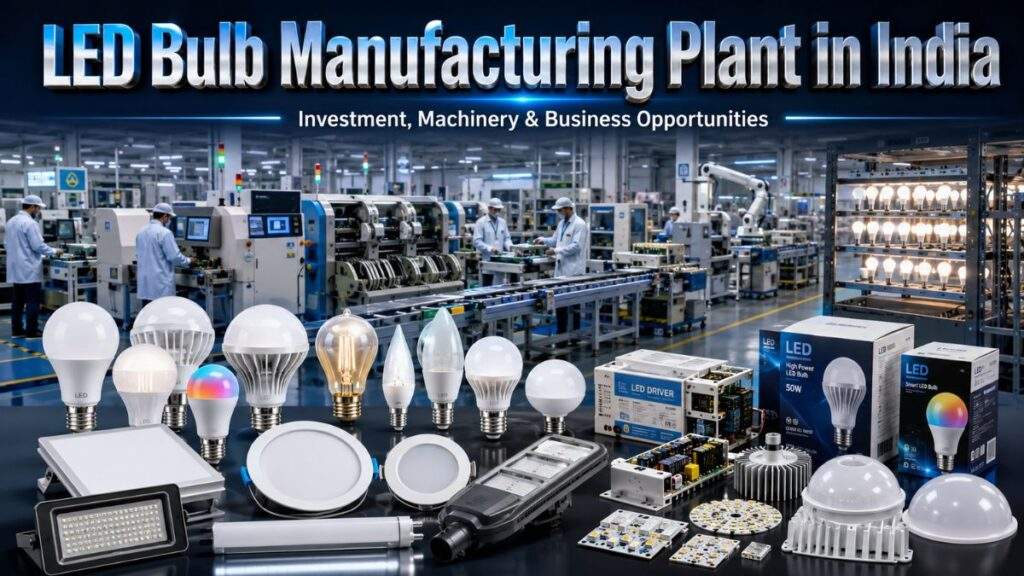
LED Bulb Manufacturing Plant The LED light revolution in India is one of the most successful government initiatives in the field of transitioning from traditional lighting to LED technology, and it offers entrepreneurs an exciting opportunity in the electronics manufacturing business with a Rs.5 Crore LED light manufacturing unit at a sweet spot of high domestic demand, institutional procurement by the government and the emerging export possibilities. Mass LED adoption has been achieved through the UJALA programme and the energy efficiency regulations that have ensured that LED is the standard light for the household, commercial and industrial sectors in the country under the leadership of the Bureau of Energy Efficiency (BEE), Ministry of Power. Beyond just replacing bulbs, India’s LED market is still expanding with the introduction of smart lighting, horticulture LED, and solar powered LED systems. Why LED Manufacturing Is a Strategic Opportunity in India The LED lighting market in India has witnessed tremendous growth over the years, driven by the increasing push for energy conservation, declining LED lighting chip prices, and government regulations. Institutional demand alone saw the UJALA scheme roll out over 36 crores of LED bulbs at subsidised rates in India. Commercial and Industrial LED use – factories, office buildings, hospitals, and street lighting – is also expanding with energy cost savings being measurable and payback periods generally ranging from 12-24 months. The Ministry of New and Renewable Energy also supports solar LED systems for rural electrification, thus establishing a renewable energy market for LED. Based on the BIS certification, an LED manufacturer from India will be able to sell LED products to the private sector and institutions across India. Get Detailed Project Report (DPR): LED Light Bulbs, Tubes, Fittings, Spotlights and Wall Lights Projects Government Policies Supporting LED Manufacturing LED products are certified under the star rating programme by BEE under the Ministry of Power and procurement preference is given to LED products that are BEE rated in government procurement. The Government e-Marketplace (GeM) portal provides access to Government as one of the biggest institutional buyers to MSME manufacturers registered on GeM. The technology upgradation funds under MSME Ministry are used to acquire the modern LED assembly and testing machine. LED Lamps sold in India must have BIS (Bureau of Indian Standards) certification as per IS 16102 and can be checked from BIS portal. There is a PLI scheme for electronics manufacturing that offers production subsidy to LED manufacturing companies that meet its criteria. Top Business Ideas in LED Manufacturing at Rs.5 Crore Scale LED Bulb and Tube Light Assembly for Domestic Market and GeM A semi-automated LED assembly machine with an investment of Rs.5 Crore can produce 10,000 to 30,000 LED bulbs as well as tube lights per day for imports of LED chips and drivers and domestically manufactured LED housing and heat sink. The main quality marks for the domestic market sale are IS 16102 certified by BIS. The GeM portal enables MSME manufacturers to directly sell to Government departments, Municipal corporations and public sector units, making it one of the biggest LED buyers in India. The municipal street lighting, government building lighting and school and hospital LED projects are big tender categories for institutions in which MSME manufacturers having GeM registration and BIS certification compete directly with each other. Agricultural and Horticulture LED Grow Lights The use of plant growth LEDs is a niche segment of LED manufacturing that is growing rapidly, and is tailored for greenhouse horticulture, vertical farming, and controlled environment agriculture. The growing protected agriculture in India, poly-house and vertical farming by urban farms place demand on the light spectrum specific grow lights, which stimulate plant growth and electricity usage compared to conventional horticulture lighting. The cost of grow lights per watt is 3–5 times as much as normal LED bulbs, which results in a better revenue per unit and margin profile. There is also good export potential to horticulture markets in South East Asia and Europe for this product category. Solar-Integrated LED Street Lighting and Garden Lighting The use of solar powered LED street lights, including solar panel, battery storage, LED luminaire and intelligent controller, is required in rural electrification projects, border area lighting and off-grid community lighting. There is a significant budget for solar LED street-lighting procurement in the MNRE and the state electricity boards. One manufacturing unit with the capacity of Rs.5 Crore per set of solar LED integrated systems can apply for state/central government tenders for rural street lighting. The average unit price is also much higher than the price of a retail LED bulb, which ranges from Rs.50 to Rs.200, to the cost of a solar LED street light system ranging from Rs.8,000 to Rs.25,000 per system, which greatly enhances the revenue per order. Get Detailed Insights from This Book: Solar PV Power and Solar Products Handbook Import-Export Opportunity Analysis India presently imports a substantial quantity of LED chips (epitaxial wafers) and LED drivers mainly from China, Taiwan and South Korea. The PLI scheme by the government for electronics manufacturing and global buyers’ China Plus One policy are providing opportunities for Indian LED manufacturers to increase the supply of chips and drivers from domestic manufacturers. Indian LED manufacturers are price competitive and quality as compared with the markets of Africa, South Asian and Middle East region of the world. The DGFT registers LED product exporters for RoDTEP benefits. Other LED export market development is through export promotion of electronics through APEDA equivalent, in the form of Electronics and Computer Software Export Promotion Council (ESC). Indian MSME Success Stories in LED Manufacturing Syska LED: Building India’s Largest LED Brand The Rajesh and Govind Uttam Chandani of the Syska Group developed the India’s most recognised LED lighting brand, choosing to specialise entirely in LED as India began its energy transition from a small electronics company. Its aggressive distribution strategy – that is, introducing Syska LED products in all segments of the Indian retail from modern trade to kirana stores – gave the company national visibility,
How to Build Hospital in India with Up to 60% Government Funding
Hospital business in India India has a shortfall of more than 6 lakh hospital beds to meet the WHO recommended norms, and the government has put a number of financial instruments in place to address this shortfall — many of which the majority of entrepreneurs are unaware of. When the project is structured properly, the government can provide Rs.25–30 Crore to the hospital through the scheme of Viability Gap Fund (VGF) under the State Government, National Health Mission (NHM) capital funding, Ayushman Bharat Health Infrastructure Mission (AB-HIM) grants, and NABARD concessional long-term loan. These are ideas for businesses in healthcare that are both commercial and directly hit a public national health problem that’s being actively pursued by the government with allocated resources. Why India Urgently Needs Private Hospital Investment India has an average of 0.55 hospital beds per 1,000 individuals, which is significantly below the WHO recommendation of 3 beds/1,000 people. The gap is particularly acute in Tier-2 and Tier-3 cities where the capacity of the public health system is not being utilized optimally. More than 60% of healthcare expenditure is already on the private side in India, clearly showing that patients opt for private care when it’s available and affordable. The Ayushman Bharat PMJAY scheme has opened up insurance coverage for more than 55 crore beneficiaries, leading to assured inflows of patients into empanelled private hospitals provided the hospitals are available in the right places. Health entrepreneurs can use the district level health infrastructure gap data published by the Ministry of Health and Family Welfare to help them choose project locations. Get Detailed Insights from This Book: Investment Opportunities In Hospitality, Medical, Entertainment, Ware Housing & Real Estate Projects Government Schemes That Can Fund Up to 60% of Your Hospital A number of complementary Government schemes are available to be rolled up to finance a substantial part of a private hospital project. The National Health Mission (NHM) PPP component is in charge of funding the initiatives of private hospitals in low-density regions. Different states like Uttar Pradesh, Bihar, Rajasthan, Jharkhand and Odisha provide private hospitals with Viability Gap Funding (VGF), which is a grant of between 20-35% of the project cost that is provided for hospitals investing in district towns where healthcare facilities are inadequate. NABARD offers concessional long term loan facilities at lower interest rates in rural and semi urban areas for healthcare. Thousands of crores have been allocated under the Ayushman Bharat Health Infrastructure Mission (PM-ABHIM) for development of Healthcare Infrastructure with a provision for participation of the private sector. Having VGF grants and concessional NABARD loans along with operational revenue from PMJAY gives rise to a project financial model which makes the entrepreneur’s net capital requirement much less. Top Business Ideas Within the Hospital Development Model 100-Bed District Hospital with Surgical and Emergency Focus Most of the health needs of a population of 10 to 30 lakh people in a district is met by a 100-bed district hospital having a general surgery OT, orthopaedic surgery capability, obstetrics and gynaecology, ICU, NICU and 24×7 emergency services. After considering the state VGF, NABARD debt, the entrepreneur’s investment in equity comes to Rs.18-20 Crore. First Quality Milestone, get NABH Accreditation – mandatory for empanelment with PMJAY and CGHS and will ensure institutional revenue. Fill online application form on the National Health Authority website for empanelment under PMJAY. PPP Model Hospital Under NHM or State Government Concession The most capital efficient model is the Public-Private Partnership (PPP) model where a private operator constructs and operates a hospital in a public land, on the condition that the government will provide him a minimum patient volume or a subsidy for the operation of the hospital. The NHM has issued PPP guidelines that outline the mechanisms of engagement between the NHM and State health departments for district level hospital PPP arrangements. The State Governments in Tamil Nadu, Karnataka, Andhra Pradesh and Maharashtra have well established PPP hospital frameworks. In some state models, the government constructs the building and pays for the equipment and the private operator operates it and delivers clinical services — eliminating the need for a significant investment from the entrepreneur. Get Detailed Project Report (DPR): Healthcare Business Ideas in the Medical Sector Speciality Hospital Targeting One High-Volume Surgical Procedure Single specialty hospitals (cardiac, orthopaedics, ophthalmology or oncology) have better clinical outcomes and financial performance than generalist hospitals for the same size. A 50-bed cardiac care hospital in Tier-2 city can achieve the same revenue as 100 bed generalist hospital given the higher complexity of the procedures, which command premium rates of PMJAY packages. Specialisation decreases the diversity of equipment needed, leading to more efficient capital deployment. Talk to SECI equivalent at NABH for their advice on the speciality hospital accreditation pathways that lead to premium insurance rates. Import-Export Opportunities in Hospital Development There is a high level of import activity because of the development of hospitals — medical equipment’s from Siemens, GE, Philips and Fujifilm. CDSCO portal can be used to verify duty concession on medicals which are lifesaving medicines. The medical tourism industry is a foreign exchange generation sector in India which is growing day by day. A modern, NABH certified well equipped district hospital can be developed to attract medical tourists from Bangladesh, Nepal, Myanmar and the Gulf countries for its quality, affordable care. The Ministry of Tourism has a medical tourism policy that offers marketing assistance for the facilities approved. Indian MSME Success Stories in Hospital Development Narayana Health — Making Super-Speciality Care Affordable at Scale Located in Bengaluru, founded by Dr. Devi Prasad Shetty, Narayana Health challenged Indian healthcare by bringing to light the fact that cardiac surgery, when carried out in a high-volume, processes-driven fashion, can be a major cost-effective and yet world-class experience for every patient. Dr. Shetty’s shrewdness, that high volume would bring cost efficiency as well as improvement of quality, resulted in hospitals being constructed in areas where they were most needed. Narayana Health’s patient volume model was defined around the
Electrical & Electronics Manufacturing: 4 Business Ideas from Copper Wire to Lithium Batteries
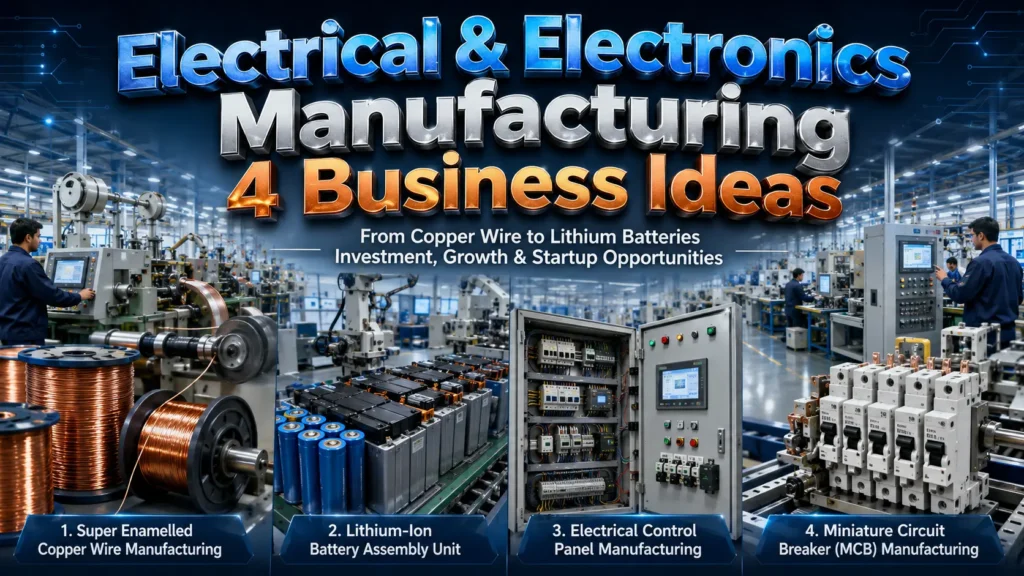
Electrical & Electronics Manufacturing Business For those who are looking around for business ideas with a long-term horizon, it is a good idea to take a second look at India’s electrical and electronics manufacturing base, because it is one of the most significant changes that the industry is currently undergoing. The reasons are not philosophical. Wiring and protection devices are required on every new residential tower; batteries packs are required for every electric two-wheeler, control panels are required for every industrial shed and every motor rewinding shop requires enamelled copper wire. This article outlines four real manufacturing opportunities – Super Enamelled Copper Wire, Lithium-Ion Battery Assembly, Electrical Control Panels, and Miniature Circuit Breakers (MCBs) – in a way that a consultant would approach when considering a project for a first-generation entrepreneur with practical, feasibility-oriented logic. Why This Sector Deserves Attention Right Now It is unusual and noteworthy that three separate demand curves are converging at the same time. Construction and real estate activities are driving up the demand for control panels and MCBs as distribution boards and protective switchgear are essential for any commercial or residential project prior to its use. At the same time, the electric mobility transition is generating a completely new supply chain for components: lithium-ion cells and battery packs—an industry that existed only in small quantities a decade ago. But there is an undercurrent to these, the simple enamelled copper wire, which is used in almost every motor, transformer and generator the country produces and whose consumption goes hand-in-hand with industrial growth and investment in infrastructure, rather than any one trend. The mix is appealing from a profitability perspective on a few reasons: It covers both established, cash-generating businesses (copper wire and MCBs) and growth businesses that offer more opportunity for new entrants (battery assembly and control panels for niche applications). A consultant who reviews this area will consider raw material cost pass-through, as well as the trust of the brand in products where safety is a critical issue, and the ability to service the OEM client on a recurring basis — and all three points would find electrical manufacturing to be reasonably defensible once a unit has proven themselves. There is another export aspect: Indian products such as wiring, panels and battery packs are increasingly selling in the African, Middle East and South Asian markets, where Indian products that are price competitive and reasonably certified are well-positioned against higher-priced options. Related Article: How to Start an Electrical Manufacturing Business in India – Profitable Ideas & Complete Guide Government Policies and Incentives Supporting New Entrants Entrepreneurs may not be aware but policy support for this sector is more widespread than they imagine and can substantially alter the economics of a project if used correctly. The Production Linked Incentive (PLI) for Advanced Chemistry Cell (ACC) battery storage has secured significant investments in large-scale Lithium-Ion Batteries (LIB) manufacturing in India, while the smaller battery pack assembly units indirectly benefit from the cell ecosystem being nurtured by the PLI scheme. The PLI scheme for White Goods and the overall PLI for electronics manufacturing similarly provide benefits for component suppliers that supply to the larger assembly business, such as control panel and switchgear component suppliers. On the borrower’s side, there is a credit guarantee scheme and the assistance of the Ministry of MSME for collateral-free loans provided to a first-time entrepreneur, which makes it a lot easier to avail the working capital without pledging family property and availability of interest subvention schemes that reduce the cost of the term loans for plant and machinery. The FAME and then the EV linked incentive program by the government of the country known as Ministry of Heavy Industries has benefited indirectly the demand for Lithium-ion battery assembly by providing subsidy to end-vehicles, which trickles down to the supplier of components. State-level industrial policies, especially in the states that actively promote the electronics and EV component industries, often add on power tariff concessions, stamp duty exemption, and capital subsidy. Eligibility details are updated periodically; therefore, readers can check scheme details directly on the Ministry of MSME portal for authentic and updated scheme details. Multiple Business Ideas for Startups in This Sector 1. Super Enamelled Copper Wire Manufacturing Super enamelled copper wire is the “plain vanilla” of the electrical motor and transformer industry, and this is why it’s a viable business venture for a serious entrepreneur and not a hobby. The product consists of copper conductor covered with a number of layers of enamel (polyester, polyesterimide or polyamide-imide) which are applied to the conductor by a continuous line of wire-drawing and enamelling, and then baked in ovens to the dielectric strength and thermal class desired by applying the end-user. The range of real-world applications is vast, including domestic and industrial motors, transformers, generators, relays, solenoids and household appliances, and is far from seasonal like some customer types. An important manufacturing tip is that most quality complaints come at the enamelling oven stage of the process and not at the wire drawing stage, so it’s important to budget enough for a sure-fire multiple pass enamelling machine, not the wire drawing. One of the key raw materials, which is subject to price volatility, is Copper wire (rod) used in electrolytic production and Enamel varnish used for coating the wires, which are sold to customers on a formula basis. Motor rewinding industry, OEM transformer manufacturers, fan and pump industry, the motor rewinding industry is a major consumer of copper wire and the fan and pump industry is a major user of copper wire, and the motor rewinding industry is a major demand driver for copper wire, and because copper wire is an actual input and not discretionary, the revenue can be tracked fairly closely with the industrial production data. Processing efficiency and working capital discipline are most important factors affecting profitability in this category, as copper content is significant in determining the overall cost, and a well-run processing unit with a consistent quality certification can benefit from
Top 16 Manufacturing Business Ideas in Jharkhand for ₹15 Crore+ Investment
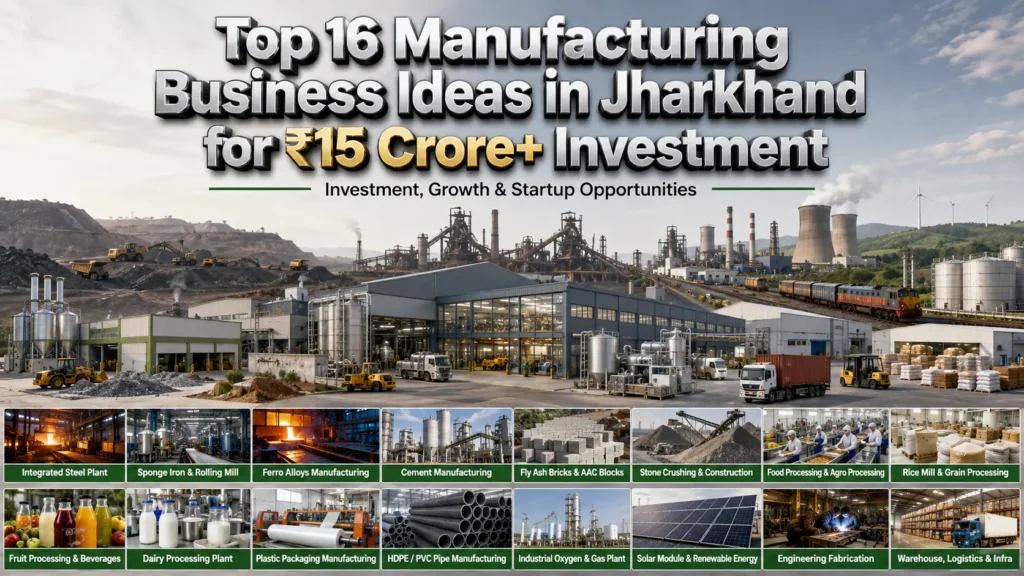
Manufacturing Business Ideas in Jharkhand Why Jharkhand Deserves More Investor Attention If investors are interested in finding big business opportunities in developing states in India, Jharkhand is not one of them. That’s a big mistake. With a young and growing labour force, and an ambitious state industrial policy, Jharkhand is one of the underutilized industrial opportunities in India today, with a rich mineral belt in Asia. The state has rich coal, iron ore, copper, mica deposits which form a significant percentage of the country’s total resources of these minerals. However, it has a very small share of manufactured goods and processed exports. Smart capital should be flowing in the opposite direction, to that gap. Investors with Rs.15 crore or more can buy the shares at an entry point that is exceptionally good. The Jharkhand Industrial and Investment Promotion Policy provides competitive land allocation, power tariff concession, tax benefits, especially for large scale manufacturing. Further, the country-level schemes initiated by the Ministry of MSME, DPIIT and Make in India further enhance the investment proposition. This article presents 16 judicious and economically viable business initiatives that meet the requirement of the availability of raw materials, have high domestic demand and also have a good export demand. Why Jharkhand Is the Right State for Large-Scale Industry The industrial appeal of Jharkhand is more than just its mineral resources. The state possesses over 40% of forest area, has good water resources in the shape of river systems like Damodar, Subarnarekha and Barakar and a developing network of national highways and railway lines linking it to the major port cities. This geographical advantage allows logistics costs to be kept to a minimum, which is a factor that is often a limiting factor for inland manufacturing companies. Moreover, the state of Jharkhand has a well-educated technical staff, primarily due to the presence of institutions such as the Indian Institute of Technology, Dhanbad (ISM), NIT Jamshedpur and Birsa Institute of Technology. Labour cost is much less than it is in Gujarat or Maharashtra and this directly helps to make the unit economic of capital-intensive projects. The state government has also simplified the single window system for clearance by introducing e-Nivesh portal, which was not as cumbersome as in previous years. Get Detailed Project Report (DPR): Jharkhand Investment & Entrepreneurship Guide Key Sectors Driving Industrial Growth Sectors that have seen the most promising growth patterns in Jharkhand are steel and metal fabrication, cement and construction materials, agro-processing, pharmaceuticals, power generation and electronics manufacturing. Besides this, State is becoming a potential place to establish food parks, textile industries and chemical industries. The Invest Jharkhand Portal is the official platform for new industrial project facilitation in Jharkhand and investors can keep track of the active investment opportunities and sector-wise data. Government Policies and Incentives Supporting New Businesses Multiple layers of policy support benefit investors in Jharkhand who intend to undertake large projects. Industrial area development authority (JIADA) gives industrial plots at subsidised rates in the industrial zone, capital investment subsidy, electricity duty exemption for 5–10 years, stamp duty refund and employment generation subsidy. JIADA is the first window for allocation of industrial land in the state. The Chief Minister’s Office, Jharkhand has actively promoted investor summits and fast-track clearance process of projects involving investment of Rs.50 crore and above. This political commitment at the highest level helps to minimise ground delays to the project than what would occur if industrial facilation is a bureaucratic formality in states. Central Government Schemes Worth Leveraging The national level includes the Production Linked Incentive (PLI) Scheme, which is applicable to industries such as specialty steel, food processing, pharmaceuticals, electronics, etc., which are considered viable in Jharkhand. CGTMSE is a scheme that provides project finance for MSMEs. The Ministry of MSME promotes cluster manufacturing through SFURTI scheme. A ready infrastructure plug is provided to the textile investors by the PM MITRA park scheme. Investors should proactively seek assistance from DPIIT (Department for Promotion of Industry and Internal Trade) on matters relating to central incentives and new policies. 16 Large-Scale Business Ideas in Jharkhand (Rs.15 Crore+ Investment) 1. Integrated Steel Re-Rolling Mill Steel re-rolling is perhaps the most natural business idea which can be implemented on a large scale in Jharkhand. The State is flanked by some of the richest iron ore and coking coal belts of India. An integrated re-rolling mill processing billet into TMT bars, sections and wire rods can cater to the demand of construction industry which uses explosions throughout the eastern and central parts of India. The investments of the project, which fall in the range of Rs.20 – Rs.50 crore, provide strong returns as the raw material procurement cost is structurally lower in this range as compared to any other state in India. Domestic demand for TMT bars has been steadily increasing, fuelled by infrastructure investment within the National Infrastructure Pipeline (NIP). Besides, there is also additional market access owing to its proximity to Odisha and West Bengal. Backward integration into sponge iron should be considered by investors to improve their margin profile even further. Improvements in power sector were a challenge in Jharkhand for industrial areas, but now it’s better. 2. CemenManufacturing t Plant Cement is one of the most feasible business ideas in Jharkhand as it has a good availability of limestone in Palamu district, of Hazaribagh and Latehar districts. The margin profile of a mid-scale cement plant is very strong in eastern India where supply has always been weak and the investment requirements are Rs.30–Rs.80 crores per day. Eastern corridor continues to be one of the most cement-starved ones in India. This deficit is expanding, not contracting, in light of the central government’s infrastructure push, which ranges from roads, housing, to bridges. Moreover, the housing schemes of the state government, the Mukhyamantri Awas Yojana, also provide a captive consumption channel. Investors setting up regional cement companies in Jharkhand are likely to create substantial pricing power against the national cement companies, which have to deal with higher logistics
Madhuban Bapudham, Ghaziabad: NCR’s Next Industrial Powerhouse and 6 High-Potential Manufacturing Business Ideas for MSME Entrepreneurs
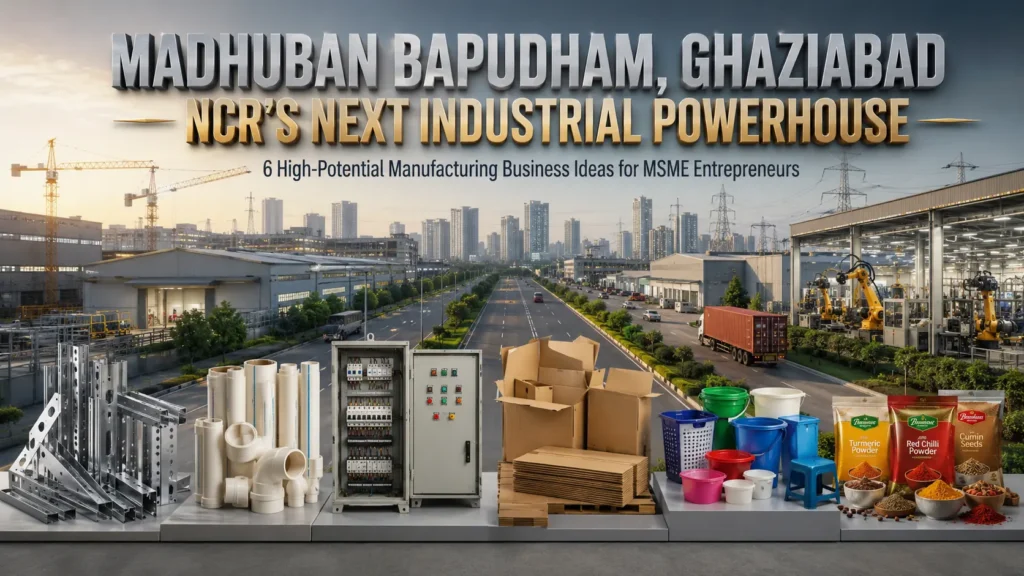
Madhuban Bapudham Industrial Hub One News Report That Could Reshape Your Business Direction Recently, the Navbharat Times published a report that has immense ramifications for not just entrepreneurs but MSMEs in the National Capital Region. As per this report in Navbharat Times, the Madhuban Bapudham area of Ghaziabad is slated to become a significant new industrial location with more than 200 factories in the area and the plan to provide jobs to over 5000 youths. It’s no ordinary real estate story. It’s a market shift signal, a signal that will create wide business opportunities for entrepreneurs, suppliers and service providers in coming 3-5 years. Ghaziabad has been one of the significant industrial centres of NCR for long. The key areas of the corridor has been manufacturing activity for decades at Sahibabad Industrial Area, Loni and Modinagar. Today, Madhuban Bapudham is becoming a new industrial pole and entrepreneurs who grasp this development early will be in key position to steer their sectors of the future. The development is particularly significant given the direct access via the Delhi-Meerut Express Highway, connection to the Duhai Namo Bharat RRTS station, and planned infrastructure growth by the Ghaziabad Development Authority. These combine to give conditions which are not usual for most emerging industrial zones. The question is not if this area will be growing, it is only if you will be part of that growth. What the Recent Navbharat Times Report Actually Signals Navbharat Times reports that Ghaziabad Development Authority (GDA) has formally given its approval to Madhuban Bapudham as an industrial area. The main facts of this development are: 200+ factory units to be systematically established 5,000+ direct, youth employment positions A total of 1,200+ hectares of integrated mixed-use township planning. 5 km from Duhai RRTS (Namo Bharat) station — direct rail connectivity with Delhi and Meerut. GDA-supported modern infrastructure: underground electrical power lines, cycle tracks, wide internal roads and central water supply What does this mean to entrepreneurs? When 200+ factories come together into one zone, a full-service economy develops around them. Canteens, logistics operators, safety equipment companies, staffing agencies and warehousing companies all have immediate demand. Navbharat Times’ report is the first official announcement in public and early movers often end up securing the biggest market share. Related Article: Ghaziabad’s ₹500 Crore Industrial Push: 6 Manufacturing Units Smart Entrepreneurs Are Setting Up in Madhuban Bapudham Why This Industrial Belt Is Growing — 5 Solid Reasons 1. Land Scarcity in Core NCR Creates a Ghaziabad Opportunity Small and medium entrepreneurs have found land in Delhi and Noida for their industrial purpose far too costly. With government support from the Madhuban Bapudham, it has started offering structured plots at fair prices without any party disputes and speculative pricing. It is very important for the first-time factory owners. 2. RRTS Connectivity Is a Genuine Game-Changer It takes less than 30-40 minutes to reach Delhi from Meerut from Duhai Namo Bharat RRTS Station, which is 1.5 km away from the township. Widely distributed commuters who can count on commuting. The expressway and rail access is an advantage for freight movement, and this is something that older industrialized areas in the region don’t have. 3. UP MSME Policy Offers Tangible Financial Benefits The Uttar Pradesh Government has announced the MSME policy that offers tangible financial support to industrial units in Ghaziabad with 50% stamp duty exemption, EPF reimbursement for 5 years, etc. These incentives are detailed in Invest UP’s official MSME page. These aren’t promises to be made, they’re active policy provisions. 4. Make in India and PLI Schemes Are Fuelling Manufacturing Demand Government of India’s Production Linked Incentive (PLI) scheme is encouraging massive investment in Indian manufacturing. Such national policies are directly impacting new industrial areas such as Madhuban Bapudham, which are welcoming anchor manufacturers, and thereafter there is demand for 40 or 50 MSMEs. 5. Five Thousand Jobs Mean Five Thousand Consuming Households Secondary spending is generated by 5000 new jobs in a zone. Demand surges in the housing, food, transport, healthcare, retail and personal services sectors. The business opportunity at Madhuban Bapudham is therefore not restricted to the industrial supply, it’s extended to the services of the working population. Government Schemes and Incentives That Will Support Your Business The combination of central and state government programmes provides a robust support program for MSME entrepreneurs entering new industrial areas. Some of the important schemes available on the official portal of the MSME Ministry are: PMEGP (Prime Minister’s Employment Generation Programme) — 25-35% capital subsidy to set up a new manufacturing unit This is government-initiated free online MSME registration for Udyam registration and availed government benefits and priority access. Collateral-free loans available to eligible MSME entrepreneurs up to ₹2 crore through CGTMSE. In Ghaziabad, stamp duty exemption has been introduced under UP MSME Policy, which will be 50% for 5 years, and EPF reimbursement will be 100% for 5 years. The PLI Scheme, which is a production linked incentive scheme for priority manufacturing sectors, was established. Production linked incentive scheme for priority manufacturing sectors, PLI Scheme was created. As per Startup India official website, registering on the platform gives a lot of advantages to the startups including tax exemption, a curated network of funding, a mentorship ecosystem, etc. which are directly relevant to the entrepreneurs launching their startups in emerging industrial zones. 6 High-Potential Manufacturing Business Ideas for Madhuban Bapudham Considering the industrial DNA present in Ghaziabad and the type of anchor factories that are most likely to establish in Madhuban Bapudham, six manufacturing units have been identified, which a first generation MSME entrepreneur can easily establish in this zone. Every idea is based on an existing demand, there are government schemes available, and it is kept at the MSME entry. These are viable from day one with reported Navbharat Times 200+ factory ecosystem, as buyers will be just a next-door neighbour! 1. Sheet Metal Fabrication Unit (Precision Components for Engineering Factories) All engineering, auto-ancillary and electrical equipment manufacturing companies in the zone will require