
How to Start Manufacturing Business of Traction Motors for E Vehicles
Electromotive vehicles (e-vehicles) are rapidly growing. The global e-vehicle market is expected to reach $170 Billion by 2021. The growth of e-vehicles has led to demand for traction motors, which are used in electric vehicles for acceleration and deceleration. In this blog post, we will learn about the various types of traction motors and the manufacturing process involved in making a traction motor. No new technology or idea becomes successful unless it is simplified to such an extent that anyone with minimal knowledge of it can understand it and implement it in their own life so easily that they’ll want to do it again and again. And, that’s where most new ideas fail miserably! Why are Traction Motors being sought after? Traction motors are being sought after for their ability to provide high torque at low speeds, which is ideal for electric vehicles (EVs). In addition, traction motors are more efficient than internal combustion engines (ICEs), and generate less heat and noise. As a result, manufacturing businesses of traction motors for EVs are being established in order to meet the growing demand for EVs. Businesses of traction motors for EVs are being established in order to meet the growing demand for EVs. Key Considerations before beginning business in Traction Motors: The electric vehicle market is rapidly growing, driving increased demand for traction motors to power these vehicles. If you are considering starting a business manufacturing traction motors for electric vehicles, there are a few key considerations to keep in mind. Keep these key points in mind to successfully start manufacturing electric vehicle traction motors. Types of Traction Motors for E Vehicles As we learnt above, a traction motor is an electric motor used in e-vehicles for driving the wheels. It converts electrical energy into mechanical energy to produce shaft torque and rotary motion for driving the wheels. The amount of electrical energy required by a motor depends on the amount of mechanical energy required by it. The following types of traction motors are used in e-vehicles: Manufacturing Process in Detail The manufacturing process begins with procuring raw materials and designing the traction motor. After this, the raw materials are processed to create components like coils, core, and stator. The assembly process involves mounting the components together to form a complete motor. Finally, quality testing is carried out to ensure that the motor is ready for use in e-vehicles. The manufacturing process of AC induction motors and DC brushless motors is quite similar. However, the production of permanent magnet DC brushless motors differs from that of synchronous DC brushless motors. Additionally, the manufacturing of AC induction motors follows a consistent process across different types. The Competitive Landscape Manufacturing Business of Traction Motors for E Vehicles The automotive industry is rapidly shifting from combustion engines to electric vehicles. A key component of electric vehicles is the traction motor, which is responsible for providing power to the wheels. As the demand for electric vehicles grows, there is an opportunity for businesses to enter the market for manufacturing traction motors for e-vehicles. The competitive landscape for manufacturing traction motors is fairly fragmented, with a number of small and medium-sized businesses competing for market share. However, there are a few key players that have a dominant presence in the market. These companies have the economies of scale and technology expertise needed to mass-produce high-quality motors. To be successful in the market for manufacturing traction motors for e-vehicles, businesses need to have a strong understanding of the competitive landscape and the key players within it. They also need to have the ability to mass-produce high-quality motors at a competitive price. Conclusion The traction motor is an important part of an e-vehicle. A motor converts electrical energy into mechanical energy to produce shaft torque and rotary motion for driving the wheels of an e-vehicle. AC induction motors and DC brushless motors are commonly used in e-vehicles. The manufacturing process begins with the procurement of raw materials and ends with quality testing. Visit the page Select and Choose the Right Business Startup for You for sorting out the questions arising in your mind before starting any business and know which start-up you can plan. We, at NPCS, endeavor to make business selection a simple and convenient step for any entrepreneur/startup. Our expert team, by capitalizing on its dexterity and decade’s long experience in the field, has created a list of profitable ventures for entrepreneurs who wish to diversify or venture. The list so mentioned is updated regularly to give you a regular dose of new emerging opportunities. NPCS The Niir Project Consultancy Services NPCS offers a project report on starting a manufacturing business of traction motors for electric vehicles. The report provides detailed project feasibility analysis including market survey, investment opportunities, project economics, and return on investment. The report covers all the aspects of the manufacturing process of traction motors for E vehicles including plant & machinery requirements, raw material requirements, land & building requirements, and labor & staff requirements. It also provides a detailed project financial analysis including the cost of setting up the manufacturing unit, working capital requirements, and return on investment. The report is a must-read for entrepreneurs, investors, and business professionals who are looking to start or invest in a manufacturing business of traction motors for E vehicles. Contact Us
Benefits of Electric Vehicles
The benefits of electric vehicles are transforming the future of the global automobile industry. As concerns about climate change and fossil fuel dependency rise, the benefits of electric vehicles position them as a practical and sustainable solution for modern transportation. From reducing environmental pollution to offering lower operational costs and energy efficiency, EVs are reshaping how we commute. With increasing government support, expanding infrastructure, and groundbreaking innovations in battery technology, electric vehicles are no longer just alternatives—they are becoming the preferred mode of transport for the future. Understanding these advantages helps individuals and businesses make informed decisions toward a cleaner and smarter mobility solution. Comprehensive Overview of the Benefits of Electric Vehicles Electric vehicles offer a wide array of benefits that extend beyond environmental concerns. Their quiet operation, efficient energy use, and low ownership costs make them increasingly attractive to both private users and businesses. Let’s explore these benefits in greater detail. Environmental Advantages of Electric Vehicles 1. Zero Tailpipe Emissions One of the most prominent advantages of electric vehicles is the complete absence of tailpipe emissions. Traditional vehicles emit carbon dioxide, nitrogen oxides, and particulate matter—all of which contribute to air pollution and global warming. EVs, on the other hand, operate cleanly, significantly improving air quality in urban areas. 2. Reduction in Greenhouse Gases Even when accounting for the emissions generated during electricity production, EVs produce fewer greenhouse gases than conventional vehicles. As countries transition to renewable energy sources like solar and wind, the environmental benefits of EVs will become even more pronounced. 3. Sustainable Materials and Recycling Modern EV manufacturers are increasingly using sustainable materials such as recycled plastics and renewable resources in their vehicle construction. Moreover, battery recycling programs are evolving to minimize the environmental impact of battery disposal. Visit this Page for More Information:Start a Business in Electric Vehicle Industry Economic Benefits for Consumers 1. Lower Operating Costs Electric vehicles offer significantly lower running costs compared to ICE vehicles. Electricity is cheaper than gasoline or diesel, especially when charged at home. Over time, these savings can amount to thousands of dollars. 2. Reduced Maintenance Expenses With fewer moving parts, EVs require less frequent maintenance. There are no oil changes, fewer brake replacements (thanks to regenerative braking), and minimal transmission issues. This reliability reduces service costs dramatically. 3. Government Incentives and Tax Breaks Many governments provide financial incentives, such as rebates, grants, and tax deductions, to encourage EV adoption. These incentives lower the upfront cost, making electric vehicles more accessible to the average consumer. Related Business Plan: E- Vehicle, E-Rickshaw Performance and Driving Experience 1. Instant Torque and Acceleration EVs deliver immediate torque, providing quick and smooth acceleration. This instant response enhances driving pleasure and ensures a superior performance experience, particularly in city traffic. 2. Quiet and Smooth Ride Electric motors operate silently, offering a quieter cabin environment and reducing noise pollution on roads. This contributes to a more relaxed and enjoyable driving experience. 3. Advanced Technology Integration Most electric vehicles come equipped with cutting-edge technology, including large infotainment displays, autonomous driving features, over-the-air software updates, and connected mobile apps. Read Similar Articles:E- VEHICLE PROJECTS Energy Efficiency and Grid Integration 1. Higher Energy Efficiency EVs convert more than 85% of electrical energy into mechanical power, whereas traditional cars only convert about 20–30% of the energy in gasoline. This makes EVs much more energy-efficient overall. 2. Vehicle-to-Grid (V2G) Capabilities New EV technologies allow for bi-directional energy transfer, enabling vehicles to store energy and feed it back into the grid during peak demand. This supports grid stability and promotes better utilization of renewable energy sources. Click here to send your queries/Contact Us Societal and Urban Development Benefits 1. Reduced Urban Air Pollution By eliminating exhaust emissions, EVs help combat urban smog and respiratory illnesses caused by poor air quality. Cleaner air leads to healthier communities, especially in densely populated cities. 2. Energy Independence Electric vehicles reduce dependence on imported fossil fuels. Countries can shift to domestic renewable energy sources, increasing energy security and reducing geopolitical risks associated with oil supply. 3. Job Creation and Economic Growth The EV industry drives new employment opportunities in battery manufacturing, charging infrastructure development, software engineering, and renewable energy. This growth contributes positively to national economies. Related Feasibility Study Reports:Set Up Electric Vehicles Business | High Demanding Industry EV Charging Infrastructure and Convenience 1. Home Charging Convenience EV owners can install Level 2 chargers at home, allowing them to fully charge overnight. This eliminates the need for frequent fuel station visits and saves time in daily routines. 2. Expanding Public Charging Networks Governments and private enterprises are rapidly expanding public EV charging networks, including fast chargers on highways and urban centers, making long-distance travel with EVs more practical. 3. Integration with Renewable Energy Many EV owners pair their vehicles with solar power systems, allowing them to charge using clean, free energy from the sun. This further reduces operating costs and environmental impact. Read our Books Here: See Our Books & Databases Long-Term Sustainability and Technological Innovations 1. Advancements in Battery Technology The ongoing development of solid-state batteries and lithium-iron phosphate (LFP) cells will lead to longer-lasting, safer, and cheaper EV batteries, enhancing the overall value proposition. 2. Autonomous Driving Integration Electric vehicles are often at the forefront of autonomous driving innovations, combining clean mobility with cutting-edge AI and machine learning technologies. 3. Scalability for Commercial Fleets From delivery vans to buses, fleet electrification is becoming the norm. Businesses enjoy reduced operating costs, simplified maintenance, and enhanced CSR (Corporate Social Responsibility) profiles. Click here to send your queries/Contact Us Conclusion The benefits of electric vehicles extend far beyond environmental conservation. They represent a smarter, cleaner, and more sustainable mode of transportation that benefits individuals, businesses, and society at large. As global adoption increases, supported by policy reforms and technological advancements, EVs will become the backbone of modern mobility. Whether you’re a first-time buyer, fleet manager, or policy planner, embracing electric vehicles today means contributing to a greener and more efficient tomorrow. Reasons for Buying
What the Electric Vehicle Industry Could Look Like In 2030
The Electric Vehicle Industry is poised for transformative growth and innovation by 2030. With increasing global awareness about climate change, rising fuel prices, and government incentives promoting clean energy, electric vehicles (EVs) are rapidly gaining popularity worldwide. By 2030, the Electric Vehicle Industry is expected to dominate the automotive market, with EVs making up a significant percentage of new vehicle sales. Advances in battery technology, charging infrastructure, and renewable energy integration will make EVs more affordable, reliable, and convenient for consumers. Moreover, autonomous driving features and connected vehicle technology will be mainstream, further accelerating the adoption of electric cars, buses, and trucks. Leading automakers and startups alike are investing heavily in research and development to capture this lucrative market. As nations push for stringent emission regulations, the Electric Vehicle Industry will play a critical role in reducing carbon footprints and driving sustainable transportation solutions globally. Key Trends Shaping the Electric Vehicle Industry by 2030 Widespread Adoption and Market Penetration By 2030, electric vehicles are expected to account for more than 50% of new vehicle sales worldwide. Governments in Europe, North America, and parts of Asia have announced plans to phase out internal combustion engine vehicles within the next decade, creating strong demand for EVs. This shift will be supported by expanding charging networks and enhanced battery performance. Visit this Page for More Information: Start a Business in Electric Vehicle Industry Advanced Battery Technology Battery costs have dropped significantly over the past decade, and this trend will continue. The Electric Vehicle Industry will benefit from breakthroughs in solid-state batteries and improved lithium-ion technologies, offering higher energy densities, faster charging times, and longer lifespans. These innovations will reduce the overall cost of EVs and address range anxiety concerns among consumers. Read our Books Here: Handbook on Electric Vehicles Manufacturing Charging Infrastructure Expansion A robust and accessible charging infrastructure is crucial for EV adoption. By 2030, fast-charging stations will be ubiquitous in urban and rural areas, supported by smart grids and renewable energy sources such as solar and wind. Wireless charging technology may also become more common, allowing seamless and convenient energy replenishment for EVs. Related Business Plan: E- Vehicle, E-Rickshaw, Hybrid Electric Scooter, Battery Operated Vehicle Integration of Autonomous and Connected Technologies The future Electric Vehicle Industry will blend electric propulsion with autonomous driving systems and IoT connectivity. Self-driving electric cars and trucks will improve road safety, reduce congestion, and enable new business models like autonomous ride-sharing fleets. Connectivity will allow vehicles to communicate with infrastructure and other cars, optimizing energy use and traffic flow. Environmental and Economic Impact The growth of the Electric Vehicle Industry will significantly reduce greenhouse gas emissions and urban air pollution. Additionally, the demand for EVs will stimulate industries related to battery recycling, renewable energy production, and smart grid technologies. Job creation in manufacturing, software development, and infrastructure maintenance will boost economies worldwide. Read Similar Articles: E- VEHICLE PROJECTS Challenges and Opportunities Despite optimistic projections, the Electric Vehicle Industry faces challenges including raw material sourcing (like lithium and cobalt), battery recycling, and the need for consistent government policies. However, these challenges also present opportunities for innovation in sustainable mining, circular economy practices, and policy advocacy. Related Feasibility Study Reports: Hybrid Electric Scooter Assembling https://www.entrepreneurindia.co/project-identification Conclusion The Electric Vehicle Industry in 2030 will be marked by rapid growth, technological breakthroughs, and widespread consumer acceptance. EVs will no longer be niche products but rather the mainstream choice for personal and commercial transportation. With governments, manufacturers, and consumers aligned on sustainability goals, the industry will help shape a cleaner, smarter, and more efficient mobility future. Staying updated on these trends will be essential for investors, entrepreneurs, and policymakers looking to capitalize on the booming electric vehicle market. Niir Project Consultancy Services (NPCS) helps you to identify a profitable project for investing or diversifying into by throwing light on crucial areas like industry size, the market potential of the product, and reasons for investing in the product. The project reports by NPCS help you understand the viability of the project by disclosing details like machinery required, project costs, and a snapshot of other project financials. Click here to send your queries/Contact Us Reasons for Buying NIIR Report: Our research report helps you get a detailed picture of the industry by providing an overview of the industry along with the market structure and classification. Our report provides market analysis covering major growth driving factors for the industry, the latest market trends and the regulatory framework of the industry. Our Report provides an analysis and in-depth financial comparison of major Players / Competitors. Our Report provides indispensable buyers data with their company financials as well as the contact details, which can be an important tool in identifying the target customers. Our report provides forecasts of key parameters which help to anticipate the industry performance. We use reliable sources of information and databases. And information from such sources is processed by us and included in the report. See More Links: Contact Us
Vision of Electric Vehicle Industry by 2030: A Vibrant and Sustainable Future
Electric Vehicle Industry by 2030: Transforming Global Transportation The Electric Vehicle Industry by 2030 is poised to revolutionize how the world moves, marking a significant shift from traditional fossil-fueled cars to cleaner, sustainable alternatives. Driven by advancements in battery technology, increasing government incentives, and rising consumer awareness about climate change, electric vehicles (EVs) are expected to dominate global transportation in the next decade. According to recent projections, EVs could account for over 50% of new car sales worldwide by 2030, signaling a massive surge in demand and investment. Automakers are ramping up production capacity, governments are setting ambitious emission reduction targets, and infrastructure for charging EVs is rapidly expanding. Together, these factors contribute to a thriving Electric Vehicle Industry by 2030 that promises to reduce greenhouse gas emissions, improve urban air quality, and redefine the future of mobility. Market Growth and Projections The Electric Vehicle Industry by 2030 is forecasted to grow at a compound annual growth rate (CAGR) exceeding 20%, driven by technological innovation and shifting regulatory landscapes. The global EV stock surpassed 16 million in 2023, with China, Europe, and the United States leading the adoption curve. By 2030, estimates suggest the global EV fleet could reach 200 million vehicles, supported by enhanced battery capacities and cost reductions. The International Energy Agency (IEA) emphasizes that declining battery prices—expected to fall below $100 per kilowatt-hour—will make EVs cost-competitive with internal combustion engine vehicles. This affordability will further accelerate consumer adoption, fueling the industry’s rapid expansion. Battery Technology Advancements Central to the Electric Vehicle Industry by 2030 is the evolution of battery technology. Lithium-ion batteries currently dominate EVs but face challenges such as resource limitations and environmental impact. Research and development efforts focus on solid-state batteries, which promise higher energy density, faster charging, and improved safety. Companies are also exploring alternative materials like silicon anodes and cobalt-free cathodes to reduce reliance on scarce metals. Breakthroughs in battery recycling and second-life applications will contribute to a circular economy, enhancing the sustainability of the industry. These innovations are crucial for meeting the growing demand while minimizing the ecological footprint of EV production. Government Policies and Incentives Government policies worldwide play a pivotal role in shaping the Electric Vehicle Industry by 2030. Many countries have announced bans on new gasoline and diesel car sales by 2030 or 2035, aligning with global climate goals under the Paris Agreement. Subsidies, tax rebates, and zero-emission vehicle mandates encourage both manufacturers and consumers to shift towards electric vehicles. Additionally, investments in charging infrastructure and smart grid technology are expanding to support widespread EV usage. For example, the European Union plans to install over 3 million public charging points by 2030, while the U.S. has allocated billions of dollars in infrastructure funding to accelerate EV adoption. These supportive policies create a favorable environment for the industry’s sustainable growth. Challenges and Opportunities Despite the promising outlook, the Electric Vehicle Industry by 2030 faces several challenges. The supply chain for critical minerals like lithium, nickel, and cobalt must scale sustainably to meet demand, posing risks of geopolitical tensions and environmental degradation. The charging infrastructure, especially in rural and developing areas, requires substantial expansion to eliminate range anxiety among users. Additionally, the integration of EVs into existing power grids calls for advanced energy management solutions to balance load and maintain stability. However, these challenges present opportunities for innovation and investment. Companies focusing on battery recycling, renewable energy integration, and fast-charging technologies are set to benefit from the industry’s growth trajectory. Impact on Environment and Economy The Electric Vehicle Industry by 2030 offers significant environmental benefits by reducing carbon emissions and air pollutants associated with traditional vehicles. Transportation contributes nearly 25% of global CO2 emissions, and widespread EV adoption could cut this substantially, aiding the fight against climate change. Economically, the EV sector will create millions of jobs in manufacturing, infrastructure development, and maintenance. It will also stimulate growth in related industries such as renewable energy, battery production, and smart grid technologies. However, to maximize positive outcomes, stakeholders must ensure responsible sourcing of materials and invest in workforce reskilling to transition from conventional automotive sectors. Future Trends Shaping the Industry Looking ahead, the Electric Vehicle Industry by 2030 will be influenced by emerging trends such as vehicle-to-grid (V2G) technology, autonomous driving, and shared mobility. V2G allows EVs to supply energy back to the grid, enhancing energy efficiency and supporting renewable integration. Autonomous EVs are expected to transform urban transportation by improving safety and reducing congestion. Furthermore, the rise of car-sharing and ride-hailing services will encourage the use of electric fleets, lowering overall emissions. These trends, combined with continuous technological improvements and policy support, will redefine how people commute, making the EV industry a cornerstone of future smart cities. Visit this Page for More Information: Start a Business in Electric Vehicle Industry Related Business Plan: E- Vehicle, E-Rickshaw Read Similar Articles: E- VEHICLE PROJECTS Click here to send your queries/Contact Us Related Feasibility Study Reports: Set Up Electric Vehicles Business Read our Books Here: Electric Vehicles Manufacturing Niir Project Consultancy Services (NPCS) provides detailed Project Report, Business Plan for Electric Vehicle Manufacturing Plant, Start-up Ideas, Business Ideas for Entrepreneurs, Start up Business Opportunities, entrepreneurship projects, Successful Business Plan, Industry Trends, Market Research, Manufacturing Process, Machinery, Raw Materials, project report, on various segments. A lot of engineers, project consultant & industrial consultancy firms in India and across the globe have taken benefit from the project report provided by NPCS. You can also get project report and books from the official website of NPCS. Click here to send your queries/Contact Us Reasons for Buying NIIR Report: Our research report helps you get a detailed picture of the industry by providing an overview of the industry along with the market structure and classification. Our report provides market analysis covering major growth driving factors for the industry, the latest market trends and the regulatory framework of the industry. Our Report provides an analysis and in-depth financial comparison of major Players / Competitors. Our Report provides indispensable buyers
The Bright Future of Electric Vehicles
The Bright Future of Electric Vehicles is shaping the global transportation landscape like never before. As concerns over climate change intensify, electric vehicles (EVs) are emerging as the sustainable alternative to traditional gasoline-powered cars. Advancements in battery technology, decreasing costs, and expanding infrastructure are driving consumer adoption at an unprecedented pace. Governments worldwide are implementing supportive policies and ambitious targets to accelerate the transition to electric mobility. The Bright Future of Electric Vehicles is not just about cleaner air and reduced carbon emissions—it also promises economic growth, innovation, and new job opportunities. By 2030, EVs are expected to dominate new vehicle sales, making them a cornerstone of future smart cities and sustainable living. This transformation will redefine how we think about transportation and energy use globally. Why the Bright Future of Electric Vehicles is Inevitable The Bright Future of Electric Vehicles is backed by rapid technological progress, policy support, and changing consumer preferences. Falling battery costs and longer ranges are making EVs increasingly accessible. Meanwhile, governments are phasing out fossil-fuel vehicles and investing heavily in charging infrastructure, paving the way for widespread adoption. Visit this Page for More Information: Start a Business in Electric Vehicle Industry Market Growth and Sales Trends The market for electric vehicles is experiencing explosive growth. In 2023 alone, global EV sales surpassed 10 million units, a number projected to more than double by 2030. China leads the pack as the largest EV market, followed by Europe and North America. As battery prices decline, the upfront cost of EVs is becoming competitive with traditional vehicles, helping drive adoption across various income groups. The Bright Future of Electric Vehicles is also supported by automakers launching hundreds of new electric models to meet demand, signaling a strong industry commitment. Related Business Plan: E- Vehicle, E-Rickshaw Breakthroughs in Battery Technology Battery innovation is central to the Bright Future of Electric Vehicles. Lithium-ion batteries continue to improve in energy density and charging speed, while research into solid-state batteries promises safer, longer-lasting power sources. These advancements will extend driving ranges and shorten charging times, addressing two of the biggest consumer concerns. Additionally, new recycling technologies are being developed to reclaim valuable materials, making EVs more sustainable. This ongoing evolution of battery technology ensures that the Bright Future of Electric Vehicles will be both efficient and environmentally friendly. Read Similar Articles: E- VEHICLE PROJECTS Government Incentives and Policy Initiatives Government policies around the world are accelerating the shift toward electric vehicles, underpinning the Bright Future of Electric Vehicles. Many countries have announced plans to ban new internal combustion engine vehicle sales by 2030 or 2035. Incentives such as tax credits, subsidies, and rebates reduce purchase costs for consumers. Moreover, investments in charging infrastructure are expanding rapidly, with millions of public charging stations planned worldwide by 2030. These policies not only encourage consumers to switch to EVs but also push manufacturers to accelerate electrification in their fleets. https://www.entrepreneurindia.co/project-identification Challenges on the Road Ahead Despite the promising outlook, the Bright Future of Electric Vehicles faces several hurdles. Supply chain issues for critical minerals like lithium and cobalt could slow production growth if not managed sustainably. The availability and convenience of charging infrastructure remain inconsistent, particularly in rural or underdeveloped areas. Furthermore, integrating large numbers of EVs into electrical grids requires smart energy management to prevent overloads. Public awareness and education about EV benefits and usage also need improvement. Addressing these challenges is vital to realizing the full potential of the Bright Future of Electric Vehicles. Related Feasibility Study Reports: E- Vehicle, E-Rickshaw Environmental and Economic Benefits The environmental advantages of the Bright Future of Electric Vehicles are substantial. EVs produce zero tailpipe emissions, significantly reducing air pollution in urban areas and lowering global greenhouse gas emissions. When powered by renewable energy, their carbon footprint shrinks further. Economically, the electric vehicle sector is creating millions of jobs in battery manufacturing, vehicle assembly, and infrastructure development. It also stimulates growth in allied sectors like renewable energy and smart grid technologies. However, ensuring responsible sourcing of raw materials and workforce training is essential for sustainable economic benefits. Read our Books Here: Handbook on Electric Vehicles Manufacturing Emerging Trends Shaping the Future Several exciting trends are shaping the Bright Future of Electric Vehicles. Vehicle-to-grid (V2G) technology enables EVs to feed electricity back to the grid, aiding energy storage and stability. Autonomous driving combined with electric powertrains promises safer, more efficient urban transport. Shared mobility platforms increasingly adopt EV fleets, reducing overall emissions in cities. Advances in digitalization and smart charging enhance user convenience and grid integration. These innovations position the electric vehicle industry as a key driver in building sustainable, smart urban environments in the coming decade. Click here to send your queries/Contact Us Reasons for Buying NIIR Report: Our research report helps you get a detailed picture of the industry by providing an overview of the industry along with the market structure and classification. Our report provides market analysis covering major growth driving factors for the industry, the latest market trends and the regulatory framework of the industry. Our Report provides an analysis and in-depth financial comparison of major Players / Competitors. Our Report provides indispensable buyers data with their company financials as well as the contact details, which can be an important tool in identifying the target customers. Our report provides forecasts of key parameters which help to anticipate the industry performance. We use reliable sources of information and databases. And information from such sources is processed by us and included in the report. See More Links: Contact Us
An EV Future: How Electric Vehicles Will Take Over by 2030
The EV Future is not a distant dream anymore—it’s already taking shape, reshaping transportation as we know it. Electric vehicles (EVs) are no longer limited to concept cars or luxury models; they’re fast becoming the standard mode of personal and commercial transportation. With increasing global concern over climate change, dependence on fossil fuels, and urban pollution, the world is embracing electric mobility at an accelerating pace. Major carmakers are pledging full electrification of their fleets, governments are offering policy support, and consumers are showing strong preference for cleaner alternatives. As infrastructure scales and battery technology evolves, the EV Future will dominate the automotive landscape by 2030. Experts predict that over half of all new vehicles sold globally will be electric by the end of this decade. This rapid transformation is not just a trend—it’s a fundamental shift that will redefine energy consumption, environmental impact, and economic growth around the world. Understanding the EV Future and Its Global Impact The EV Future refers to the global transition from internal combustion engine vehicles to electric vehicles, driven by sustainability goals, technological innovation, and policy reforms. By 2030, the EV market is projected to surpass 50 million units in annual sales, radically altering the automotive industry and reducing global carbon emissions significantly. Visit this Page for More Information: Start a Business in Electric Vehicle Industry The Rise of Global EV Sales The most tangible sign of the EV Future is the surge in global electric vehicle sales. According to the International Energy Agency (IEA), EV sales in 2023 exceeded 10 million units, with strong growth projected year-over-year. China, the European Union, and the United States continue to lead in adoption. With many countries announcing bans on new fossil-fuel vehicle sales between 2030 and 2035, automakers are rapidly scaling up their EV production. Brands like Tesla, BYD, Volkswagen, and Hyundai have committed billions of dollars toward electrification. These numbers confirm that the EV Future is not hypothetical—it’s becoming the new normal. Related Business Plan: E- Vehicle, E-Rickshaw Battery Innovation Driving the Future A key enabler of the EV Future is the continuous innovation in battery technology. Lithium-ion batteries have become cheaper and more efficient, with prices declining by nearly 89% over the past decade. Range anxiety is no longer a barrier, with many EVs now capable of driving over 400 kilometers on a single charge. By 2030, solid-state batteries—offering even higher energy density and faster charging—are expected to enter mass production. Moreover, investments in battery recycling and second-life use for energy storage are reducing the environmental footprint of battery manufacturing. These advancements are essential to making the EV Future not only accessible but also sustainable. Read Similar Articles: E- VEHICLE PROJECTS Charging Infrastructure and Urban Transformation To fully realize the EV Future, a reliable and widespread charging infrastructure is crucial. Governments and private companies are investing heavily in public and private charging solutions. For instance, the U.S. has pledged to build over 500,000 public charging stations by 2030. The EU and China have even more aggressive plans. Smart charging, solar-powered stations, and wireless charging are also emerging. In cities, the EV boom is prompting a redesign of parking spaces, fueling stations, and urban planning. As the charging ecosystem becomes more convenient and efficient, range anxiety will diminish, accelerating mass adoption of EVs. Click here to send your queries/Contact Us Policy Support and Global Commitments Governments around the world are playing a significant role in shaping the EV Future. Incentives such as subsidies, tax exemptions, and lower registration fees have made EVs more appealing to buyers. Regulatory mandates like CO2 emission targets and zero-emission vehicle (ZEV) quotas are pushing automakers to innovate and transition. Countries including Norway, the UK, and India have set clear targets to eliminate the sale of new internal combustion engine vehicles within this decade. These bold moves send a strong message to consumers and businesses alike: the EV Future is not optional—it’s inevitable. Related Feasibility Study Reports: Set Up Electric Vehicles Business Environmental Benefits of an EV World One of the strongest arguments in favor of the EV Future is its positive environmental impact. Road transportation contributes approximately 20–25% of global carbon emissions. Electric vehicles produce zero tailpipe emissions, significantly improving urban air quality. When powered by renewable energy sources, their carbon footprint can be close to zero. Noise pollution also reduces dramatically in EV-heavy cities. Moreover, as the electricity grid itself becomes greener, the long-term sustainability of EVs becomes even more viable. Thus, the EV Future is critical not only for mobility but also for global climate strategy. Economic Opportunities and Industry Disruption The shift to an EV Future brings enormous economic opportunities. The EV industry is expected to create over 10 million new jobs globally by 2030 in manufacturing, R&D, infrastructure, and after-sales services. However, it also poses challenges for traditional automotive suppliers and oil-dependent economies. Auto companies must invest in retraining their workforce and upgrading their supply chains. Meanwhile, new players—especially startups and clean-tech innovators—have the chance to thrive in this transforming market. The overall economic value of the EV Future could surpass $7 trillion by 2030, according to McKinsey & Co., making it one of the most valuable industrial shifts of our time. Future Trends Beyond 2030 Even as we approach 2030, the EV Future extends far beyond it. Trends such as vehicle-to-grid (V2G) integration, autonomous EVs, and shared electric mobility will redefine how we use vehicles. V2G technology allows EVs to serve as mobile power sources, stabilizing the grid during peak hours. Autonomous EVs, combined with AI and IoT, will revolutionize urban transport systems, making them safer and more efficient. In the long term, EVs will not just be about moving people but about powering entire ecosystems—smart homes, renewable energy grids, and connected cities. The EV Future is not just about changing how we drive—it’s about transforming how we live. We, at NPCS, endeavor to make business selection a simple and convenient step for any entrepreneur/startup. Our expert team, by capitalizing on its dexterity and
Just Released: Handbook on Electric Vehicles Manufacturing
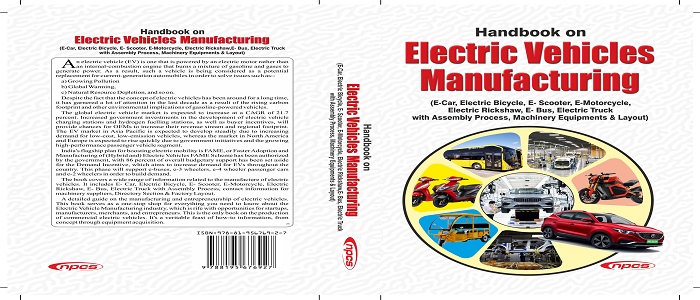
As the world shifts toward cleaner, more sustainable transportation, electric vehicles (EVs) are no longer a futuristic concept—they are a present-day revolution. India, driven by government initiatives like FAME (Faster Adoption and Manufacturing of Hybrid and Electric Vehicles) and increased environmental awareness, is experiencing a surge in electric vehicle adoption. For entrepreneurs, manufacturers, and investors, this evolving sector offers an enormous opportunity. Whether you aim to manufacture electric two-wheelers, cars, buses, or EV components, this handbook on electric vehicle manufacturing will guide you through the key steps, infrastructure needs, and strategic decisions involved in building an EV business. Visit this Page for More Information: Start a Business in Electric Vehicle Industry Understanding the EV Manufacturing Ecosystem The electric vehicle manufacturing industry isn’t just about assembling cars—it’s an ecosystem comprising battery technology, power electronics, motor production, software integration, and charging infrastructure. Each component offers a business opportunity. From building a full-fledged EV assembly line to supplying batteries, motors, or software systems, this sector allows entry at multiple levels based on budget and expertise. Read Similar Articles: E- Vehicle Projects 1. Types of Electric Vehicles to Manufacture Depending on market demand and your investment capacity, you can choose to manufacture one of the following types: Electric Two-Wheelers (E-Scooters, E-Bikes): High in demand due to affordability and lower regulatory hurdles. Electric Cars: A capital-intensive segment requiring advanced R&D and safety compliance. Electric Commercial Vehicles (Buses, Trucks): Often government-backed with larger profit margins. Three-Wheelers (E-Rickshaws, Cargo Loaders): Popular in urban and semi-urban logistics. Each segment has its own target customer base, technology requirements, and compliance norms. Read our Books Here: Electric Vehicles Manufacturing 2. Core Components of EV Manufacturing To manufacture an electric vehicle, you need to integrate multiple sub-systems, each of which plays a critical role: a. Battery Pack The battery is the heart of any EV. Lithium-ion batteries dominate the market due to high energy density. Key factors include: Cell Sourcing (local or imported) Battery Management System (BMS) design Thermal management for safety Swappable battery architecture (for 2-3 wheelers) b. Electric Motor Motors convert electrical energy into mechanical motion. Common types include: Brushless DC (BLDC) motors – used in scooters and bikes Induction motors – used in larger vehicles Permanent Magnet Synchronous Motors (PMSM) – efficient but expensive Related Feasibility Study Reports: E- Vehicle, E-Rickshaw c. Controller & Inverter These components regulate the power supply from battery to motor and influence vehicle speed, efficiency, and safety. d. Chassis & Body Design You can design your own chassis or use existing templates. Materials range from aluminum alloys to reinforced plastics. e. Software Systems Includes dashboard displays, mobile app integration, vehicle diagnostics, and battery monitoring. Download PDF: Handbook on Electric Vehicles Manufacturing 3. Manufacturing Setup and Investment Setting up an EV manufacturing plant involves: Location selection (industrial area with logistics support) Land and building cost Machinery: welding units, painting booths, assembly lines, testing equipment Tooling and fixtures R&D and testing labs Labor and automation Estimated investment: ?1–2 crore for small-scale e-bike or e-rickshaw manufacturing ?10–50 crore for mid-sized car or commercial vehicle manufacturing Government subsidies and state-level EV policies can reduce initial capital requirements A detailed guide on Handbook on Electric Vehicles Manufacturing 4. Licensing, Certification & Compliance Manufacturing EVs in India requires adhering to several standards: Central Motor Vehicle Rules (CMVR) ARAI or ICAT certification (for safety, emission, and performance) Pollution Control Board clearance FAME-II Subsidy Compliance (for accessing incentives) BIS certification for battery and electronic components Additionally, you’ll need: GST registration Udyam MSME registration Factory and labor law compliance 5. Sourcing and Supply Chain Management The EV manufacturing ecosystem depends heavily on both domestic and imported components. Key supply chains include: Battery cells and electronics – mostly imported from China, Korea, or Japan Motors and controllers – can be sourced from Indian OEMs or built in-house Plastic and fiber body panels Wiring harnesses, tires, and lighting systems To reduce dependency and costs, many companies are now investing in localizing component manufacturing under the “Make in India” initiative. 6. Testing, Quality Control & R&D EVs must undergo rigorous testing for: Battery performance Vehicle safety Crash testing Range, charging time, thermal management Setting up an in-house R&D facility or collaborating with certified labs like NATRiP, ARAI, or ICAT can enhance product quality and credibility. 7. Branding, Distribution & After-Sales Service Once your EV is ready for market, strong branding and distribution networks are critical. You can: Sell via dealerships or franchise models Set up exclusive experience centers Leverage e-commerce for two-wheelers Partner with fleet operators or delivery companies After-sales service is a key differentiator. Offering warranty, battery replacement, and remote diagnostics can increase customer trust. 8. Government Incentives and Financial Support India offers several incentives to promote Handbook on Electric Vehicles: FAME-II subsidies for manufacturers and buyers State EV policies offering tax exemptions, capital subsidies, and land allotments PLI Scheme for ACC batteries and auto components Interest subsidies and soft loans via SIDBI, NABARD, and EV-focused NBFCs Staying updated with policy changes can help in cost planning and expansion. Final Thoughts Electric vehicle manufacturing is not just a business—it’s a transformation. With increasing demand, supportive government schemes, and global environmental urgency, this is the perfect time to step into the EV sector. Whether you’re an established manufacturer looking to pivot or a startup founder passionate about clean mobility, EVs offer a sustainable, profitable path forward. This handbook on electric vehicles manufacturing is just the beginning. Success lies in strategic planning, quality control, and a deep understanding of both technology and market needs. With the right vision and execution, you can become a key player in India’s electric revolution. See More Links: Start a Business in Asia Start a Business in Potential Countries for Doing Business Best Industry for Doing Business Business Ideas with Low, Medium & High Investment Looking for Most Demandable Business Ideas for Startups Startup Consulting Services Start a Business in Africa Start a Business in India Start a Business in Middle East Related Videos Related Books Related Projects Related Market
Handbook on Electric Vehicles Manufacturing
The global shift toward sustainable energy and reduced carbon emissions has accelerated the adoption of electric vehicles (EVs). What was once considered an experimental concept has now become a rapidly growing industry, with EVs dominating future mobility discussions. From startups to established automobile manufacturers, businesses around the world are investing in electric vehicle manufacturing. India, too, is experiencing a surge in EV interest, driven by favorable government policies, rising fuel prices, and increased environmental awareness. If you are an entrepreneur, engineer, or investor eyeing the EV space, this handbook on electric vehicles manufacturing will guide you through the fundamentals of EV production—from components and processes to setup, cost, and compliance. Visit this Page for More Information: Start a Business in Electric Vehicle Industry Understanding Electric Vehicle Manufacturing The process of manufacturing an electric vehicle is significantly different from that of traditional internal combustion engine (ICE) vehicles. EVs require a deep integration of mechanical engineering, electrical systems, software, and clean energy components. The major parts of an electric vehicle include a battery, motor, power control systems, chassis, and an interface system. The EV ecosystem includes: Electric two-wheelers (scooters, bikes) Three-wheelers (rickshaws, loaders) Four-wheelers (cars and vans) Heavy commercial vehicles (buses, trucks) Each segment offers opportunities based on investment, target market, and technology capabilities. Read Similar Articles: E- Vehicle Projects 1. Core Components of an Electric Vehicle Manufacturing EVs involves assembling and integrating multiple critical systems. Here’s a breakdown: a. Battery Pack Usually made of lithium-ion cells Determines the range and performance of the vehicle Includes a Battery Management System (BMS) for monitoring, temperature control, and safety b. Electric Motor Converts electric energy into mechanical power Common types: BLDC (Brushless DC Motor), PMSM (Permanent Magnet Synchronous Motor), and Induction Motor Motor selection depends on vehicle size and usage c. Controller and Inverter Controls power flow between the battery and the motor Affects vehicle speed, torque, and energy efficiency d. Vehicle Chassis and Body Can be modified from traditional automotive platforms or newly designed for lightweight and better battery housing e. Software and IoT Integration Enables diagnostics, battery monitoring, smart dashboards, GPS, and mobile app integration Plays a crucial role in customer experience and maintenance Read our Books Here: Electric Vehicles Manufacturing 2. EV Manufacturing Process Flow EV manufacturing is a blend of mechanical assembly and electronic integration. The typical steps include: Design and Prototyping CAD design and digital simulations Performance, battery capacity, and safety tests Component Sourcing Motors, batteries, controllers, chargers, wiring, and software systems Components can be locally sourced or imported Body Fabrication Sheet metal or fiber molds for the vehicle body Integration of lightweight materials for efficiency Assembly Line Setup Frame welding, motor fitting, battery placement Wiring and control unit installation Quality Testing Road tests for stability, range, charging time Electrical safety and emissions compliance Branding and Finishing Logo placement, body paint, accessory fittings Packaging and Distribution Ready vehicles are distributed through dealerships or direct-to-consumer platforms Related Feasibility Study Reports: E- Vehicle 3. Plant Setup and Infrastructure Establishing an EV manufacturing plant requires the following: Land and Factory Building Area needed: 10,000–50,000 sq. ft. (depending on output) Should have space for R&D lab, assembly area, testing zone, and inventory storage Machinery and Tools Welding machines, hydraulic lifts, painting booths Assembly stations, testing benches, power backup systems Manpower Requirements Electrical engineers, mechanics, software developers, quality controllers, assembly workers Utilities High-load electrical connection, water treatment, dust-free environment Download PDF: Handbook on Electric Vehicles Manufacturing 4. Licenses and Regulatory Compliance Before launching your EV manufacturing business, acquire the following licenses: Company Registration (Private Ltd., LLP, or MSME) GST Number Factory License Pollution Control Certificate FAME-II Eligibility Certification (if availing subsidies) Approval from ARAI or ICAT for vehicle compliance and roadworthiness BIS Certification for battery safety standards 5. Government Policies and Subsidies India is aggressively promoting EV adoption. You can benefit from: FAME-II (Faster Adoption and Manufacturing of Hybrid & Electric Vehicles) Offers subsidies for both manufacturers and buyers State-level EV Policies (Delhi, Maharashtra, Tamil Nadu, Gujarat offer capital subsidies, tax rebates, and power discounts) Production-Linked Incentive (PLI) Scheme For battery and auto component manufacturing Startup India Incentives for innovative EV technologies Watch other Informative Videos: Automobile Industry 6. Target Market and Business Models You can enter the EV market through several approaches: OEM Manufacturing Design and produce complete vehicles under your brand White Labeling Manufacture EVs that other companies sell under their brand Component Manufacturing Specialize in batteries, chargers, BMS, or motors EV Conversion Kits Offer kits to convert petrol/diesel vehicles into electric Franchise or Dealership Models Sell ready-made EVs via distributor channels 7. Cost Estimation and ROI Cost of setting up an EV manufacturing unit: Small-Scale Unit (2-wheelers, 10–20/day): ?1.5 to ?3 crore Mid-Scale (3-wheelers or 100 units/month): ?5 to ?10 crore Large-Scale (cars, buses, or exports): ?25 crore and above ROI Timeline: 2 to 4 years depending on production capacity, sales model, and market demand. Margins can range between 15%–35%, with higher profits in niche or B2B segments (e.g., delivery vehicles, fleet services). 8. Marketing and Distribution Strategy To sell electric vehicles successfully, consider: Building a strong brand identity Creating product demo videos and test ride events Listing on EV directories and B2B platforms Partnering with last-mile delivery companies and ride-share platforms Setting up service stations and charging points for brand loyalty Digital platforms (website, YouTube, LinkedIn, and Facebook Ads) are powerful tools for reaching early adopters and sustainability-conscious consumers. 9. Challenges in EV Manufacturing Despite the opportunities, several challenges persist: Battery sourcing and cost volatility Lack of charging infrastructure Skilled manpower shortage Compliance complexities and testing delays Limited access to high-end EV software tech Overcoming these requires innovation, strategic partnerships, and continuous improvement. Final Thoughts The electric vehicle manufacturing business is a golden opportunity for forward-thinking entrepreneurs and investors. As India aims to make 30% of vehicles electric by 2030, the demand for high-quality, affordable EVs is exploding. This handbook on electric vehicles manufacturing outlines the fundamentals of entering and growing in this industry. By focusing on quality production,
Opportunities in Commercial Vehicles Dealership
Starting a Commercial Vehicle Dealership in India or any growing economy can be a lucrative venture. With rising demand from logistics, e-commerce, construction, and transportation sectors, commercial vehicles are in high demand across urban and rural regions. If planned correctly, this business not only provides high returns but also offers long-term stability and opportunities for expansion. From choosing the right brand to setting up after-sales services and understanding government regulations, there are multiple factors that contribute to a successful commercial vehicle dealership. Steps to Start a Profitable Commercial Vehicle Dealership Setting up a Commercial Vehicle Dealership requires a deep understanding of the automobile industry, strategic planning, and a significant capital investment. However, if approached with the right business mindset and preparation, it has the potential to yield high profits. Understanding the Commercial Vehicle Market Before entering this business, it’s essential to understand the types of commercial vehicles available in the market. These include: Light Commercial Vehicles (LCVs): Pickup trucks, mini-trucks, and vans. Medium Commercial Vehicles (MCVs): Buses and mid-weight trucks. Heavy Commercial Vehicles (HCVs): Trailers, large trucks, and tippers. India, for instance, is one of the largest markets for commercial vehicles globally. With the surge in e-commerce, rural road development, infrastructure growth, and increasing movement of goods, there is consistent demand for reliable commercial vehicles. Choosing a dealership that aligns with regional demand is critical. Selecting the Right Brand and Partnership The success of a Commercial Vehicle Dealership largely depends on the brand you partner with. Established manufacturers such as Tata Motors, Ashok Leyland, Mahindra & Mahindra, Eicher, BharatBenz, and Volvo offer dealership opportunities in different territories. Before choosing a brand: Evaluate their product line-up. Understand their after-sales support. Analyze existing market competition. Consider dealer margin and company support. Usually, companies offer a dealership model based on territory and market potential. It is advisable to have detailed discussions and sign transparent agreements outlining all aspects such as inventory management, credit support, marketing contribution, and training programs. Capital Investment & Infrastructure To set up a standard Commercial Vehicle Dealership, you need a considerable amount of capital investment, typically ranging from ?1 crore to ?5 crores, depending on location, brand, and scale of operation. Key cost heads include: Land and building (showroom + service center + parking area) Vehicle inventory Workshop equipment Staff recruitment and training Office setup and utilities Marketing and branding You’ll need a showroom of at least 1,000–2,000 sq. ft., plus additional space for vehicle display, test drives, repairs, and parking. Ideally, the dealership should be located near highways or industrial zones for easy access to transporters and logistics companies. Legal Requirements and Documentation Compliance with local and national laws is essential for running a Commercial Vehicle Dealership. Ensure the following licenses and approvals are in place: Trade license from the municipal corporation GST registration Vehicle dealership agreement PAN and business registration Shop and establishment act registration Pollution control and environmental clearance for service centers Also, enroll in programs for RTO coordination to facilitate registration and other formalities for buyers. Staffing and Training Your team is the backbone of your Commercial Vehicle Dealership. Recruit skilled professionals for the following roles: Sales executives Finance consultants Technicians and service managers Inventory and logistics officers Customer care and administration The manufacturer usually provides technical and sales training. Efficient customer service, quick turnaround for repairs, and follow-ups are essential to building long-term customer relationships. Inventory and Logistics Management Managing inventory efficiently is key to maintaining the profitability of your dealership. This includes: Maintaining optimal stock levels Regular follow-up on pending deliveries Accurate vehicle tracking systems Timely billing and registration processing An automated inventory management system can improve efficiency, reduce overhead, and boost customer satisfaction. Marketing and Promotion Strategies Visibility and brand awareness are crucial for attracting potential customers to your Commercial Vehicle Dealership. Adopt a mix of traditional and digital marketing techniques: Billboard and hoarding ads near transport hubs Tie-ups with logistic companies and fleet owners SMS and email campaigns Local event sponsorships and vehicle demonstration programs Google Ads and local SEO to capture regional traffic Social media promotions on platforms like Facebook and YouTube Highlight unique selling points (USP) such as fuel efficiency, low maintenance cost, finance availability, and after-sales support. After-Sales Service and Customer Retention After-sales service is a significant revenue stream for commercial vehicle dealers. Ensure your service center is equipped with skilled technicians, genuine spare parts, and diagnostic tools. Offer value-added services such as: Annual maintenance contracts Roadside assistance On-site service for fleet customers Spare parts delivery Loyalty programs and referral bonuses Retaining clients through exceptional post-sale services leads to long-term profitability and strong brand loyalty. Financing and Insurance Support Most commercial vehicle buyers seek loan support. Partner with NBFCs, banks, and captive finance arms of manufacturers to offer easy financing options. Provide in-house assistance for: Loan processing Insurance coverage (third-party and comprehensive) Documentation and RTO services Customers prefer one-stop solutions, and this adds to your dealership’s appeal. Challenges in Commercial Vehicle Dealership Business Like every business, the Commercial Vehicle Dealership model also faces challenges. These include: Market fluctuations and fuel price hikes Stiff competition and thin margins High working capital requirement Delayed payments from corporate clients Dependency on economic conditions and government transport policies However, with sound financial planning and strong customer relationships, these challenges can be mitigated effectively. Expansion Opportunities and Growth Tips Once the dealership is running successfully, explore growth opportunities: Add multiple vehicle brands Offer used commercial vehicle sales Provide rental or leasing services Expand to nearby districts or rural markets Introduce electric commercial vehicles Stay updated with industry trends such as EV adoption, BS-VI emission norms, and new government transport subsidies. Conclusion Starting a Commercial Vehicle Dealership is an ambitious yet rewarding business opportunity for entrepreneurs with the right mix of capital, strategic vision, and passion for the automobile industry. With increasing demand across sectors, commercial vehicles are an essential part of India’s growth engine. By choosing the right brand, offering excellent service, and managing operations professionally, you can create a profitable and
Hybrid Electric Scooter Assembling Business
The demand for sustainable transportation is increasing rapidly, and hybrid electric scooters are becoming a popular choice among eco-conscious consumers. With rising fuel prices and a shift toward cleaner technologies, starting a Hybrid Electric Scooter assembly business can be a highly lucrative opportunity in 2025 and beyond. Entrepreneurs with a passion for green energy and innovation can tap into this growing market by setting up an efficient and affordable assembly operation. This guide will walk you through everything you need to know to start a successful hybrid electric scooter assembly business, including market potential, setup requirements, investment, profitability, and more. Market Overview and Growth Potential The Hybrid Electric Scooter market in India and across the globe is expanding rapidly due to urbanization, environmental awareness, and government support for electric mobility. Hybrid electric scooters, which combine electric and fuel-powered technologies, provide better mileage, lower emissions, and reduced dependence on fossil fuels. These advantages make them an ideal choice for city commuters, delivery services, and fleet operators. According to industry reports, the Indian electric two-wheeler market is expected to grow at a CAGR of over 40% during the next five years. Within this segment, hybrid models are gaining traction because they offer the flexibility of fuel backup when electric charging stations are not available. As a result, assembling and distributing Hybrid Electric Scooters presents a profitable business model with strong long-term prospects. Why Choose Hybrid Over Fully Electric? While fully electric scooters are environmentally friendly, they are often limited by battery range, charging infrastructure, and longer charging times. Hybrid Electric Scooters offer the best of both worlds — efficient electric performance and the reassurance of a petrol engine. This dual-mode capability reduces range anxiety and increases convenience for users. Moreover, hybrid models are better suited for regions where charging infrastructure is still under development. This makes them particularly attractive in semi-urban and rural areas, expanding your customer base significantly. Step-by-Step Guide to Start Your Hybrid Electric Scooter Assembly Business 1. Market Research and Business Plan Start by analyzing your local and regional market for Hybrid Electric Scooter demand. Identify your target audience, competitors, pricing trends, and distribution networks. A detailed business plan should include investment estimates, break-even analysis, marketing strategies, and scalability plans. 2. Business Registration and Licensing Register your business under an appropriate structure such as a proprietorship, LLP, or private limited company. You’ll also need to obtain the following: GST registration Udyam registration (for MSMEs) NOC from Pollution Control Board (if required) Vehicle Type Approval from ARAI (if you’re launching your own brand) Trade license from local authority 3. Location and Infrastructure You need a well-ventilated and spacious industrial shed or factory space for your assembly unit. An area of 3000–5000 sq. ft. is generally adequate for a small to medium-scale Hybrid Electric Scooter assembly business. The facility should be equipped with proper electricity, workbenches, storage, and safety measures. 4. Machinery and Equipment The following are essential tools and machinery for scooter assembly: Hydraulic lift tables Electric drills and screwdrivers Wheel alignment machines Battery testing equipment Engine installation tools Quality control and diagnostic tools You may also need a conveyor system for streamlined production. Most hybrid scooters arrive as semi-knocked-down (SKD) or completely knocked-down (CKD) kits from manufacturers and are assembled locally. 5. Raw Materials and Components You’ll require a steady supply of major components such as: Hybrid electric scooter kits (chassis, electric motor, petrol engine) Lithium-ion batteries or lead-acid batteries Brake systems Wheels and tyres Controllers and wiring harnesses Speedometers and displays Headlights and indicators It’s advisable to partner with reliable domestic or international component suppliers for consistent quality and pricing. 6. Manpower and Skilled Workforce Hire skilled technicians and engineers experienced in automobile assembly and electrical systems. A team may typically include: Assembly line workers Electrical technicians Quality control inspectors Logistics personnel Office and administrative staff Training your staff on safety protocols and standard assembly procedures is crucial for efficiency and reliability. 7. Branding and Marketing Strategy Develop a strong brand identity and promote your Hybrid Electric Scooter under a recognizable name. Leverage both online and offline marketing channels such as: Social media and digital ads Dealership networks Roadshows and demo events Local newspaper ads and radio Influencer collaborations Highlight your scooter’s unique selling points such as fuel efficiency, low maintenance, and eco-friendliness. Offering test rides and EMI options can help attract more customers. 8. Dealership and Distribution Network To scale your operations, establish a dealer network across cities and towns. Offer attractive margins and training to your dealers. You may also consider an online direct-to-customer (D2C) model with doorstep delivery and service. 9. After-Sales Service and Support Reliable after-sales service is a key differentiator in the auto industry. Set up service centers or tie up with local garages for repairs and maintenance. Offer warranties, easy spare part availability, and customer support to build long-term trust. 10. Legal Compliance and Safety Standards Ensure that your Hybrid Electric Scooter models comply with the safety and emission standards laid out by the Ministry of Road Transport and Highways (MoRTH). You must also conduct regular quality checks and safety audits during production. Investment and Profitability A small to medium-scale Hybrid Electric Scooter assembly business requires an initial investment of ?20–50 lakhs, depending on scale, machinery, and infrastructure. The major cost components include: Factory setup: ?10–15 lakhs Machinery and tools: ?5–10 lakhs Raw materials: ?5–20 lakhs (as per order volume) Salaries and operational costs: ?2–5 lakhs Branding and marketing: ?2–3 lakhs Once operational, the profit margins on hybrid scooters range from ?7,000 to ?15,000 per unit, depending on model and volume. With a monthly production of 100 units, you can generate a profit of ?7–15 lakhs per month. A well-managed business can recover its investment within 1.5 to 2 years. Government Support and Subsidies The Indian government’s Faster Adoption and Manufacturing of Hybrid and Electric Vehicles (FAME) scheme offers subsidies and tax incentives for electric vehicle businesses. You can also avail MSME loans, startup grants, and state-specific EV policy benefits. These