
How to Choose Your Next Manufacturing Business: A Practical Guide Using Entrepreneur India’s June 2026 Issue
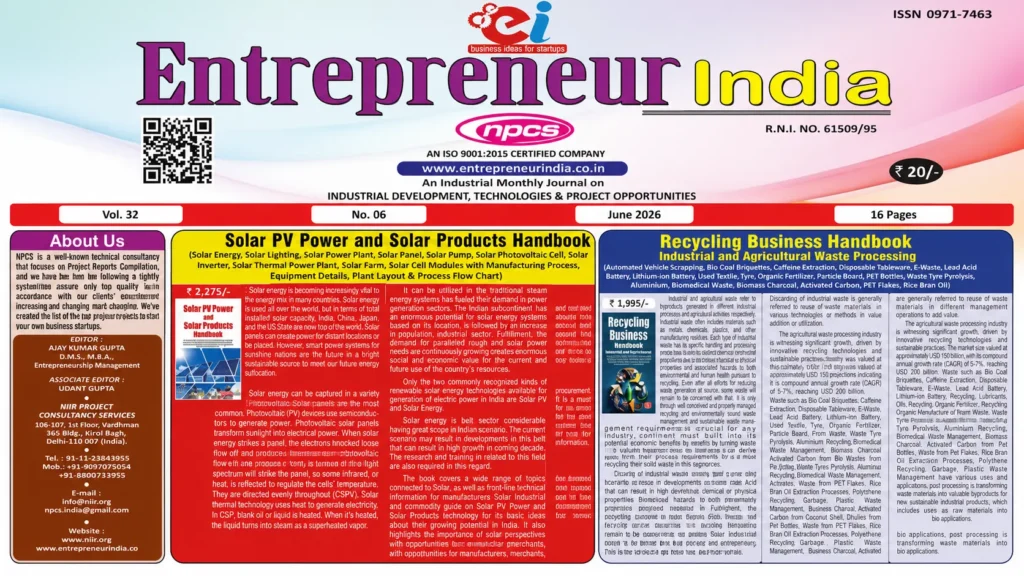
How to Choose Your Next Manufacturing Business Hundreds of new business concepts are written about, shared and lost every month. For most first timers, the problem is not that they are not getting ideas, but rather, what idea is worth pursuing. This is where the Entrepreneur India June 2026 (Vol. 32 No. 06) article on it comes in handy! It doesn’t present opportunities as a list; it provides you with the data points to compare opportunities. Each idea of manufacturing as well as service business given in this issue is accompanied by Project Cost Estimate which is prepared by NIIR Project Consultancy Services (NPCS), an ISO 9001:2015 certified consultancy firm with a rich experience of 30 years in the field of project research. Rather than just summarising what is in there, this article takes the reader through the process of how to apply the information to help make a decision — and does so, with examples taken from this issue. Step 1: Start With Capital, Not Excitement It’s easy to choose a business that’s exciting or futuristic. The first “true” filter, however, is always capital availability. The selection of the June 2026 issue is quite broad. The lowest project cost for Moringa Oleifera (Drumstick) Powder is ₹71 lakhs which includes the cost of Plant and Machinery of ₹31 lakhs. On the other hand, paper water bottles are priced at ₹286 lakhs, and Ready to Eat Food (Retort Packaging) is priced at ₹718 lakhs. At the other end of the scale, the Viscose Filament Yarn Spinning by the Lyocell Process requires the investment of ₹480 crore and Mono Crystalline Silicon Wafers cost ₹91 crore — definitely not the level of competition for most new entrepreneurs, but certainly attractive to established manufacturers or well-financed start-ups aiming to move into a niche, high barrier sector. The rule is: identify your investment level with the concept before. If you cannot raise the required capital of ₹480 crore to start the business, then it is of no use to a business having 44% rate of return. View Full Project Details: Moringa Oleifera (Drumstick) Powder Manufacturing Plant Report Step 2: Look at Rate of Return Alongside Break-Even Point The discussion is mostly about the rate of return, but the break-even point is just as important because it lets you know how long you’ll be operating before the business starts to make money — and that’s just as critical in cash flow planning. Choose two examples from this issue. Lithium-Ion Battery Assembly has been determined to have a 32% return on investment and break-even point of 39%. The 22% rate of return for Steel Containers is slightly lower with a 43% break-even point. Agro Industrial Park has a higher rate of return of 26% but a particularly low breakeven point of 18% as it generates a lot of income from leasing and service income, compared to the simple manufacturing activities. A lower break-even is a more significant factor than a slightly higher ROI, if you’re self-funding or have restricted working capital. If you have investors who are willing to wait for a longer time period and are willing to accept a higher rate of return, you may be willing to wait. Step 3: Check Where Government Support Actually Applies One positive aspect of this issue is that it refers to specific schemes, not to the vague term of “government support. It’s helpful to do this because it allows you to assess eligibility before falling in love with an idea. For example: Lithium-Ion Battery Assembly is the name given to Advanced Chemistry Cell batteries under the PLI scheme, which has an outlay of ₹18,100 crore. Agro Industrial Park schemes can leverage PMKSY, Mega Food Parks, BHAVYA scheme and the ASPIRE scheme. Steel Container Manufacturing is eligible for CGTMSE, MUDRA (for ancillary unit) and PMEGP and State level industrial subsidies. The other construction-material companies indirectly profit from the spending on smart city infrastructure and affordable housing. It is advisable to review the schemes listed to see if you or your business structure are eligible to apply for the shortlisted idea before you submit it. The business that has the potential to look great on paper may not look that great once you discover that your unit size or location is not eligible! Step 4: Take a look at the domestic demand and export potential. A few businesses in this issue are based on domestic demand, and a few others rely heavily on opportunity for export. The category you’re entering will impact your thinking on location, certification, and your go to market plan. The rice husk ash silica, for example, has already found export markets in Bangladesh, Nepal, Sri Lanka, Myanmar, UAE and Africa, as well as domestic applications in tyre manufacturing and paint production. The diversification of the supply chain from China is a major driver of the importance of export markets for both Steel Containers and LRPC Steel Strand, with the United States, Europe and the Middle East being the key markets. Businesses, on the other hand, such as Ready to Eat Food and Hydroponic Green House Farming, are more domestically based and are closely linked to the consumption pattern in India and urban food habits. If exporting is a key part of your business plan, the extra compliance, certification and logistics costs should be taken into account early, as these are not included in the basic project cost estimates. Read the Complete Book Here: Manufacture of Value Added Products from Rice Husk (Hull) and Rice Husk Ash (RHA) Step 5: Use the Feasibility Report as Your Next Step, Not the Final One It’s important to understand that what the magazine will provide you is a starting, not a final business plan. Each project profile in the June 2026 issue refers to NPCS’ detailed techno-economic feasibility reports including raw material sourcing, machinery suppliers, manufacturing process flow, personnel requirement, land and building requirement, multiyear financial details etc. which are suitable for further analysis. Use the magazine for your
Is Made-in-India Really Cheaper Than China? The Honest Answer for Manufacturers
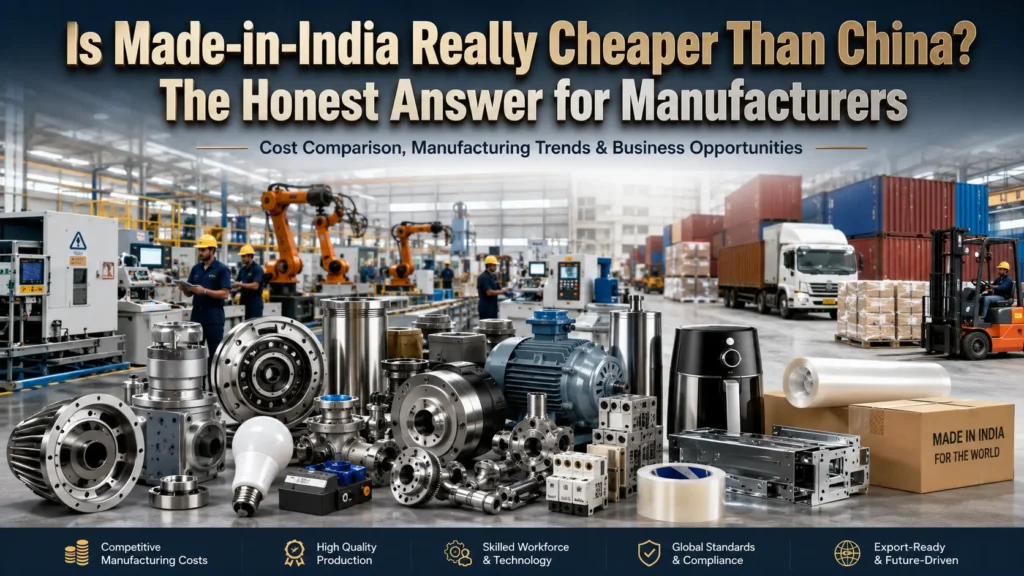
India vs China Manufacturing Cost Comparison The manufacturing fraternity in India creates a new momentum every few months. Glossy headlines herald factories moving, FDI soaring and a new day of industrial self-reliance. The prospect is alluring: India’s labor cost is less than China’s, government is providing incentives, and the geopolitical winds are favouring us. This is the story that is compelling to start-up founders who are considering manufacturing business ideas, and often is incomplete. The real answer is more complicated. India may be more cost-effective for a wise choice of product, scale and supply chain setup when compared to China. But for a lot of categories, the hidden inefficiencies, logistics, infrastructure, and lead time for manufacturing in India still heavily compete with China. That’s closing. However, it has not yet closed. This article cuts through the clutter. It looks at India’s cost advantage, its remaining disadvantage and what considerations manufacturers should make before making a decision on sourcing and/or investment. The Labour Cost Advantage Is Real — But Overstated Let’s talk about India’s strengths first. Average manufacturing wages in India are still much lower than the Chinese counterparts. Data collected by the International Labour Organisation (ILO) and trade bodies like CII shows that factory workers in labour-intensive industries in India are earning approximately 30–45% less than their Chinese counterparts in the same job. That’s a lot of benefit on the books, at least. The industries that benefit most from such an advantage are primarily the clothing, leather, footwear, simple assembly, and some agro-processing industries. For these items, labour represents 35-60% of the total cost. India thus has a defensible cost advantage. It is for this reason that global apparel firms are moving orders to Tiruppur, Surat and Noida. The Confederation of Indian Industry (CII) keeps a close watch on this trend and observes the increasing competitiveness in labour intensive manufacturing. But there are other inputs than labour. Many new startups begin by focusing on labor expenses for manufacturing and neglecting to factor in other expenses. It is not. In capital-intensive or precision manufacturing, labour may only be 10-20% of the cost. Related Article: India vs China Manufacturing: Best Business Opportunities, High Profit Sectors & Startup Ideas in India Where India’s Cost Advantage Gets Eroded Logistics and Inland Infrastructure The Pearl River Delta is a marvellous logistics machine in China. Factories are located within 60-100 km of ports with millions of containers moving through them each month. The roads are of excellent quality. Rail freight operates at high speed. All cold chains, warehouses and last mile are scaled. India’s logistics cost to GDP is in the range of 13-14%, whereas China’s logistics cost to GDP is 8-9% and in developed nations 6-8%. This gap is recognized straight by the Ministry of Commerce and Industry and the National Logistics Policy. The result: manufacturers are paying an additional 4–6% to cover inefficiencies, such as road conditions, port delays and broken cold chains. This one feature can cost the exporter his/her labour cost savings. Power and Utilities The power tariffs for industries are significantly different across states in India, but on average are higher than in China. Power cost is the most important variable input in highly energy consuming industries such as steel processing, chemicals, aluminium, ceramics and glass. In these areas, China’s energy subsidy system and integrated utility system provides a structural cost advantage which India is still trying to catch up with. The Bureau of Energy Efficiency (BEE), under the Ministry of Power, has launched a number of initiatives aimed at enhancing the energy productivity of MSMEs. However, most States still face a tariff deficit against the Chinese industrial zones, and PAT (Perform, Achieve and Trade) cycles and energy audits have helped. Raw Material Supply Chains In part, China developed its manufacturing power by clustering together raw material processing, component production, and final assembly. Shenzhen for electronics. Foshan for ceramics. Small goods in Yiwu. India is building similar clusters, such as textile parks, pharma SEZs and electronics PLI hubs, but the level of depth in the ecosystem is still not matching. India still imports high volumes from China for manufacturers that rely on precision components, speciality chemicals or electronic sub-assemblies. This makes the situation a little paradoxical – a manufactory which seems to be “made in India” can have a partly Chinese supply chain. Government Policies and the PLI Push Indian government has acknowledged these deficits. The Production Linked Incentive (PLI) scheme is implemented through DPIIT and line ministries, and has a total allocation of more than ₹1.97 lakh crore in 14 sectors. They range from mobile phones, pharmaceuticals, medical devices, food processing, textiles, white goods to specialty chemicals. The goal is to push the overall disadvantage of the output side towards direct output-based cash payments. The Ministry of MSME provides credit guarantee scheme (CGTMSE) for MSMEs, capital subsidy on technology upgradation (CLCSS), and the Udyam registration framework which unlocks priority-sector lending for MSMEs. Besides, there’s a Make in India portal (Make in India) which collates information regarding incentives under state and central schemes. It is perhaps the most effective structural intervention, the PM Gati Shakti National Master plan. It plans and manages road, rail, port and utility infrastructure at an integrated level. If fully operational, Gati Shakti has the potential to bring down India’s logistics cost differential by 3-4 percentage points, thus changing the competitiveness landscape. Business Ideas Where India Already Beats China 1. Labour-Intensive Garment and Textile Manufacturing Today, India offers a real cost benefit to entrepreneurs, who are considering their business options in the apparel industry. A well-managed garment unit in Gujarat or Tamil Nadu can compete with the Chinese mills on product categories which are basic and mid-range as the labour cost is 35-40% cheaper compared to the Chinese mills. Additional output incentives are given under PLI scheme for textiles. The success is to establish effective cutting-sewing-finishing lines, to obtain OEKO-TEX or GOTS certification for export markets, and to establish direct buyer-seller relationship without depending on trading
Break-Even Analysis for Manufacturing Business: Formula, Examples & What Every MSME Founder Must Know
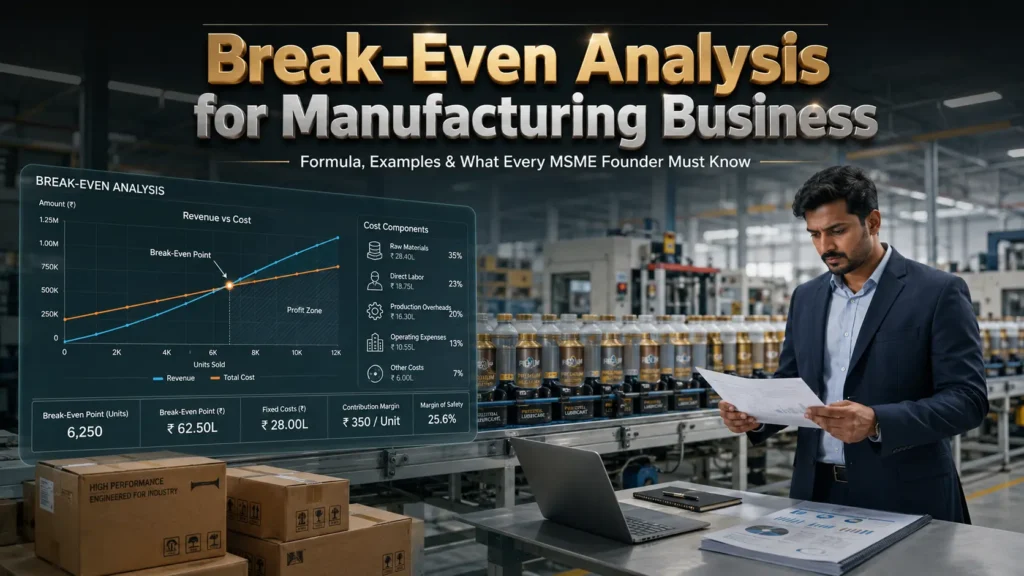
Break Even Analysis for Manufacturing Business The Number That Decides Everything — Before You Sell a Single Unit Only 72% of the first-generation manufacturing entrepreneurs in India have never worked out the break-even point before they go into production. This number is not only a number; it is a figure from a SIDBI MSME Pulse report. It is a confession. It is like driving on the Yamuna Expressway with your headlights off — fast, confident and headed for a crash. What is so deadly about this number when left unchecked; you can be operating at 80% capacity with a salary of ₹8 lakh per month and still be in the red. This is a common occurrence in industrial belts ranging from Morbi to Meerut every day. The machine is running. Workers are paid. Orders are flowing. However, the unit is running a leak! Break-even analysis will tell you precisely how many units you need to produce (or how much revenue you need to clock in) before your business starts to break even and begin to turn a profit. It is NOT a Finance Department Tool! It serves as a survival tool. It is a must-know for every MSME owner, entrepreneur with a startup investment of ₹20 lakh or ₹2 crore. In this article, you will get the formula, real-world examples in India, and the step-by-step process to compute your break-even – for any product or production scale! Why Most MSME Units Price Blind — and Pay for It According to the government, India has more than 63 million MSMEs, accounting for a whopping 30% of the country’s GDP and 45% of its exports. According to the Annual Report of the Ministry of MSME, there are more than 63 million MSMEs in India which contribute to almost 30% of GDP and 45% of exports in the country. Among these are about 14 million manufacturing units. However, there is an enduring problem in this sector – most of the owner’s price on the gut rather than on a cost basis system. The problem is structural. In clusters such as Ludhiana (hosiery), Rajkot (engineering goods), Firozabad (glassware) and Sivakasi (fireworks and matches), the pricing for first generation entrepreneurs is passed on from the older ones. They use their lower prices to compete and don’t know if those competitor prices are profitable at all. The outcome: narrow profit margins that always disappear when costs of input increase. Data from the Confederation of Indian Industry (CII) and the National Sample Survey Office (NSSO) reveals that more than 50 per cent of manufacturing units in India that close are not due to lack of demand but due to mismanagement of cash flows – a lot of which is directly related to under-pricing and unmanaged fixed-cost overhead. The three industrial towns of tier-2 and tier-3, namely, Hapur in Uttar Pradesh (rubber goods), Morbi in Gujarat (ceramics) and Batala in Punjab (agricultural equipment) are most vulnerable to this issue. In each of these clusters, new firms regularly enter without considering break-even analysis — for prices that just cover variable costs and exclude fixed costs. The immediate result: They ran straight into a wall at 6–18 months of service. Not because the market was against them. As the numbers were never calculated. Related Article: 100 Industrial Parks Worth ₹33,660 Cr: Top Business Ideas for MSME Founders Table 1: Break-Even Analysis Snapshot — Indian Manufacturing Sectors Industry / Product Fixed Costs/Month (₹) Variable Cost/Unit (₹) Selling Price/Unit (₹) Break-Even Units/Month Garment Unit (Tiruppur, TN) 3,20,000 180 320 2,286 Plastic Moulding (Rajkot, GJ) 4,80,000 42 95 906 Namkeen / Snack Food (Indore, MP) 2,10,000 28 55 7,778 Steel Fabrication (Ludhiana, PB) 6,50,000 220 440 2,955 Agarbatti / Incense (Bengaluru, KA) 1,20,000 12 28 7,500 Paper Cup Manufacturing (Pune, MH) 3,80,000 0.35 0.75 9,50,000 cups Source: Illustrative estimates based on MSME cluster data from SIDBI, CII, and industry association benchmarks. Actual figures vary by state and scale. The Formula — Simple, Powerful, Non-Negotiable There is one basic equation to break-even analysis. All other are modifications of it. Break-Even Point (Units) = Fixed Costs ÷ (Selling Price per Unit − Variable Cost per Unit) The Contribution Margin in this formula is the denominator or Selling Price per Unit minus Variable Cost per Unit. It indicates the amount of each unit sold that covers your fixed costs and ultimately, your profits. A revenue-based version is also available: Break-Even Point (Revenue) = Fixed Costs ÷ Contribution Margin Ratio As selling price increases, the contribution margin ratio has the same trend as the contribution margin.As the selling price goes up, the contribution margin ratio follows the same pattern as the contribution margin. Worked Example: Plastic Moulding Unit, Rajkot A first-generation businessman establishes a plastic injection moulding shop in Rajkot. The data from Gujarat Industrial Development Corporation (GIDC) suggests that the rent of a standard GIDC shed of 1500 sq ft in Metoda Industrial Estate is in the range of ₹35,000 to ₹45,000 per month. He has fixed monthly expenses of the following amounts: Factory shed rent (GIDC Metoda): ₹40,000 Loan EMI on machinery (₹18 lakh @ 10.5% over 5 years): ₹38,500 DGVCL (Electricity fixed charges): ₹22,000 Salaries — supervisor + admin: ₹55,000 Depreciation, insurance, misc: ₹24,500 Total Fixed Costs: ₹1,80,000 per month He incurs the following variable costs per kg of moulded output: raw material (HDPE) ₹92, direct labour ₹18, power per unit run ₹12 and packaging ₹8. He sells the product to a distributor at a price of ₹185 per kg. Contribution Margin = ₹185 − ₹130 = ₹55 per kg Break-Even = ₹1,80,000 ÷ ₹55 = 3,273 kg per month The monthly sales in this unit have to be 3,273 kg to be profitable. At 5,000 kg — a realistic 70% capacity run — it earns ₹94,985 in monthly profit. At 60% (4,300 kg), profit is ₹56,650. The numbers shouldn’t tell the originator what to shoot! Why Government Schemes Must Factor into Your Break-Even PMEGP (Prime Minister’s Employment Generation Programme) scheme provides capital
India-Vietnam 13 MoUs: The Project Planning Framework Indian Entrepreneurs Need
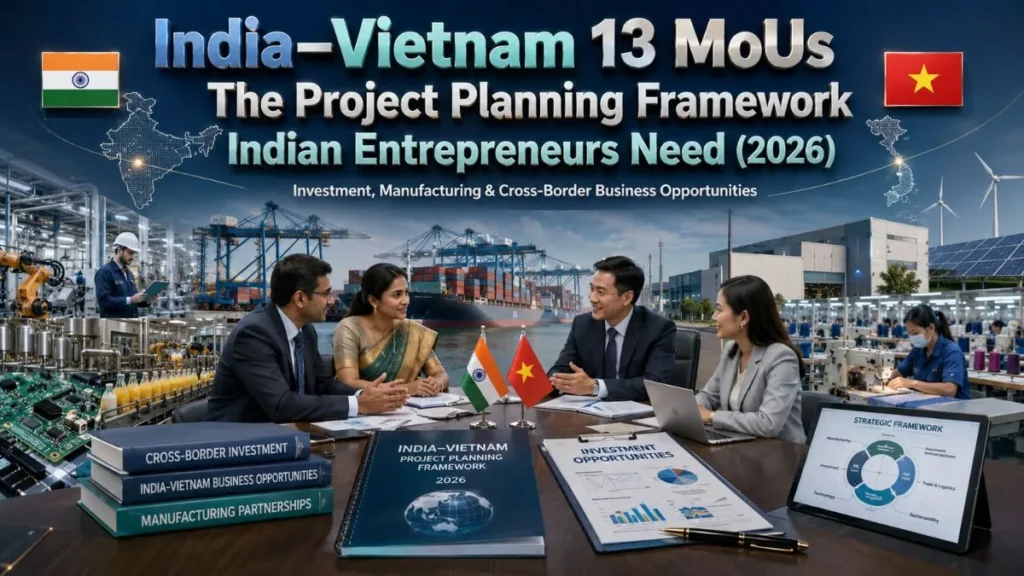
India Vietnam business opportunities The recent signing of 13 Memorandums of Understanding (MoUs) between India and Vietnam has been a great boost for Indian entrepreneurs to make a foothold in the fast-growing ASEAN markets. There are several industries open today from manufacturing to digital services, but not picking the industry that is popular this year will not bring success. Most entrepreneurs fall in failure due to the lack of proper evaluation, not due to the weakness of the opportunity. Structured planning techniques are very useful, such as NIIR Project Consultancy Services (NPCS). Related Article: India-Vietnam Trade Deal: 6 Manufacturing Projects Now Worth a Detailed Feasibility Study The Real Mistake Entrepreneurs Make The first thing you want to ask when you hear a trade deal is the question, “What business should I start?” That is a confusing question, it results in random searches and risky decisions. It probably would be better to ask, “Which opportunity is in my budget, location and skills?” This small change makes a huge difference! It makes you think practically, not emotionally. The majority of the projects that fail do so because of similar issues with them: Failing to identify the right trend to pursue due to a wrong sector selection. Too little capital investment and working capital Lacks of understanding of regulations No proper project documentation Typical errors occur at a later stage – when going for loans or when production begins. The Six Sectors: Where the Real Opportunities Are Six key sectors have been unlocked under the India–Vietnam agreement. There are varying degrees of risks and investments involved. Agri-processing is extensively regarded as the most approachable option. It is suitable for agricultural areas for entrepreneurs and is a steady demand. Rare earth processing is influenced by changes in the global supply chain and has a high export potential but needs a permit for the environmental processing. Pharmaceutical Production is a lucrative and complicated industry and it is so much required to be compliant. Renewables vs. Components for balanced growth with limited investment and, FinTech has a low cost, high scalability but strong competition. Defence manufacturing is at the top, and needs high capital investment and a long approval process. To make your life easier: Agri-processing: Best for beginners, stable demand Rare earth processing: High demand, moderate complexity Pharma manufacturing: High profit, high regulation Renewable components: Balanced growth opportunity FinTech: Low investment, high competition Defence manufacturing: High barrier, long-term returns Choosing the right sector depends less on hype and more on your situation. Get Detailed Insights from This Book: Drugs & Pharmaceutical Technology Handbook Why Proper Planning Matters More Than the Idea If you don’t plan an idea, it’s a risk. Many businessmen think that once they decide on a business, they will have success. But in truth execution is all. Through a proper evaluation, you can be sure that: All your raw materials are available Your location is conducive to logistics and exports. Your investment can help support early operations. All permissions and licenses are easy to deal with. That’s why it’s best to begin with a project report like this one to invest in someone’s expertise. These reports are created by organizations like NIIR Project Consultancy Services (NPCS) to minimize uncertainties. DPR vs Feasibility Study: Understanding the Difference You have to be sure of what you’re getting into before you invest and the best way to find out is with the proper paperwork. A Detailed Project Report (DPR) provides a comprehensive view of the industry. It provides an understanding of how the business operates, the costs associated with it and what to expect in terms of returns. This is the first and most critical step for most novices. A feasibility study delves further. Tailored for your strategy and can answer reasonable questions like ‘Is my position appropriate?’ and ‘Is my investment sufficient. In simple terms: You can learn about the business through the help of DPR if you are having problems. A feasibility study is used to validate your business. This step is frequently missed and results in future financial and operational issues. View Full Project Details: Renewable Energy Sector and Green Power Realistic Expectations: The Truth About Profits There are lots of entrepreneurs that start with a vision that is too great. They believe that they are able to grow quickly and make quick profits – something that is not common in manufacturing or exports. In reality: Businesses take time to reach full production Delays in payments, particularly in exports, can occur In the first couple of months, cash flow control is crucial. Better way to do it is to make a plan for gradual growth rather than immediate success. It’s more important to have stability during the first year than to expand aggressively. Common Mistakes That Lead to Failure Staggering opportunities are not being utilized because they are not being executed well. Here are some of the most frequent errors: Not accounting for working capital needs Overestimating first-year revenue Delaying regulatory approvals Choosing sectors without understanding operations The following are some of the pitfalls you should avoid to increase your odds of success. Choose the right startup backed by real market demand How NPCS Helps Entrepreneurs NIIR Project Consultancy Services (NPCS) has a rich experience of more than 45 years in providing assistance to the entrepreneurs for the planning and implementation of industrial project. Their support includes: Industry-specific project reports Techno-economic feasibility studies The participation of the bank in the financial planning and in the documentation of loans. Advice regarding equipment and standards These reports are a favorite of banks and financial institutions for funding and execution. A Simple Strategy to Choose the Right Sector Rather than over thinking, stick to a practical filtering approach: Use the amount of money that you have. Use the capital you have. Look at the advantages of your place. Think about place strengths. Evaluate your technical knowledge or experience This obviously limits your choices and enables you to concentrate on viable opportunities. Conclusion: Preparation Is
Solar Panel Manufacturing: 10 reasons why it is a game-changer for startups
In the 21st century, we are witnessing a massive transformation in the way that energy is produced and consumed around us. Climate change is forcing nations to reduce their reliance on fossil fuels. Renewable energy sources have emerged as the foundation of a sustainable future. Solar panel manufacturing is one of the most important. It is not an alternative, but the future of electric power. Solar panel manufacturing is at the heart of this revolution. This industry has grown exponentially in the last decade. Entering this sector for entrepreneurs and startups is more than just about profit; it’s about being part of a bigger global mission. Solar panel manufacturing is a business opportunity that also has environmental responsibility. It’s one of the best opportunities available in today’s industrial landscape. The top 10 reasons solar panel manufacturing can be a game-changer for startups are explained in depth. 1. Global Markets Explode in Growth Solar energy has grown at a rapid rate in recent years. Market forecasts predict that the global solar market will surpass USD 300 billion in 2032 with a growth rate of almost 10% annually. Solar capacity in India has risen from 2 GW to 80 GW, and is expected to grow to 170+ GW before 2030. The surge in solar energy is a result of several factors, including falling prices for solar panels, an increase in electricity demand and international commitments towards reducing carbon emissions. Solar energy, unlike traditional industries, where demand fluctuates over time, is supported by long-term climate goals and policy frameworks, ensuring steady growth. This creates an environment where startups can thrive, as the risk of saturation in demand is low. By entering the industry now, a company can position itself in one of the most resilient markets and future-proofed in the world. Related: How to Build a Profitable Solar Panel Manufacturing Plant 2. Strong Government Support and Incentives Renewable energy is one of the few industries that receives as much support from the government as it does. Solar adoption is actively promoted by governments around the world, who recognize its importance in achieving energy security and climate goals. The Production-Linked Incentive Scheme (PLI) in India offers substantial financial support to solar manufacturers. This allows startups to overcome initial obstacles and expand operations more quickly. Tax exemptions for renewable energy equipment, rooftop solar subsidies, and solar parks that are dedicated to manufacturing encourage demand. Globally, countries such as the United States and the European Union invest billions of dollars to boost their domestic solar industries. This creates export opportunities for manufacturers from emerging economies. Aligning with government programs reduces startup costs and ensures a steady demand, especially from large-scale projects. 3. Rising Domestic and Export Demand Solar panels are in demand from both domestic and international markets. India has seen an unprecedented increase in rooftop solar installations, for both households and commercial buildings. Government tenders and private investments are boosting the growth of large-scale utility projects. This ensures a strong market for local manufacturers. Solar power is being used by emerging economies around the world to solve electricity shortages. Solar power is a viable option for these countries, which often do not have large reserves of fossil fuels. Indian manufacturers have more opportunities to export, especially as global supply chains try to reduce their dependence on China. Solar panel manufacturers today can take advantage of both the domestic and global markets, allowing them to scale their business. View Our Handbooks on Solar Products, Renewable Energy, Solar PV Power, Solar Energy, Solar Lighting, Solar Power Plant, Solar Panel, Solar Pump, Solar Photovoltaic Cell, Solar Inverter, Solar Thermal Power Plant, Solar Farm And Solar Cell Modules 4. Declining Manufacturing Costs The dramatic drop in production costs is one of the most important factors that has enabled solar adoption. Solar power was much more expensive a decade ago than conventional electricity. It is now one of the most affordable sources of energy in the world. Solar panel production has benefited from technological advancements and economies of scale, which have led to a significant drop in price. Automation in manufacturing, advances in silicon wafer technologies, and improvements in the efficiency of solar cells have significantly reduced the cost per watt. This trend is a boon for startups as it allows them to enter the market with low prices and still maintain healthy margins. The learning curve effect also means that, as solar manufacturers produce more, unit costs will continue to drop, giving them an advantage over time. Solar panels are a cost-saving alternative to many other traditional manufacturing industries that have seen costs rise. 5. Diverse Product Opportunities Solar panels do not come in one size fits all. Startups in the manufacturing industry have the option to select from a variety of products that are tailored for different markets and applications. Monocrystalline panels are durable and highly efficient, which is why they are often selected by customers who have high standards. Polycrystalline panels tend to be more affordable, and are popular on markets with a high cost-sensitivity. The thin-film panels, which are light and versatile, can be used for industrial or specialized uses such as portable devices. Bifacial solar panels are a more recent innovation that can capture the sun on both sides. This allows for higher energy yields. There are new opportunities for solar power beyond traditional panels. These include floating panels, BIPV (building-integrated photovoltaics) and hybrid systems that use battery storage. These niche markets provide startups with the opportunity to innovate and develop unique value propositions. BIPV, for example, integrates solar panels into windows and walls to transform buildings into power generators. This futuristic concept is already being adopted by Europe and the U.S. The diversity of products allows startups to adapt to the changing preferences of consumers and not be tied to one market segment. Related: How to Start a Manufacturing Business of Solar Panels 6. Contribution to Sustainability Goals Today, many entrepreneurs measure success not only by profits, but also
How to Start a Profitable Alum Manufacturing Business

Alum is a chemical compound that has many uses, from paper production to water purification. Alum, called potassium aluminum sulfate or ammonium aluminum sulfate depending on the type, provides powerful antiseptic and coagulating properties. Entrepreneurs in the chemical sector should consider manufacturing alum because demand remains strong. Manufacturers use alum in municipal water treatment, industrial effluent treatment, textile dyeing, and cosmetics. Alum demand continues to be driven by the global shift towards clean water, stricter environmental norms and growth in paper production and textile production. Alum manufacturing is a good option for startups and MSMEs because it offers a simple production process, constant market demand and growth opportunities both domestically and internationally. For more information check our Handbooks Understanding What is Alum Alum is an astringent, antibacterial substance that has a colorless crystalline structure. Most common types are: Potassium Alum – Also known as Potash Alum, it is used in cosmetics and food processing. Ammonium Alum is widely used in textile dyeing, tanning and tannining. Soda Alum is used in the paper industry. The primary function of alum in water purification is to coagulate impurities, making them easier to remove. Alum is a chemical that can be used in municipal corporations and industrial treatment plants because of this characteristic. Market Outlook Alum is in high demand both in developed and emerging economies. Here is a summary of trends in India and globally: Region/Market Market Size (by 2024) Forecast (2029). CAGR (2024-2029). Key Demand Drivers Global USD 780 Million US $1.05 billion ~6% Water treatment, paper production, textile processing and pharmaceuticals India USD 120 Million USD 170 Million ~7% Rural sanitation projects, textile hubs and growing paper industries, urban water supply projects Key Insights Infrastructure upgrades in water systems in developing countries, in particular, are sustaining the global demand. Government-led initiatives in India, such as Jal Jeevan Mission or Swachh Bharati Abhiyan, drive consumption of municipal and rural water projects. The textile belts of Gujarat, Maharashtra, and Tamil Nadu consume large quantities of ammonium alum. Related: How to Start a Profitable Alum Manufacturing Business Applications and Demand Drivers Alum’s diverse applications ensure that the market is stable and grows. Alum helps water treatment facilities remove suspended particles, ensuring cleaner drinking water, and it serves as a sizing agent in paper production to enhance texture and printability. Textiles use alum to fix dyes, and the leather tanning sector uses it to prepare hides before processing. It also tightens the skin. Alum is used in traditional medicine, food processing, and even for cosmetics. Its preservative properties and refinement capabilities are very useful. The variety of applications spreads the demand across many industries and reduces the risk of dependence on one market. Manufacturing Process Overview Alum is a relatively easy chemical product to manufacture, so it’s accessible to small and medium-scale entrepreneurs. Raw Material Preparation Producers make alumina mainly from bauxite and aluminum hydroxide, adding potassium or ammonium sulfate; some processes also use sulfuric acid. Reaction Process In reactors, raw materials are dissolved in a controlled temperature and under agitation. This results in the formation of an alum-solution. Crystallization Cooling the alum solution will encourage crystallization. The crystals can grow until they reach the desired size. Separation of the Drying and Separation To remove impurities, the crystals are washed and dried after being separated from the liquid. Packaging The dried alum comes in bags that are moisture-proof for transport and storage. Modern plants incorporate continuous processing units and filtration systems to ensure high purity. For more detailed information, check out our Project Reports on Ferric Alum – Manufacturing Plant Startups have many opportunities Alum manufacturing offers many opportunities. Increased Municipal Demand: Due to urbanization and the scarcity of water, municipal bodies are increasing their investment in treatment facilities. Industrial Expansion: The growth of paper mills and textile processing units as well as leather tanning units, continues to increase industrial alum demand. Export Potential: Alum is imported by many developing countries, including those in Africa, Southeast Asia and Latin America, for the treatment of water. This presents a lucrative opportunity to export. Startups may also want to explore niche markets, such as high-purity alum used in cosmetics and pharmaceutical-grade products that command premium prices. For more information, check out this related video Sustainability and Challenges While the outlook for the alum market is positive, there are certain challenges that alum producers face, such as fluctuating prices of raw materials and environmental concerns about production waste. It is important to comply with pollution control standards. Sustainability trends create opportunities for businesses. Renewable energy used in manufacturing Recycle process water to reduce waste. Eco-friendly packaging of industrial chemicals. Companies that adopt sustainable practices better satisfy global buyers’ needs and stand out in the marketplace. Find the Best Idea for Yourself With our Startup Selector Tool The conclusion of the article is: Alum production is a stable and profitable industry with many applications, including water treatment, textiles, and paper. As governments and industries prioritize clean water and sustainable practices, demand will rise in domestic and international markets. Niir Project Consultancy Services prepares detailed techno-economic feasibility reports for alum production and other industries. The reports contain detailed manufacturing processes and raw materials requirements, as well as plant layouts and financial projections. NPCS assists entrepreneurs in assessing the feasibility of setting-up new industries. They also provide them with the necessary technical and market insight to ensure success.
How to Start an EV Station Franchise: A Complete Guide for Entrepreneurs

India is accelerating towards adopting electric mobility at an unprecedented rate. The electric vehicle (EV) revolution is no longer an aspiration; it’s in full swing, and entrepreneurs can actively participate in shaping its trajectory. The model of EV Station Franchise is a great entry point to this ecosystem. It allows aspirational industrialists to capitalize on the EV boom without major investments and with ample room for long-term growth. In this post, we cover everything an entrepreneur aspiring to start an EV charging franchise in India needs to know. You will discover the potential the market holds, the key drivers of growth, the underlying business model, its technical requirements, and a strategic outline of the steps to begin. It does not matter if you operate as a solo entrepreneur or as an MSME looking for diversification; this blog aims to guide you towards informed actions in one of the most dynamically evolving industrial sectors today. India’s EV Infrastructure Market: A Sector Accelerating Towards Breakneck Speed In the last five years, the electric vehicle market in India has witnessed unprecedented growth due to government policies, increasing fuel prices, and shifting consumer habits. With the current trend, electric vehicles are expected to account for more than 30% of all vehicle sales in India by 2030. However, the charging infrastructure lags behind in comparison to EV adoption. In lagging charging infrastructure, there lies a paradox: A tremendous market opportunity for the development of charging stations. There is a rampant need for EV charging services in highways, city centers and even in residential and corporate complexes. With projections stating 4.8 million EVs by 2025 and 1 million public chargers needed by 2030, the market still has great potential. Popularity for Franchise-based models stems from their provision of swift, uniform scaling across varied locations, service, and software integration. This is just the start since demand from Tier 2, Tier 3, inter-city routes, and commercial EV fleets further bolster a booming ecosystem. Related: Build a Profitable EV Station Franchise Why the EV Franchise Model Works for Entrepreneurs The EV charging sector is quite difficult to break into as a sole entrepreneur. Scaling such a business requires proprietary vendorship, hardware, integration to software systems, user-centered applications, as well as maintenance and billing systems, all while remaining within the bounds of regulatory compliance. This is where the franchise model helps as a simple, less risky method of making a business venture. When you integrate into a recognized brand, there is the advantage of access to the required backend systems, tech, proprietary frameworks, and experience. Usually, the franchise holder gives you the required chargers, software interface, mobile applications, relevant support systems, and training. You, as a business person, acquire the land, infrastructure, and running the business full-time. Under this model, the entrepreneurs do not have to bear the burden of reconstructing a tech-laden service business’s vastly complex system to a level where it is functional. Instead, they begin making money with far less effort. Demand Forecast: A Business Built for the Next Decade The charging infrastructure in India is still new. Per NITI Aayog’s report, India requires over one million public charging stations while currently sitting at a little over 100,000 mark. This is an enormous gap and provides a massive opportunity for carving out a charging infrastructure over the next 5-7 years. Demand for EVs is driven by: Adoption of EVs in two- and three-wheeler vehicles. Growing fleets of electric taxis and delivery vehicles. Automakers and logistics companies facing stricter emissions regulations. Smart city and electric highway infrastructure. Both the central and state governments are offering subsidies, access to land, low-interest loans, and priority power connections. This is one of the rare cases in India where the private sector and the government work in tandem. Franchise Business Models: Choosing the Right Path Within the EV franchise ecosystem, there are various business models, and the best options for you will depend on your capital, location, and goals. The most prevalent model is the ownership-plus-technology model. In this case, the entrepreneur purchases land and builds infrastructure, and the franchise company equips the location with chargers and provides mobile integration and remote monitoring. Revenue is earned for every vehicle charged. Some brands operate a hybrid revenue-sharing model, where space and basic facilities are provided, and the franchise brand operates the equipment in exchange for sharing profits. This is preferred in shopping malls, office and complex buildings, and highway motels where landowners seek passive income. Then there’s the host model, where your land is leased to the franchisor who owns and manages everything. While offering the bare minimum operational control, this model works for landowners who prefer not to engage in active business operations. Technical Summary: An EV Charging Station’s Requirements At a minimum, an EV station includes the charging equipment, a securely accessible and adequately located area, the requisite infrastructure for power supply, safety equipment, and software systems for billing and usage control. Each of these components, however, has distinct requirements that must be understood during the design phase. Your target market determines the type and size of chargers you install. Electric rickshaws and two-wheelers only need low-capacity AC chargers. For four-wheelers and buses, higher-capacity DC fast chargers are required, such as CCS2, CHAdeMO, or GB/T. You will also need sanctioned power loads from the local electricity distribution company, or DISCOM. For larger setups, you may need to apply for a high-tension connection. Most charging stations also include fire safety equipment, as well as surveillance and real-time monitoring systems from the franchise partner. Software integration is an important part of any business. Charging sessions need to be monitored and billed to users through mobile applications, and mobile apps need to be user-friendly. The franchise you choose should provide the full stack, including charger interface, real-time diagnostics, app integration, and customer service backend. View our handbooks on the Electric Vehicle Industry The Breakdown: Step-by-Step to Go Live Setting up your EV charging franchise starts with selecting a reputable franchisor. Focus
How to Start a Cold Storage Business in India
In India’s growing economy, cold storage plays a vital role in reducing food wastage, maintaining the integrity of pharmaceuticals, and enabling timely deliveries for e-commerce. From milk produced in rural dairy farms to vaccines shipped from pharmaceutical hubs to frozen food catering to urban populations, cold chain infrastructure is a need of the hour. In this article, we will explore the business potential, necessary technical setup, market relevance, and legal considerations involved in operating a cold storage business. The Importance of Cold Storage in Today’s India India generates more than 300 million metric tons of perishable food every year. Unfortunately, almost 30–40% of this food is wasted due to the lack of cold chain systems. This situation is detrimental not only to the farmers and food prices, but is a huge loss to food security. In addition to this, the rising demand for pharmaceuticals, frozen food, and e-grocery services is further increasing the need for controlled climate storage. The scope of cold storage now extends beyond rural supply chains. Today, it is an integral part of a myriad of sectors such as agriculture, seafood, pharmaceuticals, and fast-moving consumer goods. Related: How to Start a Profitable Cold Storage Business Key Aspects of Cold Storage Storage Units A sufficient cold storage environment, controlling temperature and weather conditions, along with an efficient cooling system forms the basis of the operations in cold storage facilities. The systems ensure that there is no spoilage, bacterial growth, or damage to the products due to changes in temperature. Temperature and humidity regulation, along with efficient circulation and stacking, is crucial in advanced facilities. Additionally, the advanced facilities incorporate enhanced real time tracking systems that boosts energy and inventory management. Classification Of Cold Storage According to a Cold Storage Facilities India, there are three primary classifications. Private cold storage are owned by organizations such as food processors and pharmaceutical manufacturers for in-house use. Public or third-party storage are owned by third parties that rent the storage spaces to traders, exporters, and wholesalers. Emerging as a versatile option, flexible or hybrid cold storage systems are a combination of both and offer several compartments for different temperature settings. Such systems are very useful for companies that deal in mixed products such as meat, dairy, and vaccines or need them for e-commerce deliveries. Relevance of Different Sectors In the agricultural sector, cold storage plays a pivotal role in minimizing post-harvest losses. Some of the leading states that have pioneered the use of climate-controlled storage facilities are Maharashtra for grapes, Himachal Pradesh for apples, and Punjab for potatoes. Meanwhile, the seafood and meat sectors rely on freezing equipment for quality control and to reduce spoilage-related losses. In the pharmaceutical industry, the storage of vaccines, APIs, and biologics requires facilities with proprietary temperature controls, which are increasingly being used. E-commerce and grocery stores also require cold storage for the final logistical steps in densely populated metros like Delhi, Mumbai, and Bengaluru. Related: Cold Chain Project Opportunities Market Size and Forecast The cold storage market in India is estimated at ? 715 billion and projected to reach ? 1,500 billion by 2027, growing at a CAGR of 14.8%. Increased consumption of perishables, organized retail expansion, and a greater focus on exports in the pharmaceutical and seafood sectors are driving this growth. Additionally, infrastructure aid like the PM Kisan SAMPADA Yojana is improving access to subsidies, making cold storage a pragmatic investment for small and mid-size entrepreneurs. Choosing The Right Location Choosing the correct site for your facility is one of the most important decisions. The site should ideally be close to production or consumption centers, for example, Nashik for grapes, Lucknow for potatoes, and Kochi for seafood. Along with saving on transportation costs, this will reduce operational costs too. The presence of uninterrupted power, water, and other utilities, along with weather conditions and the availability of skillful labor, also impacts the long-term prospects of cold storage. Designing and Building Your Facility An ideal cold storage structure incorporates insulated PUF panels and can be based on pre-engineered building (PEB) models, which allow for quicker and cheaper construction. Depending on the scale, refrigeration systems can be either ammonia-based for industrial-sized facilities or Freon-based for smaller operations. Each temperature zone within the facility is meant to store goods within a plus or minus range. For instance, +5°C for dairy and fruits, and 18°C or lower for seafood and certain meats. Along with these, the facility should also have automated door systems, proper drainage, and humidity control to maintain product safety and quality. Technology and Automation Today’s cold storage facilities incorporate modern technologies like IoT sensors for real-time monitoring of temperature and humidity, automated compressors for efficient power usage, and backup power systems like diesel generators and solar panels. Management, control, and metering systems for energy management can considerably lower electricity expenses, which is a major expense for such facilities. Integrated systems for inventory, billing, and customer interactions boost service levels and help manage large-scale cold storage operations seamlessly. Operations and Human Resources Managing a cold storage facility requires trained personnel who specialize in handling perishables, refrigeration systems, and sanitation. Daily inventory management, scheduled preventive maintenance, quality-control checks, and safety drills showcase rigorous operational discipline. Staff trained in HACCP, ISO, or WHO-GMP standards, especially in food and pharma, improves compliance and company reputation. Operators are able to provide additional services such as re-packaging and labeling, which help diversify the customer base and increase margins. Cold Storage Categorized by Use Case Businesses usually sort their cold storage by different commodities. Multi-commodity storages deal with multiple goods together, servicing different seasons and customer segments and catering to different seasons and customer segments. Pharma cold rooms have to follow strict WHO-GMP guidelines, making them sterile with all surveillance done in real time, and with continuous temperature checking. Licensing and Legal Regulations Cold storage units that deal with food have to register with the Food Safety and Standards Authority of India (FSSAI), making them legally able to store food. Some of the
Start These 15 Industrial Businesses in 2025 with High Growth
Introduction As technology continues to progress at an incredible pace and the world market continues to evolve, Industrial Businesses bring new innovative startup ideas for new and ambitious entrepreneurs. Although the industrial field is viewed as capital-intensive and more traditional, segments of manufacturing and industrial services are open to innovation and offer new investment opportunities for those who are skilled and strategic thinkers. In this detailed article, we will provide new business opportunities and market prospects on 15 different industrial products. Examples are pet foods, school bags, and specialized industrial products, ethylene furnace coils and cell-free sample collection tubes. Based on the results, we will provide concrete suggestions for business leaders. We will provide critical insights for innovative and ambitious entrepreneurs to take an active role in building new sustainable on emerging business niches. The goal of this article is to provide a clear, strategic industrial roadmap, encouraging needed in the industrial sector. 1. Pet Food: An Expanding Industry Fostered by Humanization and Premiumization The global market for pet food is a well-developed and growing industry driven by the increasing humanization of pets and evolving consumer readiness to spend on specially designed and high-quality nutrition. The market size is estimated to be around USD 130.8 billion in 2024 and is expected to grow to USD 192.8 billion by 2033. This represents a Compound Annual Growth Rate (CAGR) of roughly 5.8% yearly from 2025 to 2033. Major trends and drivers include humanization of pets, premiumization, expanding e-commerce business, and a focus on sustainability and functional, health-oriented ingredients. Start-up opportunities include niche formulations and pet food incorporating sustainable and novel proteins, direct-to-consumer (D2C) models, and specialized supplements. Pet Food Market Share by Product Classification Classification Market Share Dry Food 45% Wet Food 30% Treats & Snacks 20% Others 5% 2. Wet Ground Mica Powders: Niche Market Opportunities Abound for Diverse Industrial Applications Wet Ground mica powder is a specialized industrial mineral product due to the unique properties it possesses, such as its excellent lamellar structure, high aspect ratio, chemical inertness, as well as thermal stability. This market for Wet Ground Mica Powders is valued to be 150 million dollars in 2024 and is estimated to reach 210-212.49 million dollars by 2032-2033, showing a growth rate of 4.5% CAGR from 2026. This is primarily used in Paints and Coatings, Plastics and Rubber, Cosmetics, and Construction Materials. Startups can target specialized grades, sustainable sourcing, and Application-specific formulations. 3. Galvanized Steel Fabrication Structures for Solar Panels: The Backbone of Renewable Energy Solar Panel Mounting Structures: Welded and Galvanized Steel Structures are important solar panel mounting structures, as they are strong, do not rust easily, and are not expensive. The mounting structures market for solar panels operated worldwide is projected to grow from 13.1 billion dollars to 43.7 billion dollars from 2024 to 2033, and will reach a 12 percent growth from 2024 to 2033. There is a global need for solar energy, growth in the construction industry, as well as structural integrity and affordability, which is driving the demand. Some of the opportunities for entrepreneurs include mounting structure servicing, systems servicing, and modular system servicing. Related: Production of Galvanized Steel Wire 4. WPC Panels: These are easy-to-use, eco-friendly Panels for the Plywood Wholesalers and Retailers With the rise of construction projects worldwide, there are new plywood retailers selling plywood globally to satisfy the consumer demand. This will enhance the Wooden plywood industry cores of the refurbished plywood, eco plywood, as well as other plywood materials. The benefits these new suppliers will experience stem from the rising demand brought to them from construction projects, the growth of the economy, and eco-friendly alternatives to wood adopted by consumers. 5. High-Pressure Laminates (HPL): Durable and Aesthetic Surface Solutions Versatile and durable surfacing materials utilized in furniture and interior design, High-Pressure Laminates (HPL) are projected to increase in demand. The global HPL market was valued at approximately $8.17 billion in 2024 and is projected to reach $11.64 billion by 2034, growing at a CAGR of 5.2% from 2025 to 2034. Factors spurring demand include construction growth, durability, design versatility, and hygiene. Custom HPL designs, specialized products, and prefabricated components present growth opportunities. 6. Copper Tubes Used in HVAC: Essential for Efficient Climate Control Copper tubes are indispensable in HVAC systems due to their thermal conductivity and corrosion resistance. The global copper pipes and tubes market, including HVAC, was estimated at $22.52 billion in 2023 and is projected to reach $42.62 billion by 2030, growing at a CAGR of 7.9% from 2025 to 2030. Startups can focus on specialized copper tube manufacturing, custom fabrication, and recycling. Related: Copper Powder by Electrolytic Process Manufacturing Plant 7. School Bags: Always In Demand In Expanding Educational Sectors An emerging trend demonstrates school bags to be a perpetual necessity, with the global market for lift bags being valued at 23.48 billion USD in 2024 and 30.19 billion USD in 2030, with a CAGR growth of 4.3% from 2025 to 2030. Emphasis on student demographics, design, and fashion ergonomics drives demand. Potential demand streams include health and ergonomics-focused bags, smart bags, and sustainable production insulated bags. 8. Cricket Balls: The Crafter of the Game Cricket Balls are the heart of the game, with the global market for the product being valued at 255.2 million USD in 2023 and is expected to reach 336.48 million USD by 2029, with a CAGR of approximately 5.4% from 2022 to 2029. Premium-grade ball manufacturing, training balls, and customization are avenues for exploration for start-ups. 9. Sustainability in Sports Equipment: The Recycling of Old Cricket Balls Recycling old cricket balls is important for the environment, and it also transforms waste into resources. Its methods include material separation, leather recycling, and cork and rubber recycling, although ball construction is multi-material. The market is in its early phases, but it is growing. Regulations require it, and consumers prefer sustainable products. There are chances in collection and processing, the manufacturing of up-cycled products, and in collaboration with sports
India UK FTA Vision of 2035: Startups can cash in on the $120 billion trade pact
India-UK Vision 2035 The India UK FTA Vision 2035 lays out a roadmap for deepening and diversifying bilateral cooperation in trade, technology, and education. The Vision, which is anchored in a Comprehensive Strategic Partnership (CSP), highlights mutual commitments to sustainable growth, creating jobs, and leading the world in light of rapid technological and environmental change.This evolving partnership offers entrepreneurs and startups in the manufacturing and industrial sectors the opportunity to earn millions of dollars by 2025. It is driven by export targets and sectoral market growth as well as policy support from both sides. India’s Export Achievements and Targets Record Merchandise Exports India’s merchandise imports exceeded the US$400 billion target set by the Ministry of Commerce and Industry in FY 2021-22.In FY 2022-23, non-petroleum exports and those that do not include gems and jewellery grew from US$315.64 to US$320.23 billion despite global headwinds.These figures reflect India’s resilience in exporting and indicate attractive prospects for startups, particularly those who are involved in manufacturing segments like textiles, engineering products, and chemicals. Bilateral Trade Growth The bilateral trade in goods and services between India and the UK has increased from less than US$30 billion (in 2013) to almost US$60 billion (by 2024).With the ratification of the Comprehensive Economic and Trade Agreement (CETA) and ongoing Free Trade Agreement negotiations, this trajectory is set to accelerate–potentially doubling over the next five years.This is a warning to entrepreneurs that they should orient their product design, standards of quality, and supply chain towards the UK market’s needs. For more information, you can check our Handbooks Sectoral Market Size Opportunities in 2025 1. Renewable Energy and Clean Technology Market Size and Forecast Solar modules, wind turbines, and energy storage system components are in high demand as the UK strives to reach 70% renewable electricity by 2030.India’s National Green Hydrogen Mission aims to produce 5 million tonnes of clean hydrogen by 2030. This would represent a market opportunity of US$8-10 billion in electrolyzers and related systems between 2025-2027. (Govt. of India, Ministry of New and Renewable Energy Annual Report, 2023-24). Startup Insights Component Manufacturing: Precision cast for turbine blades and polymer films for solar panels. Energy Storage: Battery assembly and recycling capability. Green Hydrogen: Small electrolysis units for industrial clusters. 2. Advanced Materials and Critical Minerals Market Size and Forecast The global semiconductor materials market is expected to reach US$80 billion in 2025. India and the UK will collaborate on niche markets such as photoresist substrates and specialty gases.Both governments are focusing on secure sourcing and processing of critical minerals (lithium, Cobalt). Startup Insights Material Synthesis: nano-coated powders as electrodes. Recycling Technologies: Urban Mining of Electronic Waste for Precious Metals Supply Chain Solutions: Blockchain-enabled traceability of conflict-free minerals. 3. Life Sciences and Pharma Intermediates Market Size and Forecast India’s pharmaceutical trade was valued at US$25 billion in FY2023-24. The UK accounted for US$2 billion of that amount (Govt. of India, Ministry of Commerce & Industry, Annual Report 2023-24).The global specialty chemical market is projected to reach US$940 billion by 2025. This represents a growth rate of 5.2% CAGR (Government of India, Ministry of Chemicals & Fertilisers, Annual Report 2022-23). Startup Insights API Intermediates: Synthesis of high-purity pharmaceutical intermediates to UK GMP standards. Biotech Tools: Customized consumables and reagents for diagnostics and genomics. Contract Manufacturing: High-value, small-batch manufacturing services for niche therapies. 4. Digital Manufacturing and Industry 4.0 Market Size and Forecast India’s digital manufacturing industry is expected to reach US$70 billion by 2025. This market will be driven by IoT integration and robotics (NITI Aayog annual report 2022-23).The UK Industrial Strategy focuses on investing PS900 million in advanced manufacturing research until 2027. Startup Insights Retrofitting legacy machines with IoT sensors, cloud analytics and other smart technologies. Additive Manufacturing: Metal 3-D printing services for rapid prototypes and small-batch manufacturing. Digital twins: Platforms for simulation and process optimization, such as in the automotive and aeronautical sectors. For more information, you can check the Project Report The Strategic Pillars of Startup Success Trade Agreements: Enhanced Access to Markets Once fully ratified, the India-UK CETA will reduce tariffs and nontariff barriers to goods and services. This will benefit sectors like textiles, leather, and engineering goods. Startups should consider: Map Tariff Lines – Identify the product categories that will be given preferential access. Comply Early: Align your quality certification (ISO and CE marking) with UK standards. Joint platforms: Attend JETCO (Joint Economic and Trade Committee) events to explore and network. Collaboration in Technology and Research India and the UK are jointly funding R&D for AI, quantum computing, and semiconductors under Vision 2035’s Technology Security Initiative. The following are some of the opportunities: Consortia formation: pooling resources with UK Universities for grant proposals. IP Frameworks: How to structure co-development agreements so that patents are protected in both jurisdictions. Pilot Projects: Deploying prototyping in UK testbeds to develop smart manufacturing and urban solutions Climate Finance and Green Growth Climate Partnership: aims to mobilize US$50 billion in climate finance before 2035. Early windows for green bonds and blended finance as well as public-private partnerships are available. Startups can: Green Energy Projects – Secure funding to bridge the viability gap for solar or wind farm projects ESG Advisory Services – Offers compliance and reporting assistance to ESG-inclined investors. Circular Economy Solutions: Develop waste-to-value processes eligible for green incentives. Actionable Insights for Entrepreneurs Market Research & Forecasting For granular data on exports and growth rates by sector, consult the Ministry of Commerce Annual Reports. Use trade databases (DGFT, WTO statistics, and WTO EXIM) to track changes in tariffs under CETA. Feasibility and Techno-Economic Evaluations Align business model with Vision 2035’s pillars – green growth, advanced materials, and life sciences. Identify niche gaps in the UK value chain. Partnerships & Funding To co-finance the pilot and scaling-up phases, explore UK Innovate grants and British International Investment Facilities. Regulatory & Certification Compliance Expect UK REACH for chemical exports, CE/UKCA certification for industrial equipment, and UK GMP guidelines. Which business to start? How to choose a business idea?