
Tyre Retreading: A ?6,000 Cr Sustainable Business Opportunity
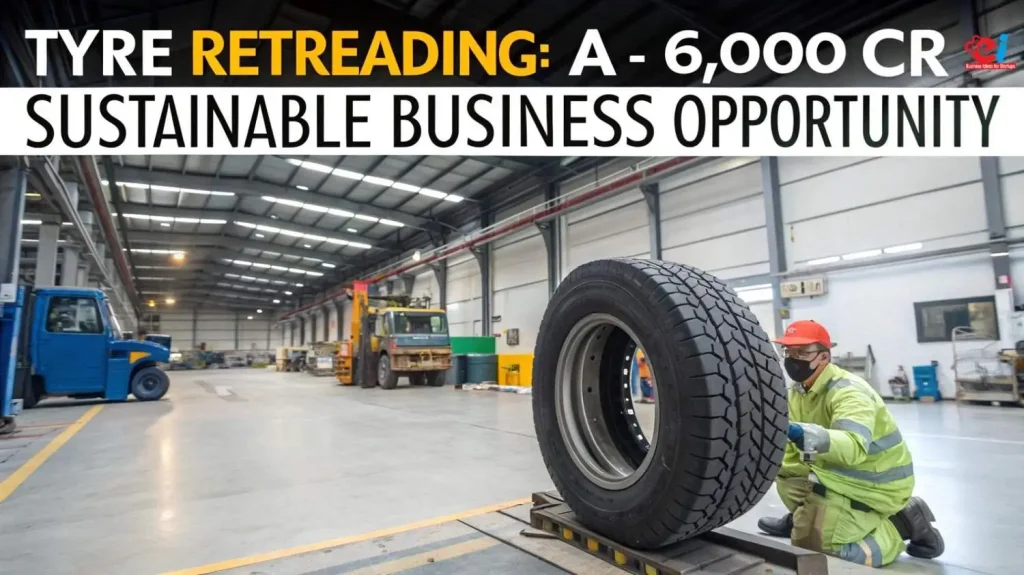
The revolution of sustainability Tyre Retreading is now taking place in the automotive sector. The industry is now looking beyond vehicle innovations to consider the carbon emissions, waste generation, resource scarcity along with the lifecycle of all vehicle components. One of the most effective yet ignored strategies in this context is tyre retreading which helps reduce operational costs while promoting the circular economy. Over the decades, tyre retreading has evolved significantly. The process was previously deemed to be a stopgap measure for the worn-out tires. But now, it is a global, technologically sophisticated, safety-standardized, and industry-backed quality-controlled process that is in increasing market demand. This is especially critical in economies such as India, where public transportation, logistics, and commercial vehicles are dominant. The rising fuel and maintenance costs, retreading offers logistic operators and fleet companies a cost-effective solution for increasing the life of tires while maintaining safety. Retreading tyres stands out as an economically appealing option as the Indian government works on decarbonizing the transportation sector and dealing with the growing environmental issue of waste tyres. For small manufacturers, existing automobile service providers and entrepreneurs, the decision to start a business in tyre retreading now has great timing and very good long-term impact. The Importance of Tyre Retreading for Business Today Retreading refers to the process to restore a worn-out tyre by changing its tread but keeping the casing if the tyre is still usable. The idea is to use the casing of the tyre which is more than 70% of the material and manufacturing cost, and add a top coat which improves the quality and safety of the tyre. The retreaded tire operates almost the same as a new tyre but at a much lower price. The work usually starts with an inspection of the tyre casing. Inspecting every part of the tyre lets the technician check for hidden cracks, sharp punctures, or heavy wear that would make the tyre dangerous to reuse. Once the outer layer is see-through, we grind off the worn rubber and stick on a new sheet. That patch can be either cold, already cured, or hot, still uncured-and each method brings its own strengths. Retreading old tyres cuts the number of new ones that factories must build, so everyone saves money, raw materials, and energy. There is now a wide utilisation of retreaded tyres in on-highway and off-highway transport applications including buses, trucks, trailers, construction equipment, and even some aircraft. They are fuel-efficient and deliver great mileage and performance, and if well-cared for, are nearly as durable as new tyres. For many transport operators, this translates into considerable reductions in operating costs. Environmentally, it results in reduced reliance on natural rubber oil, carbon black—crucial raw materials, and tyres in landfills which have great environmental costs. Related: Why to Invest In a Tyre Retreading Business? The Environmental Effects that Tyre Retreading has The main reason for the increase in the retreading of tyres globally is due to the willingness to adopt sustainable business practices. An estimate 25 – 28 litres of oil is consumed in the manufacture of a truck tyre. Multiply that single wasted tyre by the millions of trucks, cars rolling down the road each day, and the pile of junk rubber quickly grows into an eye-watering mountain. Tossing those tyres straight into a landfill-or worse, beside the highway-hurts the planet in ways we cant easily brush off. The environmental carbon footprint incurred while manufacturing a new tyre is significantly more than that of retreading a tyre. By retreading a tyre, it is possible to reduce emissions by up to 70% increase. In addition to that, the problem waste issue of used tyres is additional benefits of retreading. Old tyres dont break down like food scraps or paper, so when we toss them in a landfill or burn them, toxic bits leak into the soil, ruin nearby water, and drift up to pollute the air we all breathe. Retreading offers a way to alleviate such a waste concern. Countries with more sophisticated environmental policies like Germany, USA and Japan has incorporated the tire retreading into the waste management and formulated transport policies at the national level. India is a country that discards in excess of 100 million tyres every year. Developing a strong retreading infrastructure in India can create dual environmental and economic solutions. Methods of Retreading: Comparison of Cold and Hot Retreading Processes The classification of tyre retreading two types: cold retreading (precure process) and hot retreading (mold cure). Each one has its particular benefits based on the type of tyre, it’s size and the environment of application. Cold retreading is widely used for commercial vehicles in India. The pre-cured tread is molded and vulcanized with its design before being applied to the tire. The tread is bonded to the casing of the tyre and is later cured in a chamber. One of the biggest advantages of this method is that it preserves consistent tread depth, better mileage, shorter processing time, among others. Hot retreading consists of adding unvulcanized rubber to the casing and tread design is added while curing the tyre. This allows easy tread design changes and is common in off-road or custom vehicles. Even though cold retreading has lower operational costs and a cleaner finish, hot retreading integrates with the tyre body better. Most modern plants are equipped to handle both methods and select a process based on the casing’s condition and end-use requirements. Market Demand and Business Viability Market experts say the Indian tyre-retreading business is already worth more than 6,000 crore and still growing every year. Roughly 60 to 70 out of every 100 commercial tyres in India are retreaded at least once before being scrapped. That slice of the market should grow even bigger for truck and bus radials, because fleet owners are moving away from bias tyres and looking for ways to stretch every tyre’s lifespan. When it comes to the retreading business, the economics are quite persuasive. The price for a new truck
Latex Mattress Production | Start Latex Mattress Business
Watch other Informative Videos: Rubber Processing and Rubber Products Manufacturing Projects Click here to send your queries/Contact Us Together with technological advancement, the marketing of latex mattresses has improved tremendously. Mattress companies use a range of approaches, such as social media marketing, targeted advertising, and building brand recognition, to draw in potential customers. As a result, entrepreneurs who wish to start a latex mattress business must be prepared to spend a lot on marketing and advertising. In conclusion, given its phenomenal growth rate, the future of the latex mattress industry seems rather hopeful. As more people become aware of the benefits of these mattresses and as manufacturers continue to develop cutting-edge technology and successfully market it, the demand for these goods will only increase. As a result, launching a latex mattress manufacturing company is an exciting and successful venture. Also Read: 5 Reasons Why Market Research is Vital for Start-ups Contact Us
Start Manufacturing Business of Styrene Butadiene Rubber (SBR)
Visit this Page for More Information: Start a Business in Rubber Manufacturing Industry Why SBR is in High Demand Globally The demand for SBR is largely driven by the automotive and industrial sectors. Here’s why industries prefer SBR: High abrasion resistance and durability Good aging stability when mixed with antioxidants Cost-effective substitute for natural rubber Versatility in blending with other rubbers and additives More than 50% of SBR production is used in tire manufacturing, while the rest finds applications in footwear, adhesives, gaskets, and flooring materials. https://youtu.be/M4amyGg4p2o Market Potential for SBR Manufacturing in India India imports a significant volume of SBR annually due to limited local production, which creates a strong case for domestic manufacturing. Factors favoring SBR manufacturing in India include: Rising vehicle ownership and tire replacement demand Growth in infrastructure and construction activities Government’s “Make in India” initiative Import substitution potential to reduce dependency on foreign suppliers By setting up a plant to manufacture SBR locally, you can serve not just domestic clients but also tap into export markets like Southeast Asia, Africa, and the Middle East. Click here to send your queries/Contact Us Key Steps to Start Manufacturing Business of Styrene Butadiene Rubber (SBR) 1. Feasibility Study and Market AnalysisConduct in-depth research to understand regional demand, competitors, logistics, and supply chains. Also, identify your ideal customer base: tire manufacturers, rubber product makers, industrial suppliers. 2. Choosing the Right TechnologySBR is mainly produced by: Emulsion Polymerization (E-SBR): More common, suitable for general applications like tires, footwear. Solution Polymerization (S-SBR): Offers better performance, preferred in high-performance tires. Technology choice will impact your machinery, operating cost, and product range. 3. Location and InfrastructureSet up your plant near industrial hubs, ports, or petrochemical complexes. Ensure access to utilities (power, water, steam), road transport, and skilled labor. 4. Sourcing Raw MaterialsThe two main raw materials for SBR are: Styrene: Derived from benzene or ethylene Butadiene: A byproduct of petroleum refining or natural gas processing These can be sourced from petrochemical suppliers within India or through imports. 5. Machinery and Equipment Required Reactors and polymerization vessels Heat exchangers and separators Vacuum pumps and dryers Blending tanks and pelletizing systems Storage tanks for monomers and solvents Pollution control units (scrubbers, effluent treatment) 6. Licenses and ApprovalsSecure the following: Environment clearance from State Pollution Control Board Explosives and hazardous chemical storage licenses Factory license and GST registration Consent to Establish and Operate Related Feasibility Study Reports: Rubber and Rubber Products Investment and Cost Structure A medium-sized Styrene Butadiene Rubber (SBR) manufacturing unit may require an investment of ?50–100 crore or more depending on capacity and level of automation. Major cost components: Capital investment in land and machinery (45%) Raw materials and utilities (35%) Skilled labor and operations (10%) Licensing, R&D, and marketing (10%) Profitability improves with scale, long-term contracts, and energy-efficient operations. Margins typically range from 12–20% in the synthetic rubber sector. Target Buyers and Business Opportunities The primary customers for SBR include: Tire manufacturers (OEM and aftermarket) Conveyor belt and hose manufacturers Footwear and sports equipment brands Adhesive and sealant industries Additional revenue streams include exporting processed SBR to regions with rubber shortages and diversifying into rubber-based products. Read our Books Here: Rubber Processing And Compounding Technology Books Environmental and Safety Considerations As a chemical manufacturing business, SBR production must comply with environmental and safety norms: Install Zero Liquid Discharge (ZLD) systems Use air scrubbers and VOC emission control technologies Ensure worker safety with PPE, hazard training, and process automation Conduct regular audits for chemical handling and storage compliance Being compliant not only avoids regulatory penalties but also builds trust with clients and investors. Click here to send your queries/Contact Us Conclusion: Start Manufacturing Business of Styrene Butadiene Rubber (SBR) for Long-Term Growth The global rubber industry is evolving, and the shift toward synthetic solutions makes this the right time to start a manufacturing business of Styrene Butadiene Rubber (SBR) in India. With growing demand across multiple sectors, SBR production offers long-term profitability, scalable operations, and opportunities for product diversification. Whether you are an investor, chemical engineer, or entrepreneur, this business model aligns well with future trends in automotive and industrial applications. Take the first step today with proper planning, expert consultancy, and a focus on quality. Reasons for Buying NIIR Report: Our research report helps you get a detailed picture of the industry by providing an overview of the industry along with the market structure and classification. Our report provides market analysis covering major growth driving factors for the industry, the latest market trends and the regulatory framework of the industry. Our Report provides an analysis and in-depth financial comparison of major Players / Competitors. Our Report provides indispensable buyers data with their company financials as well as the contact details, which can be an important tool in identifying the target customers. Our report provides forecasts of key parameters which help to anticipate the industry performance. We use reliable sources of information and databases. And information from such sources is processed by us and included in the report. See More Links:
Start Production Business of Rubber Granules from Waste Tyre
In the modern industrial world, environmental concerns are rapidly becoming a top priority. One of the most significant contributors to non-biodegradable waste is discarded tyres. With millions of tyres reaching the end of their life cycle every year, proper disposal is a global challenge. This is where a rubber granules business comes into play. It offers a perfect solution that not only reduces tyre waste but also creates a valuable product widely used across industries. If you’re looking to start a sustainable, scalable, and profitable business, rubber granules production from waste tyres is an opportunity you should not miss. What Are Rubber Granules? Rubber granules are small particles of rubber obtained from recycling scrap tyres. These granules are used in a wide variety of applications, such as: Synthetic sports fields and playgrounds Rubber mats and flooring Road construction Industrial rubber products Shoe soles and molded products Landscaping and erosion control The recycling process involves shredding tyres and removing steel and fiber components, resulting in clean, uniform-sized rubber particles. Why Start a Rubber Granules Business? Rising Demand Rubber granules are essential in industries like construction, automotive, sports, and landscaping. With increasing urban infrastructure development, there is a continuous demand for these materials. Environmental Benefits Tyres are not biodegradable. If dumped or burned, they cause massive environmental damage. By converting waste tyres into granules, you’re actively contributing to a cleaner, greener planet. Cost-Effective Raw Material Waste tyres are abundantly available at very low prices. In many cases, businesses or municipalities may even pay you to dispose of their old tyres responsibly. Government Incentives Many governments across the world, including India, support recycling ventures through subsidies, low-interest loans, and relaxed environmental regulations. Lucrative Profit Margins With minimal raw material cost and growing demand, profit margins in rubber granule production are highly attractive. Step-by-Step Guide to Starting a Rubber Granules Business 1. Conduct Market Research Begin with a thorough feasibility analysis. Understand: Local tyre waste availability Competition and market saturation Industrial demand for rubber granules Legal and environmental regulations Study buyers in your region—builders, sports facility contractors, flooring manufacturers—and understand their specifications and pricing models. 2. Prepare a Business Plan Your business plan should include: Business objectives and scope Target market and revenue model Operational strategy and logistics Equipment and manpower requirements Marketing and sales plan Financial projections and ROI analysis A detailed plan helps in securing funding and attracting partners or investors. 3. Register and Legalize Your Business You must legally register your business under a proper entity (e.g., sole proprietorship, partnership, Pvt Ltd). Also, obtain: Udyam/MSME Registration GST Registration Pollution Control Board NOC Factory License Fire Safety Certificate Ensure compliance with local environmental laws, especially for handling and disposing of industrial waste. 4. Choose an Ideal Location Your production unit should be: Close to tyre scrap sources Accessible via road/rail for logistics Spacious enough for machinery, storage, and safety zones Away from residential areas to avoid environmental concerns Locations in industrial zones are most suitable. 5. Machinery and Equipment Required Setting up a rubber granules manufacturing plant requires several machines: Tyre Cutter: To cut large tyres into manageable pieces Shredder Machine: Reduces tyre parts into small chips Granulator: Further crushes chips into fine rubber granules Steel Separator: Removes steel wires using magnets Fiber Separator: Eliminates nylon fibers Rotary Screen: Sorts rubber granules by size Dust Collector System: Controls air pollution Conveyors and Packaging Units You may also consider a cryogenic grinding system for producing very fine rubber powder. Estimated Machinery Cost: ?20–30 Lakhs depending on production capacity 6. Hire Skilled Workforce You’ll need: Machine operators and technicians Quality control and lab personnel Loading and logistics workers Administrative and sales staff Train your staff in machine safety, waste handling, and product quality standards. 7. Source Waste Tyres Set up contracts or partnerships with: Vehicle scrapyards Tyre retailers and mechanics Transport companies Municipal waste departments Maintain a consistent and steady supply of tyres to ensure continuous production. 8. Production Process Here is the typical rubber granules production workflow: Tyre Cutting: Cut tyres into sidewalls and treads Shredding: Convert the pieces into small chips Granulating: Crush chips into fine granules Steel and Fiber Removal: Extract steel and textile materials Screening: Separate rubber granules into various size grades Dust Collection: Capture fine particles for air pollution control Packaging: Pack the final product in bags or bulk containers for delivery 9. Quality Control and Certifications Maintaining consistent quality is key. Establish a lab for: Particle size analysis Purity checks (removal of steel and fiber) Moisture content testing You may also seek ISO certifications for quality assurance. Estimated Investment and Returns Capital Investment Category Estimated Cost Machinery & Equipment ?20–30 Lakhs Factory Setup ?10–15 Lakhs Legal & Licensing ?1–2 Lakhs Working Capital (3–6 months) ?5–10 Lakhs Total ?36–57 Lakhs Operating Costs Labour wages Electricity and water Maintenance Transport and packaging Marketing and admin Revenue & Profit On average, 1 ton of tyres yields 600–700 kg of rubber granules, 100–150 kg of steel, and 50–100 kg of fiber.Selling price of rubber granules: ?20–30/kg (varies with size & purity)Monthly profit margins: 20%–35%, depending on efficiency and scale Marketing Your Rubber Granules Target Customers Sports facility builders Flooring and mat manufacturers Rubber product industries Asphalt and road builders Exporters Marketing Channels B2B platforms (IndiaMART, TradeIndia) Local industrial expos Government tenders Digital marketing (Google Ads, LinkedIn) Environmental and recycling forums Highlight the eco-friendly and sustainable aspect of your product in all promotions. Challenges and How to Overcome Them Challenge Solution High Initial Investment Explore government subsidies, soft loans Regulatory Hurdles Hire legal consultants to ensure compliance Tyre Supply Shortages Develop long-term supplier contracts Dust & Pollution Issues Invest in effective dust collection systems Quality Inconsistency Regular QC checks and maintenance Future Potential and Expansion Opportunities The rubber recycling industry is expected to grow exponentially, driven by increasing sustainability awareness, government regulations, and industrial demand. Once your business is stable, consider expanding into: Rubber powder production Colored rubber granules Rubber floor tiles or paver blocks Exporting to construction companies abroad Collaborating with
Radial Tyres Manufacturing Business: Most Lucrative Startup Opportunities in Automobile Sector
Introduction to the Radial Tyres Industry The radial tyres manufacturing sector is witnessing an unprecedented boom globally, driven by escalating demand for high-performance, fuel-efficient, and durable tyres. In emerging markets like India, the automotive sector is thriving, and radial tyres are becoming the preferred choice for commercial and personal vehicles. For entrepreneurs seeking a profitable and scalable venture, stepping into the radial tyres manufacturing business offers a goldmine opportunity. Why Radial Tyres Are in High Demand Radial tyres provide better road grip, superior fuel economy, enhanced durability, and lower rolling resistance compared to traditional bias-ply tyres. With the global push towards vehicle safety and performance optimization, radialisation in commercial vehicles and passenger cars is no longer optional — it’s a necessity. Key Advantages of Radial Tyres: Reduced fuel consumption due to lower rolling resistance. Longer lifespan, reducing maintenance and replacement costs. Improved handling and braking efficiency. Superior performance at high speeds. Understanding the Radial Tyres Market Scope The global radial tyres market is projected to reach USD 120 billion by 2030, growing at a CAGR of over 6%. This growth is fueled by increased automobile production, stringent regulations on fuel economy, and the replacement of older vehicles. The Indian market alone is shifting rapidly toward 100% radialisation, especially in the truck and bus segment, making it a strategic manufacturing location. Step-by-Step Guide to Starting a Radial Tyres Manufacturing Unit 1. Conduct Market Research and Feasibility Study Understanding demand dynamics, target market, raw material availability, and cost structure is essential before investing in a manufacturing unit. A feasibility study will highlight: Potential ROI Break-even point Regional tyre consumption patterns Competitive analysis 2. Choose a Strategic Location Select a location with access to: Industrial infrastructure Skilled labor Proximity to automobile hubs Easy logistics and raw material sourcing Cities like Pune, Chennai, Vadodara, and Indore are ideal choices due to their strong automotive and rubber industry linkages. 3. Obtain Legal Registrations and Approvals To legally operate a radial tyres manufacturing plant in India, you must secure: Company registration (LLP or Pvt. Ltd.) GST Registration Pollution Control Board Clearance Factory License Import-Export Code (for global sales) BIS Certification for quality compliance 4. Machinery and Technology Setup Invest in automated machinery for: Tyre building Curing press Calendering Bead forming Tread extrusion Quality control testing units Leverage latest radialisation technologies from global manufacturers like VMI Group, Mesnac, or HF Group for optimized output. 5. Hire Skilled Workforce Skilled professionals in: Mechanical and industrial engineering Rubber technology Quality control and R&D Logistics and marketing You’ll also need a strong operations team to manage daily production schedules and ensure quality standards are met consistently. 6. Secure Raw Materials The essential raw materials include: Natural and synthetic rubber Carbon black Steel wires Sulfur and accelerators Nylon/Polyester cords Establish long-term contracts with domestic and international suppliers to ensure consistency in quality and pricing. 7. Build a Robust Distribution Network Develop a network of: Dealers and distributors OEM (Original Equipment Manufacturer) tie-ups Export channels E-commerce platforms for retail sales Ensure a strong logistics and supply chain management system to deliver tyres safely and on time. Investment and Profitability Overview Initial Investment Estimate: Land and Building: ?2 – ?5 Crores (depending on location) Machinery and Equipment: ?8 – ?12 Crores Working Capital: ?2 – ?4 Crores Total Investment: ?12 – ?20 Crores Profit Margins: Radial tyre manufacturers enjoy a gross profit margin of 25-35%, especially when scaling up with OEM contracts and export markets. The break-even period typically ranges between 2 to 3 years depending on production volume and market penetration. Government Schemes and Support The Government of India supports the radial tyres industry through: PLI Scheme for auto and auto component manufacturers. MSME subsidies on interest and capital investment. Export incentives under the RoDTEP Scheme. Technology Upgradation Fund Scheme (TUFS) for modern machinery. These schemes significantly reduce capital risk and support business growth. Export Potential of Radial Tyres India exports radial tyres to over 100 countries. The top export destinations include: United States Germany UAE Australia South Africa To tap global markets: Obtain DOT, E-Mark, and GCC certifications Build a strong export compliance and shipping framework Participate in international auto expos and B2B meets Marketing Strategy for Radial Tyres 1. Brand Building Create a strong brand identity with: Eye-catching logo and brand story Eco-performance messaging Emphasis on durability and savings 2. Digital Marketing Use SEO, PPC, and social media to promote: Product features Comparisons with competitors Customer testimonials Bulk order discounts for fleet owners 3. OEM Tie-ups Partner with leading vehicle manufacturers to supply tyres directly to assembly lines. This offers stable long-term revenues. 4. Aftermarket Sales Target individual customers, garages, tyre shops, and fleet operators with competitive pricing and dealer loyalty programs. Challenges and Risk Mitigation Common Challenges: High capital investment Raw material price volatility Import dependency on machinery Quality control consistency Risk Mitigation: Diversify suppliers Use hedging tools to manage raw material price fluctuations Regular maintenance and staff training ISO 9001 and BIS quality systems implementation Future of Radial Tyres Manufacturing The future is green and intelligent. Expect major innovations such as: Eco-friendly, recyclable tyres Smart tyres with embedded sensors AI-driven predictive maintenance analytics Integration with electric vehicles (EVs) for specialized requirements India is poised to become a global manufacturing hub for radial tyres, driven by favorable government policy, strong domestic demand, and export opportunities. Conclusion Launching a radial tyres manufacturing business is not just a lucrative opportunity, it’s a strategic entry into the booming automotive and mobility market. With careful planning, adherence to quality, and a robust marketing strategy, you can transform this venture into a multi-crore enterprise in just a few years. It’s the perfect time to roll into the future with radial precision. Visit the page Select and Choose the Right Business Startup for You for sorting out the questions arising in your mind before starting any business and know which start-up you can plan. We, at NPCS, endeavor to make business selection a simple and convenient step for any entrepreneur/startup. Our expert team, by
Latex Rubber Thread Production Business
The global demand for elastic materials used in textiles, garments, medical supplies, and industrial products has seen a significant surge in recent years. Among these, latex rubber thread is one of the most essential raw materials. Known for its elasticity, strength, and ability to revert to its original length after stretching, latex rubber thread plays a critical role across various industries. For entrepreneurs and investors looking to tap into a high-demand, export-worthy, and scalable business, the latex rubber thread production unit is a profitable venture with long-term potential. Why Start a Latex Rubber Thread Manufacturing Unit? Latex rubber thread, also known as elastic thread or rubber thread, is primarily made from natural latex extracted from rubber trees. This raw material is abundant in tropical countries like India, Thailand, and Malaysia. The product is widely used in the production of garments such as socks, undergarments, sportswear, and other elastic-based items like diapers, face masks, balloons, and even in fishing and automotive industries. With increasing demand from the garment and medical sector, many businesses are shifting focus to latex-based manufacturing. The latex rubber thread industry offers low to medium competition, a consistent raw material supply chain, and the potential for both domestic sales and exports. Moreover, its application across varied industries makes it a recession-resistant product. Market Demand and Scope The global latex rubber thread market is expected to grow at a CAGR of over 5% in the coming decade, driven largely by the booming apparel and healthcare industries. Asia-Pacific countries, including India, Vietnam, and Indonesia, are emerging as strong markets due to their large-scale textile industries. As consumer preferences shift toward stretchable, comfortable clothing, the demand for high-quality elastic threads continues to increase. This rising demand makes investing in a latex rubber thread production business both viable and profitable. Business Setup Requirements Setting up a latex rubber thread manufacturing unit requires a detailed business plan, regulatory approvals, and access to high-quality raw materials. Here’s a brief breakdown of the major requirements: 1. Land and Location:You will need an industrial plot of around 10,000 to 15,000 sq. ft. for setting up production machinery, raw material storage, finished goods storage, and quality testing labs. Proximity to rubber plantations or ports (for export) can lower logistic costs. 2. Machinery and Equipment:The production line includes machinery for latex compounding, extruding, coagulation, leaching, drying, talcum coating, and winding. Automatic or semi-automatic units can be chosen depending on budget. An investment of ?2–4 crore may be required depending on capacity. 3. Raw Materials:The key raw material is natural latex, sourced from rubber trees. Additional materials include sulfur, stabilizers, colorants, talc, and coagulants. Consistent quality latex supply is crucial for uninterrupted production. 4. Manpower and Technical Expertise:You will need skilled technicians, plant operators, quality analysts, and packaging staff. A workforce of 20–30 people is required for medium-scale production. Training on machinery operation and safety is essential. 5. Utilities:The production process consumes a considerable amount of electricity and water. Hence, ensure stable utility connections. Also, install a proper waste treatment system to comply with pollution control norms. Manufacturing Process of Latex Rubber Thread The manufacturing of latex rubber thread is a multi-stage process involving physical and chemical transformations. Below is an overview: Compounding: Natural latex is mixed with various chemicals like stabilizers and vulcanizing agents to enhance properties such as strength and elasticity. Extrusion: The compounded latex is extruded through fine holes to form threads. Coagulation: The extruded threads are passed through a coagulation bath (usually with acetic acid) to solidify. Leaching: The coagulated threads are thoroughly washed to remove residual chemicals. Vulcanization and Drying: Threads are heated to achieve cross-linking (vulcanization), making them elastic and durable. They are then dried in hot air chambers. Coating and Winding: Dried threads are coated with talcum or anti-tack powder and wound onto spools. This process must be precisely controlled to ensure uniformity, strength, and quality in the finished product. Licensing and Legal Compliance To operate a latex rubber thread production unit in India, you need several approvals: Factory License from the local authority NOC from Pollution Control Board (essential due to chemical usage) Udyam Registration (for MSME benefits) GST Registration Import Export Code (IEC) if you plan to export Compliance with labor laws, employee safety, and environmental norms is mandatory. Investing in quality certification like ISO 9001 can also help in capturing international markets. Investment and Profitability The capital investment depends on the production capacity. A medium-sized plant with a capacity of 2–3 tonnes per day can cost approximately ?3–5 crore, including land, building, equipment, and working capital. Here’s a basic profitability estimate: Production Capacity: 60 tonnes/month Cost of Production (approx): ?200–250/kg Selling Price (avg): ?300–350/kg Monthly Profit: ?30–50 lakhs (before tax and overheads) Exporting to countries like Bangladesh, Sri Lanka, and Middle East can further improve margins. Establishing tie-ups with textile manufacturers or medical suppliers ensures steady bulk orders. Marketing Strategy To promote your latex rubber thread brand, focus on both domestic B2B and export clients. Attend industry trade fairs, advertise in textile and industrial journals, and use platforms like IndiaMART, Alibaba, and TradeIndia. Building long-term supply contracts with garment units, diaper manufacturers, and medical companies will ensure stable demand. Offering custom specifications (thread diameter, color, elasticity) and on-time delivery can make your brand stand out. Also, maintaining superior product quality will help you build trust and brand recognition in the market. Challenges and Risk Factors Despite its profitability, the latex rubber thread business has some risks: Price fluctuation of natural rubber latex Environmental regulations related to chemical effluents Machinery maintenance and downtime Skilled labor availability High competition from Malaysia and Thailand in export markets However, these risks can be mitigated through long-term raw material contracts, installing modern waste treatment systems, and investing in workforce training. Future Outlook and Growth Potential The growing demand from fashion and sportswear brands, rising health consciousness (leading to more hygiene products like masks and diapers), and booming e-commerce industry all point to sustained demand for elastic materials. Further innovations in latex blending, eco-friendly
Rubber Band Manufacturing Business
Rubber bands are one of the most essential and commonly used products in households, offices, agriculture, and various industries. Their simple design and multifunctionality have made them indispensable in everyday life. As the demand continues to rise, starting a rubber band manufacturing business presents a lucrative opportunity for aspiring entrepreneurs. Whether you’re looking to establish a small-scale unit or a medium enterprise, understanding the production process, raw materials, market, and setup requirements is crucial for long-term success. Overview of Rubber Band Manufacturing Process The rubber band manufacturing process involves converting natural rubber or synthetic rubber into elastic loops of varying sizes and thicknesses. These are produced through molding, extrusion, curing, and cutting operations. The business has low entry barriers and promises decent profit margins with moderate capital investment. Market Potential of Rubber Band Manufacturing The market for rubber bands spans several sectors—stationery, packaging, agriculture, fishing, medical, textiles, and more. Their usage in bundling items, sealing containers, organizing tools, and even in physical therapy increases their versatility. The increasing consumption in India and international markets like Africa, the Middle East, and South Asia boosts the potential for export-oriented units. Additionally, the e-commerce and logistics boom has pushed demand higher as rubber bands play a crucial role in product packaging and handling. Given their non-toxic nature, affordability, and reusability, the consumption curve continues to rise globally, creating ample room for small and mid-size players in the rubber band manufacturing space. Raw Materials Required The primary raw materials used in rubber band manufacturing are: Natural rubber or synthetic rubber: Generally, crepe rubber is used for its elasticity and durability. Sulfur and other chemicals: For vulcanization and curing processes. Pigments and dyes: To color the rubber bands. Talcum powder: To prevent sticking and enhance shelf life. You will also need packaging materials like polybags and cartons for the final product. Machinery and Equipment To begin production, you’ll require the following machines: Rubber mixing mill – Used to blend raw rubber with chemicals. Extruder – Shapes the rubber into tubes. Vulcanizing tank – For heat treatment to strengthen rubber. Cutter – Slices rubber tubes into individual bands. Boiler – Supplies steam for vulcanizing process. Grinding machine – Optional, for recycling rubber scraps. Packaging machine – For final product packing. The cost of machinery can range from ?8 lakhs to ?20 lakhs depending on production capacity and automation. Manufacturing Process Step-by-Step Raw Material PreparationThe crepe rubber is washed and dried. It is then mixed with required chemicals like sulfur, accelerators, and pigments in a mixing mill. ExtrusionThe rubber compound is passed through an extruder to form long tubular shapes. VulcanizationThese rubber tubes are treated in a steam-heated chamber or vulcanizer where the elasticity and strength are improved. Cooling and CuttingThe tubes are cooled, and then cut into small rubber bands using precision cutters. Finishing and DryingThe bands are coated with talcum powder and dried to remove moisture. Inspection and PackagingThe finished rubber bands are sorted by size and weight, checked for quality, and packed in printed polybags for sale. Legal and Regulatory Requirements Starting a rubber band manufacturing business in India requires: Udyam/MSME registration (for availing government benefits) GST registration (mandatory for taxation) Factory license (if applicable) NOC from Pollution Control Board Trade license from the local municipal authority If you’re planning to export, you’ll also need an Import Export Code (IEC) from DGFT. Investment and Profitability The investment in rubber band manufacturing can vary as follows: Small-scale setup: ?6–10 lakhs Medium-scale setup: ?15–30 lakhs Large-scale setup: ?40 lakhs and above Your costs will include: Machinery Raw materials Labor Utilities Packaging Marketing The average profit margin in the rubber band business can range from 20% to 30%. With an efficient setup, breakeven can be achieved within 1 to 2 years, depending on market reach and scale. Location and Infrastructure Choose a location with the following features: Easy access to raw materials and transportation Uninterrupted water and electricity supply Space for storage, processing, and packaging Proximity to target markets For small-scale units, a 1000 sq. ft area might be sufficient, whereas medium or large units may require 2000–5000 sq. ft or more. Manpower and Staffing Depending on your business scale, you’ll need: Machine operators Packaging staff Supervisors Quality control personnel Administrative staff A typical small unit can function with 6–10 workers, while larger units may require 15–30 employees. Training your workforce on machine handling, quality control, and safety is essential to reduce wastage and increase productivity. Marketing and Sales Strategy Success in rubber band manufacturing depends heavily on distribution and marketing. Here are effective channels: Retailers and wholesalers Stationery distributors Packaging companies Export traders E-commerce platforms You can also brand your rubber bands with custom packaging and labels to build identity. Bulk orders and long-term contracts with businesses ensure stability and higher profits. Online marketing, trade exhibitions, and industrial directories are great tools to reach a broader market. Quality Standards To compete effectively, ensure that your rubber bands meet the following quality benchmarks: Consistent elasticity Uniform size and shape Non-toxic and eco-friendly materials Resistance to weather and temperature changes No surface defects or unpleasant odor Implementing a robust quality control system ensures fewer rejections and a stronger reputation in the market. Challenges in the Rubber Band Manufacturing Industry While rubber band manufacturing is relatively simple, entrepreneurs may face the following challenges: Price fluctuations in rubber Stiff competition from established brands Ensuring consistent product quality Skilled labor shortages Compliance with pollution norms To overcome these, keep machinery updated, build a reliable supplier network, and invest in employee training and waste reduction. Sustainability and Waste Management Environmental regulations now require manufacturers to minimize waste and pollution. Adopt eco-friendly practices such as: Recycling scrap rubber Using non-toxic colors and chemicals Reducing water and power consumption Efficient waste disposal Promoting sustainability can also become a unique selling point for your brand, appealing to environmentally conscious consumers. Export Opportunities India has become a significant exporter of rubber products. Countries in Africa, the Middle East, and Southeast Asia show increasing demand for
Canvas Shoes Manufacturing Industry
Canvas shoes have carved a significant niche in the global footwear market. They are lightweight, comfortable, eco-friendly, and trendy, making them an ideal choice for people across all age groups. With increasing demand for casual and affordable footwear, starting a canvas shoe manufacturing factory can be a highly profitable business venture. Whether you are a budding entrepreneur or an experienced manufacturer looking to diversify, the canvas shoe manufacturing industry offers great potential with relatively low investment and high returns. Steps to Start a Canvas Shoe Manufacturing Factory Starting a canvas shoe manufacturing factory requires a combination of proper planning, resource management, and a clear understanding of the production process. Here’s a comprehensive guide to help you establish your own canvas shoe manufacturing unit: 1. Market Research and Business Plan Before venturing into canvas shoe manufacturing, it’s crucial to conduct detailed market research. Understand the latest trends, consumer preferences, pricing strategies, and competitors in the footwear industry. This will help you identify your target audience and carve a unique selling proposition (USP) for your brand. Develop a solid business plan that includes: Business objectives and vision Estimated investment and funding sources SWOT analysis (Strengths, Weaknesses, Opportunities, Threats) Marketing and sales strategy Risk management and contingency plans The business plan will also help you gain investor confidence and secure business loans or financial support if needed. 2. Choose the Right Location The location of your canvas shoe manufacturing factory plays a vital role in your operations. Choose an area that offers: Affordable industrial space Easy access to raw materials and labor Efficient logistics and transportation Power and water supply Minimal environmental hazards and legal hurdles Proximity to marketplaces or footwear wholesale hubs will also reduce shipping costs and delivery times. 3. Register Your Business and Obtain Licenses To legally operate your canvas shoe manufacturing unit, you must complete all necessary registrations and certifications. These typically include: Company registration (as a sole proprietorship, partnership, or private limited company) GST registration Trade license from local authorities Factory license Environmental clearance (if applicable) Udyam registration (for MSMEs) ESIC and EPF registration (if hiring employees) Ensuring proper documentation from the outset will save you from legal troubles in the future. 4. Procure Machinery and Equipment Canvas shoe manufacturing involves multiple processes including cutting, stitching, assembling, sole fixing, and finishing. Some of the common machinery required are: Canvas cutting machine Stitching and sewing machines Sole pressing machines Eyelet punching machine Vulcanizing machine Shoe molding equipment Conveyor belts Packaging machinery You can either purchase brand-new machines or opt for second-hand machinery based on your budget. Make sure to invest in high-quality tools to ensure durability and productivity. 5. Source Raw Materials The key raw materials for canvas shoe manufacturing include: Canvas fabric (cotton, polyester blends, etc.) Rubber or EVA soles Insoles Laces Eyelets and rivets Adhesives and glues Threads and trims Choose reliable suppliers who can deliver consistent quality and meet your production demands. Buying in bulk will help you negotiate better prices and reduce manufacturing costs. 6. Set Up the Production Line Design a streamlined production process to maximize efficiency. Divide the manufacturing floor into different departments: Cutting unit (fabric and sole) Stitching and assembly unit Sole attachment section Quality control Finishing and packaging Proper layout design reduces material handling time and ensures a smoother workflow. Implement lean manufacturing practices to minimize waste and improve productivity. 7. Hire and Train Staff Recruit skilled labor for different roles such as cutters, stitchers, assembly line workers, quality inspectors, and packagers. Additionally, employ supervisors and administrative staff to manage day-to-day operations. Offer training sessions for new hires to familiarize them with the canvas shoe manufacturing process and maintain high standards of production. Providing safety gear and maintaining a clean working environment is equally essential. 8. Focus on Quality Control Quality assurance is critical in canvas shoe manufacturing. Customers expect durable, well-finished, and comfortable footwear. Implement stringent quality checks at every stage: Material inspection before production Stitch and assembly checks Adhesive bonding inspection Final product examination for defects Maintain detailed records of quality reports and continuously seek feedback to improve product quality. 9. Branding and Packaging Attractive branding and packaging can significantly enhance your product appeal. Design a unique logo, shoe box, tags, and labels for your brand. Eco-friendly packaging options can also serve as a strong marketing tool for environmentally conscious buyers. Offer customization options like printed canvas designs or designer soles to target niche audiences. 10. Marketing and Sales Strategy Use a multi-channel marketing approach to increase your brand visibility. Some effective strategies include: Listing your products on e-commerce platforms (Amazon, Flipkart, etc.) Creating your own brand website Partnering with local retailers and wholesalers Promoting via social media platforms like Instagram, Facebook, and Pinterest Attending trade fairs and footwear expos Offline and online marketing should go hand in hand to ensure maximum reach and brand recall. 11. Understand Costing and Profit Margins The overall cost of setting up a canvas shoe manufacturing factory depends on various factors such as location, scale of operations, machinery, labor costs, and raw materials. On average, a small-scale unit can be set up with an investment ranging from ?15 to ?30 lakhs. Keep track of fixed and variable costs like: Rent and utilities Wages and salaries Raw material costs Maintenance Marketing expenses Canvas shoe manufacturing can offer profit margins ranging from 20% to 35% depending on efficiency and sales volume. 12. Innovate and Expand Once your canvas shoe manufacturing factory is established and running smoothly, explore expansion opportunities: Introduce new styles and colors Launch kids’ or sportswear lines Export your products to international markets Collaborate with fashion designers or influencers Constant innovation will help you stay ahead of the competition and build a loyal customer base. Conclusion Starting a canvas shoe manufacturing factory is a promising business opportunity for entrepreneurs who are passionate about footwear and fashion. With a well-defined business strategy, efficient production line, and innovative marketing techniques, you can establish a profitable and scalable venture. As sustainable and affordable footwear continues
Bicycle Tyre & Tubes Production from Natural Rubber
The Bicycle Tyre & Tubes Production from Natural Rubber industry is a cornerstone of the global bicycle manufacturing ecosystem. As cycling gains momentum due to rising environmental concerns, fitness awareness, and urban traffic congestion, the demand for high-quality tyres and tubes has increased significantly. Natural rubber, known for its durability, flexibility, and eco-friendliness, serves as the ideal base material. Starting a Bicycle Tyre & Tubes Production from Natural Rubber business offers tremendous opportunities for entrepreneurs aiming to tap into both domestic and international markets. Market Overview and Demand Growth The bicycle market is experiencing explosive growth worldwide, especially in Asia, Africa, and Europe. India alone produces over 15 million bicycles annually, and each one requires at least two tyres and two tubes—creating a consistent and scalable market. In addition to conventional city bicycles, the growth of mountain bikes, e-bikes, and hybrid cycles is further boosting the tyre and tube segment. The Bicycle Tyre & Tubes Production from Natural Rubber segment specifically appeals to eco-conscious consumers and brands who prioritize sustainable components in their products. Moreover, governments across the globe are actively promoting bicycle usage through infrastructure development, smart city planning, and pollution reduction goals, creating ripple effects in the allied manufacturing sectors. Benefits of Using Natural Rubber Natural rubber, extracted from the latex of rubber trees, offers several advantages that make it suitable for tyre and tube manufacturing: High elasticity and tensile strength, essential for enduring road conditions Resistance to wear and tear, extending tyre life Thermal stability, allowing usage in diverse climates Eco-friendly and biodegradable, compared to synthetic rubber alternatives Superior air retention, making tubes safer and longer-lasting Because of these traits, the Bicycle Tyre & Tubes Production from Natural Rubber process is favored by both large manufacturers and sustainable startups. Production Process Overview Starting a Bicycle Tyre & Tubes Production from Natural Rubber unit requires a well-structured manufacturing workflow: Raw Material Processing – Natural rubber is cleaned, mixed with chemicals (like carbon black, sulfur, accelerators), and compounded. Tyre Casing Formation – The rubber compound is shaped into tyre casings using extrusion machines and then reinforced with fabric or steel belts. Tube Extrusion and Vulcanization – Tubes are formed via extrusion, cut into size, sealed, and then vulcanized (heat treated) for strength and flexibility. Curing and Molding – Tyres are placed into molds and cured at high temperatures to form the tread pattern and sidewall designs. Finishing and Quality Check – Final trimming, pressure testing, leakage testing, and aesthetic inspections are done. Packaging and Dispatch – Products are packed in sets, labeled, and made ready for shipping. The process requires trained labor and quality control to ensure that each tyre and tube meets safety standards. Machinery and Equipment Requirements To establish a standard Bicycle Tyre & Tubes Production from Natural Rubber plant, the following machinery is needed: Rubber mixing mills Extrusion machines for tube and tread formation Tyre building machines Hydraulic curing presses Tube jointing and vulcanization units Buffing, trimming, and testing units Air compressor and boiler systems A semi-automated setup helps reduce operational costs while maintaining volume. Depending on the capacity, a unit may need 10,000–15,000 sq. ft. of operational space. Raw Materials and Utilities Key materials used in the Bicycle Tyre & Tubes Production from Natural Rubber business include: Natural rubber sheets or latex Carbon black – for reinforcement Sulfur and accelerators – for vulcanization Nylon or rayon cord – for tyre carcass Lubricants and solvents Tread gum compound and curing bladders Utilities like consistent electricity, water, and compressed air are essential. Also, proximity to rubber plantations or suppliers can reduce input costs and improve margins. Capital Investment and Financial Overview Starting a Bicycle Tyre & Tubes Production from Natural Rubber business requires moderate to high capital investment depending on production volume. Here’s a typical cost structure for a medium-scale plant: Land & Building: ?40–?60 lakhs (lease or own) Machinery and Equipment: ?1–1.5 crore Raw Material Inventory (initial): ?30–50 lakhs Labor and Staffing (3–6 months): ?20–30 lakhs Licensing, setup, utilities: ?10–15 lakhs Marketing & branding: ?5–10 lakhs Overall investment can range from ?1.5 crore to ?2.5 crore, with scalable options available based on automation and output. Profitability and Market Strategy The profit margin in the Bicycle Tyre & Tubes Production from Natural Rubber sector can be quite attractive due to the combination of low input costs and high-volume demand. Margins range from 20% to 35%, depending on: Product quality and branding Cost control in raw material sourcing Distribution efficiency Value-added features like anti-skid or puncture-resistant tyres A well-run plant can achieve break-even within 2–2.5 years and generate consistent monthly revenue from OEM orders, retail supply, and export contracts. Legal Compliance and Certification Legal requirements for a Bicycle Tyre & Tubes Production from Natural Rubber unit include: Business registration (MSME/Udyam, Pvt Ltd, or LLP) GST registration and trade license Pollution Control Board clearance (air and water emissions) Factory Act compliance and employee welfare measures ISI Certification or BIS compliance for tyres and tubes Export licensing if targeting international markets Ensuring compliance builds long-term credibility and eligibility for tenders, bulk supply, and government programs. Marketing and Distribution Approach To grow a Bicycle Tyre & Tubes Production from Natural Rubber brand, manufacturers can adopt multiple channels: Tie-ups with bicycle manufacturers and assemblers Distribution to spare parts dealers and retail outlets Launching a direct-to-consumer e-commerce brand Exporting to Africa, Southeast Asia, and Latin America Branding through cycling events, eco campaigns, and NGO partnerships Participation in trade expos and industrial exhibitions Creating regional warehouses or working with logistics aggregators can improve delivery time and scale faster. Government Support and Funding Schemes The Indian government and several international development programs offer support to promote sustainable manufacturing and MSMEs, including: Credit Linked Capital Subsidy Scheme (CLCSS) Startup India registration and benefits Subsidized loans via SIDBI and Mudra Yojana NABARD funding for agri-linked industrial units State-specific incentives for eco-friendly industries Manufacturers may also receive tax exemptions, subsidies on equipment, or land leasing options in designated industrial zones. Conclusion The Bicycle Tyre & Tubes Production
Butyl Rubber (IIR) Production
Butyl rubber (IIR), also known as isobutylene-isoprene rubber, is a synthetic elastomer widely used in various industries for its excellent air retention, heat resistance, and chemical inertness. It plays a pivotal role in applications such as tire inner linings, sealants, adhesives, protective clothing, and pharmaceutical stoppers. The manufacturing of Butyl Rubber (IIR) is a complex but fascinating process that blends chemistry, engineering, and technology to produce a material that has been in demand since its commercial introduction in the 1940s. This article provides an in-depth look into the step-by-step production process of Butyl Rubber (IIR), shedding light on the science and methodology behind this versatile polymer. Step-by-Step Process of Manufacturing Butyl Rubber (IIR) 1. Raw Material Selection and Preparation The production of Butyl Rubber (IIR) begins with two primary monomers: isobutylene (IB) and a small amount (about 1–2%) of isoprene. Isobutylene, a highly reactive hydrocarbon, provides the primary backbone of the polymer, while isoprene introduces a few unsaturated sites necessary for vulcanization. The high purity of these monomers is essential to achieve optimal polymer properties. These raw materials are typically obtained as by-products from petroleum refining processes such as catalytic cracking or steam cracking. Before polymerization, the monomers are purified to remove water, oxygen, and other impurities. This ensures a controlled and efficient polymerization reaction, which is critical in achieving the desirable molecular weight and characteristics of Butyl Rubber (IIR). 2. Low-Temperature Cationic Polymerization The core of Butyl Rubber (IIR) manufacturing lies in its polymerization, which takes place through a low-temperature cationic polymerization process. This process occurs in a liquid phase, typically within a solution of methyl chloride (CH?Cl) acting as the solvent. The polymerization is carried out in a stainless steel reactor maintained at extremely low temperatures, usually around -100°C to -120°C. This low temperature is crucial because isobutylene is a highly reactive monomer, and any heat could lead to undesirable side reactions or chain scission. A catalyst, commonly aluminum chloride (AlCl?) or boron trifluoride (BF?), is added to initiate the cationic reaction. The catalyst forms a reactive carbocation with isobutylene, which begins a chain reaction, linking thousands of isobutylene and a few isoprene monomers into long polymer chains. The proportion of isoprene is controlled to ensure the polymer has a minimal number of unsaturated sites—enough for vulcanization but low enough to retain butyl’s impermeability and chemical resistance. 3. Polymer Recovery and Precipitation Once the desired molecular weight is achieved, the polymerization reaction is halted by adding a terminator, such as methanol or water. The reaction mixture is then passed through a series of separation units. The polymer solution is subjected to precipitation, commonly in hot water baths, where the polymer (Butyl Rubber IIR) is separated from the solvent and catalyst residues. The precipitated rubber appears as a white crumb-like material, which is then separated from the water and dried. The spent solvent and unreacted monomers are recovered and recycled, making the process both economical and environmentally friendly. 4. Devolatilization and Drying The wet rubber crumb undergoes a devolatilization process to remove any remaining traces of solvents and monomers. This is usually done using vacuum dryers or extruders equipped with venting systems. Efficient drying ensures that the final Butyl Rubber (IIR) product is free from volatile organic compounds, making it safe and stable for downstream applications. After drying, the rubber is cooled and then passed through mills or extruders to form continuous sheets or pellets, depending on the manufacturer’s preferences and customer requirements. 5. Compounding and Formulation (Optional Stage) Although the base Butyl Rubber (IIR) is now ready, it often undergoes a compounding process where it is blended with additives such as fillers (carbon black, clay), plasticizers, antioxidants, and curing agents. This process tailors the rubber’s physical and chemical properties for specific applications, such as tire inner liners or pharmaceutical closures. Compounding is typically performed using internal mixers like Banbury mixers or two-roll mills, where the base rubber and additives are mixed under high shear and temperature. 6. Quality Control and Testing Before Butyl Rubber (IIR) is packed and shipped, it undergoes rigorous quality control tests to ensure it meets industry specifications. Tests include: Mooney viscosity to assess processability. Molecular weight distribution via GPC (Gel Permeation Chromatography). Ash content for additive levels. Tensile strength and elongation. Gas permeability tests to confirm its low permeability—critical for tire and pharmaceutical applications. This phase ensures that every batch of Butyl Rubber (IIR) delivers consistent performance and meets stringent global quality standards. 7. Packaging and Storage Once the quality checks are completed, the finished Butyl Rubber (IIR) is then packed in bales, pellets, or slabs based on customer requirements. Additionally, to avoid contamination and moisture ingress, it is wrapped in plastic sheets or placed in polyethylene-lined containers. The rubber is then stored in climate-controlled warehouses until it is shipped. Proper storage is essential to maintain its integrity and shelf life. Applications of Butyl Rubber (IIR) Butyl Rubber (IIR) is renowned for its unique combination of air impermeability, weather resistance, and chemical stability, making it suitable for: Tire inner tubes and liners – The low air permeability of IIR extends tire life and reduces pressure loss. Pharmaceutical closures – Its chemical inertness makes it perfect for stoppers and seals in medical packaging. Sealants and adhesives – Used in construction and automotive industries due to its flexibility and weather resistance. Protective clothing and gloves – Excellent barrier properties against chemicals and gases. Vibration dampers and shock absorbers – Thanks to its high damping characteristics. Environmental and Safety Considerations Butyl Rubber (IIR) production requires strict safety and environmental protocols due to volatile chemicals and low-temperature processes. Modern plants are equipped with closed-loop systems to recycle solvents and minimize emissions. Also, significant efforts are made to ensure proper disposal or treatment of chemical waste to prevent environmental contamination. Manufacturers are exploring bio-based isobutylene and green catalysts to make Butyl Rubber (IIR) more eco-friendly. Conclusion To begin with, the manufacturing process of Butyl Rubber (IIR) showcases precision engineering and chemical mastery. Each step, from raw materials to