
5 Seamless Tube Production Business Ideas That Can Earn You ₹2 Crore/Year
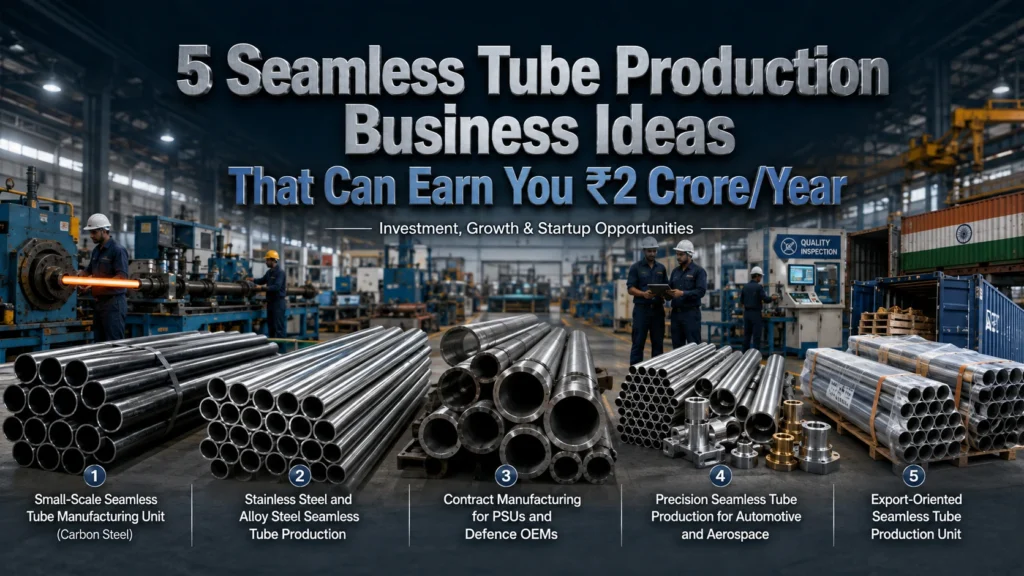
Why Seamless Tube Production Is One of India’s Most Compelling Business Ideas India’s goal of infrastructure development is on a full throttle. There’s no application where failure isn’t a concern, and there are no products as important as oil and gas pipelines, power plant boilers, automotive axles, aerospace assemblies, chemical reactors — and no place where a weld failure isn’t an option. Seamless tube manufacturing is a viable business venture as it has good industrial demand, export potentials and real government support when compared to other business ideas. Seamless tubes are manufactured from a solid billet, not welded, no weak point, unlike welded tubes. This structural superiority makes them essential in applications with high-pressure, high-temperature and corrosion. The demand is rising where India has the most aggressive expansion plans – energy, defence, railways, petrochemicals and nuclear power. However, domestic production is still not meeting demand which means there is a significant import deficit that enterprising manufacturers can exploit. This article analyzes the seamless tube production business in India in detail based on the available data providing a detailed outlook on the market opportunity, government incentives, various business models, trade dynamics and lessons learnt from the most successful MSME stories in this space in India. View Full Project Details: Seamless Tubes Manufacturing Project Report Why Seamless Tube Production Is a High-Growth Sector Right Now The global seamless tube and pipe market is estimated at more than USD 100 billion and is expected to grow at a moderate CAGR mainly due to the investments in energy infrastructure, urbanisation and defence modernization. This is the worldwide picture and, in some areas, India’s domestic demand outstrips it. India’s steel demand growth has been surpassing many developed economies, with finished steel demand posting a solid year-over-year growth due to infrastructural and manufacturing activity, as mentioned in IBEF Indian Steel Sector Report. Multi-Sector Demand: The Core Strength Seamless production of tubes is especially strong as a manufacturing investment because of its multiple industry end-user applications. There is no dominant end-industry in terms of consumption. Large diameter, high pressure seamless line pipes are needed for oil and gas exploration. The precision metallurgic requirements for boiler tubes in power generation, thermal and nuclear, are well known. Seamless tubes are applied to manufacturing of axle shafts, drive shafts and structural parts for the automotive industry. Seamless tubes in special alloys are needed for aerospace and defence applications. Corrosion resistant seamless tubes are used in chemical/pharmaceutical plants in stainless steel and duplex grades. This diversification will ensure that the demand does not slow down when any one sector slows down. India’s Infrastructure Push: A Direct Demand Catalyst The seamless tube consumption is directly related to the Government of India’s spending on infrastructure, such as the implementation of the National Infrastructure Pipeline, the PM Gati Shakti corridors, the city gas distribution network, and defence self-reliance initiatives. For every kilometre of gas distribution line, for every new boiler installation, for every renewal of a railway wagon. This initiative, known as Make in India — Metals and Mining, is actively encouraging the push towards domestic manufacturing and providing a demand signal as well as a preference towards buying seamless tubes made in India by government projects. Import Substitution: The Commercial Opportunity The current market demand for seamless tubes in India is fairly high particularly for high quality products like stainless steel, alloy steel, specialty API grade, etc. The prices these imports come in at are based on world freight, duties, and traders’ margins. An immediate and natural competitive advantage is achieved if a local company is able to compete at a lower effective cost while providing products of equivalent quality. Heavy engineering and capital goods manufacturing is growing at an accelerated pace as explained by Invest India’s study on the capital goods manufacturing boom in India that’s providing a tactical opportunity to Indian seamless tube manufacturers to outcompete imports in several grade categories. Government Policies and Incentives for Seamless Tube Production The policy landscape in India has been made one of the most conducive for manufacturing in the country’s history. There are some central government schemes that directly benefit the entrepreneurs who are contemplating investing in seamless tube production. PLI Scheme for Specialty Steel The Ministry of Steel’s Production Linked Incentive (PLI) Scheme offers support to business owners in the seamless tube segment directly for seamless tube products in alloy steel, stainless steel and other high value grades. This scheme offers monetary support for manufacturers for sales exceeding a base year sales amount. In a PIB press release announcing the launch of PLI Specialty Steel Round 3, it has been affirmed that investment commitments made under the scheme have reached ₹43,874 crore so far, creating jobs worth more than 13,000 direct jobs, and the scheme now covers 22 product sub-categories, such as seamless tube grades. The incentive rates vary by product sub-category from 4% up to 15% of incremental sales. MSME Credit and Financial Support If the seamless tube unit is registered on the Udyam portal, it will be eligible for obtaining loans up to ₹2 crore through MSME Credit Guarantee Fund Trust (CGTMSE), which offers collateral-free loans to eligible manufacturing units. New entrants’ financial burden further decreases because of concessional rates on priority sector loans, subsidised power tariffs in several states, and preferential consideration in government procurement. MSME registration can be done digitally and it should be done at the earliest by the new manufacturers. Invest India Capital Goods Support The Invest India Capital Goods sector page provides a complete solution to invest in India’s heavy engineering and capital goods manufacturing industry, which includes seamless tube manufacturing equipment and facilities. The sector has 100% FDI with automatic approval, no industrial licensing and no restrictions on technology transfer payments. Invest India’s investor facilitation services are designed specifically to assist manufacturers with approvals, to facilitate linkages with state governments for allocation of industrial land and to access central incentive schemes. Startup India and DPIIT Recognition Startups operating innovative seamless tube manufacturing ventures, especially
Entrepreneur India July 2026: 13 Manufacturing Business Opportunities in India
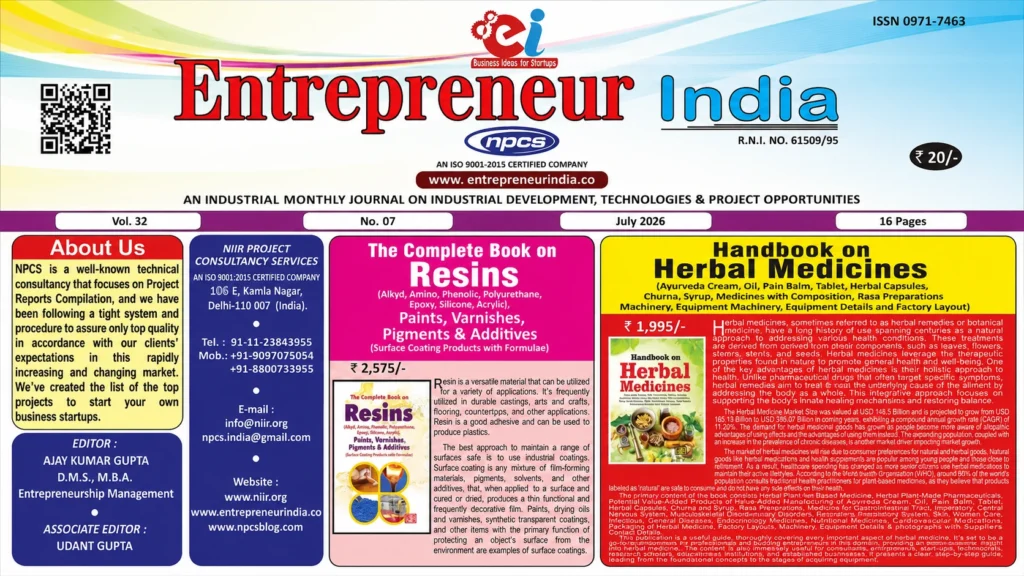
Technologies, infrastructure, sustainability, healthcare, energy efficiency and value addition are setting the stage for new opportunities for entrepreneurs and investors in the manufacturing sector in India. If you’re seeking actionable manufacturing business ideas for 2026, the new Entrepreneur India July 2026 issue features a targeted list of industrial projects and industry-focused insights. The July 2026 edition is intended for entrepreneurs, startups, MSMEs, investors, consultants, financial institutions, and industrial planners, and published by Niir Project Consultancy Services (NPCS). The focus is not just on business ideas but also on the practical aspects of developing manufacturing ventures, such as technology, plant capacity, machines, raw materials, project economics, compliance and market positioning. Explore the Entrepreneur India July 2026 Issue The July 2026 edition lists 13 manufacturing opportunities including construction material, industrial insulation, logistics, healthcare, food processing, packaging, specialty products and renewable energy. According to the official magazine page, the issue is an industrial reference for decision makers who are seeking manufacturing opportunities that is supported by market realities and feasible execution strategies. Read or download the complete issue here: Every effort is made to ensure that the information provided to readers is accurate and does not contain any errors. All information provided to the readers are made sure to be accurate and error free. 13 Manufacturing Opportunities Featured in the July 2026 Issue 1. Micro Porous Insulation Boards The Micro Porous Insulation Boards are a niche industrial application for steel, cement, aluminum, glass, furnace, electric vehicle and other energy-intensive industries. The project demonstrates the rising significance of energy saving and innovative thermal insulation in industrial processes. Get Detailed Project Report (DPR): Micro Porous Insulation Boards Manufacturing 2. AAC Blocks Another key construction material opportunity is the use of Autoclaved Aerated Concrete (AAC Blocks). The project’s emphasis is on light weight and energy efficient building materials which have the potential to contribute to urbanization and infrastructure development in India. Access Complete Business Plan: AAC Blocks Manufacturing Business Guide 3. Continuous Sandwich Panels Continuous Sandwich Panels are applicable across the broad spectrum of industrial construction, cold storage, warehouses, pharmaceuticals, logistics and pre-engineered buildings. Growing industrial development may bring opportunities to specialized manufacturers for providing effective insulated building systems. View Full Project Details: Discontinuous Sandwich Panel 4. Compressed Wood Pallets Compressed Wood Pallets show how production can integrate logistics requirement and sustainability. The project is a way to add value to an otherwise underutilised resource, the wood waste, which is used to make pallets for warehousing, exports, logistics and supply-chain applications. Get Detailed Insights from This Book: The Complete Technology Book on Wood and Its Derivatives 5. Nicotine Extraction from Tobacco Leaves and Waste This special project concentrates on the utilization of tobacco leaves and waste. It illustrates the greater potential of waste-to-wealth manufacturing process and how products with higher value such as pharmaceutical and specialty chemical products can be produced from the agricultural by-products. Get Detailed Project Report (DPR): Nicotine Extraction from Tobacco Waste – Detailed Project Report 6. Packaged Drinking Water The packaged drinking water sector is an important consumer sector which is being supported by urbanisation, hospitality, tourism, retail and demand for safe drinking water. But it is important for entrepreneurs entering this segment to take care of quality standards, regulatory compliance, packaging, distribution and competition besides just the demand being a sure shot of profit. Access Complete Business Plan: Packaged Drinking Water Manufacturing Guide 7. LPG Cylinder Manufacturing LPG Cylinder Manufacturing is a capital-intensive industrial opportunity related to the energy infrastructure of households and homes. The project is reflective of the ongoing need for cylinders in India’s energy system. View Full Project Details: LPG Cylinder Manufacturing Project Report 8. Surgical Latex and Nitrile Gloves Another big opportunity mentioned in the issue is healthcare manufacturing. Surgical Latex and Nitrile Gloves fulfil the Infection control needs of Hospitals, Clinics, Clinics as well as in other medical facilities; in addition, if the manufacturing are of top quality, they can help export markets as well. Get Detailed Project Report (DPR): Surgical Latex and Nitrile Gloves 9. Glass Reinforced Concrete Glass Reinforced Concrete (GRC) is a recent development of a durable construction material that offers applications where durability, fire resistance, design flexibility and up-to-date architectural requirements are significant. It is an indicator of the increasing use of specified materials in construction. Access Complete Business Plan: Glass Reinforced Concrete Manufacturing Project Report 10. Flavoured Cashew Processing Special attention is also given to flavoured cashew processing and dry-fruit packaging. This opportunity involves the commercialization of food processing by value addition, product differentiation, branding and packaging. Explore This Book: The Complete Book on Cashew (Cultivation, Processing & By-Products) 11. Biodegradable Plates and Cups from Rice Husk When suitable processing technology is available, agricultural wastes can be used as feedstock in manufacturing. For instance, the use of disposable plates and cups in the project marked by the conversion of agricultural waste into biodegradable tableware is an example of this. Related Article: Products from Rice Husk and Rice Husk Ash: Business Ideas, Manufacturing Process, and Project Opportunities 12. Expanded Polystyrene Expanded Polystyrene or EPS is used in various industries such as packaging, cold storage logistics, electronics, fisheries, building and insulation. It can be used in a variety of applications, making it an interesting project for entrepreneurs who are studying industrial materials. View Full Project Details: Expanded Polystyrene Manufacturing Guide 13. Ethanol as Bio-Fuel One of the renewable-energy opportunities featured in the issue is ethanol as Bio-Fuel. The project is linked to agriculture as a source for feedstock, fuel blending programmes and India’s push towards low carbon energy. Check Out This Recommended Book: Handbook on Biofuel, Ethanol and Bioenergy Based Products What Entrepreneurs Can Learn from These Projects The most important lesson from the July 2026 issue is that opportunities in manufacturing are not limited to any one industry. Opportunities are coming into existence in: The diversity is important because the investment, technical skills, market access, and risk aversion of these entrepreneurs is different. A new business that is just starting may
How to Start Power Cable and Winding Wire Manufacturing Business: High-Demand Business Ideas in India’s Electrical Conductors Sector
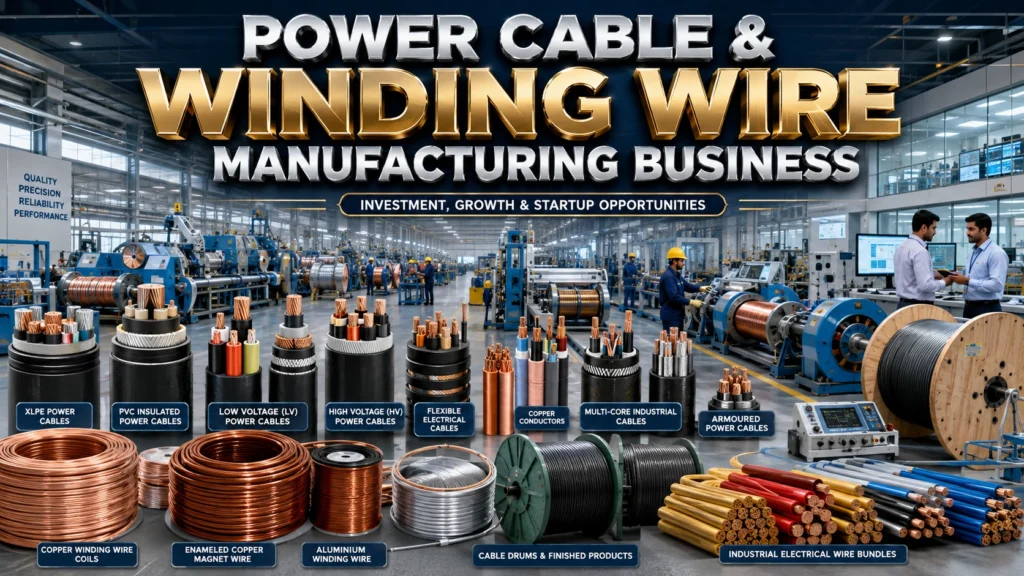
Power Cable Manufacturing Business Business ideas do come in cycles. There are also companies that are part of the cycle. Power cable and winding wire factories are in second category. Conductors are used every kilometre of transmission line, every substation commissioned, every transformer wound, every motor assembled and every industrial building electrified. The power cable, control cable, winding wire, and specialty conductor segments of the Indian electrical conductor market together account for tens of thousands of crores per year and have seen compounded growth across a number of fronts. Cables and winding wires combine a large and dynamic market, government initiatives to boost domestic manufacturing, a well-defined opportunity for import substitution at the specialty end, multiple product entry points at varying investment scales, and significant future opportunities for entrepreneurs to assess, making them an attractive manufacturing business idea for an MSME. However, there are some challenges inherent in the sector, particularly the prices of copper and aluminium which are benchmarked and volatile throughout the world; but experienced manufacturers overcome this by using commodity hedging, by timing purchases and by passing through material cost fluctuations to customers. Get Detailed Insights from This Book: Manufacture of Electrical Cables, Wire and Wire Products Handbook Why This Manufacturing Business Is Growing at an Exceptional Pace The power transmission and distribution in India is experiencing the most forward-thinking investment cycle in its history. The National Electricity Plan calls for installing more than 50,000 circuit kilometres of transmission lines within 10 years’ time. Particularly in urban areas, the underground cabling of distribution networks is creating a persistent demand for underground LT and HT cables in all key metropolises under the Revamped Distribution Sector Scheme (RDSS). The amount of conductor needed on cabling for each kilometre of length of underground cable is significantly greater than that of lines of a similar capacity on the top of the tower. There is an alternative demand engine from the renewable energy industry. Solar parks need DC cables from panel strings to the inverter and AC cables from the inverter to the point of connection to the grid. Several thousand kilometres of cable might be used in a 100MW solar installation. The wind farm network needs flexible wind farm cables buried and armoured cables in the turbine towers. The Indian target of 500 GW of renewable capacity equates to a demand for the industry to meet at home, which it is actively working on. Enamelled copper and aluminium wires for transformers, motors and generators are also experiencing a surge in demand. Winding wire is used for every new transformer made. Each EV motor needs a certain type of enamelled copper wire. Winding wire is utilized with all types of industrial motors, home appliances compressors and generators. Winding wire demand is directly linked to the growth of the domestic transformer, motor and EV component manufacturing. The demand for winding wire goes hand-in-hand with the growth of the domestic transformer, motor and EV component manufacturing. This is an actual inflection point in the sector. Export Opportunity: Indian Cable Manufacturers Are Winning Global Orders Indian power cable manufacturers are adept at exports and have established a strong presence in the power cable market in Africa, Middle East, and Southeast Asia. The data obtained from EEPC India reveals that engineering exports, such as cables and conductors, have been growing steadily. The UAE, Bangladesh, Kenya and Tanzania are some of the countries that import large quantities of Indian cables. A well certified MSME manufacturer can generate some good export revenues which when added up can give a good cushion against the price fluctuations of the domestic market, especially with regard to exporting IEC certified cables from India as compared to the Chinese and the European options in many of the export markets. Government Policies and Incentives for Cable and Wire Manufacturers BIS Certification: Mandatory and a Market Advantage All power cables delivered to Indian utilities, government projects and big power plants have to be BIS certified. PVC Insulated power cables are covered by IS 1554. XLPE-insulated cables are covered in IS 7098. IS 8783 is applicable to flexible cables. IS 13730 is the standard for winding wires. Although it involves some upfront cost for type testing and factory evaluation, BIS certification can bring benefits such as preferential bidding in Government tenders and deliver credibility in terms of quality to the private sector buyers. BIS certification provides the domestic cables with a score advantage when public tenders are evaluated in accordance with Make in India approach. MSME Support Schemes The Ministry of MSME’s CGTMSE scheme has been introduced to provide working capital and term loan assistance without any collateral up to Rs 5 crores, which is very crucial for the cable manufacturing industry as copper and aluminium are the major expenditure items and the working capital. Upgrading the existing equipment with modern extrusion and wire-drawing machines is supported by the Technology Upgradation Fund Scheme (TUFS). There are two other state level subsidy schemes for electrical conductor manufacturing units under the name of capital subsidy in Rajasthan, Gujarat, Uttar Pradesh and Telangana. PLI and Domestic Content Policy Ministry of Heavy Industries has been actively encouraging the production of electrical componentry at home with PLI-adjacent support schemes. Remarkably, some of the state electricity boards have adopted local content clauses in cable procurement tender that mandates a percentage of locally made cable, which directly benefits Indian MSMEs manufacturers. Duty drawback benefits are also available for exported cable products by Directorate General of Foreign Trade (DGFT), which makes export-oriented manufacturing models more economical. Business Ideas in Power Cable and Winding Wire Manufacturing Business Idea 1: LT Power Cable Manufacturing (Up to 1.1 kV, PVC and XLPE) The low-tension power cable market segment is the widest and most accessible cable manufacturing market, and includes 1.1 kV power cables with PVC insulation (widely used, lower cost) and 1.1 kV power cables with XLPE insulation (higher capacity, longer service life, preferred by utilities). The uses of LT cables are vast in the field
Entrepreneur India May 2026 Is Here — Download Free & Explore India’s Most Profitable Manufacturing Business Ideas
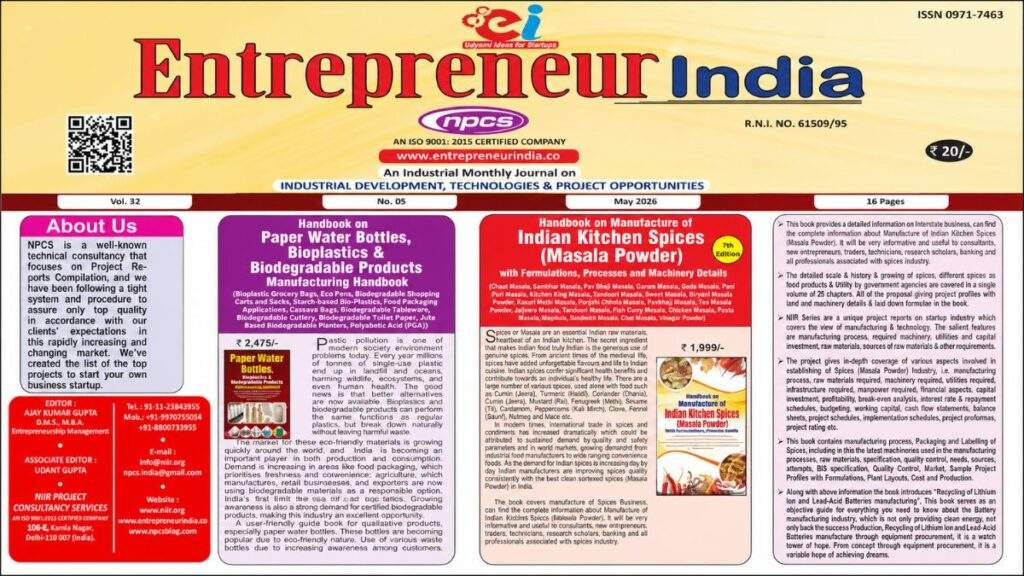
India is going through a strong period of industrialization. Rapid infrastructure development, government support, growing domestic demand and boosted exports are generating huge opportunities for manufacturing startups. Economists nationwide are now focusing on new, high-growth, manufacturable industries that have long-term potential, as opposed to the traditional jobs. NIIR Project Consultancy Services (NPCS) publishes the latest issue of Entrepreneur India May 2026 which is one of the best resources to find these opportunities. This issue contains a lot of detailed manufacturing business ideas, market analysis, project cost estimates and future trends of industry which can help the entrepreneurs to make better business decisions. As a startup founder, investor, MSME owner, or a first-time entrepreneur, this issue offers you valuable insights into some of the fastest-growing industries in India. Get Detailed Insights from This Book: Just For Starters: How To Start Your Own Export Business What is Entrepreneur India Magazine? Entrepreneur India is one of India’s most prominent industrial magazines covering manufacturing, new technologies and project opportunities. The magazine has been the navigational guide of entrepreneurs and industrial investors for over 30 years now published by NIIR Project Consultancy Services (NPCS). Entrepreneur India is not a regular business blog that just gives general information, it provides detailed industrial information, which is backed by research and actual project data. The magazine includes: Manufacturing business ideas Plant and machinery cost estimates Market demand analysis The rate of return and break-even information. Industrial technology insights Future growth opportunities This is very useful for business owners who are going to venture into manufacturing. Related Article: India’s Healthcare Manufacturing Sector Is Booming —5 High-Return Businesses. Entrepreneur India May 2026 Free Download of Entrepreneur India May 2026 The Entrepreneur India May 2026 issue is available for free download online through the official website. Download Here: Entrepreneur India May 2026 PDF Official Website: Entrepreneur India Top Manufacturing Business Ideas Featured in Entrepreneur India May 2026 Bioplastics and Paper Bottle Manufacturing One of the most standout features of the May 2026 edition is sustainable packaging and eco-friendly production methods. Governments across the globe have curbed the use of plastic; and organizations are moving quickly towards adopting environmentally friendly alternatives. The magazine delves into the opportunities in: Bioplastic carry bags Compostable products PLA-based materials Paper water bottles Eco-friendly packaging solutions The world’s largest beverage manufacturers are testing sustainable packaging systems, making paper bottle production one of the hottest start-up areas. This business holds a great potential, because of the following: Growing environmental awareness Government assistance to green industries Rising export opportunities The growth of demand from FMCG companies. This is a business sector that is future ready with the increased demand for biodegradable products in the coming decade. Explore This Book: Paper Water Bottles and Bioplastics Manufacturing Handbook Moringa Powder Manufacturing Business Due to its nutritional content and health benefits, Moringa is sometimes referred to as the “Miracle Tree”. India is the biggest producer of moringa and the demand for moringa powder has been rising in the world. Moringa powder will be utilized for: Health supplements Herbal products Nutritional foods Health and beauty products The Entrepreneur India May 2026 issue includes comprehensive details on project cost estimates for establishing a moringa powder manufacturing unit. Project Cost Estimate Capacity: 907 Kg per day Plant & Machinery: Rs. 134 Lakhs Total Project Cost: Rs. 466 Lakhs Rate of Return: 25% Break Even Point: 80% Since the consumers with interest on health is increasingly looking for natural products, the moringa business is expected to have considerable growth in international market. WPC Boards from Rice Husk The magazine also emphasizes on the increasing need for Wood Plastic Composite (WPC) boards using rice husk. India produces a huge amount of rice husk annually, and the modern technologies are available to use the agricultural waste product for useful industrial products. WPC products are used extensively in: Furniture manufacturing Modular kitchens Wall cladding Outdoor construction Interior decoration These boards are used extensively due to their: Waterproof Termite-resistant Eco-friendly Durable and long-lasting With the adoption of sustainable construction products, the WPC manufacturing has become a lucrative industrial opportunity in India. Blood Bag Manufacturing Business Healthcare manufacturing is one of the most secure and stable of all manufacturing industries. Blood bags and medical disposable products market is growing in the market, which is talked about in Entrepreneur India May 2026. The increase in hospitals, blood banks, and healthcare facilities is driving the demand for blood storage systems market. Growing number of hospitals, blood banks, and healthcare facilities is fueling the blood storage systems market. This kind of business offers the following benefits: Stable long-term demand Growing healthcare infrastructure High-value medical products Export opportunities Healthcare products are a critical business in any economic climate, so it’s generally regarded as somewhat recession-proof. Access Complete Business Plan: Blood Bags Manufacturing Plant Report Gas Atomized Aluminum Powder Manufacturing Gas atomized aluminum powder manufacturing is another high potential opportunity mentioned in the issue. It is an advanced industrial material with applications in the field of aviation, electric vehicles, military and 3D printing. Applications include: Aerospace components Electric vehicle manufacturing Defense equipment Advanced metallurgy Industrial 3D printing The rising interest in EV and industrialization in India is driving the demand for quality aluminum powder. This is a business that demands technical skills and of course a higher investment, but has a high level of profit, and a relatively low level of competition. About NIIR Project Consultancy Services (NPCS) NIIR Project Consultancy Services (NPCS) is one of the most trusted industrial consultancy firms in India. Over the past 30 plus years, NPCS has assisted entrepreneurs in business opportunities that are economically viable via industrial research, market analysis, and project consultancy. NPCS specializes in: Detailed Project Reports (DPR) Techno-economic feasibility studies Manufacturing startup guidance Market survey reports Industrial project identification Business investment analysis They are reported by and used by: Entrepreneurs MSMEs Industrial investors Manufacturing companies Banks and financial institutions NPCS is being used by thousands of businesses throughout India for hands-on guidance for industry and project
Profitable Manufacturing Projects in Afghanistan
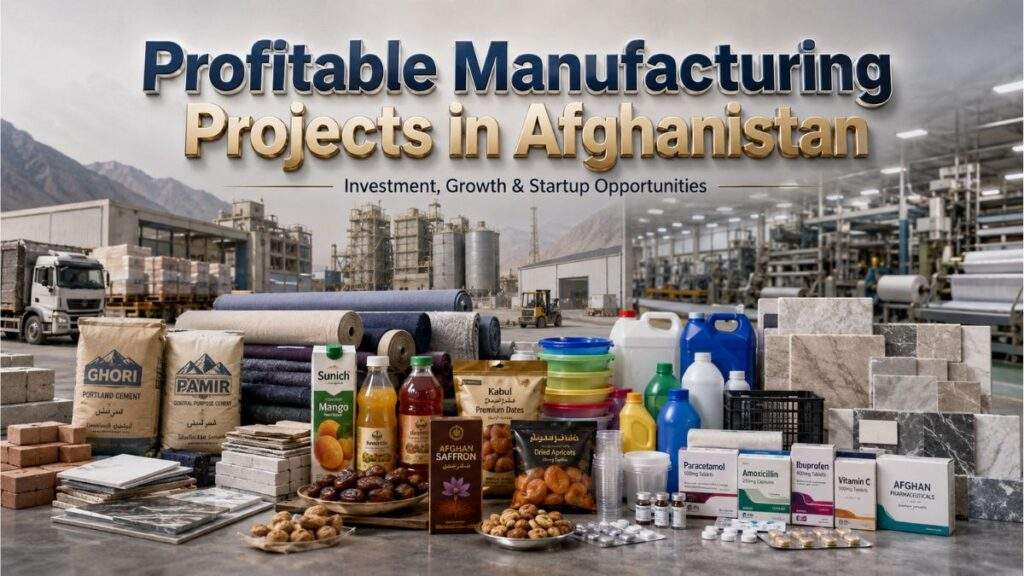
Manufacturing Business in Afghanistan Although Afghanistan is not often cited as a manufacturing hub, it provides one of the best industrial opportunities in Asia. There are significant gaps in local manufacturing in Afghanistan and many developing markets are already saturated with competition. It is a country with high level of agricultural and mineral resources; however, its processing facilities are less. This imbalance means the export of raw materials is done at a more affordable price than the import of finished goods. This is a huge opportunity for those who are entrepreneurs who are willing to be among the early entrants. Afghanistan has a wide export of raisins, almonds, pistachios, saffron and dried fruits each year. But, most of these products are not cleaned, graded, branded and packaged within the country. International companies process the articles in UAE, Europe and India and take the biggest benefits. It is the same in the case of construction materials and pharmaceuticals. Though there are high demand in Afghanistan, but Afghanistan is importing most of the building materials and medicines from neighboring countries. This is a golden opportunity for Indian entrepreneurs and MSME investors to play a first-mover advantage. Why Afghanistan Has Strong Manufacturing Potential Business opportunities can be the largest when the supply chain is incomplete. This is evident from the economy of Afghanistan. The country is still relying on imports for products which can be produced locally. There are some major market gaps such as: Limited facilities for food processing. Higher dependency on imports for medicines Low local production of construction materials Agricultural production that is big but not adequately processed. The increased demand in the cities of Kabul, Kandahar and Herat. This means that manufacturers have good profit margins available due to the combination of raw material availability and low competition. One of the other key benefits is that of exports. Afghan saffron, raisins, almonds and apricots already enjoy a good reputation in the international markets. The lack of an industrial processing and branded packaging layer. It is here that manufacturing companies can really make healthy margins. Related Article: Best Import Substitution Industries in Afghanistan Dry Fruit Processing: The Best Low-Risk Manufacturing Opportunity Dry fruit processing is the most feasible business opportunity for the entrepreneurs in all the manufacturing sectors in Afghanistan. Afghanistan already has high-quality: Raisins Pistachios Almonds Dried apricots Saffron But the major products are exported in their raw state. These products can have their market value enhanced significantly when the businesses involved in their cleaning, sorting, grading, packaging and branding do so. Why This Business Works The raw material supply is already available and there is a steady demand for exports in the following markets: UAE Germany Saudi Arabia India United Kingdom The investment in the medium scale processing unit is in the range of ₹64 lakh to ₹1.10 crore depending upon the level of automation and production capacity. Basic Machinery Required A machine used to clean and de-stone. Colour sorting machine Grade and size equipment Packaging line Cold storage unit Moisture testing devices The majority of the machinery can be obtained from industrial cities in India like Ahmedabad, Ludhiana and Pune. One of the most significant benefits of this sector is that it is non-violent. It is easier to meet the regulatory requirements than for pharmaceuticals. The margins on exports are much greater than in heavy construction manufacturing. Dry fruit processing is probably the best and most secure venture for the first time industrial entrepreneurs. Get Detailed Insights from This Book: Drying & Milling of Cereal Foods Construction Material Manufacturing: A Growing Domestic Market The cities of Afghanistan are growing at a high rate, however the capacity to produce building materials is low. Hence contractors heavily depend upon import from Pakistan, Iran and China. It provides good prospects in the following industries: Hollow concrete blocks Marble processing Tiles and stone finishing Cement-based products Another attractive manufacturing option for hollow concrete blocks is that the setup cost is relatively low and a demand exists. Why Demand Is Rising Across Kabul and other cities urban development projects are still on the rise. Construction materials are needed for residential buildings, commercial buildings, warehouses, and roads. A medium sized block manufacturing unit can manufacture thousands of blocks in a day and deliver to local contractors. Key Advantages Lower setup cost Simple machinery requirements Immediate domestic demand Stable recurring orders Another sector that has potential is the marble processing sector since Afghanistan has great reserves of marble, but lacks modern finishing facilities. The majority of the marbles produced are not cut or polished and the value added is left for foreign processors. Pharmaceutical Manufacturing: High Investment, High Margins Pharmaceuticals are the greatest opportunity in Afghanistan with a high barrier to entry and some great long-term returns. Medicines, including basic generic medicines, are mostly imported in Afghanistan. Most of the products used, such as painkillers, antibiotics, vitamin tablets and so on are imported. This gives a huge opportunity to local pharmaceutical formulation plants. The selection of products with strong demand. Tablets Capsules Antibiotics Vitamin supplements Pain relief medicines The cost of a pharmaceutical manufacturing project is typically between ₹1.5 crore and ₹4 crore, depending on the scale of production and the standards for compliance. Major Requirements WHO-GMP compliance Regulatory approvals Skilled technical workforce Clean-room infrastructure Set-up is more complex but operation margins can be very high after approvals are given, due to limited competition. It is the best place for experienced industrial investors who can deal with the regulatory and operational complexity. Access Complete Business Plan: India Pharmaceutical API Market Report Why Indian Entrepreneurs Have an Advantage Indian companies currently are well established at using: Food processing Pharmaceutical manufacturing Industrial machinery Packaging solutions Export management Geographical proximity and ready access to machinery are other advantages for Indian entrepreneurs. Technical support and the availability of spare parts are relatively easy in the case of Industrial equipment import from India. Indian MSMEs have a good strategic edge in the rapidly growing manufacturing sector of Afghanistan.
Entrepreneur India April 2026: India’s Industrial Transformation Is Creating Business Opportunities Worth Billions
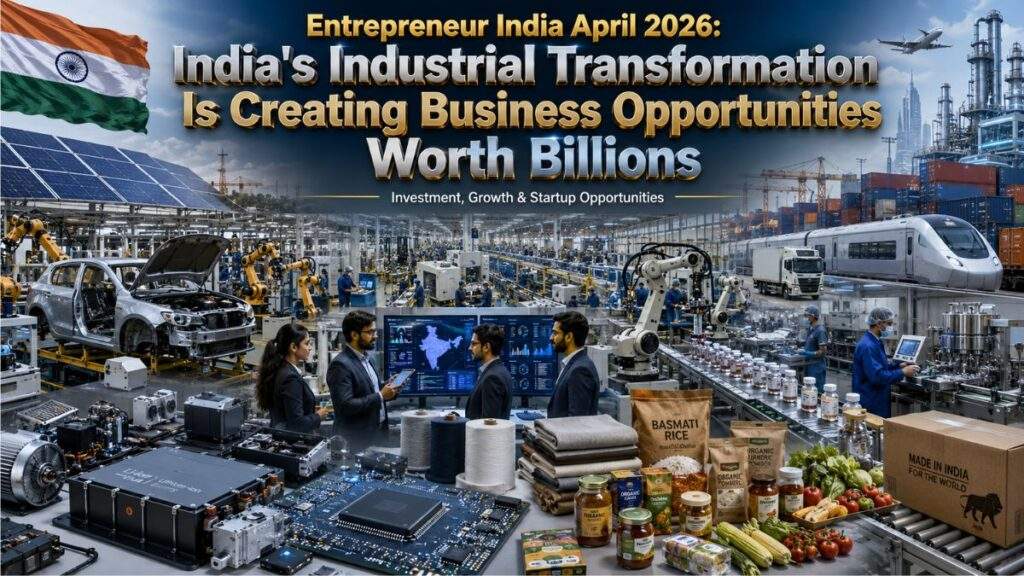
Entrepreneur India April 2026 India is now in a new phase of growth in the field of industries. The country is experiencing one of the biggest manufacturing growths in decades with the introduction of electric vehicles, use of advanced materials, green packaging solutions, and agro-processing as a few examples. Businesses that can be developed today in the right industries will be very lucrative over the next decade. NIIR Project Consultancy Services (NPCS), April 2026 issue of Entrepreneur India Magazine, features some of the most promising industrial opportunities that are now available in India. Entrepreneur India is different from the regular magazines which bring to light start-up stories or corporate news, it is all about real business opportunities supported by industrial research and project feasibility analysis. At a time when India is witnessing the growth of manufacturing sector due to various factors such as strong government support, escalating domestic demand, infrastructure development, and the global China+1 strategy, this edition comes at a perfect time. International companies are seeking manufacturing alternatives other than China, and India is among the most significant beneficiaries of this trend. Related Article: Entrepreneur India April 2026 Is Here — And It Could Change the Way You Look at Indian Manufacturing Why India’s Manufacturing Sector Is Growing So Fast Indian industry is on the rise due to a number of strong influences. The government is promoting domestic investment in manufacturing through various schemes such as Make in India and Production Linked Incentive (PLI) scheme in several industries. Concurrently, the growing urban demand and the surge in the demand of sustainable products are generating new business opportunities. The following are key factors in this growth: Expansion of EV and battery manufacturing Increasing demand for green products The development of infrastructure and logistics. Import substitution opportunities Growing demand for specialty chemicals. To give more attention to the use of renewable energy resources The April 2026 edition of Entrepreneur India delves into the sectors that are directly benefiting from these long-term economic shifts. High-Growth Business Opportunities Featured in Entrepreneur India April 2026 One of the best features of this issue is that it concentrates on industries that are scalable for the long-term and have a high future demand. Lithium-Ion Battery Assembly The Indian electric vehicle industry is rapidly expanding, leading to a significant demand for lithium-ion batteries and energy storage solutions. It is expected that Battery Manufacturing will be one of the largest industrial sectors in the near future in the country. There are opportunities in this sector for work in the following occupations: EV battery packs Solar energy storage Industrial battery systems Consumer electronics batteries Indian Government is also giving a push to electric mobility and entrepreneurs interested in this business might reap huge benefits in the coming years. Get Detailed Insights from This Book: Lithium-Ion & Lead-Acid Battery Production Get Detailed Insights from This Book: Just For Starters: How To Start Your Own Export Business Rice Husk Biodegradable Cutlery As regulations start to take effect and plastic bags are enforced for all consumers, there is a growing need for biodegradable options. Rice husk biodegradable cutlery is an ongoing business that emerges as profitable since it helps the conversion of agricultural waste to eco-friendly products. The following are some of the key benefits of this enterprise: Low-cost raw materials Growing export demand Eco-friendly market positioning The support for sustainable manufacturing is provided by government. It’s a good example of the conversion of waste materials to commercially useful materials. Carbon Fiber Reinforced Polymer (CFRP) The applications of carbon fiber reinforced polymer are in the fields of aerospace, automotive, railways, renewable energy and construction. India currently has significant import dependence on CFRP products, thus presenting a high level of import substitution potential for domestic CFRP manufacturers. The sector has potential due to: High industrial demand Strong profit margins Advanced manufacturing growth Long-term infrastructure expansion View Full Project Details: Carbon Composite Fiber Manufacturing Plant Report Hesperidin and Pectin Extraction The magazine also makes an in-depth focus on opportunities for citrus peel processing. Citrus waste has been used to extract hesperidin and pectin, which are relevant for the food processing, cosmetic, pharmaceutical, and nutraceutical industry. This business model is desirable because: Raw materials will cost less. The finished products are of high value. Demand is increasing globally Increased profitability due to waste utilization. Circular Economy Manufacturing Is Becoming a Major Trend One of the key topics in the April 2026 issue is circular economy manufacturing. Agricultural waste, food waste, or industrial waste are increasingly being used for profit by businesses. Entrepreneurs are now converting waste into: Biodegradable packaging Nutraceutical ingredients Industrial chemicals Eco-friendly consumer products These businesses can usually enjoy high profitability as the raw material costs are low, and there is a demand from the consumer for “green” products, which entitle them to premium prices. The push towards sustainability in the environment is likely to bring even more opportunities from this segment in India in the coming decade. Why Import Substitution Businesses Have Huge Potential India still has a high dependence level on imports for many industrial products and specialty materials. This opens up huge possibilities for Indian entrepreneurs to set up indigenous manufacturing units. The following industries have high import substitution potential: Specialty chemicals Battery materials Advanced engineering products Industrial minerals High-performance materials The government actively encourages domestic production by providing incentives, subsidies and infrastructure support. There is potential for policy-driven growth as well as strong demand for entrepreneurs to enter these sectors. How NPCS Helps Entrepreneurs Start Manufacturing Businesses NIIR Project Consultancy Services (NPCS) is one of the most experienced project consultancy and industrial research firms in India having over 45 years of experience. NPCS provides support for entrepreneurs through: Detailed Project Reports (DPRs) Techno-economic feasibility studies Market research reports Plant setup guidance Financial projections Bank loan documentation Selecting suitable machinery and processes Thousands of entrepreneurs, MSMEs, investors, financial institutions use the NPCS reports to assess the manufacturing opportunities and industrial projects. The main strength of NPCS is its specialization
The Complete Book on How to Start a Business in Industrial Gases Industry
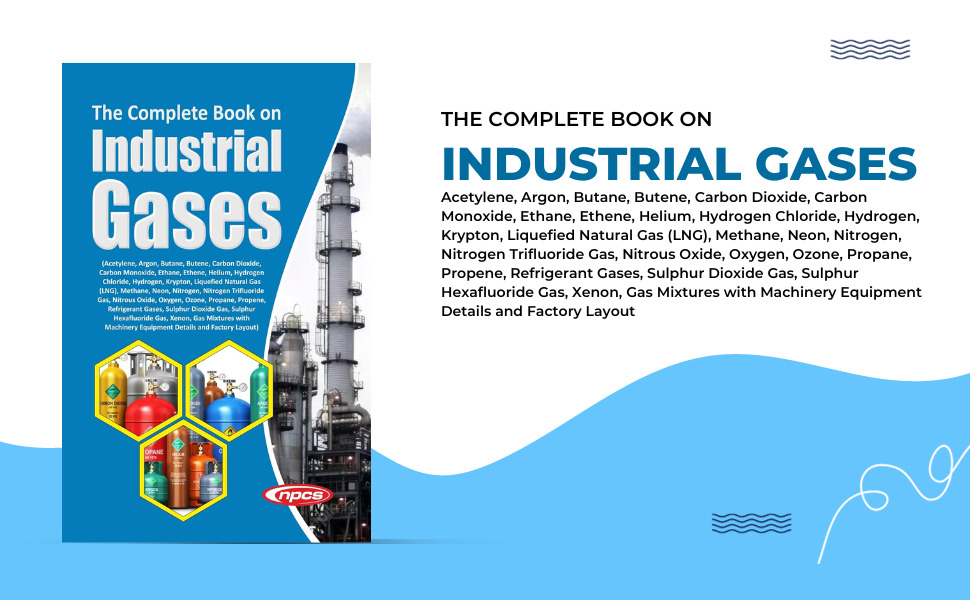
Comprehensive Content Chapter careful examination of a range of gases including Avtion, Argon, Carbide, Gasses, Hydrogen, Nitrogen, Oxygen, to name a few, along with nuanced knowledge about every gas. It also offers a thorough list of gases while highlighting niche areas, in particular our understanding of Liquefied Natural Gas (LNG) and Refrigeration Gasses and their compounds. The text included in-depth knowledge with additional information on how these gases are developed, their properties, and their uses. Each chapter is identified by a gas, demonstrating the characteristics of the gas, procedures of production, and its uses making the information easy and digestible for the reader. Additionally, there are pictures of equipment and vendors’ address and contact information which add to the text as a valuable source in any commercial application. Enlightening and Informative Although this is a list of facts and figures, it hopefully gives a broader context for how gas technologies are changing your industry in providing renewable and sustainable solutions to your work. It provides significant information about gases as well as processes and applications within the industrial gases industry, highlighting complexity and details about industrial gases sector. Read Related Blog : Important Trends to Watch in the Global Market Entrepreneurial Insight This book also provides an overview of business success and opportunities in the industrial gasses industry, emphasizing opportunities for manufacture, retail, and for entrepreneurs. This book offers a comprehensive array of practical information and guidance, from conceptualizing ideas to making equipment purchases, and also acts as a guide for those who wish to embark on their journey in this growing industry. Accessibility and Clarity The well organized, clearly presented company of the content on the web site, combined with in-depth evaluations and an excellent range of practical information, makes this a key resource for both novices and seasoned practitioners in the commercial gases sector. It offers a pathway to those who are eager to delve deeper into this dynamic and important sector of the economy. Related Business Plan: Production of Industrial Gases and Speciality Gases Mixture A Comprehensive Guide This compact, unique publication serves as a comprehensive guide to the world of commercial gases, presenting a treasure trove of information and insights that are needed for anyone who is acting in, or is curious about, this field. It is not just a book in the conventional sense. It is a tool that empowers its readers and members, and gives them the information and insights required to operate and prosper in the turbulent climate of the commercial gases industry. I highly endorse this book to anyone in the commercial gases sector, from an individual as a perspective student, to an experienced professional or owner of a business who wishes to embark into the industry. I believe that you will find, as I did, that this book is a key resource that will provide you with the comprehensive knowledge and practical insights you need to succeed. So pick up your copy of The Complete Book of Industrial Gases and get yourself: an opportunity to enter the world of opportunities in the industrial gases industry! Insightful Illustrations and Practical Details One feature of The Complete Book on Industrial Gases that stands out is the inclusion of practical illustrations and images of machines, which helps to elucidate the application and effectiveness of various gases, as well as their functions within the machines. The book also contains contact information for suppliers, which could serve as a useful impetus for aspiring entrepreneurs and professionals to find contacts and connections in the field. This thoughtful combination of hands-on information, coupled with a thorough treatment of the theory, places this book in a class all of its own as it serves as a reference book in the field of industrial gases. Emphasis on Innovation and Sustainabilizy The book places significant emphasis on the innovative applications of industrial gases, as well as how these innovations are resulting in more sustainable outcomes in various fields. Readers looking to start a business in the industrial gases industry will gain valuable insights into the contributions of gaseous technologies in transforming industries ranging from manufacturing to health, and understand how industrial gases are applied to suit the vastly different needs of each sector. Read Related Blog: What is the Most Used Industrial Gas? A Comprehensive Analysis Educational Value In addition, The Complete Book on Industrial Gases represents a tremendous resource for educational institutions as well. Not only can it be a foundational text for students studying industrial chemistry, chemical engineering or more broadly disciplines of study relevant to industrial gases, it can serve as a complete introduction to industrial gases, that will give students a complete understanding of industrial gases and their applications. The book provides adequate detail to allow a growing culture of learning, innovation and to inspire the next generation of thinkers and makers in the industrial gases field. Economic Perspective From an economic perspective, the book provides an in-depth account of the industrial production of industrial gases, covering not just economic considerations but also market functions within the sector. As a locus, the book serves as a bright guiding sign to amongst capitalists and business owners, spelling out pathways to responsibly informed decision-making and taking advantage of all opportunities within the industrial gas sector. Conclusion The Complete Book on Industrial Gases offers encyclopedic information implicating developments in theory and practice, making it a foundational text in the field of industrial gases. The comprehensiveness of the organization, depth of development, and ease of understanding Visit this Page for More Information: Start a Business in Industrial Gases Industry Contact Us
Save Money and Help Save Our Planet with This Eco-Friendly Fuel Compressed Bio Gas Bio CNG plant
As the global demand for sustainable energy continues to rise, Compressed Bio Gas Bio CNG plant technology has emerged as a revolutionary, eco-friendly alternative to fossil fuels. Not only does it help mitigate greenhouse gas emissions, but it also offers a profitable avenue for businesses, farmers, and investors. In a world where environmental degradation and energy insecurity threaten future generations, compressed bio gas (CBG), also known as bio-CNG, presents an efficient, renewable, and cost-effective solution. Derived from agricultural waste, cow dung, food scraps, and other organic materials, CBG is a purified and compressed form of biogas that mimics natural gas in composition and efficiency. It is used in transportation, cooking, power generation, and industrial applications. Establishing a Compressed Bio Gas Bio CNG plant not only helps reduce carbon footprints but also generates employment, supports rural economies, and promotes sustainable development. What is a Compressed Bio Gas Bio CNG Plant? A Compressed Bio Gas Bio CNG plant is a facility where organic waste is processed and fermented in anaerobic digesters to produce raw biogas. This gas is then purified to remove CO?, hydrogen sulfide, and moisture, leaving behind methane-rich fuel—Compressed Bio Gas. Once compressed, it can be bottled, stored, and distributed just like traditional CNG. India, under the Sustainable Alternative Towards Affordable Transportation (SATAT) initiative, has identified CBG as a key component in achieving energy independence. The government targets 5,000 CBG plants by 2025, and the sector is attracting significant interest from MSMEs and green energy entrepreneurs. Click here to send your queries/Contact Us Raw Materials Used in Bio CNG Production A variety of biodegradable materials are used to feed the anaerobic digesters, including: Cow dung and poultry waste Agricultural residues like paddy straw, wheat husk, and sugarcane press mud Food waste from hotels, households, and food processing units Municipal solid waste and sewage sludge Distillery spent wash and fruit peels Setting up a Compressed Bio Gas Bio CNG plant close to these waste sources ensures low input costs and efficient operations. Visit this Page for More Information: Start a Business in Industrial Gases Industry Working Process of a Bio CNG Plant Feedstock Collection & Pre-treatment – Organic waste is gathered, sorted, and sometimes shredded for uniformity. Anaerobic Digestion – The feedstock is fed into digester tanks where bacteria break it down without oxygen to produce raw biogas. Biogas Purification – Impurities like CO? and H?S are removed through chemical or membrane purification systems. Compression & Bottling – Purified gas is compressed to 250 bar and stored in cylinders for transport or distribution. By-product Management – The remaining slurry is a rich organic fertilizer used in agriculture. Download Pdf: The Fuel of the Future Compressed Bio Gas CBG Bio CNG plant Save Money Cost, Setup & ROI Setting up a Compressed Bio Gas Bio CNG plant involves the following investment: Small-scale (2–5 tons/day): ?1 – ?3 crore Medium-scale (10–30 tons/day): ?5 – ?10 crore Large-scale (50+ tons/day): ?12 crore and above Related Business Plan: BIOGAS PRODUCTION Revenue Streams: Sale of CBG to OMCs (Oil Marketing Companies) at ?46 – ?56/kg Fertilizer sale (organic slurry) Carbon credits and green energy subsidies Gate fees for waste collection The average payback period is 4–6 years, with profitability improving based on location, feedstock cost, and operational efficiency. Read Similar Articles: INDUSTRIAL GASES PROJECTS Licenses and Government Support To operate a Compressed Bio Gas Bio CNG plant, the following approvals are required: PESO License (for gas bottling and compression) Pollution Control Board Clearance FSSAI license (for bio-manure) MSME registration & factory license SATAT MoU with OMCs (IOC, BPCL, HPCL) The Government of India provides capital subsidies through: MNRE (Ministry of New and Renewable Energy) State Bioenergy Policies NABARD support for rural energy projects Environmental and Economic Benefits The benefits of a Compressed Bio Gas Bio CNG plant are both environmental and economic: Reduces methane emissions from untreated organic waste Cuts dependency on imported LNG and diesel Generates rural employment and supports the circular economy Improves soil health via organic fertilizer by-products Saves cost for fleet owners using CBG instead of diesel (approx. ?20–?25 cheaper per kg) According to NITI Aayog, India generates over 300 million tons of organic waste annually—enough to support thousands of CBG units. Use Cases and Market Opportunities Transportation Fuel – Used in buses, auto-rickshaws, and trucks Cooking Fuel – Cleaner alternative for households and commercial kitchens Industrial Energy – Boilers, dryers, and furnaces can run on CBG Power Generation – Fuel for gas turbines and CHP (Combined Heat & Power) units Agriculture – Organic slurry boosts crop yield and soil health CBG plants also create synergy with dairy farms, food processors, municipalities, and distilleries, making them attractive for integrated projects. Challenges and Mitigation High initial investment – Can be mitigate via bank loans, PPP models, and government subsidies Technology complexity – Partnering with established plant developers ensures smooth setup Feedstock availability – Long-term tie-ups with local farmers and municipalities are essential Market linkage – MoUs with OMCs ensure offtake of produced gas Conclusion A Compressed Bio Gas Bio CNG plant is more than just a clean fuel initiative—it’s a sustainable, future-ready business model that combines environmental responsibility with financial profitability. Entrepreneurs, MSMEs, and even large enterprises have the opportunity to lead India’s green energy revolution while reducing waste, empowering rural economies, and creating reliable income streams. Related Feasibility Study Reports: Compressed Biogas Click here to send your queries/Contact Us Read our Books Here: Handbook on Biogas and Its Applications See More Links: Contact Us
Oil and Gas Sector in India: The Fastest Growing Industry
Oil and Gas Sector in India: Oil and Gas Sector in India is one of the Fastest Growing Industry of the economy. Crude oil output totals 267 million tonnes, accounting for 2% of global oil production, while natural gas production totals 636 billion cubic metres, accounting for 5% of global gas production. Since independence, India has discovered significant hydrocarbon resources on land and at sea. Only about 38% (1119 trillion cubic feet) of them have been examined. At present usage rates, these reserves are expected to last more than 100 years. It is an appealing investment destination and a lucrative business prospect because of its enormous potential. Indian energy demand is predicted to expand by 4-5 percent each year over the next 10 years, according to the Petroleum Planning & Analysis Cell (PPAC), a division of the Ministry of Petroleum & Natural Gas. This will need investments in the Oil and Gas Sector in India of $250 billion (Rs 12 lakh crore). Rising incomes, increased urbanisation, industrialisation, population growth, and greater living standards will all contribute to this growth. Visit this Page for More Information: Start a Business in Petroleum Industry Rising Demand of Oil and Gas Sector in India: Total energy demand is expected to rise by more than a third between 2012 and 2035, according to the International Energy Agency, with fossil fuels accounting for the majority of this increase. Oil demand has steadily increased from 1.6 billion tonnes in 2010 to roughly 1.8 billion tonnes (b/d) now, owing to economic expansion and fast modernization. According to the latest IEA report, world oil demand will grow at an average pace of 1.2 million b/d from 2013 to 2030, surpassing 10 million b/d for the first time before 2030. In other words, non-OECD nations, led by China and India, will account for almost two-thirds of new demand over that time span. With a population of over 1.3 billion people, India is expected to overtake the United States and China as the world’s third largest consumer. Although only 2% of its population consumes motor gasoline, compared to 55% in the United States, it will overtake the United States as the third largest consumer in the next five years due to fast GDP growth. Read Similar Articles: Petroleum Based Products Energy Market with the Fastest Growth: After China and the United States, India is the world’s third largest energy and oil consumer. India is the world’s fourth-largest liquefied natural gas importer (LNG). In FY 2019-20, India utilised 213.13 MMT petroleum products and 64.14 BCM natural gas, respectively, up 0.4 percent and 5.5 percent from FY 2018-19 consumption levels. India’s oil demand will climb by about 4 million barrels per day by 2040, the biggest increase of any country. India has 26 sedimentary basins encompassing 3.36 million square kilometres. With a goal of reducing oil and gas import dependency by 10% by 2022. The overall number of petroleum retail outlets increased by 7.7% from 18,848 in 2002 to 77,094 in 2021. As of January 2022, this number had risen to 81,099 people. India is attempting to transition to a gas-based economy by boosting natural gas’s portion of the country’s energy mix from 6.3 percent to 15 percent by 2030. The Pradhan Mantri Ji-VAN Yojana aims to set up 12 commercial scale 2G bio-ethanol projects with viability gap funding of up to INR 150 crore per project. The Sustainable Alternative to Affordable Transportation (SATAT) Scheme aims to install 5000 compressed biogas (CBG) units. By 2025, the goal is to have 20% ethanol blended into gasoline. Natural gas output grew by 19.5% in December 2021 compared to December 2020. Production at petroleum refineries grew by 5.9% in December 2021 compared to December 2020. Petroleum Products exports were valued at $ 3732 million in January 2022, up 74.73 percent from $ 2136 million in January 2021. Total crude oil output from April to December 2021 was 22378.40 TMT, down 4.47 percent and 2.63 percent from the period’s objective and production from the same period previous year, respectively. Natural gas production totaled 25673.90 MMSCM from April to December 2021, up 21.51 percent from the same period previous year. Related Business Plans: Petroleum and Petroleum Products, Refining, Greases, Lube Oil, Brake Fluid, Automotive & Industrial Lubricants, Gear Oils, Wax & Wax Products, Paraffin Wax, Polishes, Bitumen, Base Oil, Crude Oil, Fuel Oils, Lubricating Oils, Gear Oils, Kerosene Situation in Industry: India’s present refining capacity is 249 MMTPA, with 23 refineries (nine in the public sector, three in the private sector, and one in a joint venture). With a capacity of 80.5 MMTPA, Indian Oil Corporation (IOC) is the largest domestic refiner. One Gas Grid, One Nation: Up until September 2021, a total of 21735 kilometres of pipelines have been installed as part of the Gas Grid. By 2024-25, India wants to increase pipeline coverage by 60%, to 34,500 kilometres. By 2027, all states should be connected by a trunk national pipeline network. Over the years, India’s output and consumption of petroleum products have steadily increased. Petroleum product production increased by 5.9% YoY to 250 MMT in 2021, compared to 236 MMT in 2020. Petroleum product consumption increased by 3.6 percent YoY to 201 MMT in 2021 from 194 MMT in 2020. product exports totaled USD 7730.20 million in April 2022, representing a 113.21 percent increase over April 2021. OMCs have adopted a number of efforts to encourage improved LPG consumption and avoid diversion and supply delays. From April to December 2021, PSU OMCs enlisted 141.15 lakh new domestic consumers. On both coastlines, LNG supply is advancing, with three new LNG terminals and one expansion project under construction on the west coast and two on the east coast. The total capacity will be 62.5 MMTPA when all of the projects are completed. Read our Books Here: Petroleum, Greases, Petrochemicals, Lubricants Opportunities for Entrepreneurs: Oil and Gas Sector in India is one of the fastest growing Industry in the world. Huge investment opportunities await business entrepreneurs thanks to
Emerging Business of Oxygen Gas Plant. Rising Demand of Oxygen, Due to Covid-19 Pandemic.
The outbreak of the COVID-19 pandemic exposed critical gaps in healthcare infrastructure across the globe. One of the most urgent needs during the crisis was the supply of medical-grade oxygen. In India and many other countries, hospitals faced severe shortages. This urgent demand spotlighted the oxygen gas plant industry, turning it into a lucrative and essential business opportunity. Starting an Oxygen Gas Plant today is not just profitable—it’s socially impactful and future-resilient. Why the Oxygen Gas Plant Business is Booming Post-COVID The demand for medical oxygen surged during the pandemic, especially during the second wave in India. While the crisis has now subsided, the need for reliable and readily available oxygen has not. Hospitals, clinics, industrial setups, and even smaller healthcare centers are now stockpiling oxygen supplies. Government initiatives have also started funding oxygen plants in remote and rural areas. Additionally, industries such as welding, steel manufacturing, glass production, pharmaceuticals, and wastewater treatment are traditional consumers of oxygen gas, ensuring long-term demand beyond the healthcare sector. Market Potential and Industry Growth The oxygen gas market in India alone is expected to grow at a CAGR of 6-8% in the coming years. Globally, the industry is forecasted to reach over USD 40 billion by 2027. The COVID-19 pandemic catalyzed this growth, with governments and private players focusing on setting up localized oxygen gas plants to avoid reliance on transported liquid oxygen. Moreover, the Make in India initiative is pushing domestic manufacturing, providing an added advantage to new entrants in the oxygen business. Types of Oxygen Gas Plants Before venturing into this business, it’s crucial to understand the types of oxygen gas plants available: PSA (Pressure Swing Adsorption) Oxygen Plants: These are widely used in hospitals. They separate oxygen from atmospheric air and produce medical-grade oxygen with over 90% purity. Cryogenic Oxygen Plants: Suitable for large-scale production, these plants work on the principle of distilling liquefied air and are ideal for industrial purposes. Liquid Oxygen Plants: These produce liquid oxygen, mainly for transportation and long-term storage purposes. Each type of oxygen gas plant serves a specific need, and your choice will depend on your target market, investment capacity, and production scale. Investment and Setup Cost The cost of setting up an oxygen gas plant can vary widely depending on the type and capacity. Here’s a general overview: Small-Scale PSA Oxygen Plant (20-50 LPM): ?25 lakh to ?50 lakh Medium-Sized Plant (100-500 LPM): ?50 lakh to ?1.5 crore Large Cryogenic Plant (5–50 TPD): ?5 crore and above Other costs include land acquisition or leasing, building infrastructure, installing machinery, securing licenses, hiring skilled technicians, and ensuring 24/7 power supply. A well-planned plant can achieve ROI within 1.5 to 3 years, depending on local demand and operational efficiency. Licensing and Regulatory Requirements Since oxygen is considered a medical and industrial gas, you must obtain specific licenses and approvals: PESO (Petroleum and Explosives Safety Organization) approval Pollution control board clearance Drug license for medical-grade oxygen Factory license and labor law compliance BIS certification for quality assurance Additionally, safety protocols and emergency systems must be installed to avoid leaks or explosions. Key Machinery and Equipment To run an oxygen gas plant efficiently, investing in high-quality machinery is vital. Here’s what you’ll need: Air compressor Air purification unit PSA/Cryogenic modules Oxygen storage tanks (cylindrical or liquid tanks) Gas filling stations Control panels and automation systems Quality testing units Invest in automated systems for better safety and efficiency, especially for hospitals that rely on uninterrupted oxygen supply. Manpower and Technical Expertise Setting up an oxygen gas plant also involves hiring skilled manpower. You’ll need: Plant operator and technicians Quality control and lab staff Safety officers Delivery and logistics team Maintenance personnel Invest in proper training and certification, especially if you’re supplying to hospitals, where precision and quality cannot be compromised. Supply Chain and Distribution Your distribution model will depend on whether you plan to sell in gaseous or liquid form. Partnering with: Hospitals and clinics Government health departments Industrial buyers (steel, pharma, textiles) Medical supply companies Retail distributors can ensure consistent sales. Creating your own network of delivery vehicles and refill stations can boost your revenue further. With COVID-19 making oxygen plants a national priority, many state governments and NGOs are now offering subsidies, incentives, and low-interest loans for businesses in this sector. This is the perfect time to step in. Profit Margins and Revenue Streams An oxygen gas plant typically enjoys high profit margins due to low raw material costs—the primary input is atmospheric air. Here’s a breakdown of potential revenue: Medical oxygen cylinder (46.7L): ?300 – ?500 each Industrial oxygen cylinder: ?150 – ?250 each Bulk liquid oxygen supply: ?10 – ?25 per liter Daily production capacity of even a small plant (100 LPM) can fill around 14–15 cylinders, generating ?5,000 – ?10,000/day. Large-scale plants can easily generate monthly revenue in crores depending on contracts and distribution. Diversify your offerings—add nitrogen, argon, or hydrogen gas production later to increase profitability and become a multi-gas supplier. Challenges and Risk Management Like any business, this one comes with risks: Technical failure or leakage risks Licensing delays and inspections Price fluctuations due to demand-supply shifts Strict health and safety regulations Need for uninterrupted power supply These can be managed with proper planning, trained staff, quality machinery, and regular audits. Investing in insurance coverage for the plant and employees is a wise step. Future Scope and Innovation With rising healthcare awareness and the government’s push for self-reliance, the future of the oxygen gas plant industry is bright. Upcoming trends include: Solar-powered oxygen plants in rural hospitals Mobile oxygen generation units for disaster zones Integration with IoT for remote monitoring Modular PSA plants for plug-and-play deployment Entrepreneurs who innovate and provide efficient, sustainable solutions will find success in this space. Hospitals, industries, and governments will continue to rely on dependable oxygen suppliers well beyond the pandemic era. Conclusion Starting an oxygen gas plant in the post-COVID era is not just a profitable venture—it’s a business that saves lives and builds national