
NPK Fertilizer Market Research Report 2026: Size, Growth, Demand-Supply Gap and Business Opportunity for Startups in India
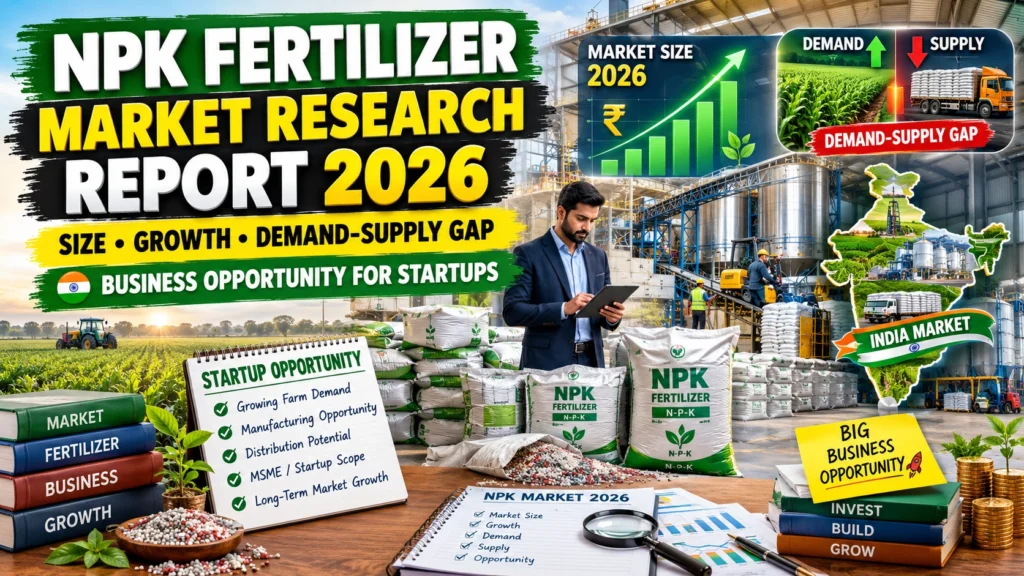
NPK Fertilizer Manufacturing Business in India Government data, certain of which is India-specific, is clear: NPK fertilizer production rose from 165.15 lakh tonnes in 2014-15 to 220.69 lakh tonnes in 2024-25, while consumption increased even more, from 255.76 lakh tonnes to 329.28 lakh tonnes over the same period. It’s a growing, growing India-made to India-farmers gap that’s being filled by imports of finished fertilizer and even more importantly, imports of raw material such as phosphoric acid, phosphate rock, and potash. For an entrepreneur, it is as near as manufacturing can get to guaranteed, policy supported demand. What Is NPK Fertilizer? NPK is a complex or compound fertilizer that includes the three primary plant nutrients—nitrogen (N), phosphorus (P), and potassium (K)—in one granulated product, which is usually assigned a ratio (such as 10-26-26, 12-32-16, 20-20-0) that shows the percentage of each nutrient by weight. NPK complex fertilizers contain all three nutrients together which provides balanced nutrition and reduces the wastage of nutrients compared to separately applying the single nutrient fertilizers, making them more convenient to use than straight fertilizers (urea for nitrogen alone, DAP for nitrogen-phosphorus, MOP for potassium alone). There are two major ways in which NPK fertilizers are produced: India’s fertilizer policy is also increasingly moving towards customised and specialty NPK grades such as water-soluble fertilizers for fertigation/drip irrigation, micronutrient fortified formulations and controlled release fertilizers, which are in line with precision agriculture nutritional programing. View Full Project Details: NPK Fertilizers Manufacturing Project Report India NPK Fertilizer Market Size and Growth The India fertilizer market is estimated to be valued at USD 11.35–25.30 billion (2025-26) with most estimates falling in the range of USD 14.9 billion to USD 34.3 billion by 2031-2035 at average CAGRs of 3.8% to 6.6%. Chemical fertilizers, as a group, make up about 83% of the total product demand in India up to 2025 in India, with NPK/complex fertilizers being the major part of the market, followed by urea and DAP. Note on figures: India’s fertilizer market is generally reported as the aggregate or in total, encompassing urea, DAP, MOP, NPK complexes and specialty grades, rather than as an NPK-only number and as such can differ significantly between sources. NPCS can provide a customized techno-economic feasibility study based on the specific NPK grade (complex/granulated, bulk-blended, water-soluble) and capacity (investor-grade numbers) required. India’s Structural Production-Consumption Gap The National NPK fertilizer production increased from 165.15 lakh tonnes in 2014-15 to 220.69 lakh tonnes in 2024-25, while the consumption increased to 329.28 lakh tonnes during the same period — a higher rate of growth over the years which has actually increased the absolute gap. This deficit is filled by importing finished NPK product, and near complete reliance on imported potash (India has almost no commercial potash reserves) and a high reliance on imported phosphate rock and phosphoric acid for the production of phosphatic fertilizers. Policy Tailwinds 1. Nutrient Based Subsidy (NBS) framework reform: The NBS framework was reformed in 2024 with a nutrient-centric approach to calculating subsidy, explains the increase by 23% in complex fertilizer sales in 2024 kharif season due to higher prices for the NPK blends, which prompted the farmers to switch from urea and straight N. 2. Increase in NBS budgetary outlay: The Nutrient Based Subsidy window budget rose from ₹79,500 crore (2023-24) to ₹87,500 crore (2024-25) with the Department of Fertilizers getting an estimated allotment of ₹1.71 lakh crore in FY2026-27, which has made it easier for fertiliser manufacturers such as IFFCO and Coromandel to increase blending capacity by 35%. 3. New specifications under the Fertilizer Control Order (FCO): Better quality specifications for the micronutrient levels in NPK grades are compelling manufacturers to produce high-end, micronutrient fortified fertilizers and encouraging foreign companies to come up with specialty products. 4. Pradhan Mantri Krishi Sinchayee Yojana (PMKSY) fertigation support: Government outlays exceeding ₹21,900 crore have expanded micro-irrigation coverage to over 95 lakh hectares, directly driving demand for water-soluble NPK grades compatible with drip and sprinkler systems. 5. Indigenous water-soluble fertilizer technology: This is a significant step towards reducing the dependency on specialty fertilizers, where India is still importing, and could make the country a net exporter of the technology, after all the technology was completed by the Ministry of Mines in August 2025 with indigenous raw materials. Get Detailed Insights from This Book: Get Detailed Insights from This Book India Demand-Supply Gap: NPK Fertilizer Parameter Current Position (2024-25, per Economic Survey 2025-26) Domestic NPK production 220.69 lakh tonnes (up from 165.15 lakh tonnes in 2014-15) Domestic NPK consumption 329.28 lakh tonnes (up from 255.76 lakh tonnes in 2014-15) Production-consumption gap Roughly 108.6 lakh tonnes — met through finished-product imports and imported raw material for domestic granulation Raw material import dependence Near-total dependence on imported potash (India has minimal domestic reserves); significant dependence on imported phosphate rock and phosphoric acid Current stock buffer As of March 2026, India held approximately 48.38 LMT of NPKS stock alongside 53.08 LMT urea, 21.80 LMT DAP, and 7.98 LMT MOP — reflecting active government management of the supply gap through strategic stocking Nature of the gap A structural, widening production-consumption gap, driven both by finished-product shortfall and by India’s fundamental lack of domestic potash reserves and limited phosphate rock resources Opportunity for new entrants Concentrated in granulation/blending capacity expansion (converting imported raw materials into finished NPK product domestically), and in the specialty/water-soluble segment where India is actively reducing import dependence Reading the gap: Unlike categories where the constraint is manufacturing know-how or capacity, NPK fertilizer in India faces a genuine raw material resource constraint — the country simply doesn’t have significant domestic potash reserves, and its phosphate rock resources are limited. That means the most realistic opportunity for new entrants isn’t primary raw material extraction, but capacity in granulation, blending, and specialty formulation — converting imported intermediates into finished, subsidy-eligible, farmer-ready product, and increasingly into higher-value specialty and water-soluble grades where India is building genuine import-substitution capability. Major Indian NPK Fertilizer Manufacturers Company Base/Region Notes Indian Farmers Fertiliser Cooperative Ltd. (IFFCO)
Biopesticide Market Research Report 2026: Size, Growth, Demand-Supply Gap and New Business Opportunity for Startups in India
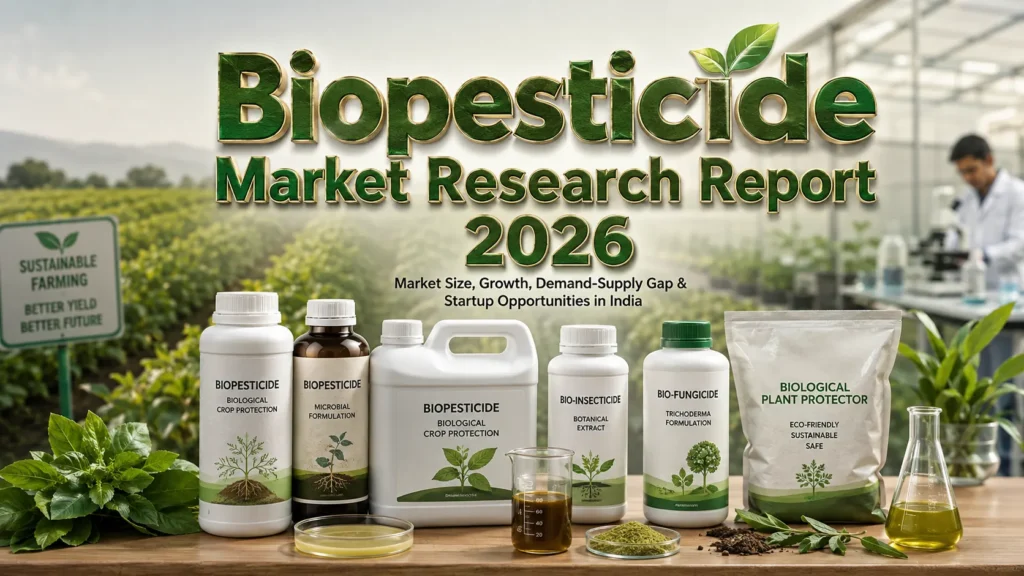
Biopesticide Manufacturing Business in India Indian agriculture is faced with a dichotomy between the increasing pressure of pest and increasing resistance to conventional chemicals and at the same time the demand of the consumers, regulators and exporters for residue-free produce is also increasing. Biopesticides are exactly at that intersection and despite being on a strong tailwind of government support and export market driven adoption, India’s biopesticide sector is small in comparison to its farmland base and overall pesticide consumption. That’s the opportunity this report crosses. What Are Biopesticides? Biopesticides are substances that are used to manage pests and are derived from natural materials (plants, bacteria, fungi, viruses, and certain minerals) instead of synthetic chemical compounds. They can be generally divided into three types: In India, biopesticides are registered through the Central Insecticides Board & Registration Committee (CIB&RC) through BioRRAP (Biopesticides Registration and Regulatory Approval Process) portal, with 970 bio-registrants and approximately 28 different types of biopesticides registered in the country in microbial and botanical category. Read the Complete Book Here: Biopesticides Handbook Global and India Biopesticide Market Size and Growth There are some variations in the estimates, but they are not significant, and the trend is clear: this is one of the fastest-growing areas of crop protection, with estimates varying primarily in scope (whether biofertilizers and bio stimulants are counted as a single category or separated, and whether they are crop protection products or different categories of products) and base-year methodology. Global market: Estimates for the 2024/25 base year range from approximately USD 4.4–9.5 billion, and are projected to grow anywhere from USD 9.8 billion to more than USD 27 billion by the early/mid-2030s, with most of the projections within the 8–15% CAGR range. India market: Estimates for 2025 vary from approximately USD 242 million to 287 million, the vast majority of forecasts falling in the range of USD 380 million to USD 700+ million by 2030-2034, with a typical CAGR between 9.5% to 10.5%. As per estimates, the commercial formulation volume in India is around 35–38 thousand metric tonnes per year for 2025–26. Note on figures: Figures are approximate, and may vary greatly depending on the scope and methodology being used and are therefore directional. NPCS can develop a custom techno-economic feasibility study to your specific requirement for precise scope for your biopesticide category (microbial, botanical, or biochemical) and numbers for investors. Where India Stands Today Currently, the share of biopesticides in the Indian pesticide market is approximately 10-12% of total pesticide usage, which is expected to grow significantly as the acreage of organic farms increase (organic farms have grown at around 18% CAGR over the past few years) and as export markets implement increasingly stringent limits on pesticide residues. Despite all this, awareness is the real problem; according to ICAR studies, only 10–15% of Indian farmers are aware of biopesticides and how they can benefit their crops, indicating an under-saturated rather than over saturated market. The production is currently largely concentrated with over 50 big companies, primarily in Maharashtra, Gujarat, Tamil Nadu, Andhra Pradesh, Bengaluru is now becoming a hub for biopesticide research and development (R&D) as well as innovations in agriculture technology, including the University of Agricultural Sciences. Policy Tailwinds 1. Parampara at Krishi Vikas Yojana (PKVY): A scheme of Ministry of Agriculture & Farmers Welfare for the promotion of organic farming clusters which directly boosts the demand for biopesticides as an alternative to synthetic chemical inputs. 2. National Mission for Sustainable Agriculture (NMSA): Promotes the adoption of integrated pest management (IPM), including biopesticides. 3. Reduced time to market for new microbial strains: CIB&RC facilitated faster registration timelines which helped smaller producers and startups to come in with proven formulations. 4. State level organic inputs subsidies: There are a few states such as Punjab, Haryana, Maharashtra, Sikkim and Karnataka where certain inputs of biological crop protection are provided with subsidies and extension support. Sikkim has made itself as first state in India which adopted organic approach in totality. 5. Export residue-compliance requirements: Horticultural exporters (grapes, pomegranates, onions, basmati rice) face increasingly strict Maximum Residue Limit (MRL) norms in destination markets, making biopesticide adoption a practical export-enablement tool rather than a niche preference. View Full Project Details: Biopesticides Manufacturing Project Report India Demand-Supply Gap: Biopesticides Parameter Current Position Share of total pesticide use Biopesticides account for only ~10–12% of India’s total pesticide consumption today Farmer awareness Only an estimated 10–15% of Indian farmers are meaningfully aware of biopesticides, per ICAR-linked studies Domestic manufacturing base 50+ major producers concentrated in Maharashtra, Gujarat, Tamil Nadu, and Andhra Pradesh — a fragmented, largely regional industry structure Registered product base 970 bio-registrants with ~28 distinct biopesticide types under BioRRAP, a relatively narrow product range compared to the diversity of Indian cropping systems Nature of the gap Primarily an adoption and distribution gap rather than a raw material or capacity gap — India has the biological raw material base (agro-residue, native microbial strains) but limited farmer reach, cold-chain/shelf-life-appropriate distribution, and formulation diversity Opportunity for new entrants Significant white space in underserved crop segments, regional distribution, and shelf-stable formulation technology — not a mature market being fought over by entrenched incumbents Reading the gap: India is facing the Biopesticide gap as a penetration gap, since the market is small in comparison to the area being cropped and the Indian conventional pesticide market. The synergy of both (low current penetration + strong regulatory and export tailwinds) is exactly the type of category that new manufacturing capability and improved last-mile delivery forms the opportunity. Major Indian Biopesticide Manufacturers Company Base/Region Focus Area Notes Coromandel International Ltd. Hyderabad, Telangana Microbial and botanical biopesticides, biofungicides Major Indian fertiliser and agri-solutions company; launched “ECO Neem Plus,” a neem-extract biofungicide SOM Phytopharma India Ltd. Pune, Maharashtra Botanical extracts, pheromone-based products Established Indian biopesticide and biological crop-protection specialist, frequently profiled among global market players IPL Biologicals Ltd. Panchkula, Haryana Microbial biopesticides and biofertilizers Recognised domestic manufacturer with a diversified biologicals portfolio T. Stanes and Company Ltd. Coimbatore, Tamil Nadu Botanical
How to Start a Water-Soluble NPK Fertilizer Business
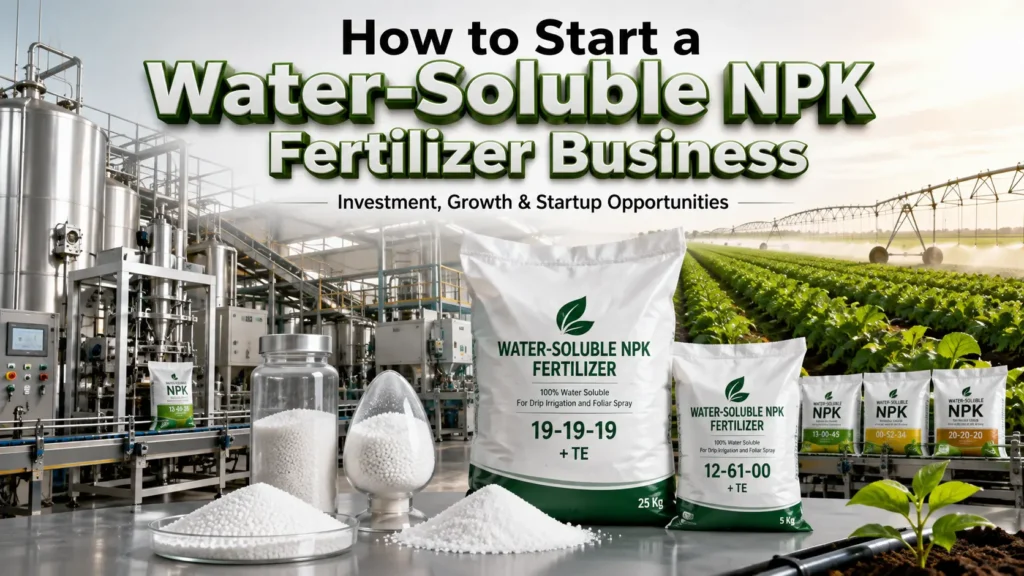
This book will provide a practical and consultant style approach of making the Water Soluble NPK Fertilizer Manufacturing in India, market logic, government support, business ideas and practical feasibility steps. Currently, water soluble NPK fertilizer has become one of the most attractive manufacturing opportunities in India in a stealth manner. Farmers today are expecting rapid nutrient uptake and drip irrigation is gaining a sudden momentum in Maharashtra, Gujarat, Karnataka etc. This change is creating solid business opportunities for somebody with chemistry, timing and knowledge of government support in mind. It isn’t simply a matter of mixing together the correct proportions of NPK solution. It’s all about getting the demand signals right and creating a business that will evolve with the changing Indian farm economy. In this article, you’ll follow the logic of the market, the schemes you know of, some real business ideas, and some foundational work you should do before putting money into any business. Get Detailed Project Report (DPR): Fertilizers & NPK Manufacturing Why This Sector Is Growing Fast The water-soluble fertilizer market in India is estimated to be USD 425 million recently, and will hit the mark of USD 650 million within a couple of years. This translates to a growth rate in excess of 7 percent per year. However, the Indian NPK fertilizer market is already in the USD 12 billion mark and continues to rise. That isn’t an educated guess. They truly represent a ground-level change. The Shift From Bulk Urea to Specialty Nutrition The Indian agriculture has been functioning on bulk urea and subsidized granular urea for decades. But now horticulture has reached a level of production of over 3.5 crores tonnes per year, and high value crops like grapes, pomegranates and vegetables require accurate and quick nutrition. As a result, farmers cultivating these crops are shifting to fertigation and foliar feeding, for which 100% water soluble grades are essential. As a result of the government-sponsored schemes, there has been a further expansion of micro-irrigation, and of course this is attracting more farmers to soluble fertilizers as drip systems will not work with granular material. Profitability Logic Behind Water-Soluble Grades The prices of water-soluble NPK fertilizers are generally not subject to the statutory price control regime in place for bulk urea. This has allowed manufacturers to price their products according to quality and formulation instead of a specific subsidy slab. This one thing completely alters the new competitor’s profitability equation. Margins on water-soluble grades with branding, fortification or micronutrients generally are much higher than margins on standard granular grades. In this way, a well-managed small unit can offer competitors quality and service, as well as price, and thus compete on more than just price. Government Policies Supporting New Businesses A new entrepreneur is not required to use his own capital to finance all activities. The policy landscape for MSMEs in India has come a long way and there are various schemes that are applicable to a fertilizer manufacturing start-up. MSME Registration and Credit Support The first step for every founder should be Udyam Registration, an online platform set up by the Ministry of MSME which is free of cost for the founders. After registration, a unit can avail of loans up to ₹1 crore without any collateral under the Credit Guarantee Fund Trust for Micro and Small Enterprises or CGTMSE. Besides, the Credit Linked Capital Subsidy Scheme (CLCSS) provides subsidy for the machinery upgrade and the Prime Minister’s Employment Generation Programme (PMEGP) provides margin money subsidy ranging from 15% to 35% as per the scheme category and area. These schemes, together, can significantly reduce the initial investment for a new fertilizer plant. Fertilizer-Specific Regulatory and Support Framework Each fertilizer company has to register under the Fertilizer Control Order (FCO) with the Department of Fertilizers that prescribes quality criteria for NPK grades. On the demand side, the Pradhan Mantri Krishi Sinchayee Yojana continues to expand the scope of micro-irrigation, directly expanding the addressable market for soluble fertilizers. In addition, state governments in Maharashtra and Gujarat provide major subsidy on drip irrigation capital cost for the smallholder farmers, thereby indirectly encouraging the demand for fertigation friendly nutrients. Entrepreneurs can also avail Make in India resources on export facilitation and manufacturing incentives available to them in the agri-input segment. Get Detailed Insights from This Book: Fertilizers Manufacturing Handbook Profitable Business Ideas in This Water-Soluble Fertilizer Sector Here are some business ideas that can be implemented in this space. They are geared toward different customer segments and should be chosen based on the founders’ capital, location, and market access. 1. Fully Water-Soluble NPK Powder for Fertigation This is the big opportunity, the one that provides a lot of value. A unit manufactures crystalline or powder pellets (NPK) that will dissolve in the irrigation water, such as 19:19:19 or 13:40:13. Quality consistency is of huge importance, as these grades are directly connected to the drip system, and any insoluble residue can ruin a farmer’s trust by clogging emitters. Sizing and purifying the particles are critical for repeat orders and require investment at an early stage in the manufacturing process for a founder entering this segment. This model has a quick path to actual revenue, as the farmers obtain it through agri-input dealers in horticulture belts, especially in Maharashtra, Karnataka and Andhra Pradesh. 2. Foliar Spray Grade Fertilizer for Export Crops Foliar sprays are used on crops intended for export including grapes, pomegranates and cut flowers where there are requirements for buyers to see good quality and compliance with residues. A mini unit focused on foliar grade formulations can command a higher price because these products address a specific issue – correction of nutrient deficiencies during a critical growth phase. Relationships with the export market are best established with the farmer producer organisation (FPOs), rather than with general retailers, as the latter prefer consistency and technical support over the lowest price. 3. Micronutrient-Fortified NPK Blends For high value horticulture, plain NPK may not be sufficient. Therefore, the fortified blends
How to Start Floriculture Export Business in India: Investment, APEDA Support & Export Opportunities

Floriculture Export Business Floriculture – the cultivation, export and marketing of cut flowers, potted plants, dried flowers and floral products is one of the most underdeveloped agriculture export business ideas in India. Cultivated globally, the cut flower industry generates over $50 billion per year, with the Netherlands, Colombia, Kenya and Ethiopia as the leading producers. India has a small share in this global market considering the range of tropical climates, skilled agriculture labour and existing farming tradition of flower cultivation in the country. APEDA’s floriculture export promotion mandate and support from the National Horticulture Board for modern greenhouse cultivation are paving the way to a new era for Indian Floriculture entrepreneurs to enter into the international markets. Floriculture export is a high value, land intensive land-based business with good commercials for the entrepreneurs who have access to land in suitable agro climatic zones like Karnataka, Tamil Nadu, Himachal Pradesh, West Bengal and J&K. Why Floriculture Export Is a Premium Agricultural Opportunity Cut flower export is one of the highest valued agricultural enterprises in terms of value per square metre as it generates a turnover of ₹500 – ₹2,000 per square metre of land in well managed polyhouse cultivation versus the most commonly grown vegetable crops which generate a turnover of ₹50 – ₹200 per square metre on the same area. Floriculture is particularly appealing to farmers having less agricultural area and seeking to utilize their farm for the maximum agricultural exportable value per area. Year-round consumption is the driving force behind global demand for cut flowers; floral gifting, wedding decoration, hotel amenity, and corporate event decoration are year-round markets. India’s tropical and sub-tropical climate variety allows flowers to be produced throughout the year; which is in stark contrast to the European countries who are very reliant on costly heated greenhouses during the winter months. This natural season advantage coupled with low labour cost provides a structural competitiveness to Indian floriculture exporters as compared to the established exporters from Europe and South America. Explore 10,000+ business ideas aligned with your investment goals APEDA and Government Support for Floriculture Exporters The floriculture and floriculture products (cut flowers, cut foliage, dried flowers and potted plants) are in the mandate of the Agricultural and Processed Food Products Export Development Authority (APEDA). APEDA offers loans for market development, pack house, pre-cooling, modern greenhouse (polyhouse) and financial assistance for refrigerated transport. APEDA also arranges participation of exporters from India in the largest Flower trading platform in the world, Flora Holland auction at Aalsmeer. The National Horticulture Board (NHB) offers subsidy and financial assistance for the construction of polyhouse and greenhouse where 50% of the total eligible capital cost is eligible up to the limit of the scheme. For new floriculture entrepreneurs, a considerable portion of the investment is taken up by the investment support provided by NHB for the protected cultivation infrastructure. The Ministry of Agriculture and Farmers Welfare has the National Horticulture Mission and the Horticulture Mission for North East and Himalayan States under its wings, which gives extra impetus to floriculture development in specific areas with climate conditions conducive to high value cultivation of flowers. An important logistics element for the export of perishables such as flowers is the air cargo capacity and cost. The government’s efforts towards developing air cargo infrastructure at key airports and APEDA’s push for dedicated air cold chain capacity for the flower exporters are gradually making the flower export logistics economics more attractive. Improvements to cold chain logistics from the farm to the airport are provided by APEDA’s financial support for pre-cooling and refrigerated transportation facilities. The logistics support of APEDA is explained in detail on the APEDA portal. Business Ideas in Floriculture Export 1. Cut Rose Export from Polyhouse Cultivation Roses are the most traded cut flower in the world, representing more than 30% of cut flower trade. So, the modern roses cultivated in polyhouse of Karnataka (Bengaluru district) and Himachal Pradesh are already exported to the markets of the Gulf, European and Japanese countries. A 1-hectare rose growing polyhouse can yield 1,500 to 2,500 flowers, which can be converted into 1.5 to 2.5 million stems for export, with investment ranging from ₹80 lakh to ₹1.5 crore, covering the construction of the polyhouse, irrigation, growing structures and post-harvest handling. The cost of the construction of the polyhouse is 50% subsidized by NHB. The main markets include export to Dutch flower markets and to the markets for flowers in the Gulf. With proper cultivation management, profits from 1-ha of polyhouse can be up to ₹30 lakh to ₹60 lakh annually. Get Detailed Project Report (DPR): Cut Rose Flower (Floriculture) Manufacturing Project Report 2. Tropical and Exotic Flower Export Tropical flowers (anthurium, heliconia, bird of paradise, ginger flower, and tropical foliage) are exported to Japanese, European and American florists, who are looking for unique non-European flower varieties for high-quality floral arrangements. These varieties have natural climatic conditions in the tropical southern part of India and North East India. One of the most valuable opportunities is to export to Japanese flower markets, where exotic tropical flowers have a high value. The investment on tropical flower cultivation & export unit varies from ₹30 lakh to ₹80 lakh based on plant species and scale of the project. The main logistics needs are air freight to Japan and EU. 3. Dried and Preserved Flower Export Dried flowers, potpourri, silica-dried roses, preserved eucalyptus and dried decorative botanicals are in high demand in the retail market in Europe and North America, especially on the home décor and gift market. India is blessed with a tremendous biodiversity, which offers a remarkable source of dried flower products. The investment in drying infrastructure, preservation chemical processing, sorting, and packaging is estimated to be between ₹10 lakh and ₹30 lakh for a dried flower processing unit. Dried products have the advantage of a shelf life of 12-24 months, which removes the time constraint of fresh cut flowers by air freight. Effective channels of export include the e-commerce platforms and
How to Start Agri-Warehouse Business in India: Investment, AIF Subsidy & Profit Guide
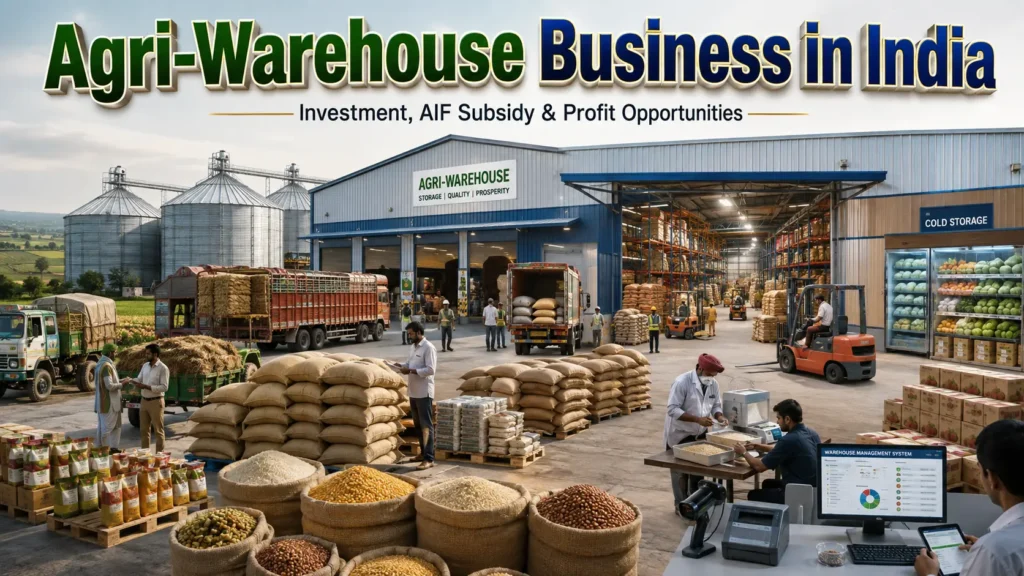
Agri Warehouse Business in India India wastes nearly 16% of its agricultural produce every year due to poor storage infrastructure. This gap is a huge business opportunity for entrepreneurs considering having high impact business ideas in the agri-sector. It is not only a logistics project, but a platform to integrate farmers, traders, processors & exporters in the Central India Agri-Warehouse and Commodity Trading Hub on a single ecosystem with Rs.50 Crore investment. The interesting rate on loans for qualified agri-infrastructure projects is paid by the Agriculture Infrastructure Fund (AIF) at 3%. The Warehouse Development and Regulatory Authority (WDRA) allows registered warehouses to issue a powerful financial tool called Negotiable Warehouse Receipts (NWRs), which can generate additional income for the hub operators. Get Detailed Project Report (DPR): Cold Storage & Cold Chain Technology Guide Why Central India Is the Right Location for This Business Soybean and wheat, pulses and cotton are vast in number produced in Madhya Pradesh, Vidarbha region in Maharashtra and Chhattisgarh. However, infrastructure for local storage and trading is still very poorly developed. The Agmarknet portal offers district-wise available commodity data which reflects good volume of throughput but lack in storage capacity to match in these districts. A modern warehousing infrastructure created in advance will give the entrepreneur the first-mover advantage in an area where demand is outpacing supply. Government Policies and Incentives Supporting Agri-Warehousing Agriculture Infrastructure Fund (AIF): It is a fund that has been established with an interest subvention of 3% on loans upto Rs.2 Crore for eligible projects, backed by credit guarantee from CGTMSE. Pradhan Mantri Kisan Sampada Yojana (PMKSY) provides capital subsidy for the cold chain and storage projects ranging from 35% to 50% in general areas and SC/ST and NE areas respectively. The NABARD has long-term refinance for warehouse construction through its Rural Infrastructure Development Fund (RIDF). The warehouse may also be registered as a warehouse under the WDRA, which would allow it to issue Negotiable Warehouse Receipts (NWRs) which would give the farmers a second source of income as they may pledge the stored commodities as collateral for loans. Turn your budget into a successful business plan Top Business Ideas Within the Agri-Warehouse and Trading Hub Model Commodity Storage and Negotiable Warehouse Receipt (NWR) Services This business’s core is the large-scale commodity storage registered by the WDRA. NWR system allows the warehouse to issue receipts for the commodities stored in the warehouse. These receipts are accepted by the banks, and the farmers borrow against them, instead of selling the produce at distress prices after harvest. The warehouse charges the storage fee on a per quintal, per month basis, handling charges and quality certification charges. Commodity backed financing and price discovery is provided on the NCDEX (National Commodity and Derivatives Exchange) platform which can be directly accessed by the WDRA registered warehouses. Commodity Grading, Testing, and Quality Certification Centre An FSSAI approved testing laboratory and grading facility in the hub warehouse enables a business to take a charge for moisture testing, aflatoxin testing, protein content testing and separation of foreign material. Soybean meal exporters, rice millers and pulses traders will all need certified quality reports before they can move on to large transactions. The APEDA mandates certification of agri-products exports, and a set-up having its own NABL certified testing facility makes the service offering more attractive for export processors. Electronic Commodity Trading and Auction Platform The third option of high-value business ideas in the hub is registering as a sub-broker/affiliate with NCDEX or setting up an electronic auction platform for trading at the mandi level. Traditional mandis are still in existence in central India, where many farmers sell their produce at lesser prices. The hub can fill this gap by organizing electronic auctions where registered buyers will bid for lots stored in the warehouse. The platform charges a transaction fee, which is usually between 0.5% – 1% of the transaction amount. Monitor real time commodity prices, highlight the price discovery value to the farmers through the Agmarknet. Related Article: Cold Storage, Cold Chain & Warehouse Import-Export Opportunity Analysis Some commodities are identified in Central India which have high export potential. The soybean meal is sold overseas in animal feed in Southeast Asian and European countries. Wheat and flour is exported to neighbouring countries, West Asia and Africa. APEDA helps to export agri-commodities and offers support for phytosanitary certificates. As an export consolidation service, a hub operator with APEDA registration will be able to bring together small lots from smallholder farmers into export ready shipments. Check for export documentation/IEC code from DGFT. Indian MSME Success Stories in Agri-Warehousing Arya.ag — Building India’s Agri-Finance Backbone Chattanathan Devarajan and Prasanna Rao of Arya.ag, were able to address one of the most significant agri-problems in India, which is post-harvest financing, by leveraging Technology and Warehousing. The company developed an asset-light warehousing network in the rural areas of India, established digital NWRs, and linked the farmers to the institutional credit market at affordable rates. Arya.ag proved that agri-warehouse infrastructure coupled with fintech is a high return and scalable business. A key part of their business model was the integration with WDRA’s NWR framework. Star Agri warehousing and Collateral Management Ltd Initially, Star Agriwarehousing started with one warehouse in the state of Rajasthan and has now emerged as one of the largest collateral management companies in India. The company’s approach, which involved managing storage on the field at a client’s owned or rented warehouse, enabled it to grow without a significant capital expenditure. Today it has stocking of millions of metric tonnes in various states and is serving banks, NBFCs, traders, agri-processors etc. The lesson for new business owners: You may require third-party storage infrastructure, but not self-owned infrastructure, to achieve this reduces capital requirements. Get Detailed Insights from This Book: The Complete Book on Cold Storage, Cold Chain & Warehouse (with Controlled Atmosphere Storage & Rural Godowns) How NPCS Can Help You Build This Project The Niir Project Consultancy Services (NPCS) aims to provide professional consulting for
गांव में शुरू होने वाले 50 सबसे फायदेमंद बिजनेस आइडियाज़
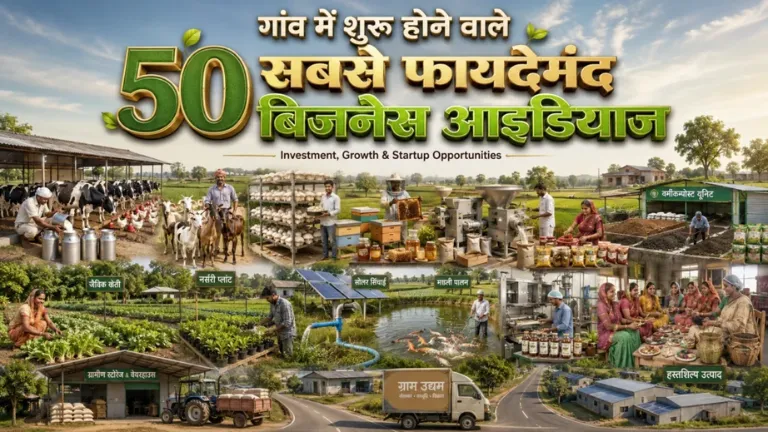
गांव में बिजनेस आइडिया भारत के गांवों में एक बड़ा आर्थिक बदलाव चल रहा है। जमीन सस्ती है। मजदूरी कम है। कच्चा माल करीब है। और सरकारी योजनाएं पहले से कभी इतनी अनुकूल नहीं थीं। एमएसएमई मंत्रालय के आंकड़ों के अनुसार देश के कुल सूक्ष्म, लघु और मध्यम उद्यमों का करीब 51 प्रतिशत ग्रामीण और अर्ध-शहरी क्षेत्रों में काम करता है। नाबार्ड की वित्तीय समावेशन रिपोर्ट बताती है कि ग्रामीण परिवारों की औसत मासिक आय पिछले एक दशक में दोगुनी से ज्यादा हो चुकी है। यह रिपोर्ट उन 50 बिजनेस की बात करती है जो असल में चलते हैं — और जिनकी व्यवहार्यता जमीनी स्तर पर साबित हो चुकी है। यह क्षेत्र मजबूत स्टार्टअप अवसर क्यों है बाजार की मांग और विकास ग्रामीण खपत लगातार बढ़ रही है। खाद्य प्रसंस्करण, कृषि सामग्री, हस्तशिल्प और हल्के विनिर्माण — सभी में मांग बढ़ी है। हर बड़ी सरकारी योजना एक नई स्थानीय आपूर्ति श्रृंखला बनाती है। सरकारी सहयोग और नीतियां पीएमईजीपी योजना के तहत ग्रामीण उद्यमियों को 25 लाख रुपये तक की विनिर्माण इकाई के लिए 35 प्रतिशत पूंजी अनुदान मिलता है। अनुसूचित जाति, जनजाति और महिला उद्यमियों को यह और अधिक मिलता है। पीएमएफएमई योजना खाद्य प्रसंस्करण इकाइयों को दस लाख रुपये तक का ऋण सहायता अनुदान देती है। नाबार्ड ग्रामीण उद्योगों को कार्यशील पूंजी ऋण और तकनीकी सहायता देता है। जोखिम जागरूकता ग्रामीण बिजनेस में तीन मुख्य जोखिम हैं — कच्चे माल की मौसमी उपलब्धता, परिवहन की सीमाएं और कुशल कार्यबल की कमी। बिजनेस चुनते समय पहले स्थानीय कच्चे माल और खरीदार की पुष्टि करें — फिर पूंजी लगाएं। बिजनेस चयन का तर्क गांव में बिजनेस चुनते समय ‘क्या चल सकता है’ नहीं, ‘यहां क्या टिकेगा’ यह पूछें। मुनाफे की संरचना तीन स्तरों पर काम करती है: पहला — कृषि आधारित प्रसंस्करण: सकल मुनाफा 18 से 30 प्रतिशत, पूंजी कम, बाजार करीब। दूसरा — हस्तशिल्प और वस्त्र: सकल मुनाफा 35 से 55 प्रतिशत, बाजार जोड़ जरूरी। तीसरा — हल्का विनिर्माण (साबुन, मोमबत्ती, कागज थैली): मुनाफा 35 से 60 प्रतिशत, विस्तार संभव। विस्तार का रोडमैप सरल रखें। छोटी इकाई से शुरू करें, स्थानीय मांग सिद्ध करें, फिर बढ़ें। Find the most profitable startup for your investment range 50 फायदेमंद गांव के बिजनेस — विस्तृत विवरण 1. आटा चक्की गांव में हर घर रोज आटा पिसवाता है — यह मांग कभी नहीं रुकती। पांच से दस घोड़े-शक्ति की मोटर वाली छोटी चक्की में डेढ़ से तीन लाख रुपये की शुरुआती लागत है। रोजाना 200 से 500 किलो पिसाई पर सकल मुनाफा 15 से 22 प्रतिशत बनता है। पीएमईजीपी में 35 प्रतिशत पूंजी अनुदान मिलता है। विपणन की जरूरत लगभग शून्य है — ग्राहक खुद आते हैं। 2. दाल मिल अरहर, मूंग, उड़द — ये सभी दालें ग्रामीण इलाकों में बड़े पैमाने पर उगाई जाती हैं। छोटी दाल मिल में तीन से सात लाख रुपये की लागत है। प्रसंस्कृत दाल कच्चे अनाज से 30 से 40 प्रतिशत महंगी बिकती है। मध्यप्रदेश और महाराष्ट्र में ऐसी इकाइयां सालाना पांच से दस लाख रुपये कमाती हैं। उद्यम पंजीकरण के बाद नाबार्ड से कार्यशील पूंजी ऋण आसानी से मिलता है। 3. अगरबत्ती निर्माण घर से शुरू होने वाला जाना-पहचाना सूक्ष्म उद्योग। मशीन और कच्चे माल पर 50 हजार से डेढ़ लाख रुपये। महिला उद्यमियों में यह सबसे लोकप्रिय विनिर्माण बिजनेस है। तमिलनाडु और कर्नाटक में घरेलू इकाइयां सालाना तीन से पांच लाख रुपये कमाती हैं। खादी एवं ग्रामोद्योग आयोग प्रशिक्षण और बाजार सहयोग देता है। सकल मुनाफा 30 से 45 प्रतिशत। 4. मोमबत्ती निर्माण पैराफिन मोम, धागा और सांचों से शुरुआत होती है। 30 हजार से 70 हजार रुपये में इकाई लग जाती है। सजावटी मोमबत्तियां ऑनलाइन बाजार में 150 से 800 रुपये प्रति नग बिकती हैं। त्योहारी मौसम में मांग तीन गुना हो जाती है। देशभर के ऑनलाइन बाजार तक पहुंच सरल है। सकल मुनाफा 40 से 55 प्रतिशत। 5. साबुन निर्माण हर्बल और हाथ से बने साबुन की मांग शहरी बाजार में बढ़ रही है। 40 हजार से 80 हजार रुपये में घरेलू उत्पादन शुरू होता है। नीम, हल्दी, चारकोल — ये सामग्री गांव में आसानी से मिलती हैं। ठंडी विधि से बने साबुन में सकल मुनाफा 35 से 50 प्रतिशत है। सूक्ष्म खाद्य उद्यम योजना में पैकेजिंग के लिए अलग अनुदान उपलब्ध है। 6. वर्मी खाद उत्पादन जैविक खेती की मांग साल-दर-साल बढ़ रही है। 100 वर्ग फुट इकाई से शुरुआत — लागत 15 हजार से 30 हजार रुपये। तीन महीने में पहली खेप तैयार। आठ से 12 रुपये प्रति किलो के भाव पर महीने में 500 किलो बेचना संभव है। कच्चा माल लगभग मुफ्त मिलता है। सकल मुनाफा 40 से 55 प्रतिशत। 7. मुर्गी पालन एवं चारा प्रसंस्करण 500 ब्रॉयलर मुर्गियों से शुरुआत — लागत डेढ़ से ढाई लाख रुपये। प्रति खेप 45 दिन में शुद्ध आमदनी 20 हजार से 35 हजार रुपये। साल में छह खेप संभव हैं। नाबार्ड के कुक्कुट उद्यम पूंजी कोष से वित्त उपलब्ध है। चारा प्रसंस्करण जोड़ने पर मुनाफा और बढ़ता है। Read the Complete Book Here: Preservation of Meat and Poultry Products 8. मधुमक्खी पालन एवं शहद प्रसंस्करण दस बक्सों से शुरुआत पर 25 हजार से 40 हजार रुपये की लागत। प्रति वर्ष 200 से 300 किलो शहद उत्पादन। जैविक शहद 300 से 500 रुपये प्रति किलो बिकता है। प्रसंस्करण और पैकेजिंग जोड़ने पर 600 से 900 रुपये प्रति किलो तक मिलता है। कौशल विकास मिशन और खादी आयोग दोनों प्रशिक्षण देते हैं। 9. पशु चारा निर्माण डेयरी पशुपालन की वृद्धि के साथ गुणवत्तापूर्ण चारे की कमी है। छोटी चारा मिल में दो से पांच लाख रुपये की लागत है। कृषि उपउत्पादों को मूल्यवर्धित चारे में बदला जाता है। स्थानीय डेयरी सहकारी से सीधा आपूर्ति अनुबंध मिलता है। सकल मुनाफा 20 से 30 प्रतिशत। मध्यम आकार की इकाई सालाना 15 से 25 लाख रुपये का राजस्व बनाती है। 10. गुड़ निर्माण गन्ना उत्पादक गांवों में यह सबसे स्पष्ट अवसर है। पारंपरिक क्रशर और उबालने की इकाई में एक से तीन लाख रुपये लगते हैं। जैविक गुड़ शहरी बाजार में 80 से 150 रुपये प्रति किलो बिकता है जबकि उत्पादन लागत 25 से 35 रुपये है। सूक्ष्म खाद्य उद्यम योजना में पैकेजिंग के लिए अनुदान मिलता है।
Products from Biogas Plant Digestate: Manufacturing Process, Investment & Business Opportunities
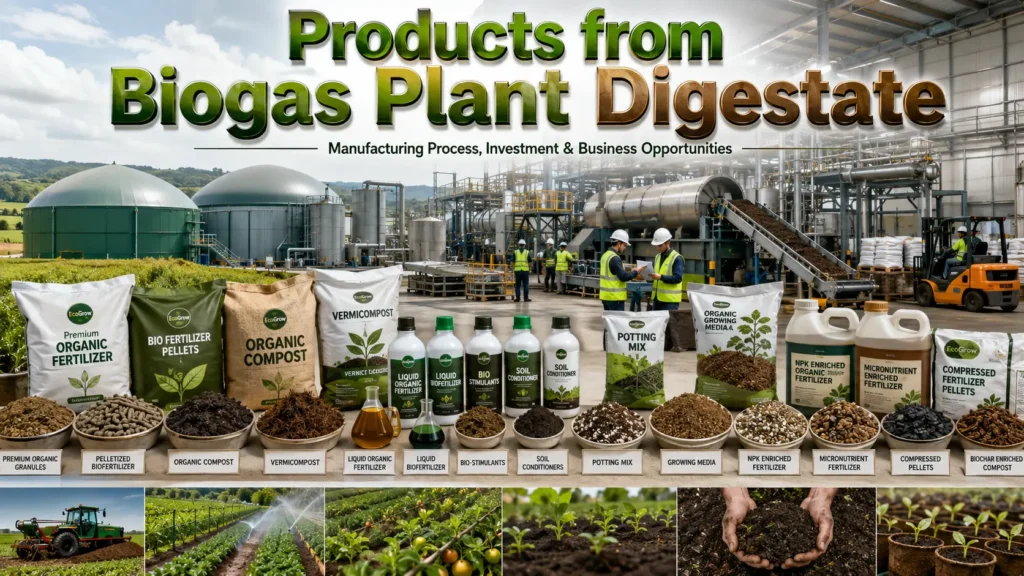
Biogas Digestate Products India has one of the world’s highest installed bases of domestic biogas plants (about 5 million) and commercial biogas plants (hundreds) at dairies, food processors, distilleries and municipal waste sites. The Satat Scheme has also introduced a compressed biogas plant (CBG) and MNRE is supporting fresh biogas capacity. However, in this extensive installed base, the digestate (liquid and solid residue after the energy has been extracted from the waste material as biogas) is not adequately managed and monetized. Most biogas plants just release liquid digestate into the adjacent agricultural land or water bodies and solid digestate piles up in pits, without making any effort to utilise them commercially. The digestate is not waste, but the best liquid organic fertilizer for Indian farmers. While composting and raw manure must undergo weeks of soil mineralisation before the available N can be absorbed by plants, anaerobic digestion breaks down complex organic nitrogen (protein and amino acids) quickly into ammoniacal nitrogen (NH₄-N) and is readily available for plant uptake without requiring weeks to mineralise the soil. Liquid digestates produced by well-managed biogas plants is a complete NPK fertiliser, consisting of 1.5–4% N, 0.8–2% P₂O₅ and 2–4% K₂O on dry matter basis. It has been consistently proven that application of digestate increased crop yields by 15–30% compared to the same mineral fertiliser application, which is probably due to growth hormones and beneficial microorganisms present in digestate. Explore This Book: Handbook on Biogas and Its Applications Top 6 Products from Biogas Digestate 1. Liquid Bio-Fertiliser (Direct Application Grade) This is because the digestate of food, agricultural and dairy waste biogas plants can be filtered at the plant (to remove fibre >1 mm) and quality tested before being sprayed directly onto crops in both drip irrigation or sprinkler irrigation systems. Bulk liquid bio-fertiliser (Rs. per unit) 200–300 litre tankers at Rs. 2,000–5,000 per tonne (Rs. The biogas plant is serving the organic and conventional farmers within 50 km radius. 2. Concentrated Liquid Bio-Fertiliser (Evaporation) The multi-effect evaporators enable digestate to be concentrated to 3-4 times its original concentration (from 1.5 % dry solids to 5-6 % dry solids) and allows for a more economic transport over longer distances for the bio-fertiliser. The digestate is produced in concentrated form (20–25% DS) in Rs. The cost of 20 litre containers is Rs. In urban horticulture and hydroponic crop production, premium prices are obtained for 150 – 300 per litre. A digestate concentration evaporation system: 50–150 lakh. Get Detailed Project Report (DPR): Biotechnology, Enzymes & Organic Farming Guide 3. Separated Fibre Compost (Press Cake) Organic compost material (25–30% DS) is produced by screw press separation of digestate to solid press cake and into liquid fraction, which can be stacked and transported. Granular Organic Compost for bagged retail is prepared by pressing the fibre cake and after drying and bulking agents, the compost is obtained at the retail price of Rs. 5,000–10,000 per tonne. Screw press separator and compost yard: Rs. 30–80 lakh. 4. Nutrient-Rich Irrigation Water (Fertigation) Using filtered digestate in on-farm irrigation systems (such as drip and furrow irrigation) to contracted farmers provides a complete service which can replace 30-50% of mineral fertiliser need. The operators of biogas plants establish long-term agreements with farmer clusters within 5 km of the plant, providing digestate via stationary pipelines or mobile digestate tank systems. 5. Dried Organic Fertiliser Granules Press cake from digesters is further dried (rotary dryer) to less than 10% moisture, and subsequently granulated to yield organic fertiliser granules which are easily spread mechanically and sold in the retail market. For the same, the FCO certified dried digestate granules sell for Rs. Premium organic fertiliser markets: 6-12 tonnes per tonne. Investment in the dryer and granulation line is Rs.: 40–120 lakh. 6. Algae Cultivation Substrate Microalgae (Spirulina/Chlorella) cultivation in raceway ponds or photobioreactor systems can be done with high nutrient liquid digestates diluted with water which serve as a perfect growth medium. Nitrogen and phosphorus (nutrient polishing) removed by algae at digestate water is converted to algal biomass with economic value of Rs. Nutraceutical, animal feed, and biofuel applications: 200-800 per kg. A digestate fed algae pond system: 30–100 lakh. Investment and Market Summary Product Investment (Rs.) Price Key Buyer Liquid Bio-Fertiliser 10–30 lakh Rs. 2,000–5,000/MT Organic/Conv. Farmers Concentrated Bio-Fertiliser 50–150 lakh Rs. 150–300/litre Urban Horticulture Fibre Press Cake Compost 30–80 lakh Rs. 5,000–10,000/MT Organic Farmers, Export Organic Fertiliser Granules 40–120 lakh Rs. 6,000–12,000/MT Premium Organic Market Algae Biomass (on Digestate) 30–100 lakh Rs. 200–800/kg algae Nutraceuticals, Feed Farmer Contracts: Building the Digestate Market Utilisation of digestate is only feasible if reliable farmer buyer relationships are established within the economic transport distance from the biogas plant. A 50 km radius around a large biogas plant contains tens of thousands of farmer fields, which however, need systematic market development, demonstration plots in which digestate crop response is demonstrated and infrastructure for delivery. The most successful digestate utilisation model in India is the biogas plant operators forming partnerships with Farmer Producer Organisation (FPO) where FPO provides farmer market aggregation, the operator supplies digestate at a cost below mineral fertiliser equivalent, and both parties benefit from the partnership. This FPO – biogas partnership model is being actively promoted by NABARD and the State cooperative departments. Related Article: Compressed Biogas Export India Opportunities That Can Earn ₹8 Cr/Year Digital Platforms for Digestate Marketing The agri-tech ecosystem in India is maturing to create online platforms that allow organic fertiliser producers (biogas plant digestate suppliers included) to connect with farmer buyers directly instead of through the traditional distributing chain to enhance farmer and producer margins. DeHaat, Ninjacart, AgriBazaar etc. are developing organic input procurement wings that will link the organic input producers to their farmer network. Aqgromalin (an aquaculture focused agri-platform) collects fish and shrimp farm inputs such as organic fertilisers. They offer the following services for biogas plant digestate producers: nationwide farmer buyer access beyond the geographical reach, digital payment and invoicing system, and quality test by the platform. Agri-tech platforms
India RHA-Based Products Market Analysis 2026–2033: SWOT, Demand-Supply Gap, Applications & Startup Investment Opportunities
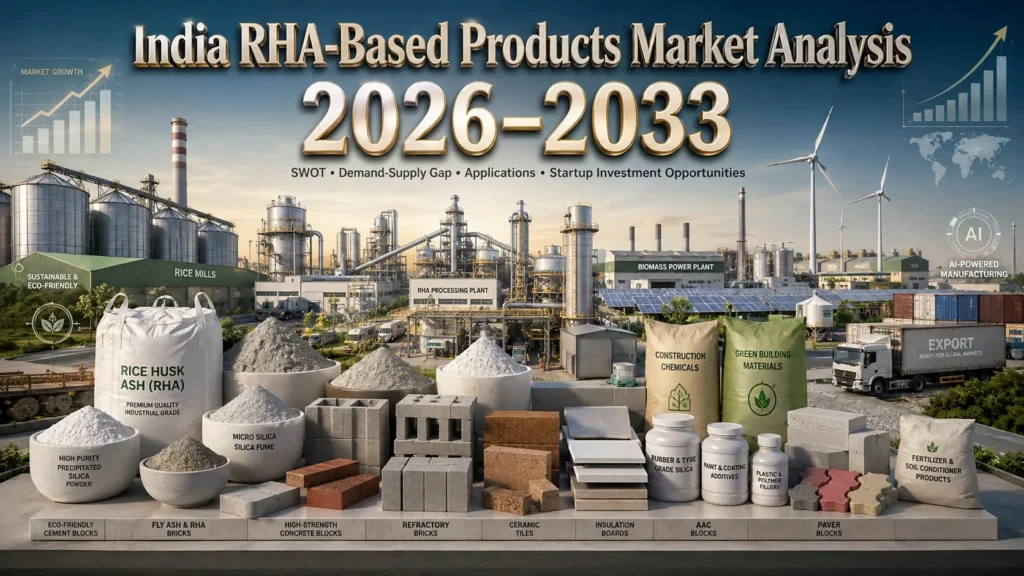
India RHA Based Products Market The market for Rice Husk Ash (RHA) in India is emerging at a time when the country’s agriculture sector is producing more rice than ever before, its infrastructure sector has a $175-billion investment pipeline, and the country is experiencing a shortage in specialty silica supply. The global market for RHA is estimated to be in the range of USD 3.0–3.2 billion, expanding at a 4.8–5.3% CAGR to USD 4.1–4.8 billion by 2033. In this global context India has one of the most dominant raw material positions in the world, but is structurally dependent on imports for high-purity silica, still from that very raw material. The big business opportunity for Indian MSME chemical and agro industries this decade will be closing that gap. The demand–Supply Gap India (D-S-G) is a result of the imports of silica precipitated from China, Germany, Japan, Malaysia and Taiwan at a compounded rate of 20.59% CAGR (2020-2024) and the fragmented nature of the RHA processing capacity with quality inconsistencies in India. The country produces 30+ million tonnes of rice husk a year, but only a small proportion is used to make value added silica products, resulting in a structural gap being addressed by importing rice husk. Organized players in various product segments of RHA include Major Indian Players Guru Metachem Pvt. Ltd., Usher Agro Limited, and Rescon (India) Pvt. Ltd., ranging from steel-grade insulating compounds, high-purity silica, to construction additives. With raw material which is almost free from rice mill clusters, the MSME scale silica unit with a capital investment of ₹ 3–8 crore can expect to generate a profit of 20–30% IRR. The multi-sector pull from green tyre demand, EV sector growth and construction sector boom insulates this investment from single industry cyclicality. India’s Hidden Industrial Asset: 30 million Tonnes of Wasted Silica India’s rice mills produce in excess of 30 million tonnes of rice husk as an end product of the milling process annually in the rice bowl states of Uttar Pradesh, Telangana, West Bengal, Punjab, Chhattisgarh and Andhra Pradesh. This husk, when fired at well-controlled temperature of 500°C to 700°C, produces Rice Husk Ash (RHA) rich in amorphous silica (80-95% by weight) which is the most reactive form of SiO2 available from any raw material on earth with a highest surface area. The contradiction is obvious. As per the Department of Agriculture & Farmers Welfare (DA&FW), India is the world’s largest or second-largest rice producing country based on the crop year with the total paddy production of 1,364 lakh tonnes in 2024–25. The Economic Survey 2025-26 reveals that Uttar Pradesh is the leading contributor of rice, with a production of 20.76 million tonnes, followed by Telangana with 17.45 million tonnes and West Bengal with 16.02 million tonnes, making the top three states contribute to more than 36% of the national rice production. India, however, despite having what is supposed to be a world-class silica manufacturing raw material base, continues to import hundreds of thousands of tonnes of specialty silica annually, due to the lack of pace of development of the processing infrastructure. It’s not a farming issue. It is a gap in industrial policy — and one of the most obvious MSME business opportunities in India’s manufacturing industry. Related Article: Why Rice Husk Silica is the Future of Green Tyres: Market Growth and Demand Gap Understanding RHA: Not Just Ash, But Industrial-Grade Silica It is important to be aware of what RHA is in fact providing that has made it commercially viable to a number of industries, before assessing the market opportunity. In the controlled combustion of rice husk, the organics are burned, leaving a concentrated ash of organic silicon compounds which is extremely porous and amorphous. The result is RHA that has amorphous silica — a much more chemically active form of silica than the crystalline silica from traditional quartz quarries. That’s what makes RHA so valuable. In the field of construction, it reacts with calcium hydroxide to produce more calcium silicate hydrate, which strengthens and makes the concrete impermeable at 10 to 25% cement replacement. It is used as a top-notch filler in the rubber and tyre industry to enhance the resistance to abrasion and minimize rolling resistance. Its thermal stability of over 1500°C is ideal for steel ladle and tundish linings in refractory applications. Global rice production is expected to reach a record high of more than 535 million tonnes (milled basis) in 2024–25, according to the Food and Agriculture Organization of the United Nations (FAO). India has the biggest share of the global upward revision, and also contributes the largest share of the world’s total rice husk production. This places India not just as the producer of RHA for in-house use but as one of the future suppliers of high purity silica derivatives in the global market, which so far India has not fully occupied. Global and India RHA Market: Size, Growth, and What the Numbers Mean for Investors The RHA market is expected to grow to USD 4.1–4.8 billion by 2033, from USD 3.0–3.2 billion in 2026, with the forecast range indicating scope differences among various market segments. The base RHA market is expected to reach nearly USD 1.0 billion in 2034 at 10.4% CAGR, whereas the higher value-added sub-market of Precipitated Silica from RHA will cross USD 608 million by 2026 at 19.2% CAGR. This is because the demand for higher purity of silica for application in tyres, rubber, pharmaceuticals, cosmetics, and specialty chemicals is increasing, while bulk ash for construction products is decreasing. India is poised for faster growth compared to the global rate of 12–15% CAGR, owing to the infrastructure investments that are accelerated in the country, the rapid growth of the rubber and tyre sector, and growing awareness among institutions of the use of pozzolanic materials as carbon efficient alternatives to OPC. The domestic precipitated silica market, the primary commercial product of RHA, was estimated at USD 76.2 million in 2024 and will expand at 10.2% CAGR, to
How to Start a Spice Export Business in India: APEDA, Spices Board & Investment Guide
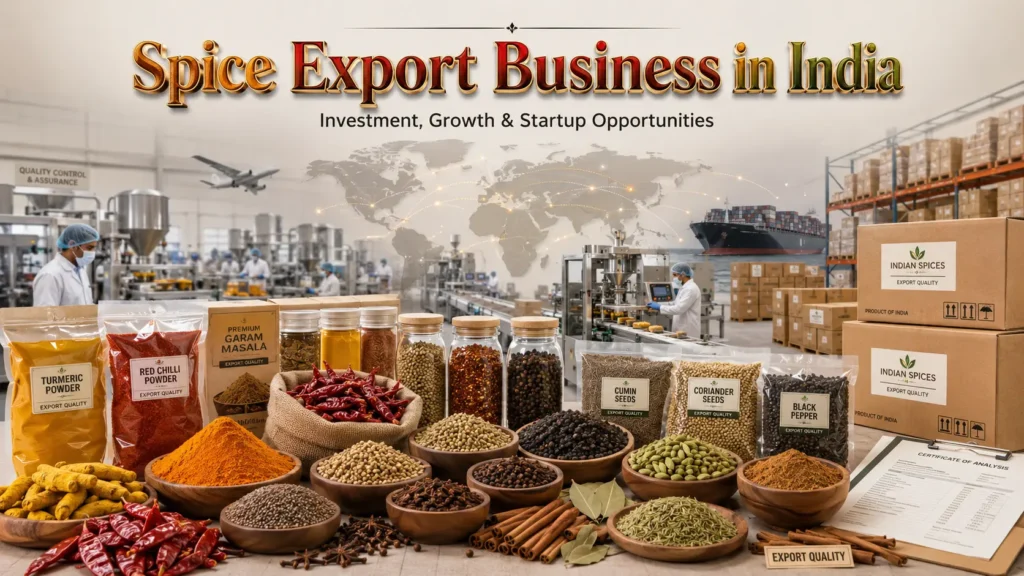
Spice Export Business in India The spice industry is a unique one in the Indian food culture and is an industry which, for the aspiring entrepreneurs with serious business ideas in the agricultural exports, has a significant opportunity both in terms of heritage and a present-day business opportunity of Rs.20 Crore Spice Exports Business. The Ministry of Commerce has established the Spices Board of India to oversee the entire spice export development ecosystem and provides subsidies on spice processing infrastructure, quality testing equipment and organic certification expenses. India is the world’s biggest producer, consumer and exporter of spices. However, the benefit that the Indian exporters are able to reap is limited to bulk commodity exports and not on premium branded exports, which can be tapped by organised entrepreneurs having appropriate processing and certification facilities. Why India’s Spice Export Sector Is a Global Opportunity The demand for genuine Indian spices has been rising worldwide, especially in North America, Europe and the Gulf, where ethnic cuisine has become increasingly popular — and so has the demand for authentic Indian spices in the organic, premium, and culinary specialty categories. Spices Board of India keeps a close watch on export statistics that have been showing positive double-digit growth in value added spices export. The European Union’s food safety standards have made buyers prefer certified Indian exporters who can certify pesticide residue compliance, creating a quality barrier in favour of organised Indian exporters as compared to unorganised traders. In the west, the functional food trend has made turmeric, ginger and black pepper superfood status, forming new food segments beyond traditional food buyers. Read the Complete Book Here: Handbook on Spices Government Schemes Supporting Spice Export The Spices Board of India (SBI) offers subsidies for the installation of spice processing infrastructure, quality testing equipment, and costs of organic certification. APEDA organises buyer-seller meets, export pavilions at international trade fairs and market intelligence reports of particular country requirements for the export of spices. Ministry of Commerce has given a framework for the export of value-added spice products under the name of Agriculture Export Policy with the identification of agri-export zones in the spice producing states. There is farm level support in the form of spice boards from Kerala, Karnataka and Andhra Pradesh states. DGFT’s RoDTEP scheme will help exporters get back domestic taxes which are hidden in export goods, making them more competitive in the international markets. Top Business Ideas in Spice Export at Rs.20 Crore Scale Certified Organic Spice Processing and Export Organic certified spices (such as turmeric, chilli, cumin, coriander, ginger and cardamom) sell at a premium of 50-200% in markets in Europe and North America. A Rs.20 Crore organic spice processing industry is using farmer network aggregation and advanced processing technologies such as steam sterilisation, colour sorting, grinding and blending along with certified organic cultivation. The organic promotion scheme by the Spices Board gives partial refund on the certification cost. NPOP and EU Organic certification are the main export certifications, apply through an APEDA accredited certification body. Steam Sterilised Spice Powder for Retail Export The technology investment for Indian spice exporters to comply with the European and American food safety standards on microbial limits is steam sterilisation (microbial elimination) of spice powders. A state-of-the-art Rs.20 Crore plant equipped with modern steam sterilisation technology and extensive quality testing, can deliver high quality spice powders that comply with the most rigorous import standards. FSSAI lays down the standards for spice quality and the Spices Board offers technical assistance to the processors aiming at upgrading to the steam sterilisation technology. Access Complete Business Plan: Curcumin Manufacturing, Extraction & Turmeric Processing Value-Added Spice Products: Cooking Pastes, Blends, and Extracts Moving beyond raw and powdered spice to value added products (oleoresins and essential oils) in flavour and fragrance industries captures much more value in the same raw materials. The price of spice oleoresins and essential oils is much higher than the price of food-grade spice powder in an industrial level. A solvent extraction/steam distillation technology is available to an entrepreneur for spice oils and oleoresins at Rs.20 Crore. The Spices Board has a list of oleoresin exporters, and it also supplies information on the world markets for spice extracts. Import-Export Opportunity Analysis India ships spices to more than 180 countries and the largest buyers are USA, China, Vietnam, Bangladesh and UAE. Export data is published by Spices Board of India on an annual basis, based on the product and country exported. The EU’s market need for organic spices, especially as part of the EU Farm to Fork Strategy, is a long-term positive trend for Indian exporters. In fact, regulatory environment is propping the quality-oriented Indian exporters as they are reducing the competition from the unorganised players in the market due to the updates of MRLs by EU. Early Registration with APEDA and Spices Board for export promotion benefits. Indian MSME Success Stories in Spice Export MDH Spices: Building India’s Most Recognised Spice Brand Established by Dharampal Gulati in Delhi, MDH (Mahashian Di Hatti) started as a small spice shop in Old Delhi and is one of the most popular spice brands in India today, both nationally and internationally. They had an international distribution network established in the UK, USA and Canada, with their own grocery stores from the Indian people, which provided an international income stream without an export setup. MDH illustrates how brand consistency – same taste, same packaging – every time is the key to a spice export business that stands the test of time. Related Article: MDH Masala Story: How Dharampal Gulati Built a Spice Empire Synthite Industrial Chemicals: Spice Extracts Export Pioneer Synthite Industrial Chemicals, Kerala, is one of the world’s biggest manufacturers of oleoresins and essential oils of spices and exports to the flavour houses of USA, Europe and Japan. The Company’s competitive edge was created through its perpetual investments in extraction technology and direct technical relationships with international flavour and fragrance firms, led by K.V. Jose. The success of Synthite has proven
Products from Brewery Spent Grain and Distillery By-Products: Manufacturing Guide and Business Opportunities
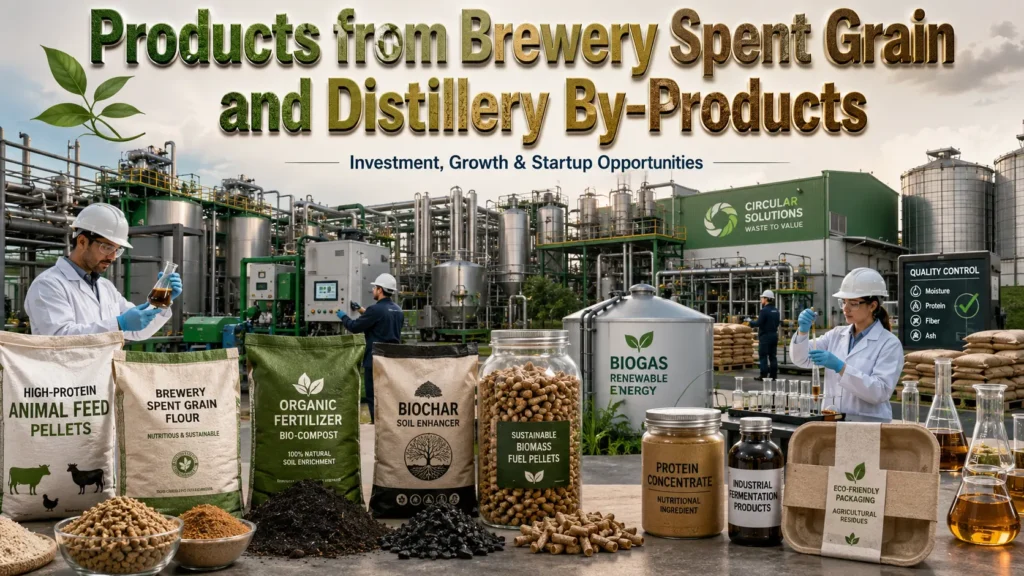
Brewery Spent Grain Business in India Beer and Spirits in India has experienced a tremendous growth in the last 10 years. The Indian market is now the second biggest in the world for whisky and 8–10% of the population are drinking beer every year. This growth equates to increasing amounts of processing waste, such as brewer’s spent grain (BSG) from the brewing industry and distillery spent wash from alcohol production. BSG is the barley malt and adjunct grain used to make the wort that is left over from the brewing processes. About 20kg of wet BSG is produced for every 100 liters of beer produced. The wet BSG is produced by a large Indian brewery (1 lakhs liters per month) and is sold/donated as cattle fodder at Rs. 200 per ton. 1,000–3,000 per ton. BSG is 25–30% protein, 15–25% dietary fiber and has a high content of B vitamins and antioxidants. With the rise in market demand for high fiber, high protein food ingredients like protein bars, sports nutrition, functional foods, food enrichment, there is scope for processing BSG into food grade ingredients which fetches high price of Rs. 100–250 per kg versus Rs. 1- 3 per kg feed as wet cattle feed. The distillery spent wash is a by-product of the alcohol distillation process that contains high levels of BOD (50,000-100,000mg/l) and is rich in potassium, nitrogen and organic compounds useful as crop fertilizers. However, the regulatory pressure (i.e. effluent discharge prohibition) and fertilizer requirement creates a business structure for valorization of spent wash. Top 8 Products from Brewery and Distillery Waste 1. Brewer’s Spent Grain Protein Flour Dried (drum dryer or spray dryer) spent grain after centrifuge and ground to fine flour has a protein content of 25-30% and a fibre content of 15% (dietary fibre). Protein enriched bread, crackers, pasta and health food products use food grade BSG flour. It sells at Rs. 80–150 per kg versus Rs. 1–3 per kg wet. A BSG drying and milling unit will cost Rs. 60–150 lakh. 2. Dried Distillers Grain (DDG) for Animal Feed Dried and pelletised distillery grain residue (corn, sorghum or barley based) is high in protein (26–30%), high in metabolisable energy and high in fat (9–11%) making it a premium animal feed ingredient. DDG can be used in rations for dairy cattle, poultry and swine as a protein-energy source at a competitive price. DDG is a product of large grain-based distilleries and smaller operations can be given the chance to complement their facility with drying and pelletising. Get Detailed Project Report (DPR): Business Plan for Starting Animal Feed Production 3. Spent Wash Potash Fertiliser (Bio-Composted) Distillery spent wash (after multi-effect evaporation) is mixed with agricultural biomass (bagasse, press mud) and forms an organic manure containing 2-3% K₂O, 1.5-2% N and 1% P₂O₅. The Fertiliser Control Order allows spent wash compost as an acceptable organic fertiliser. The cost of the spent wash treatment by composting plant is Rs. It is able to save 50-150 lakh and also addresses the effluent compliance. 4. Biogas from Spent Wash Amongst all industrial effluents, spent wash generates the most energy efficient biogas from high-rate reactors such as UASB and CSTR with 25-35 m³ of gas per m³ of spent wash. The biogas is fired in boilers in place of biomass or coal. A number of large Indian distilleries (United Spirits, Radico Khaitan, Allied Blenders) have installed biogas plants from spent wash. Cost of 1 million litre/day distillery spent wash biogas plant is Rs. 3–8 crore. Get Detailed Insights from This Book: Handbook on Biogas and Its Applications 5. Protein Supplement for Aquaculture Feed Dried and pelletised with balanced amino acid profile, Brewer’s spent grain protein is accepted in tilapia, rohu, catla and shrimp aquafeed at inclusion levels of 10-20%. In the context of the rising production in Andhra Pradesh, West Bengal and Odisha, the demand for plant-based protein feed alternatives to fishmeal is increasing. The price of BSG protein supplement is Rs. 40,000–70,000 per tonne in the aquafeed market. 6. Yeast Extract (from Surplus Brewing Yeast) Protein-rich by-product of the brewing process, surplus brewer’s yeast can be lysed (heated or treated with enzymes) before spray drying into yeast extract, a savory flavour ingredient found in processed soups, sauces, seasoning blends and pet food. The price of yeast extract is Rs. It is imported at present, and costs 200–500 per kg. The cost of a yeast extract production unit is Rs. 1–3 crore. 7. Biosorbent (Spent Grain for Heavy Metal Removal) Chemical processed (acid washed and crosslinked) spent grain is used to make a biosorption material that is efficient in the removal of heavy metals (lead, cadmium, chromium) from industrial effluents. A specialty, niche chemical application for the ETP industry. The cost of a specialty biosorption preparation unit is Rs. 40–100 lakh. 8. Compostable Packaging Material Dried and compressed BSG fibre with starch binders, can be used to create rigid compostable packaging trays, plates and containers. These products are in competition with bagasse and wheat bran moulded packaging products — the single-use plastic alternative market. The cost of a BSG moulded packaging unit is Rs. 80–200 lakh. Discover business ideas that actually make money Investment and Market Summary Product Investment (Rs.) Price Key Buyer BSG Protein Flour (Food Grade) 60–150 lakh Rs. 80–150/kg Health Food, Bakeries DDG Animal Feed Pellets 40–100 lakh Rs. 25–40/kg Dairy, Poultry, Aquafeed Spent Wash Compost 50–150 lakh Rs. 4,000–8,000/MT Organic Farmers Biogas from Spent Wash 3–8 crore Fuel Cost Saving Self-Consumption, OMC Yeast Extract 1–3 crore Rs. 200–500/kg Food Flavour, Pet Food Related Article: Strategic Role of Zinc and Copper in Animal Nutrition: Why Every Feed Formulation Must Include Trace Elements Raw Material Contracts with Breweries and Distilleries Formal contracts must be signed with breweries and distilleries to assure supply of BSG and spent wash including agreed delivery dates, quality data (moisture, protein content), and price. In addition, large breweries are willing to outsource the entire BSG logistics to a processor, even if they have to pay