
How to Start a Seaweed and Marine Algae Products Export Business in India

Seaweed and Marine Algae Products Export Business The seaweed and marine algae products manufacturing for export is one of the promising and fastest-growing business ideas in the blue economy in India. The global seaweed market is over 16 billion dollars annually and is expanding at a rate of 10% to 12% per year, due to the increasing trend in the world towards natural, plant-based, and sustainable products. Seaweed farming and processing is a high priority marine export category promoted by MPEDA and there are significant natural resources of seaweeds in India available along the coast, especially in Tamil Nadu, Gujarat and Andaman and Nicobar Islands. Seaweed and marine algae products represent a business opportunity for entrepreneurs who have access to coastal land, interest in aquaculture or a chemistry processing unit, and are interested in supporting sustainable, healthy, and sustainable business development and future growth. Why Seaweed Products Export Is a Growing Blue Economy Opportunity The potential benefits of seaweed are its exceptional chemical diversity, with carrageenan, agar, alginates, fucoidan, laminarin and various bioactive compounds being used as food additives, excipients for pharmaceuticals, cosmetic actives, agricultural bio stimulants and sustainable packaging materials. This chemical variety provides several opportunities for market penetration and investment and margin characteristics. Seaweed has a strong competitive edge for India because of coastal biodiversity, tropical water temperature, availability of sunlight and its traditional harvesting knowledge among the seaweed harvesting communities in Tamil Nadu and Gujarat. The use of seaweed aquaculture (cultivation of species such as Kapahulu’s alvarezii (cottonii) and Gracilaria (used for agar) production can supplement the natural harvest in terms of scale and consistency. MPEDA and Government Support The Marine Products Export Development Authority (MPEDA) is actively encouraging the cultivation and processing of seaweed products with financial assistance for seaweed cultivation infrastructure, processing equipment, quality certification, and developing market. MPEDA’s seaweed development programme offers subsidies for systems of raft and ropes, for drying facilities and for extraction machines. Seaweed farming infrastructure such as rope, raft cultivation system and seaweed processing equipment are given capital subsidy in the Department of Fisheries PMMSY. The support given to PMMSY is also generous, especially for the cultivation of seaweeds which aligns to the coastal livelihood development and blue economy goals. Central Institute of Fisheries Technology (CIFT), ICAR, offers technical support and technology transfer for the processing of seaweed such as carrageenan extraction, agar production and manufacture of seaweed biostimulant technologies to help entrepreneurs with proven technologies for setting up new enterprises. Exports of seaweed and marine algae products are covered under DGFT RoDTEP Scheme. MPEDA RCMC must be claiming these benefits. Seaweed products are one of the most promising marine export products for MSME entrepreneurs, due to their relatively low investment requirements and the increasing global demand. Read the Complete Book Here: Handbook on Fisheries and Aquaculture Technology Business Ideas in Seaweed and Marine Algae Products 1. Dried Seaweed and Raw Seaweed Export The exported seaweeds are mainly sun-dried Kappaphycus alvarezii (cottonii) from Tamil Nadu coastal farms for processing in food grade carrageenan by the carrageenan extraction companies in Philippines, China and Europe. This is the most readily available seaweed export venture which has minimal processing facilities. Cost investment range between ₹10 lakh to ₹30 lakh for seaweed drying platforms, packaging and basic quality testing. The farmers and SHG of Tamil Nadu involved in seaweed farming under the support of MPEDA and PMMSY provide raw seaweed which is processed and packaged by the traders/exporters. The export price of dried cottonii seaweed is from ₹25 to ₹50 per kg, depending on the quality and the amount of carrageenan present. 2. Carrageenan Extraction and Export A widely used food additive in this country, carrageenan is a natural hydrocolloid obtained from red seaweed, which is used in dairy products, processed meats, infant formula, and cosmetics. The Kappaphycus seaweed cultivation in India is the source of raw material used in the production of carrageenan. The investment amount in an extraction vessel, filtration unit, drying and milling is in the range of ₹1crore to ₹4crore in a carrageenan extraction unit. Premium food industry buyers must use carrageenan that is food grade and certified by JECFA as well as Kosher and Halal. Carrageenan is sold internationally as a stabiliser and gelling agent for dairy manufacturers and processed food producers in the EU, US, Japan and Southeast Asia. 3. Agar Production from Gracilaria Seaweed Agar is a gelling agent from red seaweeds (Gracilaria and Gelidium) that is widely used in microbiology laboratory media, food production and in the manufacture of pharmaceutical capsules. In India natural Gracilaria resources are found in Tamilnadu and Gujarat. The cost of investment for a production unit of the bacteriological agar and food grade agar lies between ₹80 lakh and ₹2.5 crore. The bacteriological agar used in laboratories is one of the most expensive seaweed derivatives in international markets where its prices range from Rs. 2000 to 5000 per kg. Its export markets include some of the global research institutions, food manufacturers, diagnostic laboratories and pharmaceutical companies. To gain access to the pharmaceutical market, the USP and BP agar specifications must be adhered to. Get Detailed Project Report (DPR): Agar Agar (Bacteriological Grade) Manufacturing Industry 4. Seaweed Biostimulant for Agriculture With the growing popularity of organic farming and sustainable agriculture, the use of seaweed based agricultural biostimulants is accelerating in the form of liquid seaweed extracts, seaweed powder and seaweed meal. They are used to enhance crop productivity, tolerance to stress and soil quality when applied to a crop or soil. Mechanical or chemical extraction of fresh or dried seaweed can be used to establish a seaweed biostimulant production unit with an investment of ₹20 lakh to ₹60 lakh. Premium market for organic agriculture opens by compliance with EU Organic Regulation and US organic certification (USDA NOP). The countries with the highest adoption of biostimulants in their export markets are organic farming communities in EU, US, Japan, and Australia. Import-Export Opportunity Analysis The export of seaweed products is steadily increasing in India.
Products from Rice Husk and Rice Husk Ash: Business Ideas, Manufacturing Process, and Project Opportunities
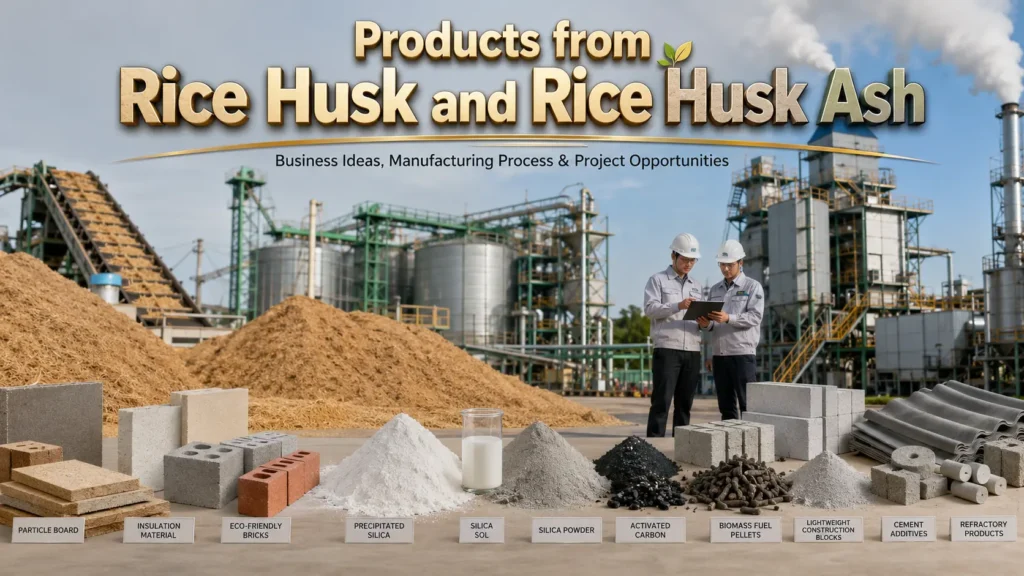
Rice Husk Products Business Ideas Why Rice Husk Is One of India’s Most Undervalued Industrial Raw Materials The one thing that most business people fail to consider when they start a business based on agricultural waste is that the raw materials are nearly free. Rice husk, the sheathing of paddy is just such an opportunity. India is the second largest rice producer, producing around 12 million tonnes of rice husk as a by-product of the milling process every year. Most of this husk was used as fuel for boiler generation of steam in rice mills until recently, but was accompanied by particulate pollution. What entrepreneurs are finding is that rice husk is not only a fuel, but also a chemical feedstock, construction material, and an industrial input that is much more valuable than its fuel value. Rice husk is about 20% silica in a highly amorphous and reactive form. Ash from the controlled combustion known as Rice Husk Ash (RHA) is about 85-92% amorphous silica. This silica is used as a raw material in the production of precipitated silica, sodium silicate, activated carbon, cement additives and refractory materials. The business is real and proven and can be done by the MSME entrepreneurs with an understanding of the processing. Get Detailed Insights from This Book: Manufacture of Value Added Products from Rice Husk (Hull) and Rice Husk Ash (RHA) Top 10 Products from Rice Husk and Rice Husk Ash 1. Precipitated Silica Precipitated silica is produced by reacting RHA with caustic soda to produce sodium silicate solution, and then precipitating silica by acidification with sulphuric acid. The white powder produced is used as a rubber tyre reinforcement, a flow aid in toothpaste, an anti-caking agent in animal feed and a tablet excipient in pharmaceuticals. India is now importing so many materials from China and Germany. The cost of a 5 TPD unit is Rs. The investment requirement for this is about 80 lakh to 150 lakh and has the potential to create Rs. The annual net profit lies in the range of 40-60 lakh at market price of Rs. 35,000–70,000 per tonne depending on grade. 2. Sodium Silicate (Water Glass) Sodium silicate can be obtained by melting RHA with soda ash at high temperature or by dissolving RHA in caustic soda at high pressure. It is used for making detergents, paper adhesives, foundry core binding, textile processing and water treatment. There is a big domestic market in India. In the case of a 10 TPD plant, the investment costs are: 30–80 lakh. It is easy to process and there is a reliable industrial buyer base for the product. 3. Activated Carbon Rice husk activated carbon is obtained when the rice husks are carbonised at 500-700°C and then activated with steam or CO₂ at 800-950°C. Surface areas of 800-1200 m2/g are used for water purification, air filtration, decolourisation in pharmaceuticals, food processing and gold recovery. The cost of a 3 TPD unit is around Rs. Investment required is 60 to 120 lakh and the revenues earned are Rs. Depending on application grade between 50000 and 1,50,000 per tonne. 4. Rice Husk Particle Board Particle board is made from rice husk, Urea Formaldehyde or isocyanate binders and is hot pressed into panels that are used for furniture, partition and low-cost housing. The boards have termite resistance and moisture stability. The cost of a 5,000 m³/year plant is Rs. 1.5–3 crore. Clients are furniture makers, government housing schemes, interior fit out companies etc. Get Detailed Project Report (DPR): Rice Husk, Rice Hull, Rice Husk Ash (Agricultural Waste) Based Projects 5. Rice Husk Briquettes and Pellets The biomass fuel of dense quality with calorific value of 3200 – 3600 kcal/kg is produced by compressing the rice husks under high pressure, without using binders. These briquettes are used in industrial boilers of the food processing, textile, ceramic and brick industries as an alternative to coal. Investment: Rs. 25–60 lakh. Renewable energy requirements around the world are increasing, and so are European and South Korean demands on biomass fuel exports. 6. RHA as Cement Pozzolan The rice husk ash contains a large amount of amorphous silica ash, which has excellent pozzolanic activity, when the rice husk is burned at 600–700°C. RHA can be used as a substitute for 10 – 25% of the Portland cement used in concrete, enhancing durability and reducing carbon footprint. As per contract, RHA is supplied to cement companies at the rate of for 2,000-5,000 per tonne, only investment for collection and quality control is required. It is a low-cost product with 10 to 25 lakh customers and low processing cost. 7. Refractory Products High-silica RHA used in the refractory bricks and castable for industrial furnace, which has high resistance to temperature above 1,600℃, is suitable for steel ladles, foundry furnaces, ceramic kilns, etc. The niche, higher margin product is well-balanced with an industrial buyer base. The price of a small refractory unit begins at Rs. 50–100 lakh. 8. Oxalic Acid Rice husk cellulose is treated with alkaline water at high temperature and pressure to produce oxalic acid which is further acidified to produce oxalic acid. Currently it is imported for use in the textile industry, in leather manufacturing and in the synthesis of pharmaceuticals as well as in metal surfaces. The cost of a 2 TPD unit is Rs. 40–80 lakh. RHA is a cost competitive alternative to imported production. 9. Silicon Metal (Advanced Application) High-temperature carbothermic reduction is being used commercially to provide a source of high purity silicon for electronic and solar cell applications for RHA. India and abroad there are several pilot and commercial plants. This requires a lot of capital (Rs.). The selling price of silicon metal is Rs. 10 lakh – 50 lakhs (10 – 50 crore). The rice husk has the highest value-addition of Rs 1.5–3 lakh per tonne. Discover business ideas that actually make money 10. Cellulosic Ethanol (2G Biofuel) Rice husk is rich in cellulose (35-40%) and hemicellulose (25-30%) which can be fermented
Organic Food Processing Business: Setup Cost, Certification & Investment Guide for Indian Entrepreneurs
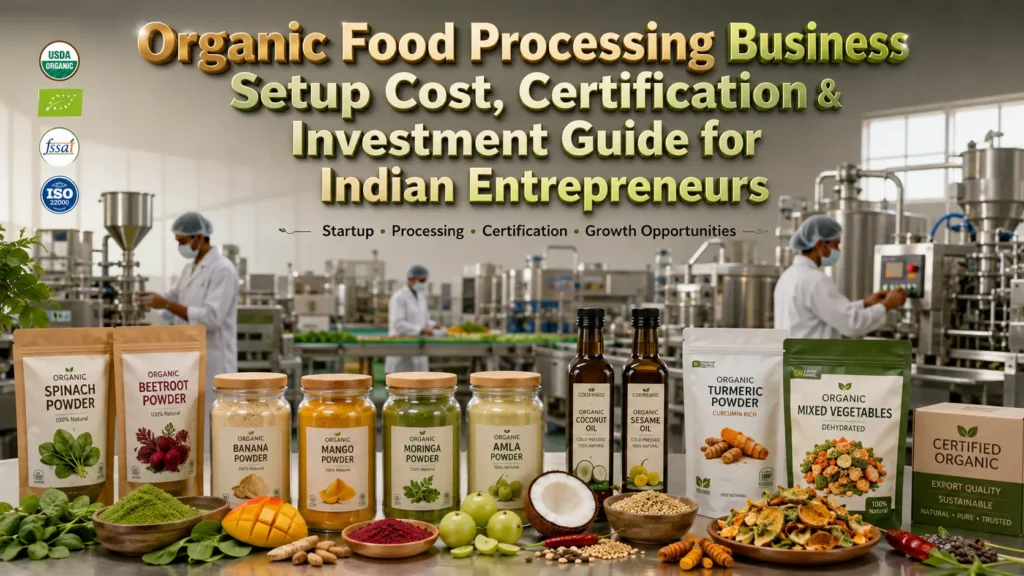
Organic Food Processing Business in India The Counter-Intuitive Truth About Organic Food in India India is exporting more than ₹5,300 crore of certified organic products annually, while it imports the processing technology to process them. Let that sink in. The nation that has over 30% of the organic produce grown in the world, the majority of which is cardamom, grown in the cardamom hills of Kerala, to the spices of the Rajasthan spice belts, are sold mostly as raw commodity. That is the profit realization, that is the packaging, that is the branded product – that goes overseas. A company from Germany imports organic turmeric powder from India and places it in a glass jar bearing a serif logo and sells it for €14. The Indian farmer received ₹42 for every kilo he sold. It is in this space between raw organic produce and finished certified organic produce that the true business is going to be. The Agriculture and Processed Food Products Export Development Authority (APEDA) has reported that demand for certified organic food has increased at the rate of 12–15% every year for the last five years in India. In the three cities, the average urban household in Bengaluru, Pune, and Delhi-NCR spends 22% more per grocery basket when shopping for organic than conventional products, on average, 5 years ago. It is not sufficiently available in the region where it is made, there is no traceability, and it is not properly certified. Get Detailed Project Report (DPR): Food Processing and Agriculture Based Projects The Supply Gap Nobody Is Filling Fast Enough India has the maximum area (36.53 lakh hectares) of certified organic farming in the world, according to the National Centre of Organic and Natural Farming (NCONAF). Less than 12% of the small and medium organic processors have been certified in India as per the minimum requirement of NPOP (National Programme for Organic Production) to be able to label a product as ‘certified organic’ for domestic retail and export market. The outcome: a deficiency in structural processing. Raw sales dominate to large aggregators, most of these who are also organic farmers sell at prices slightly higher than conventional producers. At the processed and value-added segment, less than 200 brands have a national presence with the bulk of them concentrated in Maharashtra, Gujarat and Karnataka. States such as Uttarakhand, Himachal Pradesh, Odisha and Chhattisgarh which have more than 8 lakh hectares of organic farms have virtually no processing infrastructure. The Indian Council of Food and Agriculture (ICFA) believes the India domestic organic food market has total value of around ₹9,000 crore and is estimated to reach ₹30,000 crore within a decade. Retail outlets such as the DMart, BigBasket and Nature’s Basket have admitted that there is less space for certified organic essentials priced between ₹100 and ₹500. The supply situation is even more constrained for smaller categories of organic food, such as immunity boosters, millets and cold-pressed oils. Demand from exports is just as poor. More than 85% of the certified organic exports from India are consumed by the EU, USA and the Gulf markets. Processing units that are able to ensure traceability, hygiene and NPOP or NOP (USDA Organic) certification can charge 25-40% price premium on uncertified Indian exports. TABLE 1: State-Wise Organic Demand, Key Crops & Industrial Clusters State Key Organic Crop / Product Industrial Cluster / Hub Estimated Demand Growth (Annual) Export Potential Sikkim Organic vegetables, ginger, cardamom Gangtok Agro-Processing Zone 18% High (EU, USA) Madhya Pradesh Soybean, wheat, pulses Indore, Jabalpur 14% Medium-High Rajasthan Cumin, coriander, fennel Jodhpur, Kota Spice Cluster 16% High (Middle East, EU) Uttarakhand Basmati rice, herbal extracts Rudrapur, Haridwar Food Park 12% High (USA, Japan) Maharashtra Soybeans, millets, sugarcane jaggery Pune, Nashik Agri-Zone 11% Medium Kerala Coconut oil, spices, black pepper Kochi Spice Park, Thrissur 15% Very High (Gulf, UK) Source: APEDA Organic Export Data; NCOF Annual Report; State Agriculture Department estimates Why Entry Right Now Makes Commercial Sense Organic food processing is an appealing proposition right now in three ways. First: Policy tailwinds are there and backed by cash. Organic clusters are eligible for up to ₹50,000 per hectare under the Government of India’s Parampara at Krishi Vikas Yojana (PKVY) for support in the certification process and farmer group formation. This directly lowers sourcing cost of raw material. The processors who coordinate with PKVY clusters are provided with a cost and supply benefit at the same time. Second: The demand for exports is growing faster than the supply. As per the export data from APEDA, the value of organic exports increased from ₹1,900 crore to more than ₹5,300 crore during the last decade. They are mostly made of turmeric, ginger, pulses and rice. But only part of these flows as a complete branded product. This market can be reached directly by a processing unit certified to the NPOP standards. Thirdly, the processing sector of the MSME is undercapitalized — on purpose. There has been no meaningful presence by big FMCG players in the organic sub ₹300 SKU segment. It is structurally inefficient because of their small production volumes and high marketing expenses. The price band of ₹80-250/unit is left open for agile MSME processors in this regard as it is the optimum sweet spot of the metro consumers. The Ministry of Food Processing Industries (MoFPI) has earmarked more than ₹10,000 crores for the food processing industry under the Production Linked Incentive (PLI) Scheme. Organic processors whose sales is more than ₹1 crore per year will get a 4-10% incentive on incremental sales, thus reducing the payback period by 8-12 months. The MUDRA Kishore and Tarun loan categories offer a loan of up to ₹10 lakh, which is enough for a micro-processing unit, but it does not require any collateral. The Prime Minister’s Employment Generation Programme (PMEGP) is a scheme offered by KVIC, which provides 15–35% capital subsidy based on the geographic location of the project and the type of the founder (women, SC/ST entrepreneurs receive higher subsidy). Get Detailed Insights
From Slum to Supply Chain: How a Mumbai Street Vendor Built a ₹25 Crore Cold Chain Logistics Business
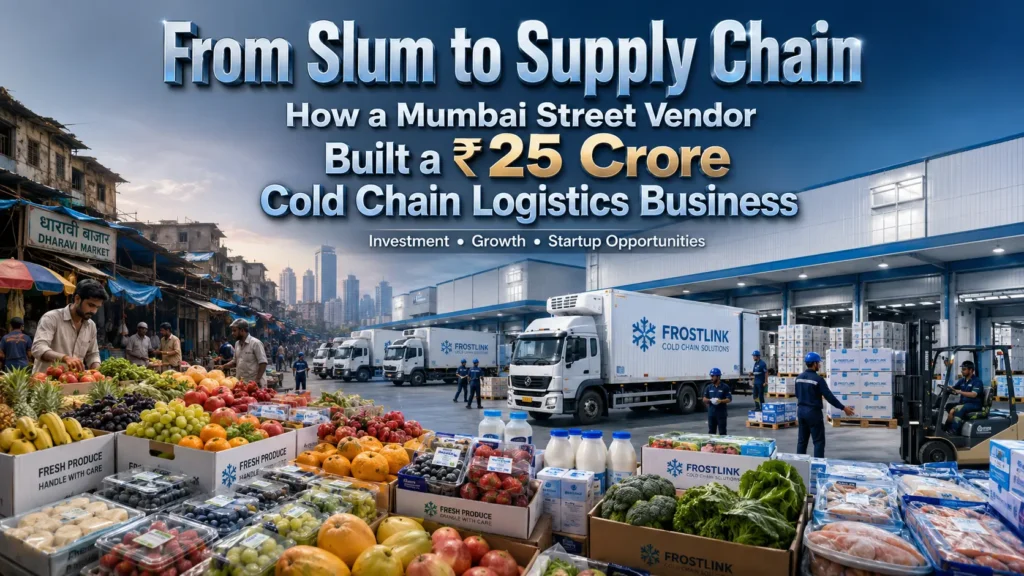
Cold Chain Logistics Business in India The Gap That Makes Millionaires Almost one third of the fruits and vegetables that are grown in India don’t reach the consumers. They decompose from the farm and up to the city market. Not due to its poor farming. This is not due to poor roads. The cold chain in India is where it lacks — at the last mile. The National Horticulture Board (NHB) reports that the installed capacity of cold storages in India is about 37 million metric tonnes. Which is large until you realise that more than 70% of that is in five states: Uttar Pradesh, West Bengal, Punjab, Gujarat and Maharashtra, and virtually no portion is temperature-controlled transport. Cold rooms are present. The refrigerated trucks have been removed. One man from Dharavi discovered his fortune in that space between warehousing and wheels. Ramesh Gaikwad started selling vegetables from a pushcart in Dadar in the late 1990s. He saw something that no logistics consultant had ever thought to write down: there were warm produce and no one owned a last-mile refrigerated van for small packs, in the hotel kitchens in South Mumbai. He took a loan of ₹3 lakh from the chit fund and started hiring a small cold van, making a firm commitment to one hotel for the same-day delivery of chilled produce. After 12 years, Ramesh’s company owns 22 cars with refrigeration and has two cold storage units in Navi Mumbai and Bhiwandi with an annual turnover of ₹25 crore. The business doesn’t spend money on advertising. All of the clients were referred. His is not a unique case. Repeatable — if you just know where to find it and how to make it. Access Complete Business Plan: Cold Chain, Temperature Controlled Supply Chain Projects India’s Cold Chain: Numbers That Should Embarrass Us The Ministry of Agriculture & Farmers Welfare estimates that India produces more than 320 million tonnes of horticulture produce every year, which is the second largest in the world. The estimated losses in the post-harvest sector from 10 years of losses by the National Centre for Cold-chain Development (NCCD) are approximately worth ₹92,651 crore annually. The nodal body on cold chain policy the NCCD estimates the demand of India at 61,000 reefer vehicles when less than 12,000 are available. This is a 80% deficit. The difference isn’t large in large cities. It’s in tier-2 towns, mandis and farm clusters in the states like Bihar, Madhya Pradesh, Assam, Odisha and Chhattisgarh. The pharmaceuticals add to the issue. According to the Pharmaceuticals Export Promotion Council of India (Pharmexcil), India exports more than USD 25 billion worth of pharma products every year. This is increasing proportionately for vaccines, biologics and temperature-sensitive APIs, which must be handled under 2°C to 8°C conditions from the factory to the airport. But only about 15% of Indian airports have dedicated pharma cold zones leaving exporters to last mile, which is fragmented. This was highlighted during the rollout of the COVID-19 vaccine where the government had to make do with blood banks, ice cream freezers, and improvised refrigeration at district health centres. The lesson has since led to serious investment by the government and private demand. It is two sectors which are seeing the greatest need across the country: processed food (11% growth per year) and pharma cold chain (14% growth per year). The last mile delivery is problematic in both the sectors. TABLE 1: State-Wise Cold Chain Demand, Infrastructure Gaps & Key Opportunity Clusters State Hort. Produce (MT/yr) Cold Storage Gap (%) Reefer Van Deficit Key Opportunity Clusters Uttar Pradesh 55 Million 28% ~9,000 vans Agra, Lucknow, Varanasi — potato, mango, milk Bihar 18 Million 67% ~4,200 vans Muzaffarpur, Patna — litchi, vegetables, pharma Maharashtra 22 Million 31% ~5,800 vans Nashik, Pune, Mumbai — grapes, onion, hospitality Madhya Pradesh 14 Million 54% ~3,600 vans Indore, Jabalpur — soybean, tomato, pulses West Bengal 19 Million 22% ~2,900 vans Kolkata, Siliguri — fish, vegetables, flower exports Assam 8 Million 72% ~2,100 vans Guwahati, Dibrugarh — tea, vegetables, fish Rajasthan 9 Million 48% ~2,400 vans Jaipur, Jodhpur — dairy, vegetables, tourism supply Get Detailed Insights from This Book: Handbook on Fruits, Vegetables & Food Processing with Canning & Preservation Why This Decade Belongs to Cold Chain Operators The cold chain business is one of the most poised logistics segments in India at present, thanks to three factors. The first one is the retail transformation. The app of quick commerce like Blinkit, Zepto, Swiggy Instamart have made it a consumer expectation to order food products in just 10 minutes. There is a need for a fresh produce delivery twice a day to every dark store in Tier-1 or Tier-2 cities from cold chain supplier. These platforms do not have the “last mile” themselves. They contract it out. The contracts are guaranteed to volume and multi-year. Second, regulation tightening by the pharma industry. Strengthening of Schedule M requirements for storage and transport of pharmaceuticals by CDSCO (Central Drugs Standard Control Organisation). The UK healthcare sector has been impacted by the transition to non-controlled environments; those that have already done so will now have to meet the requirements of becoming a controlled environment or risk suspension of their licence. This means that there is legal demand for certified cold chain operators, not merely discretionary demand. Third, government push. Under PM Kisan Sampada Yojana, the Indian government has pledged to establish an integrated cold chain network, budgeting a total of ₹2,000 crore for cold chain development initiatives nationwide. NABARD provides financing for the construction of cold storage through its development programme Rural Infrastructure Development Fund (RIDF) at subsidised interest rates. Under the Integrated Cold Chain and Value Addition Infrastructure scheme, 35% is the capital subsidy that is available from the Ministry of Food Processing Industries (MoFPI) — with the scheme, if you invest ₹1 crore, the government will write you a cheque of ₹35 lakh. NABARD Cold Chain Subsidy Scheme: Provides subsidy of up to 35% of the capital
6 Agro-Manufacturing Business Ideas That Can Earn ₹1 Crore/Year in India
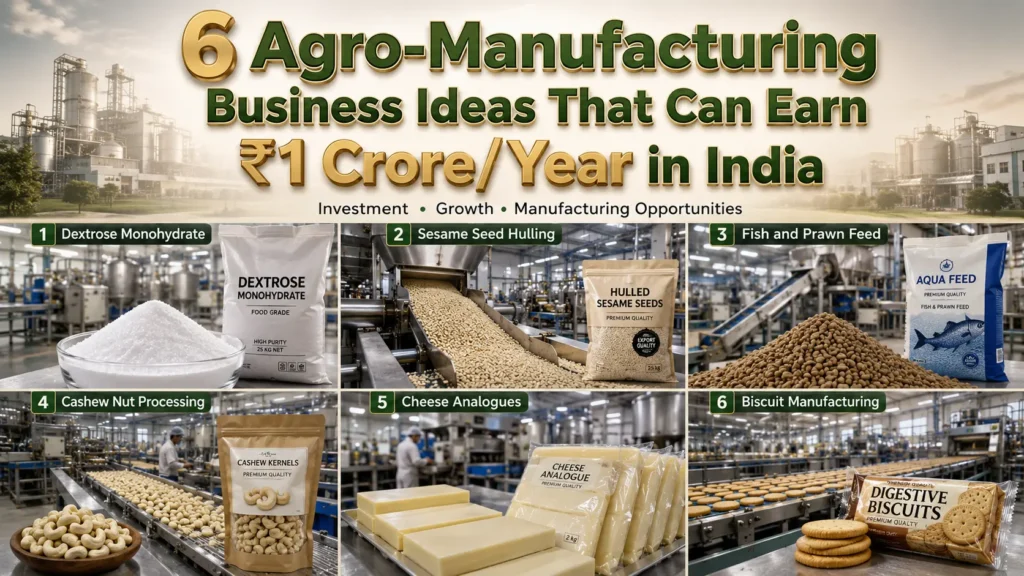
From the Farm to the Factory: High-Growth Opportunities in Food Processing, Agricultural Inputs, and Specialty Products Agro Manufacturing Business Ideas in India India is at a unique turning point. There is a daily need for food, feed and specialty ingredients, which is driven by a billion-plus population. There are still a number of manufacturing sectors that are not yet well developed. For the right entrepreneur, this void is not a hindrance, it’s a chance. This opportunity is being supported by government policy. However, the Production Linked Incentive scheme for food processing, PMEGP for small manufacturers and the consistent thrust under Make in India has helped to create a conducive environment for the first-generation entrepreneurs. But policy is not enough to establish a business. A business is created by knowing which products are in structural demand, what the real costs of producing them are and where the margins are. This article will explore six manufacturing and processing business ideas that have a strong depth of demand, approachable processes and good margins. Practical aspects of production logic, cost structure and commercial opportunity are presented for each sector: dextrose monohydrate, sesame hulling, aqua feed, cashew processing, cheese analogues, and biscuits. Get Detailed Insights from This Book: Profitable Agro Based Projects 1. Dextrose Monohydrate: The Quiet Workhorse of Indian Industry What It Is and Where It Goes Dextrose monohydrate, a hydrolysate of starch, is one of the most commonly used functional ingredients used in the Indian manufacturing. The infusion for the pharmaceutical application, called Intravenous Dextrose Normal Saline, is familiar. But the food-grade derivative market is arguably bigger and bigger. Dextrose is used in a variety of key food applications such as: Confectionery, bakery products and hard candy formulations. The production of energy drinks, sports nutrition and baby food. Amino acid, citric acid, and API production fermentation substrates Specialty chemical applications and special applications in textile processing Starch derivatives industry is located in the main part of the country in Maharashtra, Uttar Pradesh and Andhra Pradesh. There are a few big players controlling the organised segment. But demand downstream has reached a critical threshold and regional processors are discovering commercially viable niches that the large processors cannot be agile enough to serve. Investment and Growth Outlook This core process consists of starch liquefaction by alpha-amylase enzymes, saccharification by glucoamylase, purification activated carbon and crystallisation. The capital cost of a small to mid-sized plant with 10-25 tonnes per day capacity lies between ₹4 crore to ₹12 crore. Dextrose intended for food use should be in conformity with the FSSAI specifications. Dextrose used for food should comply with the FSSAI requirements. Other certifications are required for producers that sell into export markets or for pharmaceutical ingredient producers. Please refer to the FSSAI website for full regulatory requirements. The starch derivatives industry in India is expanding at about 8 – 10% CAGR due to the processed foods, sports nutrition, and expanding pharmaceutical industry. The true market potential is in differentiated applications: ultra-pure types for infant formula companies and blends of dextrose-maltodextrin types for sports nutrition companies. 2. Sesame Seed Hulling: A Business Idea with Strong Export Pull Why Sesame Deserves Serious Attention India is the largest producer and exporter of sesame seeds. It is true that there has been a world market for raw sesame from the beginning. But, hulled sesame (also called natural white sesame) fetches a much larger price, and is the preferred form for almost all international buyers. Main export destinations are Japan (150,000–180,000 metric tonnes per year), South Korea, China, Middle East and emerging markets such as North American Countries and EU. The premium for raw to hulled sesame has been between 25% and 45%. This ensures a simple value addition game called hilling and is one of the easiest agro-processing business ideas for India. Investment and Commercial Viability A sesame hulling plant is comprised of cleaning, soaking, mechanical hulling, flotation separation, washing, drying and colour sorting. Colour sorting is a crucial stage, as international buyers have stringent quality requirements, and if the colour isn’t good, even if the lot is properly hulled, it will be rejected. The investment in plants for 5–10 tonne per day operation can be from ₹80 lakh to ₹2 crore. The consistent supply of 99.95% purity by Indian exporters, ensures them premium price buyers. Exporters are assisted by the Agricultural and Processed Food Products Export Development Authority (APEDA) with regard to quality certification and market development funding. A natural raw material advantage can be acquired while setting up near major growing belts in Rajasthan or Gujarat. Another planning point of importance is working capital management and storage infrastructure, and procurement should be focused on a 2–3-month window post-harvest. Related Article: Top 3 Profitable Agro-Based Manufacturing Business Ideas in India 3. Fish and Prawn Feed: Riding the Blue Economy Wave The Structural Demand Story The aquaculture industry in India has silently undergone a change in the last 15 years. Shrimp exports have reached the levels of ₹50,000 crore per year, and consumption of fish is increasing gradually. Quality compound feed is part of the rapidly expanding demand which lies behind both of those trends. The fish and prawn reared on nutritionally balanced feeds grow faster, have less mortality rate, and yield better quality meat. The organised aqua feed market is valued at more than ₹18,000 crore and will be expected to reach ₹30,000 crore by the end of this decade. The five key states that are boosting demand are Andhra Pradesh, Odisha, West Bengal, Kerala and Tamil Nadu. Manufacturing and Margin Profile A compound aqua feed formulation usually will include fish meal or soy protein concentrate, energy ingredients (such as wheat and maize), lipid sources, vitamins, minerals and binding agents. The protein content should be higher in prawn feeds (32-40%). This is due to the increased significance of the extruded feed technology, which means that water pollution can be alleviated and the feed consumption can be monitored better. A medium size extruded plant is likely to need an
6 Profitable Agri-Chemical Business Ideas That Can Earn ₹2–8 Crore Per Year in India
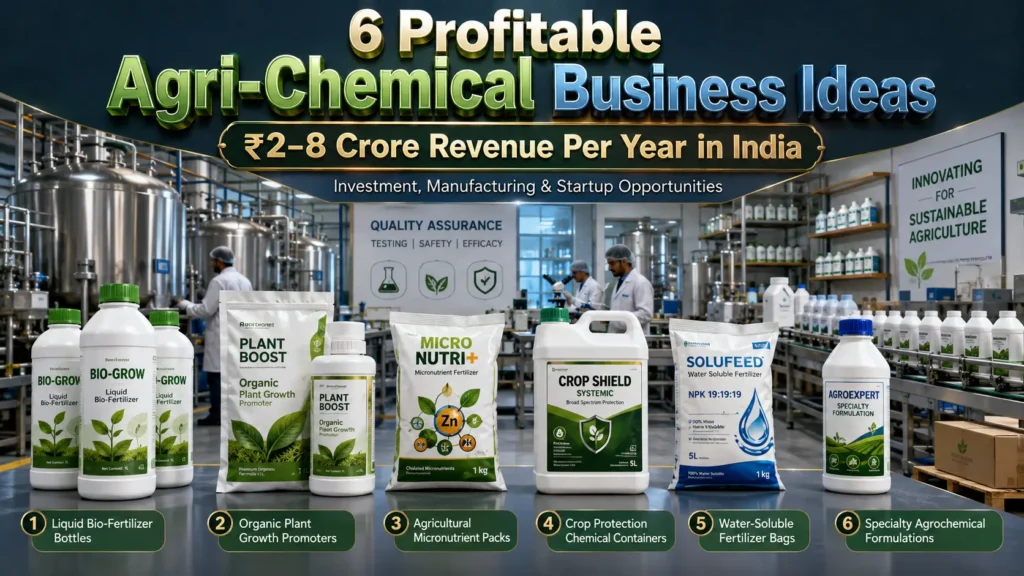
Profitable Agri Chemical Business Ideas India Why These Six Business Ideas Deserve Your Attention Right Now India’s most successful manufacturing entrepreneurs have one common thing; they did not take the path of glamorous products. Instead, they selected unromantic chemicals, raw materials which travelled between factories without all the fanfare. The use of synthetic camphor, sodium silicate, urea fertilizer, 2,4-D herbicide and potassium permanganate are not popular topics on social media. But they are found in nearly all critical supply chains, from the farm to the drug manufacturing plant or the food processing facility. These six products are among the most under-explored business areas in India for those entrepreneurs who are looking for viable manufacturing business ideas with structural demand. The drive towards import substitution, growth in domestic agri-chemical demand and increased scale-up of MSMEs due to PLI and various government incentives for industrial policies have created a rare opportunity. Specialty chemical imports remain at almost 30 percent penetration for some sub-segments, according to government data. With that gap directly comes a market opportunity to well capitalised Indian manufacturers who are ready to take action. In this article, all products will be reviewed individually as a business venture that could be started on its own or in combination with others. In each of these, we will discuss the fundamentals of manufacturing, important demand factors, and what a realistic expectation of profitability is for a serious MSME promoter. The aim isn’t to sell up — it’s to arm entrepreneurs with a clear view of what these businesses are about and why the timing can’t be better. 1. White Petroleum Jelly — The Multi-Industry Workhorse White petroleum jelly is a semi-solid hydrocarbon mixture that’s obtained from the petroleum refining process. It has no smell, is unreactive and thermally stable, hence its widespread use in industry. Who Buys It and Why It is employed as a base for dermatological preparations and topical ointments in the pharmaceutical industry. It is used by cosmetic companies in hair care products, moisturisers and lip balms. It is useful as a corrosion inhibitor and lubricant to industrial users. Food grade petrolatum is used in food processing as a release agent in bakery, confectionery and packaging. The slack wax fraction from lubricating oil refining is used to make the production wax. This is then subjected to hydrotreating (a high-pressure process in a pressure vessel with hydrogen and a catalyst) to give the pharmaceutical grade petrolatum or food grade petrolatum. Slack wax can be sourced from Gujarat or Rajasthan refineries and the production can be cost competitive. Financial Outlook The capital investment required for a plant of 500 to 2,000 MT/year varies from ₹1.5 crore to ₹6 crore depending on the level of automation of the plant. Pharmaceutical grade has a price premium ranging between 20-35 percent, gross margins of 22-28 percent. The pharmaceutical industry in India is expanding at the rate of nearly 11 percent per year, while the cosmetics industry is expanding at a rate of 9-10 percent. It is estimated that the domestic market is 85,000-95,000 MT per year, which is one of the highest demand-stable entries on this list. Parameter Detail Domestic Market Size ~90,000 MT/year Growth Rate 8–10% p.a. Key End-Uses Pharma, Cosmetics, Cables, Auto Indicative CapEx ₹1.5–6 Crore Gross Margin (Pharma Grade) 22–28% Get Detailed Project Report (DPR): Petroleum Jelly Manufacturing Plant Report 2. Potassium Permanganate — The Oxidiser That Crosses Sectors Potassium permanganate (KMnO4) is an industrial oxidising agent. Water treatment facilities employ it as a means to oxidize iron, manganese and hydrogen sulphide in raw water sources. In India, the supply of KMnO4 is directly connected with the initiatives of the municipal water supplies to scale up the treatment facilities in Tier 2 and Tier 3 cities. Its applications also extend into a wide range of other areas such as textile bleaching, pharmaceutical intermediates, food sanitisation and agricultural fungicide applications, providing manufacturers with various revenue streams from a single product. Why Demand Stays Resilient The solid demand theme is the investment in water infrastructure, as required by the government. The Jal Jeevan Mission in India is an initiative to provide access to tap water to more than 190 million people living in rural areas. All new treatment plants within that network are potential customers. Furthermore, wastewater treatment standards in industry are also constant with no relation to consumer sentiment. Domestic price of pharmaceutical grade KMnO4 is ₹130-180 per kilogram. Investment range of a plant of 300-800 MT/year is ₹3 – ₹9 crore. With good raw material procurement strategies, margins of 18 to 24 percent can be expected. Related Article: Potassium Schoenite Manufacturing Business in India: Investment, Profit Margin & Setup Guide for Entrepreneurs End-Use Sector Demand Share Growth Outlook Water Treatment 42% High (9–11% p.a.) Pharmaceuticals 20% Moderate-High (8–10%) Textiles 15% Moderate (5–7%) Agriculture 12% Growing (7–9%) Other Industrial 11% Stable (4–6%) 3. Urea Fertilizer — Foundation of India’s Agrarian Economy Almost 50% of the total consumption of nitrogenous fertilizer in India is done by urea. The annual demand is between 33-35 million metric tonnes which is highest for the second time in the world after China. India has 31 operating production plants, but still imports 7-9 million MT per year to meet the demand. The MSME Entry Point Economically feasible urea production involves large natural gas quantities and very high capital investment (in the range of thousands of crores of rupees). This means that primary production is not in the reach of MSMEs. But there are some easy business ideas for smaller manufacturers in the surrounding ecosystem: Sub-micron elements (such as iron, manganese, zinc, copper, and boron) at lower levels, mainly as chelates Coated and slow-release urea with sulphur or polymer membrane Fertilizer blends with micronutrients, specific to crop The distribution of agricultural inputs and branded retail downstream. The price premium for slow-release urea is in the range of 30-60 percent on top of conventional urea. The demand is building up across Maharashtra, Karnataka and Tamil Nadu, among horticulture, floriculture and
Moringa Seed Oil Extraction Business in India: Cost, Machinery, Profit & Complete Project Report
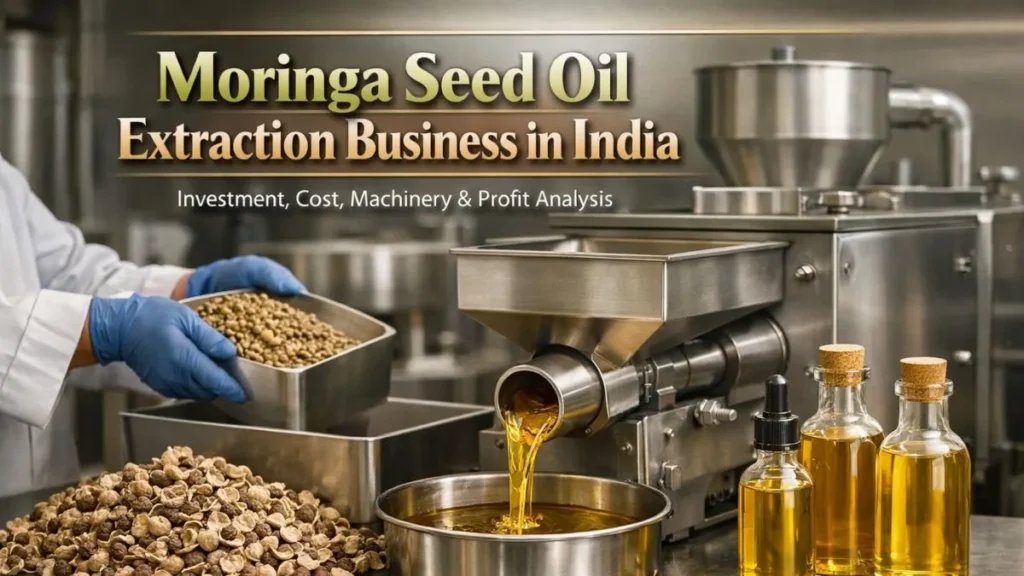
Introduction: Moringa Oil Business India The seed oil extraction of moringa business is emerging as one of the rapidly expanding business opportunities in the Indian agro processing industry. As the world continues to demand natural, chemical-free and plant-based oils, moringa oil has been highly utilized in the cosmetics, pharmaceutical and wellness market. India is already a significant producer of the moringa seeds in the world, but the majority of it is exported as raw material. There is minimal value addition in the country. This gives a significant chance to entrepreneurs to install cold-press oil extraction plants and achieve high-margin markets in exports. This business is appealing because of its moderate investment, good supply of raw materials and high prices in the global markets. What is Moringa Seed Oil and Why It Is Valuable Moringa seed oil is derived out of the seeds of the moringa Oleifera tree, commonly referred to as the miracle tree. It is non-greasy, lightweight and abundant in antioxidants, vitamin E and oleic acid. These properties have made it very popular in: Anti-aging and skin care products. Scalp oils and oils on the hair. Aromatherapy and massage oils. Pharmaceutical and herbal preparations. The world is witnessing a rise in demand due to the fact that consumers are moving towards natural and clean-label cosmetic products. Get Detailed Insights from This Book: Herbal Cosmetics & Ayurvedic Medicines (EOU) (3rd Revised Edition) Why This Business Is Growing Rapidly The increase in popularity of the moringa oil manufacturing has strong economic and market reasons. India has a comparative advantage since almost 80 percent of the world moringa production is in Indian states like Andhra Pradesh, Tamil Nadu, Karnataka and Telangana. Nevertheless, the bulk of value addition occurs after the farming phase. This provides a definite chance to MSME entrepreneurs to venture into processing and make better margins. Some of its driving factors are: Increasing demand of organic cosmetic oils in the world. Minimal competition in structured processing units. Good exportations to high value markets. Low-cost raw materials in India. Manufacturing Process of Moringa Oil The process of production is easy, clean and it can be used in small and medium sized industries. The seeds of moringa are first collected and washed then de-hulled to eliminate outer shells. The inside kernels are then subjected to cold-press oil expeller, oil is extracted mechanically without the use of chemicals. The oil is extracted and then filtered to eliminate impurities and checked on quality parameters such as acidity and moisture content. Lastly, it is filled in glass bottles, or food grade containers, and stored and sold. The choice of this cold-press process is due to the fact that it maintains the nutrients and enables the oil to be sold at high prices in cosmetic and export markets. Machinery Required for Setup An average unit of MSMEs demands simple yet effective machinery. They are seed cleaning machines, de-hulling equipment, cold press expellers, filtration systems and packaging machines. In the case of a small plant, a minimum of 200-500 kg/day is a good capacity to begin operations. Key machinery includes: Cold press oil expeller (2-3 units) Seed cleaning & grading system Filter press unit Filling and labelling machine. Basic quality testing devices. Indian manufacturing hubs have easy access to the machines and their establishment and maintenance are convenient. Get Detailed Project Report (DPR): Moringa Tablets Production Business Guide Investment and Project Cost The overall investment is determined by the size and degree of automation. On average, the project cost ranges between ₹39 lakh to ₹84 lakh. This involves land or sheds development, machinery installation, working capital, packaging set up and testing equipment. Government programmes such as PMEGP and MUDRA can alleviate financial strain greatly by providing subsidies and loans without collaterals. Profit Margin and Revenue Potential Moringa oil enterprise has a good prospect of making profits because of the high export price. The domestic market price is typically between ₹900 and ₹1500 per litre and export-grade oil can go up to ₹2500 to 5000 per litre with certification and quality. An efficiently operated 500 kg/day unit has the potential to earn 10 to 15 lakh every year. Efficiency is required in profit, but usually: Gross margins of 35-55. Other revenues include those of seed cake by-products. The by-product is also employed in the animal feed and in the organic fertilizer industries, which provides an additional revenue to the business. Export Market Opportunity In the global markets where natural cosmetic ingredients are in high demand, moringa oil enjoys high demand. Key exporters are USA, Germany, France, Japan, South Korea and UAE. Moringa oil is applied in luxury skin care products, anti-aging creams and hair care products in these countries. A big advantage of India is that: The raw material is in high supply. Cost of production is cheaper compared with the world competitors. Quality: It is possible to enhance quality through appropriate certification. Entrepreneurs can easily access premium export markets with such certifications as ISO, USDA Organic or ECOCERT. Turn your budget into a successful business plan Government Schemes for MSME Entrepreneurs The Indian government is very supportive to agro-processing enterprises in terms of finance. Key schemes include: PMEGP subsidy on new manufacturing units. MUDRA loans to small entrepreneurs. CGTMSE collateral-free credit up to ₹2 crore PMKSY assistance in food processing facilities. The plans reduce startup risks while supporting first-time entrepreneurs to enter their field of work. Role of NPCS (NIIR Project Consultancy Services) The process of starting a manufacturing business requires scheduled planning, financial research, and structured financial organization. NPCS (NIIR Project Consultancy Services) plays an important role in this process. The company provides complete project documentation which includes detailed project reports and feasibility studies along with equipment consultancy and expense evaluation and industry analysis services. Their reports are used extensively to report: Bank loan approvals Government subsidy applications Investment planning Technical setup guidance In case of moringa oil projects, NPCS assists entrepreneurs to comprehend precise profitability, machinery choice, and the viability of the business prior
Moringa Processing Business in West Africa: Profitable Agro Industry Opportunity
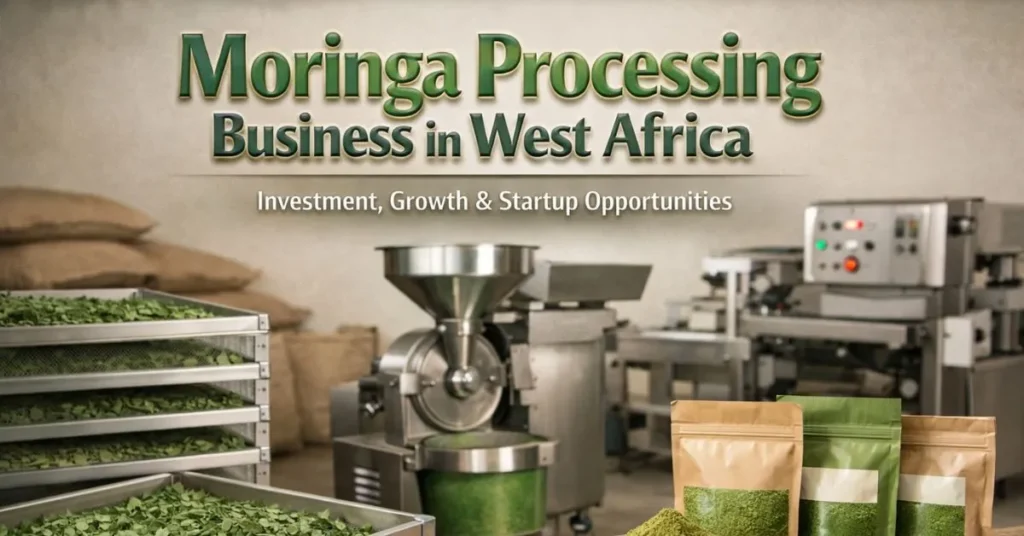
Moringa Processing Business in West Africa is a guide to investing in this business and making a profit. People around the world want to use natural health products and plant-based ingredients. This is why Moringa oleifera also known as the miracle tree has become very valuable in the agro-processing industry. Moringa oleifera was once a plant that people had in their homes but now it is a major export product used in nutrition, cosmetics and pharmaceutical manufacturing. West Africa is a place for growing Moringa oleifera because the climate is favourable the cost of farming is low and there are many international trade connections. Many entrepreneurs in countries like Nigeria, Ghana, Senegal and Niger are investing in Moringa oleifera processing units to produce leaf powder and seed oil for both export markets. The Moringa oleifera business is an opportunity for new entrepreneurs because the technology is simple the demand is strong and the potential for profit is attractive. Get Detailed Insights from This Book: Handbook on Agro Based Industries (3rd Edition) Why Moringa oleifera Processing Is a High-Growth Business in 2026 More and more people are becoming health conscious and this is driving the demand for Moringa oleifera products. People today prefer to use supplements and herbal products, which has created a steady demand for Moringa oleifera-based products. Some of the reasons the Moringa oleifera industry is growing quickly include: Strong international demand for natural health products Low cost of cultivating and processing Moringa oleifera Multiple income sources from a Moringa oleifera plant Long shelf life of finished Moringa oleifera products High export potential and profitability of Moringa oleifera products These factors make Moringa oleifera processing one of the most promising agro-based manufacturing businesses in developing regions. Main Products in the Moringa oleifera Processing Industry A Moringa oleifera processing plant can produce products but two products generate the majority of revenue: Moringa oleifera leaf. Moringa oleifera seed oil. Each product serves industries and provides stable income. The health and nutrition industry uses Moringa oleifera leaf powder as a common ingredient. The product functions as a dietary supplement which manufacturers use to enhance the nutritional profile of their food items. The European market and United States market along with Asian markets show strong demand for Moringa oleifera leaf powder. The cosmetics and personal care industry considers Moringa oleifera seed oil as a high-quality ingredient. The product functions as a moisturizer with extended shelf life which makes it valuable. Because of its selling price Moringa oleifera seed oil significantly increases overall profit margins. Other secondary products can also generate income, such as: Moringa oleifera capsules and tablets Animal feed made from Moringa oleifera seed cake Organic fertilizer Herbal tea products Producing products helps Moringa oleifera businesses reduce risk and increase total revenue. Detailed Project Report (DPR): Plantation, Farming, Cultivation, Agro Based and Livestock Projects Manufacturing Process of Moringa oleifera Products The manufacturing process for Moringa oleifera products is relatively simple. The business needs to maintain its quality standards because this requirement is crucial for success when exporting Moringa oleifera products. Moringa oleifera Leaf Powder Production Process The production of Moringa oleifera leaf powder involves controlled steps. Fresh Moringa oleifera leaves are first collected from farms. Carefully washed to remove dust and impurities. The Moringa oleifera leaves undergo cleaning before their drying process which uses controlled temperatures to maintain their nutritional content. After Moringa oleifera leaves undergo the complete drying process, they are converted into a powder form which is then stored in sealed containers. The key stages in the process include: Leaf collection from Moringa oleifera farms Washing and cleaning of Moringa oleifera leaves Controlled drying of Moringa oleifera leaves Grinding and sieving of Moringa oleifera leaves Packaging and storage of Moringa oleifera leaf powder The very quality and the very longevity of something like Moringa oleifera produced leaf powders is indeed subject to what drying procedure, and there it is the main thing to keep in line. Find high-return business ideas based on your investment range & ROI Moringa oleifera Seed Oil Production Process The application of different solvent systems will determine the types and amounts of arabinogalactan-protein complexes that will be extracted. The outer shells are removed before the Moringa oleifera seeds are pressed in a cold-press machine. The cold pressing method enables Moringa oleifera seed oil to retain its characteristics while achieving extended shelf life. After extraction the Moringa oleifera seed oil is. Packed in suitable containers for distribution or export. Machinery Required for a Moringa oleifera Processing Plant Setting up a Moringa oleifera processing unit requires food-processing equipment. The production capacity determines the specific equipment needed for manufacturing operations. Most Moringa oleifera plants include the following equipment: Leaf washing machine Dryer (solar or mechanical) Pulverizer or grinder Sieving machine Packaging machine Seed shelling machine Oil expeller or cold press Filter press The Moringa oleifera business becomes accessible to medium-scale entrepreneurs because these machines are commonly found and simple to use. Investment Required to Start a Moringa oleifera Processing Business The total investment required depends on the size of the Moringa oleifera plant, production capacity and technology level. However compared to manufacturing industries the startup cost is moderate. A scale Moringa oleifera processing plant can typically be established with an investment ranging from 80,000 to 120,000 USD. This level of investment is suitable for startups and small entrepreneurs entering the Moringa oleifera market for the time. A medium-scale Moringa oleafira plant needs an investment between 150000 and 250000 USD for its export operations. These Moringa oleifera plants have production capacity and better quality control systems. Although the initial investment may appear significant the strong demand for Moringa oleifera products allows businesses to recover their investment within a period. Profitability and Revenue Potential One of the advantages of the Moringa oleifera processing business is its strong profit potential. The difference between the raw material cost and the finished product price creates margins, especially when Moringa oleifera products are sold to export markets. The small Moringa oleifera processing unit which
Food Processing Unit in India: Step-by-Step Startup Guide for MSMEs
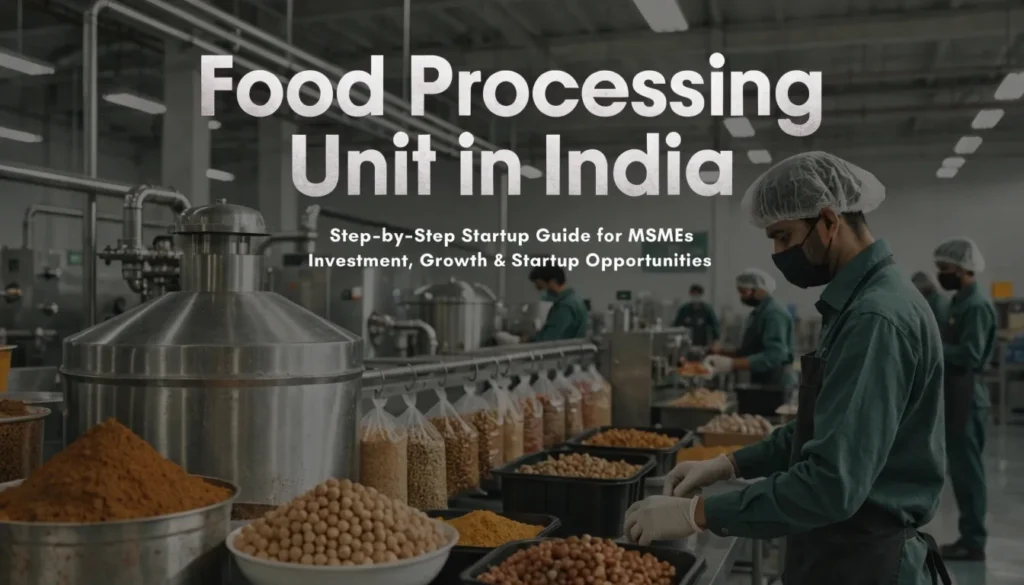
India is one of the largest producers of agricultural produce in the world of fruits, vegetable, cereals, pulses, dairy etc. Yet, less than 10% of this produce is formally processed, and thus a huge potential for entrepreneurs and MSME investors. Setting up a food processing unit not only adds value to raw agricultural products but also cuts down on waste, meets surging domestic and international demand and provides a lucrative business model. The food processing industry in India is quite unique as it gives the businesses scope to produce value-added products through branding, packaging, and distribution. Combined with government incentives and a secure supply of raw materials, the sector is a scalable opportunity for startups and investors. Download the Full Guide: Handbook on Fruits, Vegetables & Food Processing with Canning & Preservation (3rd Edition) Why Food Processing Is a Profitable Business Venture Several factors contribute that food processing is a very lucrative industry in India: Increasing Urbanization and Changing Lifestyles: More knowledge about hygiene, safety of food, and nutritional values has resulted in the demand of high-quality processed foods. Growing Awareness of Food Safety and Nutrition: More knowledge about hygiene, safety of food, and nutritional values has resulted in the demand of high-quality processed foods. Export Potential: Indian processed foods is exported to more than 100 countries such as the Middle East, Southeast Asia, the US and Europe. Government Focus: The Indian government has a target of increasing the volume of processed food, which is a good indicator of strong structural demand for investments in the processed food sector. Designating Your Food Processing Unit A successful food processing business begins with Techno-Economic Feasibility Report (DPR). This report is important for investors, banks, and your project team. A good DPR should cover: Market Demand and competition analysis Raw material Sourcing and supplier networks Machinery, utilities and production processes Capital costs, operating costs and revenue projections Financial ratios such as IRR, NPV and payback period Investing time into a well-crafted DPR reduces risks, eases the execution phase of the project as well as the chances for bank loans or government subsidies. Access Complete Business Plan: Food Processing Unit (Pulses & Dates) Project Report Choosing the Correct Food Processing Segment Investment, operations, and market reach are impacted by the choice of the right product segment. Promising options include: Fruit and Vegetable Processing Products: Mango pulp, tomato paste, dehydrated garlic, pickles Investment: Small to medium scale units would need an investment of 20-50 lakh Advantages: High domestic and export demand Moderate capital investment Dairy Processing Products: Cheese, paneer, flavoured milk, whey protein. Investment: Rs. 50Lacs-2Crore (depending upon scale). Advantages: Urban demand, QSR (Quick Service Restaurants) chains; Cold chain infrastructures are necessary. Spice Processing and Blending Products: Spices (ground), packaged blends, masalas Victoria Marine Science Institute has noted that “fossil fuel use can be avoided through alternative technologies and processes that use alternative energy sources to perform the same function.” Advantages: India has a reputation for authentic spices; high margin segment Edible Oil Refining Products: Mustard oil, sesame oil, cold pressed oils Investment: The investment in small-scale units starts at₹50 lakh Advantages: Specialty oils command high prices; quality control is important Ready-to-Eat Foods Products: Breakfast cereals, instant soups, packaged khichadi, curry bases Investment: 1-5 crores rupees, based on scale of production & export potential Advantages: Urban convenience market; small-batch production – allows testing the market Start with clarity—choose the best business idea Licenses and Compliance With Regulations Compliance functions as an essential requirement for organizations that seek to operate their business activities legally while gaining access to different markets. The main licenses required for operation include the following: FSSAI Registration or License: This is mandatory for all food business APEDA Registration: Required, if it is export oriented units Original or Implementation of: Product-specific Certifications: EIC (marine products), AGMARK (agricultural products), ISO 22000 (quality management) Factory License: Under the Act of State Factories Environmental Clearance: Needed for large units and specific products The organization should estimate all compliance expenses and required time periods before starting work because this process enables them to manage their project schedule and budget more effectively. Government Schemes & Incentives The Indian government is very supportive of food processing startups with subsidies, concessional loans, and incentive schemes: Pradhan Mantri Kisan Sampada Yojana (PMKSY): 35-50% subsidy for capital expenditure on processing units Production Linked Incentive (PLI) Scheme: Cash incentives for incremental sales of innovative products, organic and ready-to-eat products Food Processing Fund (NABARD): Concessional financing to infrastructure such as Mega Food Parks Start-up India & State Schemes: Tax exemptions, interest subvention, and capital subsidies These schemes greatly lessen the financial burdens of startups as well as increase the rate of success. Related Article: Top Government Schemes Driving India’s Food Processing Growth Lessons from Leaders in the Industry Successful entrepreneurs emphasise the importance of quality, branding and distribution: Kishore Biyani (Future Group): Harnessed the advantage of retail access and private-label food brands along with manufacturing excellence Nandita Hegde (ID Fresh Food): Being focussed on freshness, authenticity and cold chain discipline, commanding a premium pricing even in price sensitive markets The takeaway: a sound market and distribution plan is as important as the quality of the product. https://youtu.be/-fM5qktIS5c?si=120Ol65cfJlAj80J Conclusion The establishment of a food processing unit in India serves as a business venture which enables entrepreneurs to create positive impacts on agriculture while they generate employment opportunities and deliver high-quality nutrition products. The entrepreneurs need to create a business plan which includes a detailed project report and needs to follow regulations while using their market approach to develop export-ready food operations. The combination of increased domestic consumption, exports, government incentives, and planned approach makes food processing one of the most promising sectors for startups and MSME investors in India today. Commonly Asked Questions (FAQs) How much investment will it require the least? Small scale spice or pulp of fruits unit starts from Rs. 20 – 50 lacs. Dairy and oil refining generally cost from Rs. 50 lakh – 2 crore. Ready-to-eat foods having export
Maize Processing Industry in India: Starch, Glucose, Dextrose & Sorbitol Market Outlook to 2032
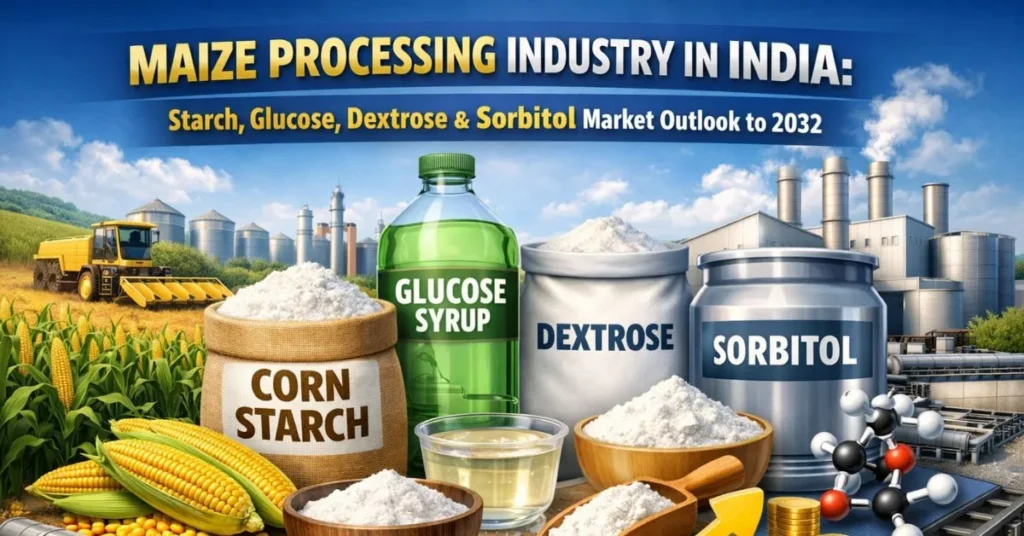
Introduction: Maize Processing Industry in India India’s maize processing industry has seen a steady shift from the traditional grain milling operation to value-added biochemical processing industry. Today, maize-based derivatives are important in providing the raw materials for pharmaceuticals, food processing, textiles, paper industries, personal care products and fermentation industries. This transformation has been furled by rapid growth of FMCG, growing pharmaceutical production and growing domestic consumption of processed food products. India produces over 36-38 million metric tonnes of maize per year but less than 25% is made into industrial derivatives. This low penetration of processing, coupled with growing downstream demand, leaves a large opportunity for new investments in maize-based starch and sweetener manufacturing.(Maize Processing Industry in India) Read More: Maize (Corn) Products in India (Starch, Glucose, Dextrose, Sorbitol) Trends, Opportunities, Market Analysis and Forecasts (Upto 2030-31) Structure of Maize Processing Industry Of India Indian maize processing industry is mainly developed around four major derivatives used by various industries: Maize starch, used in large amounts in textiles, paper, pharmaceuticals and food applications Liquid glucose syrup (consumed by confectionery, bakery and fermentation industries) Dextrose monohydrate, a widely used ingredient in IV fluids, ORS and nutraceutical formulations Sorbitol, an important ingredient in toothpaste, cosmetics and pharmaceutical syrups These products guarantee a regular industrial demand all year round and shelter the manufacturers from seasonal fluctuations.(Maize Processing Industry in India) Industrial Demand Trends and Growth Factors Maize starch continues to dominate the market for starch derivatives due to the wide use in the textile sizing, paperboard manufacturing, pharmaceutical tablets binding and adhesives production. Growth in organized textiles, packaging and healthcare has ensured steady consumption through India.(Maize Processing Industry in India) Liquid glucose demand has grown in tandem with the confectionery and bakery segments, especially due to urbanization and the changing lifestyles. Additionally, industries based on fermentation, such as antibiotics, enzymes and organic acids, are extremely dependent on glucose syrups, further reinforcing demand. Dextrose Monohydrate has become one of the fastest growing maize derivatives because of the growing pharmaceutical manufacturing. The pharmaceutical industry alone is responsible for over 30% of total domestic dextrose consumption with strong demand coming from Gujarat, Maharashtra, Telangana and Himachal Pradesh. Sorbitol demand has increased steadily with the growth of the oral care, personal hygiene and cosmetics industry. Domestic averment is still feeble in comparison to the high demand for the pharmaceutical grade, although it suffices as a craver from the import business.(Maize Processing Industry in India) Read More: Maize (Corn) Products in India (Starch, Glucose, Dextrose, Sorbitol) Trends, Opportunities, Market Analysis and Forecasts (Upto 2017) Import Dependency and Market Gap Despite being a large producer of maize, India imports refined corn derivatives because of the lack of high purity processing infrastructure. This dependency makes it more costly for downstream manufacturers and exposes them to global price fluctuations. Key gaps in the present market include: Shortage of pharmaceutical grade sorbitol and glucose syrups Limited domestic production of specialty and modified starches Regional imbalance in supply in South and Central India These gaps clearly show high import substitution potential for integrated maize processing units.(Maize Processing Industry in India) Read More: Why India Imports Sorbitol Despite High Maize Production – A Golden MSME Manufacturing Opportunity Integrated Maize Wet Milling Business Feasibility Integrated maize wet milling plants have excellent economics because of diverse product production. In such facilities, maize is processed into starch that can be sold directly or further processed into glucose, dextrose and sorbitol. Major benefits of integrated plants are: Ability to serve various industries at the same time Higher capacity utilization and operational flexibility Additional income from by-products such as maize germ oil and gluten feed This multi-product structure helps to reduce risk to the business and helps improve long-term profitability. Key Players and Competitive Scenario Organised processing industry of maize in India includes some established manufacturers such as Gujarat Ambuja Exports Ltd., Sukhjit Starch & Chemicals Ltd., Riddhi Siddhi Gluco Biols Ltd. and Roquette India Pvt Ltd. These players mostly serve large FMCG and pharmaceutical clients. However, production facilities are clustered into few regions, thus leaving gaps in supply near emerging clusters of pharmaceutical and food processing industries. This provides scope for MSME-scale decentralized units.(Maize Processing Industry in India) Read More: Maize, Corn and its By Products, value added Products, Derivatives, Maize Processing Industry, Corn Starch, Dextrose, Liquid Glucose, Sorbitol, Oil, Gluten, Germ Oil, Wet Milling, Maize Starch Plant & related Products, High-Fructose Corn Syrup (HFCS) Government Support and Incentives The Government of India is actively involved in maize processing under various agro-industrial schemes. Entrepreneurs can benefit from: capital subsidies on plant and machinery Infrastructure support for integrated processing units Incentives at state level under industrial policies In addition, the growth of the pharmaceutical sector under the PLI scheme is likely to generate a considerable increase in the demand for maize based excipients.(Maize Processing Industry in India) Read More: Maize Processing Industry in India: Starch, Sorbitol & Value-Added Products Market Opportunity https://youtu.be/_Ojb64-SfK0?si=F1ck3AWZG6d2454M Market Outlook and Forecast Up To 2032 India’s maize derivatives market is expected to have a steady growth until 2032, aided by the growth in pharmaceutical manufacturing, growth in processed food consumption, demand for personal care products and fermentation-based chemical manufacturing. Important growth opportunities include: Import substitution in sorbitol & specialty glucose Drivers of manufacturing in India: – Regional cluster of manufacturing – Pharma and FMCG Value addition through integrated processing Entrepreneurs who ventured into this sector with proper plan and linkage with the market will surely anticipate scalable operations and stable returns in the long run.(Maize Processing Industry in India) Frequently Asked Questions (FAQ) Is maize processing profitable in India? Yes, as a result of diverse product output, good industrial demand and because of government incentives, maize processing has attractive returns. Why is sorbitol still imported? Due to limited domestic capacity for use of pharmaceutical grade sorbitol, which results in import dependency. Which industries are the heaviest consumers of maize derivatives? Pharmaceutical, food processing, textiles, paper, personal care and fermentation industries. Are there subsidies for maize processing