
Why India Still Imports Sorbitol? Maize Processing Industry Capacity & Business Opportunity
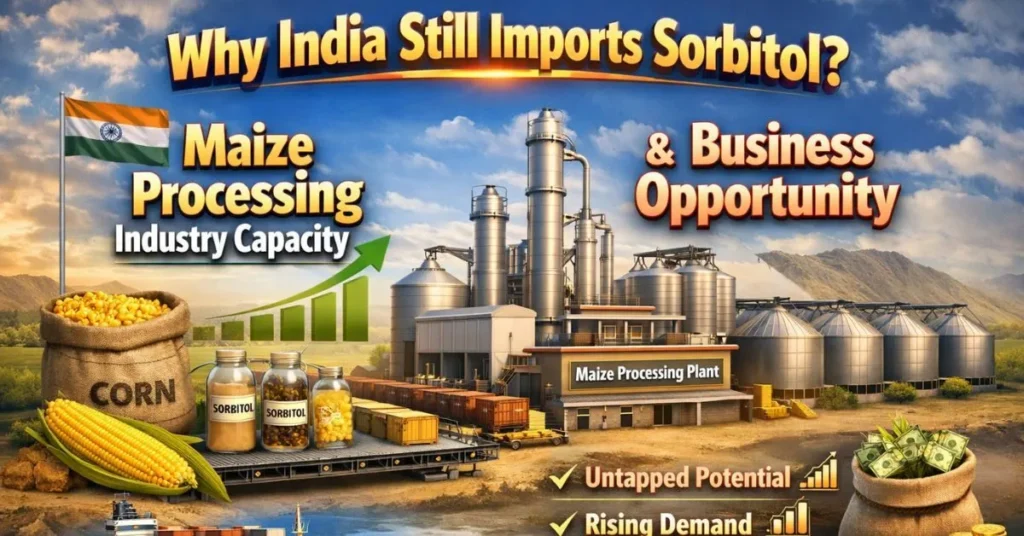
Introduction: Maize Processing Industry India India’s maize processing industry has undergone a tremendous transformation during the past decade from being primarily an agriculture-driven enterprise to being a strategic industrial sector. Processed maize derivatives like starch, liquid glucose, dextrose monohydrate and sorbitol have become key raw materials for pharmaceutical, food processing, textiles, paper, adhesives, fermentation, and personal care industries. Despite being one of the largest producers of maize in the world, India still has a structural deficit in industrial maize processing capacity. This demand-supply gap has led to persistent reliance on imports for refined maize derivatives, in particular, pharmaceutical-grade sorbitol and specialty glucose syrups. As a result, maize wet milling has become a high potential manufacturing and investment opportunity for organized sector players and MSME entrepreneurs.(Maize Processing Industry India) Read More: Maize (Corn) Products in India (Starch, Glucose, Dextrose, Sorbitol) Trends, Opportunities, Market Analysis and Forecasts (Upto 2030-31) Maize Production Scenario in India India is one of the leading maize producing countries in the world. According to the data released by the ministry of agriculture and farmers welfare, more than 36 million metric tonnes of maize is produced in the country every year. Maize cultivation is concentrated in states in: Karnataka Madhya Pradesh Maharashtra Telangana Andhra Pradesh Bihar These states have benefited from favourable agro-climatic conditions, availability of hybrid seeds and increasing mechanization. However, high agricultural production has not been matched by equivalent levels of industrial processing, and a disconnect of the farm production with the utilization of it in the industries has developed.(Maize Processing Industry India) Utilization Pattern of Maize in India The pattern of domestic consumption of maize reveals the limitations of the processing infrastructure in India: 55-60% used in poultry and animal feed 10–15% consumed directly as food 20-25% used for industrial processing Developed economies, on the other hand, use a much higher proportion of maize in value-added industrial products. India’s low processing share is the reason that industries are still importing refined derivatives despite good availability of maize domestically.(Maize Processing Industry India) Read More: Handbook on Maize (Corn) Processing and Manufacture of Maize Products Industrial Demand for Maize Products The demand for maize derivatives has grown steadily because of growth in a range of end use industries. Each derivative has a different and critical industrial function: Important Derivatives and Uses of Maize Maize Starch Used in textile sizing, paperboard manufacture, corrugated box adhesives and pharmaceutical tablets binding. Liquid Glucose Widely used in confectionery, bakery products, ice creams, jams and other medicinal syrups, and infant foods. Dextrose Monohydrate Essential for intravenous (IV) fluids, fermentation industries, nutraceuticals and energy supplements. Sorbitol Extensively used in toothpaste, oral care products, cosmetics, the development of vitamin C, pharmaceutical preparations; According to the industry insights from Ministry of Food Processing Industries, the increased intake of packaged and processed food items has directly increased the demand for starch and glucose syrups. Simultaneously, because of rapid expansion of pharmaceutical manufacture under the Department of Pharmaceuticals, there is a significant increase in the requirement for pharmaceutical grade sorbitol.(Maize Processing Industry India) Major Maize Processing Companies in India and Capacity The maize wet milling capacity in India is concentrated amongst a few organized players. Some of the major companies are: Gujarat Ambuja Exports Ltd. The largest player, with estimated processing capacity of more than 4000 tonnes per day, producing starch, liquid glucose, sorbitol and by-products. Riddhi Siddhi Gluco Biols Ltd. A leading supplier of starch derivatives to the food and pharmaceutical industries. Sukhjit Starch & Chemicals Ltd.The company employs one of its most experienced players who has extensive knowledge of both national and international markets. Roquette India Pvt. Ltd. Focused on Specialty starches and Pharmaceutical Excipients. Gulshan Polyols Ltd. A leading manufacturer of sorbitol and other polyols. Despite their combined output, existing capacity is too low to keep pace with the rapidly growing demand from the pharmaceuticals, food processing and personal care sectors.(Maize Processing Industry India) Read More: Maize, Corn and its By Products, value added Products, Derivatives, Maize Processing Industry, Corn Starch, Dextrose, Liquid Glucose, Sorbitol, Oil, Gluten, Germ Oil, Wet Milling, Maize Starch Plant & related Products, High-Fructose Corn Syrup (HFCS) Import Dependency & Regional Demand Gap However, India continues to import considerable amounts of refined sorbitol and specialty glucose syrups. Pharmaceutical manufacturing clusters in Gujarat, Telangana, Himachal Pradesh and Maharashtra often purchase sorbitol from Chinese, Indonesian and European suppliers. Due to this import dependence there are: Higher procurement costs Exposure to volatility of foreign exchange Longer lead times Vulnerability to Disruptions in Global Supplies For domestic manufacturers, this avails a significant import substitution opportunity. Industrial buyers receive faster product delivery because maize wet milling units operate closer to consumption locations. The units simultaneously provide customers with competitive pricing and reliable product delivery.(Maize Processing Industry India) Overview of the Maize Wet Milling Process The major steps in a typical, integrated maize wet milling plant are: Steeping – Maize kernels are put in a soaking phase to soften the endosperm Grinding and Separation – grinding and Starch gluten fiber and germ are separated Starch Refining – purification and concentration of starch slurry Hydrolysis – It is the conversion of starch to glucose syrup by the use of enzymes Crystallization – Dextrose Monohydrate Formation Hydrogenation – Glucose is converted to sorbitol Valuable By-Products Maize germ (edible oil) Corn gluten meal (animal feed) Corn Fiber – feed & industrial uses Sale of by-products makes overall project much more profitable.(Maize Processing Industry India) Read More: 3 Profitable Green Manufacturing Business Ideas in 2026: Bio-CNG, Maize Starch & Palm Oil Mill Importance of Techno-Economic Feasibility Studies Before investing in maize processing projects, entrepreneurs need to undertake a detailed technical and financial evaluation. A professional feasibility study is helpful to investors who want to know: Market demand and price trends Best product mix and capacity selection Technology alternatives and plant configuration Raw material sourcing and logistics Project cost, ROI and break even period Organizations like Niir Project Consultancy Services offer Market Survey-cum-Detailed Techno-Economic Feasibility Reports which go a long way
How to Start a Profitable Vermicompost Business

The international demand for sustainable agricultural methods, soil restoration, and waste recycling has accelerated the growth of the vermicompost business. Vermi composting used to be considered a low-tech rural venture, but it’s transforming into a scalable, organized business opportunity, especially in regions like India, where organic agriculture, horticulture, and waste management are national priorities. Entrepreneurs in the manufacturing or agri-input industry will make the most of establishing a vermi compost unit, not only for the return on investment but also because of its low entry barrier and alignment with climate-resilient practices. This guide provides critical industry trends and analyses, along with the production model, key raw materials, and their potential applications. Why Vermi Compost Is a Profitable Business in 2025 The use of compost and vermicompost in modern agriculture has been increasing along with the demand for organic inputs. Vermicomposting not only diverts organic waste but also provides nutrient-rich compost to farmers. In contrast, it’s much more effective in comparison to chemical fertilizers, which take a lot of time to break the soil and improve its structure, aeration, and water retention. The demand stems from three main forces: The organic farming boom – In India, the area of certified organic farming has increased vermi compost production tremendously over the past five years. Sustainable waste disposal – The use of decentralized organic waste processing systems funded by local governments is accelerating the use of vermicomposting. Export and horticulture sectors – Specifically, these sectors deal with high-value crops which include fruits, vegetables, and spices that need to be supplemented with premium-quality organic fertilizers to meet international standards for residues. Other than agriculture, vermicompost is gaining popularity for use in landscaping, urban gardening, and floriculture. This creates opportunities for industrial entrepreneurs to tap into numerous niche markets and at the same time aid in the environmental recovery. Related: How to Start a Profitable Vermicompost Business Market Demand, Growth Forecast, and Industry Outlook According to multiple agricultural and market intelligence reports, the Indian organic fertilizer market — of which vermi compost is a significant section — is forecasted to grow at a CAGR of 7–9% from 2025 to 2030. Furthermore, the rise in awareness in the farming community, along with government schemes under Paramparagat Krishi Vikas Yojana (PKVY) and the push towards Zero Budget Natural Farming (ZBNF), is increasing adoption on a holistic level. The market is also witnessing: Growing Interest from Urban Cooperatives and Eco-Villages Contract Farming Companies and FPOs (Farmer Producer Organizations) Shifting into Export-Oriented Horticulture and Spice Farms that are going organic Small-scale units in urban and peri-urban areas are selling packaged vermicompost to retail outlets for balcony gardens, nurseries, and organic food brands. These add-on segments are further diversifying the revenue streams for the producers. Why is Vermi Composting a Feasible Manufacturing Business Vermi composting is biologically driven, modular, and less complex. Unlike chemical fertilizers, which need heavy machinery, composting only needs organic material, composting organic waste, and certain species of worms, specifically Eisenia fetida or Eudrilus eugeniae. Both the compost feedstock and the market for vermicompost are scalable. The venture can start from a small modular setup of 1-2 acres, which can then be upgraded to a semi-automated production unit that has the capability to dry, sieve, and package. Continued agricultural waste supply (kitchen, garden, dairy, etc.) guarantees consistent production in output. This type of business also follows the principles of the circular economy by transforming waste into value-added resources, alleviating landfill burdens, and fostering sustainable agronomy. In agro-industrial areas, poultry, dairy, food processing, and even sugar mills offer ready streams of byproducts, which can be utilized as raw materials, thus lowering procurement expenses and improving margins. Manufacturing Process: Waste Transformation to Nutrient-Rich Compost Nutrient-rich humus can be obtained through the vermi composting process which involves the cultivation of earthworms on organic waste, which increases the value of the waste. 1. Pre-Treatment of Waste Cow dung, vegetable peels, and residue from crops, as well as leaves, are pre-processed by gathering and partially decomposed for around 10-15 days. This pre-emptive step yields compost that worms can consume. 2. Bedding and Layering Dried leaves and sand are also called coarse substrates and are important for enhancing the drainage as well as the aeration of the compost. Thus, a layer of this material is added as the base. On top of this, layer the pre-treated waste and earthworms. 3. Worm Processing and Composting To begin with, worms and their castings make up the main vermicompost feed dunked in 45–60 day cycles. They go through an aerobic stretching process that maintains a 60–70% moisture level. 4. Compost Extraction and Sieving When the compost reaches the desired dark granular structure, the earthworms can be extracted and reused through light or sieving techniques. Any lumps that have formed will be removed in the sieving step, and the finished product will be kept until packaging. 5. Product Packaging and Holding The finished product can be kept in bulk or 5-25kg bags until sent to retail stores and garden centers. Marking and labeling have a big impact on B2B customers. An additional value product can be made from the compost, called vermi-wash. This is a liquid extract enriched with bio-enzymes. Related: How to Start a Profitable Vermicompost Business Essential Features and Raw Material Sources Effectiveness can be improved by finding a place with direct access to composting agriculture or livestock zones. Consistent streams of organic waste products Labor and capital for manual sorting Effective road access for the inbound and outbound materials Valuable sources of raw materials may include: Dairy cow dung Organic materials from fruit and veggie mandis Poultry and agro-waste from sugarcane fields Sludge from food processing facilities (post-removal of non-organics) Key Operational and Regulatory Challenges and Solutions Focusing on the system failures of a specific vermi compost business can lead to a variety of opportunities. However, entrepreneurs should be aware of certain operational and regulatory hurdles. Inefficient Management of Waste Quality: However, churning organic waste
Cattle Industry: Exploring the Booming Industry of Cow-Based Products

A-2 Cow Milk Processing: Tapping into Health-Conscious Markets The process of A-2 cow milk and by-products, including butter, ghee, and paneer, represents additional profitable market potential. A-2 Milk, marketed for health and digestibility, appeals to a growing segment of health-conscious consumers. Investing in this market allows a new business to capitalize on a segment of the market that demands food quality and ethical production. Electricity and Bio CNG from Cow Dung: Sustainable Energy Solutions The processing of cow dung for electricity and Bio CNG planning is innovative and environmentally sustainable. The use of cow dung for Biogas reveals the importance of sustainable energy systems and provides evidence of companies sustaining deteriorating levels of fossil energy. For new companies, entering the sustainable energy market means the opportunity for government allocations to sustain energy and the economic market developed around zero-emission energy sources. Innovative Uses of Cow Urine: Phenyl and Cow Urine Distillate Two novel products made from cow urine include phenyl and cow urine distillate (gau mutra ark). These products are targeted to specialty markets interested in organic and Ayurvedic options for mainstream products. The investment in processing and packaging cow urine can open market possibilities for products like gau mutra ark. Mosquito Repellent and Eco-Friendly Products from Cow Dung Products like mosquito repellent coils blend traditional knowledge with contemporary needs. Coils, along with other eco-friendly products made from cow dung (especially folded paper, pottery, and tiles), serve multiple needs for customers in the emerging eco-friendly products market. This absolutely new and untouched industry of products will allow startups/entrepreneurs to innovate while solving environmental problems. Cattle Farming: The Foundation of the Cow Products Industry farming is the backbone of the cow products industry, and ethical cattle farming practices with beef producers will help ensure a more stable supply of products previously mentioned. Cattle farming products can simplify supply chains for the startup industry and create consumer trust within the industry of beef production. Cow Urine Distillate and Concentrate: The Untapped Goldmine Cow Urine Distillate, referred to as Gau Mutra Ark or Kamdhenu Ark, is an investment opportunity like no other. Both traditional medicine and agricultural bio-enhancer uses have created a growing market for this product around the world. Urine Distillate and Concentrate cow products have exploration potential that may soften market access and provide advancement opportunities for new technologies relating to the distillation and packaging of cow products. Cow Urine Processing and Packing: Meeting Modern Standards Cow Urine Processing and Packaging, including cow urine (Gaumutra) for medicinal and agricultural purposes, provide an opportunity for innovation in the industry. Startups can use different modes of processing cow products, generate high sanitation processing, and control animal product sanitation from beginning to end. This has the capacity not only to add value and improve consumer appeal, which considers organic and proven cow urine benefits but also to ensure that their processing and consumable upgrades meet food safety and enhanced health and safety compliance. The Rising Trend of Cow Dung-Based Paper and Tiles Cow dung-based paper and tiles represent integrated sustainability, products, and health-conscious and regenerative experiences. Cow-based products have value-added opportunities in a modern-day enjoyment and utility to the use of discarded products from the livestock sectors. Cow dung-based products represent sustainability and focus on green products while creating a substitute for a generated society while using waste. Entering this market allows startups to partake in eco-friendly development that satisfies a new and growing sector of eco-conscious customers and entire companies. Market Analysis: Understanding Size, Share, Trends Understanding the size, share, and trends in the market is an essential aspect of a startup beginning in the cow products business. Natural and sustainable product demand is destined to increase, so capitalizing on growth trends can be powerful for cow product startups. One of the pillars of market analysis is conducting a full market assessment to determine prospective target demographics, consumer behavior, and define specific product needs for your business strategy. Identified Business Categories:Cow Products, Cow Milk Products, Cow Dung Products, Panchagavya Products, and Cow Urine Products. Related Business Plans: Cow Products, Cow Milk, Cow Dung, Panchagavya & Cow Urine Based Products The Role of Technology in Revolutionizing the Cow Products Industry The startup industry needs technology to innovate the cow products industry. Technology can enhance all aspects, from processing milk and urine to biotechnologies improving cattle farming practices. Startups with a technology orientation can facilitate improving product quality and making the process more efficient. Technology orientation can foster a competitive advantage for your startup. Sustainability: A Core Value in the Cow Products Industry Sustainability is more than a marketing term; it is currently necessitated in the marketplace. Startups with sustainable practices in cattle farming and production processes will appeal to a growing customer segment that identifies as eco-conscious. Sustainability will also ensure your startup’s longevity and conformity to environmental regulations for the future. Ethical Practices: Winning Consumer Trust Ethics in cattle farming and production processes is valued by the customer. More consumers today are aware of animal welfare issues and prefer to use products sourced from producers who maintain a high level of ethical standards. For the startup, this will entail compliance with escalating regulations, following humane treatment of animals, and being more transparent in your company’s operations. Marketing Strategies for the Cow Products Industry Developing effective marketing strategies is a critical component of succeeding in the cow products industry. Startups must concentrate on referring to the distinct attributes of their products, including health benefits, sustainability, and ethical considerations. Leveraging digital marketing platforms, as well as partnering with influencers and thought leaders in the organic and sustainable sectors, can increase visibility and consumer engagement. Read our Book Here: Modern Technology Of Milk Processing & Dairy Products (4th Edition) The Global Potential of Cow Products While cow-based products are well-established in some markets, their opportunity is worldwide. The growing trend for organic and natural products in many parts of the world indicates this segment of the market is growing, providing a larger opportunity
Building a Green Future: Examining the Feasibility and Economic Viability of Bamboo Toothbrushes

Bamboo toothbrushes serve as a sustainable alternative to traditional plastic toothbrushes, which are one of the many causes of plastic waste globally. Traditional plastic toothbrush disposal has increased with the public awareness of having sustainable practices. With the increase in public awareness, manufacturing bamboo toothbrushes has become a viable economic opportunity. This study explores the economic viability of bamboo toothbrushes, emphasizing the importance of assessing the feasibility and techno-economics before developing any new business venture. In this research, we analyze the feasibility and techno-economic availability of operating a bamboo toothbrush manufacturing company. Market Analysis: Within the recent past, the demand for bamboo toothbrushes has been on a steady increase worldwide due to the increased awareness of sustainability and many eco-friendly lifestyle changes globally. According to a study, the global bamboo toothbrush market CAGR is expected to grow at 9.3% between the years 2020–2027. This growth trend highlights the economic viability of bamboo toothbrushes as a promising business opportunity. Furthermore, the survey also indicates that Asia Pacific will have the largest share of the market due to the popularity of eco-friendly products and the presence of many small producers. Related Feasibility Study Reports: Production of Bamboo Toothbrush Basic Material: The main raw material used for producing bamboo toothbrushes is a ramified natural reed known as bamboo. Bamboo is a radically renewable resource with the ability to grow quickly. Furthermore, bamboo is often readily available in many eroded regions of the world at an economic price. Production Process: The process of producing trekking out bamboo toothbrushes is fittingly basic and adaptable and can be readily taken out at a small scale. The Procedure Includes the Adhering to Steps: Bamboo Option as well as Sorting: The initial step in the manufacturing process is the selection of bamboo suitable for use. Bamboo must certainly be solid, straight, and also free from knots or fractures. The bamboo selected is then sorted according to shape and size. Bamboo Cutting as well as Shaping: The sorted bamboo is then cut to their preferred size and shape to create the toothbrush handle. The handle is sanded to get rid of any rough edges and to establish a smooth finish. Placing the Bristles: The next step is to secure the bristles into the handle. The bristles are generally made from nylon; bristles are secured under pressure using a secure handle. Product Packaging: The last phase is packaging toothbrushes. Toothbrushes are typically packaged in compostable or recycled packaging material to maintain their eco-friendly position. Read our Books Here: Bamboo Plantation and Utilization Handbook Machinery and Equipment: The machines and equipment required in the production of bamboo toothbrushes are easily manageable and easily located and obtainable in local stores. To further illustrate the scope of equipment and machines used, we have provided a listing of major machines and machinery required below. Bamboo Cutting Machine Sanding Machine Bristle Insertion Machine Packaging Machine Labour Needs: Manufacturing bamboo toothbrushes could demand limited skilled and unskilled labor. There is work stock that could be at a justifiable rate. Reliable labor can be substituted with currently hired labor or can be filled in-house or outsourced. Expense Evaluation: The necessity and aspects to begin a bamboo toothbrush manufacturing organization will depend on several varying factors including the range of the organization, location, and reasonable costs of materials and equipment. Nevertheless, it is estimated that the total investment for starting a bamboo toothbrush project will range between $10,000-$50,000 in startup costs. Profits Evaluation: The revenues from a bamboo toothbrush production project will, not unavoidably, depend on several variables, including the operation of the infrastructure, price of toothbrushes, and demand. It is, however, acknowledged that small bamboo toothbrush infrastructure can earn upwards of $50,000-$100,000 per year. If the production grows in scale or if new markets are occupied, profit will increase. Techno-economic Feasibility: The techno-economic feasibility of a bamboo toothbrush production project may also be established using a cost-benefit ratio to acknowledge feasibility. The cost-benefit ratio is found by taking the total cost of a project divided by the total profit produced in regard to the project. If the cost-benefit ratio is below 1, the project is classed as economically feasible. In the case of a bamboo toothbrush project, a cost-benefit ratio below 1 for this niche commodity indicates categorical economic feasibility. Because of a generally growing demand for environmental products and the costs of resources and manufacturing, it is easy to see how costs could be lower than a non-renewable resource product like plastic. Read Related Blog: Production Business of Eco-Friendly Bamboo Toothbrush. Most Profitable Business Ideas in Bamboo Industry. Environmental Impact: When comparing bamboo toothbrush products to plastic toothbrush products, bamboo toothbrushes could have a small-scale environmental impact. Bamboo, as a renewable resource, is biodegradable and does not contribute to plastic waste. This is an additive benefit for the toothbrush industry. The natural production of bamboo toothbrushes requires less energy, and emissions are significantly lower than those of plastic toothbrushes. Conclusion: Bamboo toothbrush manufacturing is both an affordable and financially practical business opportunity. There is an increasing demand for sustainable products, and the prices for materials and tools are fairly cheap. The project is expected to have a benefit-to-cost ratio that supports the economic viability of bamboo toothbrushes. In addition, bamboo toothbrushes have a significantly reduced carbon footprint compared to plastic toothbrushes, making them a more ecological option. Thus, creating a bamboo toothbrush manufacturing business demonstrates a responsible and lucrative business investment for environmentally conscious entrepreneurs looking to start their business journey with a sustainable and meaningful venture. Visit this Page for More Information: Start a Business in Bamboo Industry Contact Us
India Sugarcane Bagasse Biodegradable Disposable Tableware Market
Related Feasibility Study Reports: Biodegradable Disposable Cups And Plates Using Sugarcane Bagasse Contact Us
Why Manufacturing of Agrochemicals is a Lucrative Business Opportunity
The manufacturing of agrochemicals plays a pivotal role in enhancing global agricultural productivity and food security. Agrochemicals, including fertilizers, pesticides, herbicides, fungicides, and plant growth regulators, are vital in protecting crops from pests, diseases, and weeds while also enriching soil fertility. As the world population continues to grow, the demand for efficient agricultural inputs continues to rise, making the agrochemical industry one of the most strategic sectors within global manufacturing. By transforming chemical substances into usable agricultural solutions, agrochemical manufacturers contribute directly to increasing crop yields, improving quality, and reducing post-harvest losses. With modern scientific innovations and increasing awareness about sustainability, the industry is shifting toward environmentally friendly solutions and precision farming. In this article, we explore every aspect of the agrochemical manufacturing business, including processes, raw materials, technologies, challenges, and future opportunities. Understanding the Agrochemical Industry and Market Dynamics The manufacturing of agrochemicals caters to a vast global market that supports farmers in growing healthier, more productive crops. With agricultural land shrinking and climate change impacting yields, the use of agrochemicals has become indispensable. As per market research, the agrochemical industry is projected to surpass $300 billion by 2030, driven by population growth, urbanization, and the need for sustainable farming practices. The market is broadly categorized into: Crop Protection Chemicals: Pesticides, herbicides, fungicides, and insecticides. Fertilizers: Nitrogen-based, phosphorus-based, and potassium-based compounds. Plant Growth Regulators: Compounds that enhance crop development and output. Agrochemicals are used extensively in commercial farming, horticulture, floriculture, and even in urban landscaping, creating diverse revenue streams for manufacturers. Visit this Page for More Information: Start a Business in Agrochemicals Industry Key Categories of Agrochemicals and Their Applications 1. Pesticides and Insecticides These chemicals are used to eliminate or control harmful insects and pests that destroy crops. Common active ingredients include chlorpyrifos, imidacloprid, and permethrin. 2. Herbicides Used to control unwanted plants and weeds, herbicides like glyphosate, atrazine, and paraquat help ensure that crops receive maximum nutrients and space. 3. Fungicides These protect crops from fungal infections and diseases. Commonly used fungicides include mancozeb, carbendazim, and copper-based formulations. 4. Fertilizers Fertilizers replenish essential nutrients in the soil such as nitrogen, potassium, and phosphorus. Urea, ammonium nitrate, and superphosphate are widely used fertilizers in both organic and chemical forms. 5. Bio-agrochemicals An emerging category includes bio-fertilizers, bio-pesticides, and microbial growth enhancers which are gaining momentum due to their eco-friendly profile. Related Business Plan: Disinfectants Step-by-Step Guide to Agrochemical Manufacturing 1. Market Research and Product Selection Begin by identifying the demand for specific agrochemical products in your region. Research existing competitors, regulatory requirements, and market trends. Decide whether you want to manufacture a single product line (e.g., only fertilizers) or a diversified range. 2. Licensing and Regulatory Compliance Agrochemicals are strictly regulated due to their impact on health and the environment. Obtain the necessary licenses from regulatory bodies like: Central Insecticides Board & Registration Committee (CIBRC) State Agricultural Departments Pollution Control Board (PCB) Good Manufacturing Practice (GMP) Certifications Also, label compliance and Material Safety Data Sheets (MSDS) are mandatory for each formulation. 3. Selection of Raw Materials Raw materials include active ingredients, surfactants, binders, stabilizers, solvents, and emulsifiers. For fertilizers, ingredients like ammonium, potassium salts, and urea are needed. For pesticides, you’ll require active compounds synthesized from petrochemicals or plant derivatives. 4. Infrastructure and Equipment Set up your manufacturing plant with essential equipment such as: Mixing tanks Reactors Granulators Dryers Blenders Automated filling and packaging machines Proper waste management, air filtration, and worker safety equipment are essential parts of an agrochemical plant. 5. Manufacturing Process The typical manufacturing process involves: Weighing and mixing raw materials based on the formulation. Chemical reaction or blending depending on the product. Quality testing for concentration, pH, viscosity, and stability. Filling, labeling, and packing the final product in containers of various sizes. Automation and batch control systems improve precision and efficiency. Read Similar Articles: Agrochemicals Projects Quality Control and Testing in Agrochemical Production Quality assurance is non-negotiable in the manufacturing of agrochemicals. Each batch must undergo rigorous testing to ensure: Accurate chemical composition Product stability under different conditions Absence of toxic impurities Safe handling and storage Quality control labs test for performance efficacy and shelf life. It’s critical to maintain strict documentation and traceability of all production batches. Click here to send your queries/Contact Us Sustainability and Environmental Considerations Traditional agrochemical production has faced criticism for contributing to soil degradation, water pollution, and ecological imbalance. Modern manufacturing practices are increasingly adopting: Green Chemistry: Use of environmentally safe raw materials and solvents. Closed-loop systems: Reducing emissions and reusing water. Biodegradable packaging: To reduce plastic waste. Manufacturers are also investing in bio-based agrochemicals that offer reduced toxicity and improved safety for both humans and the environment. Related Feasibility Study Reports: Disinfectants Challenges in the Agrochemical Manufacturing Industry Despite its potential, the manufacturing of agrochemicals presents several challenges: Regulatory Hurdles: Navigating compliance for new product approvals is time-consuming. Volatile Raw Material Prices: Many ingredients are imported or tied to oil prices. High R&D Costs: Developing safer and more effective formulations requires substantial investment. Counterfeit Products: Fake or substandard products flood the market and damage brand credibility. Environmental Concerns: Managing waste disposal and pollution risk adds to operational costs. Read our Books Here: Read Our Books & Databases Opportunities and Future Trends The agrochemical industry is rapidly evolving. Here’s how you can capitalize on future trends: Adopt digital agriculture tools: Integrate IoT and AI to develop customized solutions for farmers. Focus on organic and bio-based chemicals: These will dominate the market due to increasing environmental consciousness. Expand to emerging economies: Africa, Southeast Asia, and Latin America are seeing rising demand. Collaborate with agritech firms: Develop smart sprays and controlled-release formulations. The Complete Technology Book on Pesticides Conclusion The manufacturing of agrochemicals is a high-impact business that supports agricultural productivity and sustainability. As food demand grows and farming evolves, so does the need for advanced agrochemical products. Entrepreneurs and investors entering this field must prioritize regulatory compliance, product innovation, environmental responsibility, and efficient supply chains to succeed in
How to Start a Manufacturing Business of Bromelain from Pineapple?
The business of Bromelain from pineapple is gaining significant momentum due to its natural origin and wide range of industrial applications, especially in the pharmaceutical, food processing, and cosmetic industries. Bromelain is a proteolytic enzyme extracted primarily from pineapple stems and juice, known for its anti-inflammatory, digestive, and wound-healing properties. As the demand for plant-based enzymes and nutraceuticals continues to grow globally, entering the Bromelain manufacturing business represents a high-value opportunity for forward-thinking entrepreneurs looking to tap into the biochemical and health products sector. The global shift toward sustainable and plant-based alternatives in healthcare and functional foods has created a ripe market for naturally derived enzymes. Establishing a Bromelain extraction and processing unit not only allows you to explore domestic and export markets but also supports waste utilization by extracting value from pineapple by-products. Visit this Page for More Information: Start a Business in Food Processing and Agriculture Based Industry Understanding the Market for Bromelain Bromelain’s global market is projected to grow at a CAGR of 7% from 2023 to 2030, driven by increasing adoption in: Pharmaceuticals – Anti-inflammatory drugs, post-surgical recovery, pain relief Food & Beverage – Meat tenderizers, protein hydrolysates, clarifying agents in beverages Cosmetics – Skin exfoliants, anti-acne treatments Veterinary Use – Digestive aids for animals Countries like the USA, Germany, Japan, and China are major importers, giving India a massive opportunity to tap into global enzyme supply chains with cost-effective production. Read Similar Articles: FOOD PROCESSING AND AGRICULTURE PROJECTS Steps to Start the Business of Bromelain from Pineapple 1. Feasibility Analysis and Market Research Start with: Identifying regions with high pineapple cultivation (e.g., Assam, West Bengal, Kerala, North-East India) Assessing availability of pineapple stems and peels (by-products) Evaluating market demand in nutraceuticals and pharma sectors Exploring potential export partners and regulations Click here to send your queries/Contact Us 2. Legal and Regulatory Requirements Secure necessary licenses: MSME registration FSSAI license (for food-grade Bromelain) Pollution Control Board clearance Drug license (if targeting pharma industry) Import-Export Code (IEC) for global trade ISO 9001, ISO 22000, GMP, and HACCP certifications These ensure credibility and regulatory compliance, especially for international exports. Read our Books Here: Biotechnology, Nanoscience, Nanotechnology 3. Infrastructure and Plant Setup You’ll require: Land: Minimum 5,000–10,000 sq. ft. Location: Close to pineapple farms or processing units to reduce raw material transport cost Utilities: Uninterrupted water, power supply, cold storage, and drainage systems A modern processing facility must include: Washing & chopping units Juice extractors or stem shredders Centrifugation & filtration systems Spray or freeze dryers Controlled drying chambers Enzyme activity analyzers Packaging & labeling units Related Feasibility Study Reports: Biotechnology 4. Raw Materials and Inputs Main inputs include: Pineapple stems, peels, or juice (waste from juice/canning industries) Water (food-grade) Chemicals for purification (ethanol, ammonium sulfate) Food-grade preservatives (optional) Packaging materials (HDPE jars, blister packs, vacuum-sealed pouches) Procuring raw materials from pineapple processors or directly from farmers will keep input costs low and improve profit margins. Manufacturing Process of Bromelain The typical steps include: Collection and Cleaning: Pineapple stems and peels are washed to remove dirt and debris. Grinding: The raw material is crushed and pulped. Extraction: The juice is filtered and centrifuged to extract the enzyme-rich liquid. Precipitation: Using salts (ammonium sulfate), the enzyme is precipitated out. Purification: Multiple filtration and concentration stages to enhance purity. Drying: The purified enzyme is dried via spray or freeze-drying. Packaging: Packed in air-tight, moisture-proof containers. Activity units of the enzyme (measured in GDU or MCU) are tested before labeling. Investment Required Component Estimated Cost (INR) Land & Building ?50 lakh – ?1 crore Machinery & Equipment ?1 crore – ?1.5 crore Raw Material (Initial Stock) ?15 lakh – ?25 lakh Staff & Technicians ?10 lakh – ?20 lakh Certifications & R&D ?10 lakh Working Capital (6 months) ?50 lakh Total Investment: ?2.5 crore to ?4 crore (USD $300,000 – $500,000 approx.)Expected Profit Margin: 30% to 45%Break-even Point: 18–24 months Marketing and Sales Strategy Direct B2B Sales – To pharmaceutical, nutraceutical, and food processing companies Online B2B Platforms – IndiaMART, TradeIndia, Alibaba Export – Middle East, Europe, South Asia (via FDA and EU-compliant products) Branding – As an eco-friendly, plant-based enzyme with multiple applications Exhibitions – Attend food & pharma expos for global networking Provide COAs (Certificate of Analysis), enzyme activity reports, and regulatory docs to build buyer confidence. Sustainability and Future Trends The business of Bromelain from pineapple also supports sustainable agriculture by reducing agro-waste. The future will see more demand for organic enzyme variants, higher purity grades, and multi-enzyme complexes for therapeutic and food applications. With technological innovations, you can also venture into nano-encapsulated enzymes, enzymes for pet foods, or topical medicated applications—broadening your revenue streams. Conclusion The manufacturing business of Bromelain from pineapple is a sustainable, high-growth opportunity that intersects food science, pharmaceuticals, and biotechnology. Leveraging India’s pineapple cultivation, coupled with modern enzyme extraction technologies and global market access, this venture offers great scalability and profitability. Entrepreneurs with a vision for health-based, eco-friendly businesses should strongly consider this path. Related Business Plan: Chemicals, Biotechnology Niir Project Consultancy Services (NPCS) prepares multiple project reports on different segment one of the project report by NPCS is Bromelain from Pineapple – Detailed Project Report, Profile, Business Plan, Industry Trends, Market Research, Survey, Machinery, Raw Materials, Feasibility Study and Investment Opportunities. The detailed project report by NPCS covers all the important aspects of a business from analyzing the market, confirming availability of various necessities such as plant & machinery, raw materials to forecasting the financial requirements. The project reports are not only used in India but worldwide by engineers, project consultants & industrial consultancy firms. You can get the project reports from the official site of NPCS. Click here to send your queries/Contact Us Reasons for Buying NIIR Report: Our research report helps you get a detailed picture of the industry by providing an overview of the industry along with the market structure and classification. Our report provides market analysis covering major growth driving factors for the industry, the latest market
Cocoa Processing Unit | Cocoa Processing Unit is Set Up for Manufacturing Cocoa Butter, Cocoa Couverture and Cocoa Powder.
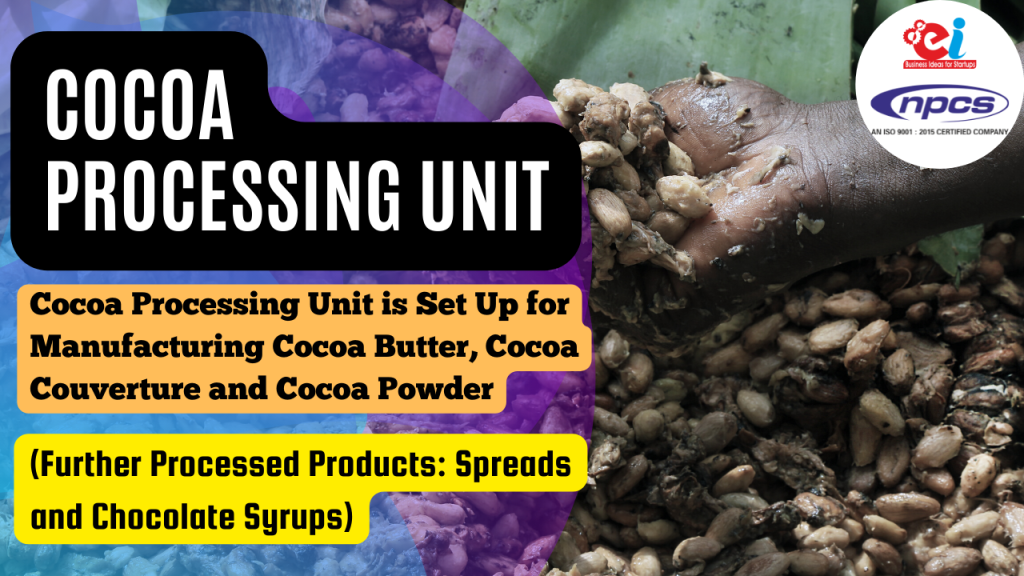
The cocoa processing industry is a lucrative segment within the global agricultural value chain. Setting up a cocoa processing unit is not only a strategic business move but also an opportunity to create value from one of the world’s most loved commodities—chocolate. With proper planning, investment, and knowledge, establishing a cocoa processing plant can be a game-changer in agribusiness. Understanding the Cocoa Value Chain The cocoa processing value chain begins from sourcing raw cocoa beans and continues through fermentation, drying, roasting, and grinding. The main products obtained from this process include cocoa liquor, cocoa butter, and cocoa powder, which serve as critical ingredients in food, cosmetic, and pharmaceutical industries. Sourcing quality beans is vital. West Africa (especially Ivory Coast and Ghana), Latin America, and parts of Southeast Asia are known for producing premium cocoa. Establishing partnerships or direct sourcing channels ensures consistent quality and volume. Market Research and Feasibility Study Before launching a cocoa processing unit, it is essential to conduct comprehensive market research and a feasibility study. Analyze: Demand trends for cocoa-derived products. Local and global competitors. Import-export regulations in target markets. Technology requirements. Operational cost and profit margins. The feasibility study must include analysis of ROI, breakeven point, and scalability potential. It should also review raw material sourcing, logistics, and the potential for forward or backward integration. Business Plan Development Developing a robust business plan is the foundation of any successful cocoa processing venture. The business plan should include: Executive summary of your goals and vision. SWOT analysis of your business concept. Product line description (liquor, butter, powder). Processing capacity (small-scale, medium, or large). Investment requirements and financing sources. Marketing and distribution strategies. Risk management plan. Make sure your business model reflects sustainable practices, fair trade policies, and includes room for future expansion. Legal Registration and Compliance To operate a cocoa processing unit, legal compliance is mandatory. These include: Company registration and factory licensing. Food safety and hygiene certifications (FSSAI, ISO 22000, HACCP). Labor and environmental clearances. Tax registrations (GST, Import-Export Code). Engage legal advisors to assist in ensuring that all government regulations, both local and international, are met for a hassle-free operation. Site Selection and Plant Layout Choosing the right location for your cocoa processing facility directly impacts logistics and operational efficiency. Ideal characteristics include: Proximity to cocoa bean farms or ports. Availability of clean water and stable electricity. Adequate space for current and future expansion. Access to skilled and unskilled labor. Design the plant layout for optimal workflow, from bean reception, cleaning, and roasting to grinding, pressing, and packaging. A well-optimized layout minimizes energy consumption and increases productivity. Procurement of Equipment Investing in high-quality, energy-efficient machinery ensures smooth and consistent output. The primary equipment required includes: Roasting machines – for flavor development. Winnowers – to separate nibs from shells. Grinders/melangers – to produce cocoa liquor. Hydraulic presses – to extract cocoa butter. Powdering units – to process cake into cocoa powder. Packaging machines – to meet various market needs. Opt for semi-automated or fully automated systems based on your budget and production scale. Also, consider sourcing from manufacturers offering installation and after-sales support. Production Process and Quality Control The production process involves several stages, each requiring stringent quality control: Cleaning and Sorting – Remove impurities and grade beans. Roasting – Enhance flavor and reduce moisture. Winnowing – Break and separate nibs. Grinding – Convert nibs to cocoa liquor. Pressing – Separate cocoa butter and cake. Grinding Cake – Produce cocoa powder. Packaging – Preserve freshness and extend shelf life. Implement a comprehensive quality management system. Monitor temperature, moisture, hygiene, and microbial content regularly. Ensure each batch meets industry and food safety standards. Packaging and Branding The packaging of cocoa products must be airtight, tamper-proof, and compliant with local and international regulations. It plays a crucial role in shelf-life and brand image. Consider packaging solutions that are: Eco-friendly and recyclable. Labeled with nutritional information. Designed to appeal to end consumers and B2B buyers. Invest in a strong branding strategy. Highlight product purity, origin, sustainability, and traceability. Effective branding helps position your company in the premium market segment. Distribution and Marketing Channels Develop a multi-channel marketing and distribution approach: Partner with FMCG companies, chocolate manufacturers, bakeries, and cosmetic producers. Explore export opportunities to North America, Europe, and Asia. Build an eCommerce presence to sell directly to consumers. Attend trade shows and industry expos to create B2B connections. Digital marketing is key. Use SEO-driven websites, social media, email campaigns, and influencer marketing to create brand visibility and generate leads. Skilled Workforce and Training Hiring trained personnel ensures process efficiency and quality. Key roles include: Food technologists. Machine operators. Quality assurance professionals. Packaging and logistics managers. Sales and marketing executives. Invest in regular training and upskilling programs to maintain standards and adapt to technological changes. Sustainability and Waste Management Sustainability in cocoa processing is vital. Adopt eco-conscious practices such as: Utilizing cocoa shells for fuel or animal feed. Recycling water and minimizing energy waste. Complying with environmental laws and carbon footprint norms. Promote ethical sourcing and fair-trade certifications to attract conscious consumers and global buyers. Financial Planning and Profitability Setting up a cocoa processing unit involves significant investment. Capital is needed for land, machinery, labor, and working capital. A sample cost breakdown: Land & infrastructure: 20–30% Machinery & installation: 40–50% Licensing, marketing, staffing: 20% Contingency: 10% Profitability depends on efficient operations, market access, and product differentiation. Cocoa products have high demand elasticity, offering profitable margins with the right positioning. Conclusion Starting a cocoa processing unit is a capital-intensive but highly rewarding venture. By aligning strategic planning, technical infrastructure, quality assurance, and marketing, one can build a scalable, globally competitive business. The demand for cocoa-derived products continues to surge, making this a timely opportunity for entrepreneurs and investors alike. Visit the page Select and Choose the Right Business Startup for You for sorting out the questions arising in your mind before starting any business and know which start-up you can plan. We, at NPCS, endeavor to make business selection a
Manufacturing Business of Granulated Fertilizers
The manufacturing business of granulated fertilizers is a cornerstone of modern agriculture, essential for improving crop yields and ensuring food security worldwide. Granulated fertilizers are solid particles containing vital nutrients like nitrogen, phosphorus, and potassium (NPK) that dissolve slowly and supply nutrients over time. Unlike powdered or liquid variants, granules offer better handling, reduced loss during application, and longer-lasting effects in the soil. With agriculture continuing to be the backbone of economies, especially in developing countries, the demand for efficient fertilizer forms has surged. This makes the manufacturing business of granulated fertilizers a lucrative and high-potential industry. Whether serving domestic agricultural markets or exporting to global agro-economies, fertilizer manufacturing presents significant opportunities for profitability, technological innovation, and long-term scalability. Rising population, declining soil fertility, and the push for high-efficiency farming practices continue to drive demand across regions. Entrepreneurs who invest in quality production, nutrient customization, and distribution can build a competitive and sustainable operation in this thriving sector. Market Outlook and Industry Demand The global fertilizer market is projected to surpass USD 200 billion in the coming years, and the manufacturing business of granulated fertilizers plays a critical role in this expansion. Granulated fertilizers dominate due to their stable structure, ease of transport, and adaptability to various crops and soils. Countries like India, Brazil, China, and the U.S. represent massive demand hubs due to their vast agricultural areas. As governments promote balanced fertilization and climate-smart agriculture, the shift from traditional manure and urea-only usage to scientifically formulated granulated NPK blends has accelerated. Moreover, increasing awareness among farmers about the importance of micronutrients and soil health is boosting demand for granules enriched with sulfur, zinc, and other elements. Organic granulated fertilizers are also gaining traction as sustainable agriculture grows. The business is further supported by public subsidies, agro-loan programs, and cooperative purchasing systems, making it a resilient sector in both good and challenging economic times. Visit this Page for More Information: Start a Business in Fertilizer Industry Types of Granulated Fertilizers In the manufacturing business of granulated fertilizers, understanding product diversity is key. The most common types include single nutrient granules (e.g., urea, SSP), NPK complex granules, and specialty granules like slow-release, coated, and micro-nutrient-rich variants. Granules can be homogenous (each granule contains all nutrients) or blended (a mix of different granules). Customized granules formulated based on soil test data are gaining popularity. Compound fertilizers like 10:26:26 or 12:32:16 are in high demand in cereal farming, while calcium ammonium nitrate or diammonium phosphate serve specific crop needs. Organic granulated fertilizers made from compost, poultry litter, and bone meal are on the rise in environmentally sensitive zones. Offering a portfolio of products aligned with local soil and crop needs helps manufacturers build strong customer loyalty and regional dominance. Related Feasibility Study Reports: Fertilizers Raw Materials and Inputs The raw materials used in the manufacturing business of granulated fertilizers depend on the formulation. Common inputs include ammonium nitrate, urea, muriate of potash (MOP), diammonium phosphate (DAP), sulphur, and rock phosphate. Fillers like bentonite clay or dolomite are also added for binding and consistency. For micronutrient-enriched granules, zinc sulfate, boron, copper, and magnesium compounds are used. In organic fertilizer production, composted plant residues, bone meal, poultry manure, and seaweed extracts are common. All materials must meet quality and purity standards, as impurities can reduce efficacy or harm crops. Reliable sourcing from domestic and international chemical markets is vital to maintain production schedules and cost efficiency. Manufacturing Process Overview The manufacturing business of granulated fertilizers generally involves these key steps: raw material mixing, granulation, drying, cooling, screening, coating, and packaging. First, solid and liquid raw materials are mixed in the right ratio using a mixer. The blend is then fed into a granulator (drum or pan type), where it forms round pellets under rotation and spray binding. After granulation, the product is dried in rotary dryers to remove moisture and enhance shelf life. It is then cooled, screened for uniform size, and coated with anti-caking agents or polymer films if needed. Final products are bagged in 25kg, 50kg, or bulk packaging depending on the market. Automation and PLC systems help improve productivity, consistency, and quality control. Ensuring a dust-free and safe environment is crucial, as some raw materials are sensitive or hazardous in large quantities. Read our Book Here: Manufacture of Biofertilizer and Organic Farming Machinery and Plant Setup Setting up the manufacturing business of granulated fertilizers requires a well-planned plant layout, based on production capacity (e.g., 10 TPD, 50 TPD, or more). Essential machines include raw material feeders, mixers, pan/drum granulators, rotary dryers, rotary coolers, sieves, coating drums, conveyors, dust collectors, and packing machines. The plant should also include storage silos, a water treatment unit, power backup, and a lab for R&D and quality control. Advanced systems may include SCADA-based control for real-time monitoring and process optimization. Small-scale units can operate semi-automatically, while larger plants typically invest in full automation to meet industrial volumes and international standards. The overall plant area may range from 1 to 5 acres depending on scale and automation level. Quality Control and Certification In the manufacturing business of granulated fertilizers, product quality and regulatory compliance are non-negotiable. Manufacturers must adhere to BIS (Bureau of Indian Standards) guidelines in India or equivalent standards like ISO 9001, EC Fertilizer Regulation (EU), or EPA norms (USA). Each batch must be tested for nutrient content, particle size distribution, moisture level, and contamination. Maintaining a well-equipped lab ensures product consistency and market reputation. For export, certifications like REACH (Europe), SGS inspection reports, and crop-specific labels improve buyer trust. Customizing blends as per soil health cards and ensuring traceability through barcodes or QR codes adds competitive advantage. Sustainable practices, waste minimization, and green packaging are also becoming important differentiators in the market. Investment and Profit Margins The investment required for entering the manufacturing business of granulated fertilizers depends on scale. A small unit may cost ?30–50 lakhs, while a medium plant may require ?1–3 crores. Large, automated plants can exceed ?10 crores in setup
Lucrative Business of Disposable Safety Razors. Investment Opportunities in Men Grooming Products Industry.
The disposable razors market continues to flourish in today’s fast-paced personal care landscape, presenting a lucrative opportunity for investors and entrepreneurs alike. With consistent consumer demand and advancements in razor technology, investing in this segment has become a compelling venture for those aiming to enter the grooming sector. Rising Demand and Market Overview of Disposable Razors The global grooming industry has witnessed remarkable growth, and disposable razors have played a pivotal role in this evolution. As consumers prioritize convenience, hygiene, and affordability, disposable razors have emerged as a practical solution for people. According to market reports, the disposable razor segment is projected to reach multi-billion-dollar valuations globally by 2028, driven by increasing personal grooming awareness, lifestyle changes, and rising disposable incomes. Why Disposable Razors Are a Strategic Investment Choice Disposable razors offer several advantages over reusable alternatives, especially in developing regions where cost and accessibility are critical factors. They require no maintenance, eliminate the need for blade replacement, and are travel-friendly. The simplicity of their design and the low price point make them an attractive option for mass consumption. In the post-pandemic era, heightened hygiene concerns have further fueled the demand for personal-use disposable grooming products. This shift in consumer mindset has created an ideal scenario for investors to explore scalable opportunities within this segment. Market Segmentation and Consumer Trends The disposable razors market is segmented based on blade count, gender, distribution channel, and geography. Products range from single-blade razors used mainly in low-income markets to triple or quadruple-blade versions preferred by premium users. Men’s disposable razors dominate the market, but the female segment is rapidly growing due to increased marketing efforts and specialized designs catering to women’s skin sensitivity and grooming preferences. Online sales channels have seen an explosive rise, especially among millennials, thanks to e-commerce platforms offering doorstep delivery and subscription models. Sustainable packaging and eco-conscious materials are being explored as consumer preference shifts towards environmental responsibility. Key Players and Competitive Dynamics Leading players in the disposable razors market include Gillette (P&G), BIC, Edgewell Personal Care (Schick), and Dorco. These companies are investing in aggressive marketing, R&D, and product differentiation strategies. However, the market also presents ample room for new entrants, particularly those focusing on private-label manufacturing, custom razor designs, or subscription-based distribution. Manufacturing and Supply Chain Insights The production of disposable razors involves injection molding for handles and precise metal stamping and sharpening for blades. While the entry barriers for manufacturing are moderate, setting up a fully integrated production facility can yield higher profit margins and better control over quality. Supply chain optimization is crucial, especially when catering to large retail chains or export markets. Establishing partnerships with high-volume packaging suppliers and third-party logistics providers can significantly reduce overheads. Investment Models and Entry Strategies There are several business models to consider when investing in disposable razors: Private Label Manufacturing: Create white-label razors for retailers or e-commerce brands. Direct-to-Consumer (D2C): Build a brand and sell online via your website or platforms like Amazon and Flipkart. B2B Distribution: Supply razors to hotels, hospitals, airlines, or government contracts. Retail Partnerships: Collaborate with supermarkets, pharmacies, and beauty stores. Each model has unique capital requirements and marketing approaches. For instance, D2C requires higher upfront investment in branding and digital marketing but yields higher customer lifetime value. Profit Margins and ROI Potential Profit margins in the disposable razors business can range from 20% to 60%, depending on your scale of operations, market positioning, and sourcing strategy. Bulk manufacturing and smart packaging can significantly lower per-unit costs, especially when sold through high-volume retailers or B2B clients. With the right operational setup, investors can expect ROI within 12 to 18 months, especially if brand positioning is strong and logistics are streamlined. Targeting niche markets such as eco-friendly razors or women-specific grooming kits can also enhance margins and build customer loyalty. Marketing and Brand Building in the Razor Industry Effective marketing plays a crucial role in standing out in the crowded disposable razors space. Successful brands often leverage: Influencer marketing targeting grooming enthusiasts and beauty bloggers. Social media campaigns focused on skin sensitivity, shaving comfort, and value pricing. Content-driven SEO strategies around grooming tips, product usage, and skin care. Packaging innovations that combine function with aesthetics. Establishing brand authority with educational content, customer testimonials, and consistent branding ensures long-term brand recall. Regulations, Certifications, and Compliance Investors must be aware of regulatory compliance for safety, material usage, and environmental impact. BIS certification in India, FDA regulations in the US, and CE markings in Europe are common mandatory standards for razor products. Biodegradable plastics, cruelty-free claims, and skin-safe blades should be substantiated by proper lab tests and documentation. Challenges and Risk Management While lucrative, the disposable razors market is not without challenges. Key risks include: Rising raw material costs, particularly stainless steel and plastics. Environmental concerns around non-recyclable waste. Fierce competition from both global and local brands. Shifting consumer preferences towards electric shavers and grooming kits. These challenges can be mitigated by adopting sustainable production practices, differentiating with unique product features, and maintaining a responsive supply chain. Future Outlook and Industry Innovations The future of disposable razors lies in smart grooming, where razors are integrated with ergonomic designs, skin-sensing technology, and subscription ecosystems. Companies that embrace technology, offer value-based personalization, and align with green trends will dominate the next wave of market growth. Artificial intelligence and consumer data are also playing a role in personalizing product recommendations, thereby increasing conversion rates in online sales. Conclusion The disposable razors sector is evolving rapidly, presenting dynamic opportunities for both seasoned investors and first-time entrepreneurs. By tapping into changing consumer preferences, leveraging digital channels, and focusing on innovation and sustainability, investors can carve a profitable niche in this ever-expanding grooming industry. Visit the page Select and Choose the Right Business Startup for You for sorting out the questions arising in your mind before starting any business and know which start-up you can plan. We, at NPCS, endeavor to make business selection a simple and convenient step for any entrepreneur/startup. Our