
Production of Dry Ginger from Green Ginger.
India has long been one of the leading producers and exporters of ginger, a spice known for its pungent aroma, medicinal properties, and versatility in food preparation. Among its many processed forms, dry ginger holds a significant position in the market due to its long shelf life and wide industrial use. In recent years, the demand for dry ginger and value-added ginger products has grown, driven by both domestic and international consumers looking for organic, natural, and health-oriented solutions. As the awareness of wellness and immunity-boosting foods increases, dry ginger is becoming a profitable option for agri-entrepreneurs and small-scale businesses alike. Exploring the Dry Ginger Market: A Golden Opportunity for Agri Entrepreneurs Ginger is cultivated widely across Indian states like Kerala, Karnataka, Meghalaya, and Sikkim. After harvesting, fresh ginger rhizomes are typically sun-dried or mechanically dehydrated to produce dry ginger. This drying process enhances the shelf life of the product and makes it suitable for further processing into powder, oil, and extract, all of which have growing applications in the food, cosmetic, and pharmaceutical sectors. The rising popularity of Ayurvedic medicine, herbal remedies, and organic food products has further accelerated the demand for dry ginger. In fact, many manufacturers are now shifting focus from bulk exports to high-margin, value-added ginger products such as ginger candy, ginger tea mix, ginger essential oil, and flavored health drinks. These products cater not only to health-conscious consumers but also open doors to international markets looking for unfamiliar and natural wellness alternatives. Why Dry Ginger is a Profitable Investment in Agri-Business The low perishability of dry ginger makes it a strategic product for storage, transport, and export. Unlike fresh ginger, which can spoil quickly and requires cold storage, dry ginger can be preserved for over a year when properly packed. This significantly reduces logistics and wastage costs, offering better returns to producers and traders. Moreover, setting up a dry ginger processing unit does not require heavy infrastructure or massive capital. With a modest investment of ?15–50 lakhs, one can establish a small-scale plant with drying, grinding, and packaging capabilities. For entrepreneurs with larger ambitions and budget (?1–2 crore), expansion into oil extraction, capsule manufacturing, and international branding becomes feasible. Value-Added Ginger Products: Innovation Meets Tradition Dry ginger itself has several profitable offshoots when converted into value-added products. Each of these can be targeted at niche markets, such as health-conscious consumers, wellness enthusiasts, or gourmet product lovers. Here are some top trending items in this category: Ginger Powder – Made by grinding dry ginger, this powder is widely used in spice blends, Ayurvedic medicines, and bakery items. Its utility in households and restaurants ensures steady demand year-round. Ginger Oil – Extracted via steam distillation from dry ginger or fresh roots, this essential oil is sought after in aromatherapy, cosmetics, and pharmaceuticals. Ginger Candy – A tasty and healthy snack that aids digestion, ginger candy is popular among children and adults alike. It’s a strong candidate for export to countries with Indian diaspora populations. Ginger Tea Premix – Combining powdered dry ginger with black tea, jaggery, or lemon flavorings creates an instant tea product that’s both comforting and functional for immunity. Ginger Capsules – Dried ginger extracts in capsule form are now being packaged as herbal supplements to treat indigestion, nausea, or joint pain. Pickled Ginger and Pastes – Though less popular than other forms, ginger paste and pickled ginger also have a ready market in processed food industries and restaurants. How to Start a Dry Ginger Business: Step-by-Step Plan To establish a business around dry ginger, one needs to consider both production and marketing factors. Here’s a step-by-step overview for aspiring entrepreneurs: Step 1: Sourcing Raw Material Identify reliable ginger farmers or cooperatives for a continuous supply of fresh rhizomes. Opt for organic or pesticide-free produce if you plan to target high-end or export markets. Step 2: Infrastructure Setup Set up a processing unit equipped with: Solar or mechanical dryers Pulverizing machine for powder Steam distillation unit (for essential oil) Packaging machines Storage rooms with moisture control A 500 kg/day capacity unit is sufficient for a small-scale entrepreneur and can be scaled as the business grows. Step 3: Licensing and Certification Register your enterprise under MSME/Udyam and obtain: FSSAI License GST Registration Agmark certification (for quality assurance) Export-Import (IEC) code (if exporting) If you’re producing Ayurvedic or supplement items, additional AYUSH or drug certifications might be needed. Step 4: Branding & Packaging Today’s consumers are attracted to well-branded and aesthetically packaged goods. Invest in eco-friendly, resealable, and tamper-proof packaging with nutritional labels and QR codes for traceability. Step 5: Marketing and Sales Create multiple sales channels: B2B: Supply to herbal pharmacies, Ayurveda centers, or health food stores B2C: Sell directly through local retail, exhibitions, or online platforms like Amazon, Flipkart, and your own website Export: Target overseas markets such as the USA, UK, Canada, and the Middle East where there’s high demand for Indian spices and health products Social media marketing and influencer collaborations in the wellness space can accelerate brand awareness for your dry ginger products. Government Support and Subsidies India’s Ministry of Food Processing Industries (MoFPI) and various state departments offer financial aid and training for spice and herb-based enterprises. Some schemes include: PM Formalization of Micro Food Processing Enterprises (PM-FME) Agri-Export Zones for Ginger NABARD subsidies for rural food processing Availing these subsidies and schemes can reduce initial financial pressure and offer technical support for building capacity and maintaining quality. Sustainability and Organic Opportunities Consumers worldwide are becoming more conscious about sustainability and food origin. This presents a golden chance for dry ginger businesses to adopt: Organic farming tie-ups Eco-friendly packaging Renewable energy-based processing (solar drying) With certifications like USDA Organic or India Organic, you can tap into premium markets willing to pay more for traceable, chemical-free products. Challenges in the Dry Ginger Sector Despite the opportunity, there are some common challenges: Price volatility of raw ginger Lack of awareness among farmers about post-harvest handling Competition from unbranded or low-quality alternatives Need
Silica Produced From Rice Husk Ash. Rice Husk Ash Silica Manufacture.
In the modern industrial age, turning waste into wealth has become a critical component of sustainable development. Among the many agricultural byproducts, rice husk stands out as an underutilized resource with vast potential. One of the most valuable derivatives of this waste is Rice Husk Ash Silica—a highly useful compound employed in several industries ranging from construction to electronics. As rice remains one of the most consumed grains globally, its byproducts are available in abundance, making the business of producing silica from rice husk ash a promising and profitable venture. The Potential of Rice Husk Ash Silica Production Rice husk is the outer covering of the rice grain that is removed during the milling process. It constitutes about 20% of the weight of harvested rice. When rice husks are burned, they produce rice husk ash (RHA), which can contain up to 85–95% amorphous silica under controlled combustion conditions. Rice Husk Ash Silica is a fine, white to grey powder that has versatile applications and commercial value. From serving as a pozzolanic material in cement to being used in high-tech industries, silica derived from rice husk ash has a lucrative market globally. Understanding the Source and Availability Asia, especially countries like India, China, and Vietnam, is the largest producer of rice, which makes rice husk an abundantly available agro-waste. For every 1 ton of rice paddy milled, approximately 200 kg of rice husk is produced. If burned under controlled temperature (typically around 600°C), this husk yields about 20% ash. This means that from every ton of rice paddy, nearly 40 kg of silica-rich ash can be generated. With millions of tons of rice cultivated annually, the resource availability is virtually endless. The Process of Rice Husk Ash Silica Production The process of producing Rice Husk Ash Silica involves several well-defined steps, and it requires minimal but strategically placed investments in machinery and control systems. Here’s a step-by-step overview of the production process: Collection of Rice Husk: Gathered from rice mills. Drying and Cleaning: They dry the husk to remove moisture and clean it to eliminate impurities. Controlled Burning: Operators burn the dried husk in a furnace or boiler while controlling the temperature and airflow to ensure complete combustion and obtain amorphous silica. Ash Collection: After burning, the system collects and cools the ash. Silica Extraction: Industries separate silica from the ash using acid leaching, alkali extraction, or thermal methods, depending on the required purity. Washing and Drying: They then wash the silica to remove residual chemicals and dry it. Packaging: Final product is packaged as per industrial standards and specifications. Applications of Rice Husk Ash Silica The success of any industrial product depends on the diversity and demand for its applications. Rice Husk Ash Silica has a wide variety of applications that span across industries, which contributes significantly to its profitability: Construction Industry: Used as a pozzolanic material in cement and concrete, it enhances strength and reduces permeability. Rubber and Plastic Industry: Acts as a reinforcing agent improving durability and resistance. Steel Industry: Used as a slag conditioner during steel manufacturing. Ceramics and Refractories: Acts as an essential raw material in creating thermal insulating products. Paints and Coatings: Enhances strength and abrasion resistance. Electronics and Solar Panels: High-purity silica is utilized in silicon wafer production for solar cells. Agriculture: Used in soil conditioners and fertilizers due to its silicon content which is beneficial for plant health. Market Demand and Profitability The demand for amorphous silica is growing rapidly. With the world shifting towards green technologies and sustainable materials, industries are seeking alternatives to traditional silica sources like mined quartz. Rice Husk Ash Silica, being eco-friendly and cost-effective, presents a superior option. The global precipitated silica market generated over USD 2 billion in revenue in recent years and is expected to grow annually. Silica extraction from rice husk ash can yield significant profit margins, especially when businesses procure the source material at minimal or no cost. Many rice mills are willing to part with rice husk as waste or even pay for its disposal, turning the collection phase into a cost-saving opportunity. Setup and Investment Setting up a Rice Husk Ash Silica production plant involves a moderate capital investment, which makes it suitable even for small to medium enterprises. You need the following basic components to establish the plant: Land and Building: 5,000–10,000 sq. ft. area depending on capacity. Furnace/Boiler System: For controlled combustion of husk. Extraction Units: For chemical or mechanical extraction of silica. Washing and Drying Units: To refine the final product. Power Supply and Utilities: Regular electricity and water supply. Labor and Workforce: Skilled and semi-skilled operators. An initial investment of ?1.5 to ?2 crore (approximately USD 200,000 to 250,000) can set up a unit capable of processing several tons of rice husk per day, yielding high-purity silica for domestic and export markets. Environmental Benefits and Sustainability One of the major appeals of Rice Husk Ash Silica is its environmental benefit. Miners conventionally extract silica from quartz, which causes extensive ecological damage. In contrast, extracting silica from agricultural waste not only conserves natural resources but also mitigates air pollution from the open burning of rice husk—a common practice in many rice-producing countries. Additionally, by reducing waste accumulation and providing a value-added product, this business aligns with circular economy principles and supports national sustainability goals. In carbon-sensitive industries, using RHA silica can even contribute to carbon credit accumulation. Challenges and Risk Mitigation Although Rice Husk Ash Silica production is highly rewarding, it comes with its own set of challenges: Consistency in Raw Material Quality: Different types of rice and burning conditions yield different ash properties. Combustion Control: Ensuring complete and clean combustion is essential for quality output. Chemical Handling: When using acid leaching or similar methods, operators must maintain proper chemical safety Market Competition: Entry of larger players can affect price points and market access. Companies can mitigate these challenges by investing in quality control systems, securing reliable supply chains, implementing standard operating procedures, and focusing on niche or high-value
Fresh water fish processing. Business Opportunities in fish processing Industry.
In recent years, the demand for fresh, hygienic, and value-added fish products has increased significantly due to the rising awareness of the health benefits of seafood and the growing urban population. India, with its abundant freshwater resources and aquaculture practices, presents an excellent opportunity for entrepreneurs to enter the freshwater fish processing business. This business not only supports the aquaculture and fisheries industry but also offers the potential for substantial profit, employment generation, and rural development. Understanding the Freshwater Fish Processing Business The freshwater fish processing business involves the collection, cleaning, filleting, freezing, packaging, and distribution of fish caught from rivers, lakes, reservoirs, and aquaculture farms. With a well-planned approach and adherence to hygiene and quality standards, this business can tap into both domestic and international markets. The processing can be categorized into different stages depending on the level of value addition – from basic cleaning and freezing to ready-to-cook and ready-to-eat products. With consumer preferences shifting toward convenience foods, processed fish products like fish fillets, fish fingers, nuggets, and marinated portions are in high demand. Market Scope and Demand The Indian fish market is expanding rapidly, with freshwater fish contributing a large share to the total production. Species like Rohu, Catla, Mrigal, Tilapia, and Pangasius are commonly farmed and consumed. Urbanization, changing food habits, and increasing health consciousness are major factors driving the consumption of fish in various forms. Apart from household consumers, hotels, restaurants, cafeterias, and institutions are significant buyers of processed fish. Export opportunities are also growing, especially for frozen and value-added products. Countries in the Middle East, Southeast Asia, Europe, and the US offer lucrative markets for high-quality processed freshwater fish. Steps to Start a Freshwater Fish Processing Business To establish a successful freshwater fish processing business, one must follow a structured and comprehensive plan that covers all critical aspects from setup to marketing. 1. Conduct Market Research Before starting, conduct in-depth market research to understand local fish consumption trends, customer preferences, competitors, pricing, and regulatory standards. Identify the most in-demand fish species in your region and assess the availability of raw materials. You should also explore potential buyers such as supermarkets, exporters, and food service businesses. The insights gathered from research will help you develop a sound business strategy. 2. Choose a Strategic Location Select a location near a freshwater source or aquaculture hub to reduce transportation costs and ensure the availability of fresh fish. Proximity to wholesale fish markets or landing centers can also be advantageous. The site should have access to clean water, electricity, roads, and waste disposal facilities. Additionally, consider building infrastructure that meets hygiene and environmental standards as per government regulations. 3. Obtain Necessary Licenses and Registrations To run a legal and compliant freshwater fish processing business, you need several licenses and permits: FSSAI Registration: Mandatory for all food processing units. Factory License: For establishments using labor and machinery. Pollution Control Board Clearance: To manage effluent discharge. Import Export Code (IEC): If you plan to export your products. GST Registration: For taxation compliance. Also, ensure that your facility follows HACCP (Hazard Analysis and Critical Control Points) guidelines for food safety. 4. Develop the Business Plan Your business plan should include: Capital Investment: For land, building, equipment, vehicles, salaries, and working capital. Project Cost: A small-scale unit may need ?50 lakhs–?1 crore; a mid-size facility may cost ?1.5–2 crores. Revenue Projections: Estimate monthly processing volumes, pricing, sales, and profits. Break-even Analysis: Determine the time to recover your investment. Secure funding from banks, NBFCs, or government MSME schemes like PMEGP, Mudra Loan, or NABARD support. 5. Set Up the Processing Unit Design a facility that ensures smooth workflow and hygiene standards. The main sections of a fish processing unit include: Reception Area: For receiving and weighing raw fish. Cleaning and Gutting Section: For de-scaling, gutting, and washing. Filleting and Cutting Area: For value addition and portioning. Freezing and Cold Storage: Blast freezers and chillers for preservation. Packaging Section: For vacuum sealing and labeling. Waste Disposal Unit: For handling fish waste in an eco-friendly manner. Equip your facility with stainless steel tables, conveyor belts, water tanks, filleting knives, cutting machines, and hygienic flooring and drainage systems. 6. Hire Skilled Labor and Technicians Recruit staff trained in fish handling, processing, packaging, quality control, and machine operation. Skilled labor ensures high-quality output and efficiency. You may also need food technologists or microbiologists to monitor quality and safety parameters. Provide regular training in hygiene, workplace safety, and HACCP compliance to your workforce. 7. Source Freshwater Fish Establish tie-ups with local fish farmers, cooperatives, or wholesalers for a consistent and high-quality supply of raw fish. Offer competitive pricing and timely payments to build long-term supplier relationships. Ensure that the fish are transported quickly in iceboxes or insulated containers to prevent spoilage. 8. Maintain Hygiene and Quality Control Adherence to food safety standards is non-negotiable in the freshwater fish processing business. Implement SOPs for cleanliness, sanitation, and pest control. Regularly test water quality, product quality, and microbial safety. Use HACCP, ISO 22000, or other food safety certifications to boost customer trust and marketability. 9. Brand Development and Packaging Create a brand identity that reflects freshness, hygiene, and trust. Invest in attractive, tamper-proof, and informative packaging. Mention details like species name, date of packaging, shelf life, storage instructions, and nutritional value. Develop a variety of packaging sizes to cater to both retail and bulk buyers. 10. Marketing and Distribution Use both online and offline marketing channels to promote your freshwater fish processing business. Some effective strategies include: Partnering with grocery chains and seafood stores. Selling through online grocery platforms and food delivery apps. Participating in food expos, seafood fairs, and B2B networking events. Promoting through social media, email newsletters, and SEO-focused websites. Offering discounts to bulk buyers like hotels and caterers. Ensure your cold chain logistics are reliable for timely and fresh delivery to customers. 11. Explore Export Opportunities Processed fish products, especially frozen and vacuum-packed items, have growing demand in the international market. Ensure compliance with export regulations
Pomegranate Farming Business
The Pomegranate Farming Business is rapidly becoming one of the most profitable and sustainable ventures in modern agriculture. With rising global demand for superfoods and health-conscious consumption patterns, pomegranate has carved out a valuable niche in the fresh fruit, juice, and nutraceutical markets. Known for its antioxidant properties, long shelf life, and drought resistance, the pomegranate is a fruit with immense commercial potential. Entrepreneurs, farmers, and agribusiness investors are increasingly turning toward the Pomegranate Farming Business to tap into both domestic and export markets. Why Pomegranate Farming is in Demand In recent years, the demand for pomegranate and its by-products has skyrocketed. Rich in vitamin C, potassium, fiber, and antioxidants, pomegranate is widely used in juices, jams, health drinks, and even skincare. India is the world’s largest producer of pomegranate, with major cultivation in Maharashtra, Gujarat, Karnataka, and Andhra Pradesh. The Pomegranate Farming Business offers significant advantages such as low water requirements, resistance to diseases, and consistent market prices. Export opportunities to Gulf countries, Europe, and Southeast Asia further enhance its profitability. With proper scientific techniques, even small farmers can achieve high yields per acre, ensuring quick returns and stable income. Ideal Climate and Soil for Pomegranate Farming Pomegranates thrive in tropical and subtropical climates. They require hot, dry summers and cool winters for optimum growth and fruiting. An annual rainfall of 500–800 mm is ideal, although the crop can be grown in areas with even less rainfall using drip irrigation. The Pomegranate Farming Business prefers loamy, sandy-loam, or black cotton soils with good drainage. A soil pH between 6.5 to 7.5 is considered best. Farmers should avoid waterlogged or highly alkaline soils. Soil testing prior to planting helps determine nutrient needs and suitability for cultivation. Popular Varieties and Their Characteristics Choosing the right variety is crucial for a successful Pomegranate Farming Business. Some high-yield and market-preferred varieties include: Bhagwa: Most popular in India, known for its bright red skin and soft seeds Ganesh: Early-maturing with pinkish-red skin and juicy arils Mridula: Suitable for processing, has deep red seeds Arakta: Deep red color, longer shelf life, ideal for export Kesar and Jyoti: Region-specific varieties grown in parts of Gujarat and Maharashtra Each variety has unique advantages in terms of sweetness, seed hardness, and suitability for processing or fresh consumption, making it easier to align with market demand. Planting and Spacing Guidelines For commercial Pomegranate Farming Business, propagation is done through hardwood cuttings or tissue culture saplings. Planting is generally carried out during monsoon (June–August) or in early spring (February–March), depending on the region. The ideal planting distance is 4 m × 4 m, which accommodates around 625 plants per hectare. In high-density plantations, spacing may be reduce to 3 m × 3 m, increasing plant count and yield. Pits of 60×60×60 cm are dug and filled with a mixture of farmyard manure, topsoil, and bio-fertilizers before planting. Irrigation and Fertilizer Management Although drought-tolerant, pomegranates need timely irrigation, especially during flowering and fruit development. Drip irrigation is highly recommended for efficient water use in the Pomegranate Farming Business. Watering frequency depends on soil moisture, weather, and crop stage but is typically done every 7–10 days. For fertilizers, a combination of organic manure and chemical nutrients is essential. FYM (Farmyard Manure) is apply at 10–15 kg per plant annually. Additional nutrients like Nitrogen, Phosphorus, and Potassium (NPK) are add in split doses throughout the growing cycle. Foliar sprays of micronutrients like Zinc, Iron, and Boron help improve flowering and fruit size. Pruning and Crop Management Regular pruning is vital to maintain plant shape, airflow, and productive growth. It helps eliminate dead wood, control height, and encourage new fruit-bearing branches. Pruning is done annually after harvesting. The Pomegranate Farming Business also requires effective pest and disease control. Common issues include fruit borers, aphids, mealybugs, and fungal leaf spots. Integrated Pest Management (IPM) practices such as neem-based sprays, sticky traps, and biological control agents can reduce chemical use while protecting crop quality. Flowering, Fruiting, and Harvesting Timeline Pomegranate trees typically begin to bear fruit after 2 to 3 years of growth. Depending on regional climatic conditions and irrigation practices, the trees may flower two to three times annually. However, the best-quality fruits are usually harvest from the main flowering season, which falls between April and June. Once flowering occurs, the fruits take around 5 to 6 months to reach maturity. Harvesting is done manually when the fruit’s outer skin turns bright, smooth, and glossy—an indicator of ripeness. Timely harvesting is crucial, particularly during the monsoon season, as delayed picking can lead to fruit splitting, which reduces market value. In the initial fruiting years, a healthy pomegranate tree yields 25 to 30 fruits per season. As the tree matures and management practices improve, this number can rise to 100 or more fruits per tree, significantly boosting farm profitability. Post-Harvest Handling and Marketing After harvest, fruits are sort base on size, color, and ripeness. Grading enhances market value, especially for exports. Proper packaging using ventilated crates or cardboard boxes minimizes damage during transportation. Cold storage extends shelf life up to 4–6 weeks, which is essential for distant markets. The Pomegranate Farming Business sells through multiple channels: Local wholesale markets Agri-mandis and APMCs Contract farming arrangements Direct retail or online farm produce models Export agents and food processors Adding value through juice extraction, seed drying, or pomegranate peel powder can further enhance profit margins. Investment and Returns Starting a Pomegranate Farming Business on one hectare typically involves: Land preparation: ?30,000–?40,000 Planting material: ?1,50,000 (for 625 plants @ ?200–250 each) Drip irrigation setup: ?75,000–?1,00,000 Fertilizers and pesticides: ?25,000–?35,000 annually Labor and maintenance: ?40,000 per year Total initial investment in the first year may range between ?3.5–?4.5 lakhs per hectare. From the 3rd year onward, returns can exceed ?5–?7 lakhs per hectare annually, depending on fruit quality and market prices. ROI becomes significantly higher with export linkage or processing partnerships. Government Support and Subsidies The Indian government supports Pomegranate Farming Business through various schemes: NABARD horticulture loans under
Food Processing Business in India
India’s food processing sector is one of the largest in the world and continues to grow rapidly due to increasing demand for packaged foods, urbanization, rising incomes, and export potential. The country is blessed with abundant agricultural resources, which makes it a promising hub for food entrepreneurs. With a growing middle class and evolving dietary preferences, the time has never been better to explore food processing business ideas in India. Understanding the Scope of Food Processing Business in India The food processing industry in India plays a pivotal role in linking Indian farmers to the consumers. According to reports, India processes only about 10% of its agricultural output, leaving immense room for growth and innovation. With support from the Indian government through subsidies, financial aid, and initiatives like “Make in India,” setting up a food processing unit has become more accessible for entrepreneurs. Below are some of the top food processing business ideas in India that offer high growth potential, scalable models, and promising returns on investment. 1. Ready-to-Eat (RTE) Food Manufacturing With the increase in working-class professionals, students, and nuclear families, there is an ever-growing demand for convenient food options. Ready-to-eat meals such as curries, biryanis, noodles, gravies, and soups are in demand in both domestic and export markets. By investing in this segment, entrepreneurs can tap into a profitable niche. Why it’s profitable: Long shelf life with retort packaging. Export potential to the Middle East, USA, and Europe. Strong demand in urban Indian households. 2. Spice Processing and Packaging Unit India is known as the “Land of Spices,” being one of the largest producers and exporters of spices globally. Starting a spice processing business involves drying, grinding, blending, and packaging spices like turmeric, chili, cumin, coriander, etc. Why it’s profitable: Consistent demand throughout the year. High export value. Low investment and scalable business. 3. Fruit Pulp and Juice Processing With the availability of seasonal fruits like mango, guava, pineapple, and orange, setting up a fruit pulp and juice processing unit can be a lucrative food processing business idea. The final product can be used in beverages, ice creams, jams, and bakery items. Why it’s profitable: Year-round market in retail and hospitality sectors. Export opportunities. Can start with moderate investment. 4. Flour Milling Business (Wheat, Rice, and Multigrain) With the increasing preference for packaged and hygienically processed staples, starting a flour milling business can be a great idea. Consumers now prefer ready-packaged wheat flour, rice flour, and multi-grain flour instead of grinding at local mills. Why it’s profitable: Daily use product in every household. Demand from bakeries and food industries. Low marketing cost due to essential nature. 5. Pickle Manufacturing Unit Pickles are an integral part of Indian cuisine, and the domestic and export markets for pickles are thriving. You can specialize in traditional regional pickles or innovate with new flavors and packaging. Why it’s profitable: Strong emotional connect with Indian consumers. Low-cost ingredients. Long shelf life and scope for branding. 6. Dairy Products Processing India is the largest producer of milk globally. Starting a unit for processing dairy products like paneer, ghee, curd, flavored milk, and cheese offers massive scope. This sector also has heavy government support under schemes like PM FME and MIDH. Why it’s profitable: High and constant demand. Possibility of multiple product lines. Strong domestic market base and export potential. 7. Bakery Products Manufacturing The demand for bakery products like bread, cakes, biscuits, and cookies is ever-growing. Starting a bakery production unit, either small-scale or industrial, is one of the most popular food processing business ideas in urban and semi-urban areas. Why it’s profitable: Easy entry and low capital requirement. High consumption in schools, offices, and homes. Opportunity for creative products and branding. 8. Frozen Food Processing With lifestyle changes and urban working culture, there is growing popularity for frozen parathas, cut vegetables, French fries, kebabs, momos, and more. Starting a frozen food unit involves refrigeration, freezing, and packing, which may require medium to high investment. Why it’s profitable: Long shelf life and easy transportation. Suitable for both domestic and export markets. Rapidly growing category in modern retail. 9. Herbal and Organic Food Products Consumers are increasingly leaning towards health and wellness. Products like organic pulses, cold-pressed oils, herbal teas, gluten-free snacks, and millet-based food are in high demand. Why it’s profitable: Premium pricing opportunity. Growing eCommerce sales for health-conscious customers. Scope for export to health-centric markets. 10. Papad and Snack Food Manufacturing Traditional snacks like papads, namkeens, banana chips, bhujia, and murukku are popular across India. These items are easy to produce and have a consistent market in rural and urban areas alike. Why it’s profitable: Low setup cost. Easy to sell through kirana stores, supermarkets, and online. Potential for women-led or SHG-based enterprises. 11. Tomato Processing Unit (Ketchup, Puree, Sauce) Tomato-based products have high domestic consumption and export demand. Setting up a tomato processing unit to make ketchup, puree, and sauces can be a smart food processing business idea, especially in tomato-producing states. Why it’s profitable: Tomatoes are widely available and inexpensive. High shelf-stable products. B2B and B2C market opportunities. 12. Jam, Jelly, and Marmalade Production With the increasing popularity of bakery items, bread spreads such as jam and marmalade are witnessing a steady rise in demand. Seasonal fruits can be preserved and processed into sweet spreads for year-round consumption. Why it’s profitable: Simple production process. Kids and adults both form major customer base. High margins due to low raw material costs. Government Support & Schemes Entrepreneurs exploring food processing business ideas in India can take advantage of several government initiatives: Pradhan Mantri Formalisation of Micro Food Processing Enterprises (PM FME) Mega Food Park Scheme Operation Greens NABARD Food Processing Fund These schemes offer subsidies, loans, and technical support to new businesses. Key Tips for Success in Food Processing Industry Follow FSSAI and ISO guidelines: Food safety is paramount. Invest in quality packaging: Packaging ensures hygiene, shelf life, and branding. Focus on branding and digital marketing: Creating a unique identity helps long-term
Water Soluble Fertilizer Manufacturing Industry
Agriculture has always been a cornerstone of India’s economy, and with the ever-growing need to enhance productivity and crop quality, the demand for efficient nutrient solutions is soaring. Among these, Water-Soluble Fertilizer has emerged as a popular choice among modern farmers due to its quick absorption, minimal wastage, and ability to meet crop-specific nutrient demands. Entrepreneurs looking to enter the agrochemical sector can find excellent opportunities in starting a water-soluble fertilizer business. This article outlines everything you need to know to start and succeed in this lucrative venture. Understanding Water-Soluble Fertilizer and Market Potential Water-Soluble Fertilizer is a type of fertilizer that dissolves easily in water and is absorbed quickly by plants through fertigation or foliar application. It allows farmers to control the nutrient composition delivered to plants, ensuring maximum efficiency in nutrient uptake. These fertilizers are ideal for high-value crops such as fruits, vegetables, and flowers, which require precise nutrition for optimal growth. The global and Indian markets for water-soluble fertilizers have witnessed consistent growth. The Indian water-soluble fertilizer market is expected to grow at a CAGR of over 6% during the next few years. This rise is driven by increasing awareness about efficient agricultural practices, government support for fertigation techniques, and a shift toward precision farming. Entrepreneurs with a solid business plan, technical knowledge, and marketing strategies can tap into this expanding market with promising returns. Step-by-Step Guide to Starting a Water-Soluble Fertilizer Business 1. Conduct Market Research and Feasibility Study Before launching your water-soluble fertilizer business, conduct a thorough market analysis. Understand the specific needs of farmers in your target region—what crops are commonly grown, the climatic conditions, irrigation methods used, and existing suppliers. Evaluate your competition, pricing models, and customer pain points. Feasibility studies should assess the availability of raw materials, potential manufacturing partners or equipment suppliers, and logistics for distribution. This groundwork will help you design a product range that meets local demand efficiently. 2. Decide on Business Model and Product Range You can either set up a manufacturing unit to produce your own brand of Water-Soluble Fertilizer or become a distributor/retailer for established brands. While manufacturing offers higher profit margins and brand control, it requires significant investment in plant, machinery, and licensing. Alternatively, the trading model offers quicker entry and lower capital requirements. If you opt to manufacture, decide on your product formulations. Common types include: NPK (Nitrogen, Phosphorus, Potassium) blends like 19:19:19 or 13:40:13 Micronutrient mixes (Zinc, Iron, Manganese, etc.) Specialized formulas for different crops (horticulture, floriculture) Work with agricultural scientists or consultants to design formulations that match the local crop and soil needs. 3. Legal Compliance and Licensing Starting a Water-Soluble Fertilizer business in India requires specific registrations and licenses. These include: FCO Registration (Fertilizer Control Order) from the Department of Agriculture Pollution Control Board Consent for manufacturing units Factory License and Shop & Establishment Act registration GST Registration Trademark registration for your brand, if applicable Ensure your production complies with the Fertilizer (Control) Order standards to avoid legal issues and product rejection in the market. 4. Set Up Manufacturing Facility (If Applicable) If you are setting up a manufacturing unit, choose a location with good connectivity to raw materials and target markets. Your facility should include: Mixing and blending equipment Pulverizers and granulators (if making granulated WSF) Quality control lab Packing and labeling machinery Storage area for raw materials and finished goods Invest in quality testing equipment to ensure every batch meets standard specifications. High product quality builds long-term trust among farmers and retailers. 5. Source Raw Materials and Machinery For manufacturing Water-Soluble Fertilizer, you will require raw materials such as urea, ammonium phosphate, potassium nitrate, micronutrients, chelating agents, etc. Build relationships with reliable chemical suppliers for consistent and timely delivery. Choose semi-automatic or fully automatic machinery based on your scale. You can also consider turnkey plant suppliers who provide complete setup solutions, including formulation assistance. 6. Develop Packaging and Branding Packaging plays a vital role in the agrochemical industry. Use high-quality, moisture-proof, and durable packaging to maintain product integrity. Common pack sizes are 1 kg, 5 kg, and 25 kg, depending on your target farmer segment. Branding should reflect trust, quality, and productivity. Include clear dosage instructions, crop suitability, and application methods on the label. Launch your product with a unique name and a professionally designed logo to stand out in a competitive market. 7. Build a Strong Distribution Network To ensure market reach, develop a robust distribution network comprising: Agro dealers and input retailers Agri co-operatives and societies E-commerce platforms (B2B and B2C) Direct-to-farmer models via field agents Offer attractive margins and training to channel partners. Organize farmer awareness programs, demos, and field trials to build credibility. Consistent product availability and on-ground support can significantly boost your brand presence. 8. Hire Skilled Personnel For a successful Water-Soluble Fertilizer business, hire the right team. Key roles include: Agronomists and technical experts for formulation and farmer guidance Quality control and lab analysts Production staff Sales and field marketing personnel Supply chain and logistics managers Ensure your team undergoes regular training on product knowledge, application techniques, and customer service. 9. Marketing and Promotion Strategies Marketing is critical to building brand identity and trust in the agricultural sector. Effective strategies include: Participating in agricultural fairs and expos Conducting farmer field days and soil health camps Distributing free samples for trial Publishing educational content (videos, brochures) in local languages Partnering with agri influencers and Krishi Kendras Leverage digital marketing channels like WhatsApp groups, YouTube, and Facebook pages that target farming communities to enhance your reach. 10. Ensure Continuous Product Innovation Agriculture is constantly evolving, and so are the needs of farmers. Innovate regularly by introducing: Crop-specific customized formulations Water-soluble biofertilizers Organic-certified WSF products Environmentally friendly packaging solutions Stay in touch with farmer feedback, agricultural research updates, and market trends to remain relevant and competitive. Investment, Profit Margin, and ROI Starting a small-scale Water-Soluble Fertilizer manufacturing unit may require an investment of ?20–?50 lakhs, including land, machinery, licenses, raw materials, and working capital. Larger
Khandsari Sugar Processing Industry
India’s traditional sweet tooth has long been satisfied by a variety of sugar products, but one variant that continues to hold a special place, especially in rural areas and among health-conscious consumers, is Khandsari Sugar. This unrefined, raw form of sugar is not just a healthier alternative but also a key player in the cottage and small-scale sugar processing industry. With the Indian government’s push for rural entrepreneurship and sustainable agro-industries, the Khandsari Sugar industry is poised for growth in 2025 and beyond. Understanding the Khandsari Sugar Industry Khandsari Sugar is a type of unrefined sugar made from sugarcane juice. Unlike modern refined sugar, it is produced using traditional methods without chemical processing or bleaching, retaining more natural minerals. It typically appears off-white or light brown and is granulated, much like regular sugar but with a slightly coarser texture. Historical Significance and Revival The origins of Khandsari Sugar date back centuries. It was widely used in Indian households before the advent of white refined sugar. Over the years, as industrialization took over, refined sugar began to dominate the market due to its shelf life and appearance. However, the growing interest in organic food and sustainable agriculture has brought Khandsari Sugar back into the limelight. Consumers are now more aware of the health disadvantages of refined sugar and are turning toward traditional, nutrient-rich options like Khandsari. The Manufacturing Process The Khandsari Sugar manufacturing process is semi-mechanized and usually carried out in rural or peri-urban areas. The production process involves the following steps: Extraction: Fresh sugarcane is crushed to extract the juice using mechanical crushers. Clarification: The extracted juice is then boiled and clarified using natural coagulants like lime or bhindi (okra) solution, which removes impurities. Boiling: The clarified juice is boiled until it thickens into a syrup. Crystallization: As the syrup cools, sugar crystals start to form. These are then separated using manual or centrifugal methods. Drying and Packaging: The semi-dried sugar is sieved and packed into bags for sale. This method not only retains more nutrients but is also less polluting compared to the production of refined sugar. The lower energy requirement and minimal use of chemicals make it ideal for eco-conscious production units. Market Trends and Demand Forecast According to recent industry reports, the Khandsari Sugar market is projected to grow at a healthy rate in 2025 due to increasing health awareness and the demand for natural food products. Urban consumers are now looking for natural sweeteners, and Khandsari fits the bill perfectly. Moreover, various Ayurveda-based health and wellness companies are also sourcing Khandsari Sugar for their products, further increasing the demand. Government support under schemes like PMFME (Pradhan Mantri Formalization of Micro food processing Enterprises) is making it easier for entrepreneurs to enter this sector with subsidies, training, and technical support. With e-commerce platforms making rural products more accessible to urban customers, Khandsari Sugar is entering new markets both within India and abroad. Investment and Setup Requirements Setting up a Khandsari Sugar production unit can be done at a relatively low investment, making it ideal for rural entrepreneurs and farmer cooperatives. Key requirements include: Land: A small piece of land (1-2 acres) is sufficient for a semi-mechanized unit. Machinery: Sugarcane crusher, boiling pans, crystallizers, centrifuges, and packaging equipment. Labor: A team of 8-10 workers can efficiently manage a small-scale unit. Raw Material: Easy availability of sugarcane is crucial. Tie-ups with local farmers ensure regular supply. The initial investment for a small unit ranges between ?10 to ?25 lakhs, depending on capacity and automation level. With proper marketing and distribution, the return on investment (ROI) can be achieved within 1.5 to 2 years. Challenges in the Khandsari Industry While the opportunities are abundant, the Khandsari Sugar industry does face certain challenges: Perishability: Due to its unrefined nature and absence of preservatives, Khandsari Sugar has a shorter shelf life. Seasonal Dependence: As it relies on sugarcane availability, production is seasonal and dependent on agricultural cycles. Limited Consumer Awareness: Many urban consumers are still unaware of Khandsari Sugar or perceive it as inferior to refined sugar. Infrastructure Issues: Lack of modern infrastructure in rural areas can affect production efficiency and storage. However, these challenges can be mitigated through better storage facilities, consumer education campaigns, and sustainable farming practices to ensure year-round sugarcane supply. Sustainability and Health Benefits Khandsari Sugar is not just an industry opportunity—it also aligns with global movements toward sustainable and health-conscious food systems. Some of the key benefits include: Rich in Minerals: It retains trace amounts of calcium, iron, and phosphorus, which are often lost during the refining process. No Chemicals: Produced without harmful bleaching agents or refining chemicals. Lower Glycemic Index: Though still sugar, it has a relatively lower glycemic index compared to white sugar. Eco-Friendly Process: Less energy-intensive and generates fewer carbon emissions than industrial sugar refining. These attributes make Khandsari Sugar popular among health enthusiasts, diabetics (with moderation), and wellness product manufacturers. Export Potential With global consumers leaning toward natural and traditional foods, Khandsari Sugar holds significant export potential. Organic food chains in the US, Europe, and Southeast Asia are already showing interest in Indian traditional sugars like jaggery and Khandsari. Certification such as FSSAI, USDA Organic, and EU Organic can further open up global markets. Exporters can tap into this niche by creating attractive branding and focusing on the health and cultural value of Khandsari Sugar. Policy Support and Government Initiatives The Government of India, through initiatives such as “Vocal for Local” and “One District One Product (ODOP),” is encouraging the revival of traditional food processing units. Several state governments are also offering capital subsidies, electricity rebates, and training programs to set up Khandsari Sugar processing plants. Entrepreneurs can also avail loans under MUDRA schemes or Small Industries Development Bank of India (SIDBI) to fund their ventures. Additionally, with NABARD’s support for agro-based units in rural areas, this sector offers both financial and infrastructural encouragement. Conclusion Khandsari Sugar production is more than just a business—it is a revival of India’s heritage, a commitment
Cow Urine Distillate/Concentrate. Gau Mutra Ark (Kamdhenu Ark)
In the world of Ayurveda, natural substances and ancient remedies hold a sacred place for their therapeutic potential. Among these is Gau Mutra Ark, a distilled form of cow urine, which has long been revered in Indian traditional medicine for its wide range of health benefits. While the idea might be unfamiliar or even surprising to some, Gau Mutra Ark is considered a powerful bio-enhancer in Ayurveda and has been used for centuries to treat various ailments, enhance immunity, and maintain internal balance. As modern society moves back to organic and alternative therapies, interest in Gau Mutra Ark is steadily rising, backed by both anecdotal evidence and emerging scientific validation. The Ayurvedic Significance and Preparation of Gau Mutra Ark The concept of Gau Mutra Ark finds its roots in the ancient Vedic texts, which often emphasize the purity and divine status of the Indian cow (Desi cow). According to Ayurveda, cow urine from a healthy, indigenous breed of cow is known to contain essential micronutrients, enzymes, and bioactive compounds. Gau Mutra Ark is not raw cow urine but a distilled product obtained through a slow heating process that retains volatile components and eliminates harmful impurities. The preparation of Gau Mutra Ark typically involves collecting urine from healthy cows early in the morning, followed by distillation in a controlled Ayurvedic setting. The distillation process ensures the final liquid is clear, odourless to mild-smelling, and safe for therapeutic use. This Ark (or extract) is believed to act on all three doshas (Vata, Pitta, and Kapha), thereby restoring balance in the body’s physiological systems. One of the reasons Gau Mutra Ark is gaining popularity in alternative medicine circles is its adaptogenic and antimicrobial properties. Ayurveda practitioners often prescribe it in measured doses as a supportive remedy in conjunction with other herbal formulations. Health Benefits of Gau Mutra Ark The benefits of Gau Mutra Ark span across physical, mental, and even spiritual well-being. Here are some notable health benefits associated with its use: 1. Detoxification and Liver Health: Gau Mutra Ark is considered a natural detoxifier. It helps in the elimination of toxins from the liver and kidneys, promoting better metabolic function. Regular use may support liver enzymes, reduce fat accumulation, and prevent hepatic disorders. 2. Boosts Immunity: Due to its immunomodulatory effects, Gau Mutra Ark can strengthen the body’s immune response. It enhances the production of white blood cells and helps in building resistance against infections, allergies, and autoimmune conditions. 3. Aids in Digestion: Many Ayurvedic practitioners recommend Gau Mutra Ark to improve digestion. It stimulates digestive fire (Agni) and aids in better absorption of nutrients, which in turn helps tackle issues like indigestion, bloating, and constipation. 4. Regulates Blood Sugar: Preliminary studies and traditional use suggest that Gau Mutra Ark may help in managing blood glucose levels, making it beneficial for diabetic patients. It works by improving insulin sensitivity and metabolism. 5. Supports Skin Health: Topical application and oral consumption of Gau Mutra Ark are believed to treat various skin conditions such as acne, eczema, psoriasis, and fungal infections. Its antibacterial and anti-inflammatory properties make it a suitable natural remedy. 6. Cancer Prevention and Support: Some early research in Ayurvedic and naturopathic circles indicates that Gau Mutra may possess anti-cancer properties due to its antioxidant and cytotoxic compounds. Often used alongside cancer treatment to boost overall vitality and support general well-being. 7. Mental Well-being: Gau Mutra Ark is said to clear the manovaha srotas (mental channels) and is believed to reduce anxiety, stress, and mental fatigue. It is also said to improve memory and focus by stabilizing nervous system functions. Usage and Dosage Guidelines Though Gau Mutra Ark is a natural remedy, it must be consumed responsibly and under the guidance of a qualified Ayurvedic practitioner. The usual dosage for adults is around 5 to 10 ml diluted in a glass of water on an empty stomach in the morning. Children and the older people, may require adjusted dosages. The Ark should always be sourced from reputable suppliers using only Desi cow urine and adhering to Ayurvedic distillation standards. One should avoid products derived from cross-bred or non-indigenous cows as they may lack the bioactive potency required for therapeutic efficacy. Who Should Avoid Gau Mutra Ark? Despite its natural origin, Gau Mutra Ark is not suitable for everyone. Pregnant and lactating women, people with severe kidney disease, or those on immunosuppressants should avoid it unless prescribed. Allergic reactions, though rare, can occur and must be addressed immediately. It’s also crucial not to exceed the recommended dosage. Overconsumption can cause gastric irritation or imbalance in Pitta dosha. Scientific Perspective and Studies In recent years, there has been a surge of interest in researching Gau Mutra Ark through modern scientific methods. Lab studies show it contains compounds with possible antibacterial, antioxidant, and enzyme-related health benefits. However, large-scale clinical trials are still limited, and more rigorous scientific validation is necessary for widespread global acceptance. Despite the skepticism in mainstream medicine, several Ayurvedic colleges and naturopathy centers in India have begun integrating Gau Mutra in holistic treatment regimens, especially in the management of chronic diseases like arthritis, asthma, and even certain cancers. Gau Mutra Ark in Modern Lifestyle With rising interest in organic living, Ayurvedic remedies like Gau Mutra are gaining daily wellness acceptance. Urban wellness centers and online stores now sell certified, sterile Gau Mutra for easy access by health-conscious consumers. Moreover, Gau Mutra is now being incorporated into various products like shampoos, disinfectants, mouthwashes, and even dietary supplements. Its role in organic farming as a natural pesticide and growth enhancer also reflects its multifaceted utility beyond personal health. Ethical and Environmental Considerations The use of cow-derived products in Ayurveda, including Gau Mutra, raises ethical and environmental questions. However, when sourced responsibly from farms that treat cows humanely and prioritize sustainability, its production can align with eco-friendly practices. Unlike synthetic drugs, Gau Mutra leaves no chemical residues and is biodegradable, thus making it an environmentally sound choice. Ayurveda always emphasizes harmony between humans and
Banana Fruit Farming Business
The Banana Fruit Farming Business has become one of the most profitable agribusiness ventures across tropical and subtropical regions. As one of the most consumed fruits in the world, bananas offer year-round demand, quick returns, and multiple revenue streams including fruit sales, plant by-products, and processing units. With proper planning, modern farming techniques, and market linkages, banana cultivation can transform small and marginal farmers into successful agri-entrepreneurs. India ranks as the largest producer of bananas globally, contributing over 25% of the world’s total output. The banana fruit farming business not only ensures steady cash flow but also aligns with government support for horticultural growth and food security. Why Choose Banana Farming as a Business? High Yield per Acre – Bananas yield 30–40 tons/acre under good management. Quick Harvest – Fruits are ready for harvest within 9–12 months after planting. Low Labor Intensity – Banana farming is semi-intensive, with moderate labor needs. Multiple Varieties – From table bananas to processing varieties like Nendran and Cavendish. Steady Demand – Bananas are consumed in all seasons and exported globally. Government Subsidies – Support through schemes like NHM, RKVY, and MIDH. Suitable Climate and Soil Conditions Bananas grow best in: Temperature: 20°C to 35°C Rainfall: 1000 to 2500 mm annually (well-distributed) Soil Type: Well-drained loamy or alluvial soil with pH 6.0–7.5 Altitude: Up to 1000 meters above sea level Avoid waterlogged or heavy clay soils. Drip irrigation and mulching enhance productivity in low-rainfall zones. Top Varieties of Bananas for Commercial Farming Grand Naine (G9) – High-yielding, globally popular, suitable for export Dwarf Cavendish – Early maturing, good shelf life Robusta – Suitable for tropical regions, disease resistant Nendran – Popular in Kerala for chips and culinary uses Rasthali and Poovan – Traditional Indian dessert varieties G9 and Robusta are the most widely grown due to their high commercial viability. Step-by-Step Banana Cultivation Process 1. Land Preparation Plough and level the land properly Incorporate organic manure or compost Form beds and channels for drip lines 2. Sucker or Tissue Culture Planting Use tissue culture banana plants for disease-free, uniform growth Ideal spacing: 6 ft x 5 ft or 6 ft x 6 ft 1200–1500 plants per acre 3. Irrigation and Fertilization Adopt drip irrigation to conserve water Apply NPK in split doses along with micronutrients Use fertigation for better nutrient uptake 4. Weed and Pest Management Regular hoeing and weeding Use neem-based pesticides or biological controls Watch for banana aphids, pseudostem borers, and leaf spot disease 5. Propping and Support Use bamboo or twine to prevent lodging due to wind or weight of bunches 6. Harvesting Occurs 9–12 months after planting Each plant yields a single bunch of 20–30 kg Harvest when bananas are full-sized and light green in color Yield and Revenue Potential Average Yield: 30 to 40 tons per acre Market Price: ?10–?25 per kg depending on variety and location Gross Income: ?3–8 lakhs per acre annually Net Profit: ?1.5–3 lakhs per acre per cycle With improved technology, some progressive farmers report up to 60 tons/acre yields using high-density plantations. Value Addition and Diversification Opportunities Banana Chips and Powder – Especially from varieties like Nendran. Banana Fibre Extraction – Used in handicrafts, textiles, and eco-friendly packaging. Banana Plant Pseudo-Stem Juice – Emerging health drink trend. Vermicompost and Organic Manure – From banana waste and leaves. Ripening Chambers – Offer controlled ripening and longer shelf life. These additional ventures can significantly increase profitability. Export Market Potential India exports bananas to: UAE Saudi Arabia Iran Oman Nepal Sri Lanka Export-oriented farmers need to follow GAP (Good Agricultural Practices), post-harvest handling, and logistics to meet international standards. G9 bananas are highly preferred in Gulf countries. Post-Harvest Management Cleaning and Grading: By size, weight, and ripeness Packaging: Corrugated fiber boxes with ventilation holes Cold Storage: 13–15°C with high humidity Transportation: Preferably refrigerated trucks for long distances Proper handling improves shelf life and reduces wastage. Licenses and Support Schemes FPO or Farmer Producer Organization registration Subsidy under MIDH and NHB PM FME scheme for processing Soil Health Card and Crop Insurance (PMFBY) APEDA registration for exporters Banks and NABARD offer credit for banana farming under Agriculture Infrastructure Fund (AIF) and term loans. Challenges to Consider Price fluctuations due to market gluts Susceptibility to cyclones in coastal areas Proper ripening and logistics needed for export Skilled labor for plantation management Need for consistent water supply and pest vigilance However, with crop diversification, contract farming, and digital platforms, these risks can be minimized. Conclusion The Banana Fruit Farming Business stands as a high-return agribusiness with minimal gestation period and vast domestic and export market potential. By adopting scientific practices, tissue culture planting, and integrating value-added services, farmers and entrepreneurs can turn banana farming into a scalable and sustainable source of income. Niir Project Consultancy Services An ISO 9001:2015 Company 106-E, Kamla Nagar, Opp. Spark Mall, New Delhi-110007, India. Email: npcs.ei@gmail.com , info@entrepreneurindia.co Tel: +91-11-23843955, 23845654, 23845886, 8800733955 Mobile: +91-9811043595 Website: www.entrepreneurindia.co , www.niir.org Contact Us
Production of PROM Fertilizer (Phosphate Rich Organic Manure) in India, Complete Guide of 2026
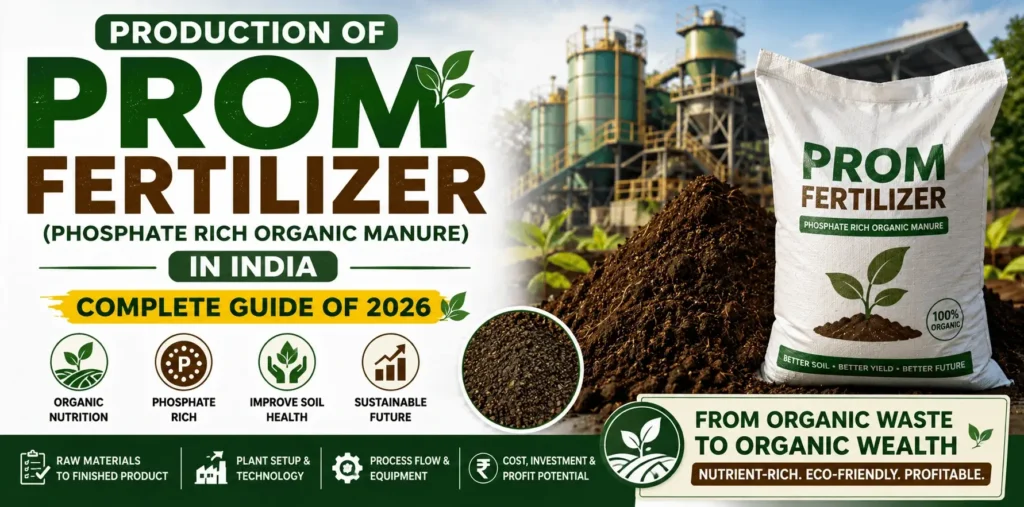
India’s agriculture sector is at a turning point, with increasing awareness about sustainable farming practices and the importance of nutrient-rich fertilizers. Among various organic and biofertilizers, Phosphate Rich Organic Manure (PROM) is emerging as a smart and scalable solution for modern farming needs. As a substitute for conventional phosphate fertilizers like DAP and SSP, PROM is both eco-friendly and cost-effective. The increasing demand for sustainable and efficient PROM fertilizer has opened smart investment opportunities in PROM production—especially at scale. Understanding PROM Fertilizer and Its Role in Agriculture PROM, or Phosphate Rich Organic Manure, is an eco-friendly fertilizer that provides essential nutrients, especially phosphorus, to plants. It is made by enriching organic manure (such as compost, press mud, or farmyard manure) with rock phosphate. This process enhances the bioavailability of phosphorus to plants and significantly improves soil health over time. PROM fertilizer not only helps reduce dependency on chemical fertilizers but also addresses the issue of phosphorus fixation in Indian soils, making it an ideal option for sustainable agriculture. Its use leads to better crop yields, improved soil texture, and a reduced carbon footprint—aligning with the goals of climate-resilient farming. For entrepreneurs and agribusiness investors, entering the PROM fertilizer production industry presents smart investment opportunities because of rising awareness, government support, and the growth of organic and natural farming in India and globally. Step-by-Step Process to Produce PROM Fertilizer at Scale To build a sustainable and scalable PROM fertilizer business, a clear understanding of the production process is essential. Here’s a simplified yet detailed overview: 1. Raw Material Procurement To produce PROM fertilizer, the primary raw materials required are: Organic base material (compost, cow dung, press mud, poultry litter) Rock phosphate (minimum 18% P?O? content) Microbial inoculants (phosphate-solubilizing bacteria) Optional: Additional minerals (neem cake, biochar) and stabilizers Organic matter should be well-decomposed to ensure microbial activity and easy mixing with rock phosphate. Rock phosphate should be finely ground (typically 100 mesh) for better assimilation. 2. Material Mixing and Blending Mixing is a critical stage in PROM fertilizer production. Use a horizontal mixer or ribbon blender to mix the organic base with rock phosphate in a specific ratio (generally 70:30 or 60:40, depending on desired phosphorus levels). Uniform mixing ensures even distribution of nutrients. Microbial inoculants are added during or after mixing to enhance phosphate solubilization. This bio-activation process is what differentiates PROM from conventional phosphate fertilizers. 3. Curing and Maturation After blending, the material is left to cure in windrows or aerated piles for about 30 to 45 days. During this period: Microbial activity solubilizes phosphate Temperature rises due to decomposition Regular turning (every 4–5 days) maintains aeration Moisture is maintained at 40–60% for optimum microbial growth This step is crucial for stabilizing the product and improving nutrient availability. 4. Drying and Sieving Once curing is complete, the PROM fertilizer is dried either under sunlight (for small operations) or using mechanical dryers (for large-scale units). After drying, it is sieved using vibrating screens to achieve a uniform particle size (typically 1–4 mm granules). Uniformity in size is essential for easy application and packaging. It also enhances the marketability of the product. 5. Granulation (Optional) For better handling and commercial appeal, many producers choose to granulate PROM fertilizer. Granulation can be done using a pan granulator or drum granulator. This step adds value to the final product and allows for precise nutrient control. Binders like molasses or bentonite clay are used during granulation to ensure proper shape and strength of the granules. 6. Packaging and Distribution The final PROM fertilizer is packed in HDPE or laminated bags (25kg or 50kg sizes), labeled with nutrient content, production batch, and compliance details. A well-branded product builds credibility and trust among farmers. Distribution strategies include: Direct sale to farmers Collaboration with agri-input dealers Online marketplaces Bulk supply to cooperatives and state departments Key Business Considerations for Scaling PROM Fertilizer Production To tap into smart investment opportunities in PROM fertilizer manufacturing, entrepreneurs must carefully assess key operational and strategic aspects: A. Land and Infrastructure Land requirement: Minimum 1 acre for a medium-scale plant Infrastructure: Shed, mixer units, curing area, storage, drying space Power & water supply: Continuous power and water availability is critical B. Machinery and Equipment Organic shredder and mixer Belt conveyors Curing platforms or windrow turners Sieving machine Granulation unit (optional) Weighing and packaging machines An investment of ?25–50 lakh can set up a mid-level plant with a 3–5 ton/day capacity. Government subsidies under the Fertilizer Control Order (FCO) and MSME schemes reduce the financial burden for new entrants. C. Manpower and Expertise PROM fertilizer production requires both skilled and unskilled labor: Skilled: Chemist or soil scientist, production supervisor Unskilled: 10–15 workers for handling, mixing, turning, and packaging Training in organic farming practices, composting, and microbial handling is essential for quality control. Regulatory Compliance and Licensing PROM fertilizer is regulated under the Fertilizer Control Order (FCO) in India. Before production begins, obtain: FCO certification from the State Agriculture Department BIS standards compliance (if applicable) Pollution Control Board clearance (for large plants) GST registration and MSME Udyam Registration Proper documentation and compliance enhance brand trust and facilitate bulk sales to government schemes and cooperatives. Market Trends and Smart Investment Opportunities With India aiming to double farmers’ income and reduce chemical inputs, the demand for organic and biofertilizers like PROM is rising fast. Here’s why investing in PROM production is a smart investment opportunity: Policy support: Subsidies for organic inputs and compost Market demand: Rise in organic farming, export-oriented agriculture Low competition: Still a developing niche compared to chemical fertilizers Environmental benefit: Carbon credits and sustainable certifications Scalability: Easy to expand with modular equipment and partnerships Investors can also diversify into vermicomposting, liquid biofertilizers, and integrated nutrient management services alongside PROM production for better ROI. Challenges and Risk Mitigation Like any Agri-based industry, PROM fertilizer production faces some challenges: Raw material availability (especially rock phosphate) Awareness among farmers Seasonal demand fluctuations Quality assurance and trust-building To address these risks: Build local supply chains for organic