
पैकेजिंग इंडस्ट्री में बिजनेस — कम निवेश, हर सेक्टर में डिमांड
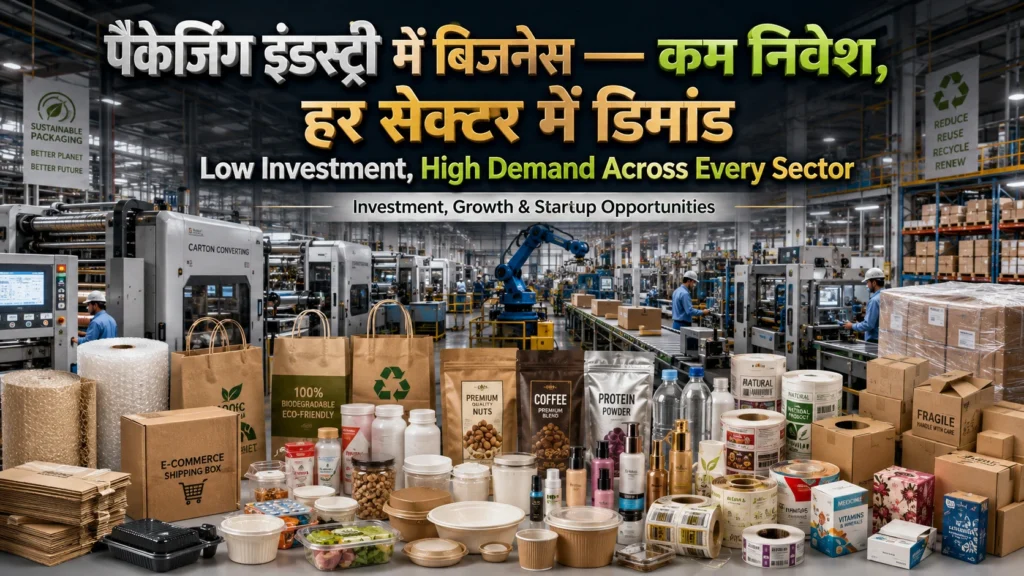
पैकेजिंग इंडस्ट्री में बिजनेस Packaging एक ऐसी industry है जो किसी एक sector पर निर्भर नहीं है। Food, pharma, FMCG, e-commerce, cosmetics, agriculture — हर जगह packaging चाहिए। यही कारण है कि packaging manufacturing को ‘recession-proof’ industry भी कहा जाता है। और अगर आप कम investment में एक ऐसा business idea ढूंढ रहे हैं जिसमें demand कभी कम न हो, तो packaging sector सबसे suitable जवाब है। भारत की पैकेजिंग इंडस्ट्री — मौजूदा स्थिति भारत दुनिया के top packaging markets में से एक है। Indian Institute of Packaging (IIP) के अनुसार, भारत का packaging sector तेज़ी से विस्तार कर रहा है। E-commerce boom, FMCG growth, और food processing expansion — तीनों ने इस growth को fuel किया है। Get Detailed Insights from This Book: Handbook on Modern Packaging Industries पैकेजिंग के मुख्य सेगमेंट 1. Corrugated Box Manufacturing यह packaging industry का सबसे large segment है। E-commerce ने corrugated boxes की demand में massive jump लाया है। Amazon, Flipkart के sellers को हमेशा boxes चाहिए। Investment ₹15-40 लाख से शुरू होता है। Monthly revenue एक medium unit से ₹20-50 लाख तक हो सकती है। 2. Flexible Packaging Laminated pouches, standup pouches, और multilayer films food और pharma packaging का सबसे popular format बन चुका है। यह traditional rigid packaging से lighter, cheaper, और more attractive है। Related Article: Sustainable Packaging Business in India – Future, Investment & Profit Guide 3. Rigid Plastic Containers Bottles, jars, और containers की demand personal care, pharma, और food sectors में बहुत ज़्यादा है। Injection molding machines से ये बनते हैं — एक machine से multiple products बना सकते हैं। 4. Paper और Paperboard Packaging Paper bags, paper cups, paper plates, और folding cartons की demand plastic ban के बाद और बढ़ गई है। यह एक environmentally friendly segment है जिसमें premium market भी है। Get Detailed Project Report (DPR): Biodegradable Packaging & Bio-based Polymers 5. Industrial Packaging Drums, IBCs (Intermediate Bulk Containers), और pallet wraps — ये industrial buyers के लिए हैं। Chemical, paint, और lubricant companies इनके बड़े buyers हैं। सबसे Profitable Packaging Products — Comparison Product Investment (₹) Target Market Profit Margin Scalability Corrugated Boxes 15–40 लाख E-commerce, FMCG 15–25% बहुत ज़्यादा Flexible Pouches 30–80 लाख Food, Pharma 20–35% ज़्यादा Plastic Containers 20–60 लाख Personal care, Food 25–40% ज़्यादा Paper Bags/Cups 5–20 लाख Retail, Cafes 25–40% मध्यम Industrial Drums 25–70 लाख Chemical, Paint 20–30% मध्यम E-Commerce Packaging — सबसे तेज़ Growing Segment E-commerce packaging सबसे fast-growing packaging segment है। Confederation of Indian Industry (CII) के अनुसार, India का e-commerce market तेज़ी से बढ़ रहा है, जिससे packaging demand में proportional growth आ रही है। Customized boxes, protective packaging (bubble wrap, foam inserts), और branded mailer bags की demand हर महीने बढ़ रही है। Packaging Business के लिए ज़रूरी Machines Corrugated Box Unit: Die-cutting machine, Flexo printing machine, Stitching machine Paper Bag Unit: Paper bag making machine, Handle fitting machine Plastic Container: Injection molding machine, Blow molding machine Flexible Pouch: Lamination machine, Pouch making machine सरकारी Support और Schemes Packaging industry को MSME schemes का पूरा benefit मिलता है। Udyam registration के बाद MUDRA loan, CGTMSE credit guarantee, और Credit Linked Capital Subsidy Scheme (CLCSS) — सब available हैं। Export के लिए DPIIT (Department for Promotion of Industry and Internal Trade) की startup और MSME schemes का लाभ उठाएं। Choose the right startup backed by real market demand Packaging Business में सफलता के Tips Quality consistency सबसे ज़रूरी है। एक bad batch पूरा contract खो सकती है। इसलिए raw material quality पर कभी compromise नहीं करें। Delivery reliability भी उतनी ही ज़रूरी है। Packaging buyers को just-in-time delivery चाहिए। इसलिए production planning और inventory management strong होना चाहिए। Customization offer करना competitive advantage देता है। Branded packaging, custom colors, और special printing — इससे आप commodity supplier से value-added supplier बन जाते हैं। अक्सर पूछे जाने वाले सवाल (FAQ) Q1. Packaging business के लिए minimum investment कितना चाहिए? Paper bag manufacturing जैसे simple segment में ₹5-10 लाख से शुरुआत हो सकती है। Corrugated boxes या flexible packaging के लिए ₹20 लाख से ज़्यादा चाहिए। Q2. Packaging में export का scope है? हां, pharmaceutical packaging और specialty packaging में India के export opportunities बड़े हैं। FDA-compliant packaging units को US और European clients मिलते हैं। Q3. क्या घर से packaging business शुरू हो सकता है? बहुत छोटे scale पर — जैसे handmade paper bags या gift packaging — घर से शुरू हो सकता है। लेकिन industrial scale के लिए dedicated space ज़रूरी है। Q4. Packaging में BIS या किसी certification की ज़रूरत है? Pharma packaging के लिए FDA approval ज़रूरी है। Food contact packaging के लिए food-grade material certification चाहिए। General packaging के लिए कोई mandatory certification नहीं है। निष्कर्ष Packaging industry एक ऐसी manufacturing business है जिसमें demand कभी नहीं रुकती। E-commerce, food processing, pharma — ये सभी sectors growing हैं, और सबको packaging चाहिए। कम investment में high demand वाला यह business idea उन उद्यमियों के लिए perfect है जो stable और scalable business चाहते हैं। अधिक जानकारी और Detailed Project Report के लिए niir.org पर जाएं।
Sustainable Packaging Business in India – Future, Investment & Profit Guide
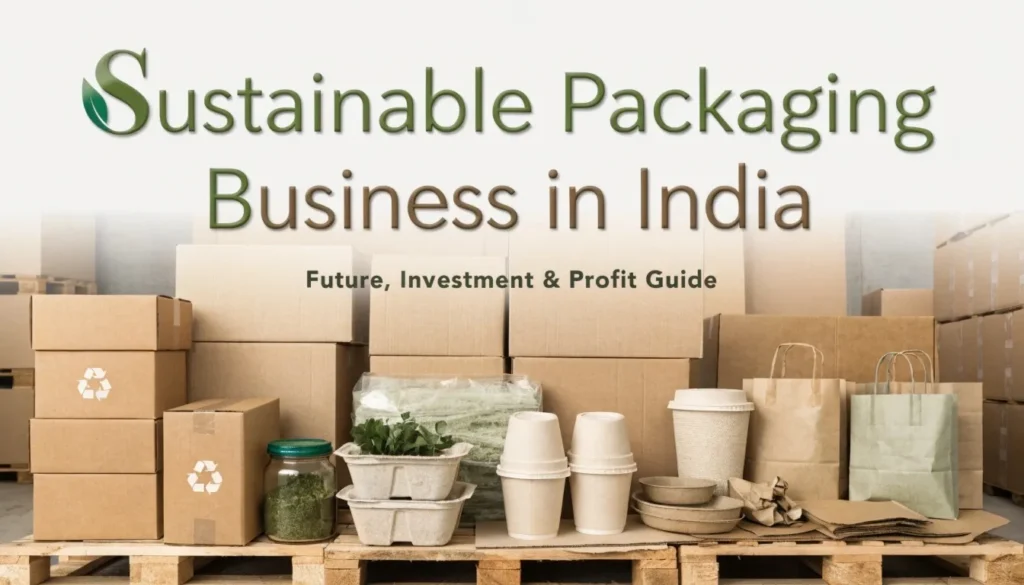
Sustainable Packaging Business in India The packaging industry in India is entering a significant phase of powerful growth due to sustainability, automation and digital technology. What was a once a traditional manufacturing sector now is a modern, innovation-driven industry with strong demand from e-commerce, food processing, pharmaceuticals and export markets. For entrepreneurs looking for profitable manufacturing or service-related businesses, packaging is a source of stable, long-term and scalable growth prospects. In 2026, the industry is being transformed by two big forces. The first is the movement worldwide towards sustainable packaging, with companies replacing plastic with eco-friendly materials. The second category involves automation together with artificial intelligence technologies which create operational efficiencies that enable businesses to boost their productivity while reducing their operational expenses. Entrepreneurs who understand emerging trends and base their business development on these trends will attain superior market positioning. Read the Complete Book Here: Dairy Industry & Milk Processing Project Profiles Handbook Why Packaging Industry is Growing Fast in India The packaging industry in India has experienced continuous growth throughout the last ten years and shows strong expansion potential in upcoming years. Online shopping has created a greater need for shipping materials, which exists alongside new requirements for safe packaging that emerged from the pharmaceutical and food industries. In addition, India is increasingly becoming a source of packaging product supply for global companies because of competitive pricing and increasing manufacturing quality. Several important factors are contributing to this growth: Rapid growth of e-commerce and logistics companies Irrational demand for packaged Food & Consumer goods Single-use plastics are regulated by the Government. Increase in export manufacturing Use of automated packaging systems Packaging requirements demand solutions that provide faster and safer operations plus dependable performance as businesses expand their activities. The modern packaging plants now require automation together with smart technology solutions because of their operational requirements.(Sustainable Packaging Business in India) The Emergence of Sustainable Packaging in Today’s Business Businesses need to implement sustainable packaging solutions because their use has become essential. Environmental regulations that governments across the world implement and the growing public awareness about the environmental effects of plastic waste have created two major challenges for businesses. Companies that do not adopt eco-friendly packaging face the risk of losing customers and facing legal penalties. India holds a strong competitive position in this industry because it possesses both essential raw materials and cost-effective manufacturing facilities. Many startups are entering the market for biodegradable and recyclable packaging product manufacture, which are as per international standards. Some of the fastest growing sustainable packaging products are: Biodegradable plastic films Compostable carry bags Paper based packaging materials Recycled cardboard boxes Eco-friendly food containers These products are widely used by industries such as retail, food delivery, pharmaceuticals and e-commerce. As regulations on sustainability are becoming more stringent, the demand for these materials will continue to grow. Get Detailed Project Report (DPR): Packaging, Holograms, Printing, Publishing, Screen Printing and DTP Projects How Automation and AI Is Changing the Packaging Industry The packaging industry now considers automation as its primary technological advancement. Manual labor dominated packaging operations in previous times, which resulted in two major drawbacks: workers performed their tasks at a slower pace, and their work quality fluctuated. Modern automated machines together with robotic systems can complete tasks that require repetition with high accuracy and operational effectiveness. Artificial intelligence enhances packaging process efficiency through its vital technological advancements. AI-driven systems perform three functions which include conducting data analysis and monitoring machine operations and detecting faults during active system usage. The system operates without interruptions because downtime reductions enable continuous production. Modern packaging factories now use automation systems to accomplish various operational tasks: Filling and sealing products. Labelling and printing Quality inspection Sorting and packaging Palletizing and dispatch These technologies help businesses to save money on labor costs, increase productivity, and ensure consistent product quality. Find high-return business ideas based on your budget & ROI Profit Packaging Business Startup Opportunities There are numerous opportunities in the packaging industry in terms of business but some segments of the industry present better potential for growth and profitability than others. Choosing the right business model depends on factors such as investment capacity, target market and technical expertise. Biodegradable packaging production represents one of the most promising sustainable packaging options. These products are in great demand as they aid companies in complying with environmental regulations. Businesses that produce environmentally friendly packaging can also tap into export markets where sustainability standards are strictly enforced. The corrugated box production process presents another valuable business opportunity. Corrugated boxes provide essential shipping and storage solutions which eCommerce businesses need because their demand keeps increasing. Automated production lines enable businesses to produce large quantities of product in a short amount of time, and still maintain high quality standards. The flexible pouch manufacturing industry is experiencing continuous improvement. These pouches provide lightweight and durable and cost-effective packaging solutions that suit diverse product applications. Flexible packaging serves as the preferred choice for many food and consumer goods companies because it reduces their transportation expenses while extending product freshness.(Sustainable Packaging Business in India) Some of the most lucrative packaging business ideas are: Biodegradable packaging manufacturing Corrugated box production Manufacturing of Compostable Carry Bags Flexible pouch manufacturing Services performed in respect of contract packaging: Paper cushioning packaging business Smart packaging solutions AI-based packaging design services Each of these businesses has very good market demand and long-term growth prospects. Export Opportunities in Packaging Industry There is considerable export potential of India in the packaging sector. Many international companies are seeking good suppliers who can provide quality packaging at low prices. Indian manufacturers who obtain proper certifications and quality standards can access international markets to increase their profit margins. Packaging businesses that focus on export operations usually experience advantages from: Larger order volumes Long-term contracts Higher profit margins Stable demand International Brand Partnerships India exports packaging products to European countries and North American states and Middle Eastern nations. Sustainable packaging solutions will experience rising demand because of increasing environmental regulation
Handbook on Printing Technology (Offset, Flexo, Gravure, Screen, Digital, 3D Printing with Book Binding and CTP) 5th Edition
Handbook on Printing Technology (Offset, Flexo, Gravure, Screen, Digital, 3D Printing with Book Binding and CTP) 5th Edition Refers to the various methods and techniques used to produce printed materials such as books, magazines, newspapers, and other publications. These printing techniques use different methods to transfer ink or toner onto the printing substrate. Offset printing is one of the most commonly used printing technologies. It transfers an inked image from a plate to a rubber blanket and then onto the printing substrate. In contrast, flexo printing uses flexible relief plates to transfer ink directly onto the substrate. Gravure printing uses an engraved cylinder with tiny cells that hold ink and transfer it onto the substrate. The cylinder rotates on a press, transferring the ink onto the substrate. Screen printing is a method that uses a stencil to apply ink onto the substrate through a mesh screen. Digital printing uses digital files to transfer images onto the substrate without the use of plates or cylinders. It provides quick and cost-effective printing solutions and is ideal for small-batch printing. 3D printing is a technology that creates three-dimensional objects using digital files. Bookbinding involves assembling the printed sheets of a book and binding them together. CTP (Computer to Plate) is a technology that allows the direct transfer of digital files onto printing plates. It eliminates the need for film-based processes and reduces the time and costs involved in plate-making. Printing is a process for reproducing text and images, typically with ink on paper using a printing press. It is often carried out as a large-scale industrial process and is an essential part of publishing and transaction printing. Modern technology is radically changing the way publications are printed, inventoried, and distributed. The printing technology market is growing due to technological proliferation along with increasing applications of commercial printing across end users. In India, the market for printing technology is at its nascent stage; however, it offers huge growth opportunities in the coming years. The major factors boosting the growth of the offset printing press market are the growth of the packaging industry across the globe, increasing demand in graphic applications, the wide range of applications in various industries, and industrialization. The 3D printing market is estimated to garner $8.6 billion in coming years. The global digital printing packaging market is expected to exceed more than US$ 40.02 billion by 2026 at a CAGR of 13.9%. This Handbook on Printing Technology (5th Edition) focuses on the printing industry. It provides detailed information on printing methods and applications, highlighting the materials required and the various processes involved. The book offers readers a deeper understanding of how printing technologies are revolutionising the industry. The major content of the book are principles of contact (impression), principles of noncontact printing, coated grades and commercial printing, tests for gravure printing, tests for letterpress printing, tests for offset printing, screen printing, application of screen printing, offset lithography, planography, materials, tools and equipment’s, sheetfed offset machines, web offset machines, colour and its reproduction, quality control in printing, flexography, rotogravure, creative frees printer, shaftless spearheads expansion, digital printing, 3D printing, 3D printing machinery, book binding, computer-to-plate (ctp) and photographs of machinery with suppliers contact details. A total guide to manufacturing and entrepreneurial success in one of today’s most prominent industries. This book is a one-stop guide to one of the fastest-growing sectors of the printing industry, where opportunities abound for manufacturers, retailers, and entrepreneurs. This is the only complete handbook on the commercial production of printing products. It serves up a feast of how-to information, from concept to purchasing equipment. Contact Us
How to Initiate Cellulosic Cellophane Film Business?
As the global packaging industry continues to seek sustainable, biodegradable, and non-toxic alternatives to plastic, starting a Cellulosic Cellophane Film Business has become a highly promising opportunity. Made from natural cellulose derived from wood pulp or cotton linters, cellophane is a biodegradable and compostable film known for its transparency, breathability, and ability to preserve freshness in food packaging. This eco-friendly material has made a strong comeback in markets demanding green alternatives to synthetic packaging. With increasing global environmental regulations and the consumer shift toward sustainability, launching a cellulosic cellophane film business is not only viable but also visionary. The cellulosic cellophane film business allows entrepreneurs to tap into a niche that is both profitable and environmentally responsible. This product is extensively used in packaging for bakery goods, candies, pharmaceuticals, and personal care products. Let’s explore the technical, market, and investment aspects of this innovative green business idea. Click here to send your queries/Contact Us Overview of Cellulosic Cellophane Film Market The cellulosic cellophane film market has been resurging with global emphasis on sustainability. This film decomposes completely within 30–60 days in industrial composting systems and is safe for incineration. With zero microplastic pollution, it is being adopted by organic and eco-label food brands, cosmetic packaging, and artisanal producers who value visual appeal and green credentials. According to recent market reports, the global biodegradable films market is projected to exceed USD 9.5 billion by 2030, and cellulosic films are expected to maintain a strong share due to their aesthetic, compostable, and renewable properties. Visit this Page for More Information: Start a Business in Plastics and Polymers Industry Applications of Cellulosic Cellophane Film Food Packaging – Especially for baked goods, chocolates, dry fruits, tea, and cheese. Pharmaceutical Packaging – Transparent wrapping for blister packs and supplements. Cosmetics and Personal Care – Used in transparent pouches and outer product wrappers. Gift and Decorative Wrap – Popular in gift items, flowers, and luxury product wrapping. Industrial Uses – Anti-static, heat-sealable films for electronics or sensitive components. Its superior oxygen and aroma barrier properties, while allowing moisture permeability, make it ideal for products that need freshness and aroma retention. Related Business Plan: Packaging Industry How to Start a Cellulosic Cellophane Film Business 1. Business Plan and Feasibility Study Begin with a detailed market analysis and feasibility report. Consider the following: Target sectors: food, pharma, retail Competitor analysis: local and international cellophane manufacturers Sourcing of raw materials (wood pulp, cotton linters) Compliance with environmental laws and packaging standards 2. Location and Infrastructure A medium-scale production unit requires: 10,000 to 15,000 sq. ft. of space for production, storage, and utilities Proximity to pulp suppliers and transport hubs 3. Machinery and Technology Cellulose pulp preparation unit Film casting machine Coating units (for moisture-proofing or printability) Drying tunnels Slitting, cutting, and packaging machines Automation and precision in film thickness and surface treatment are crucial for quality. 4. Raw Materials Refined cellulose pulp Glycerin (as softening agent) Sulfuric acid and sodium hydroxide (for processing) Coating agents (PVA, nitrocellulose if needed) Read Similar Articles: PACKAGING AND PRINTING INDUSTRY Investment and Setup Cost Component Estimated Cost (INR) Land & Infrastructure ?1.5 – ?2 crore Machinery & Equipment ?3 – ?5 crore Working Capital ?1 – ?2 crore Certifications & Licensing ?10 – ?15 lakh Total Investment: ?5.5 crore to ?9 crore (USD $650,000 to $1.1 million approx.) Certifications and Compliance To operate smoothly and export globally, acquire: ISO 9001 – Quality management ISO 14001 – Environmental management FDA & FSSAI – For food-grade packaging Compostable Certification – From relevant national agencies MSME Udyam Registration – To avail subsidies and schemes Related Feasibility Study Reports: Packaging Industry, Beverage Can Profitability and Revenue Model Production Cost per Kg: ?120–?160 depending on coating Selling Price per Kg: ?200–?350 depending on customization Profit Margin: 30%–50% Breakeven Period: Within 2 to 3 years Selling to premium eco-conscious brands allows premium pricing, boosting overall margins. Marketing and Sales Strategy B2B Partnerships: Approach organic food brands, pharma companies, and luxury product manufacturers. Trade Expos: Exhibit at packaging and sustainability expos. Online Presence: Showcase samples and capabilities on a professional website and B2B portals. Certifications & Eco-Labels: Highlight compostable credentials for market differentiation. Export Opportunities: Countries like Germany, Japan, and Canada offer strong markets for biodegradable films. Sustainability & Future Outlook Governments worldwide are banning single-use plastics. Brands are seeking alternatives that are: Biodegradable Compostable Transparent and printable Cellophane film fits perfectly into this trend. Unlike PLA and other bioplastics, cellophane decomposes without leaving microplastics, making it a favorite among green consumers. India’s EPR (Extended Producer Responsibility) norms and ban on non-compostable plastics will further increase demand for biodegradable films. With a shift in FMCG and retail packaging, the future of cellulosic cellophane film business is both stable and scalable. Conclusion Launching a cellulosic cellophane film business combines the advantages of sustainability, innovation, and high demand. With investment in the right technology, adherence to eco-certifications, and market-focused branding, this business promises long-term profitability and environmental contribution. As packaging norms evolve and consumers prioritize green alternatives, your venture in this biodegradable film segment can become a market leader in sustainable packaging. Read our Books Here: Packaging Industry Niir Project Consultancy Services (NPCS) prepares multiple project reports on different segment one of the project report by NPCS is Cellulosic Cellophane Film – Manufacturing Plant, Detailed Project Report, Profile, Business Plan, Industry Trends, Market Research, Survey, Machinery, Raw Materials, Feasibility Study, and Investment Opportunities. The detailed project report by NPCS covers all the important aspects of a business from analyzing the market, confirming availability of various necessities such as plant & machinery, raw materials to forecasting the financial requirements. The project reports are not only used in India but worldwide by engineers, project consultants & industrial consultancy firms. You can get the project reports from the official site of NPCS. Click here to send your queries/Contact Us Reasons for Buying NIIR Report: Our research report helps you get a detailed picture of the industry by providing an overview of the industry
Thriving Business of Manufacturing Alu-Alu Blister Packaging for Medicines
In the highly regulated and quality-sensitive pharmaceutical industry, packaging plays a vital role in preserving the potency, integrity, and shelf life of medicines. Among various types of pharmaceutical packaging, Alu-Alu blister packaging for medicines has emerged as the gold standard, especially for moisture-sensitive and high-value drugs. This packaging solution not only ensures extended product protection but also complies with stringent international regulatory norms. Due to the rising demand for durable, contamination-free packaging, the business of manufacturing Alu-Alu blister packaging for medicines is thriving and offers remarkable growth opportunities for MSMEs and large-scale investors alike. Alu-Alu blister packs are formed using aluminum-based cold-forming technology that provides an impermeable barrier to light, oxygen, and moisture. As India’s pharmaceutical exports grow year after year, the demand for high-grade packaging materials like Alu-Alu foil is also expanding rapidly, making this a highly profitable and essential B2B venture. Visit this Page for More Information: Start a Business in Packaging Industry Why Alu-Alu Blister Packaging for Medicines is in High Demand Alu-Alu packaging is preferred for: Heat- and moisture-sensitive medicines High-end tablets and capsules Export-quality pharmaceutical products Long shelf-life drug formulations Due to its multi-layer barrier properties (aluminum + nylon + PVC), Alu-Alu blister packaging for medicines provides the highest protection level in the pharma sector, ensuring that drugs remain effective till the expiry date. Related Business Plan: Packaging Industry 1. What is Alu-Alu Blister Packaging? Alu-Alu blister packaging (also known as cold-form foil packaging) consists of: Aluminum Foil (Alu) – Provides full light and gas barrier Nylon Film – Adds flexibility and puncture resistance PVC or PVdC Film – Provides formability It involves a cold-forming process where the foil is shaped into cavities without heat and sealed with another aluminum foil to create an air-tight blister pack. Common Products: Antibiotics, cardiovascular drugs, hormone tablets, nutraceuticals, and export pharmaceuticals. Read our Books Here: The Complete Technology Book on Aluminium 2. Growing Market Opportunity India’s Pharma Packaging Market is projected to reach $3.2 billion by 2026, with blister packaging holding the lion’s share Exports: Over 200 countries import Indian medicines, requiring international-grade packaging like Alu-Alu Regulatory Push: Alu-Alu is often a compliance requirement under US FDA, EMA, and WHO-GMP standards for sensitive formulations The demand for Alu-Alu blister packaging for medicines is expected to grow at a CAGR of 6.8% globally till 2030. Read Similar Articles: How to Start Packaging Business 3. How to Start Alu-Alu Blister Packaging Manufacturing Business To begin this venture, you’ll need: Land & Infrastructure: Covered space: 5000–8000 sq. ft. Controlled environment for GMP compliance Separate areas for raw material, processing, and storage Key Machinery: Alu-Alu Blister Packing Machine Cold Forming Station Roller Sealing Station PVC/Alu Feeding Unit Dehumidifier and Dust Control Systems Die Set and Punch Tools Automatic Cutting and Stamping Machine Cost of Machinery: ?50 lakh – ?2 crore based on speed and automation level Click here to send your queries/Contact Us 4. Raw Materials Used Aluminum Foil (45–60 microns) Nylon Film PVC/PVdC Film Heat-Seal Lacquer Printing Ink (for brand labeling) Desiccants (optional for packing) All raw materials must be of pharmaceutical-grade quality as per Pharmacopeia standards. Related Feasibility Study Reports: Aluminium Foil (food Packaging And Pharmaceuticals Foils) 5. Manufacturing Process Cold Forming: Laminated film is fed and formed into cavity blisters using cold-forming dies Filling: Tablets or capsules are automatically dropped into cavities Sealing: Top aluminum foil is heat-sealed over the cavity Printing: Batch number, expiry, and brand details are printed Cutting & Packing: Packs are cut into standard sizes and packed in cartons 6. Licensing & Regulatory Requirements Udyam/MSME Registration Factory License GMP Certification FSSAI License (if for nutraceuticals) Pollution Control Board NOC BIS or ISO 15378:2017 Certification (optional but recommended) 7. Estimated Investment & ROI Cost Component Estimated Range Land & Setup ?50 lakh – ?1 crore Machinery ?50 lakh – ?2 crore Raw Material (initial stock) ?20 lakh – ?50 lakh Utilities, Staff, Licensing ?15 lakh – ?30 lakh Total Startup Cost: ?1.5 crore – ?3.5 croreProfit Margins: 15%–25%Monthly Revenue Potential (for 10 lakh blister capacity): ?50 lakh – ?1 crore 8. Clients & Marketing Strategy Pharmaceutical Companies Third-Party Drug Manufacturers Exporters and Contract Packers Hospitals and Government Tender Vendors B2B Marketing Channels: Pharma exhibitions (CPHI, IPHEX) IndiaMART, TradeIndia, ExportHub LinkedIn B2B Campaigns Pharmaceutical consultants and sourcing agents 9. Challenges in the Industry Challenge Solution Strict quality norms Adopt ISO and GMP systems Price pressure from large pharma buyers Offer value-added services (custom dies, printing) Limited access to pharma companies Partner with PCD franchise distributors Fluctuating raw material costs Bulk procurement contracts or long-term supplier tie-ups 10. Advantages of Alu-Alu Packaging Business High demand and recurring ordersLow product rejection if GMP is followedLucrative B2B marginsScope for automation and scaleExport opportunity with compliant setup Final Thoughts The business of Alu-Alu blister packaging for medicines is one of the most promising industrial ventures aligned with India’s booming pharmaceutical exports and healthcare growth. With the right setup, compliance, and connections, this venture can deliver sustainable profits and global relevance. It’s a capital-intensive business but comes with high credibility, brand partnerships, and long-term growth. Click here to send your queries/Contact Us Alu-Alu Blister Packaging for Medicines Manufacturing Industry Is one of the project reports by Niir Project Consultancy Services (NPCS). The project report covers all the aspects of business, from analyzing the market, confirming availability of various necessities such as plant & machinery, raw materials to forecasting the financial requirements. The project report by NPCS has benefited engineers, project consultants & industrial consultancy firms not only in India but worldwide. With the project reports on various business plans, NPCS also publishes technology, technical, reference, self-employment and startup books, directory, business and industry database, and a lot more which you can check on the official website. Reasons for Buying NIIR Report: Our research report helps you get a detailed picture of the industry by providing an overview of the industry along with the market structure and classification. Our report provides market analysis covering major growth driving factors for the
Paper and Packaging Industry in India: Growth and Investment Opportunities
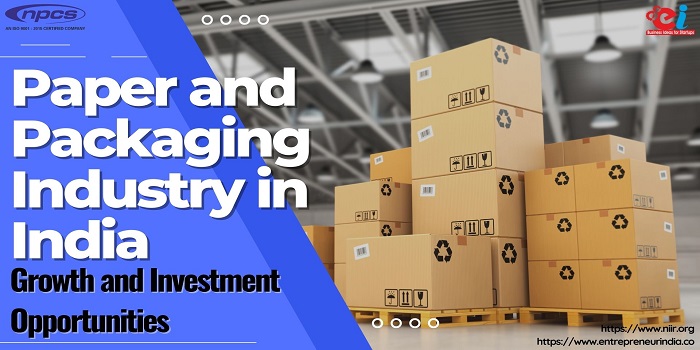
The Packaging Industry in India is rapidly evolving and is now one of the fastest-growing sectors in the country. Driven by increasing consumerism, growth in e-commerce, rising exports, and the need for longer product shelf life, packaging is no longer just a protective layer — it has become a vital marketing tool and a key driver of innovation. With an expected valuation of over USD 204 billion by 2025, the Indian packaging industry is poised for exponential growth, offering massive opportunities for businesses, startups, and investors across materials, machinery, and design services. Visit this Page for More Information: Start a Business in Packaging Industry Overview of the Packaging Industry in India India’s packaging industry has transformed significantly over the last two decades, moving from traditional jute and cloth bags to advanced materials like plastics, paper, multilayer films, and sustainable packaging. It serves diverse sectors such as food & beverages, pharmaceuticals, FMCG, agriculture, e-commerce, and electronics. Key Statistics: Currently valued at USD 75–80 billion (2024) Growing at a CAGR of 11%–13% India is the 5th largest packaging consumer globally Over 25,000 packaging companies operate across the country Read Similar Articles: Packaging and Printing Industry 1. Types of Packaging Solutions in India a. Flexible Packaging Materials: Plastic films, aluminum foil, paper Uses: Snacks, dairy, cosmetics, frozen food Advantage: Lightweight, cost-effective, customizable b. Rigid Packaging Materials: Glass, metal, hard plastics Uses: Beverages, sauces, medicine bottles, chemicals Advantage: Durable and ideal for product safety c. Paper & Board Packaging Used for boxes, cartons, cups, and trays Gaining popularity due to eco-friendly demand d. Biodegradable & Sustainable Packaging Materials: Sugarcane bagasse, cornstarch, bamboo High growth segment as brands aim to reduce plastic usage Read our Books Here: Packaging Industry 2. Major Sectors Driving Demand a. Food and Beverage The largest consumer of packaging — accounting for over 55% of total demand. Innovations like resealable pouches, vacuum packs, and tamper-evident seals are popular. b. Pharmaceuticals Stringent regulatory requirements drive demand for safe, tamper-proof packaging. India’s role as a pharma export hub adds to this. c. E-commerce and Retail Online shopping has dramatically increased the need for corrugated boxes, bubble wraps, polybags, and smart labels. d. Personal Care and Cosmetics Aesthetic and functional packaging plays a critical role in brand positioning, especially in a competitive, high-growth market. 3. Trends Transforming the Indian Packaging Sector a. Sustainability With rising environmental awareness, brands are adopting recyclable, compostable, and biodegradable packaging. Paper-based straws, plant-based plastics, and reusable containers are trending. b. Smart Packaging Incorporation of QR codes, RFID tags, and NFC-enabled packaging that tracks products, provides authentication, and enables customer interaction. c. Minimalist and Eco-Aesthetic Design Less ink, fewer layers, and simplified branding designs appeal to eco-conscious consumers. d. Personalization and Customization AI and digital printing allow for short-run, high-impact packaging tailored to customer needs (especially in gifting, luxury, and D2C brands). 4. Government Support and Regulations The Indian government has taken several initiatives to regulate and boost the packaging industry: a. Plastic Waste Management Rules Focus on Extended Producer Responsibility (EPR) and gradual phasing out of single-use plastics. b. BIS Certification and FSSAI Packaging Norms Mandatory compliance for food and pharma companies, ensuring quality and hygiene standards. c. PM Gati Shakti & Logistics Boost Enhancing packaging infrastructure via logistics parks, cold chains, and multimodal connectivity. d. Startup India and MSME Incentives Encouragement for eco-packaging startups, custom machinery producers, and rural packaging units. 5. Packaging Machinery and Automation India imports a large portion of its packaging machines from Germany, Italy, and China. However, domestic machine manufacturing is growing, driven by demand for: Automatic filling and sealing machines Shrink wrapping and strapping systems Blister packaging for pharma Robotic palletizers and conveyors Adoption of Industry 4.0, AI, and IoT in packaging lines is increasing efficiency and reducing waste. Download PDF: Paper and Packaging Industry in India: Growth and Investment Opportunities 6. Key Players in India’s Packaging Industry Major Companies: UFlex Ltd. – Flexible packaging leader Essel Propack – Tube packaging for pharma and cosmetics TCPL Packaging – Folding cartons and printed blanks Huhtamaki India – Rigid and flexible packaging Piramal Glass – Leading glass packaging exporter Emerging Startups: Bizongo – Digital packaging solutions platform Ecoware – Compostable tableware and containers Recykal – Smart waste management and recycling 7. Challenges in the Indian Packaging Sector While growth is promising, the industry also faces hurdles: Waste management and environmental compliance Rising raw material costs (paper, plastic resins, aluminum) Fragmented industry with a large number of unorganized players Lack of skilled labor in automation and smart packaging Dependency on imports for high-tech machinery 8. Opportunities for Entrepreneurs and MSMEs The packaging industry is ripe for entry across value chains: Custom box manufacturing for e-commerce Eco-packaging from agricultural waste (bagasse, bamboo) Digital design services for packaging and branding Label printing and thermal barcode services Recycled plastic pellet manufacturing Corrugated box and pouch packaging for MSMEs and D2C brands With low-entry barriers and a wide range of applications, packaging startups can tap into multiple B2B and B2C revenue streams. Conclusion The Packaging Industry in India is a booming sector driven by demand from every possible industry — from FMCG to pharma and from retail to exports. With sustainability at the forefront, along with rapid technological adoption and government support, the industry is well-positioned for long-term expansion. Whether you are a manufacturer, startup, designer, or investor — packaging presents a profitable, sustainable, and innovation-rich opportunity in the Indian market. Those who understand the shifts in consumer behavior, material science, and smart logistics will be the leaders of tomorrow. Related Feasibility Study Reports: Packaging Industry Government Ministry/ Department Department for Promotion of Industry and Internal Trade India Institute of Packaging Ministry of Commerce Industry Scenario India Paper Manufacturer Association (IPMA) Packaging Industry Association of India (PIAI) Indian Flexible Packaging & Folding Carton Manufacturers Association (IFCA) All India Plastic Manufacturers Association (AIPMA) Start a Business in Asia Start a Business in Potential Countries for Doing Business Best Industry for Doing Business Business Ideas with Low, Medium & High Investment
Startup Manufacturing Business of PVC Edge Banding Tape
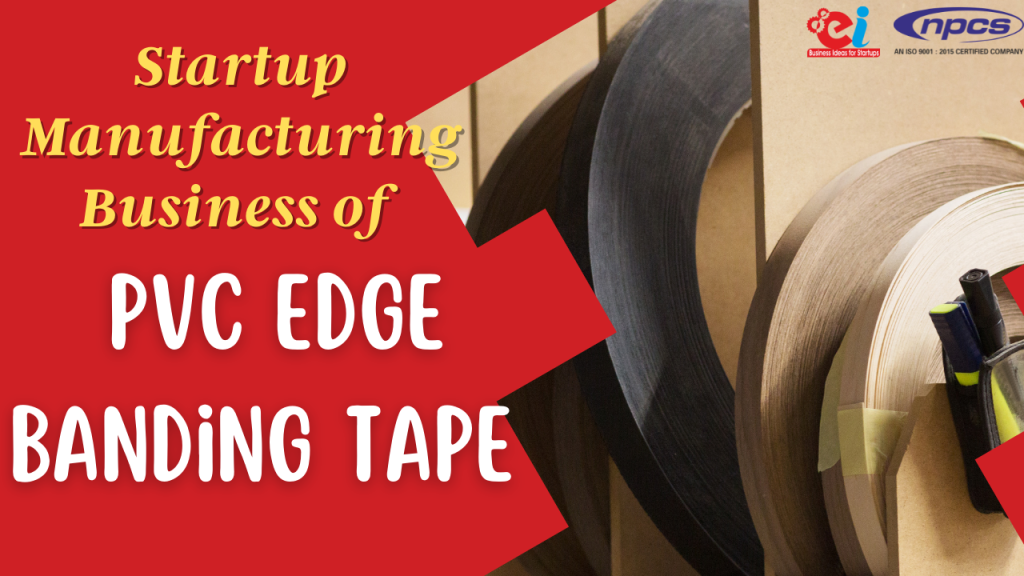
Starting a PVC Edge Banding Tape business can be a highly profitable and sustainable venture in today’s fast-evolving interior design and modular furniture industry. As the demand for aesthetic yet durable furniture products continues to grow, PVC edge banding becomes indispensable for furniture manufacturers. In this in-depth guide, we explore every facet of setting up a successful PVC edge banding tape business, from market analysis to manufacturing and marketing strategies. Understanding the PVC Edge Banding Tape Industry What is PVC Edge Banding Tape and Why It Matters PVC edge banding tape is a thermoplastic strip applied to the raw edges of furniture made from MDF, plywood, or particle board. It acts as both a functional and decorative layer, protecting the furniture from moisture, dust, and chipping while enhancing its appearance. Available in various textures such as wood grain, high gloss, and matte, PVC edge banding is used extensively in the production of office furniture, modular kitchens, wardrobes, and shop interiors. The tape is generally made from polyvinyl chloride (PVC) and is processed with additives like plasticizers, lubricants, stabilizers, and colorants to achieve desired flexibility, adhesion, and finish. Why the Market for PVC Edge Banding Tape is Growing Rapidly The PVC edge banding industry has witnessed exponential growth due to: Surge in modular furniture adoption Expanding urban population and real estate sector Increased consumer spending on home and office decor Export demand from countries in the Middle East, Africa, and Southeast Asia According to industry estimates, the global edge banding materials market is projected to grow at a CAGR of over 7% in the next five years, presenting vast opportunities for new players entering the market. Steps to Start a Successful PVC Edge Banding Tape Business Step 1: Market Research and Competitor Analysis Start by conducting detailed market research on your target regions, product demand, pricing models, and competitors. Evaluate customer preferences such as the thickness (0.45mm to 2mm), width (12mm to 54mm), finishes, and colors. Survey existing PVC edge banding tape sellers to understand supply gaps and value-added services you can offer, such as custom shades or faster deliveries. Step 2: Prepare a Comprehensive Business Plan A strong business plan will act as a roadmap for success. Your business plan should include: Market insights and goals Budget breakdown (machinery, labor, materials) Product range Funding sources SWOT analysis Break-even analysis Risk management plan This document is also essential for presenting to banks and investors when applying for loans or venture capital. Step 3: Legal Compliance and Business Registration To operate legally, register your business under an appropriate entity such as Proprietorship, LLP, or Private Limited Company. Obtain the following licenses: GST Registration MSME/Udyam Registration Pollution Control Certification Factory License (if manufacturing) Import Export Code (IEC) if planning to export These licenses are crucial to avoid legal hassles and to apply for government subsidies. Step 4: Choose Your Business Model – Trading or Manufacturing You can either trade or manufacture PVC edge banding tape: Trading: You source tape from manufacturers and supply to furniture makers or distributors. Lower investment, faster ROI. Manufacturing: You produce edge banding from raw materials. Higher profit margin, brand control, scalable. Many entrepreneurs begin with trading and transition into manufacturing once they understand the market and have built a client base. Step 5: Set Up Your Manufacturing Plant If you choose manufacturing, setting up a well-planned production facility is vital. Essential machinery includes: PVC Extruder Machine: For melting and shaping the tape Printing Machine: For applying wood grain and textured finishes Calibrating Machine: To maintain exact thickness Cooling Line: Ensures consistency Slitting and Cutting Machines: For precision finishing Packing Machine: To roll and seal the product Install all equipment following industrial safety standards. Maintain proper air ventilation, waste disposal, and fire safety equipment. Step 6: Source High-Quality Raw Materials Key materials required: PVC Resin (Base material) Plasticizers (Improve flexibility) Heat stabilizers (Increase thermal stability) Color masterbatches (Add color) Lubricants (Enhance processing) Printing inks (For textured patterns) Establish contracts with multiple reliable suppliers to ensure consistent production. Step 7: Hire and Train Your Workforce To run your unit efficiently, hire: Plant Manager Machine Operators Quality Inspectors Warehouse & Logistics Staff Sales and Admin Staff Train your team on safety protocols, machine handling, and quality assurance. Efficient Production Process for Quality Edge Banding Maintaining High Standards of Quality Control Quality control is crucial for market reputation. Key parameters to monitor: Tape thickness uniformity Accurate color matching Bonding strength with substrate Surface smoothness Roll length and weight Regular inspections and sample testing help reduce defects and maintain consistency. Packaging and Logistics Neatly packaged rolls ensure product safety during transit. Use waterproof, tear-resistant materials and print your brand logo and product details on the labels. Offer customization in roll lengths for larger orders. Establish distribution points in major cities to reduce delivery times. Marketing and Scaling Your PVC Edge Banding Tape Business Develop a Strong Distribution Network Approach: Furniture factories Interior designers Carpenters and contractors Modular kitchen manufacturers Hardware and plywood shops Offer volume-based pricing, free samples, and credit periods to gain trust. Boost Your Online Presence Create a professional website showcasing your PVC edge banding tape range with HD product images, downloadable catalogs, and client testimonials. Optimize for SEO using relevant keywords such as: PVC edge banding tape manufacturer PVC edge banding tape suppliers in India Edge banding for modular furniture Leverage social media platforms like LinkedIn, Instagram, and Facebook. List your products on B2B platforms like IndiaMART, TradeIndia, and Alibaba for global exposure. Participate in Industry Exhibitions Trade fairs such as: DelhiWood IndiaWood Acetech Interzum (Germany) offer excellent opportunities to network, find bulk buyers, and stay updated on the latest trends in PVC edge banding tape technology. Financial Planning and Profitability Cost Breakdown and ROI Initial Investment: ?30–?50 lakhs (for manufacturing) Machinery: ?20–?30 lakhs Raw materials: ?5–?10 lakhs (monthly) Labor & utilities: ?1–?2 lakhs/month Break-even: 12–18 months (average) With strategic planning, manufacturers can expect profit margins of 20–30%, while traders may earn 10–15% based on volumes and market penetration.
Rigid PVC Film Manufacturing Business
The Rigid PVC Film Manufacturing Business has emerged as a cornerstone in the global plastics and packaging sector due to its extensive applications, durability, and cost-effectiveness. With growing demand across pharmaceuticals, food packaging, printing, stationery, and construction, entrepreneurs are seizing the opportunity to invest in this high-potential manufacturing segment. The consistent need for rigid films that ensure protection, transparency, and strength makes this business not just relevant but increasingly profitable. Why the Rigid PVC Film Market is Growing Rapidly Rigid PVC films offer an unbeatable combination of mechanical strength, chemical resistance, and cost-efficiency. They are ideal for thermoforming applications and widely used in blister packaging, credit cards, ID cards, graphic arts, labels, and other industrial products. With increasing demand for safe packaging in pharmaceuticals and food-grade materials, the Rigid PVC Film Manufacturing Business is poised for rapid expansion. As the global economy leans towards industrial-scale production and sustainable materials, rigid PVC films provide a balance of recyclability and reliability. The ability to customize these films with different thicknesses, colors, and finishes adds to their industrial attractiveness. Setting Up a Rigid PVC Film Manufacturing Unit To successfully establish a Rigid PVC Film Manufacturing Business, one needs to carefully plan around equipment, technology, compliance, and raw materials. The production involves: Mixing and extrusion of PVC compounds Calendering or casting for flat film formation Surface finishing, trimming, and winding Packaging and dispatch The main raw materials include PVC resin, plasticizers (for flexible grades), stabilizers, lubricants, and pigments. Choosing high-grade inputs is vital for producing films that meet ISO and FDA standards, especially in food or pharma applications. Initial setup costs range between $200,000 to $500,000, depending on capacity and automation levels. This includes calendering machines, cooling systems, rolling stations, extrusion lines, and quality control labs. Additionally, compliance with local environmental regulations and certifications like ISO 9001 or GMP may be necessary. Applications Driving the Rigid PVC Film Manufacturing Business The diversity of applications is what makes the Rigid PVC Film Manufacturing Business so attractive. Major uses include: Pharmaceutical packaging: Blister packs, strip packs Food packaging: Vacuum-formed trays, clamshell containers Graphic arts: Overlay films, laminates, printing bases Construction: False ceilings, wall panels Consumer goods: Cards, stationery, and covers These films are available in matte, gloss, transparent, and colored varieties, making them highly adaptable across industries. Profit Margins and Revenue Potential A typical Rigid PVC Film Manufacturing Business enjoys gross margins between 20% to 35%, with net profitability stabilizing around 12% to 18% after operational costs. A mid-size plant with a monthly output of 100 tons can generate monthly revenue upwards of $200,000 depending on product grade and customer base. Profitability is highly influenced by: Stable supply of raw materials Power and energy efficiency Minimal wastage through recycling Effective sales and distribution networks Export opportunities to the Middle East, Africa, and Southeast Asia further enhance revenue potential for manufacturers who maintain international quality standards. Marketing and Distribution Strategies To thrive in the Rigid PVC Film Manufacturing Business, targeted marketing and supply chain management are crucial. Partnering with pharma companies, packaging units, and industrial distributors can ensure stable demand. Exhibiting at trade fairs, B2B platforms, and digital marketing are equally essential. Building strong relationships with packaging designers and converters helps create recurring orders. Having in-house R&D and product customization capability also gives your business a competitive edge. Sustainability in Rigid PVC Film Manufacturing Environmental sustainability is becoming a significant factor in the Rigid PVC Film Manufacturing Business. Many manufacturers are investing in: Recyclable PVC grades Non-toxic stabilizers and plasticizers Energy-efficient production systems PVC is inherently recyclable, and reusing production scraps in-house is a common cost-saving and eco-friendly practice. Adopting sustainable operations is not just good for the planet, but also attracts clients with green procurement policies. Regulatory Compliance and Certifications Ensuring regulatory compliance is essential for running a Rigid PVC Film Manufacturing Business, especially when serving pharmaceutical or food industries. Depending on your target market, your factory may require: ISO 9001 Quality Management Certification ISO 22000 or HACCP for food packaging FDA or EU regulations compliance Local Pollution Control Board (PCB) clearance Adhering to these ensures credibility, increases trust with buyers, and helps in scaling exports. Challenges in the Industry and How to Overcome Them While the Rigid PVC Film Manufacturing Business has immense potential, it is not without challenges. Common issues include: Volatility in raw material prices Stringent environmental regulations Need for skilled technical manpower High competition from Chinese and local players Overcoming these requires strategic sourcing, continuous staff training, automation for consistency, and a focus on product innovation. Incorporating ERP systems for managing production and logistics can also help maintain operational efficiency. Future Prospects of Rigid PVC Film Industry The future of the Rigid PVC Film Manufacturing Business looks promising with rising industrial applications and demand for hygienic packaging. Innovations such as antimicrobial films, biodegradable blends, and smart labeling compatibility are reshaping the landscape. The growing trend of e-commerce and packaged foods is also driving up the consumption of rigid PVC-based packaging. By keeping pace with market trends and maintaining operational excellence, businesses can scale rapidly and establish global footprints. Conclusion The Rigid PVC Film Manufacturing Business is a lucrative and future-ready industrial venture with wide-ranging applications and consistent demand. Entrepreneurs who invest wisely in technology, product quality, compliance, and marketing are well-positioned to dominate this dynamic segment. As industries worldwide continue to evolve, so will the need for reliable, versatile packaging solutions — and rigid PVC films are at the heart of that evolution. Niir Project Consultancy Services An ISO 9001:2015 Company 106-E, Kamla Nagar, Opp. Spark Mall, New Delhi-110007, India. Email: npcs.ei@gmail.com , info@entrepreneurindia.co Tel: +91-11-23843955, 23845654, 23845886, 8800733955 Mobile: +91-9811043595 Website: www.entrepreneurindia.co , www.niir.org Contact Us
HDPE Jumbo Bags Manufacturing Industry
The packaging industry has grown rapidly in recent years due to rising demands across agriculture, chemicals, construction, and logistics sectors. One such high-demand product is HDPE Jumbo Bags—also known as FIBCs (Flexible Intermediate Bulk Containers). These large, durable bags are primarily used to transport and store bulk materials like grains, chemicals, sand, fertilizers, and plastics. With the increasing shift towards cost-effective and reusable packaging solutions, HDPE Jumbo Bags Manufacturing presents a lucrative opportunity for entrepreneurs and investors alike. Understanding HDPE Jumbo Bags Manufacturing HDPE (High-Density Polyethylene) Jumbo Bags are strong, lightweight, and versatile containers designed for transporting heavy bulk items ranging from 500 kg to 2000 kg. The manufacturing process involves several stages, from raw material procurement and extrusion to weaving, cutting, stitching, and finishing. These bags are preferred globally for their cost-efficiency, chemical resistance, and eco-friendliness. To start an HDPE Jumbo Bags Manufacturing business, one must understand the industry requirements, necessary machinery, quality standards, and market scope. The process requires technical know-how, regulatory compliance, and access to raw materials and skilled labor. Market Potential of HDPE Jumbo Bags The global FIBC market is projected to grow significantly due to increasing exports and logistics activities. Industries such as agriculture, cement, food processing, and petrochemicals heavily rely on HDPE Jumbo Bags for packaging and transport. Moreover, environmental concerns are pushing companies to opt for recyclable and reusable packaging options, adding further momentum to HDPE Jumbo Bags Manufacturing. India, being a hub for agriculture and industrial production, presents a favorable landscape for starting such a unit. Export potential to regions like the Middle East, Europe, and North America makes it an even more attractive venture. Key Steps to Start HDPE Jumbo Bags Manufacturing Here’s a step-by-step guide on how to establish an HDPE Jumbo Bags Manufacturing unit: 1. Business Plan & Market Research Start with a detailed business plan outlining investment requirements, operational strategy, market analysis, production capacity, and revenue projections. Identify the local and international demand for HDPE Jumbo Bags, and define your niche—whether it’s agriculture-grade bags, UN-certified FIBCs, or customized containers. 2. Registration and Legal Compliance Register your company as per local government norms (such as MSME, GST, Factory License, Pollution Control Board NOC, etc.). If you aim to export, obtain necessary certifications like ISO 9001, ISO 22000 (for food-grade), or UN Certification for hazardous material packaging. 3. Location and Infrastructure Choose a location with easy access to raw materials, transportation, and utilities like electricity and water. A typical HDPE Jumbo Bags Manufacturing unit requires 10,000 to 20,000 sq. ft. for efficient operations, considering space for storage, manufacturing, and quality control labs. 4. Raw Materials Procurement Primary raw materials include: HDPE/PP granules Masterbatches (color additives) UV stabilizers Threads and webbings LDPE liners (if needed) It’s important to establish reliable sources for raw materials to ensure consistent production quality. 5. Machinery and Equipment To set up a full-fledged HDPE Jumbo Bags Manufacturing unit, the following machinery is essential: Extrusion lines for tape yarn production Circular looms for weaving fabric Warping and winding machines Cutting and printing machines Webbing machines for belts and loops Sewing machines and finishing units Inspection tables and packing lines Automated and semi-automated machinery options are available depending on your budget and scale. 6. Manpower and Skilled Workforce Hire trained operators, quality control inspectors, and machine maintenance staff. Additionally, employ packaging personnel, logistics managers, and administrative staff for smooth operations. Training in safety and quality protocols is essential in HDPE Jumbo Bags Manufacturing. 7. Manufacturing Process The typical production process includes: Extrusion: HDPE granules are melted and drawn into flat tapes (yarns). Weaving: These tapes are woven into circular or flat fabric using looms. Cutting & Printing: The woven fabric is cut into required sizes and printed if necessary. Webbing Production: Belt webbing and loops are created for lifting and structural strength. Stitching & Assembly: Bags are stitched, fitted with liners (if required), and reinforced with loops. Inspection & Packing: Final quality checks are conducted before packaging and dispatch. Adhering to global standards and testing tensile strength, seam strength, and UV resistance is critical to ensure the product’s durability and acceptance in international markets. 8. Quality Control and Certifications In HDPE Jumbo Bags Manufacturing, quality assurance is paramount. Bags should be tested for: Load-bearing capacity Seepage or leakage Material strength UV resistance (for outdoor storage) Electrostatic safety (for hazardous materials) Certifications from BIS, ISO, and other bodies not only enhance credibility but are also often mandatory for exports. 9. Branding and Marketing Build a strong brand identity by offering customized solutions, timely delivery, and reliable performance. Develop a professional website, attend trade fairs, and network with exporters and distributors. Offering biodegradable or recyclable variants can help tap into environmentally conscious clientele. 10. Cost Analysis and ROI The initial investment for a mid-sized HDPE Jumbo Bags Manufacturing unit can range from ?1.5 crore to ?4 crore depending on automation and capacity. Operating costs include raw material, labor, electricity, maintenance, and logistics. With efficient production and consistent orders, manufacturers can expect to achieve break-even within 2-3 years. Return on Investment (ROI) improves with scalability and consistent export contracts. Challenges in HDPE Jumbo Bags Manufacturing Despite its promise, the business involves certain challenges: Fluctuating raw material prices due to petroleum dependency Maintaining consistent quality at scale Complying with evolving international packaging norms Establishing credibility in a competitive export market Proper planning, quality focus, and marketing can help overcome these hurdles effectively. Sustainable Practices in HDPE Jumbo Bags Manufacturing Sustainability has become a key driver in modern manufacturing. Implement the following eco-friendly practices: Use recycled HDPE wherever possible without compromising quality Offer reusable bags with higher durability Set up in-house waste recycling units Minimize water and energy consumption through automation and reuse Adopting green practices not only lowers costs but also attracts environmentally conscious clients. Future Scope of HDPE Jumbo Bags Manufacturing The future of HDPE Jumbo Bags Manufacturing looks promising with innovations in design, enhanced load capacities, and digitized supply chains. Smart packaging features such as QR-coded labels, tamper-evident seals,
Flexographic Printing Industry
Flexographic printing, commonly known as “flexo,” is a high-speed printing method that utilizes flexible relief plates to print on a wide variety of substrates. With roots dating back to the early 20th century, flexographic printing has evolved significantly, now becoming one of the most widely used printing techniques globally. As industries demand more sustainable, efficient, and high-volume packaging solutions, flexographic printing stands out for its adaptability, speed, and cost-effectiveness. In 2025, the industry is poised for even greater expansion, driven by technological advancements, increased demand for eco-friendly packaging, and the growing influence of e-commerce. Flexographic Printing Technology: Current State and Advancements Flexographic printing operates by transferring ink from an anilox roller to a flexible plate, which then imprints the image onto a substrate. Unlike other printing methods, it supports a wide range of materials including plastic, metallic films, cellophane, and paper. In 2025, the flexographic printing industry is experiencing a transformation powered by digitization, automation, and sustainability. Technological developments such as servo-driven presses, automated plate mounting systems, and inline inspection tools are enhancing precision, reducing waste, and shortening setup times. The adoption of water-based and UV-curable inks is making flexographic printing more environmentally friendly, aligning with global regulatory trends on emissions and sustainability. Additionally, advancements in plate-making, including the use of digital photopolymer plates, are boosting image resolution and consistency across print runs. Industry Applications Flexographic printing is especially dominant in the packaging sector. Its capacity for large-volume runs and compatibility with diverse substrates make it ideal for printing labels, flexible packaging, corrugated boxes, cartons, and plastic bags. In 2025, major growth is observed in the flexible packaging and food packaging segments due to the rising demand for visually appealing and informative packaging. Retail and FMCG brands are increasingly leveraging flexographic printing for shelf-ready packaging that communicates brand value effectively. Meanwhile, pharmaceutical and personal care product manufacturers rely on flexographic printing for high-speed, high-quality label production. Global Market Trends The global flexographic printing market in 2025 is estimated to surpass USD 170 billion, driven by growth in Asia-Pacific, North America, and Europe. China and India continue to lead the Asia-Pacific market, benefiting from growing consumer markets and government incentives for local manufacturing. Europe is witnessing increased adoption of sustainable flexographic printing solutions, especially in countries like Germany, the UK, and France. North America remains a strong player with established infrastructure and strong demand for packaged consumer goods. Latin America and Africa, while smaller in comparison, are rapidly adopting flexographic printing solutions due to urbanization and increased consumer purchasing power. Sustainability and Eco-Innovation One of the most critical areas of development in flexographic printing in 2025 is its shift toward environmentally conscious practices. The growing pressure to minimize environmental footprints is compelling manufacturers and print service providers to adopt sustainable inks, recyclable substrates, and efficient machinery. Flexographic printing has responded with innovations like solvent-free inks, thinner substrates, and energy-efficient drying systems. Recyclable packaging and the circular economy have become central themes in product development, with many companies opting for mono-material structures that are easier to recycle. As a result, flexographic printing is increasingly viewed as a sustainable printing method, making it the preferred choice for environmentally sensitive brands. Flexographic Printing and Digital Integration Another notable trend is the integration of digital printing technologies into traditional flexographic workflows. Hybrid presses that combine flexo and digital printing are becoming increasingly popular in 2025, enabling greater flexibility, personalization, and shorter turnaround times. This hybridization is particularly beneficial for short runs, versioned packaging, and on-demand printing needs. The incorporation of digital technologies is also improving the quality control process. Real-time data analysis, remote monitoring, and predictive maintenance are becoming standard features of advanced flexographic printing systems. These features ensure consistency, reduce downtime, and enhance overall equipment efficiency. Challenges Facing the Industry Despite its advantages, flexographic printing faces certain challenges. Initial setup costs for new, high-end machines remain significant. Skilled labor shortages, especially in developing markets, hinder efficient operations. Additionally, the need for frequent maintenance and replacement of parts can lead to operational downtime. The industry also contends with competition from digital printing technologies that offer superior customization and shorter lead times. While flexographic printing is ideal for high-volume orders, digital printing is quickly gaining ground in the low- to mid-volume range, creating a competitive landscape. Opportunities in 2025 and Beyond Flexographic printing presents a wealth of opportunities in the coming years. The rise of e-commerce is fueling demand for personalized, durable, and branded packaging, where flexo technology can shine due to its speed and scalability. The growing preference for lightweight and flexible packaging is another major driver of demand, opening doors for innovation in materials and ink technologies. Startups and SMEs are also exploring flexographic printing due to its ability to balance cost and quality. With advancements in modular printing machines and easier financing options, even small-scale businesses can now invest in flexo technology and compete in niche markets. Furthermore, the education and training sector is seeing a rise in institutions offering specialized courses on flexographic printing, aiming to address the talent gap and equip the next generation of printing professionals. Major Players and Competitive Landscape The flexographic market in 2025 is highly competitive, with both global and regional players contributing to innovation and growth. Key manufacturers such as Bobst, Windmöller & Hölscher, Mark Andy, Uteco, and Comexi are leading the market with high-speed, technologically advanced machines. They are investing in R&D to develop equipment that supports faster changeovers, improved ink management, and better energy efficiency. Many players are also expanding their service offerings, including installation, training, maintenance, and remote diagnostics to ensure customer satisfaction and long-term engagement. Regulatory Landscape and Compliance Compliance with global and regional regulations is becoming a major consideration for flexographic printing companies. Food safety regulations, such as those from the FDA and EFSA, mandate the use of food-safe inks and substrates in packaging. Similarly, regulations targeting carbon emissions and waste management are influencing decisions around materials and production processes. Governments across the world are also introducing incentives for companies