
How to Launch a Successful Manufacturing Business of Aluminium Cans For Beverages
The global beverage industry is evolving rapidly, and packaging plays a crucial role in shaping both consumer preferences and environmental impact. Among all packaging formats, aluminium cans for beverages have emerged as a frontrunner. Their eco-friendly characteristics, lightweight design, and ability to preserve freshness make them a preferred choice for brands and consumers alike. As businesses continue to shift away from single-use plastics, aluminium cans offer a profitable and sustainable alternative that aligns with modern environmental and economic demands. Entrepreneurs and manufacturers exploring new opportunities in the packaging or beverage sector should closely examine this growing market. The business of aluminium cans for beverages is not only financially rewarding but also plays a central role in achieving sustainability goals. From carbonated soft drinks to craft beer and energy drinks, aluminium cans dominate shelves worldwide—and the trend shows no sign of slowing down. Visit this Page for More Information: Start a Business in Aluminium Downstream Sector Understanding the Aluminium Can Beverage Market The business of aluminium cans for beverages encompasses the design, manufacturing, filling, and distribution of cans used for packaging liquids like soft drinks, beer, juices, energy drinks, and sparkling water. Aluminium, a non-ferrous metal, is highly valued for its corrosion resistance, strength-to-weight ratio, recyclability, and barrier properties. These qualities make it ideal for preserving beverage quality and extending shelf life without the need for harmful chemical liners. With global beverage consumption steadily increasing, aluminium can production is scaling to meet demand. The shift towards sustainable packaging also adds significant momentum to this trend. As consumers become more environmentally conscious, aluminium cans offer a guilt-free solution—being 100% recyclable and retaining their quality even after multiple recycling cycles. Related Business Plan: Aluminium and Aluminium Downstream Projects Why Aluminium Cans Are the Preferred Choice for Beverages Aluminium cans offer multiple benefits that go beyond just storage. These key advantages drive the popularity of aluminium packaging across global markets: 1. High Recyclability Aluminium is one of the most recyclable materials on the planet. Unlike plastic, which loses quality with each recycling cycle, aluminium can be recycled endlessly without degradation. This property drastically reduces environmental impact and supports a circular economy. 2. Extended Shelf Life Aluminium cans provide an excellent barrier against oxygen, light, and moisture—three key factors that degrade beverage quality. This ensures that drinks maintain their flavor, carbonation, and freshness over time. 3. Lightweight and Durable Compared to glass bottles, aluminium cans are significantly lighter and less prone to breakage. This reduces shipping costs and increases safety during transport and storage. 4. Faster Cooling and Better Portability Cans cool faster than other containers, enhancing the consumer experience. Their compact and stackable shape also makes them easier to store and carry, especially for outdoor and sporting events. Read Similar Articles: Aluminium Products Project Types of Aluminium Cans in Beverage Packaging The aluminium can industry produces several variations to suit different product needs and branding strategies: Standard Beverage Cans: Typically available in 250 ml, 330 ml, and 500 ml sizes, these are used for soda, beer, and energy drinks. Slim and Sleek Cans: Designed for premium beverages and low-calorie drinks, these cans have a modern aesthetic and are growing in popularity. Aluminium Bottles: A hybrid format combining the benefits of cans and resealable bottles, used for specialty beverages and high-end drinks. Each type serves a distinct market segment, offering businesses the flexibility to target diverse consumer bases. Click here to send your queries/Contact Us Setting Up a Business of Aluminium Cans for Beverages To enter the business of aluminium cans for beverages, companies must carefully plan their operations around sourcing, production, marketing, and sustainability: 1. Investment and Infrastructure Starting an aluminium can manufacturing unit requires significant capital investment in machinery, die-casting equipment, extrusion systems, printing lines, and quality control labs. Businesses also need access to aluminium coil suppliers and efficient logistics networks. 2. Licensing and Compliance Entrepreneurs must obtain licenses for manufacturing, environmental clearance, and food-grade safety certifications. Regulatory requirements vary by country but are crucial for long-term compliance and brand trust. 3. Technology and Automation Modern aluminium can production lines are highly automated and operate at high speeds. Adopting advanced technologies can improve efficiency, reduce waste, and meet growing demand seamlessly. 4. Branding and Customization Aluminium cans offer a printable surface area ideal for branding. With digital and offset printing technologies, companies can customize cans with vibrant designs, logos, and promotional content to capture consumer attention. Related Feasibility Study Reports: Aluminium and Aluminium Downstream Projects Market Trends Driving Aluminium Can Demand Several key trends are shaping the growth trajectory of the aluminium can business: Eco-conscious Consumers: As sustainability becomes a priority, more consumers choose brands that use recyclable and eco-friendly packaging. Growth of RTD (Ready-to-Drink) Beverages: The popularity of ready-to-drink teas, coffees, energy drinks, and alcoholic beverages drives demand for easy-to-carry aluminium packaging. Ban on Single-Use Plastics: Government regulations are phasing out plastic bottles and packaging, pushing beverage brands toward metal alternatives. Craft and Artisanal Beverages: Small-scale producers in the craft beer and artisanal soda markets prefer aluminium cans for their low environmental footprint and customizable design options. Read our Books Here: The Complete Technology Book on Aluminium and Aluminium Products Challenges in the Aluminium Can Business Despite its advantages, the aluminium can industry faces a few challenges: Raw Material Price Fluctuations: Aluminium prices depend on global market conditions, which can impact profitability. Recycling Infrastructure: In some regions, inadequate recycling systems may limit the environmental benefits of aluminium packaging. Competition from PET and Glass: While aluminium is rising in popularity, it still competes with PET plastic bottles and glass containers, especially in low-cost markets. Still, these challenges are manageable with strategic planning, government collaboration, and consumer education. Opportunities in the Indian and Global Market India’s beverage sector is witnessing exponential growth, offering immense potential for aluminium can manufacturers. Rising middle-class income, urbanization, and the increasing preference for on-the-go drinks are expanding the market for canned beverages. Multinational giants and Indian startups alike are investing in local canning infrastructure. Globally, markets in
How to Start Business of Aluminum Extrusion Plant in India in 2026
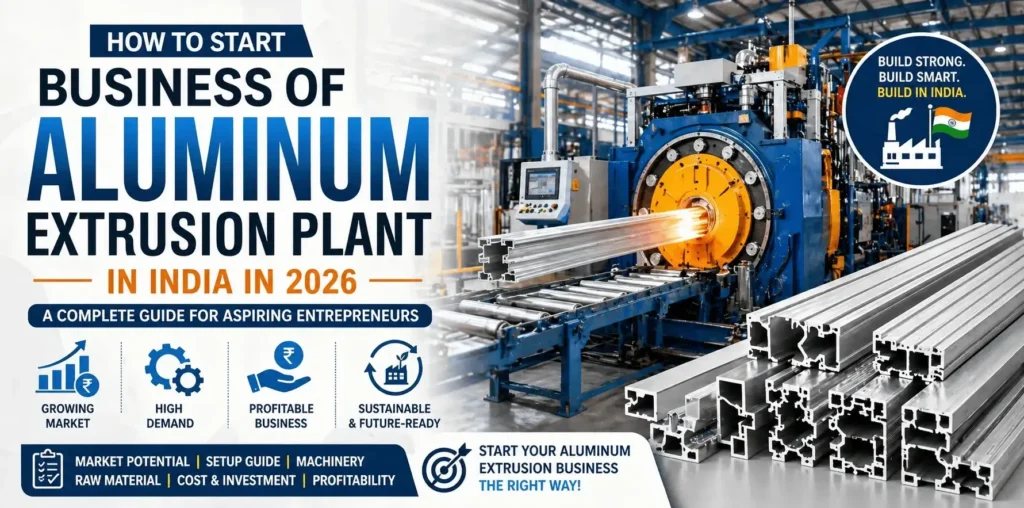
Aluminum is one of the most versatile and widely used non-ferrous metals in the world. Its lightweight, corrosion-resistant, and high-strength properties make it an ideal material for construction, transportation, consumer goods, solar panel frames, electronics, and more. One of the most important processes in the aluminum industry is extrusion, which allows the metal to be shaped into complex profiles for countless applications. With rapid urbanization, infrastructure growth, and the electric vehicle boom, the business of aluminum extrusion plant is becoming an increasingly attractive opportunity for entrepreneurs and MSMEs in India. Aluminum extrusion involves heating aluminum billets and forcing them through a die to create long, uniform profiles like channels, angles, rods, tubes, and custom designs. With growing demand from industries like real estate, automotive, railways, and electronics, starting a business of aluminum extrusion plant offers excellent growth and revenue potential. In this blog, we’ll explain the setup process, machinery, investment, market trends, and profitability of entering this sector. Visit this Page for More Information: Start a Business in Aluminium Downstream Sector Scope of the Business of Aluminum Extrusion Plant The global aluminum extrusion market is expected to reach USD 130 billion by 2030, growing at a CAGR of over 6%. In India alone, aluminum consumption is projected to reach 10 million tonnes by 2030, with extrusions making up 25–30% of this usage. Key Application Sectors: Construction and infrastructure Renewable energy (solar and wind) Automobiles and electric vehicles Electrical and electronics Consumer products and modular furniture Starting the business of aluminum extrusion plant gives you access to both B2B and B2C markets with high customization flexibility and growing demand. Read our Books Here: The Complete Technology Book on Aluminium and Aluminium Products
The Perfect Business to Start Your Journey in Aluminum Industry
The business of aluminium beverage cans has emerged as a highly scalable and eco-friendly venture in the global packaging industry. With the rapid increase in consumption of soft drinks, energy drinks, ready-to-drink juices, and alcoholic beverages, aluminium cans are now the preferred choice for beverage companies due to their lightweight, recyclability, and extended shelf life. As the demand for sustainable packaging grows, aluminium beverage cans offer entrepreneurs a golden opportunity to enter a booming sector with long-term profitability and export potential. India’s beverage packaging market is expanding at a CAGR of over 5.4%, and the market for aluminium cans is a significant contributor. Giants like Coca-Cola, PepsiCo, Red Bull, and several Indian startups prefer aluminium packaging due to its convenience and environmental benefits. Whether you’re looking to set up a manufacturing unit or invest in a contract packaging facility, the business of aluminium beverage cans offers high margins, scalable operations, and a future-proof market. Visit this Page for More Information: Start a Business in Aluminium Downstream Sector Why the Business of Aluminium Beverage Cans Is Profitable The business of aluminium beverage cans is profitable due to several factors: High demand from the beverage industry (soft drinks, juices, beers, energy drinks) Eco-conscious consumers preferring recyclable packaging Durability and transport-friendliness of aluminium cans Growing export demand from Asia-Pacific, Middle East, and Europe Support from government initiatives like Extended Producer Responsibility (EPR) and Swachh Bharat Aluminium is 100% recyclable without loss in quality, which makes this business sustainable and future-ready. Related Business Plan: Aluminium and Aluminium Downstream Projects 1. Market Scope and Demand Overview India consumes over 20 billion beverage cans annually Aluminium can market is expected to surpass ?4,000 crore by 2027 Recyclability rate of aluminium is over 90%, making it a preferred material Growing trend of ready-to-drink (RTD) beverages and premium drinks in cans Export market potential: UAE, Bangladesh, Nepal, African countries Read Similar Articles: ALUMINIUM PRODUCTS PROJECT 2. Investment Required for Aluminium Can Manufacturing Unit Component Estimated Cost (INR) Land & Factory Setup (30,000+ sq. ft.) ?1 – ?2 crore Aluminium Sheet Rolling Line ?2 – ?3 crore Cupper Press and Bodymaker Machine ?4 – ?6 crore Trimmer, Necking & Flanger Units ?1.5 – ?2.5 crore Inside Coating and Printing Line ?2 – ?4 crore Curing Oven and Packing Line ?1 – ?1.5 crore Utility Equipment (Compressor, ETP) ?50 – ?70 lakh Working Capital ?1 – ?2 crore Total Investment: ?12 crore to ?20 croreROI: 18–25% annually depending on capacityBreak-even: Within 3–4 years Related Feasibility Study Reports: Aluminum Cans Production 3. Types of Aluminium Cans You Can Produce Standard 250ml and 330ml cans (used for soft drinks and beer) Sleek 180ml energy drink cans 500ml and 1L large-sized cans Aerosol-type aluminium containers for deodorants or sprays (diversification) You can also offer printed cans as OEM for beverage companies or produce plain blanks for third-party printers. 4. Raw Materials Required Aluminium Coil (Sheet stock): Main raw material for cup making Lacquers and Inks: For inner coating and exterior branding Pull tabs and ends (lids): With ring-pull mechanisms Lubricants and gas (for forming process) Packaging Materials: Cardboard trays, shrink wrap Most raw materials can be sourced domestically, or imported from China, UAE, or Europe. 5. Manufacturing Process of Aluminium Beverage Cans Sheet Feeding & Cup Making: Aluminium coil is fed into a cupping press Body Forming: Cups are drawn and ironed into long cylindrical can shapes Trimming & Necking: Height is trimmed; top portion is necked for lid Washing & Drying: Cleaned to remove any lubricant or particles Inside Coating: Special lacquer is sprayed inside and cured Outside Printing: High-speed rotary offset printing for brand labels Curing & Drying: High-temperature ovens to cure ink and coating Lid Seaming: Cans are fitted with pull-tab lids (after beverage filling) Packing & Palletizing: Cans are shrink-wrapped or tray-packed Read our Book Here: The Complete Technology Book on Aluminium and Aluminium Products 6. Licensing and Registration Needed To start the business of aluminium beverage cans, you’ll need: MSME/Udyam Registration Factory License and Pollution Control NOC FSSAI (if filling with beverages as a co-packer) GST Registration Fire Safety and Electrical Clearance ISO 9001 and ISO 22000 for quality and food safety (optional) BIS certification for raw materials (if required) For exports, obtain IEC code and comply with destination country labeling laws. 7. Clientele and Target Market Beverage manufacturers (Coca-Cola, Pepsi, Paper Boat, Bira, Kingfisher) Bottling companies and co-packers Energy drink brands (Red Bull, Monster, Tzinga) Export buyers for plain/printed cans Craft beer and RTD beverage startups 8. Marketing and Distribution Participate in packaging expos and food & beverage trade shows Register on IndiaMART, TradeIndia, Alibaba for B2B buyers Offer custom printing services for beverage startups Tie-up with regional beverage bottlers for bulk orders Leverage green packaging trend in your brand messaging 9. Challenges and How to Overcome Them Challenge Solution High capex Consider leasing equipment or JV with a beverage brand Raw material price fluctuations Secure long-term aluminium contracts Regulatory compliance Hire legal consultant for EPR and food safety Need for constant bulk orders Diversify into aerosol or food-grade containers 10. Future Scope and Expansion Start co-packing RTD juices or cold brews in your own cans Expand into bi-metallic cans or eco-friendly variants Sell printed cans as a value-added service Collaborate with brewery chains and startups Conclusion The business of aluminium beverage cans is booming with the rising demand for sustainable, transport-friendly, and consumer-preferred packaging solutions. Though capital-intensive, this business offers strong margins, repeat demand, and global scalability. With the right technology, regulatory setup, and partnerships, you can build a successful venture in one of the fastest-growing segments of the packaging industry. If you need information about the Business of Aluminium beverage cans, then contact NPCS. The project report from Entrepreneur India enables you to choose a profitable project for investing. If you are thinking about starting a business, one of the first things you should do is contact NPCS. They offer a range of services that can help you get your business off
Manufacturing of Aluminium Cables and Conductors from Molten Aluminium Metal, Aluminium Ingots
Aluminium Cable Production: An In-Depth Guide for Entrepreneurs In the modern era of electrification and infrastructure growth, Aluminium Cable has emerged as a vital material in power distribution, telecommunication, and various industrial applications. Due to its excellent conductivity, light weight, and cost-effectiveness, aluminium has become a preferred choice over copper in many sectors. As industrial expansion continues worldwide, investing in Aluminium Cable production can be a strategic and lucrative venture for entrepreneurs seeking to establish themselves in the manufacturing sector. Understanding the Aluminium Cable Manufacturing Process The manufacturing of Aluminium Cable is a multi-stage process that combines metallurgical precision with advanced engineering. The production starts with the procurement of high-quality aluminium rods, which are typically sourced from reputable smelters or aluminium manufacturers. These rods are subjected to a series of processes to transform them into the final cable products suitable for industrial and domestic use. Initially, aluminium rods undergo a drawing process, where they are reduced in diameter through a series of dies to achieve the required wire thickness. This process improves the mechanical strength and uniformity of the wires. Next, the drawn wires are annealed — a controlled heating process — to soften them and enhance their ductility, which is essential for flexibility and ease of installation. After annealing, these wires are stranded together using sophisticated machines to form the desired cable configuration. Stranding increases the strength and improves current-carrying capacity by minimizing skin effects, making the Aluminium Cable more efficient. Once the stranding is complete, the cables are insulated with materials like cross-linked polyethylene (XLPE), polyvinyl chloride (PVC), or ethylene propylene rubber (EPR), depending on the application requirements. The final stage includes rigorous quality testing, including tensile strength tests, conductivity tests, insulation integrity, and flame resistance checks. Meeting the standards set by agencies like ISI, ASTM, and IEC is crucial to maintain quality compliance and build customer trust. Market Demand and Applications The demand for Aluminium Cable is steadily rising due to infrastructure projects, power distribution upgrades, rural electrification programs, and the renewable energy boom. Solar and wind energy projects, in particular, require vast networks of cables, and aluminium’s cost advantages make it a prime candidate for these installations. In the construction industry, people widely use Aluminium Cable in residential, commercial, and industrial projects to provide safe and reliable electrical connectivity. Railways, airports, ports, and highways also rely heavily on aluminium-based cables for signaling, lighting, and power distribution. Additionally, telecommunications sectors depend on these cables for reliable data transfer and network expansions. Industrial automation and robotics further fuel the demand for flexible, corrosion-resistant, and durable aluminium cables, which can handle complex installations and harsh operating conditions. As countries continuously invest in smart grids and digitize their electrical networks, the future demand for aluminium cables will grow consistently. Advantages of Aluminium Cable One of the primary advantages of Aluminium Cable over copper is its lower cost. Aluminium is abundant and costs nearly half as much as copper, allowing manufacturers to offer competitive pricing while maintaining healthy profit margins. Moreover, aluminium is about 30% lighter than copper, making it easier to transport, handle, and install. In overhead power lines, for instance, the lighter weight of aluminium significantly reduces mechanical strain on poles and supporting structures. This translates to lower installation costs and enhanced system longevity. Another benefit is corrosion resistance. Aluminium naturally forms an oxide layer that protects it from environmental elements, enhancing its durability in outdoor applications. Combined with modern insulation techniques, aluminium cables can reliably serve for decades with minimal maintenance. Recyclability is another positive factor. Aluminium is 100% recyclable without losing its quality, aligning with global environmental priorities and sustainability goals. As more businesses adopt green practices, the use of recyclable aluminium cables gains significant support among stakeholders. Challenges and Considerations Despite its many advantages, Aluminium Cable production does face certain challenges. Aluminium has lower tensile strength than copper, which may limit its use in very high mechanical stress applications unless reinforced properly. Additionally, aluminium cables have a slightly higher coefficient of thermal expansion, which means they expand and contract more under temperature fluctuations. You need to consider this during installation, especially in regions with extreme climate variations, to prevent connections from loosening and avoid potential hazards. Another challenge is public perception. Many consumers, especially in the traditional sectors, still associate copper with premium quality and superior conductivity. It is crucial for manufacturers and marketers to educate potential buyers about the modern advances in aluminium cable technology, highlighting their improved safety, conductivity, and cost benefits. Setting Up an Aluminium Cable Production Plant Setting up an Aluminium Cable manufacturing unit involves detailed planning, significant investment, and regulatory compliance. The first step is to conduct a comprehensive feasibility study to understand the local market demand, available resources, and competition. A suitable location with adequate infrastructure, easy transportation access, and reliable power supply is essential. Industrial areas with proximity to aluminium suppliers can help reduce raw material costs and streamline logistics. Machinery procurement is another vital aspect. Modern cable machines fully automate operations and maintain high-quality production by strictly following standards. Key machinery includes wire drawing machines, annealing furnaces, stranding machines, extruders for insulation, and advanced testing equipment. Manpower planning is equally important. Skilled engineers, technicians, quality controllers, and production supervisors ensure smooth operations and adherence to industry standards. You must obtain regulatory approvals—such as factory licenses, environmental clearances, and labor law compliance—before starting production. Collaborating with consultants like Niir Project Consultancy Services can simplify this process, as they offer expert guidance on project reports, plant layouts, cost analysis, and market research. Financial Prospects and ROI The financial potential of Aluminium Cable production is impressive, considering the robust market demand and comparatively low production costs. Once the plant is operational and reaches optimum capacity utilization, the returns on investment can be substantial. Initial investments usually recover within 3–5 years, depending on production scale, marketing efforts, and market stability. Entrepreneurs who tap into emerging markets such as renewable energy or smart grid development can further accelerate their profitability. Securing contracts
Production of Aluminium Food Containers
Aluminium food containers have become a staple in the packaging and food service industries due to their durability, hygienic qualities, and excellent heat resistance. As a lightweight yet sturdy packaging material, aluminium ensures both product safety and convenience. The process of manufacturing aluminium food container is a highly specialized operation requiring strict quality standards, advanced technology, and sustainable practices to ensure food-grade standards are met. Manufacturing Process of Aluminium Food Containers Raw Material Procurement and Preparation The manufacturing journey begins with high-quality aluminium alloy coils. These coils, generally produced from primary aluminium or recycled aluminium, must meet rigorous food-grade certification standards. The aluminium coils are carefully inspected to ensure they are free from impurities and conform to food safety specifications before being introduced into the production line. Rolling and Annealing Once the aluminium coils are selected, they undergo a cold-rolling process to achieve the required thickness. This rolling process improves the mechanical properties and surface finish of the aluminium sheets. Post-rolling, the aluminium sheets are annealed at controlled temperatures to soften the material and relieve internal stresses, ensuring they are malleable enough for further shaping. Lubrication and Surface Treatment To facilitate smooth forming, a food-grade lubricant is applied to the aluminium sheet’s surface. This prevents sticking, cracking, or tearing during the subsequent stamping process. Surface treatment is critical to ensure the aluminium remains non-reactive and safe for contact with food items, maintaining the integrity of the aluminium food containers. Blanking and Forming In this phase, the aluminium sheets are fed into high-speed press machines equipped with precision dies and moulds. The blanking operation cuts the flat sheets into the required circular or rectangular blanks. These blanks are then deep-drawn and shaped through progressive stages of pressing, trimming, and curling. The forming process involves creating the container’s side walls, base, and edges, giving aluminium food containers their well-defined structure and dimensional stability. Trimming and Curling Precision trimming removes excess material, ensuring each aluminium food container has a uniform rim that is free of sharp edges. The rim is curled to reinforce the container’s structure and to provide a smooth, safe edge for handling. At this point, the container gains its final form and is ready for the next stage of production. Embossing and Decoration If required, the manufacturer may emboss brand logos or other markings onto the aluminium food containers. Embossing not only strengthens brand identity but also helps trace and authenticate the product. Decoration processes, such as coating or printing, may be applied to improve appearance or enhance corrosion resistance while preserving food-grade safety. Cleaning and Sterilization Before packaging, aluminium food containers undergo a thorough washing and sterilization process. Automated cleaning systems remove any lubricant residues, metal particles, or debris to maintain strict hygiene standards. Sterilization ensures that the aluminium containers are entirely safe for immediate use in direct contact with food. Quality Assurance and Testing Every batch of aluminium food containers is subjected to rigorous quality checks. Tests measure dimensional accuracy, leak-proof integrity, mechanical strength, and chemical safety. Containers failing to meet the stringent quality benchmarks are immediately rejected and recycled. This consistent testing guarantees that aluminium food containers delivered to consumers maintain the highest industry standards. Stacking and Packing Finally, the aluminium food containers are stacked in nested formations to optimize space and reduce transport costs. They are then shrink-wrapped or boxed for shipment, ensuring they arrive in perfect condition at distribution centers or directly at food-processing facilities. Environmental Sustainability in Aluminium Food Container Manufacturing One of the most remarkable features of aluminium food containers is their sustainability. Aluminium is infinitely recyclable without loss of properties, meaning production waste and rejected containers can be reprocessed repeatedly. Many manufacturers incorporate recycled aluminium in their raw material mix, dramatically reducing their carbon footprint while still adhering to food-grade standards. Advanced recycling practices within the manufacturing process ensure minimal environmental impact while maintaining the circular economy. Technological Innovations Shaping Aluminium Food Container Production The aluminium food container industry continues to benefit from cutting-edge technological innovations. High-speed presses with programmable automation, laser-guided trimming systems, and sophisticated robotics enhance efficiency, reduce energy consumption, and boost product consistency. These innovations, coupled with AI-driven quality monitoring, make today’s aluminium food containers safer, more economical, and environmentally responsible than ever before. Applications of Aluminium Food Containers Aluminium food containers are used extensively in the catering, airline, and bakery sectors, as well as in household packaging. Their ability to withstand temperature extremes makes them ideal for storing, freezing, and reheating food without compromising taste or quality. Additionally, their light weight and recyclability ensure they remain a preferred choice among environmentally conscious consumers and businesses alike. Advantages of Aluminium Food Containers Aluminium food containers offer a range of benefits that make them superior to other packaging alternatives. They are odorless, leak-proof, and resistant to corrosion, preserving food freshness for extended periods. Their high reflectivity helps retain heat in warm foods, while their excellent barrier properties shield contents from moisture, oxygen, and light, prolonging shelf life. These advantages collectively highlight why aluminium food containers dominate the global food packaging market. Regulatory Compliance for Food-Grade Aluminium Containers Manufacturers of aluminium food containers must comply with stringent food-contact regulations, including certifications from agencies such as the FDA, EU authorities, and other national standards organizations. The choice of raw materials, production processes, and even packaging practices must align with these regulations to guarantee consumer health and safety. Regular audits, certifications, and testing ensure manufacturers maintain these critical standards throughout their operations. Future Outlook of Aluminium Food Container Manufacturing With growing demand for sustainable and convenient packaging, the future of aluminium food containers appears robust. Innovations in alloy composition, forming technology, and recycling infrastructure are expected to make the industry even more efficient and eco-friendly. As global awareness of sustainability intensifies, aluminium food containers are poised to maintain their market leadership due to their proven environmental benefits, hygiene, and performance characteristics. Conclusion In conclusion, the manufacturing of aluminium food containers is a complex, high-tech process that merges precision engineering, strict hygiene practices,
How to Start Food Packaging Foil Manufacturing Business
Starting a food packaging foil manufacturing business is a promising entrepreneurial opportunity in today’s fast-evolving food sector. As lifestyles change and the demand for hygienic, convenient, and longer shelf-life food products rises, aluminum foil has become an indispensable packaging material across homes, restaurants, bakeries, catering services, and food processors. With India’s growing middle-class consumption and global exports of packaged foods, entering the foil manufacturing business can be a lucrative venture with long-term growth potential. If you want to build a stable, scalable, and sustainable manufacturing business, this guide will help you understand the opportunities, challenges, investment needs, and operational strategies to start your own food packaging foil manufacturing unit. Why Start a Food Packaging Foil Manufacturing Business? Food packaging foil, especially aluminum foil, is widely used because it is lightweight, non-toxic, non-absorbent, greaseproof, and provides an excellent barrier against moisture, light, oxygen, and microorganisms. It keeps food fresh, safe, and flavorful for longer durations. The increasing consumption of ready-to-eat foods, processed snacks, bakery products, confectionery, and catering services has pushed demand for quality packaging solutions. The foil manufacturing business benefits from its product’s versatility, as foil is used for wrapping, baking, grilling, storage, and even decorative packaging. Market estimates suggest that India’s aluminum foil packaging sector is growing at over 7–8% annually, driven by expanding urban food markets, food exports, and the booming hospitality sector. Additionally, sustainability trends are favoring aluminum foil because it is recyclable and less harmful to the environment than plastics. As a result, new entrants in the foil manufacturing business can capture strong market opportunities if they ensure quality, compliance, and efficient distribution. Market Potential and Scope The scope for a foil manufacturing business is vast. Apart from food, aluminum foil is also used in pharmaceuticals, cosmetics, electronics, and industrial insulation. However, food packaging remains the largest segment. The Indian aluminum foil market alone is estimated at over 80,000 tonnes annually and growing. Packaging standards in India are also being upgraded due to increasing hygiene awareness and export requirements. For a new entrepreneur, this translates to opportunities in multiple sub-segments — from food-grade foil rolls for retail kitchens to heavy-duty foils for hotels and industrial catering. You can start by focusing on household and small commercial needs, then gradually expand to industrial contracts and institutional supplies. Since the product is highly standardized, quality consistency, branding, and supply chain management become the real differentiators. How to Start a Food Packaging Foil Manufacturing Business Let’s break down the main steps you should consider if you wish to enter the foil manufacturing business. 1. Business Planning A detailed business plan is critical. Define your product range (foil rolls, containers, custom foil sheets, etc.), target customers (households, restaurants, food processors, exporters), production capacity, and competitive strategy. Include financial forecasts, market positioning, and SWOT (Strengths, Weaknesses, Opportunities, Threats) analysis. 2. Registration and Legal Compliance Register your business as a proprietorship, partnership, LLP, or private limited company depending on your scale. Obtain required licenses from FSSAI for food-grade products, local municipal approvals, pollution control certificates, GST registration, and MSME Udyam Registration if eligible. Also, comply with Bureau of Indian Standards (BIS) norms for foil thickness and food safety. 3. Location and Infrastructure Set up your unit in an industrial zone with good power and water supply. Ideally, pick a location with easy transport links to your raw material suppliers and buyers. A 3,000–5,000 sq. ft. shed is usually adequate for a medium-scale foil manufacturing business. 4. Machinery and Technology Aluminum foil production involves aluminum foil rolling mills, slitting machines, annealing furnaces, foil rewinding machines, printing units (if custom branding is required), and packaging equipment. You can purchase semi-automatic or fully automatic lines depending on your budget and production targets. Indian and Chinese manufacturers supply these machines at reasonable prices. 5. Raw Materials The key raw material is aluminum foil stock — high-quality rolled aluminum sheets. You may import or procure from local primary producers in India like Hindalco or Balco. Maintaining a consistent, food-grade raw material source is essential to meet hygiene standards. 6. Skilled Workforce Hire trained technicians for machine operation, electricians, quality control inspectors, packers, and logistics staff. Provide them with safety training, especially for handling hot foil, rotating machines, and power controls. 7. Quality Control Establish rigorous quality checks for thickness, pinhole testing, tensile strength, toxicity, and food-grade compliance. Branding your foil as “100% food-safe” is crucial to build a trusted name in this market. ISO 9001 and FSSAI certifications will further boost buyer confidence. 8. Marketing Strategy Build relationships with wholesale distributors, hotels, caterers, bakeries, supermarkets, and even online marketplaces. Digital marketing through a dedicated website, social media, and B2B portals like IndiaMART or TradeIndia can generate early leads. Highlight your certifications, recyclable packaging, and eco-friendly credentials. Investment and Profit Potential The investment for a small-to-medium-scale foil manufacturing business typically ranges between ?30 lakh to ?1 crore, depending on plant size, automation, and initial raw material stock. Working capital is needed for aluminum foil stock purchases, labor, utilities, packaging, and transportation. Margins in foil manufacturing are reasonable — typically 10–20% net profits — but scale and consistency are key. Once you build volumes and loyal customers, profits rise steadily thanks to repeat demand from the food sector. Selling under your own brand can increase your margins over time compared to third-party contracts. Government incentives such as subsidies under MSME schemes, technology upgradation programs, and bank credit support can also help you manage initial costs. Challenges in the Foil Manufacturing Business Like any manufacturing sector, this business comes with challenges: High capital requirements for quality machinery Intense competition from established brands Fluctuating aluminum prices affecting raw material costs Strict regulatory compliance for food-grade standards Supply chain disruptions due to transportation or energy issues However, if you develop a resilient sourcing strategy, focus on continuous quality improvement, and market aggressively, you can compete effectively. Future Trends and Growth Opportunities Several trends point to continued growth in the foil manufacturing business: Rising demand for safe, hygienic food packaging Growth in
Aluminium Recycling Plant Production of Aluminium Ingots from Aluminium Scrap.
The demand for sustainable and eco-friendly business ventures has soared over the last few years, and aluminium recycling stands out as one of the most viable and profitable opportunities. Aluminium is the most recycled metal globally, thanks to its high recovery rate and energy-efficient recyclability. Unlike other materials, aluminium can be recycled indefinitely without losing its quality, making it a sustainable asset in industrial and consumer product cycles. Establishing an aluminium recycling plant not only contributes to environmental conservation but also opens doors to a highly lucrative business. Entrepreneurs looking to invest in a green business can benefit immensely by tapping into the aluminium recycling market. Business Overview: Aluminium Recycling Plant An aluminium recycling plant involves collecting used aluminium products such as cans, foils, frames, and wires, then processing them into reusable aluminium. The process generally includes sorting, shredding, melting, purifying, and casting the metal into ingots or other desired forms. The finished recycled aluminium is then used in sectors like automotive, construction, packaging, and electronics. Market Potential India’s rapid industrialization, urbanization, and increasing environmental consciousness have boosted the demand for recycled metals. The Indian aluminium industry is expected to grow significantly, with the recycling segment forming a large part of this growth. With domestic and global demand rising, setting up an aluminium recycling plant offers excellent market opportunities. Key consumers such as construction firms, automotive manufacturers, and FMCG companies are now looking for greener supply chains, enhancing the prospects for aluminium recyclers. Key Processes Involved Collection & Sorting: Aluminium scrap is collected from industrial, commercial, and domestic sources. Sorting ensures only aluminium is processed, removing contaminants and mixed materials. Shredding: Sorted aluminium is shredded into smaller pieces to increase the surface area for melting and reduce energy consumption. Melting: The shredded aluminium is melted in a high-temperature furnace. Recycled aluminium uses up to 95% less energy than primary production. Purification: Molten aluminium is purified to remove any non-metallic residues or impurities. Casting: The pure molten aluminium is then cast into desired forms such as ingots, sheets, or bars, depending on the market requirement. Business Plan Essentials When starting an aluminium recycling plant, a solid business plan is critical. Here’s what should be included: Executive Summary: Define your business model, mission, and vision. Market Analysis: Study competitors, demand trends, and customer segments. Operational Plan: Describe how you will manage the recycling process, use specific technologies, and establish sourcing channels. Marketing Strategy: Identify how you will attract and retain clients. This could involve digital marketing, industry tie-ups, or government contracts. Financial Plan: Include capital requirements, revenue forecasts, break-even analysis, and ROI estimates. Risk Assessment: Address market risks, regulatory concerns, supply chain risks, and ways to mitigate them. Investment and Cost Breakdown Setting up an aluminium recycling plant can require a substantial initial investment depending on the scale of operations. Below is a rough estimate of costs involved in establishing a medium-scale recycling unit in India: Land & Building: ?30 – ?50 lakhs (can vary based on location) Machinery & Equipment: ?40 – ?80 lakhs (includes furnaces, shredders, sorters, and casting equipment) Licensing & Compliance: ?2 – ?5 lakhs (includes environmental clearance, factory registration, GST, and labour laws) Labor & Staff Setup: ?5 – ?10 lakhs annually Utilities (Power, Water, etc.): ?5 – ?8 lakhs annually Working Capital: ?10 – ?20 lakhs (for 6–12 months) Total Estimated Investment: ?90 lakhs to ?1.7 crore (for medium scale) Smaller setups can begin with ?30–?50 lakhs using semi-automated technology and local sourcing, while large-scale plants can exceed ?5 crore in capital investment. Raw Material Sourcing Raw materials for the aluminium recycling plant include used beverage cans, aluminium wires, foils, old utensils, window frames, and other scrap aluminium products. You can source scrap through. Scrap dealers and aggregators Industrial waste from factories Local municipal corporations Import of aluminium scrap (subject to import norms) Building a reliable sourcing network is vital for uninterrupted operations. Long-term contracts with industrial waste producers or government e-waste schemes can provide a consistent supply. Revenue Streams An aluminium recycling plant generates income through various streams: Selling Recycled Aluminium: Sold as ingots or semi-finished products to industrial clients. By-products: You can sell certain by-products, such as aluminium dross, to secondary processors. Custom Recycling Services: Offering tailored recycling services to large organizations or government bodies. Export Opportunities: Recycled aluminium has a strong global demand, opening doors for international sales. This industry offers impressive margins when you control input costs and maintain operational efficiency. Recycled aluminium typically sells at 70–85% of the primary aluminium price but costs significantly less to produce. Machinery and Equipment Required Running an efficient aluminium recycling plant requires the following commonly used machines. Conveyor belts for material transport Sorting machines (manual or automated) Shredders or crushers Rotary or reverberatory furnace Degassing and fluxing units Casting moulds or billet casters Cooling and finishing systems Pollution control equipment (bag filters, scrubbers, etc.) Technological upgrades and automation can reduce labour dependency and improve productivity in the long run. Regulatory and Environmental Compliance Operating an aluminium recycling plant requires strict adherence to environmental norms. Key compliance aspects include: Clearance from the State Pollution Control Board Hazardous waste handling authorization Air and water pollution management systems Fire safety and labour law compliance Annual environmental reporting A well-documented Environment Management Plan (EMP) is essential to ensure smooth operations and eligibility for government schemes. Government Support & Subsidies The Government of India, under the Make in India and Startup India initiatives, promotes recycling-based industries. Assistance can come in the form of: Capital subsidies for plant & machinery (especially under MSME schemes) Priority sector lending from banks for recycling-based ventures Technology Upgradation Funds for green and efficient machinery Environmental clearance fast-tracking under sustainable business programs Entrepreneurs should consult the Ministry of Environment, Forest and Climate Change (MoEFCC), Ministry of MSME, and SIDBI for scheme eligibility. Challenges to Watch Out For While the aluminium recycling plant business is promising, it also comes with challenges: Fluctuating scrap prices and inconsistent supply High energy consumption for melting processes Pollution control and
Production of Aluminium Collapsible Tubes for Pharmaceutical.
The demand for collapsible tubes is increasing due to their wide use in pharmaceuticals, cosmetics, food, and industrial products. Collapsible tubes are ideal for packaging creams, gels, ointments, adhesives, and other semi-solid or viscous substances. With the growing demand for convenient and hygienic packaging, starting a collapsible tubes production plant can be a profitable venture. Entrepreneurs with a vision for manufacturing and packaging solutions can capitalize on this thriving industry. Market Potential of Collapsible Tubes Production The global packaging industry is evolving rapidly, and collapsible tubes are gaining popularity due to their efficiency, ease of use, and aesthetic appeal. These tubes are used across several sectors such as personal care (toothpaste, hand creams), pharmaceuticals (ointments, antiseptics), and food (sauces, pastes). The flexibility, leak-proof nature, and lightweight design of collapsible tubes make them highly preferred over rigid packaging. India’s growing middle class, increased focus on hygiene, and rising consumption of FMCG and healthcare products have created a robust market for collapsible tubes production. Moreover, the demand for sustainable and recyclable materials is driving innovation in aluminum and plastic tube packaging. Types of Collapsible Tubes Before starting a collapsible tubes production plant, it’s important to decide the type of tubes you will manufacture. The main types include: Aluminum Collapsible Tubes – These are commonly used in pharmaceutical and cosmetic industries due to their barrier properties. Plastic Laminated Tubes (Laminates) – Ideal for toothpaste, creams, and gels. They are made from multiple layers of polymers and offer excellent print quality. Co-extruded Plastic Tubes – These tubes are formed using co-extrusion technology and are used in premium cosmetics and pharmaceutical packaging. The decision on which type to produce depends on the target industry, investment capacity, and available resources. Steps to Start a Collapsible Tubes Production Plant 1. Business Planning and Market Research The first step in setting up a collapsible tubes production plant is preparing a detailed business plan. Conduct comprehensive market research to understand customer needs, competitor analysis, pricing trends, and regulatory standards. Your plan should cover: Product types and applications Target customer segment Production capacity Raw material sourcing Marketing and distribution strategies Financial projections and ROI 2. Company Registration and Legal Compliance You must register your business as a private limited company, partnership firm, or sole proprietorship. Apply for the following licenses and registrations: GST registration Factory license Pollution control board NOC Fire and safety clearance BIS certification (if required for packaging standards) Trademark registration for branding 3. Selecting Location and Infrastructure Choose a location that has good access to transportation, utilities (electricity, water), and skilled labor. The plant area should accommodate raw material storage, production units, quality control, packaging, and finished goods storage. For a small to medium-scale collapsible tubes production plant, a space of around 3,000 to 5,000 sq. ft. may be required. Ensure compliance with zoning and industrial area guidelines. 4. Procurement of Machinery and Equipment The machinery depends on the type of tubes you plan to manufacture. For aluminum tubes, you’ll need extrusion presses, heading machines, annealing ovens, internal coating machines, printing machines, and crimping machines. For laminated or plastic tubes, the plant requires: Extrusion machines Tube forming machines Sealing and trimming units Printing and labeling machines Inspection and packing stations Modern machines with automation and high-speed capabilities improve productivity and ensure uniform quality. You can opt for semi-automatic or fully automatic lines based on your investment capacity. 5. Raw Materials and Supply Chain Key raw materials include: Aluminum slugs (for aluminum tubes) Plastic resins such as LDPE, LLDPE, HDPE (for plastic tubes) Laminated foils (for laminated tubes) Printing inks and lacquers Caps and closures Establish strong relationships with reliable suppliers to ensure a consistent supply of high-quality raw materials. Bulk purchasing can reduce costs significantly. 6. Hiring Skilled Workforce Recruit skilled personnel for operating machinery, quality control, design and printing, packaging, and maintenance. Also hire administrative staff for logistics, sales, finance, and compliance. You may need: Plant manager Machine operators Quality inspectors Designers for tube printing Maintenance technicians Regular training is essential to ensure safety and efficiency in the collapsible tubes production process. 7. Production Process Overview The general production process includes: Extrusion/Forming: Tubes are formed by extrusion (plastic) or impact extrusion (aluminum). Trimming and Coating: Edges are trimmed and internal coatings are applied to prevent product reaction. Printing: Tubes are printed using offset or screen printing. Capping: Tubes are capped with closures and tested for leakage. Packaging: Finished tubes are packed and stored for dispatch. Strict quality control measures must be implemented at every stage to ensure the tubes meet safety and functional standards. 8. Marketing and Distribution Branding and marketing are critical for attracting clients from pharmaceutical companies, cosmetic brands, and FMCG manufacturers. Build a strong portfolio, invest in professional packaging design, and highlight the benefits of your product like durability, leak-proof sealing, and aesthetics. Promote your collapsible tubes production business via: B2B portals (IndiaMART, TradeIndia) Direct marketing to pharmaceutical and cosmetic manufacturers Digital marketing campaigns Trade shows and industrial expos Having a distribution network or working with packaging wholesalers can help expand your reach. 9. Financial Investment and Profitability Starting a medium-scale collapsible tubes production plant may require an investment of ?40–?70 lakhs (approx.), depending on the technology used and scale. The key cost heads include: Land and building Machinery and installation Raw material stock Staff salary and training Utility connections Marketing and branding Profit margins in the collapsible tube industry range from 15% to 25%, depending on the volume, quality, and specialization (e.g., pharmaceutical-grade packaging). You can expect ROI within 2–3 years with consistent operations. 10. Sustainability and Innovations With environmental concerns rising, focusing on recyclable and eco-friendly materials will add value to your brand. Biodegradable plastics and recyclable aluminum are gaining traction. Innovations like smart packaging (QR codes, tamper-proof seals) and high-resolution digital printing are also trending. Investing in R&D to improve packaging performance, shelf life, and sustainability can help you gain a competitive edge in the collapsible tubes production market. Conclusion Starting a collapsible tubes production plant is a lucrative
How to Start an Aluminium Extrusion Unit
Aluminium extruded products have revolutionized industries ranging from construction to electronics. This lightweight, corrosion-resistant, and durable material is now the go-to solution for manufacturing complex and customized shapes with ease and precision. Whether you are an industrial manufacturer, architect, or product designer, understanding aluminium extrusion can be vital for success in today’s competitive market. Understanding Aluminium Extruded Products The aluminium extrusion process involves forcing aluminium alloy material through a die with a specific cross-sectional profile. The result is an elongated piece that maintains the cross-section of the die, known as an aluminum extruded product. This method allows the production of intricate shapes with uniform dimensions and high structural integrity. The Aluminium Extrusion Process To create an aluminium extruded product, billets of aluminium alloy are first heated to a malleable state. These heated billets are then pushed through a steel die using a hydraulic press. The shape that comes out is then cooled, straightened, and cut to desired lengths. The final product can be further processed through machining, anodizing, or painting to enhance its appearance and functionality. There are two main types of aluminium extrusions: Solid: No openings (e.g., rods, beams). Hollow: One or more openings (e.g., tubes). Semi-hollow: Partially enclosed voids (e.g., channels with narrow gaps). Each type serves specific applications depending on the required strength, design complexity, and end-use environment. See Also: Nonwoven Fabric Manufacturing Plant Applications of Aluminium Extruded Products Aluminium extruded products are used in nearly every modern industry. Their lightweight nature and structural strength make them ideal for applications where both form and function matter. Construction and Architecture Extruded aluminium is used in window frames, curtain walls, structural supports, and decorative façades. Its corrosion resistance makes it suitable for outdoor use, while its strength supports structural integrity. Automotive and Transportation From heat sinks and engine components to structural parts in trains and aircraft, aluminium extruded materials contribute to fuel efficiency and performance due to their light weight. Electrical and Electronics Aluminium extruded sections are used in heat sinks, enclosures, and housings for electronics. The material’s ability to dissipate heat and its non-magnetic properties are beneficial in high-tech environments. Renewable Energy Solar panel frames, mounting systems, and wind turbine components often utilize aluminium extruded profiles for their durability and light weight. Consumer Goods and Furniture In consumer products such as sports equipment, kitchen appliances, and furniture, aluminium extruded parts are chosen for their sleek appearance and strength. Advantages of Using Aluminium Extruded Products Aluminium extruded components offer several key advantages over other manufacturing materials: 1. Design Flexibility Custom dies allow for nearly unlimited design possibilities. Whether you need intricate grooves, hollow sections, or rounded corners, extrusion can accommodate it. 2. Strength-to-Weight Ratio Aluminium has a high strength-to-weight ratio, making it ideal for applications that require strength without heavy bulk. 3. Corrosion Resistance Natural oxide layers form on aluminium, providing a level of protection against corrosion. Additional treatments like anodizing enhance this feature further. 4. Sustainability Aluminium is 100% recyclable without losing quality. Recycling aluminium requires only 5% of the energy used to create new aluminium, making extruded products environmentally friendly. 5. Cost Efficiency The extrusion process minimizes waste and allows for high-volume production, which reduces cost per unit and material usage. Surface Finishing Options The appearance and functionality of aluminium extruded products can be enhanced through surface treatments, including: Anodizing: Increases corrosion resistance and allows for color variations. Powder Coating: Provides a durable, colored finish that’s more resistant to chipping and scratching. Polishing and Brushing: Enhances aesthetic appeal for consumer products. Painting: Offers unlimited color choices and protective layering. These finishes add value by making aluminium extruded components both attractive and more durable. Quality Control in Aluminium Extrusion Precision and consistency are critical in aluminium extrusion. Reputable manufacturers implement strict quality control procedures, including: Die Inspection: Ensuring die dimensions and smoothness. Process Monitoring: Controlling temperature, pressure, and extrusion speed. Dimensional Verification: Using calipers, micrometers, and 3D scanners. Surface Inspection: Detecting any cracks, warps, or surface imperfections. Adherence to international standards like ASTM and ISO ensures that aluminium extruded products meet industry requirements for performance and safety. See Also: Profitable Projects on Food or Beverage Processing Customization in Aluminium Extrusion Aluminium extruded products are highly customizable. Manufacturers can create specific cross-sections tailored to unique applications. This capability supports product differentiation and enables businesses to meet exact design specifications. Clients can also choose alloys, tempers, and finishes that suit their specific mechanical or environmental needs. For example, architects may request anodized T5 temper profiles for window frames, while automotive clients might prefer 6061 alloys with heat-treated finishes for strength and durability. Choosing the Right Aluminium Alloy Not all aluminium is created equal. The alloy composition significantly impacts the final properties of aluminium extruded products. Common alloys include: 6061: Versatile, strong, and corrosion-resistant—ideal for structural applications. 6063: Excellent surface finish—commonly used in architectural applications. 2024: High strength but less corrosion resistant—used in aerospace. 7075: Very high strength—best for aerospace and sporting equipment. Each alloy also comes with various tempers, which define its hardness and treatment history. Selecting the correct alloy and temper is crucial for application performance. Trends in Aluminium Extruded Industry Several current trends are shaping the future of the aluminium extruded market: Sustainability Initiatives: Increased demand for recycled aluminium in extrusion. Automation: Use of AI and robotics in extrusion plants for enhanced precision and reduced costs. Miniaturization: Demand for smaller, more complex profiles in electronics and healthcare. Modular Construction: Prefabricated aluminium extrude components are being used in modular and green buildings. These trends point to a growing and evolving market, where innovation plays a vital role. See Also: Production of Ferrous and Non-Ferrous Metals Export Potential of Aluminium Extruded Products India and China have emerged as key players in the global aluminium extrusion market. With lower manufacturing costs and improving technology, these countries are exporting aluminum extrude products to Europe, the US, and the Middle East. Indian manufacturers are especially benefitting from the “Make in India” initiative and rising global demand for quality yet affordable aluminium extruded
Aluminum Cans Production. Profitable Manufacturing Business of Aluminum Beverage Cans. Aluminium Cans for Brewery. Beverage Can Manufacturing Project.
Aluminum cans have become one of the most popular and efficient packaging solutions in the beverage industry. Thanks to their lightweight nature, recyclability, and superior preservation qualities, they’re in high demand across soft drink, energy drink, and alcoholic beverage markets. If you’re planning to enter the manufacturing sector, aluminum cans production presents a high-potential, profitable manufacturing business opportunity. Moreover, as more companies transition to sustainable packaging, the demand for aluminum cans continues to rise. This makes the beverage can manufacturing project especially promising in today’s eco-conscious market. Aluminum Cans Production. Profitable Manufacturing Business of Aluminum Beverage Cans. Aluminium Cans for Brewery. Beverage Can Manufacturing Project. This guide will walk you through everything you need to know about setting up an aluminum can production unit—from the manufacturing process to cost structure, profit potential, and beyond. 1. Why Aluminum Cans? Understanding the Growing Demand Aluminum cans offer numerous advantages over glass or plastic. For instance, they chill beverages faster, are easier to stack and transport, and offer better shelf-life. More importantly, they are 100% recyclable—making them a sustainable choice. In addition, beverage brands are shifting to aluminum packaging to meet environmental regulations and consumer expectations. As a result, the global and domestic demand for aluminum beverage cans has surged. Also Read – Want to Start a Business in Madhya Pradesh 2. Market Potential and Industry Trends India’s beverage packaging industry is expanding rapidly. Specifically, the aluminum can segment is expected to grow at a CAGR of 6–8% over the next five years. This growth is driven largely by rising demand in both alcoholic and non-alcoholic drink markets. Notably, global brands such as Coca-Cola, PepsiCo, and Anheuser-Busch are pushing more of their product lines into cans. Likewise, smaller regional beverage brands are adopting this format to appeal to eco-conscious consumers. 3. Types of Aluminum Cans Used in Beverages Aluminum cans typically fall into two categories. Understanding the differences will help you choose the right production model. A. Two-Piece Cans These are formed from a single sheet of aluminum and include the body and base as one continuous unit. The lid is then sealed separately. Two-piece cans are the most common in the beverage industry due to their efficiency and durability. B. Three-Piece Cans These consist of a separate body, top, and bottom. Although they are more common in food packaging, some specialty beverages use this type. However, they are generally less efficient to manufacture. Therefore, for mass production of beverage cans, the two-piece design is the most practical and cost-effective. 4. The Manufacturing Process Explained Aluminum can manufacturing is a precise and technical process. Nevertheless, with the right equipment and setup, it can be streamlined efficiently. Steps Involved: Blanking and DrawingFirst, aluminum coils are fed into a press that cuts circular blanks and draws them into shallow cups. Redrawing and IroningThese cups are then stretched and thinned to form the cylindrical body of the can. TrimmingExcess metal at the top is trimmed to ensure uniform height. Cleaning and DryingThe cans are cleaned thoroughly to remove lubricants and particles, followed by drying. Printing and CoatingNext, cans are printed with brand designs and coated internally to prevent metal-leach reactions with the beverage. Necking and FlangingThe top is narrowed to fit the lid, which improves strength and stackability. Seaming the LidFinally, the lid is attached and sealed to complete the can. Altogether, this process ensures that the final product is durable, attractive, and safe for beverage storage. 5. Setting Up Your Manufacturing Unit Before diving in, you must consider your plant’s location, layout, and equipment. A. Land and Infrastructure You’ll need 25,000 to 40,000 sq. ft. of industrial space with adequate utilities like electricity, water, and drainage. B. Machinery Requirements Depending on your scale, you will need: Coil unwinder and blanking press Drawing and ironing machines Washing and drying units Offset printing machines Necking, flanging, and seaming machines Although the initial investment is high, the output efficiency and longevity of the equipment make it worthwhile. 6. Raw Materials Required The primary raw material is aluminum alloy sheets (typically 3104 H19 grade). Additionally, you’ll need: Coating lacquers Printing inks Aluminum ends/lids with pull tabs Cartons or shrink films for packaging Importantly, sourcing high-quality aluminum will impact the durability and finish of your cans. 7. Investment and Cost Structure The cost of setting up a beverage can manufacturing project can vary based on capacity and automation level. Component Estimated Cost (INR) Land & Infrastructure ?1.5 – ?2.5 crore Machinery & Equipment ?3 – ?5 crore Utilities (power/water) ?30 lakh Raw Materials ?50 – ?70 lakh Labor & Admin ?20 lakh Licensing & Compliance ?5 – ?10 lakh Total Estimated Investment ?6 – ?9 crore While these figures may seem steep, the returns can be significant with consistent production and long-term contracts. 8. Legal Approvals and Compliance To operate legally, you’ll need to secure: MSME/Udyam Registration Factory License Pollution Control Board NOC BIS Certification (recommended) GST Registration Additionally, if you plan to import raw materials or export finished cans, an IEC (Import Export Code) is essential. 9. Target Customers and Distribution Channels Your ideal clients include: Soft drink and beer companies Fruit juice manufacturers Energy drink brands Ready-to-drink coffee/tea producers Beverage exporters Moreover, by offering custom branding and bulk order discounts, you can attract contract packaging deals with private-label brands. 10. Profitability and ROI When scaled efficiently, this business yields healthy profit margins. Cost per Can (including materials & overheads): ?2.50–?3.50 Wholesale Selling Price: ?4.00–?5.50 Gross Margin: 30–40% With consistent demand and smart supply chain management, most manufacturers reach break-even within 3 to 4 years. 11. Sustainability and Long-Term Outlook Unlike plastic, aluminum is infinitely recyclable. In fact, over 75% of all aluminum ever produced is still in use. Consequently, government policies, global brands, and consumers are increasingly favoring aluminum over other packaging materials. Furthermore, India’s growing beverage industry and government initiatives on sustainable packaging create the perfect environment for long-term business success. See More – Fruit Juice Processing Plant Conclusion In summary, aluminum cans production is a