
How to Start Electrical Transformer Manufacturing Business in India (Up to 20,000 kVA, 36 kV)
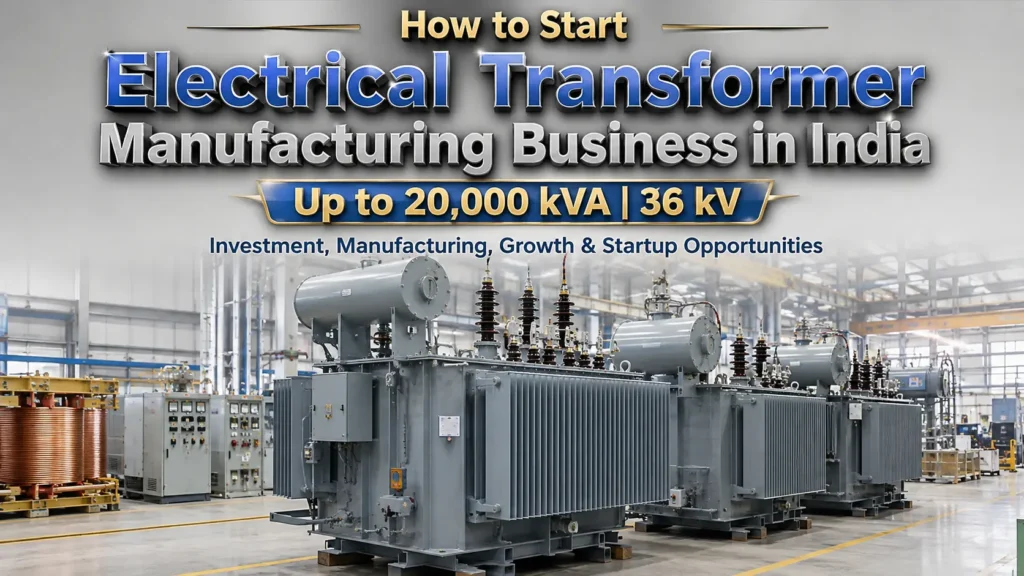
Electrical Transformer Manufacturing Business Simple as this is, India requires more power each and every year and this is where one of the most stable manufacturing business ideas of today is booming in the industrial sector; the manufacturing of electrical transformers. Transformers rated up to 20,000 kVA at 36 kV are needed by all distribution utilities, industrial plants, and renewable energy developers, and demand continues to grow, even in the wake of other sectors experiencing a slowdown. This is a unique combination of consistent orders, policy support, and long product life cycles for entrepreneurs looking into business ideas that have the active support of the government. This article provides insight into why time is crucial, the schemes that truly benefit new manufacturer, and the specific business ideas that fit a first-time promoter. Why This Sector Is Growing Fast The demand for power in India continues to grow. Peak electricity demand is already at 240 GW and will soon exceed 400 GW within this decade. This means that state utilities and private developers must purchase thousands of new transformers annually, simply to provide new connections, as well as to replace old transformers that are no longer efficient. This demand is being propelled in greater and greater numbers by three forces. First, the government’s distribution reform programme is upgrading old feeders and substations in various states, thereby generating new orders for transformers on an ongoing basis. Second, the number of inverter-duty and solar step-up transformer demand is huge for renewable energy projects, and this market was barely present 10 years ago. Third, the blooming growth in pharma, data centre, steel and cement industries is creating direct demand for dedicated power and distribution transformer. In the meantime, the fact of dependence on imports is an issue to consider. In the past, Chinese manufacturers have been known to secure a number of big tenders from utilities at cheaper rates, which has prompted the authorities to actively promote domestic capacity development. This means that new players that are interested in quality, test facilities, and on time delivery are able to secure contracts more easily than many other capital goods businesses. What’s rare about manufacturing business ideas is that the demand for transformer manufacturing is predictable and backed by the government instead of consumer sentiment. The demographic aspect can be a point of interest also. A number of well-known transformer producers were founded in a single generation and a few are now facing succession or capacity issues. This leaves space for new, efficient operators to be able to secure tender bids for units that can’t service them on time. That is, it’s not a market in need of consolidation, it’s an expanding pie that can be carved up by new entrants who deliver and are properly certified. Get Detailed Project Report (DPR): Electrical Transformer & Power Equipment Guide Government Policies Supporting New Businesses A capital-intensive manufacturing plan can make or break on the basis of good or bad policy support. Fortunately, transformer manufacturing is a field that falls into the crosshairs of multiple government programmes, and most first-generation business owners can connect two or three of them together at least. PLI Scheme for Electrical Equipment The Production Linked Incentive scheme for white goods and capital goods manufacturing directly helps the manufacturers of the components of transformers. The primary aim of the PLI scheme is the big manufacturer, but MSMEs can still benefit by being approved component or material suppliers to PLI linked companies. This is an indirect route suitable for a new winding or assembly unit, especially for a new one supplying to another larger original equipment manufacturer (OEM) under an approved PLI project. PMEGP for First-Generation Entrepreneurs New manufacturing units have been provided with margin money subsidy under the Prime Minister’s Employment Generation Programme (PMEGP) of Khadi and Village Industries Commission, Ministry of MSME. The 15 to 25 percent subsidy for General category applicants and 25 to 35 percent for women and special category applicants (SC, ST, OBC, etc.) will depend on the location of the unit. The costs for the manufacture of the units are up to fifty lakh rupees, at present, under this scheme, therefore it is a genuine option for a small distribution transformer plant. It is always advisable for the entrepreneurs to check the updated subsidy slabs on the official site before applying. Credit Guarantee Cover Without Collateral The Credit Guarantee Fund Trust for Micro and Small Enterprises wave offs the one most important obstacle in the way of most new entrepreneurs – collateral. In this scheme, these are loans of working capital or term loans that are disbursed without any property being pledged and this is of much importance in a business where the capital equipment is a significant portion of the total investment, especially in the case of machinery. State-Level Incentives In addition to central schemes, states like Gujarat, Maharashtra, Uttar Pradesh and Rajasthan have their own industrial policies for electrical equipment manufacturers. Usually, this involves capital subsidies, power tariff concessions and stamp duty exemption for land acquisition of new manufacturing units. In a few instances, state incentives, in addition to central schemes, can reduce the effective project cost by as much as fifteen to thirty percent for a qualified project. Make in India and Import Substitution Transformers have been identified as a component of high value addition required in India under the Make in India initiative by the Department for Promotion of Industry and Internal Trade. In the same way, the Revamped Distribution Sector Scheme is also compelling the state discoms to upgrade the infrastructure and this will directly mean new transformer procurement during the coming couple of years. Multiple Business Ideas for Startups Transformer making is not a monolithic industry. Rather, it is broken up into a number of distinct product lines and service niches, each with a different level of investment and buying profile. Here are some business ideas that you can consider before you finalize your project report. Small Distribution Transformer Unit (up to
Products from Biogas Plant Digestate: Manufacturing Process, Investment & Business Opportunities
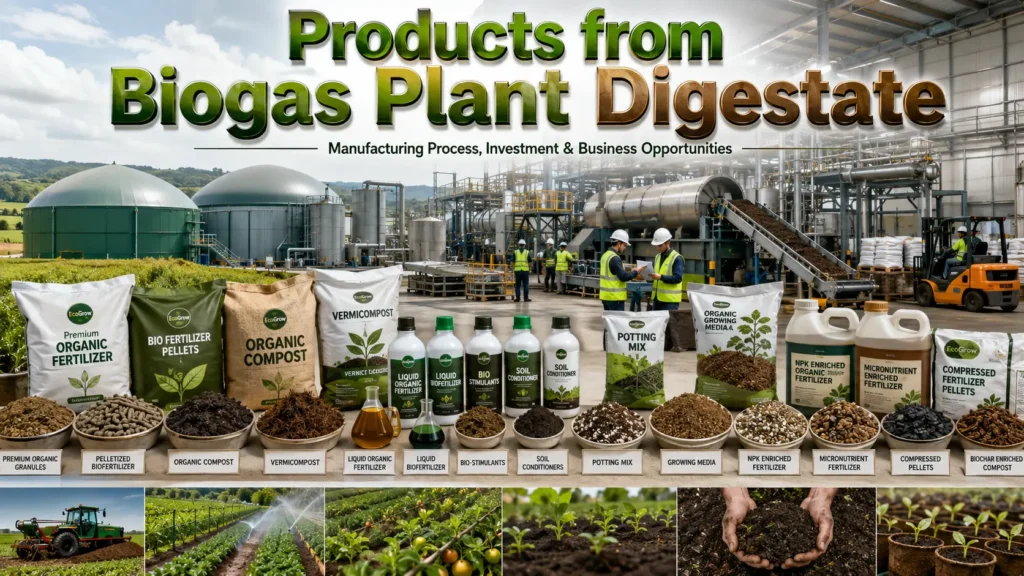
Biogas Digestate Products India has one of the world’s highest installed bases of domestic biogas plants (about 5 million) and commercial biogas plants (hundreds) at dairies, food processors, distilleries and municipal waste sites. The Satat Scheme has also introduced a compressed biogas plant (CBG) and MNRE is supporting fresh biogas capacity. However, in this extensive installed base, the digestate (liquid and solid residue after the energy has been extracted from the waste material as biogas) is not adequately managed and monetized. Most biogas plants just release liquid digestate into the adjacent agricultural land or water bodies and solid digestate piles up in pits, without making any effort to utilise them commercially. The digestate is not waste, but the best liquid organic fertilizer for Indian farmers. While composting and raw manure must undergo weeks of soil mineralisation before the available N can be absorbed by plants, anaerobic digestion breaks down complex organic nitrogen (protein and amino acids) quickly into ammoniacal nitrogen (NH₄-N) and is readily available for plant uptake without requiring weeks to mineralise the soil. Liquid digestates produced by well-managed biogas plants is a complete NPK fertiliser, consisting of 1.5–4% N, 0.8–2% P₂O₅ and 2–4% K₂O on dry matter basis. It has been consistently proven that application of digestate increased crop yields by 15–30% compared to the same mineral fertiliser application, which is probably due to growth hormones and beneficial microorganisms present in digestate. Explore This Book: Handbook on Biogas and Its Applications Top 6 Products from Biogas Digestate 1. Liquid Bio-Fertiliser (Direct Application Grade) This is because the digestate of food, agricultural and dairy waste biogas plants can be filtered at the plant (to remove fibre >1 mm) and quality tested before being sprayed directly onto crops in both drip irrigation or sprinkler irrigation systems. Bulk liquid bio-fertiliser (Rs. per unit) 200–300 litre tankers at Rs. 2,000–5,000 per tonne (Rs. The biogas plant is serving the organic and conventional farmers within 50 km radius. 2. Concentrated Liquid Bio-Fertiliser (Evaporation) The multi-effect evaporators enable digestate to be concentrated to 3-4 times its original concentration (from 1.5 % dry solids to 5-6 % dry solids) and allows for a more economic transport over longer distances for the bio-fertiliser. The digestate is produced in concentrated form (20–25% DS) in Rs. The cost of 20 litre containers is Rs. In urban horticulture and hydroponic crop production, premium prices are obtained for 150 – 300 per litre. A digestate concentration evaporation system: 50–150 lakh. Get Detailed Project Report (DPR): Biotechnology, Enzymes & Organic Farming Guide 3. Separated Fibre Compost (Press Cake) Organic compost material (25–30% DS) is produced by screw press separation of digestate to solid press cake and into liquid fraction, which can be stacked and transported. Granular Organic Compost for bagged retail is prepared by pressing the fibre cake and after drying and bulking agents, the compost is obtained at the retail price of Rs. 5,000–10,000 per tonne. Screw press separator and compost yard: Rs. 30–80 lakh. 4. Nutrient-Rich Irrigation Water (Fertigation) Using filtered digestate in on-farm irrigation systems (such as drip and furrow irrigation) to contracted farmers provides a complete service which can replace 30-50% of mineral fertiliser need. The operators of biogas plants establish long-term agreements with farmer clusters within 5 km of the plant, providing digestate via stationary pipelines or mobile digestate tank systems. 5. Dried Organic Fertiliser Granules Press cake from digesters is further dried (rotary dryer) to less than 10% moisture, and subsequently granulated to yield organic fertiliser granules which are easily spread mechanically and sold in the retail market. For the same, the FCO certified dried digestate granules sell for Rs. Premium organic fertiliser markets: 6-12 tonnes per tonne. Investment in the dryer and granulation line is Rs.: 40–120 lakh. 6. Algae Cultivation Substrate Microalgae (Spirulina/Chlorella) cultivation in raceway ponds or photobioreactor systems can be done with high nutrient liquid digestates diluted with water which serve as a perfect growth medium. Nitrogen and phosphorus (nutrient polishing) removed by algae at digestate water is converted to algal biomass with economic value of Rs. Nutraceutical, animal feed, and biofuel applications: 200-800 per kg. A digestate fed algae pond system: 30–100 lakh. Investment and Market Summary Product Investment (Rs.) Price Key Buyer Liquid Bio-Fertiliser 10–30 lakh Rs. 2,000–5,000/MT Organic/Conv. Farmers Concentrated Bio-Fertiliser 50–150 lakh Rs. 150–300/litre Urban Horticulture Fibre Press Cake Compost 30–80 lakh Rs. 5,000–10,000/MT Organic Farmers, Export Organic Fertiliser Granules 40–120 lakh Rs. 6,000–12,000/MT Premium Organic Market Algae Biomass (on Digestate) 30–100 lakh Rs. 200–800/kg algae Nutraceuticals, Feed Farmer Contracts: Building the Digestate Market Utilisation of digestate is only feasible if reliable farmer buyer relationships are established within the economic transport distance from the biogas plant. A 50 km radius around a large biogas plant contains tens of thousands of farmer fields, which however, need systematic market development, demonstration plots in which digestate crop response is demonstrated and infrastructure for delivery. The most successful digestate utilisation model in India is the biogas plant operators forming partnerships with Farmer Producer Organisation (FPO) where FPO provides farmer market aggregation, the operator supplies digestate at a cost below mineral fertiliser equivalent, and both parties benefit from the partnership. This FPO – biogas partnership model is being actively promoted by NABARD and the State cooperative departments. Related Article: Compressed Biogas Export India Opportunities That Can Earn ₹8 Cr/Year Digital Platforms for Digestate Marketing The agri-tech ecosystem in India is maturing to create online platforms that allow organic fertiliser producers (biogas plant digestate suppliers included) to connect with farmer buyers directly instead of through the traditional distributing chain to enhance farmer and producer margins. DeHaat, Ninjacart, AgriBazaar etc. are developing organic input procurement wings that will link the organic input producers to their farmer network. Aqgromalin (an aquaculture focused agri-platform) collects fish and shrimp farm inputs such as organic fertilisers. They offer the following services for biogas plant digestate producers: nationwide farmer buyer access beyond the geographical reach, digital payment and invoicing system, and quality test by the platform. Agri-tech platforms
THIN FILM PHOTOVOLTAIC (PV) MARKET: Global Landscape, India Demand-Supply Gap & MSME Startup Strategy
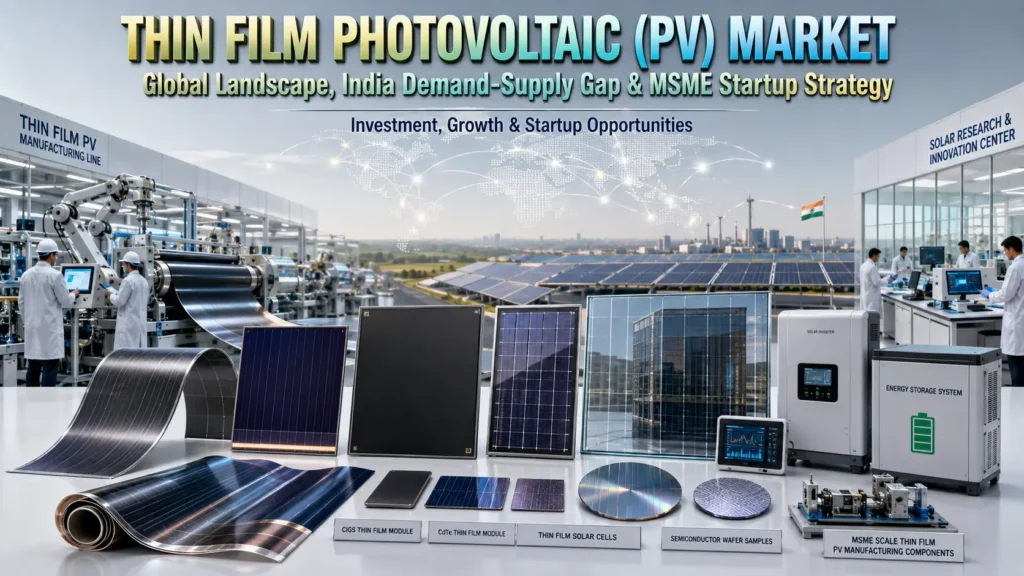
Thin Film Photovoltaic Manufacturing in India MARKET INSIGHT The worldwide thin-film PV (TFPV) market is worth more than USD 20 billion and is growing at more than 17% CAGR, fuelled by the growth of portable applications and building-integrated photovoltaic (BIPV) applications as well as utility-scale solar. The National Solar Mission (NSM) which aims to add one million MW of solar power by 2030, has created a high priority manufacturing opportunity for the thin-film PV industry with a significant import substitution potential. Structural demand-supply gap for thin-film modules is currently being met by imports from China, Japan and USA, which MSME manufacturers can close with the country. The Thin-Film PV Market: An Industrial Overview The solar energy market has experienced a fundamental change in the last 10 years, with thin film photovoltaic (PV) technology becoming a commercially viable and technically valuable alternative to traditional crystalline silicon solar modules in several high value applications. Thin-film PV cells are produced by depositing one or more ultra-thin layers of photovoltaic semiconductor material, usually in micrometres, onto a substrate like glass, metal foil or flexible plastic, and are not made by the energy-intensive ingot slicing and thick wafer processing used in conventional silicon wafer-based PV panels. This basic production disparity allows the production of significantly less material per watt of power output, power output flexibility, and distinctly superior performance characteristics under real world conditions. Get Detailed Insights from This Book: Solar PV Power and Solar Products Handbook The three major commercial types of thin-film technology are Cadmium Telluride (CdTe), Copper Indium Gallium Selenide (CIGS or CIS), and Amorphous Silicon (a-Si). Each of the technologies offers a specific set of efficiency, cost and application characteristics. The International Energy Agency (IEA) estimates that solar PV technology has become the world’s cheapest energy source to date in large parts of the world, and even thin-film PV technologies play a major part in this cost reduction trend, adding that solar PV has opened up new application categories besides the fixed-frame rooftop panel. The Indian solar market is at the cross-roads of energy security, climate change and manufacturing. India is a sizeable, ongoing, policy-driven and sunny market, both for PV equipment and as a manufacturing hub for PV energy supply. Global Manufacturing Landscape: Key Players Shaping the Industry Many vertically integrated technology conglomerates and a handful of thin-film innovators, all vertically integrated, are present in North America, East Asia and Europe that dominate the thin-film PV industry. The following table provides a summary of the key manufacturers active in this area, the country of origin for the manufacturer and the key technology that is used, as well as the main markets targeted. Company Country Technology Key Market Segment First Solar USA CdTe Thin-Film Utility-Scale Solar Jinko Solar China Multi-Tech including TF Utility & Commercial JA Solar Co. Ltd China Multi-Technology Global Utility Panasonic Corporation Japan HIT / Thin-Film Residential & Commercial Mitsubishi Electric Corp. Japan Amorphous Silicon Commercial & Industrial Sharp Corporation Japan CIGS Thin-Film Residential & BIPV Kyocera Corporation Japan Multi-crystalline & TF Commercial Systems Kaneka Corporation Japan Amorphous Si (a-Si) BIPV & Flexible MiaSole USA CIGS on Foil Flexible / Portable Solar Ascent Solar Technologies USA CIGS on Plastic Aerospace & Wearables Hanergy Mobile Energy China CIGS / GaAs Mobile & Portable Energy Yingli Green Energy China Multi-Technology Utility & Rooftop Trina Solar China Multi-Technology Global Utility ReneSola Co. Ltd China Thin-Film & Si Commercial Rooftop Suntech Power Holdings China Multi-Technology Utility Scale SUNQ China Thin-Film Consumer & Portable Trony Solar China Amorphous Silicon Commercial Solar Filsom AG Europe CIGS Thin-Film BIPV & Industrial Shunfeng Intl Clean Energy China Multi-Technology Utility Scale First Solar is the world’s leading technology company in large-scale, CdTe-solar, and has long been the low-cost leader in the U.S., European and portions of Asian utility-scale markets. The Chinese players (Jinko Solar, JA Solar, Trina Solar, Yingli, ReneSola, Suntech, SUNQ, Trony and Shunfeng) are the powerhouse behind the current 90%+ drop in PV module prices over the last 20 years. Meanwhile, the module efficiency and integration of BIPV products are still being dominated by Japanese technology companies, such as Panasonic, Sharp, Mitsubishi Electric, Kyocera, and Kaneka. Ascent Solar Technologies and MiaSole are pushing the envelope on the ultra-lightweight, flexible thin-film into defense, aerospace and wearable consumer applications. European specialist Filsom AG is taking the lead in the BIPV architectural segment, thanks to its precision CIGS deposition technology. Access Complete Business Plan: Start a Manufacturing Unit of Solar Panel. The Renewable-Energy Business is Expected to Keep High Growth. Technology Deep-Dive: CdTe, CIGS, and Amorphous Silicon Every type of thin film technology is in a different niche in the solar industry, with varying levels of capital intensity, manufacturing needs, and points of entry for MSMEs interested in entering this growing sector. Cadmium Telluride (CdTe) The non-silicon solar market is dominated by CdTe thin-film. It offers the lowest manufacturing cost per watt of any commercially available PV technology and has a particular advantage in high heat, high humidity applications which are common in much of the solar belt in India. First Solar’s position is well entrenched, but the patents available in the space are beginning to give other companies a chance to get in on tellurium and cadmium supply chains. The Ministry of New and Renewable Energy (MNRE) has declared CdTe and CIGS modules as priority category in the policy framework Approved List of Models and Manufacturers (ALMM) and the policy objective is to promote the domestic manufacturing of these modules. Copper Indium Gallium Selenide (CIGS) CIGS technology is the most efficient of all the thin-film technologies with laboratory cells now having efficiencies of over 23% and commercial modules are now achieving efficiencies of 14-18% in mass production. Its unique strength is its flexibility of the substrate that can be deposited onto a thin aluminium foil or polymer plastic, which means it can be used in curved glass facades, portable power packs, backpack-mounted chargers and wearable electronics. Mass-market applications are being led by companies such as MiaSole,
Scrap Dealer to Solar Entrepreneur: The Telangana Story That Belongs in Every Business School

Solar Installation Business in India A man who didn’t have a formal education read the renewable energy boom right, and made his way to 20 MW projects under MSME finance The Man Who Sold Scrap and Bought the Sun Ravi Shankar Reddy was an uneducated person. He went into the business of buying old transformers, old machinery and industrial waste to run a scrap metal yard in Nizamabad, Telangana. His understanding of the metal was more than just a knowledge of its weight and grade; it extended to its market value. Little did he know that this skill would help him to become one of the most successful solar installation entrepreneurs in the Deccan belt someday. The surprising reality about the Indian solar industry is that the largest profits aren’t being generated by IIT engineers backed by VC investment. It is being produced by solar channel partners, contractors and former electricians who got it right from the off: the channel partner model in solar is just like the distribution model in FMCG. You don’t manufacture. The panels are not your property. You bring buyers and installers together, deal with the paperwork with DISCOMs and earn a margin for every kilowatt installed. Within 4 years of his first installation, Reddy had crossed the ₹12 crore annual revenue mark. He never took a rupee from a venture capitalist. The funding was provided by IREDA, an Indian Renewable Energy Development Agency, and a loan from a cooperative bank in Karimnagar from the CGTMSE scheme to the tune of ₹50 lakh. He’s not the only one who had a story. It is a blueprint. Read the Complete Book Here: Solar PV Power and Solar Products Handbook The Gap That’s Still Wide Open India has made a pledge to achieve 500 GW of non-fossil fuels electricity generation. The installed solar power is about 90 GW as per data from the Ministry of New and Renewable Energy (MNRE). The country must increase the supply of electricity by about 400 GW — in a decade or so. The math alone will give you the opportunity. It’s not about utility-scale solar farms in Rajasthan. It is the unmet demand in small and medium industrial estates in Telangana, Maharashtra, Gujarat, Tamil Nadu and Madhya Pradesh. The industrial parks accommodate 200-500 MSMEs each with heavy machinery running on the grid at a cost of ₹8-11 per unit. With 25 years’ cost, Rooftop Solar can reduce this cost to ₹3.50 – 4.50 per unit. Nearly 25% of the total electricity consumption in India is used by MSME sector as per the Bureau of Energy Efficiency (BEE). However, the penetration of rooftop solar on the MSME sector is still around 8%. The answer is not price — it’s economics that make it the reason. The obstacle is the awareness of the entrepreneur, the trust of the vendors and working capital for the entrepreneur who starts the installation business. States such as Telangana, Andhra Pradesh, Karnataka and Rajasthan have been very aggressive with their state solar policies, providing faster DISCOM approvals and net metering policies. Rooftop solar is set for 2,000MW capacity for the residential and commercial segment in Telangana. At the present, only less than 400 MW are installed. The gap is 1,600 MW and actively seeking channel partners to fill. TABLE 1: State-wise Solar Opportunity — Rooftop & Industrial Captive Power State State Solar Target (MW) Current Installed (MW) Gap (MW) Key Industrial Clusters DISCOM Approval Timeline Telangana 2,000 ~400 ~1,600 Patancheru, Bollaram, Nacharam 45–60 days Andhra Pradesh 10,000 ~4,200 ~5,800 Visakhapatnam, Tirupati, Chittoor 30–45 days Karnataka 8,000 ~3,800 ~4,200 Peenya, Bommasandra, Hubli 30–60 days Gujarat 30,000 ~14,000 ~16,000 Surat, Rajkot, Anand, Vapi 21–30 days Rajasthan 40,000 ~18,500 ~21,500 Bhiwadi, Jodhpur, Alwar 30–45 days Maharashtra 12,000 ~5,200 ~6,800 Pune, Nashik, Aurangabad, Nagpur 45–75 days Why This Is the Right Window — And It Won’t Stay Open Forever The opportunity window is narrowing thanks to three policy tailwinds. Firstly, the PM Surya Ghar Muft Bijli Yojana is promoting rooftop solar in residential demand by offering up to ₹78,000 per household as central subsidy. This is building a pipeline of trained installers and familiar customers for channel partners to upsell to commercial and industrial customers. Secondly, the Production Linked Incentive (PLI) scheme for the solar module has begun to decrease the reliance on Chinese solar panels. There have been a lot of changes in the price of domestic modules, but the PLI is building a supply chain that will ensure a stable supply price in coming years, thereby providing installation companies with more predictable input costs. Thirdly, the IREDA financing structure explicitly identifies MSME solar installers and small-scale project developers as a priority lending segment. IREDA has established competitively 10 – 11 per cent per year term loan rates for solar projects and provided a moratorium of up to 12 months — a much-needed breathing space for a business which takes 3 – 6 months to commission its first project. On the finance side, the MSME (Credit Guarantee Fund Trust for Micro and Small Enterprises) enables solar channel partners with no tangible assets to pledge to avail loans up to ₹2 crore for their first-generation entrepreneurs. The PMEGP scheme of KVIC offers a capital subsidy of 25% to 35% in the manufacturing or service unit to the solar installation companies who are registered in the rural areas or semi-urban. One of the biggest structural hurdles that most potential solar entrepreneurs overlook – vendor empanelment with state DISCOMs is a real entry barrier – but good news for those who are successful. If a vendor is on Telangana’s DISCOM approved vendor list or on Karnataka’s BESCOM empanelled list, then the vendor will have a recurring pipeline which the new vendors will not get for 6 months to 18 months. This is the moat for which Ravi Shankar Reddy fought a long battle. View Full Project Details: Renewable Energy Sector: Green Power & Sustainable Technologies How to Set Up a Solar Installation Business in
6 Green Manufacturing Business Ideas in Afghanistan with 35% Margins and Growing Demand
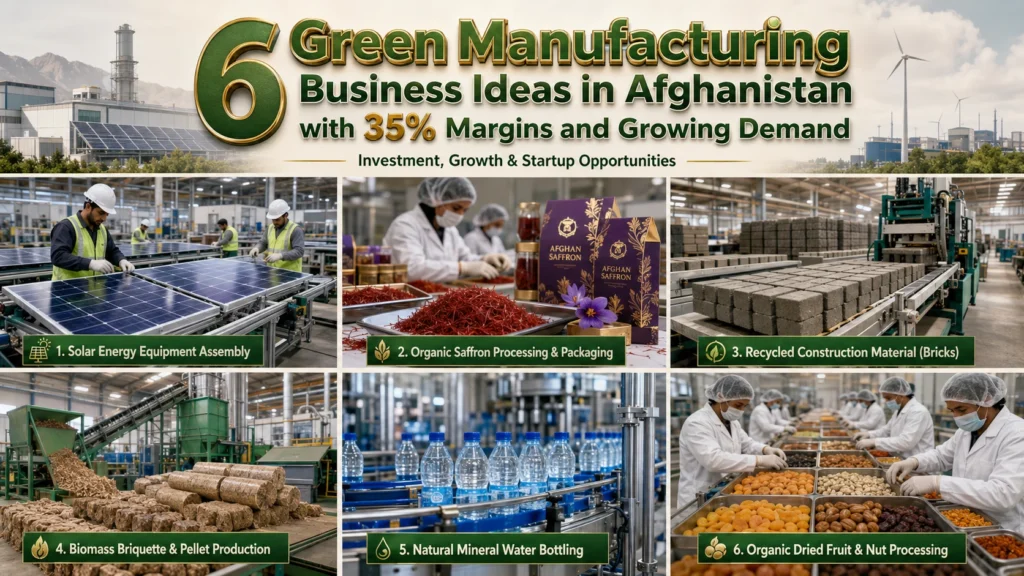
Green Manufacturing Business Ideas in Afghanistan In Afghanistan, the average annual amount of sunshine is over 300 days. It receives an average solar irradiance of more than 5.5 kWh/m2/day, higher than most of Europe and comparable to the belt of the deserts in Rajasthan, as per solar resource data available in the Global Solar Atlas published by World Bank. However, more than 70% of its citizens still do not have access to reliable electricity. Businesses run generators. Hospitals operate on borrowed electricity! For six to eight hours a day, factories sit idle due to the failure of the grid to deliver. This paradox, of a vast abundance of natural resources and a grinding poverty of industry, is no tragedy for those who merely look on. An investor or a green entrepreneur or a manufacturer, it is a signal. Such a market niche will not remain unoccupied for long. The Afghan country is also a major producer of saffron, the spice, which fetches INR 3.5–4 lakh per kilogram in international markets. The United States Geological Survey (USGS) has identified some of the most abundant deposits of lithium, copper and rare earth elements in the world in its mountains. It is an agriculture-based area that yields apricots, pomegranates, figs and almonds used in Central Asia and the Middle East. This is hardly processed locally. Related Article: Profitable Green Manufacturing Business Ideas in India: Waste to Wealth Opportunities The Market Gap: Resource-Rich, Processing-Poor Put it in numbers. The importation of manufactured consumer goods into Afghanistan accounts for approximately 80% of imports. Electricity generation capacity is less than 700 MW for a population of 40 million compared to Nepal’s 2,000 MW and Pakistan’s 40,000 MW for 300 and 220 million people respectively. Solar energy alone could power the entire electricity demand of Afghanistan multiple times while IRENA (International Renewable Energy Agency) has identified Afghanistan’s renewable energy potential as one of the least tapped in Central Asia. On the green side in particular: solar panel imports have been increasing by more than 18 per cent a year for several years now, but there is, to date, no significant solar panel assembly plant in the country. All panels are imported from China, India and UAE with import duty, freight charges and dealer margins. If assembled locally, even at a small scale, a 20-28% reduction in the landed cost of an imported unit can be achieved by a locally assembled panel. Saffron has a more pointed tale. There are approximately 20,000–25,000 tonnes of raw saffron filaments produced in Afghanistan every year. More than 85% of which is exported unprocessed to Iran and UAE, where much value is lost, as detailed by the Food and Agriculture Organization (FAO) . Iran cleans, grades, repackages it, gives it its own name and sells it to Europe at four to five times the farm-gate price. The benefits of the capturing in the Afghan units are currently enriching Iranian intermediaries. Another important gap is the lack of biomass briquettes. For more than 60% of Afghan households, wood fuel and animal dung fuel continue to be their main source of heat. These industrial briquettes, which are made from agricultural waste, such as wheat straw, cotton stalks, or almond shells, are burned with fewer pollutants, for a longer duration and to help significantly reduce indoor air pollution by up to 70%. Demand from urban areas is strong and growing. There is virtually no organized supply. Table 1: Key Green Manufacturing Sectors in Afghanistan — Opportunity Snapshot Green Business Sector Key Advantage Priority Regions Est. Investment (INR) Market Demand Solar Energy Equipment Assembly High solar irradiance (300+ days/yr) Kabul, Herat, Kandahar INR 42–65 Cr Growing rapidly Organic Saffron Processing & Packaging World’s top saffron producer Herat, Farah INR 8–18 Cr High — export-driven Recycled Construction Material (Bricks) Massive post-conflict reconstruction Kabul, Jalalabad INR 6–12 Cr Very High Biomass Briquette & Pellet Production Critical heating fuel shortage All major provinces INR 3–7 Cr Very High Natural Mineral Water Bottling Untapped aquifer resources Bamyan, Nuristan INR 5–10 Cr Moderate–High Organic Dried Fruit & Nut Processing Global demand for Afghan dried fruit Kandahar, Helmand, Farah INR 4–9 Cr High — USD-earning Source: UNAMA trade data, Afghan Ministry of Commerce, NPCS Market Research estimates. All INR figures are indicative investment ranges. Get Detailed Insights from This Book: Solar PV Power and Solar Products Handbook How to Set It Up: Solar Panel Assembly Unit Among the green manufacturing sectors presented above, the assembly of solar panels has the lowest technology risk, the highest local demand alignment, and the shortest payback period. This is a step-by-step guide to setting up a small to medium assembly unit. Minimum Investment The total capital expenditure needed for a functional assembly unit of 5 MW per year would be between INR 65-100 lakh, which includes the plant setup, machinery, and working capital for 3 months. The cost of the put together system is Rs. 22-30 lakh per MW/year in micro scale, and sharply improved at the 5 MW scale. Land and Space Requirements There should be 500–800 square metres of factory space available that is covered. Clean, dust-controlled environment is required for lamination and cell tabbing. There are industrial areas in Herat and Kabul where plots are available. The cost of a month in the industrial zone of Herat is currently USD 0.4 to USD 0.6 per sq metre. Key Machinery Equipment Cost Range (INR) Solar cell tabber and stringer machine ₹12–18 lakh Laminator (EVA film press) ₹6–9 lakh Solar simulator and IV curve tester ₹4–6 lakh Frame assembly jig and junction box attachment station ₹2–4 lakh EL imaging system for defect detection ₹3–5 lakh Raw Material Sourcing Solar cells are manufactured using monocrystalline or polycrystalline wafers from China (the leading world supplier) and usually have a lead time of 30-45 days. EVA encapsulant film, backsheet, aluminium frames and junction boxes also come in from their main supplier China. Logistics planning from the outset should include a reliable import route, either via the Herat–Islam
Compressed Biogas Export India Opportunities That Can Earn ₹8 Cr/Year

Compressed Biogas Export from India The export India story on compressed biogas is still in its nascent stages but the message is clear. The nation has a huge biomass surplus which can be harvested from agricultural waste, municipal solid waste, dung of cattle etc. which is something that most of the energy importing countries can only dream of. Domestic CBG production is growing and the policy machinery is already geared up for a much bigger play. The CBG-CGD synchronization scheme has led to the successful blending in 54 Geographical Areas of the City Gas Distribution network. The obligation to blend starts in FY 2025-26. Industry is getting regulatory support of this magnitude at an early stage and so is the export potential. India is now not only capable of producing enough CBG but whether entrepreneurs will outpace the other suppliers to catch the global opportunity in a CBG structured around them or not. Why CBG Deserves Serious Startup Attention Right Now The Domestic Foundation Is Being Laid at Speed By March 31st, 2025, the number of CBG and biogas plants commissioned in India is 100 and the total production capacity is around 700 MT per day. India has 100 CBG and biogas plants with an installed capacity of around 700 MT per day as on March 31st, 2025. Around 336 retail outlets have started the sale of CBG. Indian Oil has commissioned 44 plants and sold about 8.9 thousand metric tons of CBG so far under the SATAT initiative and has 714 active Letters of Intent. Get Detailed Insights from This Book: Biogas Applications Handbook These are not pilot numbers. This is industrial-scale momentum. The CBG Blending Obligation (CBO) framework stipulates that 1% CBG blending is required in total CNG/PNG consumption in FY 2025-26 and the target will be increased to 3% in FY 2026-27, 4% in FY 2027-28 and 5% from FY 2028-29 onwards. This is a form of domestic offtake that is guaranteed by law, and that’s what export-grade production needs as a financial backstop. The Export Logic Is Simple but Compelling There are also strong importers of green gas in Europe, Japan, South Korea and some Asian states in Southeast Asia. Germany has been a big producer of bioenergy in the form of biogas in Germany, but feedstock restrictions are slowing the growth. The cost of the LNG imports to Japan is in the tens of billions of dollars per year and the substitution of green gas is a national priority. With year-on-year biomass availability, different agriculture waste streams and now a policy supported CBG sector, India is well poised to take a bow. The compressed biogas export India opportunity is not about sending CBG in cylinders, the freight economics do not work at the current scale. The real export model is the conversion of CBG to liquefied biomethane (bio-LNG) in ISO containers and with the use of conventional LNG infrastructure. Bio-LNG is already being purchased in Europe for long-term contracts. Structural cost advantage on paddy price lies with Indian producers with access to near zero-cost feedstocks like paddy straw, press mud, and municipal waste, versus the European producers. Government Policy: What’s Actually on the Table More comprehensive than most sector founders realize, the Ministry of Petroleum and Natural Gas has developed an architecture of support. Several high-value enablers are confirmed by data from the Annual Report 2024-25 of the Ministry of Petroleum and Natural Gas, Government of India. The SATAT scheme offers a structure for Oil and Gas Marketing Companies to access CBG from private entrepreneurs through the bidding process under the EoI, thereby eliminating the above-mentioned major risk for the first-time CBG plant owner – the off-take question. In addition to procurement guarantees, the policy stack comprises central financial assistance under the National Bio Energy Programme of MNRE, classification of the sector as priority sector by the RBI, exemption from excise duty on payment of GST on CBG blended in CNG, development of pipeline infrastructure scheme for CBG injection into CGD network, and market development assistance of ₹1,500 per MT on Fermented Organic Manure produced as by-product. The subsidy for biomass aggregation machinery, which is applicable till FY 2026-27, tackles the biggest operational challenge for rural CBG units i.e., logistics of collecting biomass. Project Opportunities for Entrepreneurs Paddy Straw-Based CBG Plant (Tier-2 Agrarian Belts) The paddy straw is burnt in millions of tonnes in Punjab, Haryana and in western UP during rabi season. The capex for a 15 – 20 TPD CBG plant based on paddy straw ranges from ₹15 – 22 crores depending on the technology of anaerobic digestion. The gross margins could be as high as 28-34% in case of full utilization at the current OMC procurement price of ₹46-54 / kg along with FOM as a revenue co-stream. The current SATAT LOI are offered to Target Buyers like Indian Oil, BPCL and the HPCL. If the biomass is aggregated from day one in contract, then the scalability path is from 15 TPD to 50 TPD within 3 years. Capital recovery: 6-8 years on equity-based structure, 4-5 years with support from MNRE grant. Get Detailed Project Report (DPR): Industrial Biotechnology: Enzymes, Biofertilizers and Biogas Municipal Solid Waste (MSW) Based CBG Plant Wet waste is a problem for urban local bodies in Tier-2 cities due to Swachh Bharat Mission. This is a place that should be attractive to entrepreneurs who can obtain a long-term concession contract from a municipal corporation. The capex needed for the MSW based CBG plants of 5–10 TPD is ₹8–14 crore. Central assistance, apart from the MSW, is offered by the Ministry of Housing and Urban Affairs, which significantly enhances returns for CBG projects. EBITDA margin profile: 22–28% with tipping fees from the municipality factored in to the concession structure. Bio-LNG Production Unit for Export (Joint Venture Model) This is the most expensive and most profitable. Additional infrastructure cost of bio-LNG unit attached to a 50 TPD CBG plant comes to ₹12–18 crore. Total project cost: ₹35–50 crore. Under
Top Renewable Energy Business Ideas in Jharkhand with Government Subsidy and Low Investment
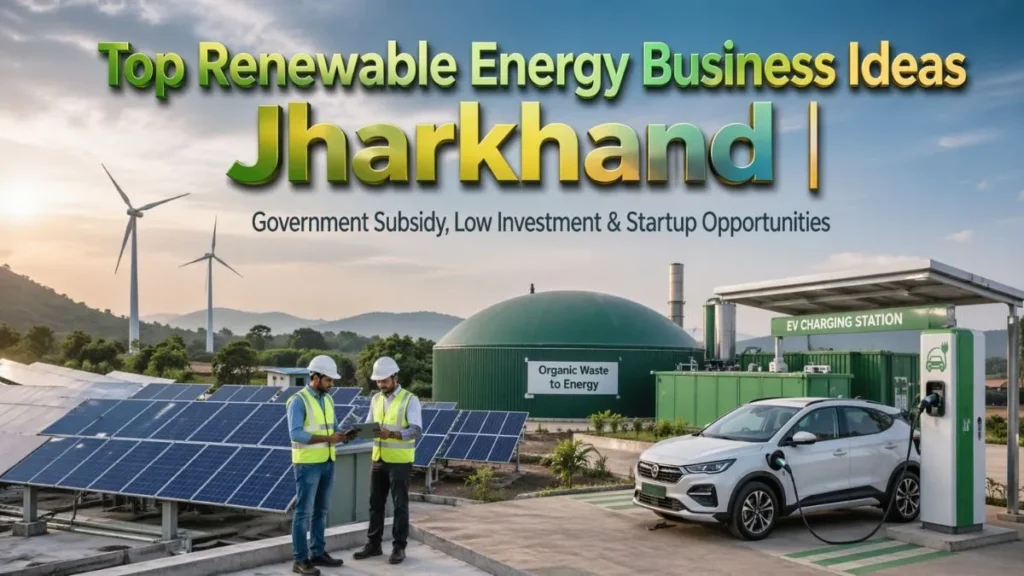
Renewable energy business Jharkhand The renewable energy sector in India is booming and alternative industrial areas are growing outside the traditional manufacturing centers. Jharkhand is one of such regions and it is silently establishing itself as one of the most promising locations to conduct a renewable energy business. The opportunity itself is not commonly spoken about at the moment, but the indications are evident- the policies of the government are favourable, the costs of production are lower, and the demand on clean energy products increases consistently. This combination is a strong advantage to first-generation entrepreneurs. The creation of a manufacturing facility of renewable energy in Jharkhand will be useful today to enable businesses to expand before competitors in the next few years. The state is slowly disengaging its economy which was majorly mining-based to manufacturing and energy production and renewable energy is emerging as a core aspect of the transformations. Why Jharkhand Is Becoming a Renewable Energy Business Destination Jharkhand is a rare combination of natural resources, industrial infrastructure, and policy support that predisposes it to the investment in renewable energy. The year long sunshine available to the state renders the production of solar energy very possible. Moreover, every year, vast amounts of agricultural and forest residue are produced, which can be used in the production of biomass fuel. The other factor is that the state is strategically located in eastern India. The companies based in Jharkhand will find it easy to deliver their products to the nearby states and save on the cost of transporting goods and enhance efficiency in delivery. The major strengths of commencing a renewable energy venture in Jharkhand are: Less cost of land and infrastructure than in metro cities. Access to skilled and semi-skilled labour. Increasing renewable energy products demand. Intense government incentives of MSME manufacturing. Availability of regional eastern and central Indian markets. These benefits provide a stable environment to new manufacturing businesses to thrive. Get Detailed Project Report (DPR): Renewable Energy Sector and Non-Conventional Energy Projects Cost Advantage: A Major Benefit for Startup Entrepreneurs The cheap cost of setting up and running a manufacturing unit is one of the greatest reasons why entrepreneurs are opting to locate to Jharkhand. The cost of industrial land is cheaper as compared to bigger cities and the cost of labour is also competitive without affecting the level of skills. The reduced operating costs will enable the startups to work longer in the initial years of business. To illustrate, a small manufacturing unit in Jharkhand may incur less startup investment, by 30 to 40 percent, than in the metro cities. This cost saving directly enhances profitability and minimizes financial risk. Common cost reductions are: Government industrial areas with affordable industrial land. Reduced monthly salaries of skilled employees. Less warehouse and factory rental costs. Industrial competitive electricity charges. To the small-time entrepreneur who may be starting with a small capital base these savings may spell the difference between success and failure. Growing Demand for Renewable Energy Products in India India is fast developing clean energy to minimize pollution and sustain energy demands in future. This shift is driving a high demand in the renewable energy equipment and service. Industries are switching to cleaner fuels; households are installing rooftop solar and electric cars are becoming more prevalent in cities. Therefore, manufacturing, installation, and maintenance services are offering new opportunities to small and medium enterprises. The renewable energy supply chain relies on small suppliers instead of big companies in many aspects, and it is therefore the best place to get the first-generation entrepreneurs. Key demand forces in the renewable energy market are: Growth of solar panels on rooftops. More use of electric vehicles. Rural electrification by government. Increased demand of industrial fuel that is green. Increased clean energy infrastructure. This is a continuous demand that guarantees the stability of the business. Profitable Renewable Energy Business Ideas in Jharkhand With moderate investment and good growth prospects, several renewable energy businesses can be started in Jharkhand. These are local and regional based businesses and enjoy government support programs. Solar Rooftop Installation and Component Manufacturing Increasing electricity costs and government subsidies are making solar rooftop systems increasingly popular. Installation can be the starting point of the entrepreneurs and then grow into production of components of mounting structures and electrical panels. The recurring income of this business provided by maintenance and service contracts. Investment is estimated to be between 25 lakh and 1.5 crore, depending on the scale and equipment. Download the Full Guide: Solar PV Power and Solar Products Handbook Biomass Briquette and Pellet Making. One of the most viable renewable energy companies in the state of Jharkhand is the production of biomass fuels since the raw materials are highly accessible. Forest residue and agricultural waste can be transformed into fuel utilized by factories and commercial kitchens. Typical raw materials are: Rice husk Sawdust Mustard stalk Agricultural residue Based on the efficiency of production and sales, a biomass plant is usually able to recover its investment in a span of two years. EV Charging Equipment Manufacturing and Installation Adoption of electric vehicles is growing in India, which presents a need in charging infrastructure. One way in which businesses can be involved in this sector is by assembling charging units, producing enclosures or even offering installation services. The initial investment is a bit more; however, in the long term, the growth prospects are high. Solar Lighting and Rural Electrification Products The solar lighting products are common in the villages and remote places where the supply of electricity is not reliable. Rural development projects are regularly funded by government programs purchasing solar street lights and home lighting systems. These products can be supplied in the form of institutional sales, which can give regular revenue. Start-up investment is between 20 lakh and 2 crores depending on the production capacity. Find high-return business ideas based on your budget & ROI Government Schemes Supporting Renewable Energy Entrepreneurs The financial viability of renewable energy business heavily relies on government
Renewable Energy Business in Chhattisgarh: High Profit Ideas, Cost & Government Subsidy Guide
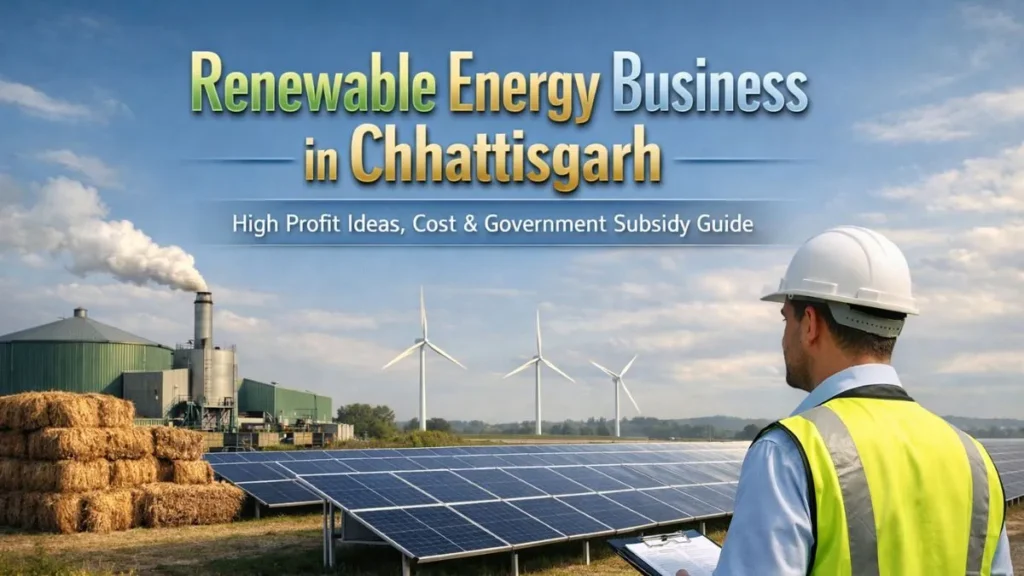
Introduction: Renewable Energy Business in Chhattisgarh. Making it silently one of the fastest-evolving states in India regarding business opportunities in the field of renewable energy, Chhattisgarh is. Although there are already established solar hubs such as Gujarat and Rajasthan that are already dominating the market, Chhattisgarh is currently getting attention with the low cost of set up, high industrial demand and natural resources. The energy consumption of the state is growing at a very good pace due to steel, cement, aluminium, and mining industries. Meanwhile, the government is also actively encouraging the use of clean energy by subsidizing and industrial policies. This is creating a wide entrance point to business people who would like to establish long term renewable business. Get Detailed Insights from This Book: India Solar Glass Market Key Renewable Energy Business Opportunities in Chhattisgarh The state will provide a variety of business opportunities based on investment ability and experience. The solar energy is the most favoured segment particularly with the increased number of rooftop installations and industrial. Solar module assembly, EPC contracting, and mounting structure manufacturing can be studied by the entrepreneurs. Another opportunity that is strong due to the presence of agricultural and forest waste is biomass energy. The industry is not developed yet and this puts early movers in a good position. Government push to electric mobility is also increasing EV-related businesses rapidly. Some of the major business opportunities include: Solar module and EPC assemblies. The production of biomass briquettes and pellets. Installation of EV charging stations and equipment production. Lithium battery pack. Carbon credits and biochar manufacturing to use in agriculture. All these sections vary in their level of investment and their potential of being scaled, and thus the industry is an apt place to be among small and large business owners. Investment Required to Start Renewable Energy Business The amount of investment in the industry is highly varied according to the business model. Small-scale biomass facilities need comparatively low capital, whereas solar and EV production need more investment yet has superior returns in the long-term. To make a better picture: Biomass briquette plant: ₹30 lakh – ₹80 lakh Solar EPC business: ₹50 lakh – ₹2 crore EV charger production unit: 2 crore -5 crore. Solar module assembly facility: ₹3 crore- 8 crore. Lithium battery pack unit: ₹5 crore-15 crore. The figures can be different according to the location, technology, and capacity of production. Get Detailed Project Report (DPR): Renewable Energy: Green Power and Non-Conventional Energy Sources Government Subsidies and Support Schemes The good government support at the central and state levels is one of the greatest opportunities of launching a renewable energy business in Chhattisgarh. Major Central Government Schemes PLI Scheme on solar production and batteries. EV adoption scheme (FAME-II). Surya Ghar Muft Bijli Yojana of rooftop solar. MUDRA loans and PMEGP loans to MSMEs. State-Level Support in Chhattisgarh Subsidies on capital investments in industries. Electricity duty exemption Allocation of industrial lands at reduced prices. Renewable energy policy incentives. These plans greatly alleviate the initial investment pressure and enhance profitability. Why Chhattisgarh is a Strong Location for Renewable Energy Business Chhattisgarh has a peculiar blend of industrial capacity and existence of resources. The state already boasts of good manufacturing base in cities such as Bhilai, Raipur and Korba which facilitates development of supply chain. The other significant benefit is cheap industrial land in comparison to metro states. This in itself saves on the cost of setting up a project to a large extent. Key advantages include: Good industrial demand of electricity. Plentiful biomass and agricultural waste. Central location and access to various states. Less expensive land, labour cost than metro cities. Expanding EV and solar market. These are the reasons why it is a viable and lucrative site to renewable energy startups. Find high-return business ideas based on your budget & ROI Step-by-Step Process to Start a Renewable Energy Business To invest in renewable energy, one needs to plan the business and not only invest. The initial one is the right segmentation according to the budget, demand in the market, and expertise. Once the business model is chosen, entrepreneurs need to come up with a comprehensive business project report to determine feasibility and financial viability. This is a very crucial step in obtaining bank loans and subsidies. After arranging funds, the next processes are the land purchase, installation of machinery, and recruitment of workforce. Once established, the emphasis is placed on establishing customer relationship with industries, EPC contractors or government projects. Role of NPCS (Niir Project Consultancy Services) Success in the renewable energy industry is pegged on proper planning. Here NPCS (Niir Project Consultancy Services) has a significant role to play. NPCS also offers professional consultancy services such as Detailed Project Reports (DPRs) and feasibility studies, market research, and financial planning to multiple industries within the solar energy, biomass, EV charging, and battery manufacturing sector. Their services assist entrepreneurs in comprehending: Real cost of project and investment needed. Market demand and competition analysis. Choice of machinery and raw materials. Return on investment and profitability. As a type of first-time entrepreneur NPCS serves as a support system that helps to minimize the risk and increase the accuracy of the decision making. Professionally prepared DPR also enhances the likelihood of banks and other financial institutions to give loans. Related Article: 10 Profitable Renewable Energy Manufacturing Business Ideas in India Future of Renewable Energy in Chhattisgarh The future of renewable energy in Chhattisgarh is very promising. Demand will be stimulated by the growing interest in electric mobility, environmentally friendly energy generation and industrial sustainability. The state will be a large renewable energy centre in central India by the year 2030. Those venturing in today will have early-mover advantage, reduced competition and robust government support. Conclusion One of the most promising opportunities to start a business in India is the renewable energy business in Chhattisgarh in 2026. Industrial development coupled with government subsidies, cheap operation and increasing energy demand provides a good base towards long term
Solar Cell Manufacturing in India 2026: Market Size, Investment Cost & Profitability Analysis
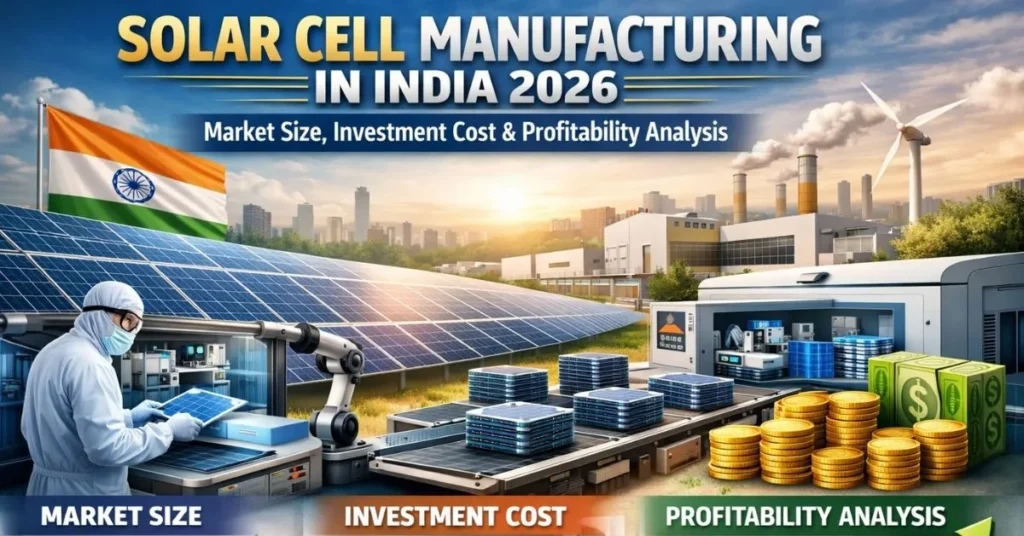
Introduction: Solar Cell Manufacturing in India India’s renewable energy transformation now has entered a decisive phase with solar energy emerging as the core of India’s clean energy strategy. Over the past 10 years, India’s installed solar capacity has risen from under 3 GW to over 135 GW, one of the fastest growing markets in the world. Under the policy direction of the Ministry of New and Renewable Energy (MNRE), not only is India getting installations moving forward, it is ramping up domestic solar manufacturing. With some ambitious renewable targets, strategic trade policies and financial incentives, solar cell manufacturing is becoming a high growth industrial sector. This report offers in-depth outlook for the solar cells market size, share, growth drivers, technology trends, investment and future opportunities in India for 2026. Read More: Solar PV Power and Solar Products Handbook India Solar Cells Market Size in 2026 India’s solar industry is growing at an industrial level. The country has already over crossed 135 GW of installed solar capacity and is aiming to reach 500 GW of non-fossil fuel energy capacity by 2030 with solar contributing close to 300 GW. Existing Manufacturing Capacity Overview Solar Module Manufacturing Capacity: ~100 GW Solar Cell Manufacturing Capacity: ~35 – 40 GW Wafer Manufacturing Capacity: Limited and growing Import Dependence: Heavy import dependency on wafers & select high efficiency cells The massive difference between the module and cell manufacturing capacity shows there is high potential for investments. As domestically the cell production starts to grow, India can not only reduce imports, but also achieve energy security and become an export-oriented manufacturing base. By 2026, India’s solar cell market is anticipated to grow at a healthy CAGR, backed by policy support, local demand, and global diversification of the supply chain.(Solar Cell Manufacturing in India) Important Growth Factors of Indian Solar Cells Industry 1. Government Incentives and Policy Support The main force which drives solar manufacturing expansion in India operates through the Production-Linked Incentive (PLI) scheme. The program provides rewards to companies based on their domestic value creation and their use of advanced technology that delivers better results. The Approved List of Models and Manufacturers (ALMM) policy ensures that government projects must select certified local manufacturers as their primary suppliers. The requirement of increased local production for solar cells and modules leads to heightened demand for their manufacturing. The import duty that applies to solar cells and modules creates advantages for local manufacturers because it improves their ability to compete with international products. 2. Rapid Growth in Power Demand The industrial growth and urban development of India has created a substantial rise in electricity requirements. Businesses in both industrial and commercial sectors use rooftop solar systems as a method to cut electricity expenses while meeting their environmental, social, and governance (ESG) requirements. The demand for advanced manufacturing technologies to produce rooftop solar installations exists because high efficiency cells require Mono PERC and Topcon production methods.(Solar Cell Manufacturing in India) 3. Utility-Scale Solar Parks States such as Rajasthan and Gujarat have developed into major solar centers because they possess optimal land resources and excellent solar energy potential and established handling facilities. Large-scale solar parks are generating predictable procurement pipelines into the multiple gigawatt range, year after year. This consistency makes the demand for solar cells visible in the long term and ensures demand visibility for solar cell manufacturers.(Solar Cell Manufacturing in India) Read More: India Solar Glass Market 4. Global Supply Chain Diversification With the international markets eager to find alternatives to single-country dependency, India has become a creditable manufacturing destination. Western countries are diversifying more and more in sourcing, and it is opening up opportunities for export for Indian solar cell producers. Manufacturers who have international certifications and high efficiency production lines stand to benefit greatly from this shift.(Solar Cell Manufacturing in India) Technology Trends Impacting Solar Cell Market Technology choice is important in competitiveness and profitability. 1. Mono PERC (Passivated Emitter And Rear Contact) Mono PERC has become the reference technology for high efficiency production technology in India. It provides better efficiency than traditional multi-crystalline cells and still has a manageable capital investment requirement. 2. Topcon (Tunnel Oxide Passivated Contact) Topcon technology is receiving rapid adoption because of its higher efficiency and improved performance in large-scale solar projects. It enables manufacturers to charge premium prices especially in export markets. 3. Heterojunction (HJT) HJT cells offer very high efficiency at the expense of higher capital expenditure and special equipment. While still emerging in India, HJT is the next stage of premium solar manufacturing. 4. Emerging Perovskite Tandem Cells Although still in the development stage, perovskite tandem technology can promise great efficiency improvements. Investment in R&D partnership by Indian manufacturers might provide early mover advantages in this segment.(Solar Cell Manufacturing in India) Competitive Landscape India’s solar manufacturing ecosystem has large conglomerates and specialized players. Read More: GOOD OPPORTUNITY IN SOLAR POWER PLANT – Manufacturing Plant, Detailed Project Report, Profile, Business Plan, Industry Trends, Market Research, Survey, Manufacturing Process, Machinery, Raw Materials, Feasibility Study, Investment Opportunities Major Industries Participants Adani Solar Reliance Industries Vikram Solar Warre Energies The companies pursue aggressive capacity expansion plans, while several companies implement a strategy to control their production process from wafer manufacturing through to module creation.(Solar Cell Manufacturing in India) Competitive Strategies Successful manufacturers are usually focused on: Large scale capacity for cost advantages Technology upgrades to keep up efficiency leadership Vertical integration to better margins Export diversification Strong domestic distribution networks New companies face challenges when they attempt to provide affordable products because they struggle to compete on that factor. The company should choose to focus on three specific areas which include niche market segments and product excellence and comprehensive service delivery according to the target market needs.(Solar Cell Manufacturing in India) Investment Requirements and Profitability Study Solar cell production is capital intensive. Estimated Investment The cost of establishing a 1 GW solar cell manufacturing facility depends on the chosen production technology which requires a substantial financial investment. The primary cost elements consist
Solar Panel Manufacturing: 10 reasons why it is a game-changer for startups
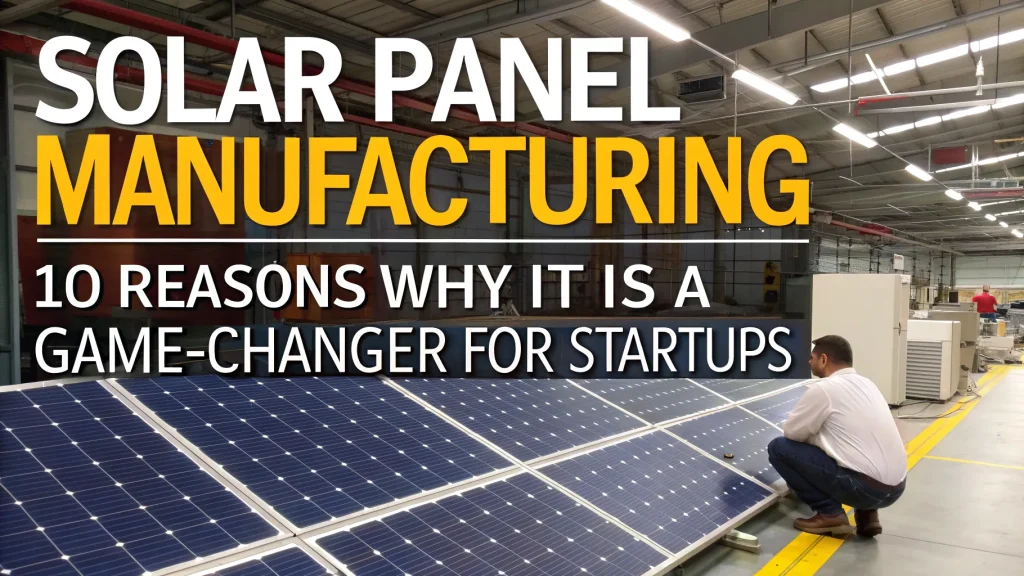
In the 21st century, we are witnessing a massive transformation in the way that energy is produced and consumed around us. Climate change is forcing nations to reduce their reliance on fossil fuels. Renewable energy sources have emerged as the foundation of a sustainable future. Solar panel manufacturing is one of the most important. It is not an alternative, but the future of electric power. Solar panel manufacturing is at the heart of this revolution. This industry has grown exponentially in the last decade. Entering this sector for entrepreneurs and startups is more than just about profit; it’s about being part of a bigger global mission. Solar panel manufacturing is a business opportunity that also has environmental responsibility. It’s one of the best opportunities available in today’s industrial landscape. The top 10 reasons solar panel manufacturing can be a game-changer for startups are explained in depth. 1. Global Markets Explode in Growth Solar energy has grown at a rapid rate in recent years. Market forecasts predict that the global solar market will surpass USD 300 billion in 2032 with a growth rate of almost 10% annually. Solar capacity in India has risen from 2 GW to 80 GW, and is expected to grow to 170+ GW before 2030. The surge in solar energy is a result of several factors, including falling prices for solar panels, an increase in electricity demand and international commitments towards reducing carbon emissions. Solar energy, unlike traditional industries, where demand fluctuates over time, is supported by long-term climate goals and policy frameworks, ensuring steady growth. This creates an environment where startups can thrive, as the risk of saturation in demand is low. By entering the industry now, a company can position itself in one of the most resilient markets and future-proofed in the world. Related: How to Build a Profitable Solar Panel Manufacturing Plant 2. Strong Government Support and Incentives Renewable energy is one of the few industries that receives as much support from the government as it does. Solar adoption is actively promoted by governments around the world, who recognize its importance in achieving energy security and climate goals. The Production-Linked Incentive Scheme (PLI) in India offers substantial financial support to solar manufacturers. This allows startups to overcome initial obstacles and expand operations more quickly. Tax exemptions for renewable energy equipment, rooftop solar subsidies, and solar parks that are dedicated to manufacturing encourage demand. Globally, countries such as the United States and the European Union invest billions of dollars to boost their domestic solar industries. This creates export opportunities for manufacturers from emerging economies. Aligning with government programs reduces startup costs and ensures a steady demand, especially from large-scale projects. 3. Rising Domestic and Export Demand Solar panels are in demand from both domestic and international markets. India has seen an unprecedented increase in rooftop solar installations, for both households and commercial buildings. Government tenders and private investments are boosting the growth of large-scale utility projects. This ensures a strong market for local manufacturers. Solar power is being used by emerging economies around the world to solve electricity shortages. Solar power is a viable option for these countries, which often do not have large reserves of fossil fuels. Indian manufacturers have more opportunities to export, especially as global supply chains try to reduce their dependence on China. Solar panel manufacturers today can take advantage of both the domestic and global markets, allowing them to scale their business. View Our Handbooks on Solar Products, Renewable Energy, Solar PV Power, Solar Energy, Solar Lighting, Solar Power Plant, Solar Panel, Solar Pump, Solar Photovoltaic Cell, Solar Inverter, Solar Thermal Power Plant, Solar Farm And Solar Cell Modules 4. Declining Manufacturing Costs The dramatic drop in production costs is one of the most important factors that has enabled solar adoption. Solar power was much more expensive a decade ago than conventional electricity. It is now one of the most affordable sources of energy in the world. Solar panel production has benefited from technological advancements and economies of scale, which have led to a significant drop in price. Automation in manufacturing, advances in silicon wafer technologies, and improvements in the efficiency of solar cells have significantly reduced the cost per watt. This trend is a boon for startups as it allows them to enter the market with low prices and still maintain healthy margins. The learning curve effect also means that, as solar manufacturers produce more, unit costs will continue to drop, giving them an advantage over time. Solar panels are a cost-saving alternative to many other traditional manufacturing industries that have seen costs rise. 5. Diverse Product Opportunities Solar panels do not come in one size fits all. Startups in the manufacturing industry have the option to select from a variety of products that are tailored for different markets and applications. Monocrystalline panels are durable and highly efficient, which is why they are often selected by customers who have high standards. Polycrystalline panels tend to be more affordable, and are popular on markets with a high cost-sensitivity. The thin-film panels, which are light and versatile, can be used for industrial or specialized uses such as portable devices. Bifacial solar panels are a more recent innovation that can capture the sun on both sides. This allows for higher energy yields. There are new opportunities for solar power beyond traditional panels. These include floating panels, BIPV (building-integrated photovoltaics) and hybrid systems that use battery storage. These niche markets provide startups with the opportunity to innovate and develop unique value propositions. BIPV, for example, integrates solar panels into windows and walls to transform buildings into power generators. This futuristic concept is already being adopted by Europe and the U.S. The diversity of products allows startups to adapt to the changing preferences of consumers and not be tied to one market segment. Related: How to Start a Manufacturing Business of Solar Panels 6. Contribution to Sustainability Goals Today, many entrepreneurs measure success not only by profits, but also