
Oxygen and Nitrogen Gas Production
Oxygen and nitrogen are two of the most abundant gases in the Earth’s atmosphere, making up nearly 99% of the air we breathe. Nitrogen constitutes approximately 78% of the atmosphere, while oxygen makes up around 21%. These two gases are essential not only for supporting life on Earth but also for powering a multitude of industrial, medical, and technological applications. From enabling combustion in blast furnaces to preserving perishable food items and saving lives in hospitals, oxygen and nitrogen are indispensable. Their efficient, cost-effective, and high-purity production has become a cornerstone of industrial progress in modern times. Industrial Processes for Producing Oxygen and Nitrogen Cryogenic Air Separation: Precision at Extremely Low Temperatures The cryogenic air separation process is the most commonly used technique for producing large quantities of oxygen and nitrogen. This method relies on the principle of fractional distillation at extremely low temperatures to separate air into its primary components. Here’s a breakdown of how this intricate yet highly efficient process works: Air Intake and Filtration: Ambient air is drawn into the system and passed through filters that remove dust, moisture, carbon dioxide, and hydrocarbons. These impurities can freeze at low temperatures and disrupt the distillation process. Compression: The clean air is compressed to high pressures, typically using multi-stage compressors with inter-stage cooling systems. Cooling: The compressed air is cooled using heat exchangers. As it cools, it releases energy that is used to chill incoming air—making the system energy-efficient. Liquefaction: The air is cooled further using turbo expanders until it reaches a liquid state, typically at around -200°C. Distillation: The liquefied air is then sent into a double-column distillation unit, where nitrogen and oxygen are separated based on their different boiling points. Nitrogen, which has a lower boiling point (-195.8°C), rises to the top, while oxygen, with a higher boiling point (-183°C), stays at the bottom. Collection and Storage: The separated gases are collected in high-purity storage tanks for industrial or medical use. Cryogenic distillation allows the production of extremely high-purity oxygen and nitrogen gases, often exceeding 99.999% purity, making it ideal for applications in aerospace, pharmaceuticals, electronics, and metallurgical industries. Pressure Swing Adsorption (PSA): Reliable and Cost-Effective PSA technology is a non-cryogenic, energy-efficient process particularly suited for on-site production of oxygen and nitrogen. It operates at ambient temperatures and is ideal for small to medium-scale gas generation. Working Principle: The system compresses ambient air and passes it through beds filled with adsorbent materials. Zeolites selectively adsorb nitrogen molecules, allowing oxygen to pass through for oxygen generation. Nitrogen generation systems use carbon molecular sieves (CMS) to trap oxygen while allowing nitrogen to flow out. Once the adsorbent becomes saturated, the system reduces the pressure and releases the adsorbed gases, regenerating the bed for another cycle. PSA units can produce gases with purities up to: Oxygen: 93%–95% Nitrogen: 95%–99.999% These systems are widely used in hospitals, laboratories, food packaging, and pharmaceutical industries. Vacuum Swing Adsorption (VSA): Energy Efficiency for Lower Flows VSA is a variation of PSA, primarily used for oxygen generation. It operates at a lower pressure and uses a vacuum pump to regenerate the adsorbent material. It is more energy-efficient than PSA but is generally suitable for low-flow applications such as in small clinics, rural hospitals, and portable oxygen units. Although less common for nitrogen generation, VSA offers excellent performance for regions where power costs are a concern and the demand for oxygen is relatively stable. Membrane Gas Separation: Simplicity and Scalability Membrane-based systems use special polymer membranes to separate gases by allowing certain molecules to pass through faster than others. This method is ideal for on-demand, moderate-purity gas production. Here’s how it works: The system compresses air and feeds it through hollow fiber membranes. The membrane selectively permeates oxygen or nitrogen depending on the desired output. The result is a continuous stream of gas with purities ranging from 90% to 99% for nitrogen, and 30%–40% for oxygen. Membrane systems are: Compact and modular Low maintenance Perfect for oil & gas, marine, and fire suppression systems. Electrolysis of Water: Clean but Limited to Oxygen Electrolysis is a clean and precise method of producing oxygen, especially in laboratories, spacecraft, and submarines where cryogenic systems aren’t feasible. How it works: An electric current splits water into hydrogen and oxygen gases. The system collects oxygen at the anode and stores it or uses it on-demand. While electrolysis is energy-intensive and doesn’t produce nitrogen, it offers ultra-high-purity oxygen, free of impurities and suitable for high-tech industries and biomedical applications. Applications of Oxygen and Nitrogen in Everyday Life and Industry Healthcare and Life Support Medical oxygen is critical for patients suffering from respiratory diseases like COPD, COVID-19, or undergoing surgery. Hospitals widely use PSA-based oxygen generators to ensure a continuous and cost-effective oxygen supply. Researchers use liquid nitrogen in cryotherapy, preserve cells through cryopreservation, and transport biological samples with it. Food and Beverage Industry Nitrogen flushing helps in extending the shelf life of snacks, coffee, and other packaged goods by removing oxygen. Oxygen is used in aquaculture systems to maintain the oxygen level in fish farms. Cold storage units use liquid nitrogen for flash freezing fruits, vegetables, and meat products. Steel, Welding, and Metallurgy Oxygen enhances combustion, allowing furnaces to reach higher temperatures for steel and iron production. In oxy-fuel cutting, operators use a mixture of oxygen and acetylene to melt and cut metals. Welders use nitrogen gas as a shielding agent in welding processes to prevent oxidation. Chemical Manufacturing Oxygen supports oxidation reactions in the production of chemicals like ethylene oxide and hydrogen peroxide. Nitrogen is employed for blanketing volatile chemicals, pressurizing reactors, and purging pipelines to prevent explosive reactions. Oil and Gas Exploration Nitrogen gas is widely used for well stimulation, pipeline purging, and enhanced oil recovery. Membrane nitrogen units on offshore platforms help reduce oxygen content in flammable environments, thus preventing fire hazards. Electronics and Semiconductor Industry Ultra-pure nitrogen gas is essential in semiconductor fabrication to maintain inert, contamination-free environments. Engineers use oxygen plasma in photolithography to etch microcircuits
Nitrous Oxide Production
Nitrous oxide, commonly known as laughing gas, is a colorless, non-flammable gas with a slightly sweet odor and taste. Widely used in the medical industry for its anesthetic properties, as well as in the food and automotive industries, nitrous oxide plays a significant role in modern manufacturing. In this article, we provide a comprehensive overview of how nitrous oxide is produced in factories, detailing each phase of the production process, the equipment involved, and safety measures taken to ensure quality and consistency. Industrial Process of Nitrous Oxide Production Raw Material Selection and Preparation The primary raw material used for the industrial production of nitrous oxide is ammonium nitrate (NH?NO?). This compound is selected for its stability and availability. Before initiating the production process, high-purity ammonium nitrate is sourced and stored in airtight, temperature-controlled containers to prevent contamination and degradation. Factories must ensure that the ammonium nitrate used does not contain impurities like chlorides, which can produce unwanted by-products and corrode reaction vessels. Quality control is crucial at this stage. Thermal Decomposition of Ammonium Nitrate The production of nitrous oxide is centered on the thermal decomposition of ammonium nitrate. This chemical reaction occurs under carefully controlled temperatures ranging from 250°C to 270°C. The reaction can be written as: NH?NO? ? N?O + 2H?O This exothermic reaction takes place in a decomposition reactor made of corrosion-resistant materials such as stainless steel or Inconel alloys. The reactor is designed to evenly distribute heat to prevent hot spots that might lead to explosive decomposition. Gas Separation and Cooling The gas mixture emerging from the reactor contains primarily nitrous oxide and water vapor, along with trace amounts of nitrogen, nitric oxide, and ammonia. To purify the gas: Cooling Units – The system first passes the gas through a heat exchanger or condenser, which cools the vapor and allows the water to condense and separate. Scrubbing Columns – The system directs the partially dried gas through alkaline scrubbers, often using caustic soda (NaOH), to neutralize acidic impurities like nitric acid or ammonia. Drying Towers – Desiccant drying towers filled with materials like silica gel or activated alumina further dehydrate the substance. These steps are critical to ensure that the final nitrous oxide product is free from contaminants and suitable for medical or industrial use. Compression and Storage Once purified, nitrous oxide is compressed using multi-stage compressors into high-pressure cylinders, typically at pressures around 50 to 60 bar. For transportation and storage, the gas is liquefied under pressure and stored in stainless steel cylinders fitted with pressure relief valves for safety. In high-capacity plants, cryogenic distillation may also be employed to liquefy and store large volumes of nitrous oxide. This ensures stability during shipping and long-term storage. Quality Control and Testing Every batch of nitrous oxide produced in factories undergoes stringent quality control testing to verify: Purity levels (typically above 99%) Moisture content Acidity and alkalinity Presence of toxic impurities like NO, NO?, and NH? Gas chromatography and infrared spectroscopy are commonly used analytical techniques. Medical-grade nitrous oxide must comply with pharmacopeia standards like USP or BP. Environmental and Safety Considerations Producing nitrous oxide requires strict safety protocols due to the risk of explosion and exposure to toxic gases. Factories employ: Explosion-proof equipment Gas leak detectors Automated shutdown systems Proper ventilation Personal protective equipment (PPE) for workers Additionally, since nitrous oxide is a greenhouse gas, modern plants use abatement systems to capture and decompose excess emissions using catalysts like rhodium or vanadium pentoxide, thereby reducing their environmental impact. Applications of Nitrous Oxide Once produced, nitrous oxide finds uses in several industries: Medical Use: As an anesthetic and analgesic, especially in dentistry and childbirth. Food Industry: As a propellant in whipped cream dispensers (E942). Automotive Industry: Enhancing engine performance in racing cars by increasing the oxygen available for combustion. Semiconductor Industry: As an oxidizer in the manufacture of microchips. The demand for nitrous oxide is growing rapidly, which is driving innovation in its production processes to ensure scalability, safety, and environmental sustainability. Latest Technological Advances Emerging trends in the industry aim to optimize nitrous oxide production through: Automated control systems for precision in temperature and pressure regulation. Catalytic converters that reduce NOx by-products during decomposition. Energy recovery systems that utilize heat from the decomposition process. Green chemistry approaches, such as using renewable electricity for heat generation. These technologies not only improve yield and efficiency but also reduce operating costs and emissions, making the process more sustainable. Global Production Leaders and Market Insights Countries like the United States, Germany, China, and India are major producers of nitrous oxide, with both public and private sector involvement. Companies such as Linde, Air Liquide, and Praxair dominate the commercial supply chain, investing heavily in advanced plant designs and regulatory compliance. The global market is expected to grow due to increased demand from the healthcare and food processing sectors. Sustainable manufacturing practices and stringent government regulations will shape the future of nitrous oxide production. Conclusion Producing nitrous oxide in factories involves a highly controlled thermal decomposition of ammonium nitrate, followed by rigorous purification, drying, and compression processes. By maintaining strict safety and quality standards, manufacturers ensure that the gas meets industrial and medical-grade specifications. As environmental concerns continue to rise, the industry is embracing cleaner technologies and advanced safety systems to make production more sustainable and efficient. Visit the page Select and Choose the Right Business Startup for You for sorting out the questions arising in your mind before starting any business and know which startup you can plan. We, at NPCS, endeavor to make business selection a simple and convenient step for any entrepreneur/startup. Our expert team, by capitalizing on its dexterity and decade’s long experience in the field, has created a list of profitable ventures for entrepreneurs who wish to diversify or venture. We regularly update the list to give you a steady dose of new and emerging opportunities. Contact Us
Production of Industrial Gases and Speciality Gases Mixture
The Industrial Gases and Specialty Gases Mixture market has witnessed rapid expansion in recent years due to its diverse applications across healthcare, manufacturing, food processing, electronics, metallurgy, and scientific research. These gases, often produced with high purity and specific compositions, are essential for modern industrial operations. With growing demand for energy-efficient and sustainable solutions, the need for reliable gas supply, storage, and blending has created a highly profitable and technologically advanced industry segment. Widening Applications Across Critical Sectors The use of industrial gases and specialty gases mixtures extends far beyond traditional manufacturing. Sectors such as pharmaceuticals, semiconductors, renewable energy, aerospace, and food preservation rely on these gases for core processes. Increasing investments in infrastructure, automation, and clean energy continue to drive the demand for custom gas solutions, particularly mixtures tailored for specific chemical, thermal, or reactive properties. What Are Industrial Gases? Industrial gases are gaseous materials manufactured for use in various industrial processes. The most commonly used include: Oxygen (O?) – Supports combustion, used in steelmaking, healthcare, and wastewater treatment Nitrogen (N?) – Used in blanketing, food packaging, and cryogenics Hydrogen (H?) – Key for refining, fuel cells, and chemical synthesis Carbon Dioxide (CO?) – Employed in beverage carbonation, welding, and fire suppression Argon (Ar) – Used as a shielding gas in welding and in inert environments Acetylene (C?H?) – Commonly used for cutting and welding metals These gases are produced at high volumes and delivered in compressed, liquefied, or dissolved forms. What Are Specialty Gases? Specialty gases are ultra-high purity gases or customized gas mixtures used for precise applications such as: Calibration gases – For testing instruments in labs and manufacturing Carrier gases – For chromatography or semiconductor production Laser gases – In medical and industrial laser systems Medical gas mixtures – Such as oxygen/nitrous oxide blends for anesthesia Environmental monitoring gases – For emission testing and air quality checks Specialty gases require stringent quality control, exact formulation, and advanced filling systems. Key Raw Materials and Sources The primary raw materials for producing industrial and specialty gases include: Air – Separated into nitrogen, oxygen, and argon using cryogenic distillation Natural Gas or Water – For hydrogen production via steam methane reforming or electrolysis Carbon Dioxide – Captured from fermentation, ammonia plants, or combustion processes Other Hydrocarbons and Halogen Compounds – Used in refrigerants and specialty blends Purity and contamination control are critical in sourcing these raw materials. Gas Production and Blending Technologies Modern gas plants use several technologies: Cryogenic Air Separation Units (ASUs) Used to extract nitrogen, oxygen, and argon in liquid and gaseous forms at ultra-high purity levels. Pressure Swing Adsorption (PSA) Produces nitrogen and oxygen from air by separating components under pressure. Steam Methane Reforming (SMR) Converts natural gas into hydrogen and carbon monoxide. Membrane Separation Used for separating gases like nitrogen or carbon dioxide from gas mixtures. Gravimetric and Volumetric Blending Specialty gases are mixed with strict control to achieve precise concentrations and certifications. Storage, Packaging, and Distribution Gas packaging varies based on gas type, pressure, and customer requirement: High-pressure cylinders (steel/aluminum) for oxygen, nitrogen, hydrogen Cryogenic tanks for liquid gases Ton containers for bulk CO? or refrigerant gases Custom skids and bundles for industrial users Gas generators and onsite filling plants for large facilities Proper labeling, safety valves, and gas quality indicators are mandatory for all packaging types. Regulatory and Safety Compliance The industrial gases and specialty gases mixture business is highly regulated: PESO (Petroleum and Explosives Safety Organization) approval for cylinder filling BIS certification for gas purity and cylinder quality ISO 17025-compliant lab for gas testing and calibration CMVR and BIS approvals for medical and food-grade gases Environmental NOCs for CO? recovery or hydrogen generation plants Occupational safety standards to protect handling staff and delivery personnel Strict compliance prevents hazardous leaks, explosions, or contamination. End-User Industries and Market Opportunities Major industries consuming industrial and specialty gases include: Healthcare – Medical oxygen, anesthesia mixtures, sterilization gases Steel and Metal Fabrication – Cutting, welding, heat treatment Electronics and Semiconductors – Ultra-pure gases for chip manufacturing Pharmaceuticals – Nitrogen blanketing, fermentation gases Food & Beverage – CO? for carbonation, nitrogen for packaging Automotive – Hydrogen and calibration gases for fuel testing Renewable Energy – Hydrogen for fuel cells and biogas upgrading Demand is growing for packaged gases, cylinder tracking, and real-time delivery solutions. Profitability and Business Model The industrial and specialty gases business offers multiple revenue streams: Cylinder filling and distribution On-site gas generation units (BOO/BOT model) High-purity gas blending and certification services Cryogenic liquid supply with tank installations Turnkey gas pipeline and safety system installations Margins are higher for specialty and high-purity gases due to customization and precision. Industrial Gases Margin: 10–20% Specialty Gases Margin: 30–60% Break-even: 1.5–3 years depending on setup scale and contracts Future Trends in Gas Industry Green Hydrogen Production using renewable sources Carbon Capture and Utilization (CCU) for sustainable CO? usage IoT-Enabled Cylinder Monitoring for tracking gas levels and refill schedules Mobile Filling Units for doorstep industrial gas services Automated Mixing and Filling Plants with AI calibration These advancements ensure growth, automation, and safety in the gas supply chain. Conclusion The industrial gases and specialty gases mixture business is vital to modern infrastructure, manufacturing, and healthcare. With evolving technology and increasing demand for high-purity, customized gas solutions, this sector offers immense profitability and scalability. Entrepreneurs and manufacturers who focus on precision, compliance, and service reliability can capture a substantial share in both domestic and global markets. Niir Project Consultancy Services An ISO 9001:2015 Company 106-E, Kamla Nagar, Opp. Spark Mall, New Delhi-110007, India. Email: npcs.ei@gmail.com , info@entrepreneurindia.co Tel: +91-11-23843955, 23845654, 23845886, 8800733955 Mobile: +91-9811043595 Website: www.entrepreneurindia.co , www.niir.org Contact Us
Profitable Investment Opportunity in LPG Filling Plant, LPG Gas Cylinder Filling Plant
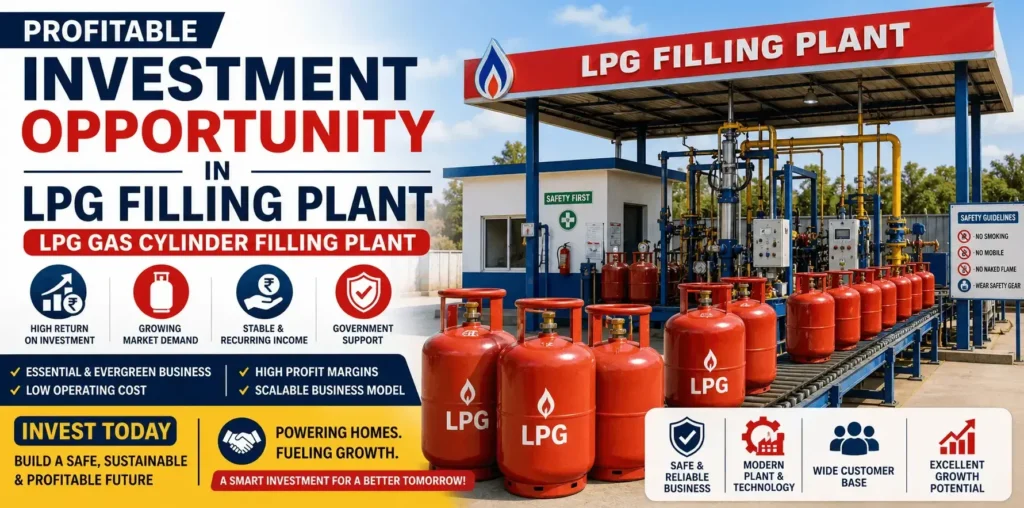
The demand for Liquefied Petroleum Gas (LPG) in India and across the globe is increasing steadily, driven by rising energy needs, urbanization, and the shift towards cleaner fuels. With this surge, the LPG gas filling plant or LPG Gas Cylinder Filling business has emerged as a highly profitable and sustainable investment opportunity. Entrepreneurs looking for a venture with long-term potential and government support should seriously consider setting up an LPG gas filling plant. This article provides a detailed guide on how to start, operate, and profit from an LPG gas filling plant business. Why Start an LPG Gas Filling Plant Business? The LPG gas filling plant business is not only capital intensive but also strategically important in contributing to national energy supply and sustainability. As households, hotels, industries, and transportation sectors increasingly rely on LPG, the need for localized, efficient gas distribution systems grows. Investing in an LPG gas filling plant can yield significant returns due to consistent demand and scope for B2B as well as B2C sales models. Market Demand and Opportunities India’s LPG consumption crossed 28 million metric tonnes in the last fiscal year, with major usage in domestic, commercial, and industrial sectors. The Pradhan Mantri Ujjwala Yojana (PMUY) and other government subsidies have added millions of LPG users from rural and semi-urban areas. Additionally, the growth of urban housing and food processing sectors ensures an ever-expanding market for LPG. This presents a golden opportunity for investors to start their own LPG gas filling plant and become an authorized distributor or independent service provider in the gas supply chain. The margins are attractive, and the ability to expand into LPG cylinder distribution, auto LPG, and even micro bottling units enhances long-term profitability. Types of LPG Gas Filling Plants There are primarily two types of LPG gas filling plants: Bulk LPG Filling Plant: These are large-scale units that receive LPG in bulk through tankers and refill into smaller cylinders of various sizes (5 kg, 14.2 kg, 19 kg, etc.). Mini LPG Filling Plant: These are smaller setups, suitable for rural or semi-urban areas, and often involve semi-automatic or manual filling operations. Both models have their own pros and cons depending on target market, budget, and operational goals. However, the LPG gas filling plant setup, regardless of scale, can generate steady revenue when planned strategically. Licenses and Legal Requirements Establishing an LPG gas filling plant requires multiple licenses and approvals from various government bodies. Here are the key requirements: Explosive License from the Petroleum and Explosives Safety Organization (PESO) NOC from Fire Department Environmental Clearance Factory License Trade License from local authorities Approval from the State Pollution Control Board Weights and Measures Certification for filling equipment All these permits ensure that your LPG gas filling plant meets safety, environmental, and quality standards. Complying with these regulations not only minimizes legal risks but also builds trust with customers and partners. Infrastructure and Equipment Needed Setting up a fully functional LPG gas filling plant involves considerable investment in land, machinery, and infrastructure. Here are the key components: Land Area: Minimum 1 to 2 acres depending on plant size Storage Bullets or Tanks: For bulk storage of LPG Filling Carousel System: Semi or fully automatic depending on capacity LPG Pumps and Compressors Cylinder Testing and Washing Units Safety Equipment: Fire suppression system, alarms, pressure gauges, etc. Admin Office and Control Room The infrastructure must follow safety norms and be designed to handle emergency situations. Automation in filling processes ensures accuracy and reduces labor dependency, which boosts operational efficiency in the LPG gas filling plant. Cost of Starting an LPG Gas Filling Plant The investment required varies depending on the scale and automation level of the plant. Here’s a rough breakdown: Mini Plant Setup: ?50 lakhs to ?1 crore Medium-Scale Plant: ?1 crore to ?2.5 crore Large-Scale Plant: ?3 crore to ?6 crore Additional working capital for staff salaries, licenses, fuel, maintenance, and marketing should also be factored in. While the capital requirement is significant, the LPG gas filling plant offers fast ROI due to bulk demand and margin opportunities. Profit Margin and Revenue Potential Profitability in this business depends on several factors such as plant capacity, distribution reach, operational efficiency, and pricing. Typically, margins in LPG filling range from ?30 to ?80 per cylinder depending on volume and B2B contracts. A plant that fills 3,000–5,000 cylinders per day can earn between ?1 lakh to ?2.5 lakh in daily profits. Adding services like cylinder delivery, auto LPG dispensing, or industrial supply can further increase revenue streams. This makes the LPG gas filling plant a high-margin business when operated with efficiency and scale. Manpower and Management Efficient staffing is crucial to operate a plant smoothly. A typical LPG gas filling plant requires: Plant Manager Technical Supervisors Operators and Filling Staff Safety and Maintenance Officers Administrative and Logistics Personnel All staff should be trained in fire safety, emergency protocols, and machinery handling. Continuous skill development and a strong safety culture will help your LPG gas plant maintain regulatory compliance and operational excellence. Challenges in LPG Gas Filling Plant Business Despite its lucrative nature, the business does come with challenges such as: High Initial Capital Strict Safety Regulations Regular Maintenance Requirements Market Competition from Established Brands Supply Chain Disruptions However, with proper planning, risk mitigation strategies, and adherence to regulations, these challenges can be effectively managed. Partnering with experienced consultants or hiring skilled managers can help overcome operational bottlenecks. Future Outlook and Expansion Possibilities With increasing energy demand and government push for clean fuel, the future of the LPG gas plant business is promising. Entrepreneurs can diversify into: Auto LPG Dispensing Stations Commercial Kitchen Supplies Mobile Micro LPG Filling Units Industrial LPG Supply Franchise or Dealer Networks By tapping into these segments, plant owners can scale their business and multiply revenues. Moreover, upcoming technologies such as IoT-based filling systems, automated leak detection, and AI-enabled logistics will transform the LPG industry further, providing more opportunities for innovation and expansion. Conclusion The LPG gas plant business is undoubtedly
List of Industrial, Medical and Specialty Gases Manufacturing Project Ideas.
The industrial and medical gases industry is a rapidly evolving sector that plays a vital role in healthcare, manufacturing, food processing, and electronics. In particular, medical gases manufacturing has emerged as a high-potential field due to the growing demand for quality healthcare and the increasing number of hospitals and homecare facilities worldwide. From oxygen and nitrous oxide to medical air and carbon dioxide, these gases are essential for patient treatment and surgical procedures. With 2025 on the horizon, new technological innovations and policy incentives are reshaping the industry, making this the perfect time for entrepreneurs and investors to explore opportunities in medical gases production. Emerging Opportunities in Medical Gases Manufacturing Medical gases refer to a variety of gases used in healthcare settings for treatment, diagnostics, and patient care. These include oxygen, nitrous oxide, carbon dioxide, helium, medical air, and nitrogen. The medical gases manufacturing industry must comply with stringent safety and purity standards, as even minor contamination can pose serious health risks. In recent years, the demand for these gases has skyrocketed due to the rise in chronic diseases, increased hospital admissions, and the COVID-19 pandemic that highlighted the need for medical-grade oxygen. As we move into 2025, the focus is shifting towards automation, quality assurance, and eco-friendly production processes. This transition opens the door for modern entrepreneurs to set up manufacturing units that are compliant, efficient, and profitable. Key Gases in Medical Gases Manufacturing Oxygen (O?):The most vital gas in any healthcare facility, oxygen is used in respiratory treatments, anesthesia, intensive care, and neonatal care. In medical gases manufacturing, oxygen must be produced at very high purity levels—typically 99% or more—and supplied in cylinders or bulk tanks. Nitrous Oxide (N?O):Commonly known as laughing gas, nitrous oxide is used for its anesthetic and analgesic properties, particularly in dental surgeries and childbirth. Its manufacturing process includes purification and liquefaction under controlled environments. Carbon Dioxide (CO?):While CO? is widely known as a greenhouse gas, in medical applications, it is used for insufflation during laparoscopic surgeries and as a component in medical mixtures. High-purity carbon dioxide is essential for patient safety. Medical Air:Comprising oxygen and nitrogen in specific ratios, medical air is used in respiratory therapy and anesthesia. It is often produced on-site in hospitals but can also be manufactured and supplied externally. Nitrogen (N?):Nitrogen is used to power medical devices, preserve biological samples, and prevent oxidation. Its inert nature makes it ideal for a range of applications in healthcare settings. Helium (He):Though less commonly used, helium is critical for magnetic resonance imaging (MRI) machines and as a component in gas mixtures for respiratory treatments. Setting Up a Medical Gases Manufacturing Unit To start a medical gases manufacturing business in 2025, several key steps must be followed: 1. Market Research and Business Planning Start by analyzing the market demand in your target region. Identify the most in-demand gases, potential customers (hospitals, clinics, emergency services), and current competitors. Create a detailed business plan outlining your production goals, investment needs, revenue projections, and marketing strategy. 2. Regulatory Compliance Manufacturing medical gases requires licenses and certifications from government health departments and drug control authorities. In India, for example, compliance with the Drugs and Cosmetics Act is mandatory. ISO certification, Good Manufacturing Practices (GMP), and FDA approvals (for export) are also recommended. 3. Site Selection and Infrastructure Choose a location that complies with zoning regulations and is near hospitals or transportation hubs. The facility should have proper ventilation, fire safety systems, and contamination control zones. Separate areas for gas generation, purification, filling, and storage are essential. 4. Machinery and Equipment Modern medical gases manufacturing plants use advanced technology for cryogenic distillation, pressure swing adsorption (PSA), and membrane separation. Equipment required includes: Air compressors Purifiers and filters Cryogenic storage tanks Gas analyzers Cylinder filling stations Leak detection systems Automation systems help maintain consistency and safety, reducing human error. 5. Quality Assurance and Testing Every batch of medical gas must be test for purity, pressure, and absence of contaminants. Testing should follow pharmacopeia guidelines (like IP, USP, BP) using gas chromatographs and other precision instruments. Ensure thorough documentation and traceability of each batch produced. 6. Packaging and Distribution Medical gases are typically store in high-pressure cylinders or liquid form in insulate tanks. Proper labeling, color coding, and barcoding are essential for safety and compliance. Develop partnerships with logistics providers who can ensure safe, timely delivery to hospitals and clinics. 7. Workforce and Training Hire qualified engineers, chemists, and operators. Regular training on safety protocols, equipment handling, and emergency procedures is critical. A safety officer should oversee operations to ensure adherence to occupational health standards. Investment and Profitability The initial investment in a small-scale medical gases manufacturing unit ranges from ?2 crore to ?10 crore, depending on scale, automation, and location. Key cost components include land, machinery, labor, licenses, and working capital. However, the return on investment (ROI) is high, with profit margins ranging from 20% to 35%, especially when contracts are secure with government hospitals, nursing homes, and private healthcare chains. Technological Innovations in 2025 In 2025, several advancements are expected to revolutionize medical gases manufacturing: Green Hydrogen Integration: Hydrogen, a byproduct in some processes, can be convert into medical-grade gases with minimal carbon footprint. AI & IoT for Quality Control: Predictive maintenance, real-time monitoring, and automated alarms can significantly enhance product safety and reduce downtime. Modular Plants: Compact and mobile gas generation units are gaining traction, especially for remote or rural hospitals. Remote Monitoring: Cloud-based platforms allow plant managers to track pressure, purity, and cylinder inventory from anywhere. Challenges and Risk Management While the industry is lucrative, it comes with challenges: Regulatory Scrutiny: Non-compliance can result in plant shutdowns or legal penalties. Safety Hazards: Gases under pressure are inherently risky. Leakages or explosions must be prevent with rigorous safety protocols. Supply Chain Disruptions: Raw materials or cylinder shortages can delay production. Diversifying suppliers is essential. Competition: The rise in demand has led to a surge in new entrants. A strong value proposition is key to standing out.
Medical Oxygen Gas Plant Oxygen Bottling Plant.
India’s growing demand for healthcare infrastructure and industrial development has significantly increased the need for oxygen. Oxygen gas, used widely in hospitals, metal processing, chemical industries, and more, is a critical resource. Setting up an Industrial Oxygen Gas Plant has become a profitable and impactful business opportunity. Whether for medical or industrial use, an oxygen gas plant serves essential purposes in life-saving treatments and manufacturing processes alike. With the right planning, regulatory adherence, and investment, entrepreneurs can establish a successful oxygen gas plant to meet the local and national demand. Why Oxygen Plants Are in Demand Over the past decade, the oxygen supply chain has gained attention due to its indispensable role, especially during public health emergencies like the COVID-19 pandemic. Hospitals rely on medical-grade oxygen to treat respiratory issues, while industries use it for welding, cutting, refining, and more. The surge in infrastructure development, steel manufacturing, and increased health awareness has driven up the demand for reliable oxygen production. An Industrial Oxygen Gas Plant serves this dual demand by catering to both sectors, ensuring steady returns on investment while contributing to essential services. See Also: PET Film Production Types of Oxygen Gas Plants Before diving into the setup process, understanding the various types of oxygen plants is important. The two main types are: 1. Cryogenic Oxygen Plants These use air separation through cryogenic distillation to produce high-purity oxygen. They are ideal for large-scale industrial or medical needs. 2. PSA (Pressure Swing Adsorption) Oxygen Plants These are compact, energy-efficient systems used mostly in hospitals or small-scale industries. PSA technology separates oxygen from atmospheric air using adsorbents like zeolite. While cryogenic plants offer higher output, PSA plants are quicker to install and cost-effective, making them suitable for regions with urgent medical needs or moderate industrial requirements. Step-by-Step Process to Set Up an Industrial Oxygen Gas Plant 1. Market Research and Feasibility Study Start with an in-depth market analysis. Study the local demand for oxygen, supply gaps, and potential clients including hospitals, industrial units, and distributors. Also, identify competitors, pricing models, and potential barriers such as logistics or licensing challenges. 2. Business Plan Preparation A comprehensive business plan should include: Type of plant (PSA or Cryogenic) Estimated production capacity (measured in Nm³/hr) Target industries (medical, manufacturing, etc.) Capital investment requirement Regulatory and compliance strategy ROI projections This plan will guide you and also be essential for investors and lenders. 3. Land & Location Selection Choose a location with easy access to utilities like water, power, and roads. Industrial areas or health corridors are preferred. For larger plants, proximity to industrial zones ensures consistent orders. A typical Industrial Oxygen Gas Plant needs about 500–1000 square meters, depending on the capacity and equipment setup. See Also: Lignocellulosic Plastic Composites 4. Legal Registrations and Licenses You’ll need multiple permits to legally operate: Company Registration (Private Ltd, LLP, or Proprietorship) Factory License Pollution Control Board (PCB) Clearance PESO (Petroleum and Explosives Safety Organization) approval ISO Certification for medical-grade oxygen Drug License from the Central Drugs Standard Control Organization (CDSCO) for medical oxygen Consulting a compliance expert can ease this process significantly. 5. Sourcing Equipment and Technology Partner with reliable suppliers for machinery. Equipment includes: Air compressor Air separation unit (PSA or Cryogenic) Oxygen storage tanks Cylinder filling station Control panel & monitoring system Ensure the machinery meets BIS/ISO standards for safety and performance. For Industrial Oxygen Gas Plant operations, efficiency and reliability of equipment are crucial. 6. Installation and Commissioning Hire experienced engineers and technical staff for installation. Once set up, the plant needs thorough testing, calibration, and trial runs. Make sure all safety protocols are in place. Professional training of operators ensures smooth functioning and compliance with industry safety standards. 7. Power and Water Supply An uninterrupted power supply is necessary for plant operations. You may need a dedicated transformer or generator backup. Water is used for cooling and purification; install a water treatment unit to maintain purity standards. 8. Storage and Distribution Oxygen is stored in cylinders or cryogenic tanks. A distribution system must be developed to deliver oxygen safely to customers. Vehicles equipped for cylinder transport or tankers should comply with transport safety norms. Use tracking software to monitor stock levels, delivery schedules, and client orders. 9. Quality Control and Compliance Ensure oxygen purity meets industry norms—medical oxygen must be 99% pure. Install online gas analyzers to monitor purity levels continuously. Regular audits and documentation are vital for compliance and maintaining licenses. 10. Marketing and Client Acquisition Once operational, market your services to hospitals, clinics, industrial units, and government procurement bodies. Use digital platforms, offline promotions, and tender listings to grow your reach. Highlight features like: 24×7 availability Custom delivery options ISO & regulatory compliance Emergency support Building long-term contracts with hospitals and industries can stabilize cash flow and reduce risks. Investment and Cost Breakdown Setting up an Industrial Oxygen Gas Plant can cost anywhere between ?1 crore to ?10 crores, depending on size, capacity, and technology. Here’s a basic cost outline: Expense Head Approximate Cost (INR) Land and Construction ?20 – ?50 lakhs Machinery & Installation ?60 lakhs – ?5 crores Licensing & Legal Fees ?5 – ?10 lakhs Power Backup & Utilities ?10 – ?25 lakhs Working Capital (6 months) ?20 – ?50 lakhs Marketing & Logistics Setup ?5 – ?15 lakhs Government subsidies under schemes like the Production Linked Incentive (PLI) Scheme or Emergency Health Response Package (ECRP) may reduce costs. Bank loans or MSME support options can also assist with financing. Challenges to Address Running an oxygen plant isn’t without hurdles: Regulatory Complexity: Navigating multiple licenses can delay launch. Safety Risks: Oxygen is highly reactive—strict protocols are essential. Skilled Workforce: Hiring and retaining skilled operators is crucial. Market Fluctuations: Prices and demand can vary seasonally or due to policy changes. However, with good planning and robust systems, these challenges can be managed effectively. Future Scope of Oxygen Gas Industry The global oxygen market is growing, driven by healthcare expansion, green steel production, wastewater treatment, and chemical processing. India,