
Introduction: Why Manufacturing Still Wins
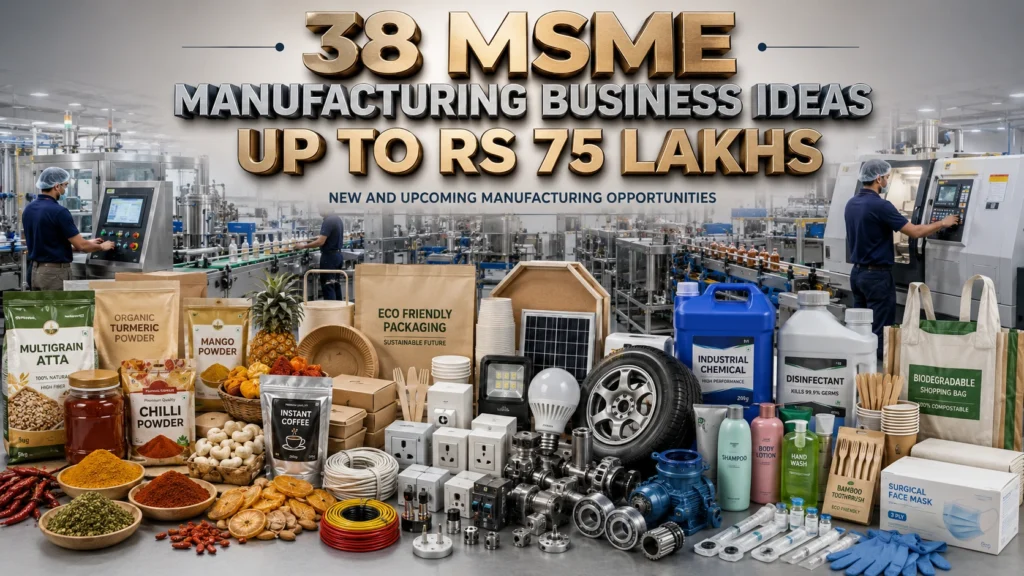
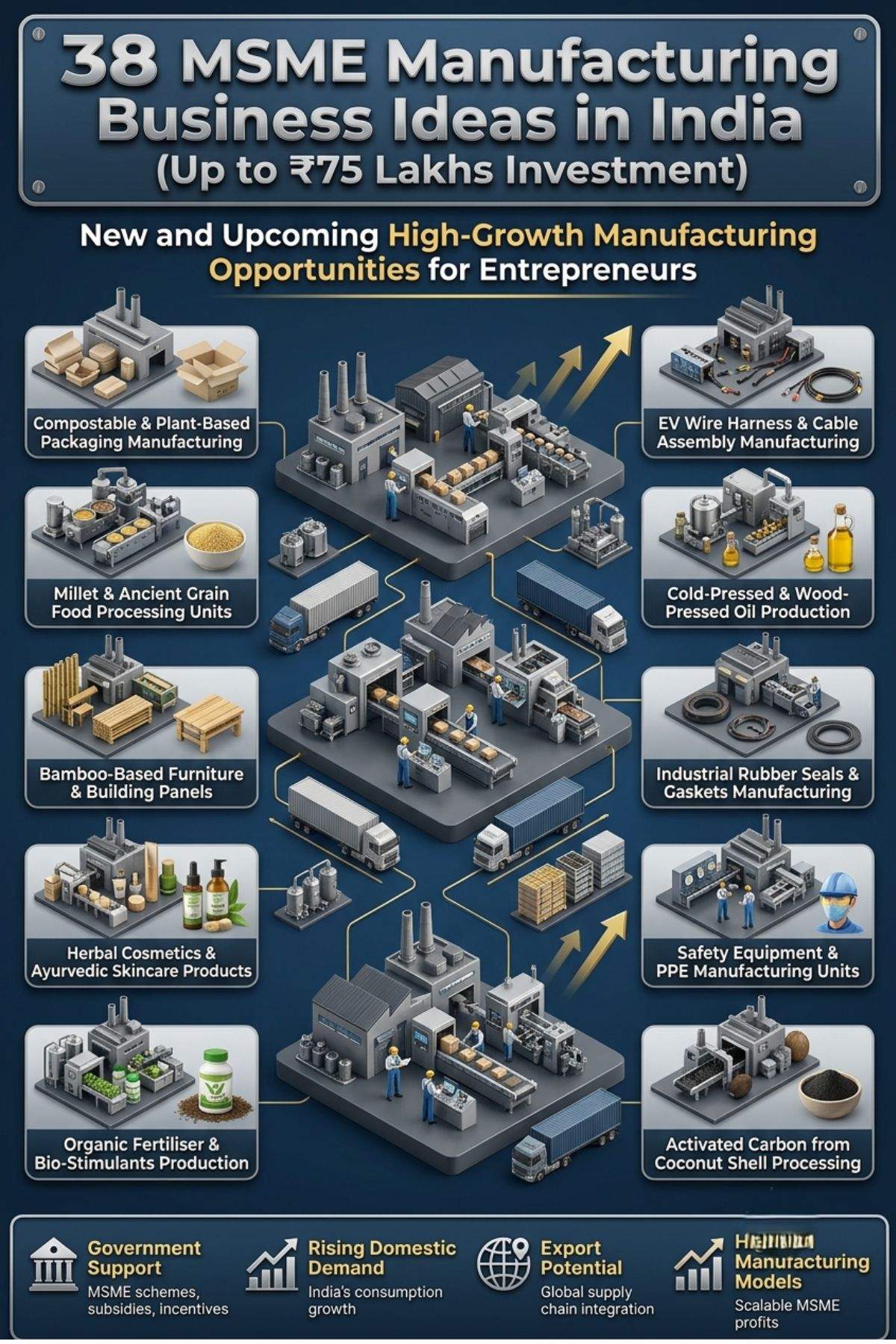
India’s MSME manufacturing sector is at a turning point. There has been a perfect alignment of policy tailwinds, expansion of domestic demand and structural changes in global supply chains, that is unusual. These 38 MSME manufacturing business ideas are a working blueprint, not a motivational talk for the first time entrepreneur and investor who is ready to study the opportunity thoroughly. The investment range covered here is deliberately chosen such that, investment up to ₹75 lakhs. It falls short of the micro enterprise, but it’s not too much for bank loans, government grants or reasonable personal investment.
As per Ministry of MSME, the MSME sector is already contributing to over 29% of GDP and employing more than 1.11 crores of people in India. However, thousands of product categories are still not tapped, particularly in speciality manufacturing, agro-processing and industrial components. Those who see these gaps now are the ones who create sustainable and profitable ventures in the future.
Why This Is the Right Moment to Enter MSME Manufacturing
There are multiple structural forces at play. Global buyers are making supply chains more diversified by no longer relying on only one country. Although wages have been increasing in India, it has been found that the wages are still low as compared to the East Asian countries, in many verticals of the manufacturing industry. The buying habits of the domestic market are changing to more branded, packaged and processed products that MSMEs can compete at relatively low investment.
Moreover, DPIIT data has always reflected that manufacturing investment in Tier-2 and Tier-3 cities yields higher ROCE as compared to investments in metros due to lower cost of land, labour and logistics. The Industrial corridors in Rajasthan, Uttar Pradesh, Madhya Pradesh, Odisha and Telangana are maturing with ‘plug and play’ factory sheds, reliable power and road connectivity. With the addition of government procurement through the GeM portal, one has a new channel of demand for new producers who are not present 10 years ago.
The profit logic is also attractive. Companies of this size and brands with established products don’t compete in smaller product categories that are specialised. This presents huge white space for MSME manufacturers who have a strong understanding of their product category, maintain quality and establish connection with the B2B buyers or distributors before scaling.
Government Support: Schemes Every Aspiring Manufacturer Must Know
PMEGP – Prime Minister’s Employment Generation Programme
PMEGP is still the most streamlined and direct entry stage for new MSME manufacturers. It provides project cost subsidy ranging from 25–35% up to ₹50 lakhs for manufacturing units and has lower subsidy rate for urban entrepreneurs and higher subsidy rate for SC/ST, women and ex-servicemen. Processing of applications is done at KVIC, KVIBs and District Industry Centres. The rest of the money comes from the bank and the entrepreneur’s own margin may be as little as 5–10% of project cost.
CGTMSE – Collateral-Free Lending for MSMEs
The Credit Guarantee Fund Trust for Micro and Small Enterprises will facilitate collateral-free credit facilities for eligible MSME manufacturers up to ₹2 crore. This is game-changer for asset-light businesses or entrepreneurs who don’t have mortgageable assets. Currently, most banks actively encourage CGTMSE-backed viable manufacturing projects.
Technology Upgradation Fund and PLI Ancillary Benefits
Technology Upgradation Fund Scheme (TUFS) offers subsidy on term loans for machinery to enable the new units to acquire modern machines at lower effective cost. In parallel, various schemes such as Production Linked Incentive (PLI) are driving demand from the supply chain that MSME sub-suppliers and ancillaries can directly tap.
Udyam Registration and GeM Marketplace
All MSME manufacturers should Udyam Registration before starting their business. It enables access to priority sector lending, reduced collateral and access to government procurement through the Government e-Marketplace (GeM). GeM has proved to be one of the most formidable demand channels for small manufacturers, giving them direct access with the institutional buyers in the central and state government departments.
38 New and Upcoming MSME Manufacturing Business Ideas Under ₹75 Lakhs
1. Compostable and Plant-Based Packaging
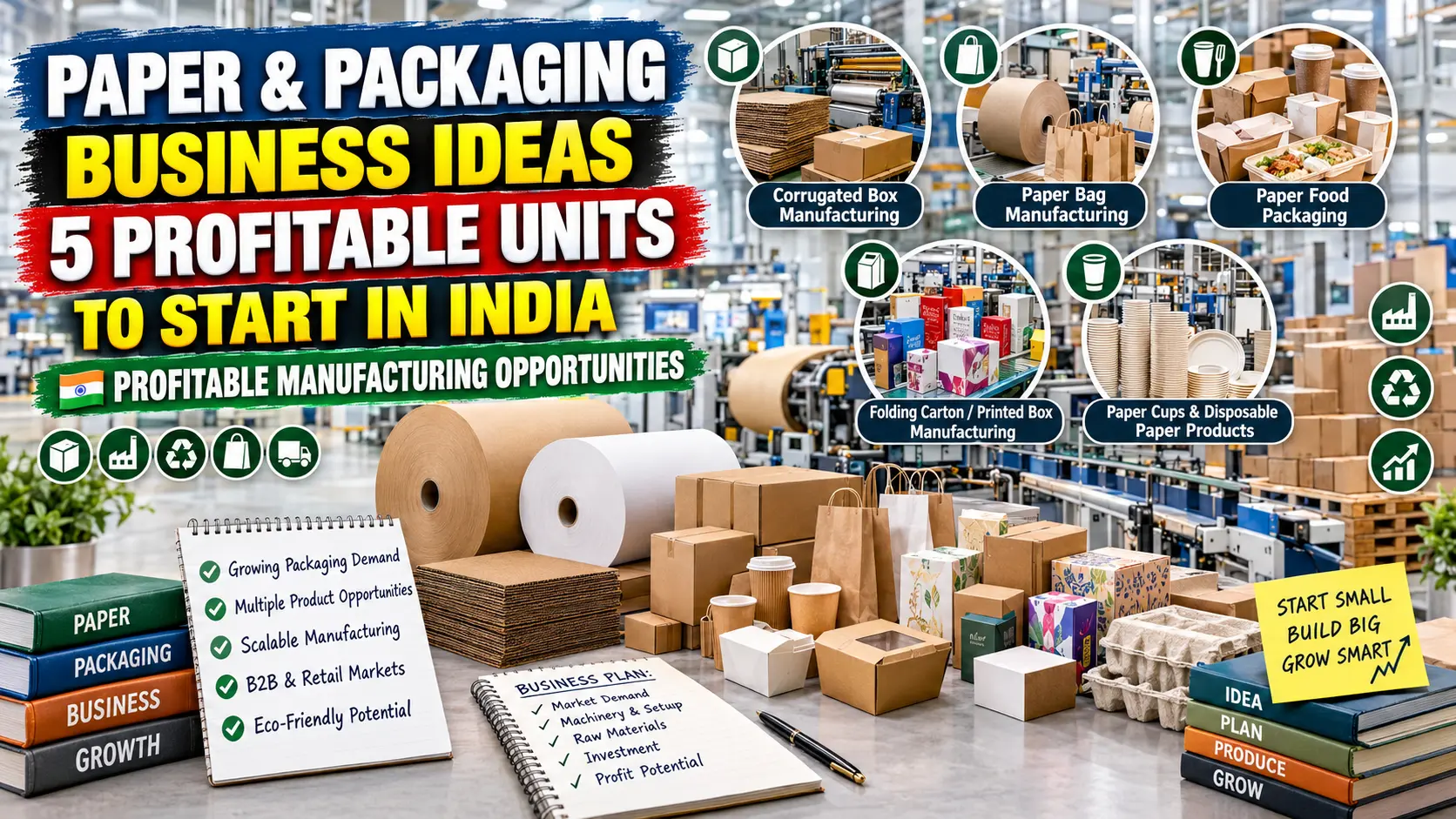
The plastic restriction policy in India has ushered in a compulsory demand shift towards alternative options of packaging made from plants. Areca leaf plates, sugarcane bagasse containers, cornstarch films, and cassava-based bags are being provided by manufacturers to food chains, quick-service restaurant chains, airlines, and event managers. The purchase of thermoforming or hydraulic press setups with agricultural by-products can cost between ₹45 lakhs. The raw materials are mainly agricultural wastes and the margin is over 30%, due to the low acquisition cost.
2. Millet and Ancient Grain Food Processing
Millets have come of age as a category of commercial crops. The Ragi pasta, jowar flour mixes, bajra health bars and foxtail millet porridge products are now available on major e-commerce platforms at a considerable premium over the grain-based products. A small food processing unit can be established with grading, roasting and packaging facility for as low as ₹30 lakhs. For this category, there is also the possibility of extra funding through the PMFME scheme and extra marketing assistance.
3. EV Wire Harness and Cable Assembly
The need for components is higher than what can be delivered by the big Tier 1 manufacturers by the time India’s e-vehicle population grows. There are several high demand sub-assembly products such as wire harnesses, battery management system connectors, and cable assemblies for two- and three-wheel EV types. A precision wire harness unit with testing facility will cost you ₹40–70 lakhs and you can get a deal from the EV OEMs (originating equipment makers) in Pune, Chennai, Bengaluru, and the NCR belt.
4. Cold-Pressed and Wood-Pressed Oils
The consumer willingness to pay 50-80% more for cold-pressed oils as compared to refined oils is the sign of a gradual change in their attitude towards health, which is now mainstream and not emerging. Cold pressed oils like groundnut, sesame, coconut and mustard are doing well in organic outlets, modern trade and D2C outlets. The cost of a traditional wood-press or steel-press unit with bottling and labelling can begin at ₹25 lakh. The distinguishing features are quality uniformity and the ability to trace back the sources of raw materials.
5. Bamboo-Based Furniture and Building Panels
The National Bamboo Mission provides direct subsidy for start-up of a bamboo processing and furniture making unit on the investment of the plant and machinery. Architects and interior designers in the mid to high-end segment are actively looking for bamboo flooring, bamboo composite boards, bamboo window frames and bamboo modular furniture parts. There is a stable demand for quality certified bamboo products from Japan, Germany and UK. The investment amount varies from ₹35 lakh to ₹65 lakh based on the complexity of the products.
Read the Complete Book Here: Bamboo Plantation and Utilization Handbook
6. Industrial Rubber Seals and Gaskets
Industrial seals and gaskets are needed in oil refineries, pharmaceutical plants, chemical manufacturers and food processing machinery. To prevent risks related to lead time, many big buyers prefer getting their MSME supplies from domestic suppliers instead of imported suppliers. A rubber, PTFE and Graphite Gasket compression moulding/die cutting machine costs only ₹ 60 Lakhs to set up. The B2B sales cycle is longer, while repeat orders are high and predictable.
7. Herbal Cosmetics and Ayurvedic Skincare
Indian herbal beauty products market is among the fastest-growing sub-segments of FMCG. The oils used in hair care products, face serums, body scrubs, herbal shampoos and natural lip balms which are made in a WHO-GMP unit can be distributed to retail, e-commerce, and private-label markets. The cost of compliant manufacturing unit is in the range of ₹30–55 lakhs. Quality in formulation and third-party testing increases the buyer’s confidence particularly for export and modern trade.
8. Safety Equipment and PPE Manufacturing
As construction activity grew post-pandemic, safety standards became mandatory for factories, and awareness of the institutions has grown, thereby increasing India’s safety equipment market forever. This includes hard hats, protective footwear soles, reflective safety vests, and hearing protection products, which have simple tooling requirements, and can be manufactured at a low cost of ₹55 lakhs. Government procurement through GeM, large infrastructure contractors are reliable source of demand.
9. Organic Fertiliser and Bio stimulants
The increasing cost of chemical inputs and soil degradation issues are pushing farmers to look for alternatives, such as the use of organic and bio-based products. A unit for vermi-compost, seaweed-based bio stimulants, phosphate-solubilising bacteria inoculants or liquid humates is a growing and yet not well-served market. The basic set up costs are less than ₹20 lakhs whereas the fermentation based liquid biofertilizer units will cost around ₹50 lakhs with decent profits on the registered biofertilizers.
Get Detailed Project Report (DPR): Fertilizers: Inorganic, Macronutrients, Micronutrients, NPK, Urea & Phosphate Fertilizers
10. Activated Carbon from Coconut Shell
Activated carbon used in water purification, air filter, gold extraction, pharmaceuticals and food decolourising. Coconut shell based activated carbon is a major producer and exporter in India. The cost of a small-scale activation kiln and processing unit is ₹55-70 lakhs. Demand for food- and pharma-grade varieties from Europe, Middle East and North America is steady throughout the year.
11. Specialty Paper and Wax-Coated Products
Bakeries, fast food chains, pharmaceutical blister packaging and FMCG companies have large volumes of food grade use greaseproof paper, silicone release liners, and wax coated wrapping materials. Paper conversion and coating equipment costs less than ₹50 lakhs, and is available for institutional buyers who want to go for the local supply to fulfil their need for the faster lead times and custom sizes.
12. Designer and Aromatherapy Candles
Scented candles, soy wax candles, and aromatherapy pillar candles have emerged from niche to mainstream in the world of gifting and lifestyle. An investment of as low as ₹18 lakhs is needed to start a candle manufacturing unit along with fragrance blending, custom mould casting, and quality packaging. Export to Amazon Global and trade platforms to the US, UK, and European Union provides solid foreign exchange income on relatively simple goods.
13. Aquaculture and Shrimp Feed Manufacturing
Shrimp and fish farming in India, which is mainly practiced in Andhra Pradesh, Odisha, West Bengal, and Tamil Nadu, demands high quantities of compound feed prepared with specific nutritional formulas. Domestic MSMEs close the real gap in the market for imported feed which is more costly. The cost of a pellet mill with formulation capacity is ₹35–60 lakhs. There is a high level of captive demand with near instant off-take from aquaculture companies located nearby.
14. Dry Fruit Grading and Value Addition
Large quantity of cashews, almonds, pistachios, walnuts are imported in India and a small value is added locally before sale. A premium pricing unit, which also grades, roasts, flavours and repackages, makes it a high margin branded gifting, health food retail, airlines and direct-to-consumer e-commerce solution. The set-up cost is around ₹35 lakhs and the payback is normally in two to three years.
15. Pet Food and Veterinary Supplement Manufacturing
Pets are a major part of urban care market and its growth is more than 15% per year in India. Domestic production of dry kibbles, baked treats and functional supplements for dogs and cats are undersupplied. The cost of a small unit for extrusion / baking food for pets is ₹40-60 lakhs. The online channels and veterinary retail provide clear distribution channels, but don’t involve the same kind of FMCG distribution networks.
16. Paper Straws and Eco-Stationery
The restrictions on plastic straws have resulted in a demand that has been forced, with good margins. Paper straw converting machine which is set up with ₹ 30 lakhs supplies to food chains, hotels and institutional buyers. Also on its doorstep are categories like recycled notebooks, seed-embedded greeting cards and eco-friendly office supplies.
17. Liquid Detergents and Surface Cleaners
Simple blending and emulsification process are used in the manufacture of household liquid detergents, floor cleaners, bathroom disinfectants, and kitchen degreasers. Small scale blending plant (filling and labelling) with an investment of less than ₹ 20 lakhs can supply private labelled products to supermarkets and institutional buyers such as hotels, hospitals, factories etc. This is a good cash-flow business with operating margins between 28-38%.
18. Paver Blocks and Cement Concrete Products
Demand for interlocking paver blocks, kerb stones and precast drainage covers is ongoing from urban infrastructure projects, township developments and government road programmes. A vibro-compressor based paver block unit costing under ₹35 lakhs can provide to the builders, municipal contractors or real estate developers. GeM registration offers extra government procurement opportunity.
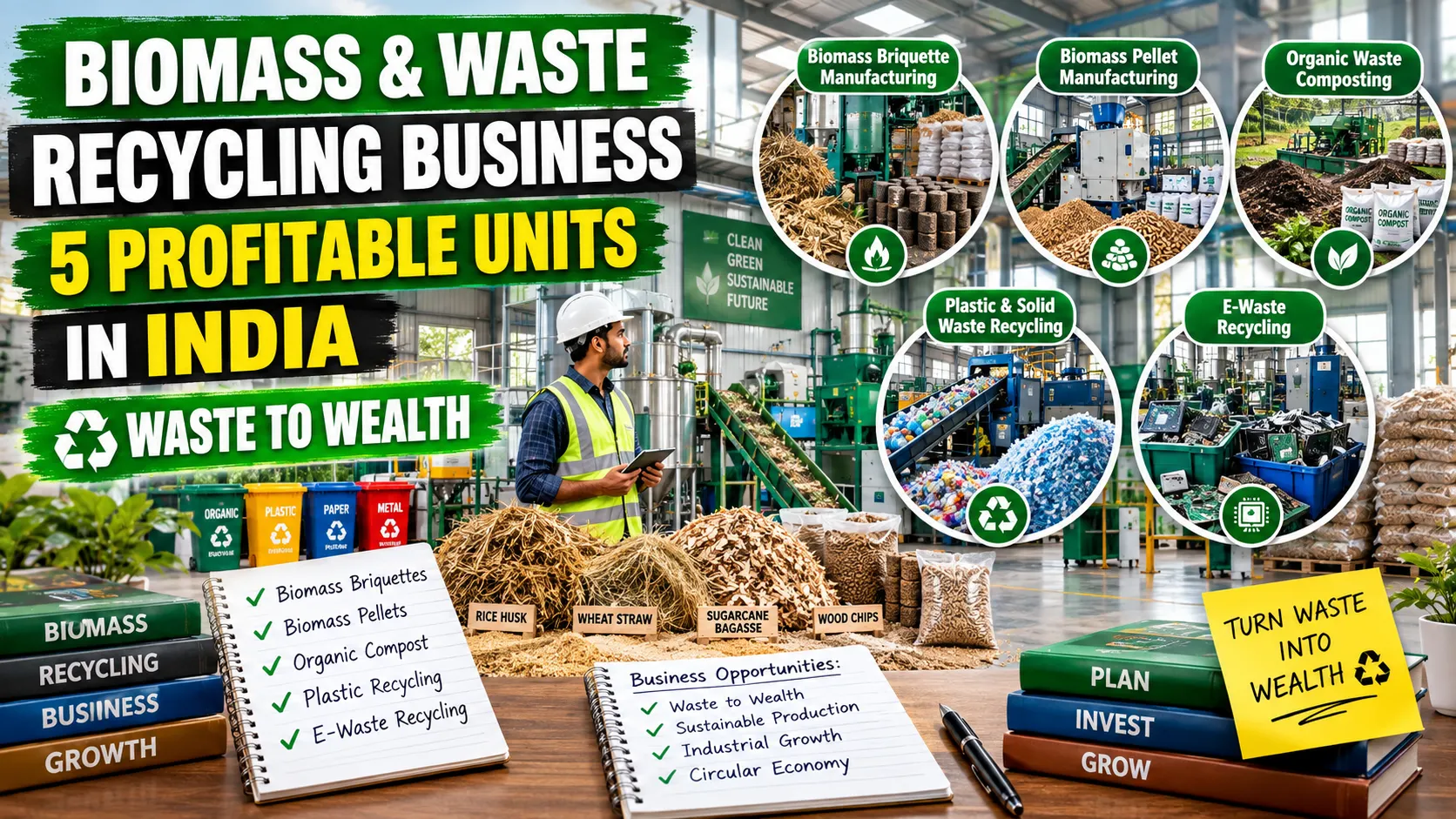
19. Electronic Waste Recovery Unit
India has a huge and ever-increasing e-waste stream with lots of materials that can be recovered — copper, gold, silver, aluminium and plastics. A mechanical shredding and physical separation unit for collecting and recovering e-waste can be set up for ₹45–65 lakhs by a licensed unit. Margins are excellent, due to the fact that most of the feedstock is underpriced, and the refined recovered metals are market priced.
Find high-return business ideas based on your budget & ROI
20. Reusable Cotton and Jute Bags
Retail chains, FMCG brands and fashion labels are now asking for sustainable packaging solutions and also custom cotton bags or jute bags are being ordered in bulk amounts. Seizing in addition to screen-printing system rated at Rs. 18 lakhs is utilized for corporate giving, export orders and institutional supply. European buyer willingness to pay a premium for sustainability is particularly appealing for export.
21. Masala and Spice Blending Unit
Branded spices have a 50–120% advantage over commodity spices in case they are sold under premium packaging. There are also regional masalas like Bisi belle bath mix in Karnataka, rasam powder in Tamil Nadu, and choler masala in Delhi that have cult followings, which can now be sold commercially across the country by ecommerce players. You can have a good cash flow with such a line of cleaning, roasting, grinding and packing and it would cost ₹ 22 lakhs only.
22. Aluminium Extrusion Components and Fabrication
Aluminium profiles and fabricated sections for construction and modular furniture and automotive applications are strong in demand from the builders, interior designers and OEM assembly units. A CNC cutting, drilling and powder-coating machine for domestic market is being manufactured at a cost of ₹65 lakhs which is manufactured in domestic market which can provide quicker turnaround than imported sections. The continuous growth of mid-sized cities in India is fueling consistent demand.
23. Frozen Ready Meals and Snacks
The concept of quick commerce and dark kitchens has revolutionized the way urban Indians have been doing their grocery shopping. Frozen patties (paratha, tikki, momos, ready-to-cook), have high repeat purchase rates and are fast moving categories. The cost of the processing unit with blast freezing is ₹ 60 – 75 lakhs. Modern channels of trade and online grocery delivery provide direct access to high-frequency buyers.
24. Solar Mounting Structure Fabrication
Demand for ancillary products like galvanised steel mounting structure, aluminium racking systems and hardware kit has been created as a result of India’s aggressive target for solar energy.India’s ambitious solar power goals have created ancillary demand for mounting structures made of galvanised steel, aluminium racking systems, and hardware kits. An MSME based fabrication unit with the welding, drilling and zinc phosphating services of less than ₹55 lakhs can serve EPC project developers, rooftop solar installers, large solar farm contractors during the entire implementation of the project.
25. Incense Sticks and Dhoop Products
The agarbatti industry is modernizing towards making the product free from wood charcoal, smoke and low volume of smoke and with essential oils, which have premium pricing in domestic and export markets. A mechanised incense stick unit which costs ₹22 lakh is capable of producing 500–800 kg per day. Religious goods importers in the United States, the United Kingdom, South Africa and Southeast Asia continue to supply a valuable source of foreign exchange as well as domestic demand.
26. Industrial Brush Manufacturing
The few MSMEs produce cylindrical brushes, strip brushes, and disc brushes in steel rolling mills, textile looms, food processing conveyor, and cleaning machines. Demand among industrial maintenance contractors and machinery OEMs is holding steady. A medium scale unit of up to ₹42 lakhs can provide B2B customers on long term supply contracts with good repeat order economics.
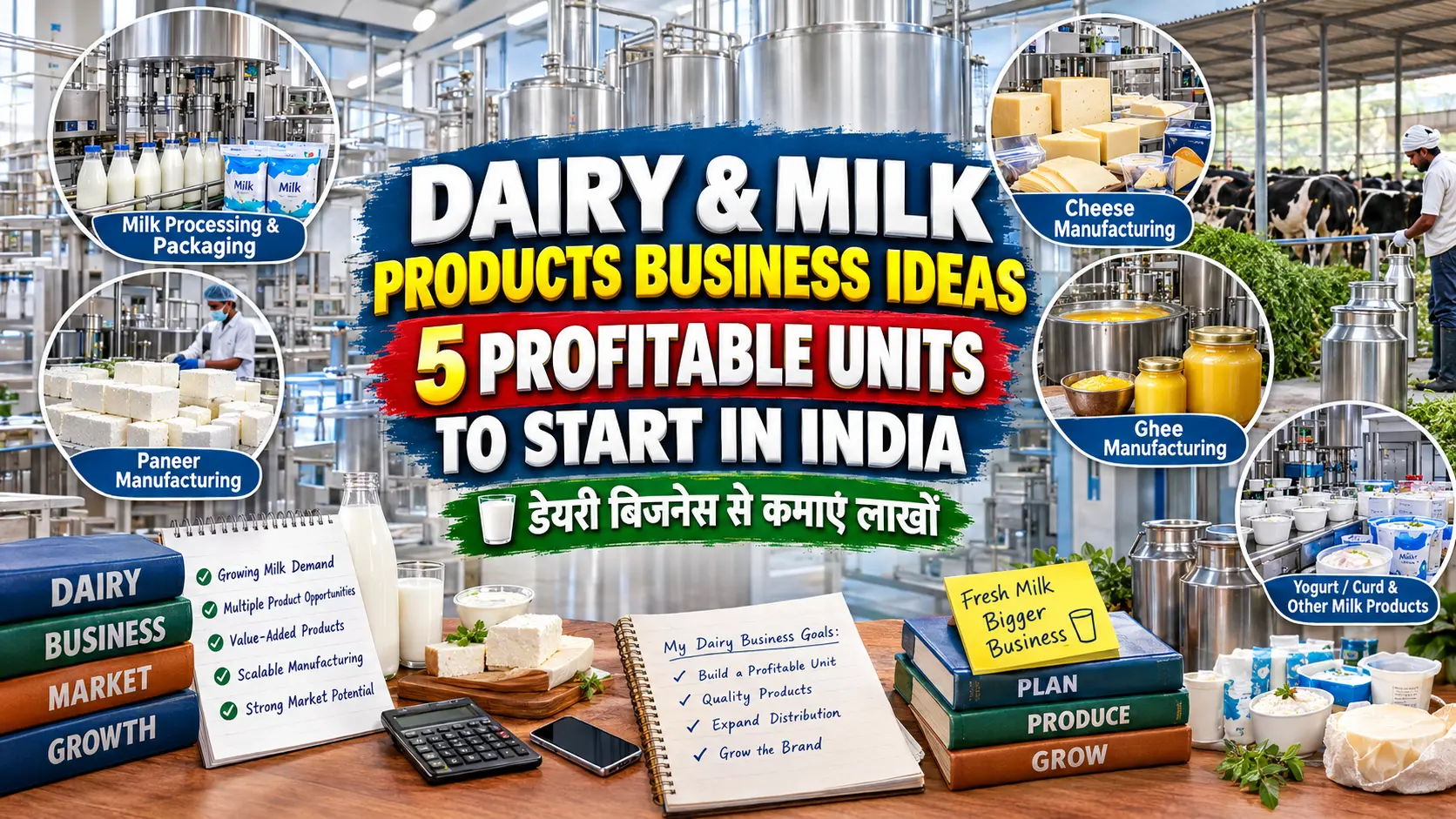
27. Dairy Value Addition – Paneer, Ghee, and Flavoured Dairy
The large milk surpluses in India and the fact that the processing units are not integrated, renders it possible even for small-scale processors to procure raw milk at lower prices and make use of it in the production of premium packaged paneer, artisanal ghee, or flavoured lassi for the urban market. With assured quality and reliability, a small processing unit ranging from ₹38 Lakhs to quick commerce, modern trade can achieve payback in 24-30 months.
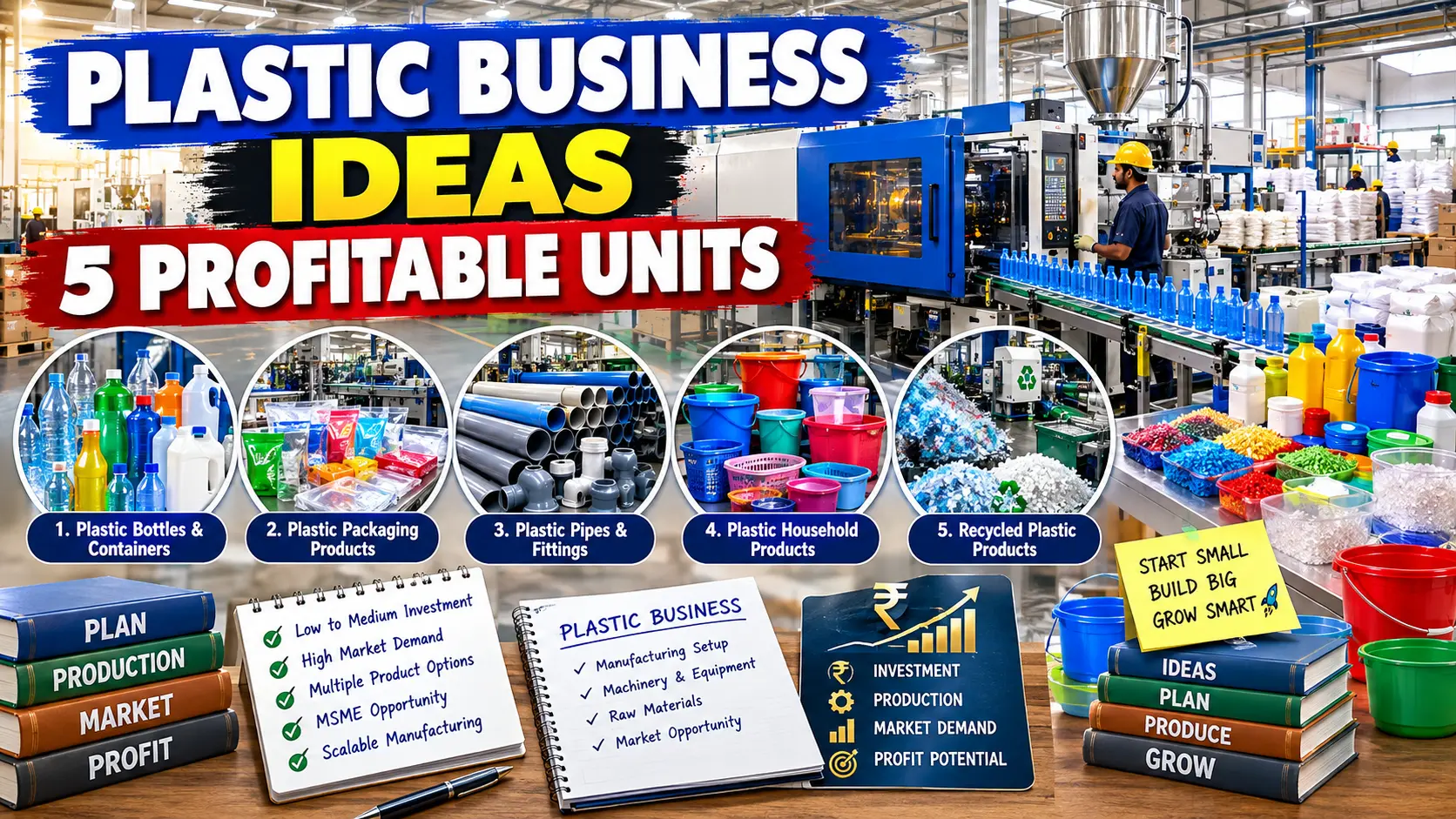
28. Plastic Injection Moulded Components
Thousands of MSMEs are involved in the production of plastic components for appliances, auto ancillaries, medical devices and consumer products. Two to three moulds 150–250 tonne injection moulding machine can be purchased at a cost of ₹55–70 lakhs and can yield a steady income for business owners by supplying the OEMs and assembly units. Focus on a single product family, whether automotive interior clips, medical device housings or appliance knobs, creates a process competency that drives premium pricing.
29. Terracotta and Ceramic Home Décor
The Indian ceramic or the terracotta craft is being mechanised in the right direction – modern kilns, standardised size, modern design languages that are pleasing to the export buyers, in the US, UK, Germany and Japan. The mid-scale unit, with a price tag of ₹32 lakh, is aimed at home décor importers and eCommerce platforms which face problems of inconsistent quality from cottage industry artisans.
30. Fibre Reinforced Plastic (FRP) Products
Use of FRP pipes, storage tanks, gratings, and panels in chemical plants, water treatment plants, telecom towers and construction. The hand layup and filament winding unit with zero price of ₹55 lakhs is used to manufacture corrosion resistant FRP pieces which can be substituted by costly stainless steel or heavy concrete. The demand side of industrial and municipal infrastructure projects is stable.
31. Canteen and Institutional Packaged Food
Semi-processed foods like vegetable cuts, marinated proteins, par-cooked rice, packaged chutneys, such as are produced in a factory under good hygienic conditions for bulk packing are required for factory canteens, hospital catering, school midday meal programmes, and railway catering. A food processing and institutional supply unit is operating below the price of ₹40 lakhs, which supplies food to large employers and catering contractors on monthly supply contracts.
32. Wire Mesh and Expanded Metal Products
Welded wire mesh, hexagonal wire netting and expanded metal sheets are used in both construction and animal enclosure and agricultural applications, and safety for miners. The wire drawing, welding and mesh cutting machinery with a value of up to ₹50 lakhs fetches B2B revenue from hardware distributors, construction contractors and farm supply retailers. Volume driven margins are flat as the cost of materials is predictable.
33. Powder Coating and Metal Surface Treatment Services
Surface treatment is essential for all steel furniture, aluminium windows, automotive parts & industrial equipment manufacturers. A powder coating and phosphating jobwork unit with a cost of raw input of Rs 42 Lakhs becomes a source of assured service revenue when it is set up in or near an industrial cluster. The key to success is location — close to fabricators and manufacturers, utilisation rates will be high.
34. Herbal Veterinary Products
Herbal feed additives, mineral lick supplements and teat dips are gaining popularity among livestock farmers and dairy operators as a replacement of costly allopathic veterinary inputs. Small herbal veterinary drug manufacturing unit of up to 30 Lakhs can be supplied through veterinary distributors, cooperative dairy networks and animal husbandry department procurement programmes.
35. Sanitary Napkin Manufacturing (Micro to Medium Scale)
The government health programs are ongoing and inclusive, with their reach to provide access to menstrual hygiene products continuing to grow, particularly in the rural and semi-urban markets. MSME sanitary napkins are a proven socially impactful model of business and are supported by PMEGP. District-level distribution eliminates direct competition with big brands. The functional unit is priced at less than ₹32 Lakhs and is eligible for several incentive schemes from State Governments.
36. Electric Switchgear Enclosures and Panel Boxes
The construction and industrial sectors have a large demand for distribution board enclosures, metering panel boxes and industrial control panel cabinets. Electrical contractors, panel OEMs and builders receive project-based orders from a sheet metal fabrication and powder-coating shop which costs ₹60 Lakhs. Demand is structurally sound in India and is closely tied to construction activity levels.
37. Sustainable Textile Products and Upcycled Fabric
Garment export waste is re-processed in to wiping rags, industrial stuffing material, non-woven fabric panels and fashion accessories are upcycled. There are three types of demand channels: urban fashion brands, export businesses interested in circularity and industrial cleaning product manufacturers. A quick start and scale up collection, sorting and conversion unit for less than ₹22 lakhs.
Related Article: How to Start a Textile & Apparel Manufacturing Unit: ₹5 Cr Investment, ₹20 Cr Revenue Potentia
38. Enzyme-Based Industrial and Household Products
Enzymes for drain cleaning, laundry, wastewater treatment and in the textile, industry are a technically differentiated product category with high demand in B2B. Industrial enzymes are used in the textile, leather and food processing industries in India, but small-scale production of such enzymes is limited. A blending and packaging unit that imports enzyme concentrates with a cost of less than ₹45 lakhs is being used for both industrial and retail purposes, providing better margins when compared to commodity cleaners.
Import–Export Opportunity Analysis for New Manufacturers
India’s trade tide is quickly turning in Favor for manufacturing sector. Consistent growth in labour-intensive & speciality manufactured exports is reflected in the statistics of the Export-Import Bank of India (Exim Bank). The ideas listed above have interesting export stories.
Indian MSME producers have a regular presence in the export markets of the West in the following categories: bamboo products, activated carbon, herbal cosmetics, ceramic décor, incense sticks, cold-pressed oils and eco-friendly packaging materials. The thing that all successful exporters have in common is that they invested in certificates at the early stages: ISO, FSSAI, BIS, CE mark, or USDA Organic, etc. — and opened doors for buyers who will not buy without the evidence of compliance.
In the field of import substitution, India imports huge quantities of industrial enzymes, specialty activated carbon (grades) and precision rubber seals and specialty packaging films which can also be manufactured within competitive quality range. FIEO (Federation of Indian Export Organisations) actively assist MSME exporters in the following areas: Buyer introduction, Market Research, Export documentation assistance etc. Export is the medium-term goal for new manufacturers, to gain commercial proof of domestic marketability, then to gain certification, and to approach global buyers.
Indian MSME Success Stories: Real Lessons for New Entrepreneurs
Patanjali Ayurved – Scale Built on Product Authenticity
Patanjali Ayurved, started by Baba Ramdev and Acharya Balkrishna from an MSME level herbal products unit, has now become a company that competes with the established multinationals. The conclusion was right: Indian consumers desired genuine, authentic Indian health and personal care products and there was no technically credible product choice within the mass-market price range. The early manufacturing was small and cost disciplined. Prior to investment in modern trade, distribution via yoga camp networks and pharmacies came first. The lesson: If the product actually fulfils the unmet need, then it can out-compete incumbents with much larger capital.
Manjushree Technopack – Anticipating Demand Before It Peaks
Manjushree Technopack was established by Vimal Kedia in Bengaluru as a small PET Packaging Plant and was expanded to become one of the biggest rigid packaging plants in India. These strategic ideas were simple: India’s beverage and FMCG industries were poised for a huge growth spurt and would require local packaging facilities. He developed Manjushree as a quality sourcing company, before, not after, the demand. The lesson for new manufacturers: “Be the first to get in a B2B supply chain before competition starts boiling up and down the chain is much more economically beneficial than joining the fray when it has a good head start.
Jyothy Laboratories – MSME Roots to National Brand
To fill this void, M.P. Ramachandran established Jyothy Laboratories in Kerala with a single product – Ujala fabric whitener. He instituted a small mixing and bottling plant, developed a very strong rural distribution system and outplayed established players with his deep channel knowledge. From MSME to Pvt. listed FMCG company, Jyothy has come a long way. The point I’m trying to make: Distribution intelligence at the grassroots is one moat that big companies don’t bother to guess.
How a Professional Feasibility Report Reduces Your Investment Risk
Market Survey cum Detailed Techno-Economic Feasibility Reports (DPRs) are prepared for starting a new manufacturing industry and business at Niir Project Consultancy Services (NPCS). Our reports are not a list of the facts. The details of every one encompass in-depth manufacturing process documentation, market research and demand analysis, process flow diagrams, product mix and capacity planning, machinery and raw material specifications, and complete project financials with profitability modelling.
It’s really simple: We want to help entrepreneurs decide if a venture is feasible, profitable and scalable before they put any money into it. A good DPR helps to minimise the risk of costly wrong decisions in equipment purchasing, plant layout, working capital calculations and market positioning. It also makes your case stronger with banks, government and would-be investors as well. From food processing, chemicals, eco-packaging to industrial components, NPCS has scrutinised projects in just these areas for founders at every stage.
MSME Manufacturing Business Ideas: Investment and Revenue Benchmarks
| Business Idea | Approx. Investment | Revenue Potential (Annual) | Gross Margin | Export Potential |
| Compostable Packaging | ₹30–45 L | ₹75–130 L | 28–40% | High |
| EV Wire Harness | ₹45–70 L | ₹100–220 L | 22–32% | Moderate |
| Cold-Pressed Oils | ₹20–28 L | ₹50–100 L | 35–48% | Moderate |
| Bamboo Products | ₹38–65 L | ₹80–150 L | 30–42% | High |
| Herbal Cosmetics | ₹30–55 L | ₹65–160 L | 38–55% | High |
| Activated Carbon | ₹55–70 L | ₹110–200 L | 30–45% | High |
| Aquaculture Feed | ₹38–60 L | ₹80–160 L | 20–30% | Low–Moderate |
| Incense Sticks | ₹15–22 L | ₹45–90 L | 36–50% | High |
| Frozen Food | ₹60–75 L | ₹100–190 L | 22–35% | Moderate |
| Enzyme Products | ₹35–45 L | ₹70–140 L | 35–50% | Moderate |
Frequently Asked Questions (FAQs)
Q1. What is the amount of my capital required for starting an MSME manufacturing unit?
For most of the viable manufacturing units in the range of ₹20–75 lakh, the entrepreneur needs to invest only 5–10% of his/her money as own capital. The remaining amount is financed by PMEGP subsidy (25–35% of project cost) and bank term loan. A good project report enhances the chances of loan approval.
Q2. What are the best product categories for new MSME manufacturers?
Products such as herbal personal care, cold-pressed oils, enzyme-based, activated carbon, and branded food products are all consistently grossing over 35%. The common denominator is value addition through processing, branding or technical differentiation, not commodity production.
Q3. What are the registrations and licences I need before I can manufacture?
Most MSME manufacturers require Udyam Registration, GST registration, and the local factory/trade licence at least. The food business enterprise must be registered under FSSAI also. Drug manufacturing licences are required by pharmaceutical and herbal product manufacturers. The Ministry of MSME portal offers compliance checklists for each of the sectors.
Q4. Is export feasible for an MSME manufacturer for first time in India?
Yes, but consider it a medium-term goal. First start to establish domestic market proof and only invest in quality certifications (ISO, BIS, CE, USDA Organic) relevant to your target export markets. FIEO offers direct assistance to MSME exporters such as buyer databases, participation in trade fairs and documentation support.
Q5. If I don’t have property I can put up as collateral, what can CGTMSE do for me?
CGTMSE waives the need to provide collateral for MSME loans of up to ₹2 crore. Project finance can be made available through the trust, which acts as a guarantee to the lending bank on the borrower’s behalf, and without having to put up any immovable property. Go to CGTMSE and see if you’re eligible and find empanelled lenders.
Q6. How would you go about selling a new factory?
GeM (Government e-Marketplace), India Mart, and Industry Trade Fairs are the best places for domestic B2B sales. FIFO and CII (Confederation of Indian Industry) facilitate matchmaking with buyers, market entry reports and networking by sector during exports. Create a good technical product catalogue first before meeting any buyer.
Conclusion: Preparation Is the Real Competitive Advantage
India’s MSME manufacturing sector is large, growing, and genuinely accessible to well-prepared entrepreneurs. The 38 business ideas presented here are grounded in current market demand, policy support, and investment feasibility — not speculation. However, the quality of preparation before launch separates businesses that scale from those that struggle.
Market need has to be verified. Production must be fully appreciated. Financial forecast needs to be stress tested against real world costs and any government scheme application to be done with no errors and at the earliest date possible. These are not nice to do – these have to be right.
Entrepreneurs who get proper feasibility studies carried out, create realistic project financials and employ knowledgeable industrial consultants, before they invest capital generally get higher returns as compared to those who work solely on their optimism. In addition to this, market intelligence, technology and mentoring is available through NSIC and CII for all stages of growth of MSME Manufacturers. The opportunity is real. The preparation is what makes the difference.
References & Authoritative Sources: Ministry of MSME | DPIIT | CGTMSE | Udyam Registration | Exim Bank India | FIEO | CII | NSIC