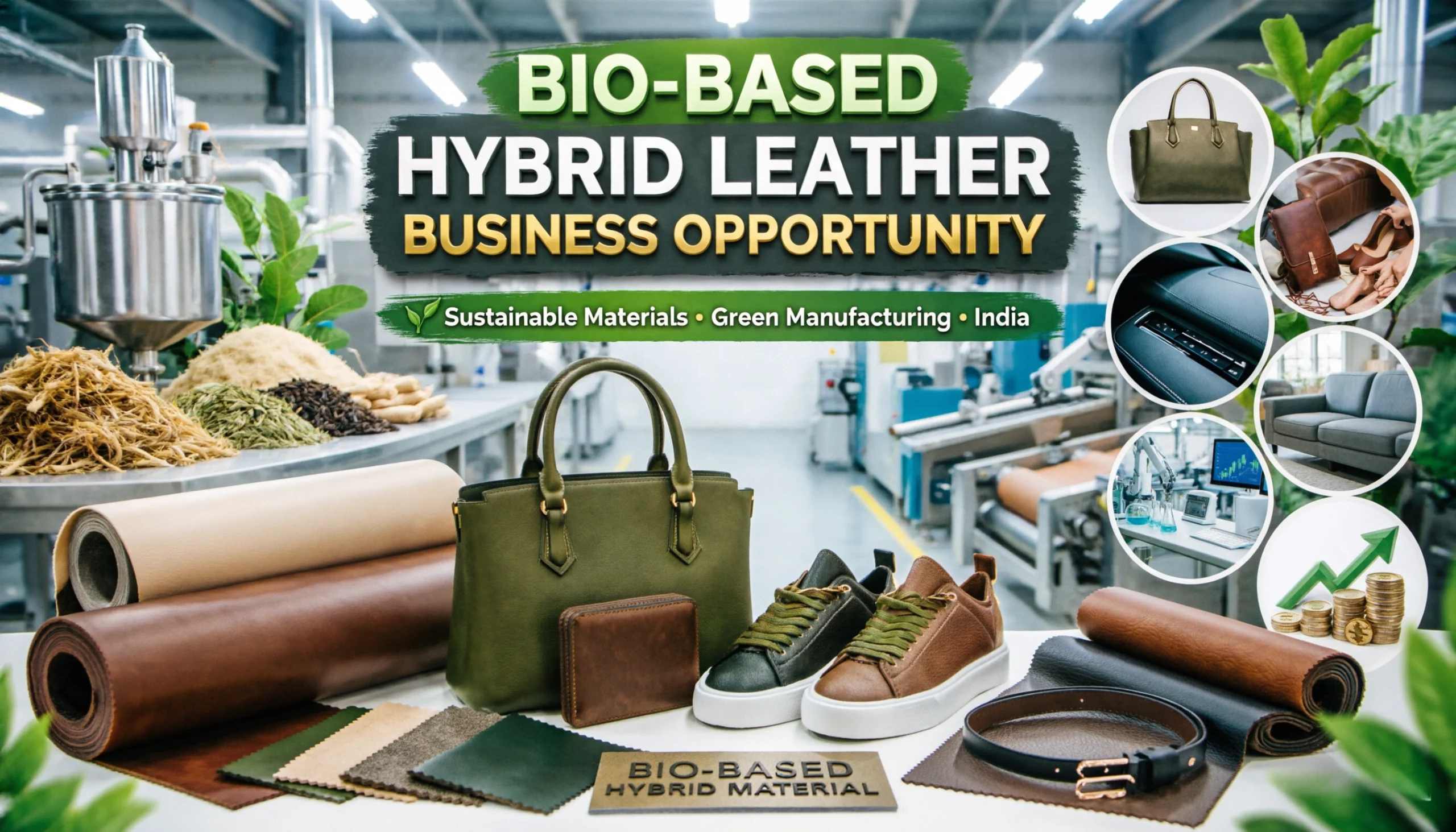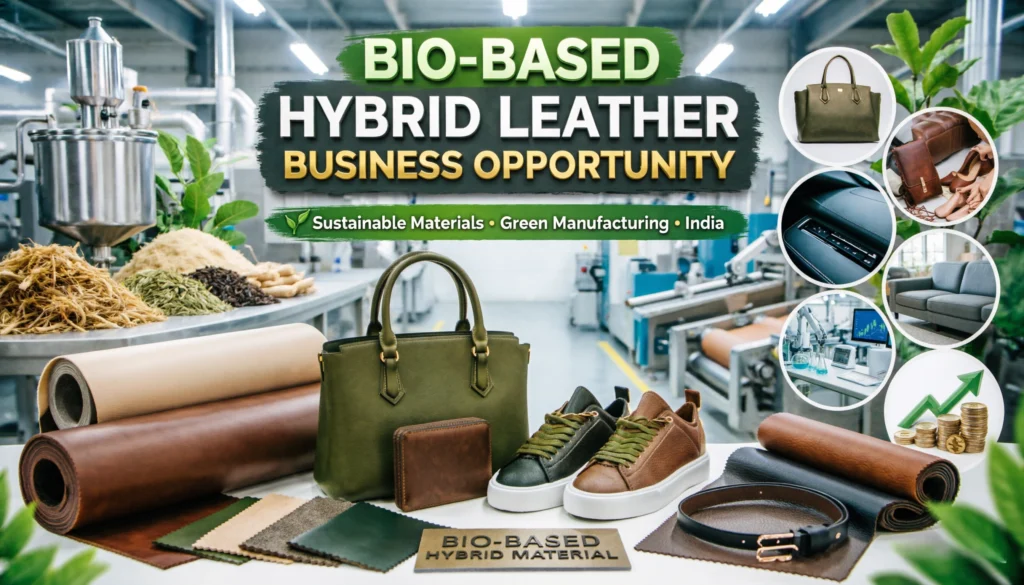

Bio based hybrid leather is one of the most promising material innovations of the last decade for a first-generation entrepreneur or MSME founder looking for business ideas that are equally sustainable and profitable. It is cruelty-free, biodegradable, and has become more cost effective to produce, all while being a demand of global brands who have pledged animal-free supply chains. India has a vast agro-waste base, a strong manufacturing base for textiles and a government that has taken an active stance to encourage green production, making it a perfect position to lead the way in this area globally. That’s an opportune moment.
Bio-based hybrid leather isn’t just vegan leather. It is an advanced form of material with plant-derived fibres or bacterial cellulose or mycelium, which are mixed with bio-polymers or natural binders to create composites with mechanical characteristics and durability comparable — and in some cases superior — to animal hide. That’s the “hybrid” part that’s important: They are made using a combination of several biological sources and processing methods, which enable manufacturers to adjust the end product for different uses, such as fashion accessories, automotive interiors, and premium footwear.
Check Out This Recommended Book: Leather Processing & Tanning Technology Handbook
Why This Sector Is Growing Faster Than Expected
The global bio-based leather market has come a long way from the experimental stage. According to several market intelligence reports, the market is growing at a CAGR of more than 13% owing to the paradigm shift in global brands’ way of thinking about material procurement. The EU Green Deal calls for the elimination of chromium tanned hides and the limiting of synthetic leathers made from high carbon.The EU Green Deal requires the removal of chromium tanned hides and the limitation of synthetic leathers made from high carbon. German, French, and Italian major fashion brands and carmakers are keen on sourcing mycelium and pineapple-fibre products.
The total market of synthetic leather, which includes bio-based, PU and PVC varieties, would have reached India’s own size of approximately USD 3.3 billion in the coming decade. The Bio-based products is the highest growth segment. The brands already have some in the domestic market such as Allen Solly who has introduced PETA-approved vegan handbag collections made from bio-based apple and cactus leather, which are a strong indicator that Indian consumers are ready for this category on a large scale.
Export-ready MSME leather units with bio-based leather EBITDA margins range from 18-25% after volumes are settled. That’s an interesting number for any entrepreneur who contrasts that with margins that are commonly in single digits with traditional textile production.
Government Policies and Schemes Supporting This Business
The overall policy framework for manufacturing bio-based hybrid leathers in India is very enabling, involving several ministries and schemes.
Indian Footwear and Leather Development Programme (IFLDP)
The IFLDP is a initiative of the Ministry of Commerce under DPIIT directly working on supporting the technology up-gradation in the leather ecosystem. Financial assistance in MSME units is provided at 30% of the cost of plant and machinery and for the units in Northeastern States it is available up to 40% of the cost of the plant and machinery. The Integrated Development of Leather Sector (IDLS) sub-scheme has an outlay of ₹500 crore. Start-ups using bio-polymer coating or fibre extraction equipment and investing in bio-based hybrid leather can directly benefit. All details are available on the National Single Window System portal: www.nsws.gov.in.
BioE3 Policy and Make in India
High-performance bio-based manufacturing is also explicitly supported under the BioE3 Policy, Department of Biotechnology. Bio-based hybrid leather (made by processing plant fibres or by growing mycelium or bacterial cellulose) is clearly within the scope of BioE3. Advanced materials are also recognized as priority sectors of manufacturing under the Make in India programme initiated by DPIIT. To avail the DPIIT recognition, founders should register on Startup India and avail income tax exemption for 3 years successive and fast track clearance from various regulatory authorities.
MSME Credit and Subsidy Support
The Ministry of MSME offers loans under the Prime Minister’s Employment Generation Programme (PMEGP) for the first-generation manufacturing entrepreneurs with subsidy. New founders’ main hurdle is eliminated when they can borrow through collateral-free lending by CGTMSE. The Council for Leather Exports is also a valuable source of export facilitation support and market intelligence on international buyer requirements for entrepreneurs.
View Full Project Details: Leather, Leather Goods & Tanning Industry Handbook
Manufacturing Business Ideas in Bio-Based Hybrid Leather
1. Agro-Waste Fibre Extraction and Bio-Leather Sheet Manufacturing
The most basic manufacturing opportunity in this business is to obtain raw bio-leather sheets from agro-waste. Pioneer startups have transformed large amounts of banana stem waste, pineapple leaf fibre, coconut husk, and sugarcane bagasse into leather composites, all with tremendous potential to transform.The startups have turned a huge volume of banana stem waste, pineapple leaf fibre, coconut husk, and sugarcane bagasse into leather composites with great potential. The cost of agrowaste fibre extraction equipment, slurry preparation system and coating machine would be around ₹15–30 lakh for a founder starting an agro-waste fibre extraction unit.
The extracted fibre slurry is used in mixing natural binders, bio-polymers and finishing agents to make fibres sheets which are being supplied to bag, footwear and automotive upholstery manufacturers. The costs of agro-waste are much less than that of petrochemical inputs and most Indian states have agricultural surplus at a nominal rate. This model is being supported by the cluster development programmes of the Ministry of MSME, which provide technical and financial support for agro industries.
2. Mycelium Leather (Mushroom Leather) Production Unit
Mycelium-based leather — grown from the root structure of fungi — is one of the most exciting innovations in this space globally. In India, this remains a largely untapped production segment even though agricultural waste substrates are widely available. A mycelium leather production unit operates on a fermentation-and-harvest cycle: agricultural waste is inoculated with fungal spores, grown into a dense mat, harvested, heat-treated, and processed into leather-like sheets. Capital requirements are moderate — a small-batch unit can be established with ₹20–35 lakh — and the product commands significant premium pricing internationally. The Indian Council of Agricultural Research (ICAR) has been involved in bio-based materials research, and entrepreneurs can explore incubation partnerships with ICAR-linked institutions to accelerate technology development.
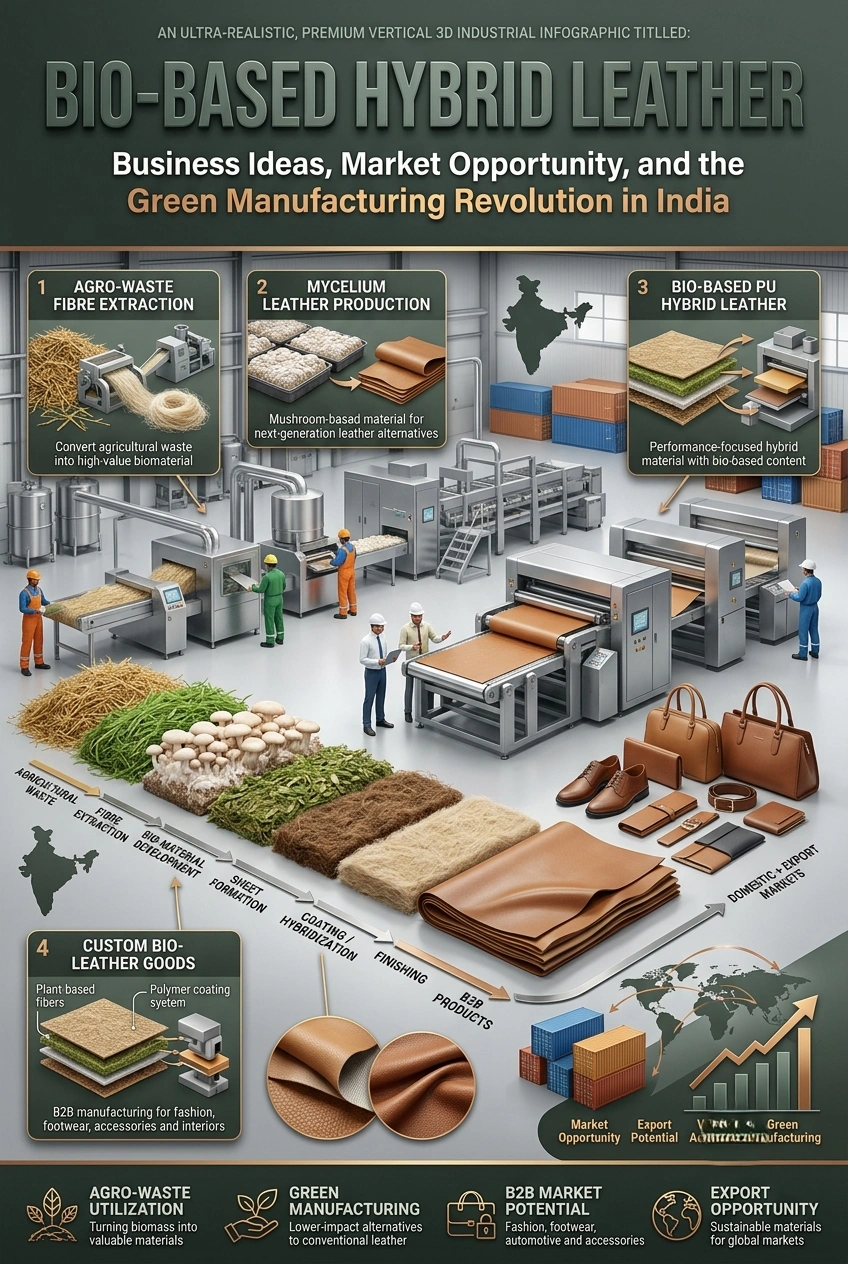
3. Bio-Based PU Hybrid Leather Manufacturing
A commercially viable compromise is producing bio-based polyurethane (bio-PU) hybrid leather, where a big percentage of the PU is substituted with plant-based polyols like castor oil or soya-based polyols. The method has a high impact on lowering the petrochemical use of traditional PU leather, while avoiding the complexity of fully bio-based materials. Cost of a micro-scale bio-PU hybrid leather line is in the range of ₹50–80 lakh which will yield leather that is eligible for eco-certification and European procurement standards. The Federation of Indian Export Organisations (FIEO) can assist market access for export oriented MSME units in this category including guidance on relevant certification process.
4. Custom Bio-Leather Goods Manufacturing (B2B Fashion and Accessories)
Instead of selling raw material, a founder can choose to sit downstream and create the final bio-leather articles – bags, wallets, belts and small accessories – to export to the B2B market. In the case of a small finished goods unit, the required capital investment is lesser, in the range ₹10 – 25 lakh and the yearly income from each unit is much higher. MSMEs in this category get support for buyer connect and export documents both from Chemicals and Allied Products Export Promotion Council (CAPEXIL) and Council for Leather Exports.
Import–Export Opportunity Analysis for New Startups
The bio-based hybrid leather trade opportunity is significant and becoming more well-defined. The India-EU Free Trade Agreement path is the most significant one on the export side as tariff on leather products is likely to come down by about 17% in European markets. The tariff cut directly increases the competitiveness of the bio-based hybrid leather manufacturer as compared to the main competitors from the Southeast Asian and Chinese leather sector — especially important when considering the EU’s sustainability standards that are also increasing the requirements for conventional leather.
Certified sustainable materials are in demand in the U.S. market by fashion brands and vehicle parts manufacturers alike. Those Export India whose LCA and eco-certifications are available stand to be in the list of preferred suppliers. The demand is also increasing from domestic buyers, such as Indian furniture and auto-parts manufacturers, who are adopting bio-leather to comply with their downstream ESG requirements.
Exports: In early stage some specialised bio-processing chemicals might need to be procured from abroad. Central Leather Research Institute (CLRI) at Chennai is working to evolve indigenous substitutes, which will eventually lessen the dependence of the country. CLRI is the leading national institution for leather science and technology research and is an important partner of any entrepreneur in this field.
Here are some notable opportunities in the state. Ambur, Ranipet, both in Tamil Nadu and Kanpur in UP, have natural co-location advantages in terms of leather clusters.In the case of tannery clusters, it is observed that Tamil Nadu has Ambur and Ranipet, and UP has Kanpur, which are natural clusters.In the case of leather clusters, it is noted that Ambur and Ranipet in Tamil Nadu and Kanpur in UP are natural clusters. There are infrastructure and financial support available for entrepreneurs establishing manufacturing units in both these states from the Tamil Nadu Industrial Development Corporation (TIDCO) and UP Startup.
Related Article: Indian Leather Industry: A Hub of Business Opportunities and Growth
Indian MSME Innovators Leading the Bio-Leather Revolution
The Bio Company (Bioleather) — Pritesh Mistry, Ahmedabad
Pritesh Mistry saw an opportunity to create a startup that could address India’s issue of over 30-35% of the annual tomato production being wasted on improper size, shape or ripeness. The idea that came to him was to use those tomatoes, which were considered as waste, as a major raw material for leather production, taking advantage of the availability of a natural polymer in the skins of these tomatoes, called pectin, which allowed adding flexibility and tensile strength to the leather.
The Bioleather has won the Best Innovation in Textile award at the PETA Vegan Fashion Awards; its annual turnover was around ₹1.2 crore and the production capacity was of 5,000 metres per month. The message: when waste becomes a valuable material, there’s more demand for it and less cost.
Malai Biomaterials — Susmith C.S. and Zuzana Gombosova, Kerala
The two founders of Malai Biomaterials, product designer Susmith C.S. and material researcher Zuzana Gombosova have developed a bacterial cellulose grown from waste coconut water from South Indian coconut processing units to create a biocomposite leather. In the coconut industry, up to 4,000 litres of coconut water is discarded daily per coconut processing unit.
This material, with its added fibres from banana stem, hemp and sisal, is water-resistant, biodegradable in 90-150 days and PETA-approved. Malai had secured the Circular Design Challenge at Lakmé Fashion Week and also gained interests from the partnership with IIT-Hyderabad. Their model demonstrates that if deep utilization of agro-wastes is coupled with having a good design sense then it becomes recognized internationally and commands premium pricing.
Banofi Leather — Jinali Mody, Kolkata
A Yale School of Environment alumna and former McKinsey employee, Jinali Mody launched the business Banofi Leather in 2022, based on the waste from India’s banana crop. About 4 tons of waste (mainly banana stems) are produced for every ton of bananas grown. This is turned into Ban o Fi, Banofi’s patented process for creating a leather-like alternative from plant materials that looks, feels and smells just like leather.
The company has raised USD 1 million and has been featured in Forbes Asia 30 under 30 as well as Vogue Business 100. Her achievements demonstrate the power of domain knowledge in sustainability science, coupled by commercial rigor, to bring a bio-materials start-up from idea to international reputation in 2-3 years.
How NPCS Supports Entrepreneurs in This Sector
We at Niir Project Consultancy Services (NPCS) provide professional consulting for the preparation of Market Survey cum Detailed Techno-Economic Feasibility Reports (DPRs) for setting up new industries and businesses in emerging manufacturing segments, including bio-based hybrid leather. We provide detailed manufacturing processes, market research and demand analysis, process flow diagrams, product mix and capacity planning, machinery and raw material sourcing details and project financials with profitability analysis.
Whether using agro-waste fibre, growing mycelium or producing leather products, a well-drafted DPR is essential to a sound business move to the bio-based leather market. The goal is to give founders a sense of feasibility, know their break-even periods and bring a set of papers that are ready for the bank or investors.
Turn your budget into a successful business plan
Bio-Based Hybrid Leather: Market and Business Data Overview
Table 1: Key Market and Business Metrics for Bio-Based Hybrid Leather (India and Global)
| Parameter | India / Global Estimate | Relevance to Startups |
| Global bio-based leather market size | USD ~800–860 million | Large addressable export market |
| Global market CAGR (forecast period) | 13–17% per annum | High-growth segment for early movers |
| India synthetic leather market size | USD 3.3 billion | Large domestic base; bio sub-segment fastest-growing |
| India synthetic leather CAGR | 13–22% per annum | India among fastest-growing markets globally |
| India’s growth ranking globally | Top 3 globally | China 8.9%, India 8.3%, Germany 7.6% |
| Export incentive (eco-friendly goods) | 5% on qualifying goods | Direct margin enhancement for exporters |
| IFLDP MSME subsidy (IDLS sub-scheme) | 30% of plant & machinery cost | Reduces capex burden significantly |
| Estimated EBITDA margin (export units) | 18–25% post scale-up | Above-average vs. conventional textiles |
| Active bio-leather startups in India | 50+ (recent estimate) | Early market with limited competition |
| Startup investment range (small unit) | ₹10 lakh – ₹80 lakh | Multiple accessible entry points |
Source: IMARC Group, Technavio, KenResearch, DPIIT, Ministry of Commerce, NPCS Research Compilation.
Conclusion: A Sector Built for the Entrepreneurial Moment
Bio-based hybrid leather is not a future-looking concept — it is a present-tense manufacturing opportunity with verifiable demand, active policy support, and a growing roster of Indian innovators proving the business model works. The convergence of EU sustainability regulation, domestic brand commitments to animal-free supply chains, India’s vast agro-waste base, and a strong MSME-friendly incentive architecture creates conditions genuinely favourable for new entrants.
The entrepreneurs who move decisively — who invest in the right material technology, build certification credibility early, and cultivate export relationships before the market gets crowded — will establish durable competitive positions in a segment with real long-term staying power. For those who want to explore this space with rigour before committing capital, beginning with a professionally prepared feasibility study is the most disciplined first step.