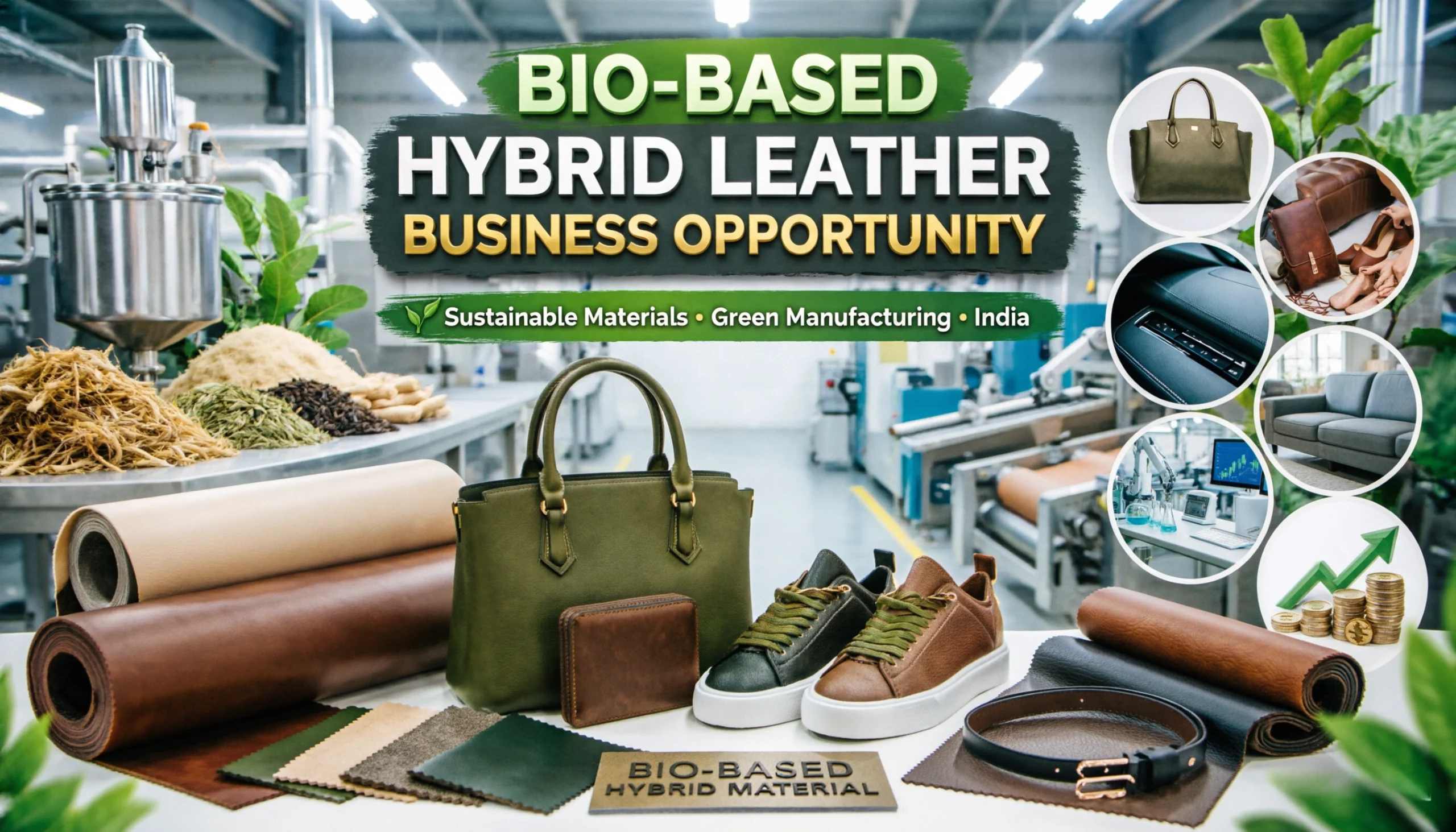
The Indian Leather Industry is one of the oldest and most prominent sectors in the country’s manufacturing landscape. Known for its skilled craftsmanship, abundant raw materials, and strong export potential, India has established itself as a key player in the global leather trade. With an evolving global market shifting towards sustainability and ethical sourcing, the Indian leather sector is undergoing a major transformation, blending traditional practices with modern technologies.
As of 2025, India is the second-largest producer of footwear and the fifth-largest exporter of leather goods in the world, making this sector both economically and strategically significant.
Start a Business in Leather Industry, Click Here
Contents
- 1. Overview of the Indian Leather Industry
- 1.1. Key Highlights:
- 1.2. 1. Segments of the Indian Leather Industry
- 1.3. 2. Strengths of the Indian Leather Industry
- 1.4. 3. Major Leather Clusters in India
- 1.5. 4. Export Trends and Global Position
- 1.6. 5. Challenges in the Indian Leather Sector
- 1.7. 6. Government Initiatives Supporting the Leather Industry
- 1.8. 7. Sustainability in Leather Manufacturing
- 1.9. 8. Emerging Opportunities in 2025 and Beyond
Overview of the Indian Leather Industry
India’s leather industry is highly diversified and includes footwear, leather garments, finished leather, leather goods, and accessories. The sector is largely export-driven, contributing nearly 12.9% to global leather production. It employs over 4.5 million people, with a strong representation from rural and underprivileged communities, particularly women.
Key Highlights:
Estimated market size: USD 17 billion (2024)
Exports: USD 5.26 billion (2023–24)
Major production hubs: Tamil Nadu, Uttar Pradesh, West Bengal, Punjab, Haryana, and Maharashtra
Top export destinations: USA, Germany, UK, UAE, Italy, France
Read Similar Articles: LEATHER GOODS
1. Segments of the Indian Leather Industry
a. Footwear
The largest segment, accounting for nearly 57% of total leather exports. It includes leather and non-leather shoes, boots, sandals, and sports footwear.
b. Leather Garments
Includes jackets, trousers, skirts, and overalls—majorly exported to the EU and North America.
c. Finished Leather
India is a major supplier of processed leather used in upholstery, automotive, fashion, and industrial applications.
d. Leather Goods & Accessories
Handbags, belts, wallets, gloves, travel goods, and more—this is the fastest-growing export category.
2. Strengths of the Indian Leather Industry
Abundant raw materials: India has 21% of the world’s cattle and buffalo population.
Skilled workforce: Traditional artisans and modern designers contribute to diverse styles.
Government support: Numerous schemes under Make in India and Indian Footwear and Leather Development Programme (IFLDP).
Global quality standards: Indian leather goods meet stringent international regulations and certifications.
Download PDF: Indian Leather Industry: A Hub of Business Opportunities and Growth
3. Major Leather Clusters in India
| Cluster | State | Specialization |
|---|---|---|
| Chennai (Ambur, Ranipet, Vaniyambadi) | Tamil Nadu | Finished leather, shoes |
| Agra & Kanpur | Uttar Pradesh | Footwear, saddlery |
| Kolkata | West Bengal | Leather goods |
| Jalandhar & Ludhiana | Punjab | Sports leather goods |
| Mumbai & Pune | Maharashtra | Premium leather accessories |
These clusters house thousands of MSMEs, tanneries, exporters, and global brands’ outsourcing units.
4. Export Trends and Global Position
India exports leather and leather products to over 100 countries. The European Union accounts for about 36% of exports, followed by the USA and UAE.
Export Share by Category (2023):
Footwear: 57%
Leather goods: 23%
Finished leather: 10%
Garments: 8%
Saddlery & harness: 2%
Despite facing competition from countries like China, Vietnam, and Bangladesh, India’s quality, cost-effectiveness, and ethical labor standards help it stay competitive.
5. Challenges in the Indian Leather Sector
Despite its strengths, the Indian Leather Industry faces several hurdles:
a. Environmental Regulations
Tanneries are often scrutinized for their pollution levels. Compliance with stringent norms increases production costs.
b. Dependence on Traditional Methods
Many MSMEs lack access to modern technologies and equipment, affecting productivity and quality.
c. Global Competition
Cheaper alternatives from Southeast Asian countries challenge Indian exports.
d. Fluctuating Raw Material Prices
Leather prices are impacted by livestock supply, global demand, and trade restrictions.
e. Limited Domestic Demand
Unlike western countries, leather is not widely used in India for cultural and climatic reasons, limiting local consumption.
Read our Book Here: Leather Processing & Tanning Technology Handbook
6. Government Initiatives Supporting the Leather Industry
The Indian government has launched several schemes to modernize and support the leather industry:
a. Indian Footwear and Leather Development Programme (IFLDP)
Budget allocation of ?1,700 crore (till 2026)
Support for modernization, infrastructure, and brand promotion
b. Mega Leather Clusters
Large-scale leather parks in Tamil Nadu and Uttar Pradesh offering common facilities, logistics, and training centers.
c. Production Linked Incentive (PLI) Scheme
Aimed at boosting domestic manufacturing and exports of footwear and leather accessories.
d. Export Promotion Council for Leather (CLE)
Facilitates global trade fairs, quality certifications, and market research support for exporters.
7. Sustainability in Leather Manufacturing
Sustainability is a growing focus in the Indian leather industry. Many players are moving towards:
Water-efficient tanning processes
Use of vegetable-based tanning agents
Waste-to-energy solutions in tanneries
Upcycled leather products
Leather alternatives from pineapple leaves, mushrooms, and cork
Brands like Hidesign and Nappa Dori have already adopted eco-friendly production practices.
8. Emerging Opportunities in 2025 and Beyond
a. Luxury Leather Goods
With growing disposable incomes, there’s a rising demand for premium leather products domestically and globally.
b. Leather Footwear Retail
India’s large youth population is driving demand for affordable, trendy leather shoes, creating scope for homegrown D2C brands.
c. Contract Manufacturing for Global Brands
Global fashion brands are outsourcing to India for skilled labor, quality output, and low production costs.
d. Export of Eco-Leather
Countries like Germany and France are seeking sustainable alternatives—India is becoming a preferred destination.
Conclusion
The Indian Leather Industry holds immense potential in the global value chain. With its rich history, abundant resources, skilled labor, and increasing government support, the sector is primed for growth in 2025 and beyond. However, modernization, sustainability, and global branding will be critical for long-term competitiveness.
For entrepreneurs, investors, or exporters—now is the ideal time to explore this promising sector. From establishing MSMEs to launching leather goods brands or partnering in exports, the Indian leather industry offers strong potential for profitable, future-ready ventures.
Related Feasibility Study Reports: Leather, Leather Goods and Leather Tanning, Finished Leather for Footwear
Government Ministry/ Department
Industry Scenario
- Indian Finished Leather Manufacturers and Exporters Association
- Indian Footwear Components Manufacturers Association
- Indian Leather Products Association
- Indian Leather Technologists’ Association
- Start a Business in Asia
- Start a Business in Potential Countries for Doing Business
- Best Industry for Doing Business
- Business Ideas with Low, Medium & High Investment
- Looking for Most Demandable Business Ideas for Startups
- Startup Consulting Services
- Start a Business in Africa
- Start a Business in India
- Start a Business in Middle East
- Related Videos
- Related Books
- Related Projects
- Related Market Research Reports
NIIR PROJECT CONSULTANCY SERVICES, DELHI
An ISO 9001:2015 Company
ENTREPRENEUR INDIA
106-E, Kamla Nagar, Opp. Mall ST,
New Delhi-110007, India.
Email: npcs.ei@gmail.com
Tel: +91-11-23843955, 23845654, 23845886
Mobile: +91-9097075054, 8800733955
Website: https://www.entrepreneurindia.co
https://www.niir.org