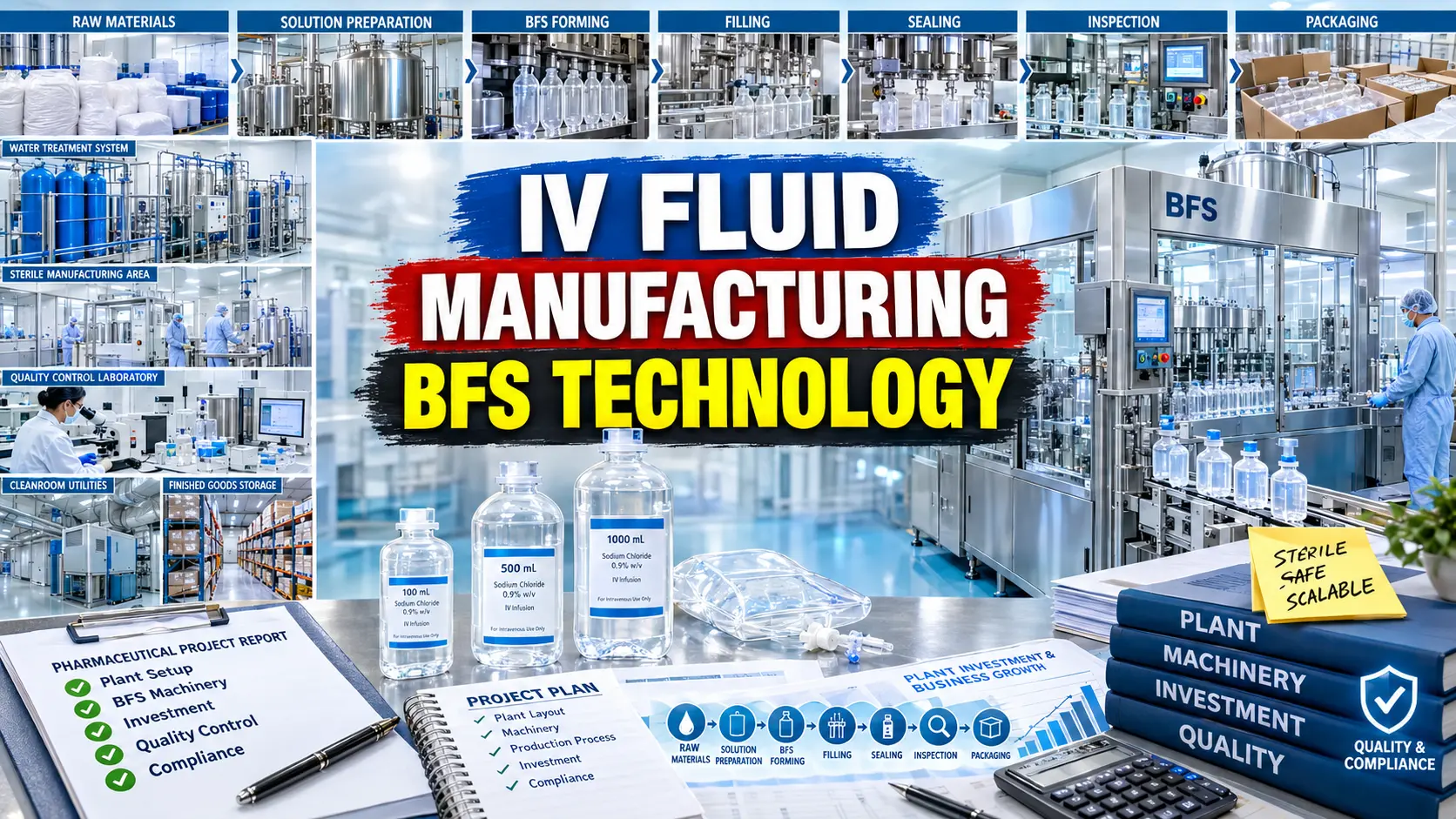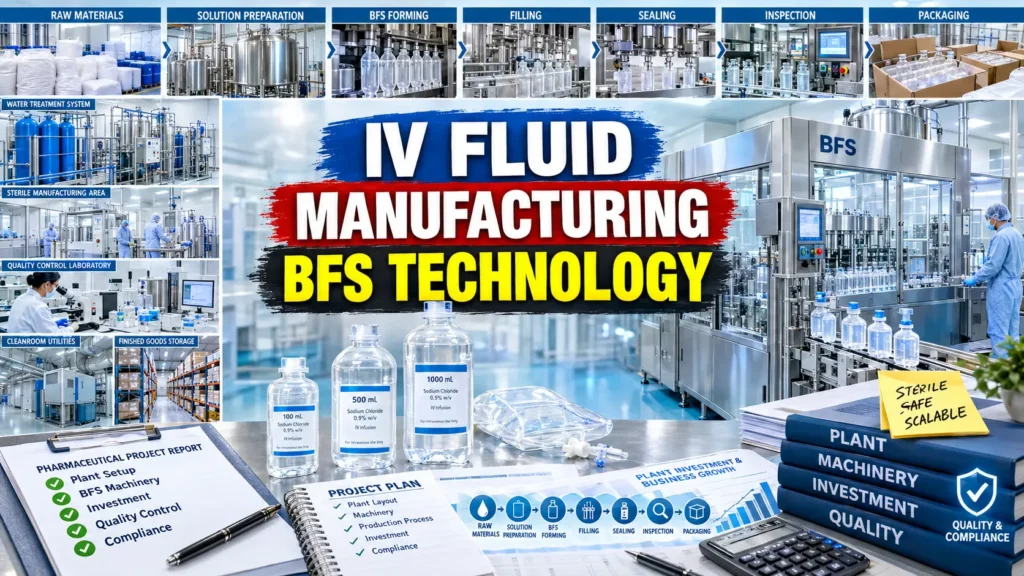

Every hospital bed in India requires a consistent supply of intravenous fluids, making IV fluid manufacturing using Blow-Fill-Seal technology one of the more lucrative business ideas in pharmaceutical manufacturing. BFS technology, which creates, fills, and seals a container in one automated, sterile sequence, lowers contamination risk compared to traditional glass-bottle methods. For entrepreneurs with pharmaceutical or engineering backgrounds, this sector presents a steady institutional demand with significant barriers to entry that protect established players from casual competition.
Why IV Fluid Manufacturing Using BFS Technology Is a Smart Business Idea Right Now
Hospital bed capacity, surgical volumes, and critical care admissions have all grown steadily, and IV fluids are one of the few pharmaceutical products every hospital consumes regardless of disease pattern or season. BFS technology has become the manufacturing route of choice due to reduced particulate contamination and lower labour cost compared with traditional glass-bottle filling, and is increasingly preferred by regulators during facility inspections. Since setup of compliant BFS manufacturing requires serious capital and regulatory clearance, existing demand consistently outpaces the number of new compliant entrants, protecting pricing.
Government Policies & Incentives
Essential medicine and critical care manufacturing, including IV fluids, receives policy attention from Department of Pharmaceuticals – Pharmaceutical Industry Policies & Schemes, including production-linked incentive support for bulk drugs and associated formulations. Regulatory approval runs through CDSCO – Drugs and Cosmetics Rules, whose Schedule M and revised good manufacturing practice norms increasingly favour BFS-based sterile manufacturing. Pharma-focused MSME units can also access dedicated cluster development support and collateral-free credit through Ministry of MSME – Credit Guarantee Scheme. Several states also offer dedicated pharma park infrastructure with pre-approved environmental clearances and shared effluent treatment facilities, which can significantly shorten the regulatory timeline for a new sterile manufacturing plant.
Multiple Manufacturing Business Ideas for Startups
Large-Volume Parenteral (LVP) Manufacturing via BFS
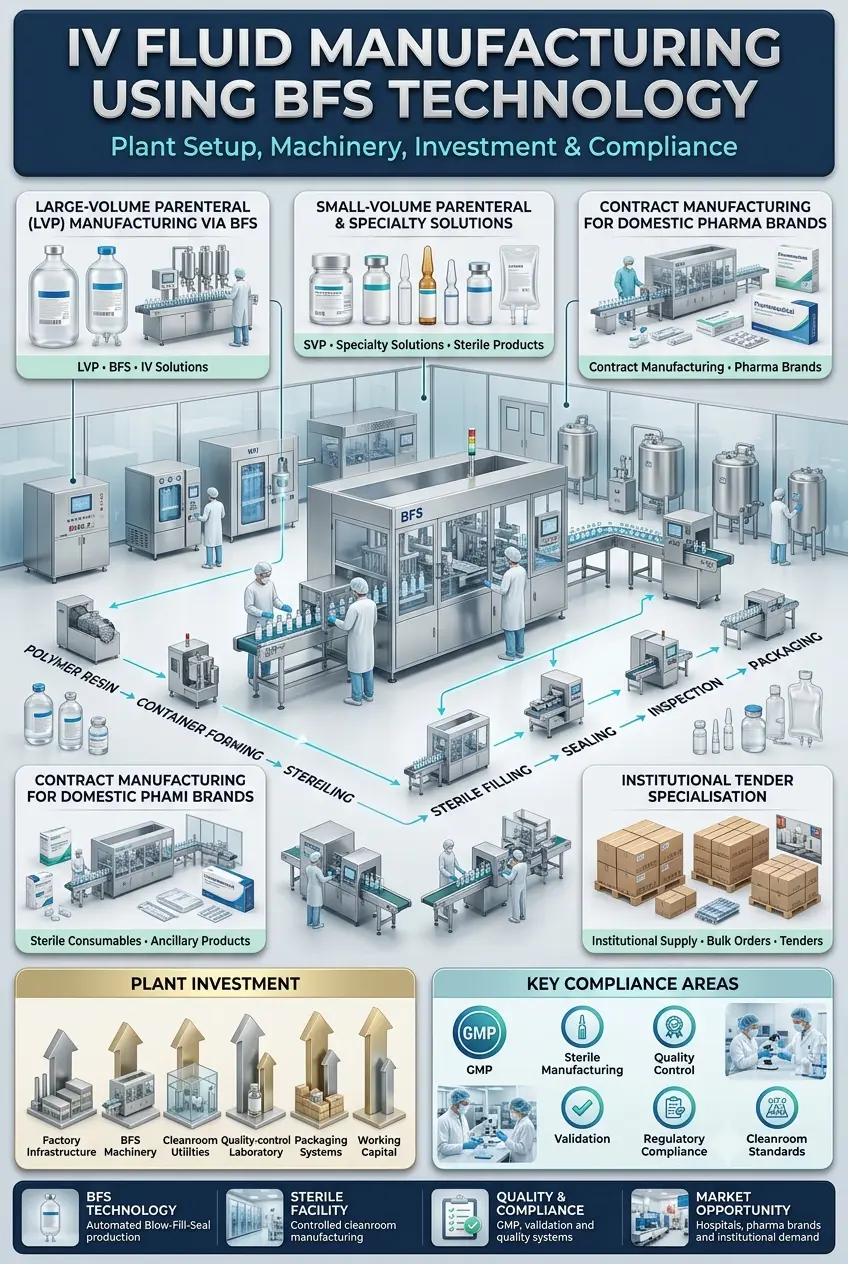
Normal saline, Ringer’s lactate, and dextrose solutions in 100ml to 1000ml formats represent the highest-volume, most consistent demand segment for IV fluids. A BFS line dedicated to LVP products can serve hospital chains, government tenders, and distributors simultaneously, and because these are standardised formulations, the main competitive differentiators are reliability of supply and consistent regulatory compliance.
Small-Volume Parenteral & Specialty Solutions
Beyond basic saline, hospitals also need smaller-volume specialty IV formulations for electrolyte correction, nutrition support, and specific therapeutic uses. While margin is better than commodity LVP products, this segment involves a broader formulation and regulatory approval effort, making it a natural second phase after establishing core LVP manufacturing.
Contract Manufacturing for Domestic Pharma Brands
Many mid-sized pharmaceutical companies want IV fluid capacity without building their own sterile manufacturing plants, creating steady demand for contract manufacturing partners. A BFS plant that positions itself as a reliable third-party manufacturer can secure multi-year supply agreements with pharma brands, providing revenue stability that pure own-brand selling often lacks.
Ancillary Sterile Consumables Manufacturing
A BFS plant’s cleanroom infrastructure and sterile handling expertise can be extended to manufacture ancillary consumables such as sterile irrigation solutions, ophthalmic rinses, or inhalation solutions, which share similar manufacturing conditions. Diversifying into these adjacent sterile products can spread fixed cleanroom and compliance costs across a broader product line.
Institutional Tender Specialisation
Government hospital procurement runs through structured tender processes that reward consistent quality documentation and delivery history over aggressive pricing. A manufacturer that builds specific expertise navigating institutional tender requirements rather than as an afterthought to private sales can secure large, recurring government supply contracts.
Import–Export Opportunity Analysis
India already exports IV fluids and essential parenterals to price-sensitive markets across Africa and South Asia, an area regularly facilitated through pharmaceutical export support by Department of Pharmaceuticals – Pharmaceutical Industry Policies & Schemes. Domestically, hospital capacity expansion under public health missions keeps consumption rising steadily, while dependence on a handful of large established manufacturers means new, WHO-GMP-aligned entrants have room to win institutional and export tenders once they clear initial hurdles.
Market Outlook & Scaling Roadmap
Hospital bed capacity expansion under public health infrastructure programmes, along with steady private hospital growth, points to continued demand growth for IV fluids beyond current domestic manufacturing capacity. Plants that achieve WHO-GMP certification alongside domestic Schedule M compliance can access a significantly larger addressable market, since export tenders and larger private hospital chains increasingly specify this higher certification tier as a baseline requirement for new suppliers.
Skills, Manpower & Quality Control
Sterile pharmaceutical manufacturing is one of the more staffing-intensive categories in this list, requiring qualified pharmacists, microbiologists, and quality assurance personnel alongside trained machine operators. A compliant plant typically needs at least one qualified quality control head with pharmaceutical regulatory experience from the outset, since this position determines whether the plant passes CDSCO inspection. Machine operators can be trained over several months, but the quality assurance and documentation team generally needs prior pharmaceutical industry experience, making recruitment lead time an important factor.
Indian MSME Success Stories
Claris Lifesciences — Arjun Handa (building on Chandulal Patel’s foundation)
Claris built one of India’s strongest reputations in IV fluids and injectables by investing early and heavily in BFS and sterile manufacturing technology, a decision that later opened export markets that few Indian generic manufacturers had accessed for parenteral products.
Nirlife Healthcare (Nirma Group’s pharma arm) — Nirma Group leadership
Nirma’s diversification from consumer chemicals into pharmaceutical manufacturing, including IV fluids, shows how disciplined process manufacturing expertise from an unrelated industry can transfer successfully into sterile pharma production when quality systems are taken seriously from day one.
How NPCS Can Help Entrepreneurs Evaluate the Opportunity
We at Niir Project Consultancy Services (NPCS) provide professional consulting for the preparation of Market Survey cum Detailed Techno-Economic Feasibility Reports (DPRs) for setting up new industries or businesses. Our reports include detailed manufacturing processes, market research and demand analysis, process flow diagrams, product mix and capacity planning, machinery and raw material details, and complete project financials with profitability analysis. Entrepreneurs use these reports to evaluate feasibility, profitability, and scalability before investing, reducing guesswork at the most capital-intensive stage of a new venture.
For anyone evaluating IV Fluid Manufacturing Using BFS Technology, that groundwork is most crucial before any capital is committed: NPCS studies work through machinery selection, raw material sourcing, plant layout, manpower planning, and a full financial model covering capital cost, working capital, revenue projections, and return on investment. Entrepreneurs approaching banks, NBFCs, or state MSME schemes for financing typically need exactly this type of documented feasibility study, since lenders rarely fund a project on an idea alone. Working with an established consultancy also shortens the learning curve considerably, allowing a first-time promoter to benefit from patterns that NPCS has already observed across hundreds of similar manufacturing projects.
NPCS has published a comprehensive printed reference book on IV Fluid Manufacturing Using BFS Technology, covering technology, market analysis, investment parameters, and manufacturing processes in depth — the printed book: Drugs & Pharmaceutical Technology Handbook.
For a detailed techno-economic Project Report on setting up a manufacturing business in this sector — including plant economics, machinery lists, financial projections, and applicable government incentives — the NPCS Project Report: Production of I.V. Fluids (Saline and Dextrose) – Intravenous Solution Manufacturing with Blow-Fill-Seal (BFS) Technology.
Common Pitfalls to Avoid
The most damaging mistake in this sector is underestimating regulatory approval timelines and running out of working capital before commissioning is complete. A second common pitfall is under-investing in quality assurance staffing relative to production capacity, creating compliance risk that can jeopardise the entire manufacturing licence.
Conclusion
IV fluid manufacturing through BFS technology rewards founders who treat regulatory compliance as the foundation of the business rather than a formality. With pharma clusters expanding in states such as Gujarat Industrial Development Corporation – Industrial Infrastructure, entrepreneurs entering now with a properly validated feasibility plan can secure a durable position in an essential, recession-resistant category.
Your Investment Deserves the Right Opportunity
Every serious investment begins with choosing the right sector and the right business model. With hundreds of industrial opportunities available across India’s manufacturing and clean-energy landscape, making the most informed choice is critical. NPCS Startup Selector tool helps entrepreneurs, MSMEs, and investors identify the most suitable business opportunities based on their investment capacity, location, and interests — so your capital is directed toward a venture with the strongest fit and potential.