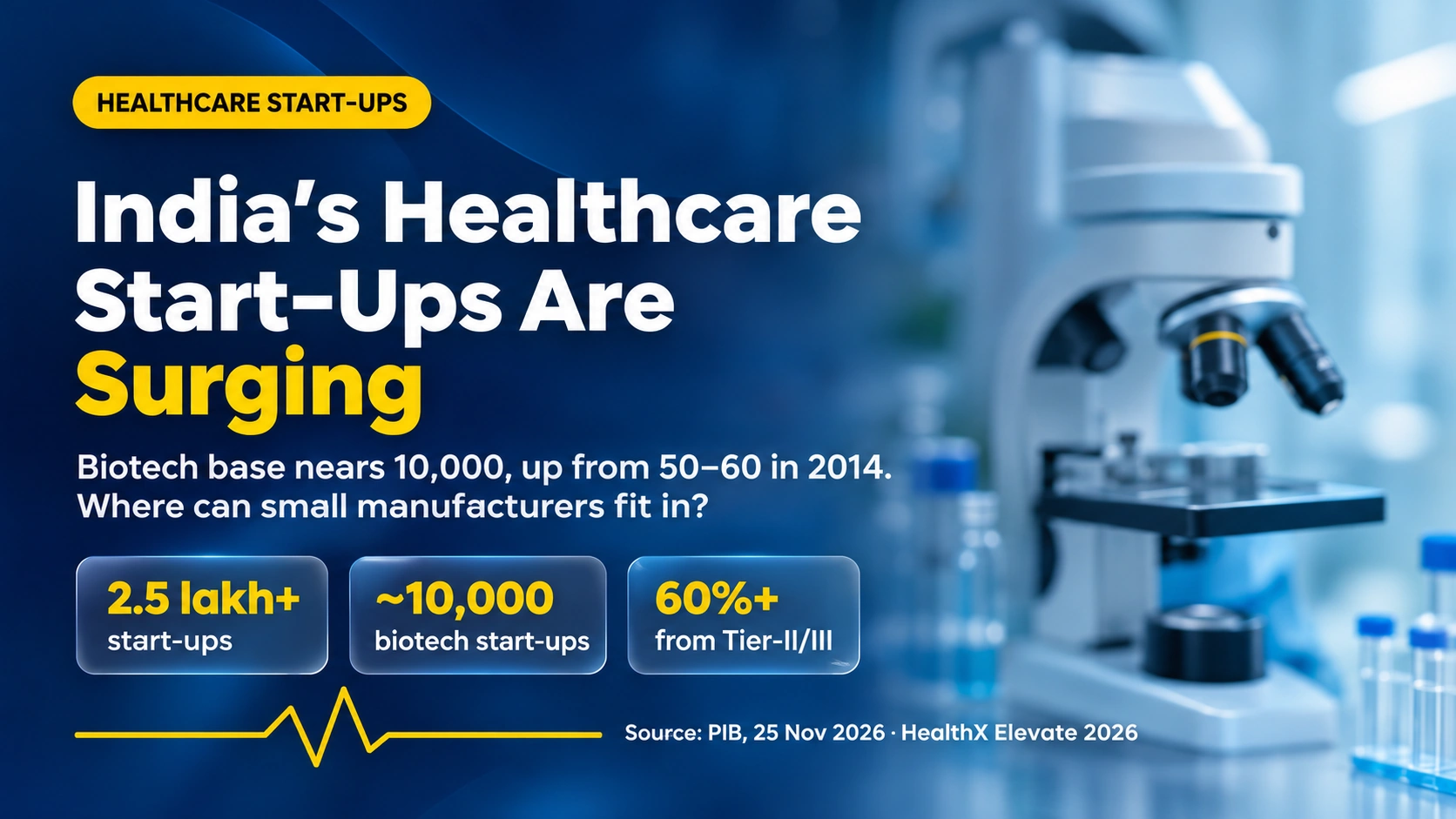
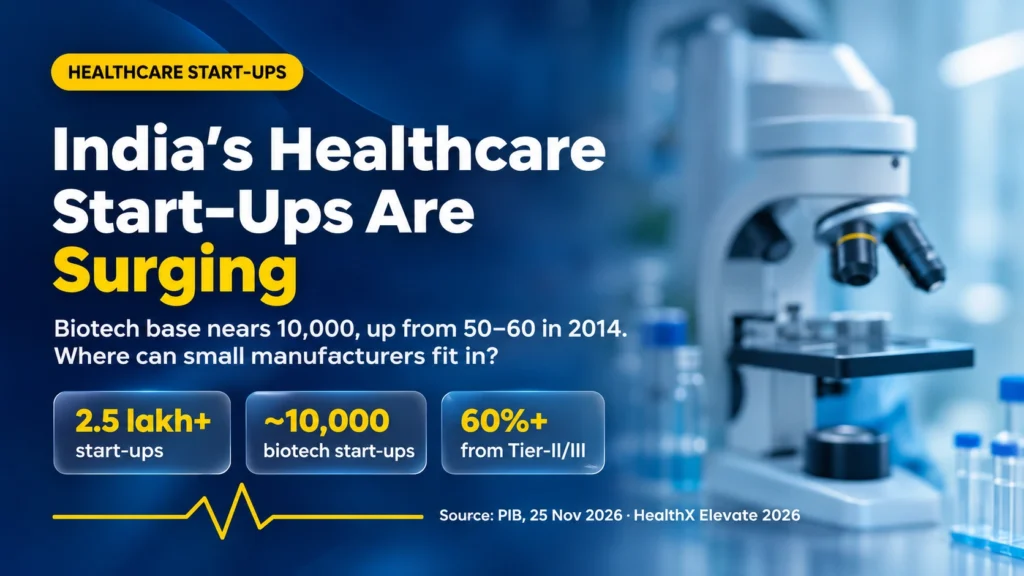

New Delhi, 25 November 2026: Union Minister of State (Independent Charge) for Science and Technology Dr Jitendra Singh told the HealthX Elevate 2026 audience that India’s healthcare start-ups are part of a start-up ecosystem that has grown from about 350 in 2014 to more than 2.5 lakh today. He added that the biotech start-up base has grown from roughly 50–60 to nearly 10,000.
For a small manufacturer the question is practical: when hospitals, labs and healthcare start-ups grow, who supplies the consumables, kits, packs and inputs they need? We cover what the minister said first, and then where a factory with a few crores of investment can fit.
Contents
- 1. Healthcare start-ups in India: the key numbers
- 2. What Dr Jitendra Singh said
- 3. What he asked of private players and investors
- 4. Behind the news: what the haemophilia trial and Genome India mean
- 5. Healthcare start-ups and small factories: where the openings are
- 6. 10 healthcare project ideas for small manufacturers
- 7. Bigger healthcare projects for larger investors
- 8. How a small unit can start: five practical steps
- 9. How NPCS can help
- 10. Questions people ask
- 11. Sources
- 12. Related guides
- 13. More in Business Ideas & Startups
Healthcare start-ups in India: the key numbers
| Number | What it is |
|---|---|
| 350 → 2.5 lakh+ | Start-ups in India, 2014 versus today (all sectors) |
| 3rd | India’s rank among the world’s start-up ecosystems |
| 60%+ | Start-ups from Tier-II, Tier-III cities and smaller towns |
| 50–60 → nearly 10,000 | Biotech start-ups, 2014 versus today |
| 30 countries | Supplied with India’s COVID-19 DNA vaccine |
| 10,000 / 80 | People sequenced and population groups covered under Genome India |
| Within a decade | When the minister hopes India will produce a globally recognised blockbuster drug |
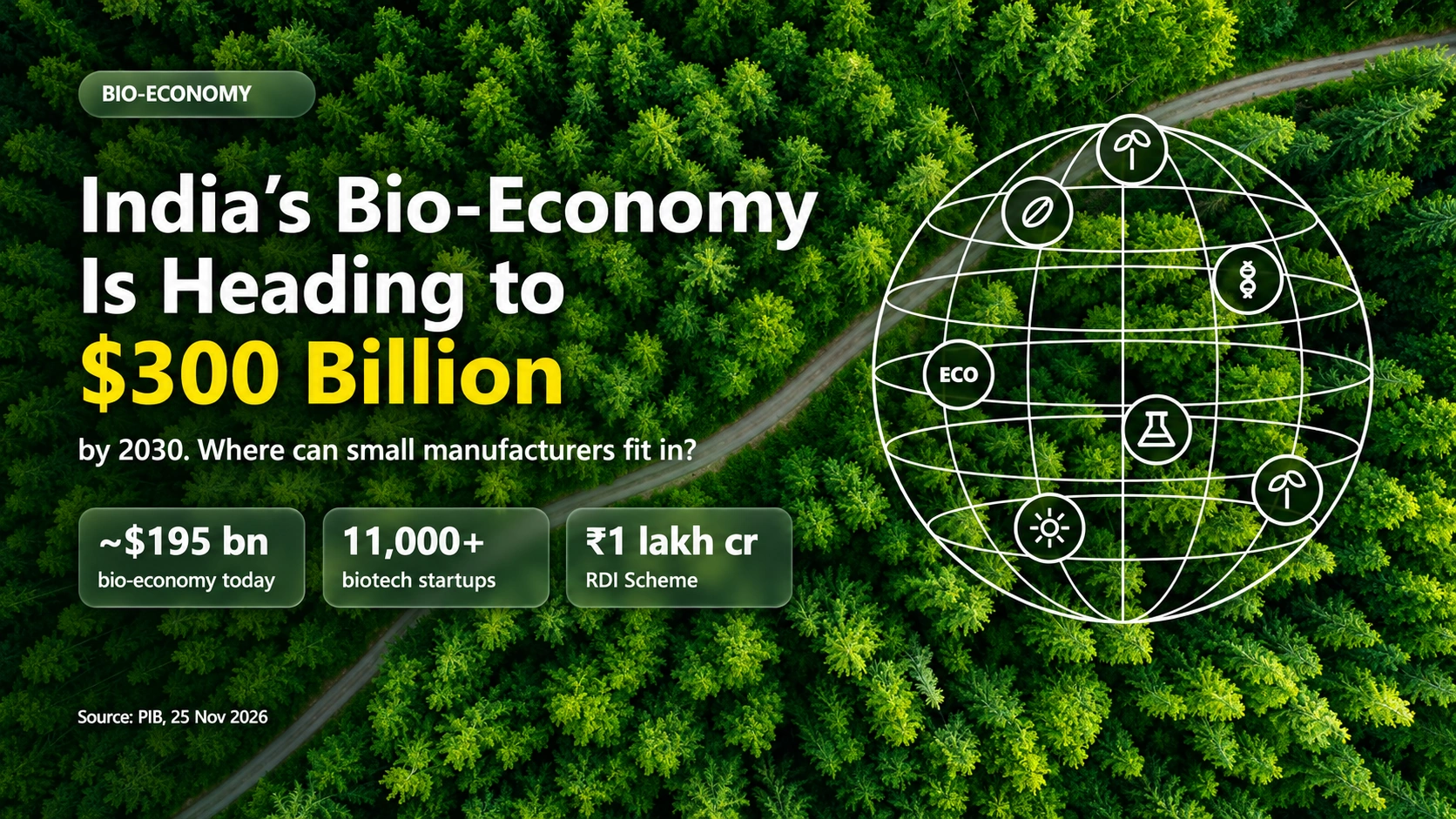
A note on the figures: the PIB release does not give a year for the “2.5 lakh” count, and it says the biotech base is “nearly 10,000”. A PIB release from the same day on the bio-economy gave 11,000+ biotech start-ups. These are different speeches and rounding, so we quote each figure as stated. The release also repeats the “third-largest” line twice, and “Fire Chat” in it is most likely “fireside chat”.
What Dr Jitendra Singh said
These are the points that matter for healthcare start-ups and for the factories that supply them.
- Beyond the big cities. More than 60% of start-ups now come from Tier-II and Tier-III cities and smaller towns. Digital access has let talent outside Bengaluru, Delhi and Mumbai take part.
- Success does not need a famous degree. Talking about agri-based start-ups, he said passion, focus and good use of technology matter more than advanced academic credentials. The Government is providing technological and financial support.
- Biotech is growing fast. India is building solutions for tropical diseases and for conditions once linked mainly with other regions.
- Vaccines and therapies. India developed a DNA vaccine for COVID-19 and supplied it to about 30 countries. A genetic therapy trial for haemophilia was successful and its findings were published in the New England Journal of Medicine.
- Nuclear medicine. Indian researchers are working on low-cost diagnostic and treatment tools, including for acute lymphoblastic leukaemia.
- Genetic diversity is an advantage. India’s varied population and genetic resources give it a research edge, and comprehensive genetic data could help both India and the world.
- AI is a tool, not a separate field. It can help with diagnosis and data analysis, and work that took hours or days can now take minutes.
- Genome India. AI is helping analyse genetic data. Sequencing of 10,000 individuals across 80 population groups has been completed.
- Personalised medicine. Treatment can be tailored to a patient’s genes, lifestyle, environment and molecular profile, so two patients with similar test results may get different prescriptions.
- Prevention and biomarkers. Early detection can show disease risk before symptoms appear. Scientists are studying biomarkers that could show a woman’s diabetes risk at the time of delivery, so follow-up can be targeted.
- Deep tech. India is moving towards deep-tech enterprises in biotechnology, quantum technology, AI and space. Opening more sectors to private players creates openings, and success stories should bring in more investment.
- The first-customer problem. Asked why deep-tech start-ups struggle to land a first big customer, he said the Government is creating a more enabling environment and allowing more risk-taking. As an example, a requirement under a CSIR provision that a start-up must have operated for at least three years before it gets funding has been removed. The release does not name the provision.
What he asked of private players and investors
- Private companies should invest more in biotech, healthcare start-ups, research and innovation. The Government encourages private partners to put money into R&D.
- Government, industry, researchers and doctors should work together. In his words, the era of working in silos is over, and pooling expertise, resources and money can move research faster towards real use.
- Philanthropy should be stronger, so that research and innovation get long-term support.
- Entrepreneurs should use the enabling environment and the new private-sector openings in deep-tech fields.
His closing point for healthcare start-ups and everyone around them was that the aim of healthcare innovation should be affordable, accessible care for everyone, through a whole-of-nation approach.
Behind the news: what the haemophilia trial and Genome India mean
The haemophilia result, one of the achievements he cited for Indian healthcare innovation, is a real Indian first. The Centre for Stem Cell Research at CMC Vellore, with Department of Biotechnology support, carried out India’s first-in-human gene therapy for haemophilia A using a lentiviral vector. Business Standard reported that all five participants had zero annualised bleeding after treatment, and that India has around 136,000 haemophilia A patients. That is a small trial, so wider use will need further trials.
HealthX Elevate itself is a platform for healthcare start-ups. Coverage of its second season describes it as a CNBC-TV18 programme presented by Optum India, with an expanded call for entries. The PIB release does not name the organisers, so treat that detail as from the event’s own coverage.
The same push for biotech, which feeds many healthcare start-ups, shows up in our earlier story on the India bio-economy, and in India’s biotechnology sector. The Biopharma SHAKTI scheme is one more policy to watch.
Healthcare start-ups and small factories: where the openings are
Healthcare start-ups design and test. Someone still has to make, pack and supply the physical products. We do not claim any of the products below is guaranteed to sell; check the buyer, the licence and the margin first.
Hospital and medical consumables
- Disposable syringe manufacturing
- Blood bag manufacturing
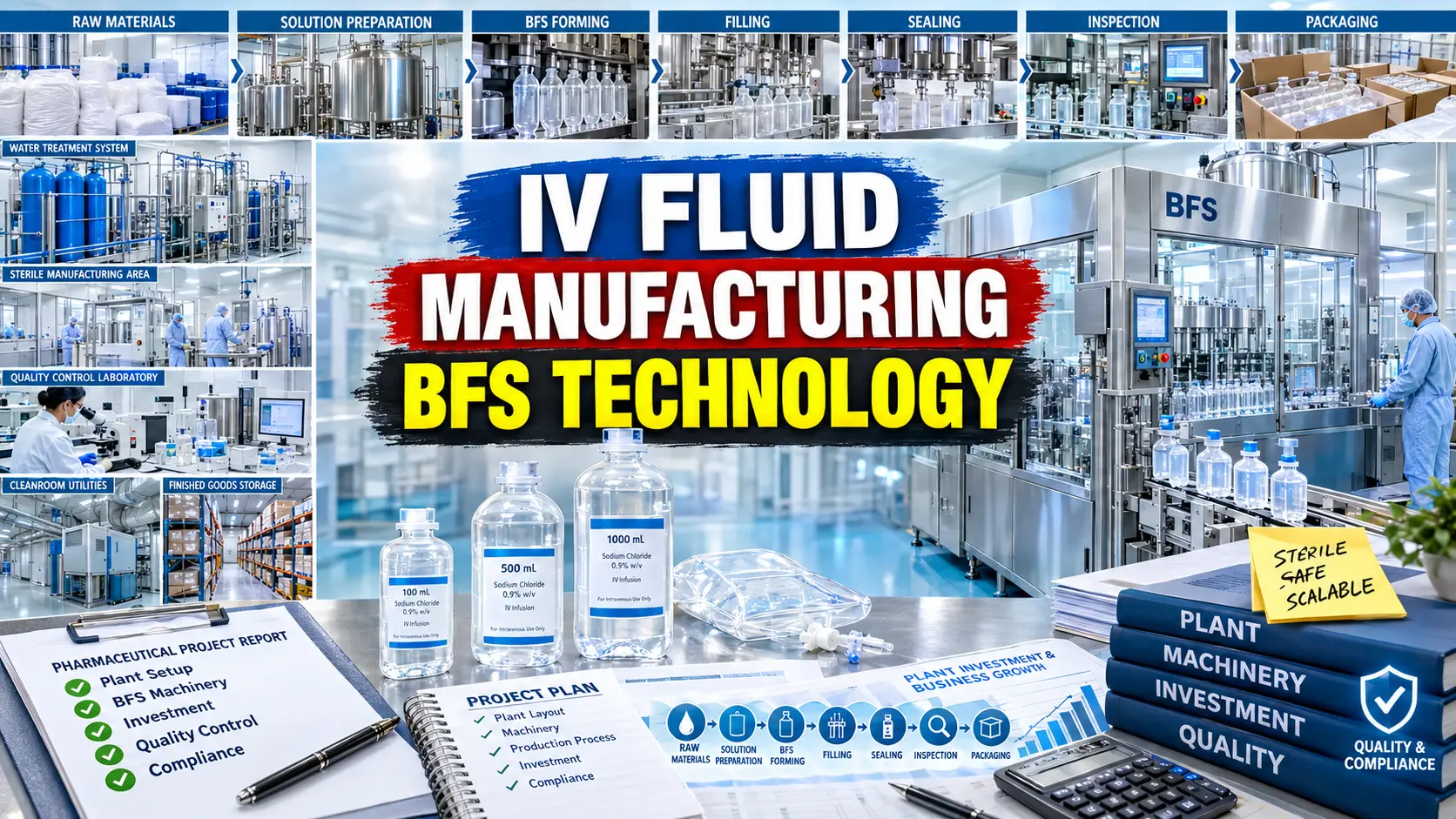
- IV fluids made with BFS technology
- Hypochlorous acid spray for disinfection
Pharma inputs and biotech supply chain
- Business ideas in active pharmaceutical ingredient (API) products
- Investment opportunities in the Indian pharma sector
- Cold chain logistics, which vaccines and many biologics depend on
Planning and registration
- Udyam registration in 2026
- 50 profitable MSME business projects
- Top 10 high-demand business ideas
- Technical manufacturing business ideas
10 healthcare project ideas for small manufacturers
These are product ideas, not promises. Each one needs its own market check, licence and quality system before you invest. Use the linked report as a starting point and confirm current demand and prices yourself.
- Disposable syringes. A high-volume single-use item for injections and vaccination. Typical buyers: hospitals, clinics, pharmacies, distributors and government tenders.
- Blood bags. Sterile bags for collecting and storing blood. Typical buyers: blood banks, hospitals and medical distributors.
- IV fluids with BFS technology. Intravenous fluids filled with blow-fill-seal technology; needs strict sterile conditions. Typical buyers: hospitals, nursing homes and institutional suppliers.
- Surgical hand gloves. Sterile and examination gloves for operating rooms and clinics. Typical buyers: hospitals, dental clinics, labs and distributors.
- Disposable surgical face masks. A simple, repeat-purchase product for hospitals and clinics. Typical buyers: hospitals, pharmacies, institutions and online sellers.
- Absorbent surgical cotton. Medical-grade cotton for dressing, wound care and hospital use. Typical buyers: hospitals, chemists, pharma packers and distributors.
- Disposable surgical devices and hospital products. A wider look at disposable medical products you could make in one unit. Typical buyers: hospitals, distributors and institutional buyers.
- Hypochlorous acid disinfectant spray. A liquid disinfectant product that is easy to pack in small sizes. Typical buyers: hospitals, clinics, labs and retail.
- Baby wet wipes and hygiene wipes. A hygiene product with steady everyday demand. Typical buyers: pharmacies, retail chains, hospitals and online sellers.
- Hospital rubber sheets (mackintosh) and gloves. Rubber sheets used in wards and operating rooms, made along with gloves. Typical buyers: hospitals, nursing homes and medical suppliers.
Not sure which one fits your budget and location? Compare them in our project reports and market research reports, or ask us on WhatsApp.
Bigger healthcare projects for larger investors
Not every opportunity is for a small unit. These projects need more capital, more space or controlled conditions, stricter licences and usually a technical team. We do not quote investment figures here, because they change with location, scale and equipment. Each linked report is a starting point; get a current project report before you commit.
- Private hospital. Setting up a private hospital is the largest and slowest project on this page, with land, building, equipment, doctors and licences to arrange. Demand comes from: patients, insurers and government health schemes.
- Medical oxygen gas plant and bottling. Producing and bottling medical oxygen for supply in cylinders. Demand comes from: hospitals, nursing homes and industrial users.
- Biotechnology-based bulk drugs. Making bulk drugs through biotechnology routes, which needs strong technical know-how. Demand comes from: pharmaceutical formulators and drug makers.
- Small volume parenteral (SVP) solutions. Sterile injectable solutions in small volumes, produced under strict sterile conditions. Demand comes from: hospitals, pharma companies and distributors.
- Sterile water for injection. A basic sterile product used to prepare and deliver injectable medicines. Demand comes from: hospitals, injectable makers and distributors.
- Glass vials for medicines. Vials used to pack injectable medicines and other pharma products. Demand comes from: injectable and pharma manufacturers.
- Empty hard gelatin capsules. Empty capsule shells sold to companies that fill them with medicines or supplements. Demand comes from: pharma, nutraceutical and herbal companies.
- Soft gelatin (softgel) capsules. Softgels for oils and liquid formulations. Demand comes from: pharma and nutraceutical brands and contract fillers.
- Indian medical devices industry. An overview for investors looking beyond disposables into the wider devices market. Demand comes from: hospitals, diagnostic centres and distributors.
- Biomedical waste recycling. Handling and recycling hospital waste, a field with strict rules. Demand comes from: hospitals and waste-collection contractors.
These bigger projects are also where the healthcare start-ups in the minister’s speech may look for manufacturing partners. If you plan one, a detailed project report from NPCS can compare plant size, machinery and working capital before you decide.
How a small unit can start: five practical steps
- Pick one product and one buyer type. Hospitals, diagnostic labs, healthcare start-ups and distributors buy differently. Decide who you will sell to before you choose a machine.
- Find out the licence for that product. Medical devices and drugs are regulated by the central and state licensing authorities, and the rules depend on the class of the product. Confirm this with the authority before you buy machinery.
- Plan for quality from day one. Buyers in healthcare ask for a quality system, testing records and traceability. Budget for a testing set-up and a quality-control person.
- Cost it honestly. Count machinery, clean-room or controlled space if needed, working capital and testing, and take at least two supplier quotes. A detailed project report puts these numbers in one place.
- Run a pilot lot. Make a small batch, get it tested, show it to two or three buyers, and scale up only after that.
How NPCS can help
NPCS (NIIR Project Consultancy Services) prepares detailed project reports and market studies for manufacturers, including those who want to supply healthcare start-ups, hospitals and labs. Use Business Finder to explore ideas, read our market research reports, browse project reports and books, or talk to us on WhatsApp, call +91 90970 75054 or write to npcs.india@gmail.com.
Send us your enquiry
Questions people ask
What did the minister say about healthcare start-ups?
He said India’s start-up ecosystem has grown from about 350 in 2014 to more than 2.5 lakh, that over 60% come from smaller cities and towns, and that biotech start-ups have grown from about 50–60 to nearly 10,000. He asked private players to invest more in healthcare start-ups and research.
How many start-ups does India have?
The PIB release says more than 2.5 lakh, and calls India the world’s third-largest start-up ecosystem. It does not give the year of the count.
Why does the government want private money in healthcare start-ups?
The minister said the Government encourages private partners to invest in R&D, and that opening new sectors to private players creates openings. He hopes India will produce a globally recognised blockbuster drug within a decade.
What is the Genome India project?
A national effort to sequence the genomes of people from India’s many population groups. The release says 10,000 individuals from 80 population groups have been sequenced.
Can a small manufacturer supply healthcare start-ups?
Yes. Healthcare start-ups and hospitals need consumables, packaging, disinfection and similar supplies, but each product needs its own licence and quality checks. Study the buyer and the rules first, and ask for a project report before you invest.
Sources
- PIB press release, 25 November 2026 (Dr Jitendra Singh at HealthX Elevate 2026)
- Business Standard: first human gene therapy for haemophilia A in India
- DistilINFO: HealthX Elevate 2026 spotlights healthcare start-ups