
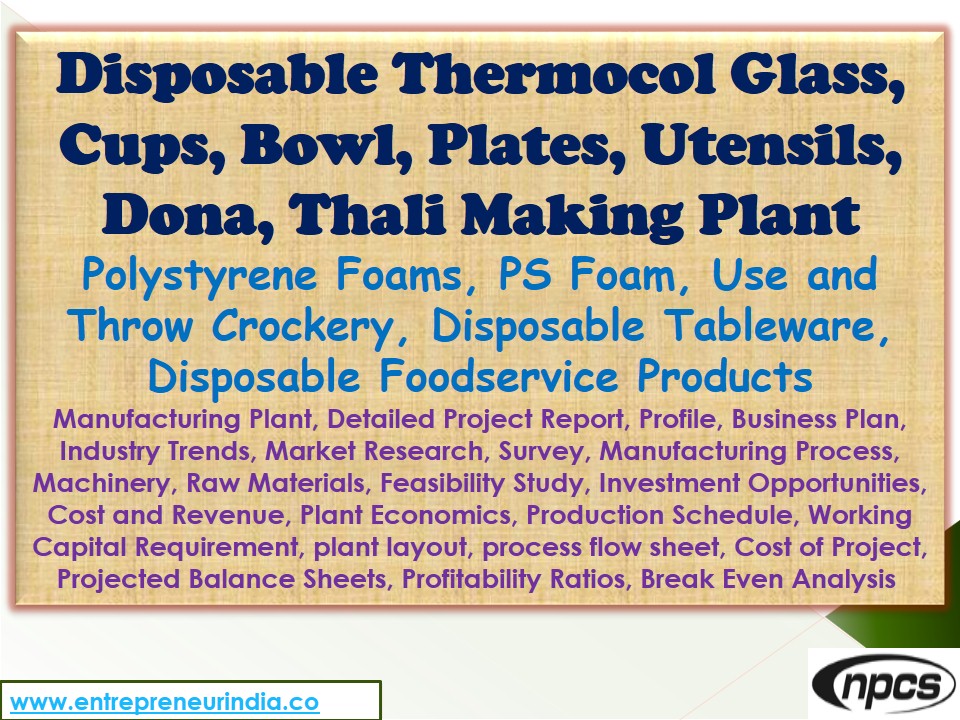
India’s growing demand for convenient, low-cost packaging and serving solutions has led to a rise in single-use product manufacturing. Among these, disposable thermocol items—such as cups, plates, and utensils—have gained significant popularity. These products are commonly used during festivals, public functions, street food services, and catering events due to their lightweight nature, insulation properties, and affordability.
Setting Up a Disposable Thermocol Manufacturing Plant
Before entering the disposable thermocol production business, thorough research and planning are essential. Despite the environmental concerns associated with thermocol (expanded polystyrene or EPS), the material continues to dominate the disposable sector due to its cost-effectiveness and availability. However, it is wise to remain updated on local regulations and explore recyclable or biodegradable alternatives where feasible.
See Also : FMCG Products Manufacturing
Market Demand and Business Potential
In recent years, the market for disposable thermocol products has expanded steadily across India. These items are in constant demand at street vendors, fast-food joints, railway stations, marriage halls, and religious functions. Although some regions have started discouraging the use of thermocol due to ecological concerns, demand remains strong where restrictions are not yet implemented. This scenario presents both an opportunity and a risk—entrepreneurs must tread carefully, assessing local laws before investing.
Government initiatives promoting cleanliness and hygiene have indirectly boosted demand. Particularly during pandemic times, disposable products were preferred to prevent infections. Even post-COVID, this behavioral shift has continued to influence buyer choices.
Raw Material Requirement
The basic raw material for disposable thermocol manufacturing is polystyrene granules. These granules are melted and expanded into thermocol sheets through a heating and foaming process. Additives like blowing agents and fire retardants may also be used to enhance product safety and appearance.
Sourcing quality raw materials from verified suppliers ensures consistency. In India, cities like Mumbai, Ahmedabad, and Delhi have several dependable suppliers. Polystyrene can be imported as well, but additional clearance and quality checks will be necessary.
Manufacturing Process Overview
To manufacture disposable thermocol cups, plates, and trays, several stages are followed. First, polystyrene beads are heated and expanded to form foam. This foam is then converted into sheets using laminators. Sheets are cut into shapes or directly molded using hydraulic or vacuum forming machines.
Modern units often rely on automatic or semi-automatic machines to increase productivity and reduce labor costs. The final products are stacked, counted, and packed for sale. To maintain hygiene standards, packaging should be done in dust-free areas using gloves and sterile tools.
Although the manufacturing process is relatively simple, care must be taken to monitor temperature, foaming consistency, and pressure to avoid product rejection. Machine calibration and skilled operators are vital for efficient production.
Machinery and Infrastructure
A small-scale disposable thermocol unit requires basic equipment such as:
Thermocol sheet extrusion machine
Vacuum forming or hydraulic forming machine
Sheet cutting machine
Molds for various shapes and sizes
Compressors and cooling systems
Packaging unit
The production area should ideally be 1000–2000 sq. ft., including sections for raw material storage, processing, and packaging. Electrical connections, ventilation, and safety systems must comply with industrial norms.
While semi-automatic machines cost less, fully automatic options offer better throughput and uniform quality. Investment in automation is recommended for long-term scalability.
Licenses and Compliance
Starting a disposable thermocol manufacturing unit requires several registrations:
Udyam Registration for MSME benefits
Factory License from the local authority
GST registration
Pollution Control Board clearance
Fire safety clearance
Trade license from municipal authorities
Since thermocol is considered non-biodegradable, certain states may require a No Objection Certificate (NOC) or impose restrictions. It is advisable to approach a legal consultant to ensure full compliance.
Additionally, if exports are planned, certifications like ISO 9001 and FDA (for food contact safety) might be needed.
Cost of Setting Up a Unit
The approximate cost for setting up a small plant producing disposable thermocol products is:
Machinery and molds: ?10–15 lakhs
Raw material stock: ?2–3 lakhs
Factory setup and interiors: ?5–7 lakhs
Power and utilities: ?1–2 lakhs
Working capital (3–6 months): ?5–8 lakhs
Total estimated cost: ?25–35 lakhs
Costs can vary depending on automation level, product range, and production volume. Funding options include bank loans under the MSME scheme, state subsidies, and private investors.
Profitability and ROI
Profit margins in disposable thermocol products are typically between 15% and 25%, depending on material costs and sales channels. Local distributors, wholesalers, and catering suppliers form the major customer base. Large orders from event planners, temples, or government functions can also boost income.
With consistent demand and streamlined production, breakeven can be achieved within 12–18 months. By adding customized designs or bulk packaging solutions, value addition becomes possible, improving profit margins.
Wastage is minimal if scraps are recycle back into the process. This further improves unit economics. However, product rejection due to shape inconsistencies must be minimize by training staff and maintaining equipment.
Marketing and Sales Strategy
To promote your disposable thermocol products, consider the following strategies:
Distribute free samples to food vendors and caterers
Partner with wedding planners and event organizers
List products on B2B platforms like IndiaMART and TradeIndia
Supply to railway and canteen contractors
Advertise in local newspapers and trade directories
Attend industrial exhibitions and packaging expos
Branding matters too. Although these products are low-cost, bulk buyers often prefer consistent quality and reliable suppliers. A well-designed logo, clean packaging, and customer support can give your business a competitive edge.
Social media can also play a role in marketing. Sharing photos of your products, plant setup, and packaging through platforms like WhatsApp Business and Instagram helps in building visibility.
Challenges in Thermocol Manufacturing
While disposable thermocol products offer a lucrative opportunity, entrepreneurs must be aware of the challenges involve:
Environmental concerns: Thermocol is non-biodegradable and causes pollution when burned or dumped.
Regulatory restrictions: Some cities and states have already banned or restricted its use.
Competition: Several small and medium players operate in this segment, creating pricing pressure.
Raw material price fluctuation: Polystyrene is derive from petroleum, hence prices are link to global oil markets.
Seasonal demand: Sales often peak during festivals and wedding seasons, leading to inventory management challenges.
Proactively addressing these challenges through innovation, quality focus, and diversification into eco-friendly options can help ensure business continuity.
Opportunities for Diversification
To future-proof the business, owners can explore related product lines such as:
Biodegradable paper or bagasse-based plates
Recyclable PET or PP cups
Thermocol packaging for electronic goods
Decorative thermocol craft items
EPS blocks for insulation and construction
Moreover, surplus plant capacity can be use for custom orders or seasonal products. This not only improves asset utilization but also reduces idle time during lean seasons.
By staying agile, manufacturers can adapt to changing trends and retain profitability.
See Also : Maize Processing & Corn
Final Thoughts
India’s demand for lightweight, hygienic, and economical food-serving solutions continues to fuel the growth of the disposable thermocol industry. Despite environmental debates, these products remain essential in many semi-urban and rural markets.
Entrepreneurs looking to enter the space should focus on cost efficiency, compliance, and market outreach. Continuous quality improvement and diversification will help maintain competitiveness and sustainability in the long term.
A well-structured disposable thermocol manufacturing business can generate stable income, offer employment, and contribute to local supply chains. However, responsible practices and awareness of ecological impacts must go hand-in-hand for lasting success.