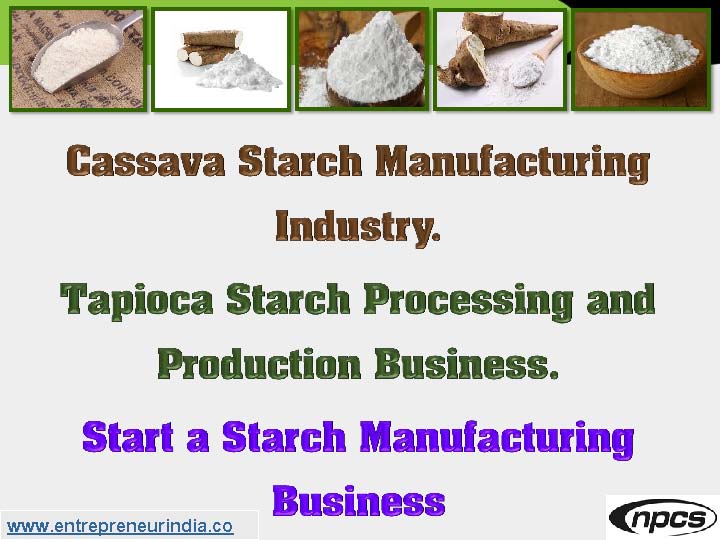
The Cassava Starch Manufacturing Industry is growing steadily due to the global rise in demand for natural, plant-based ingredients in food, pharmaceuticals, and industrial applications. Cassava, a root vegetable rich in carbohydrates, is a vital crop in tropical and subtropical regions. When processed into starch, cassava becomes a versatile product used in baking, adhesives, textiles, and even biodegradable plastics. The increasing shift towards sustainable and non-GMO sources of starch makes the Cassava Starch Manufacturing Industry an ideal investment opportunity for entrepreneurs seeking growth in the agro-processing sector.
What is Cassava Starch?
Cassava starch is a white, odorless powder extracted from the roots of the cassava plant (Manihot esculenta). It’s valued for its high viscosity, purity, and neutral flavor. Also known as tapioca starch in many regions, cassava starch is used in food processing as a thickener, stabilizer, and texturizer. In the Cassava Starch Manufacturing Industry, the starch is further modified for use in pharmaceuticals, biodegradable packaging, and industrial adhesives.
Cassava starch competes with corn and potato starch, but it stands out for being naturally gluten-free, low in allergens, and adaptable to various climates.
Applications of Cassava Starch
The Cassava Starch Manufacturing Industry serves several high-growth industries:
Food Industry: Used in soups, sauces, puddings, bakery items, and baby food
Textile Industry: Acts as a sizing agent for fabrics
Paper and Packaging: Enhances paper strength and gloss
Pharmaceuticals: Used as a binder in tablet production
Bioplastics: Used in manufacturing biodegradable films and cutlery
Adhesives: Used in making glues and pastes
The wide range of applications ensures consistent demand, making the industry highly stable and scalable.
Cassava Starch Production Process
The production process in the Cassava Starch Manufacturing Industry includes:
Washing and Peeling
Fresh cassava roots are thoroughly washed and peeled to remove dirt, stones, and skin.Grating or Crushing
The peeled roots are grated or crushed to release starch from the cell walls.Separation and Filtration
The pulp is mixed with water and passed through a screen to separate fiber from starch milk.Sedimentation or Centrifugation
The starch milk is settled or centrifuged to isolate pure starch from impurities.Drying
The wet starch is dried in flash dryers or fluidized bed dryers to remove moisture.Milling and Packaging
Dried starch is milled to uniform particle size and packed in moisture-proof bags.
The process may vary slightly depending on whether native or modified starch is being produced.
Machinery and Equipment Required
To start operations in the Cassava Starch Manufacturing Industry, key machinery includes:
Cassava washer and peeler
Grating machine or hammer mill
Starch extractor and sieve
Sedimentation tanks or hydrocyclone units
Flash dryer or tray dryer
Pulverizer for starch grinding
Packing machine (semi or fully automatic)
Most modern units also use water recycling systems and PLC-based control panels to maintain efficiency and reduce waste.
Infrastructure and Plant Setup
A medium-scale cassava starch plant typically requires 10,000 to 20,000 sq. ft. of land. Essential facilities include:
Raw material storage area
Processing hall with food-grade flooring
Drying and packing sections
Laboratory for quality control
Wastewater treatment system
Office and utilities section
Access to clean water, stable electricity, and proximity to cassava farms significantly impacts operational efficiency.
Raw Material Requirements
The core input in the Cassava Starch Manufacturing Industry is fresh cassava root. On average, 3.5 to 4 tons of cassava yield 1 ton of dry starch. Other inputs include:
Water (for washing and slurry processing)
Food-grade bags for packaging
Fuel or electricity for drying
Preservatives (optional for long shelf life)
Procuring cassava locally ensures cost-effectiveness and fresher inputs, which are essential for high starch yield.
Investment and Profit Margins
The initial investment varies based on capacity and automation:
Small-Scale Unit: ?25–40 lakhs
Medium-Scale Unit: ?80 lakhs–?1.5 crore
Large-Scale Plant: ?2–4 crores
Starch typically sells between ?35 to ?65 per kg depending on purity, grade, and packaging. The Cassava Starch Manufacturing Industry can offer profit margins between 20–30%, with ROI expected within 18–24 months under proper supply chain management.
Licenses and Certifications Required
To legally operate in the Cassava Starch Manufacturing Industry, the following licenses are required:
FSSAI License for food-grade starch production
GST Registration
MSME/Udyam Registration
Pollution Control Board NOC
ISO 22000 or HACCP certification (for quality assurance)
Trade License from the local municipality
Import Export Code (IEC) for global trade
Additional certifications may be necessary for pharmaceutical or biodegradable-grade starch.
Market Opportunities and Export Potential
The Cassava Starch Manufacturing Industry is thriving due to rising global preference for clean-label, plant-based products. Major consumers include:
Food processing companies
Textile manufacturers
Paper and pulp industries
Eco-friendly packaging companies
Global buyers in Europe, Africa, and Southeast Asia
India, Thailand, Nigeria, and Indonesia are leading cassava producers. Indian manufacturers have a golden opportunity to enter the export market with value-added or modified starch.
Growth and Diversification Opportunities
There are several ways to grow within the Cassava Starch Manufacturing Industry:
Modified Starch: For use in advanced food and pharma products
Cassava Flour Production: Used in gluten-free foods
Starch-based Bioplastic Products: Plates, cutlery, and carry bags
Starch Syrup or Glucose: Widely used in bakeries and beverages
Organic or Non-GMO Starch: For niche export markets
Establishing contracts with food brands or becoming a certified supplier to pharma companies can open premium markets.
Conclusion
The Cassava Starch Manufacturing Industry is a robust, high-potential business sector suitable for agro-industrial entrepreneurs and investors alike. With growing demand in diverse applications, consistent supply of raw material, and support for sustainable products, cassava starch production offers long-term returns. Whether supplying to food chains, textile mills, or export buyers, cassava starch remains a vital and versatile product. Investing in quality machinery, compliance, and value addition will ensure success in this dynamic industry.
Niir Project Consultancy Services
An ISO 9001:2015 Company
106-E, Kamla Nagar, Opp. Spark Mall,
New Delhi-110007, India.
Email: npcs.ei@gmail.com , info@entrepreneurindia.co
Tel: +91-11-23843955, 23845654, 23845886, 8800733955
Mobile: +91-9811043595
Website: www.entrepreneurindia.co , www.niir.org