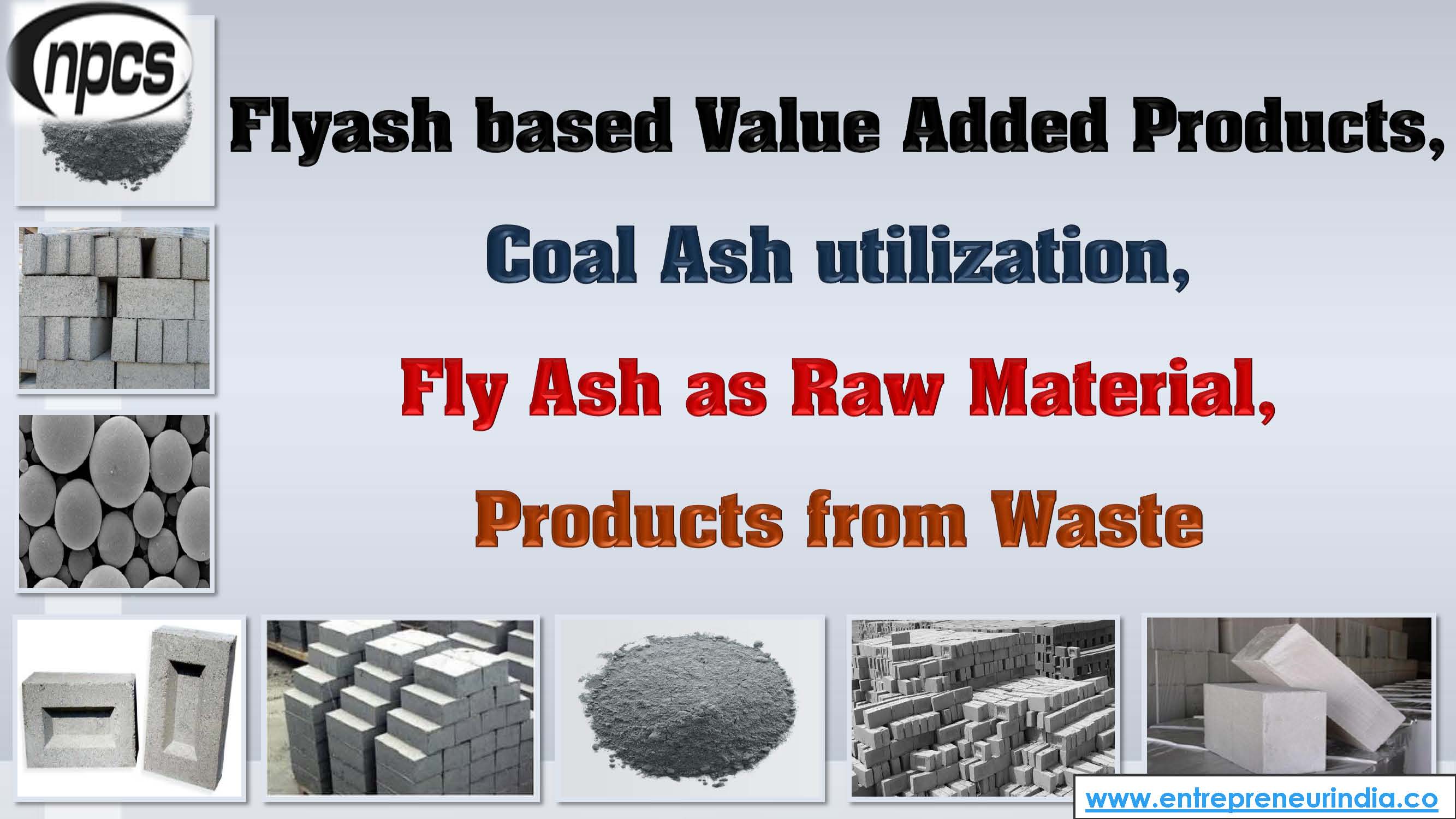
As the world moves toward sustainable industrial practices and circular economy models, Flyash-based value added products are gaining immense attention across construction, infrastructure, and environmental sectors. Flyash, a byproduct of coal combustion in thermal power plants, was once considered a waste disposal challenge. Today, it’s a goldmine for entrepreneurs and manufacturers who understand how to convert it into high-demand products that serve both economic and ecological interests.
The production of flyash-based value added products not only supports environmental protection but also offers excellent business opportunities with strong margins and scalable models.
What is Flyash?
Flyash is a fine, powdery material composed mainly of silica, alumina, and iron. It is generated during the burning of pulverized coal in power plants and collected using electrostatic precipitators or filter bags. Classified as a pozzolanic material, it has cementitious properties that make it suitable for various construction applications.
India, being heavily reliant on thermal power, produces over 150 million tonnes of flyash annually, offering abundant raw material for businesses.
Why Choose Flyash-Based Value Added Products?
Eco-Friendly Manufacturing – Reduces reliance on natural resources like limestone and sand.
Waste Utilization – Supports pollution control and aligns with government’s waste-to-wealth initiatives.
Government Support – Encouragement through subsidies, policy frameworks, and infrastructure incentives.
Cost-Effective Raw Material – Flyash is low-cost or even free in some areas.
Growing Market Demand – Used across housing, roads, precast products, agriculture, and packaging.
Top Flyash-Based Value Added Products
1. Flyash Bricks
Flyash bricks are an alternative to traditional clay bricks. They are lightweight, durable, and cost-effective.
Raw Materials: Flyash, lime, gypsum, sand
Manufacturing: Hydraulic press molding or pan-mixing
Applications: Residential and commercial construction
Advantages: Faster curing, eco-friendly, high compressive strength
Profitability: High demand due to construction sector boom and government norms promoting flyash brick usage in public projects
2. Flyash Blocks and Pavers
Large-format blocks and interlocking paver tiles made with flyash are popular in urban infrastructure development.
Applications: Sidewalks, garden paths, industrial flooring
Customization: Colors, patterns, textures
USP: Cheaper and stronger than cement-only pavers
Market: Municipal corporations, housing developers, landscaping companies
3. Ready Mix Concrete (RMC) Using Flyash
Flyash is a key component in blended cement and high-performance concrete.
Benefits: Increases workability and reduces water demand
Industry Use: Roads, bridges, flyovers, airports
Business Model: RMC batching plants with flyash integration
Opportunity: High-value B2B supply contracts in infrastructure projects
4. Flyash Cement (PPC & PSC)
Partial substitution of Portland cement with flyash creates cost-effective and durable cement products.
Types: Portland Pozzolana Cement (PPC), Portland Slag Cement (PSC)
Benefits: Lower heat of hydration, longer lifespan, improved sulfate resistance
Market: Cement dealers, retail outlets, real estate developers
5. Flyash-Based Lightweight Aggregates
Used in manufacturing lightweight concrete and thermal insulation products.
Method: Sintering flyash at high temperatures to form pellets
Applications: High-rise buildings, precast units, green roofs
Profit Potential: Lower transport cost and increasing demand in green buildings
6. Flyash Geopolymers
An innovative use of flyash in creating geopolymer cement, an eco-friendly alternative to OPC (Ordinary Portland Cement).
Composition: Flyash activated with alkaline solutions
Market: Smart city infrastructure, 3D printed construction, precast industries
Status: Emerging but high-potential market for long-term growth
7. Flyash Ceramics and Tiles
High-quality tiles and ceramic materials can be produced using treated flyash.
Process: Mixing flyash with clays, firing at high temperatures
Product Types: Wall tiles, floor tiles, roof tiles
Unique Selling Point: Cost-effective, thermally insulating, eco-friendly appeal
8. Flyash-Based Soil Conditioners
Used in agriculture to improve soil porosity and nutrient retention.
Blending: With compost, vermi-compost, or organic waste
Target Market: Organic farmers, agribusinesses, cooperatives
Benefits: Reduces fertilizer use, boosts crop yield sustainably
Machinery and Equipment Required
Hydraulic Brick/Block Press Machine
Pan Mixer and Batching Plant
Curing Chambers
Flyash Handling Units (Silos or Storage Tanks)
Packaging Machines (for soil conditioners or cement blends)
Crusher and Pulverizer (if blending flyash with other materials)
Small-scale setups can start with ?10–15 lakhs investment, while automated medium to large-scale units may require ?50 lakhs to ?1 crore.
Licenses and Compliance
Udyam (MSME) Registration
Factory License
Pollution Control Board NOC
GST Registration
BIS Certification (for products like bricks and cement)
ISO 9001 (for quality control assurance)
Manufacturers targeting government contracts may also need approval under the Fly Ash Utilization Policy and applicable construction material norms.
Profitability and ROI
Production Cost (Flyash Bricks): ?3.00–?4.50 per brick
Selling Price: ?6.00–?8.00 per brick
Gross Margin: 40%–50%
Break-Even: Within 12–18 months for medium-scale setups
Other Benefits: Carbon credit eligibility, green building certification tie-ups
Government construction norms increasingly mandate the use of flyash products in public infrastructure projects, ensuring steady demand.
Marketing Strategy
Partner with contractors, real estate developers, and government departments
List on B2B platforms like IndiaMART, TradeIndia, Justdial
Showcase at construction expos and green building conferences
Digital promotion via LinkedIn, Google Ads, and Facebook
Collaborate with NGOs and CSR initiatives for rural housing projects
Conclusion
The Flyash-based value added products industry is not only a highly profitable business opportunity but also an environmentally responsible endeavor. As sustainability takes center stage in development, converting flyash into bricks, pavers, tiles, and blended cement creates economic value while reducing industrial waste. With the right planning, technology, and compliance, entrepreneurs can build a future-ready business in one of the fastest-growing green manufacturing sectors.
Niir Project Consultancy Services
An ISO 9001:2015 Company
106-E, Kamla Nagar, Opp. Spark Mall,
New Delhi-110007, India.
Email: npcs.ei@gmail.com , info@entrepreneurindia.co
Tel: +91-11-23843955, 23845654, 23845886, 8800733955
Mobile: +91-9811043595
Website: www.entrepreneurindia.co , www.niir.org