Introduction
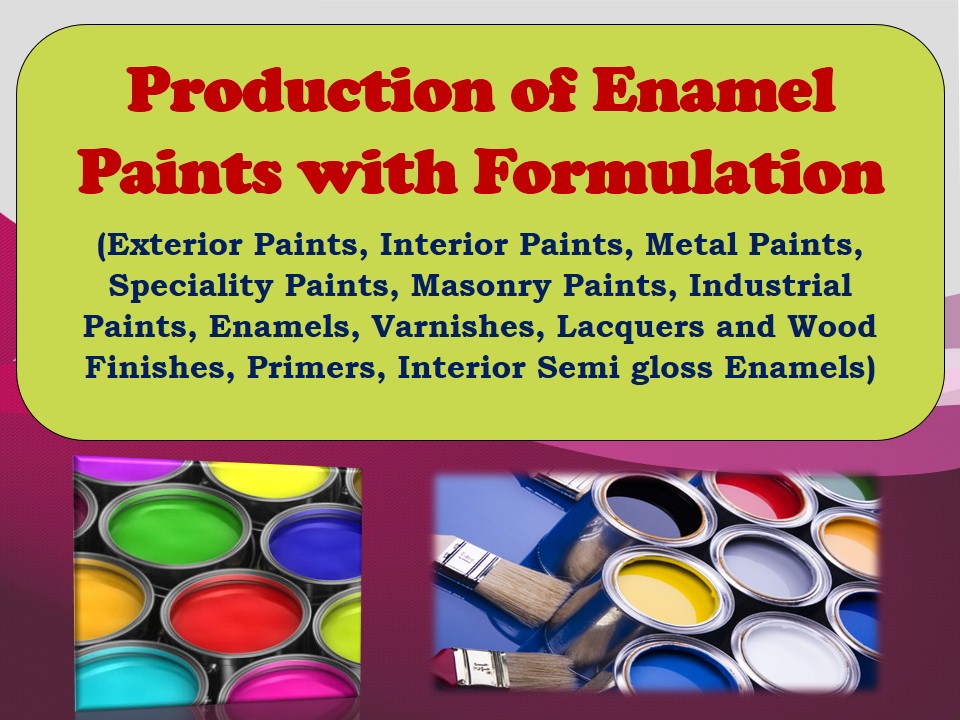
The plays a vital role in both the decorative and protective coatings industry. Enamel paints and related finishes are used across residential, commercial, and industrial applications due to their durability, gloss, and resistance to environmental conditions. From protecting metal structures to beautifying interiors and exteriors, enamel-based products are engineered for performance and aesthetics. This article explores how enamel paints are formulated, their classification based on use, and their manufacturing processes.
Understanding Enamel Paints and Their Role in Surface Protection
Enamel paints are solvent- or oil-based coatings that dry to a hard, usually glossy finish. Known for their durability and resistance to moisture, chemicals, and wear, they are widely used in applications where long-lasting protection is needed.
See Also –Electrochemical Manufacturing
What Are Enamel Paints?
Enamel paints are typically composed of the following:
Resins/Binder: Alkyd, polyurethane, acrylic, or epoxy resins form the base that creates a durable film.
Pigments: Add color and opacity. Titanium dioxide is common for white shades.
Solvents: Aid in application and control drying time.
Additives: Provide special properties such as UV resistance, anti-settling, or anti-fungal action.
Advantages of Enamel Paints
High-gloss and smooth finish
Excellent adhesion to various surfaces
Weather and moisture resistance
Easy to clean and maintain
Long service life
These properties make them ideal for surfaces like wood, metal, concrete, and masonry.
Formulation of Enamel Paints
The production-of-enamel-paints-with-formulation involves a blend of science and material engineering. Each component in the formulation affects the paint’s final properties.
Basic Enamel Paint Formulation
A general enamel paint formulation includes:
Resin (30–40%) – e.g., alkyd resin for oil-based enamels
Pigments (20–30%) – for color and opacity
Solvents (20–30%) – such as mineral spirits, xylene, or turpentine
Additives (2–5%) – anti-skinning agents, dispersants, driers
Example:
For a white gloss enamel:
Alkyd resin: 35%
Titanium dioxide: 25%
Mineral spirits: 30%
Additives: 5–10%
Types of Resins Used
Alkyd Resins: Most common for general-purpose enamel paints.
Acrylic Resins: Faster drying and lower VOC; ideal for interior applications.
Polyurethane Resins: Provide scratch and chemical resistance.
Epoxy Resins: Used in industrial and high-performance coatings.
The choice of resin directly influences hardness, gloss, drying time, and durability.
Categories of Enamel and Related Paints
Enamel paints are versatile and come in many varieties tailored to specific applications. Let’s explore the key types.
Exterior Paints
Formulated to withstand UV rays, rain, and temperature variations.
Features: Weatherproof, anti-fungal, flexible to prevent cracking
Common Surfaces: Cement walls, stucco, exterior wood, aluminum sidings
Additives: UV stabilizers, anti-fungal agents
Interior Paints
These paints prioritize aesthetics, washability, and low odor.
Features: Smooth finish, scrub resistance, low VOC
Surfaces: Plaster, drywall, wood, and gypsum
Sheens: Available in matte, satin, and gloss
Metal Paints
Specifically designed to protect and beautify ferrous and non-ferrous metal surfaces.
Formulations: May include rust inhibitors and corrosion-resistant additives
Variants: Zinc chromate primers, quick-dry enamel, epoxy-based metal paint
Application Areas: Railings, grills, machinery, pipes, metal gates
Specialty Paints
Targeted for specific effects or functions.
Heat-resistant Paints: Used in chimneys, engine parts
Radiator Paints: Reflective and heat-tolerant
Anti-fungal Paints: Ideal for hospitals, kitchens, and bathrooms
Road Marking Paints: Quick-drying and UV-resistant
Masonry Paints
Designed for porous materials like brick, cement, and concrete.
Features: Breathable, alkali-resistant, water-repellent
Binders: Often based on styrene-acrylic emulsions or silicates
Variants: Textured or smooth masonry coatings
Industrial Paints
Used in factories, plants, heavy machinery, and marine environments.
Properties: Chemical resistance, high mechanical strength, anti-corrosion
Common Types: Epoxy primers, PU topcoats, zinc-rich coatings
Enamels, Varnishes, Lacquers, and Wood Finishes
These products are closely related to enamel paints and are often used in finishing and protection tasks across industries.
Enamels
Oil-Based Enamels: Ideal for metal and wood; provide a glossy, durable finish
Water-Based Enamels: Eco-friendly and fast-drying for indoor use
Varnishes
Clear or tinted protective finishes used on wood and metal.
Types: Polyurethane varnish, alkyd varnish, marine varnish
Applications: Furniture, flooring, doors
Lacquers
Quick-drying solvent-based finishes that provide a high-gloss or matte look.
Nitrocellulose Lacquers: Used in automotive and furniture finishes
Acrylic Lacquers: UV-stable and non-yellowing
Wood Finishes
Products like wood stains, sealers, and polishes.
Purpose: Enhance grain, provide protection, prevent moisture damage
Natural Finishes: Linseed oil, tung oil, shellac
Primer Coatings and Their Importance
Primers are essential for preparing surfaces before applying topcoats like enamel paints.
Types of Primers
Metal Primers: Zinc chromate, red oxide
Wall Primers: Water-based and solvent-based acrylic primers
Wood Primers: Block tannin bleed and improve adhesion
Benefits of Using Primers
Improves paint adhesion
Enhances coverage
Prevents stains and corrosion
Increases paint durability
Skipping primer can lead to paint failure, especially on porous or oily surfaces.
Manufacturing Process of Enamel Paints
The production-of-enamel-paints-with-formulation is carried out under controlled conditions to ensure consistency, safety, and quality.
Key Steps
Weighing and Mixing: Raw materials are accurately weighed and mixed in high-speed dispersers.
Grinding: Pigments are dispersed to fine particles using ball mills or bead mills.
Letdown: Resins and solvents are added to adjust viscosity and consistency.
Filtering: The paint is filtered to remove any impurities or oversized particles.
Filling and Packaging: Filled into cans, drums, or bulk containers based on customer needs.
Quality Testing: Color, viscosity, drying time, gloss, and durability are tested.
Quality Control Parameters
Viscosity (flow and application ease)
Drying Time (surface and hard drying)
Gloss Level (measured in gloss units)
Hiding Power (opacity)
Durability (weather resistance, hardness)
Maintaining batch consistency is critical for brand trust and product performance.
Environmental and Safety Considerations
Paint manufacturing involves chemicals that must be handled responsibly to ensure safety and environmental compliance.
Therefore, VOC management has become a priority in the industry. As a result,
- low-VOC and water-based paints are increasingly encouraged, as they reduce harmful emissions while maintaining performance standards.
Waste Treatment: Solvent recovery and pigment sludge treatment are necessary
Worker Safety: PPE, ventilation, and fire prevention systems are mandatory
Regulatory Compliance: Adhering to standards like REACH, EPA, and BIS (India)
Many manufacturers are moving toward greener alternatives without compromising quality.
See Also – Medicinal Plant Farming
Conclusion
The production of enamel paints with formulation—including exterior paints, interior paints, metal paints, specialty paints, masonry paints, industrial paints, enamels, varnishes, lacquers, and wood finishes primers—is a dynamic and essential sector of the coatings industry. From vibrant walls and weatherproof exteriors to corrosion-resistant machinery and polished wooden furniture, enamel and related coatings serve both functional and aesthetic purposes.
Moreover, their durability, high-gloss finish, and resistance to environmental wear make them indispensable across residential, commercial, and industrial settings. As technology advances, the industry continues to shift toward eco-friendly, high-performance, and sustainable paint solutions. In addition, innovative formulations now allow for lower VOC emissions, faster drying times, and enhanced surface protection. Whether you are a manufacturer, architect, or DIY enthusiast, understanding the formulation and use of these products empowers better decisions in design, durability, and environmental responsibility. As a result, enamel paints remain a crucial component in modern construction and manufacturing ecosystems.