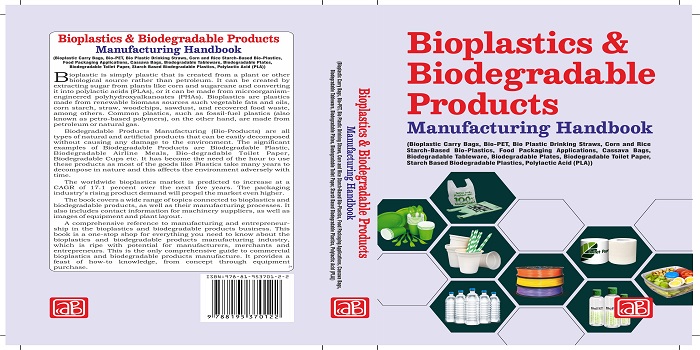

The Biodegradable Products Manufacturing Handbook is a vital guide for entrepreneurs looking to launch eco-friendly businesses in today’s sustainability-focused economy. With rising environmental concerns, increasing government regulations on plastic, and changing consumer preferences, the demand for biodegradable alternatives is growing rapidly in India and worldwide.
This guide outlines key insights into biodegradable product categories, raw materials, machinery, processes, legal standards, and business opportunities. If you’re planning to enter this space, understanding these foundational elements is crucial for long-term success.
Start a Business in Biodegradable Products Industry, Click Here
Contents
- 1. What Are Biodegradable Products?
- 1.1. Common Examples of Biodegradable Products:
- 1.2. 1. Why Start a Biodegradable Products Manufacturing Business?
- 1.3. 2. Raw Materials Used in Biodegradable Product Manufacturing
- 1.4. 3. Types of Biodegradable Products You Can Manufacture
- 1.5. 4. Machinery Required for Manufacturing
- 1.6. 5. Manufacturing Process Overview
- 1.7. 6. Licenses and Certifications Required
- 1.8. 7. Investment and Profit Margin
- 1.9. 8. Target Market and Customers
- 1.10. 9. Marketing Strategy for Biodegradable Products
- 1.11. Conclusion
What Are Biodegradable Products?
Biodegradable products are materials that can naturally break down into non-toxic components through microbial action over time. These products decompose without harming the environment, unlike conventional plastic which takes hundreds of years to degrade.
Common Examples of Biodegradable Products:
Tableware (plates, spoons, bowls, straws)
Carry bags made from corn starch or cassava
Compostable garbage bags
Biodegradable packaging films
Sanitary products and diapers
Mulch films for agriculture
Cutlery, cups, and takeaway containers
1. Why Start a Biodegradable Products Manufacturing Business?
a. Eco-Friendly Demand Surge
With bans on single-use plastic and climate change awareness, the Indian market is shifting toward sustainable solutions.
b. Government Policies & Incentives
India’s ban on single-use plastics and subsidies for green industries create a favorable ecosystem for manufacturing.
c. Export Opportunities
Countries in Europe, North America, and parts of Asia are major importers of biodegradable products.
d. Fast-Growing Market
The global biodegradable plastic market is expected to reach USD 20+ billion by 2030, growing at a CAGR of over 13%.
Related Feasibility Study Reports: Biodegradable Products
2. Raw Materials Used in Biodegradable Product Manufacturing
Choosing the right biodegradable raw material is key to ensuring your product is truly compostable and compliant with regulations.
Common Raw Materials Include:
Sugarcane Bagasse: A fibrous by-product of sugarcane processing
Corn Starch (PLA): Used for films, packaging, and tableware
Areca Palm Leaves: Used for eco plates and bowls
Rice Husk or Wheat Bran
Cassava or Tapioca Starch
Paper Pulp and Bamboo Fiber
PLA + PBAT (blends) for compostable bags
Each material has its own processing technique and shelf life, so understanding compatibility is crucial.
3. Types of Biodegradable Products You Can Manufacture
a. Disposable Tableware
Plates, spoons, bowls, and containers made from bagasse or areca palm leaves.
b. Biodegradable Carry Bags
Made using PLA, PBAT, or starch-based formulations. These are commonly used in retail, grocery, and agriculture.
c. Compostable Packaging
Food wrapping films, trays, containers, and vacuum-sealable bags.
d. Agricultural Mulch Films
Used to cover soil, these break down over time and enrich the land.
e. Biodegradable Cutlery and Straws
Popular in the hospitality industry as eco-friendly alternatives.
4. Machinery Required for Manufacturing
The selection of machinery depends on the product category. Here are commonly used machines:
Pulp Molding Machine – For tableware and packaging
Bag Making Machine – For compostable carry bags
Injection Molding Machine – For cutlery and containers
Film Blowing Machine – For biodegradable films and wraps
Hot Press Machine – For palm leaf products
Extrusion Machine – For sheets and agricultural films
Prices range from ?5 lakh to ?50 lakh depending on capacity and automation levels.
Related Books: Environmentally Friendly
5. Manufacturing Process Overview
Though the process varies by product, the basic stages include:
Raw Material Preparation – Cleaning, grinding, or pulping
Forming – Using molds or extrusion to shape products
Drying & Trimming – Removing moisture and refining shape
Printing or Branding – Optional step for custom designs
Packaging – Eco-packaging materials are usually preferred
Example: For sugarcane bagasse tableware, the process includes pulping, molding with heat and pressure, drying, and packing.
6. Licenses and Certifications Required
Before starting a biodegradable products manufacturing business, it’s essential to comply with local and national guidelines.
Required Licenses:
Udyam MSME Registration
GST Registration
Pollution Control Board NOC
Factory License
Trade License (Municipal)
Important Certifications:
CPCB/State PCB approval for compostable products
ISO 17088 certification for biodegradable plastics
Compostability test report from CIPET or BIS labs
FDA and FSSAI (for food-contact products)
Compliance helps build brand credibility and facilitates export approval.
7. Investment and Profit Margin
Initial Setup Cost (for small unit):
Machinery: ?10 – ?30 lakh
Raw Material stock: ?2 – ?5 lakh
Setup cost (shed, electricity, etc.): ?5 – ?10 lakh
Labor & Operation: ?1.5 lakh/month
Expected Monthly Profit:
Turnover: ?4 – ?10 lakh/month (depends on scale)
Profit Margin: 25% – 40% (after breakeven)
Break-even Period: 12–18 months for small-scale units
The business is scalable, and exporting increases profits significantly.
8. Target Market and Customers
Your customers may include:
Retail stores and supermarkets
E-commerce packaging suppliers
Hotel and restaurant chains
Hospitals and food caterers
Agri-input suppliers (for mulch films)
Government organizations for public use
International wholesalers and distributors
A strong B2B sales team or digital presence can help scale rapidly.
9. Marketing Strategy for Biodegradable Products
Highlight eco-benefits and government compliance
Create a brand identity around sustainability
Focus on B2B partnerships with restaurant chains and retailers
Use green packaging and certifications in your branding
Social media campaigns to build eco-conscious communities
List on B2B platforms like IndiaMART, TradeIndia, Alibaba
Conclusion
This Biodegradable Products Manufacturing Handbook offers a complete overview for entrepreneurs aiming to build an environmentally responsible business. With increasing global demand for plastic-free solutions, India has the resources, policy support, and raw materials to lead in biodegradable product manufacturing.
Whether you’re targeting tableware, packaging, or agri-products, this is the right time to step into this booming market and align profits with the planet. Be sure to maintain quality, compliance, and eco-authenticity to build long-term brand value.
Read Similar Articles: Biodegradable products
See More Links:
- Start a Business in Asia
- Start a Business in Potential Countries for Doing Business
- Best Industry for Doing Business
- Business Ideas with Low, Medium & High Investment
- Looking for Most Demandable Business Ideas for Startups
- Start a Business in Africa</strong>
- Start a Business in India
- Related Projects
- Related Market Research Reports
NIIR PROJECT CONSULTANCY SERVICES, DELHI
An ISO 9001:2015 Company
ENTREPRENEUR INDIA
106-E, Kamla Nagar, Opp. Mall ST,
New Delhi-110007, India.
Email: npcs.ei@gmail.com
Tel: +91-11-23843955, 23845654, 23845886
Mobile: +91-9097075054, 8800733955
Website: https://www.entrepreneurindia.co
https://www.niir.org