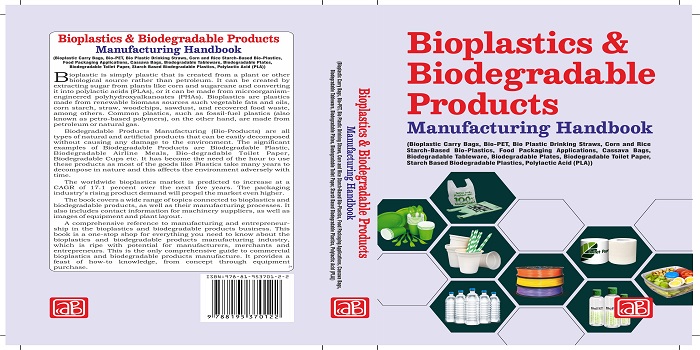
Bioplastics & Biodegradable Products Manufacturing Handbook

The Biodegradable Products Manufacturing Handbook is a vital guide for entrepreneurs looking to launch eco-friendly businesses in today’s sustainability-focused economy. With rising environmental concerns, increasing government regulations on plastic, and changing consumer preferences, the demand for biodegradable alternatives is growing rapidly in India and worldwide. This guide outlines key insights into biodegradable product categories, raw materials, machinery, processes, legal standards, and business opportunities. If you’re planning to enter this space, understanding these foundational elements is crucial for long-term success. Start a Business in Biodegradable Products Industry, Click Here What Are Biodegradable Products? Biodegradable products are materials that can naturally break down into non-toxic components through microbial action over time. These products decompose without harming the environment, unlike conventional plastic which takes hundreds of years to degrade. Common Examples of Biodegradable Products: Tableware (plates, spoons, bowls, straws) Carry bags made from corn starch or cassava Compostable garbage bags Biodegradable packaging films Sanitary products and diapers Mulch films for agriculture Cutlery, cups, and takeaway containers 1. Why Start a Biodegradable Products Manufacturing Business? a. Eco-Friendly Demand Surge With bans on single-use plastic and climate change awareness, the Indian market is shifting toward sustainable solutions. b. Government Policies & Incentives India’s ban on single-use plastics and subsidies for green industries create a favorable ecosystem for manufacturing. c. Export Opportunities Countries in Europe, North America, and parts of Asia are major importers of biodegradable products. d. Fast-Growing Market The global biodegradable plastic market is expected to reach USD 20+ billion by 2030, growing at a CAGR of over 13%. Related Feasibility Study Reports: Biodegradable Products 2. Raw Materials Used in Biodegradable Product Manufacturing Choosing the right biodegradable raw material is key to ensuring your product is truly compostable and compliant with regulations. Common Raw Materials Include: Sugarcane Bagasse: A fibrous by-product of sugarcane processing Corn Starch (PLA): Used for films, packaging, and tableware Areca Palm Leaves: Used for eco plates and bowls Rice Husk or Wheat Bran Cassava or Tapioca Starch Paper Pulp and Bamboo Fiber PLA + PBAT (blends) for compostable bags Each material has its own processing technique and shelf life, so understanding compatibility is crucial. 3. Types of Biodegradable Products You Can Manufacture a. Disposable Tableware Plates, spoons, bowls, and containers made from bagasse or areca palm leaves. b. Biodegradable Carry Bags Made using PLA, PBAT, or starch-based formulations. These are commonly used in retail, grocery, and agriculture. c. Compostable Packaging Food wrapping films, trays, containers, and vacuum-sealable bags. d. Agricultural Mulch Films Used to cover soil, these break down over time and enrich the land. e. Biodegradable Cutlery and Straws Popular in the hospitality industry as eco-friendly alternatives. 4. Machinery Required for Manufacturing The selection of machinery depends on the product category. Here are commonly used machines: Pulp Molding Machine – For tableware and packaging Bag Making Machine – For compostable carry bags Injection Molding Machine – For cutlery and containers Film Blowing Machine – For biodegradable films and wraps Hot Press Machine – For palm leaf products Extrusion Machine – For sheets and agricultural films Prices range from ?5 lakh to ?50 lakh depending on capacity and automation levels. Related Books: Environmentally Friendly 5. Manufacturing Process Overview Though the process varies by product, the basic stages include: Raw Material Preparation – Cleaning, grinding, or pulping Forming – Using molds or extrusion to shape products Drying & Trimming – Removing moisture and refining shape Printing or Branding – Optional step for custom designs Packaging – Eco-packaging materials are usually preferred Example: For sugarcane bagasse tableware, the process includes pulping, molding with heat and pressure, drying, and packing. 6. Licenses and Certifications Required Before starting a biodegradable products manufacturing business, it’s essential to comply with local and national guidelines. Required Licenses: Udyam MSME Registration GST Registration Pollution Control Board NOC Factory License Trade License (Municipal) Important Certifications: CPCB/State PCB approval for compostable products ISO 17088 certification for biodegradable plastics Compostability test report from CIPET or BIS labs FDA and FSSAI (for food-contact products) Compliance helps build brand credibility and facilitates export approval. 7. Investment and Profit Margin Initial Setup Cost (for small unit): Machinery: ?10 – ?30 lakh Raw Material stock: ?2 – ?5 lakh Setup cost (shed, electricity, etc.): ?5 – ?10 lakh Labor & Operation: ?1.5 lakh/month Expected Monthly Profit: Turnover: ?4 – ?10 lakh/month (depends on scale) Profit Margin: 25% – 40% (after breakeven) Break-even Period: 12–18 months for small-scale units The business is scalable, and exporting increases profits significantly. 8. Target Market and Customers Your customers may include: Retail stores and supermarkets E-commerce packaging suppliers Hotel and restaurant chains Hospitals and food caterers Agri-input suppliers (for mulch films) Government organizations for public use International wholesalers and distributors A strong B2B sales team or digital presence can help scale rapidly. 9. Marketing Strategy for Biodegradable Products Highlight eco-benefits and government compliance Create a brand identity around sustainability Focus on B2B partnerships with restaurant chains and retailers Use green packaging and certifications in your branding Social media campaigns to build eco-conscious communities List on B2B platforms like IndiaMART, TradeIndia, Alibaba Conclusion This Biodegradable Products Manufacturing Handbook offers a complete overview for entrepreneurs aiming to build an environmentally responsible business. With increasing global demand for plastic-free solutions, India has the resources, policy support, and raw materials to lead in biodegradable product manufacturing. Whether you’re targeting tableware, packaging, or agri-products, this is the right time to step into this booming market and align profits with the planet. Be sure to maintain quality, compliance, and eco-authenticity to build long-term brand value. Read Similar Articles: Biodegradable products See More Links: Start a Business in Asia Start a Business in Potential Countries for Doing Business Best Industry for Doing Business Business Ideas with Low, Medium & High Investment Looking for Most Demandable Business Ideas for Startups Start a Business in Africa</strong> Start a Business in India Related Projects Related Market Research Reports NIIR PROJECT CONSULTANCY SERVICES, DELHI An ISO 9001:2015 Company ENTREPRENEUR INDIA 106-E, Kamla Nagar, Opp. Mall ST, New Delhi-110007, India. Email:
The Textile and Apparel Sector in India: A Booming Industry worth Investing In!

The Textile and Apparel Sector in India is not just an economic powerhouse but a deep-rooted cultural and historical entity. From the ancient cotton looms of the Indus Valley Civilization to today’s cutting-edge textile parks and global fashion exports, India’s textile industry has evolved dramatically while retaining its artisanal heritage. It is one of the largest contributors to India’s GDP, export earnings, and employment generation, especially among women and rural communities. As of 2024, the Indian textile and apparel industry is valued at USD 160 billion and is projected to reach USD 350 billion by 2030, driven by rising domestic consumption, global demand, and robust policy support under initiatives like ‘Make in India’, PLI Scheme, and PM MITRA Parks. Visit this Page for More Information: Start a Business in Textile Industry Significance of the Textile and Apparel Sector in India The Indian textile sector is unique due to its complete value chain — from raw fiber to finished garments — all within the country. It is also one of the few industries that is deeply interwoven with India’s history, culture, agriculture, and rural economy. Read Similar Articles: Textile Industry Key Highlights: Second largest employer after agriculture, employing over 45 million people. Accounts for 2.3% of India’s GDP, 13% of industrial production, and 12% of export earnings. India is the largest producer of cotton, second-largest producer of silk, and third-largest exporter of textiles globally. 1. Key Segments of the Indian Textile Industry a. Natural Fibers Segment India is a global leader in natural fibers like: Cotton (40% of total production) Jute (dominant globally) Silk (especially Tussar, Mulberry) Wool b. Synthetic Rapidly growing due to demand in sportswear, uniforms, and technical textiles: Polyester Viscose Nylon Acrylic c. Apparel and Garments Ready-made garments (RMG) are a major export item, with hubs in: Bengaluru Tirupur Ludhiana Delhi-NCR Mumbai d. Home Textiles Includes bed linen, curtains, carpets, bath towels, and furnishing fabrics — an export-dominant segment. e. Technical Textiles Used in medical, automotive, defense, agriculture, and construction industries. Government is pushing this through the National Technical Textile Mission. Read our Books Here: Textile Spinning 2. India’s Position in the Global Textile Market Largest exporter of cotton and jute Among the top 5 exporters of RMG, home textiles, and handlooms Indian brands like Raymond, Arvind, FabIndia, Biba, and Manyavar have global recognition Key export markets: USA, EU, UAE, UK, Bangladesh, and Japan India’s textile exports were valued at over USD 40 billion in FY 2023–24, with strong projections in 2025 due to global demand shifts from China to India. 3. Government Policies Supporting Textile Growth a. PLI Scheme for Textiles ?10,683 crore approved to incentivize MMF and technical textiles manufacturing with 5-year subsidies for performance-linked output. b. PM MITRA Textile Parks Seven mega textile parks are being developed to provide integrated facilities for spinning, weaving, dyeing, printing, and garmenting under one roof. c. RoDTEP and RoSCTL Schemes Duty remission schemes to support textile exports by refunding embedded taxes and levies. d. Skill India & Samarth Scheme Focused on training over 10 lakh workers, especially women, in textile-related skills for better productivity and employability. 4. Challenges Faced by the Textile and Apparel Sector in India Despite its strength, the Textile and Apparel Sector in India faces several hurdles: Dependence on cotton makes it vulnerable to weather patterns Lack of scale and outdated technology in smaller units Inconsistent supply chain between fiber and finished product High logistics and compliance cost Low penetration of high-value products like branded apparel and technical textiles However, reforms in infrastructure, digitalization, and export facilitation are addressing many of these pain points. Related Feasibility Study Reports: Textile, Apparel, Clothing, Denim wear, Innerwear 5. Rise of Sustainable and Ethical Fashion Sustainability is becoming a defining trend in India’s apparel exports and domestic consumption. Brands are turning to: Organic cotton and khadi Recycled fabrics Plant-based dyes Eco-friendly packaging Consumers are increasingly demanding fair trade, low-carbon, and zero-waste products. This is opening new avenues for ethical textile businesses and startups. 6. Digital Transformation in Indian Textiles India’s textile value chain is embracing digital tools: CAD software for apparel design ERP and SCM platforms for supply chain management E-commerce portals like Myntra, Ajio, Amazon Fashion for direct sales Blockchain for transparency in sourcing and labor practices AI & ML in demand forecasting and inventory optimization Digitalization is helping traditional players scale up, improve efficiency, and compete globally. 7. Key Textile Hubs in India Northern India: Ludhiana – Woolen garments Panipat – Home furnishings Delhi-NCR – Fashion and fast-moving apparel Southern India: Tirupur – Knitwear exports hub Coimbatore – Yarn and spinning mills Bengaluru – High-end fashion apparel Western India: Surat – Synthetic fabrics and embroidery Ahmedabad – Cotton textiles and printing Mumbai – Apparel exports and design Eastern India: Bhubaneswar and Kolkata – Jute and handloom Assam and Tripura – Silk and traditional weaves 8. Opportunities for Entrepreneurs and Investors Branding ethnic and regional weaves like Banarasi, Chikankari, or Pochampally Export-oriented garment factories Sustainable fashion startups Private label manufacturing for global brands Value-added home décor textiles Smart textiles and wearable tech integration With FDI allowed up to 100% under automatic route, international investors are also keen on Indian textile ventures. Conclusion The Textile and Apparel Sector in India is poised for a golden era of growth, innovation, and sustainability. With deep-rooted craftsmanship, a massive workforce, and growing global demand, India holds the potential to reclaim its historical title as the “textile capital of the world.” Entrepreneurs, exporters, fashion designers, and investors can all find exciting opportunities in this dynamic industry — whether through high-value garments, eco-textiles, or global collaborations. Download PDF: The Textile and Apparel Sector in India: A Booming Industry worth Investing In! Government Ministry/ Department Development Commissioner (Handicrafts) Jute Commissioner Ministry of Textiles Office of Development Commissioner (Handlooms) Office of the Textiles Commissioner Textiles Committee Industry Scenario Apparel Export Promotion Council Clothing Manufacturing Association of India Confederation of Indian Textile Industry Indian Technical Textiles Association National Council of Textile Organizations Textile Associations of India Textile