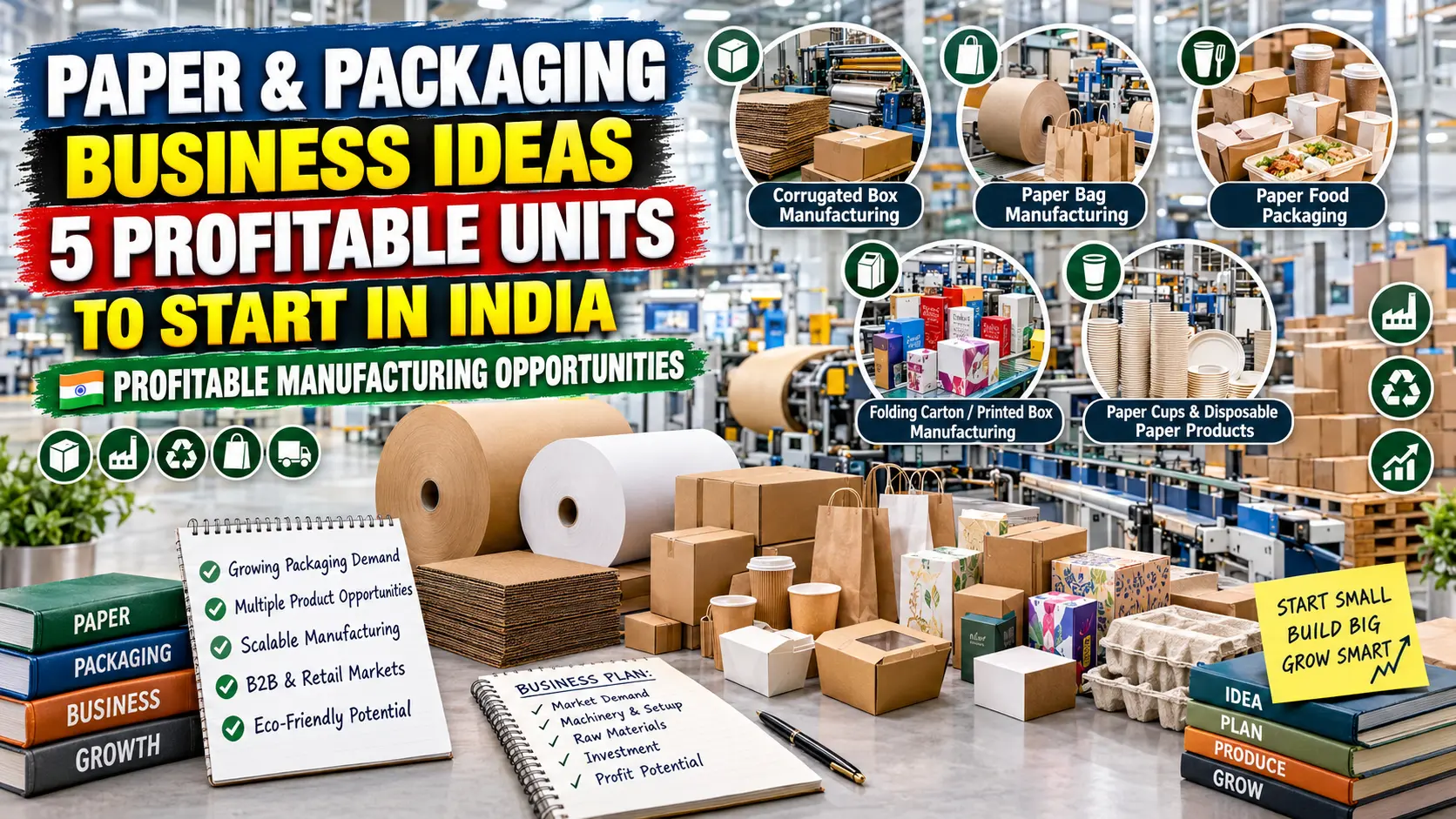

Corrugated boxes are one of the most versatile and widely used packaging materials in the world. From electronics to groceries, these boxes are indispensable in transportation and storage due to their durability, recyclability, and cost-effectiveness. With the boom in e-commerce, logistics, and export industries, corrugated box manufacturing has emerged as a highly profitable venture. If you are planning to start a manufacturing business that combines low risk with steady demand, investing in this sector could be a smart decision.
Contents
Why Corrugated Box Manufacturing is a Profitable Business
One of the biggest drivers behind the rising demand for corrugated box manufacturing is the global shift towards sustainable and biodegradable packaging. Corrugated boxes are made from recycled paper and are fully recyclable, making them a preferred choice over plastic alternatives. Moreover, the expansion of online retail, pharmaceuticals, and FMCG sectors requires a constant supply of customized and sturdy packaging. As a result, the market for corrugated boxes is growing at a steady pace, both in domestic and international markets.
Starting a corrugated box manufacturing plant not only caters to this growing demand but also allows scalability, diverse customer base, and consistent revenue. The investment and machinery requirements are moderate, and once the production setup is complete, operations can begin quickly.
See Also: Food & Agro Processing
Market Overview and Demand
The Indian corrugated packaging market is expected to reach over ?50,000 crores in the next few years, driven by retail growth and international trade. Globally, e-commerce is the single largest consumer of corrugated boxes. Companies such as Amazon, Flipkart, and grocery delivery services rely heavily on packaging solutions that are lightweight yet durable. Additionally, electronics, furniture, textiles, and auto parts manufacturers use customized corrugated boxes to ensure safe delivery and brand presentation.
Urbanization, lifestyle changes, and increased consumption of packaged goods are also propelling the demand for corrugated packaging. Government regulations restricting the use of plastic have further encouraged industries to switch to eco-friendly options like corrugated boxes.
Setting Up the Corrugated Box Manufacturing Plant
To start a successful corrugated box manufacturing unit, certain steps need to be followed for smooth planning and execution:
1. Business Registration and Compliance:
Register your business as a sole proprietorship, partnership, LLP, or private limited company. Obtain necessary licenses such as Factory License, GST registration, MSME Udyam registration, Pollution Control NOC, and Fire Safety Clearance.
2. Location and Infrastructure:
Choose a location with easy access to raw materials, labor, transportation, and markets. A space of at least 3,000–5,000 square feet is required for machinery installation, raw material storage, and finished goods stockpiling.
3. Raw Materials:
The primary raw materials for corrugated box manufacturing include kraft paper, adhesives, stitching wire, and printing inks. These can be sourced from local suppliers or imported in bulk for cost efficiency.
4. Machinery and Equipment:
Invest in semi-automatic or fully automatic corrugated box making machines based on your budget and production needs. Key machines include:
Corrugation Machine (Single/Double Wall)
Sheet Cutter
Slotter Machine
Printing Machine (Flexo or Offset)
Die Cutter or Punching Machine
Stitching Machine
Pasting Machine
The cost of machinery for a small-to-medium unit can range from ?20 to ?50 lakhs.
5. Skilled Workforce:
Hire machine operators, quality controllers, packaging staff, and supervisors. Proper training in machine handling and safety ensures efficiency and product quality.
6. Power and Utilities:
Ensure a steady power supply with backup options. Corrugated box plants require heavy-duty electric connections, clean water supply, and good ventilation.
Production Process
The corrugated box manufacturing process involves the following steps:
Corrugation: Kraft paper is pass through the corrugating machine to create fluted paper, which adds strength.
Pasting: The flute paper is glued between two liner papers to form corrugated sheets.
Drying and Cutting: Sheets are dried using heaters or sun-drying and cut into require sizes using the sheet cutter.
Printing and Slotting: Company branding, logos, or handling instructions are print on the box surfaces. Slotting machines cut slits for folding.
Stitching or Gluing: The boxes are stitched or glue into shape and test for strength and quality.
Bundling and Dispatch: Finish boxes are pack into bundles and shipped to customers.
This structured process ensures durability, neat appearance, and customization as per client specifications.
Marketing and Sales Strategy
For a corrugated box manufacturing plant to thrive, strong marketing is essential. Here are some ways to promote your products:
Business Website: Build an informative and professional website showcasing your product range, capacity, and services.
Social Media and B2B Platforms: Use platforms like LinkedIn, IndiaMART, and TradeIndia to reach wholesalers, retailers, and exporters.
Local Outreach: Approach businesses in your area – electronics shops, pharmaceutical companies, fruit/vegetable vendors, and e-commerce sellers.
Participate in Trade Fairs: Attend packaging and manufacturing expos to network with bulk buyers and suppliers.
Offer Customization: Providing printed, size-specific, or multi-layer boxes helps attract niche clients.
Creating long-term supply contracts with e-commerce warehouses and manufacturers ensures continuous orders and profitability.
Financial Considerations
The cost of establishing a medium-scale corrugated box manufacturing plant can vary between ?40 lakhs to ?1 crore, depending on land, machinery, and labor costs. Here’s a basic breakdown:
Land & Building: ?15–20 lakhs (if not rented)
Machinery: ?20–50 lakhs
Raw Material: ?5–10 lakhs (initial stock)
Labor & Utilities: ?2–5 lakhs monthly
Miscellaneous (marketing, licenses, transport): ?2–3 lakhs
Banks and financial institutions offer loans under MSME schemes with subsidies and lower interest rates. Working capital can also be arrange through overdraft facilities.
A well-run unit can break even in 1–2 years, with average monthly profits ranging from ?1 to ?3 lakhs, depending on production volume and client base.
Challenges and Solutions
Like any business, corrugated box manufacturing also has challenges:
Raw Material Price Fluctuations: Kraft paper rates often fluctuate, affecting profit margins. Solution: Buy in bulk and negotiate long-term supply contracts.
Quality Consistency: Substandard glue or poor machine handling can lead to rejection. Solution: Train staff, conduct regular QC checks, and use reliable materials.
High Competition: Many small units operate locally. Solution: Differentiate through custom design, quick delivery, and B2B relationships.
With strategic planning and focus on quality, these hurdles can be overcome easily.
See Also: Charcoal Projects
Conclusion
Corrugated box manufacturing offers a sustainable, scalable, and high-demand business opportunity, especially in the age of online commerce and eco-conscious consumers. With moderate investment, a clear understanding of the production process, and a strong sales strategy, entrepreneurs can establish a thriving manufacturing unit. As industries increasingly move toward sustainable packaging, the need for durable and eco-friendly boxes will only grow—making now the perfect time to step into the corrugated box manufacturing sector