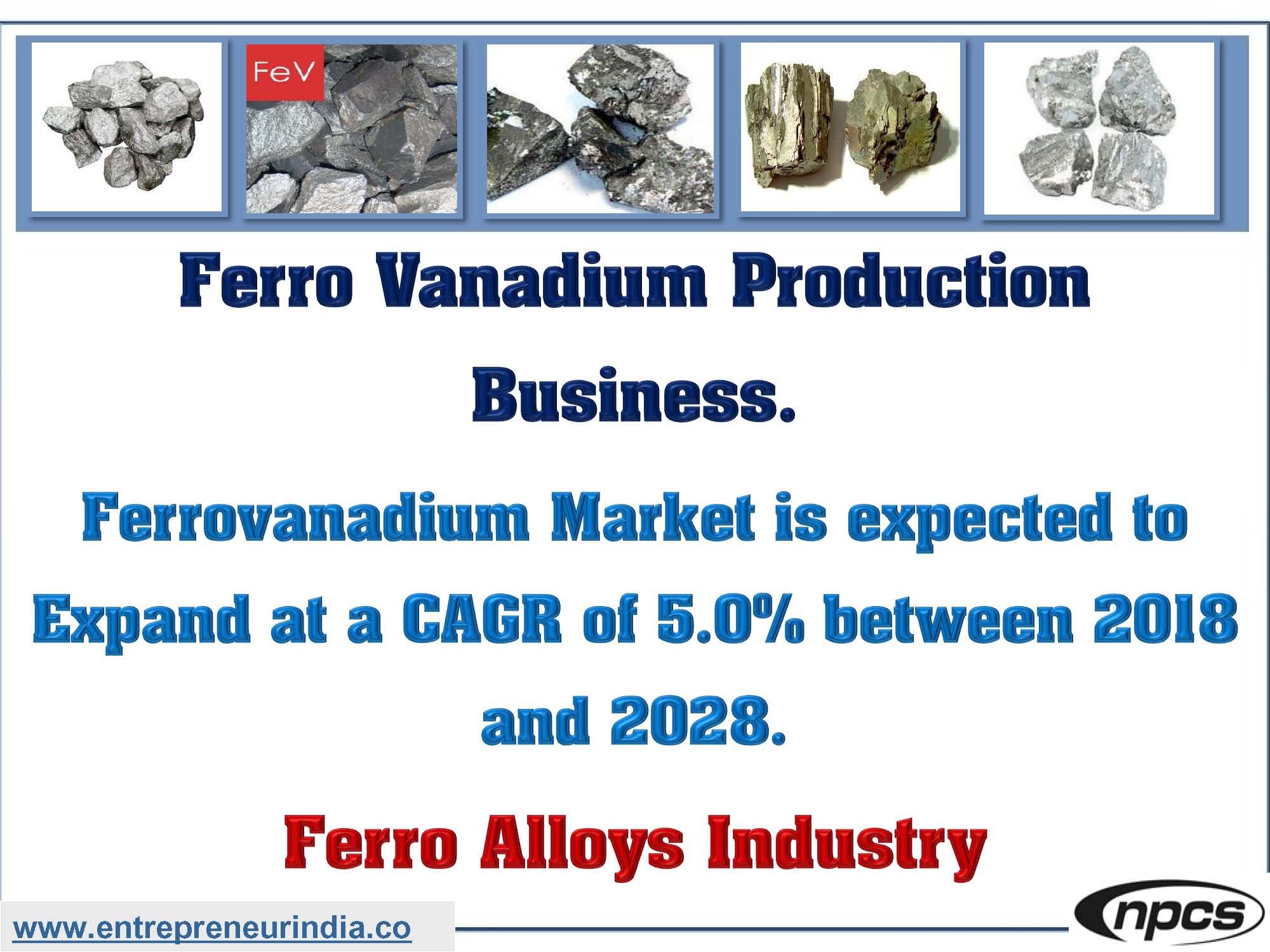
The Ferro Vanadium production business has gained significant momentum due to its essential role in steelmaking and alloy production. With increasing demand for high-strength, corrosion-resistant, and lightweight materials, ferro vanadium has become a critical alloying element across infrastructure, automotive, aerospace, and energy sectors. As industries shift towards advanced material engineering, the demand for ferro vanadium continues to rise, creating a lucrative opportunity for manufacturers and investors.
Rising Demand for High-Performance Alloys
The global steel industry heavily relies on Ferro Vanadium to improve strength, toughness, and heat resistance. Even small additions of vanadium enhance the properties of structural steel, tool steel, and specialty alloys. The surge in infrastructure development, electric vehicle production, and wind energy installations is fueling the demand for ferro vanadium, making its production a high-potential industrial venture.
What is Ferro Vanadium?
Ferro Vanadium (FeV) is an alloy composed of:
Vanadium (typically 50% to 85%)
Iron as the base material
Minor elements like silicon, aluminum, and carbon
The alloy is used in small percentages (0.1% to 0.5%) in steel but delivers substantial improvement in grain refinement, tensile strength, and fatigue resistance.
Applications of Ferro Vanadium
Ferro Vanadium finds applications in:
Construction Steel – Enhances weldability, ductility, and strength
High-Speed Tool Steels – Improves wear resistance and hardness
Reinforcement Bars (TMT Steel) – Increases tensile and yield strength
Jet Engine Components and Turbines – Offers heat and oxidation resistance
Nuclear Reactors and Pipelines – Reduces metal fatigue and cracking
Vanadium’s versatility makes it indispensable for critical structural applications.
Raw Materials Required for Production
Setting up a Ferro Vanadium production unit requires the following raw materials:
Vanadium Pentoxide (V?O?) – The primary source of vanadium
Iron Scrap or Iron Powder – Base metal for alloy formation
Aluminum Powder or Calcium Carbide – Used in aluminothermic or silicothermic reduction
Fluxes – Including lime, fluorspar, or silica to form slag
Graphite Crucibles – For high-temperature reduction reactions
Carbon Electrodes – Used in electric arc furnace (if applicable)
Sourcing high-purity raw materials ensures consistent quality and performance of the final alloy.
Ferro Vanadium Manufacturing Process
The production of Ferro Vanadium involves two major processes:
1. Aluminothermic Reduction Process
This process is ideal for medium-scale units requiring high-purity alloy.
Preparation of Charge Mix
Vanadium pentoxide, iron scrap, aluminum powder, and fluxes are weighed and blended.Ignition and Reaction
The mixture is placed in a crucible and ignited. An exothermic reaction reduces V?O? to vanadium.Slag Separation
After cooling, the slag is removed from the metallic mass.Crushing and Sizing
The alloy is broken down into granules or specific sizes for easy packaging and use.
2. Electric Arc Furnace (EAF) Method
This is used for high-capacity production.
A mixture of vanadium oxide, iron, and reducing agents is charged into the furnace.
Temperatures exceed 2,000°C, enabling reduction and alloy formation.
The molten metal is tapped, cooled, and crushed to the desired size.
Both methods require stringent control of reaction conditions and input material ratios.
Plant Setup and Equipment Required
A typical Ferro Vanadium plant includes:
Electric Arc Furnace or Reaction Vessels
Crucibles and Refractory Lining
Raw Material Feeders and Mixers
Crusher and Sizing Units
Slag Handling Systems
Fume Extraction and Ventilation Systems
Material Testing Lab with Spectrometers
Safety Gear and PPE for Workers
A plant with 5–10 TPD capacity requires 5,000–10,000 sq. ft. of space and investment of ?2–5 crores depending on the technology and automation levels.
Licensing and Regulatory Requirements
Running a Ferro Vanadium production business involves multiple regulatory approvals:
Company and Factory Registration
Consent to Establish and Operate from State Pollution Control Board
Fire and Safety NOC
GST Registration
Import/Export License (if sourcing or selling globally)
BIS Certification (if supplying to public sector or OEMs)
Environmental Compliance for slag disposal and emissions
All approvals must be secured before operations to ensure uninterrupted production.
Packaging and Transportation
Ferro Vanadium is typically packaged in:
25–50 kg HDPE-lined bags for retail and domestic sale
1 MT jumbo bags for bulk B2B supply
Sealed drums or vacuum-packed bags for export quality material
Clearly labeled with grade, composition, and batch information
Proper handling and transport are crucial due to the material’s high density and value.
Market Potential and Target Customers
The main consumers of Ferro Vanadium include:
Integrated Steel Plants
Mini Steel and Re-Rolling Mills
Automotive Component Manufacturers
Defense and Aerospace Industries
Exporters to Europe, Japan, China, and the USA
To reach these markets, businesses can utilize:
Direct industrial sales and long-term supply contracts
B2B portals and trade directories
Participation in metal and mining expos
Government e-marketplace (GEM) and e-auctions
Global vanadium consumption trends also impact local pricing and demand cycles.
Profit Margins and ROI
Ferro Vanadium offers attractive returns when managed efficiently:
Production Cost: ?1,000 – ?1,500 per kg (depending on input prices)
Selling Price: ?1,800 – ?2,500 per kg (based on purity and demand)
Net Profit Margin: 20% to 35%
Breakeven: 18–24 months for a medium-sized plant
Market fluctuations in vanadium oxide prices and electricity costs must be actively manage.
Environmental and Worker Safety Measures
The business must prioritize:
Fume and dust control systems to manage emissions
Proper slag disposal protocols to avoid environmental hazards
Regular health checks and PPE usage for workers
Training on fire hazards and handling of aluminum and vanadium powders
Routine safety drills and emergency preparedness
Eco-friendly production techniques enhance brand image and allow for certification benefits.
Conclusion
The Ferro Vanadium production business is a high-growth, high-value industrial venture that supports the steel sector’s transformation toward stronger and more sustainable materials. With the right technical knowledge, compliance measures, and efficient production setup, entrepreneurs can tap into domestic and international demand and build a scalable, future-ready business.
Niir Project Consultancy Services
An ISO 9001:2015 Company
106-E, Kamla Nagar, Opp. Spark Mall,
New Delhi-110007, India.
Email: npcs.ei@gmail.com , info@entrepreneurindia.co
Tel: +91-11-23843955, 23845654, 23845886, 8800733955
Mobile: +91-9811043595
Website: www.entrepreneurindia.co , www.niir.org