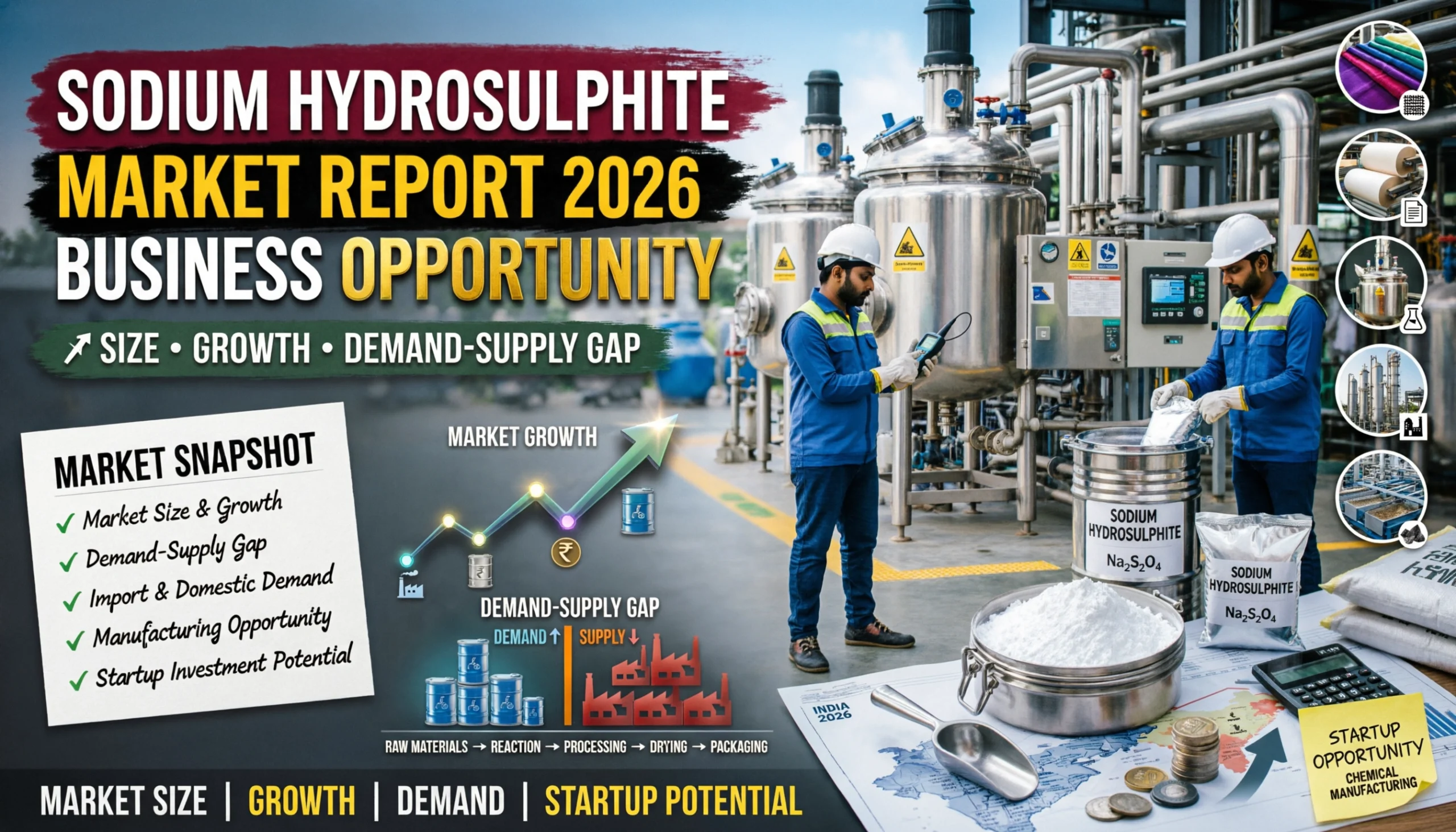

Copper sulphate is a widely used chemical compound with applications in agriculture, mining, textiles, and pharmaceuticals. Its high demand across various industries makes setting up a copper sulphate manufacturing plant a profitable business opportunity in India. If you plan correctly and invest wisely, this venture can yield long-term returns with steady market demand.
See Also : Onion Powder Manufacturing
Contents
- 1. Understanding the Copper Sulphate Manufacturing Process
- 2. Related guides
- 3. More in Chemicals & Industrial Materials
Understanding the Copper Sulphate Manufacturing Process
Before setting up the plant, you must understand the full production process. Copper sulphate (CuSO?) is manufactured using copper metal or copper oxide as raw material. The most common method involves reacting copper with sulphuric acid in the presence of heat and air. The reaction forms a blue crystalline substance, which is then cooled, filtered, and dried before packaging.
Start by sourcing raw materials like copper scrap and commercial-grade sulphuric acid. You also need to arrange equipment such as reaction tanks, filtration units, crystallizers, dryers, and packaging machines. Once raw materials are added to the reaction chamber, maintain a controlled temperature to ensure maximum copper conversion. The resulting copper sulphate solution is purified, crystallized, and separated to obtain the final product.
This process is highly scalable. You can start with a semi-automatic setup and gradually expand to fully automatic production once demand increases.
Market Demand and Application Areas
Copper sulphate is extensively used in agriculture as a fungicide and pesticide. Farmers rely on it to control fungal diseases in crops like rice, coffee, grapes, and cotton. Additionally, it finds applications in electroplating, leather processing, textile dyeing, and as a flotation agent in mining.
Because of this multi-sector demand, the copper sulphate manufacturing business remains stable even during seasonal fluctuations. This makes it a low-risk, high-potential investment option for first-time industrial entrepreneurs.
Steps to Set Up a Copper Sulphate Manufacturing Plant
1. Conduct Market Research
Begin by studying the demand for copper sulphate in your target region. Talk to agricultural suppliers, traders, and chemical distributors. This research helps you determine production capacity, pricing strategies, and your ideal customer base.
Also, explore competition levels in nearby industrial zones. Avoid highly saturated areas unless you offer lower pricing or better quality to gain an edge.
2. Select a Suitable Location
Choose an industrial location close to raw material suppliers and transportation facilities. Ensure the area is well-connected with roads and provides access to utilities like water, electricity, and drainage systems. You also need permissions from the State Pollution Control Board (SPCB), especially because the process involves acidic emissions.
The location should allow for future expansion and offer safe working conditions for employees.
3. Legal Compliance and Licenses
Register your business as a Private Limited Company, LLP, or Proprietorship, depending on your investment capacity and future goals. Obtain the following licenses:
GST Registration
Factory License
Udyam/MSME Registration
NOC from Pollution Control Board
Hazardous Waste Authorization (if applicable)
Fire and safety certificate
Make sure your plant complies with environmental safety norms. This will avoid penalties and ensure smooth functioning.
4. Machinery and Equipment Required
You must procure the following equipment for the copper sulphate manufacturing process:
Reaction vessels made of lead, glass, or stainless steel
Heating systems (steam boilers or electric heaters)
Filtration units and settling tanks
Crystallizers for controlled cooling
Centrifugal dryers
Packing and sealing machines
Pollution control devices (scrubbers and fume absorbers)
Always invest in semi-automatic or automatic machinery with good warranties. Choose equipment that meets BIS safety standards and ensure regular maintenance to avoid breakdowns.
5. Hiring Skilled Manpower
Appoint qualified chemical engineers, lab technicians, and skilled machine operators. Also, recruit safety personnel and administrative staff. Offer training in handling corrosive chemicals, machine operation, and emergency procedures.
Encourage regular health checkups for workers to avoid long-term exposure issues from sulphuric acid fumes.
6. Raw Material Procurement
Your primary raw materials include:
Copper scrap, copper turnings, or copper oxide
Sulphuric acid (98% pure)
Water and filter agents (like activated carbon or sand)
Develop contracts with local scrap dealers or importers to ensure consistent copper supply. Buy sulphuric acid in bulk from reputed chemical manufacturers to reduce cost per unit.
Store raw materials in corrosion-resistant containers under shaded conditions. Always follow safety norms while handling sulphuric acid.
7. Production and Quality Control
Maintain strict process parameters to ensure consistent crystal formation. Check the purity of copper sulphate regularly using titration or spectrometry. The finished product should have at least 98% CuSO?·5H?O purity.
Poor-quality crystals can harm your brand reputation. Always label batches clearly and keep detailed logs of test results.
8. Packaging and Distribution
Copper sulphate is packed in HDPE-lined woven sacks or plastic drums. Use moisture-resistant packaging to prevent lump formation. Print proper labeling with safety warnings and usage instructions.
Distribute through agro-retailers, chemical wholesalers, and B2B platforms. You can also collaborate with government agencies for bulk supply under agricultural subsidy programs.
Participate in trade expos and list your business on platforms like IndiaMART, TradeIndia, and JustDial to boost visibility.
Investment Required for Copper Sulphate Manufacturing
A medium-scale copper sulphate manufacturing plant with semi-automatic machinery requires ?30–?50 lakhs investment. Here’s a rough breakdown:
Land and building: ?10–?15 lakhs (rent or lease)
Machinery and installation: ?12–?20 lakhs
Raw materials (first cycle): ?5–?7 lakhs
Labor and staff setup: ?2–?3 lakhs
Marketing and branding: ?1–?2 lakhs
Licenses and legal: ?50,000–?1 lakh
You can apply for government subsidies under the MSME scheme or seek term loans from SIDBI and national banks. Maintaining detailed project reports will ease your funding process.
Profit Margin and Return on Investment
On average, manufacturing 1 tonne of copper sulphate costs around ?60,000–?70,000, while the market price may range from ?80,000–?95,000 depending on purity. This offers a gross margin of 20–30%.
With steady production and a strong distribution network, you can break even within 12–18 months. As your brand grows, explore export opportunities in Southeast Asia and Africa, where demand is high due to agricultural use.
Challenges in the Industry
Like any chemical-based business, the copper sulphate manufacturing industry also comes with challenges. These include:
Managing effluents and toxic fumes
Fluctuations in copper prices
Handling competition from Chinese imports
Adhering to pollution control regulations
To overcome these, invest in proper waste treatment systems and maintain quality standards. Build strong customer relationships and avoid short-term pricing wars.
See Also : Baby Diaper & Sanitary Napkins
Final Words
Setting up a copper sulphate manufacturing plant in India offers significant growth potential due to its widespread industrial and agricultural use. With the right planning, efficient resource use, and strict quality control, this business can deliver long-term returns. Focus on creating a trustworthy brand, meet regulatory standards, and keep improving your production methods.
This guide provides a detailed roadmap to get started. As the industry continues to grow, entrepreneurs willing to invest in quality and innovation will enjoy a strong competitive edge.