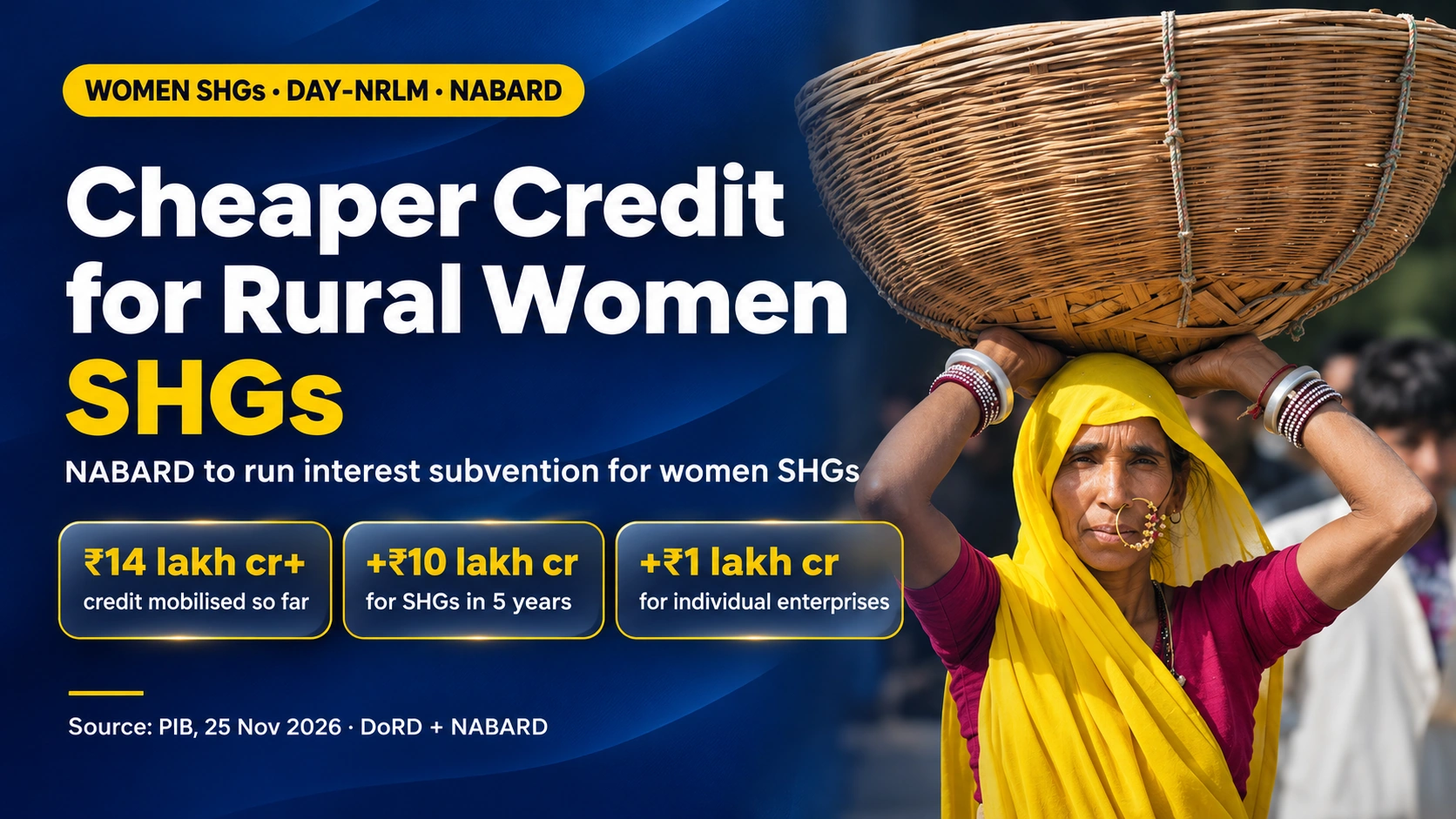
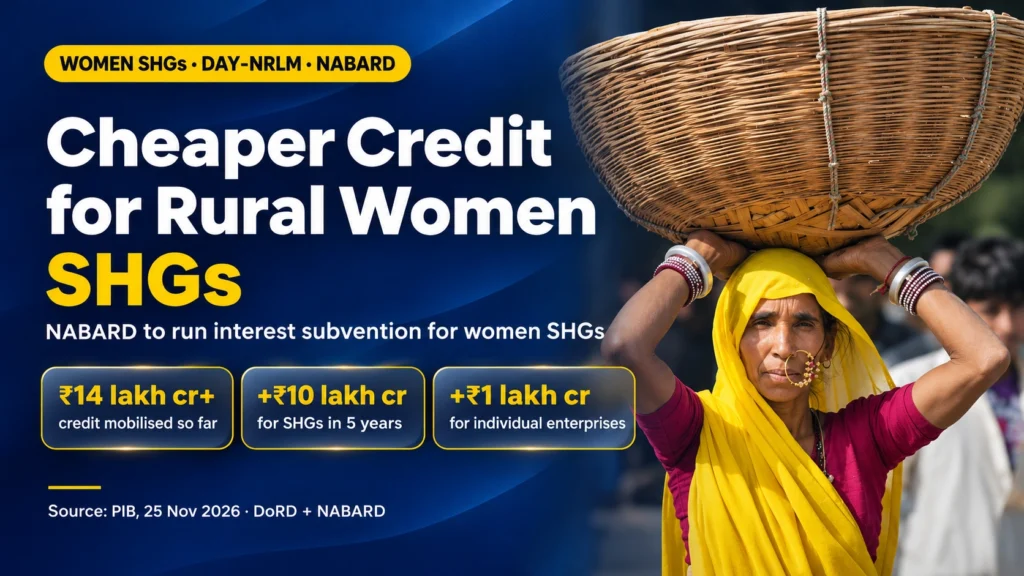

New Delhi, 25 November 2026: The Department of Rural Development (DoRD) and NABARD have signed an agreement to manage and support the interest subvention scheme for women Self Help Groups (SHGs) and the Women Enterprise Acceleration Fund (WEAF), both under DAY-NRLM. The two also launched an Interest Subvention Portal. Over the next five years, the plan is to mobilise another ₹10 lakh crore for SHGs and ₹1 lakh crore for individual enterprises.
For a small manufacturer or an aspiring women-led unit, the question is practical: if credit becomes cheaper and faster, which products can that money actually build? We cover the agreement first, and then eight project ideas, from small to larger.
Contents
- 1. Interest subvention for women SHGs: the key numbers
- 2. What the agreement does
- 3. What the officials said
- 4. What the interest subvention plan is expected to change
- 5. Behind the news: how interest subvention and WEAF work
- 6. 8 project ideas for women-led and small units
- 7. What this means for MSMEs and suppliers
- 8. How a women-led unit can start: five practical steps
- 9. How NPCS can help
- 10. Questions people ask
- 11. Sources
- 12. Related guides
- 13. More in Business Ideas & Startups
Interest subvention for women SHGs: the key numbers
| Number | What it is |
|---|---|
| ₹14 lakh crore+ | Formal credit already mobilised for SHGs, replacing informal sources |
| ₹10 lakh crore | Additional credit planned for SHGs over the next five years |
| ₹1 lakh crore | Additional credit planned for individual enterprises over five years |
| 1 agency | NABARD, the single nodal agency for both schemes |
| 5 bank types | Public sector, private sector, small finance, regional rural and cooperative banks |
| 92.30 lakh SHGs | Women SHGs under DAY-NRLM, with 10.08 crore women mobilised (PIB, August 2026) |
A note on the release: it gives no start date for the five-year targets and no portal address. Its title speaks of “safer” credit, but the text only explains guarantee-fee reimbursement for collateral-free loans. Some stray words from the web page, such as “Print” and “XClose”, are not part of the release.
What the agreement does
- One nodal agency. NABARD becomes the single nodal agency for both the interest subvention scheme and WEAF, and gives the Department technical, managerial and implementation support.
- All kinds of banks. The scheme covers public sector, private sector, small finance, regional rural and cooperative banks.
- One rulebook. Banks will work under one set of rules, one reconciliation process and one point of accountability.
- A new portal. The Interest Subvention Portal gives real-time data and faster processing. As each participating bank is onboarded, its claims are to be processed and settled on time.
- Who signed. Vipin Kumar, Additional Secretary, DoRD, and Ajay Kumar Sood, Deputy Managing Director, NABARD, signed the agreement. Rohit Kansal, Secretary, Rural Development, and Dr Shaji Krishnan V, Chairman, NABARD, were present and launched the portal.
What the officials said
- Rohit Kansal (Secretary, Rural Development). The SHG movement has reached remarkable scale and is now entering a phase focused on enterprise development. Interest subvention will make credit more affordable, guarantee-fee reimbursement will make collateral-free lending safer, and the portal will speed things up.
- Dr Shaji Krishnan V (Chairman, NABARD). The partnership joins NABARD’s institutional strengths with DAY-NRLM’s community network, and aims to move SHG women from livelihoods to viable enterprises. NABARD reaffirmed its commitment to deeper work on financial inclusion and women-led development.
- Vipin Kumar (Additional Secretary, DoRD). Women SHGs have earned a trusted place in formal banking through financial discipline and creditworthiness. The question is no longer whether banks should lend to rural women, but how fast, how cheaply and how widely.
The Secretary asked DoRD and NABARD to work closely on four things: customised credit products for SHG members, stronger enterprise support systems, bridging information gaps on schemes, and building capacity for a sustainable SHG ecosystem.
What the interest subvention plan is expected to change
- Prompt, predictable reimbursement should give banks the confidence to lend larger amounts to women’s collectives.
- Lower costs and shared risk should open enterprise finance to more women.
- Portal data will show how credit reaches rural women, so schemes can be targeted better and DAY-NRLM policy can be better informed.
- The measures aim to turn “Lakhpati Didis” into rural entrepreneurs and employers.
Behind the news: how interest subvention and WEAF work
These details come from RBI’s DAY-NRLM master circular and claim formats for 2025-26, and the terms can change every year, so confirm current rules with your bank. Under the interest subvention scheme, women SHG credit of up to ₹3 lakh is priced at 7% per annum, and the government compensates the lending bank for the difference. WEAF reimburses the credit guarantee fee that lenders pay, which is what lets banks give collateral-free loans to women-owned enterprises. RBI’s circular also says loans to SHGs up to ₹10 lakh need no collateral or margin, and that banks may lend up to ₹10 lakh to individual members of select, well-performing, mature SHGs so that they can become entrepreneurs.
The scale is large: PIB reported in August 2026 that 10.08 crore women have been mobilised into 92.30 lakh SHGs under DAY-NRLM. For the wider push on women and credit, see also our story on how the government can pay part of your factory cost.
8 project ideas for women-led and small units
These are product ideas, not promises. Four are small starts and four need a larger unit or more equipment. Each needs its own market check, licence and quality system before you borrow, and the linked report is only a starting point.
- Pickle manufacturing (small start). Pickles from seasonal fruit and vegetables, packed for local and online sale. Typical buyers: local shops, wholesalers and online sellers.
- Incense stick (agarbatti) manufacturing (small start). Simple to begin at home scale, with steady demand around festivals. Typical buyers: local retailers, temples and distributors.
- Jute shopping bags (small start). Reusable bags that replace plastic carry bags. Typical buyers: retailers, gift buyers and institutions.
- Button mushroom cultivation (small start). Needs controlled temperature and humidity, and fresh produce sells quickly. Typical buyers: local markets, hotels and processors.
- Sanitary napkin manufacturing (mid-size unit). Low-cost pads made with machines; hygiene and quality checks matter. Typical buyers: pharmacies, retailers and institutional buyers.
- Detergent cake and powder (mid-size unit). Everyday household cleaning products made in batches. Typical buyers: local retailers and wholesalers.
- Dehydrated vegetables, mushroom and soup mixes (larger plant). Drying and packing needs more equipment and food-safety systems. Typical buyers: food companies, retailers and exporters.
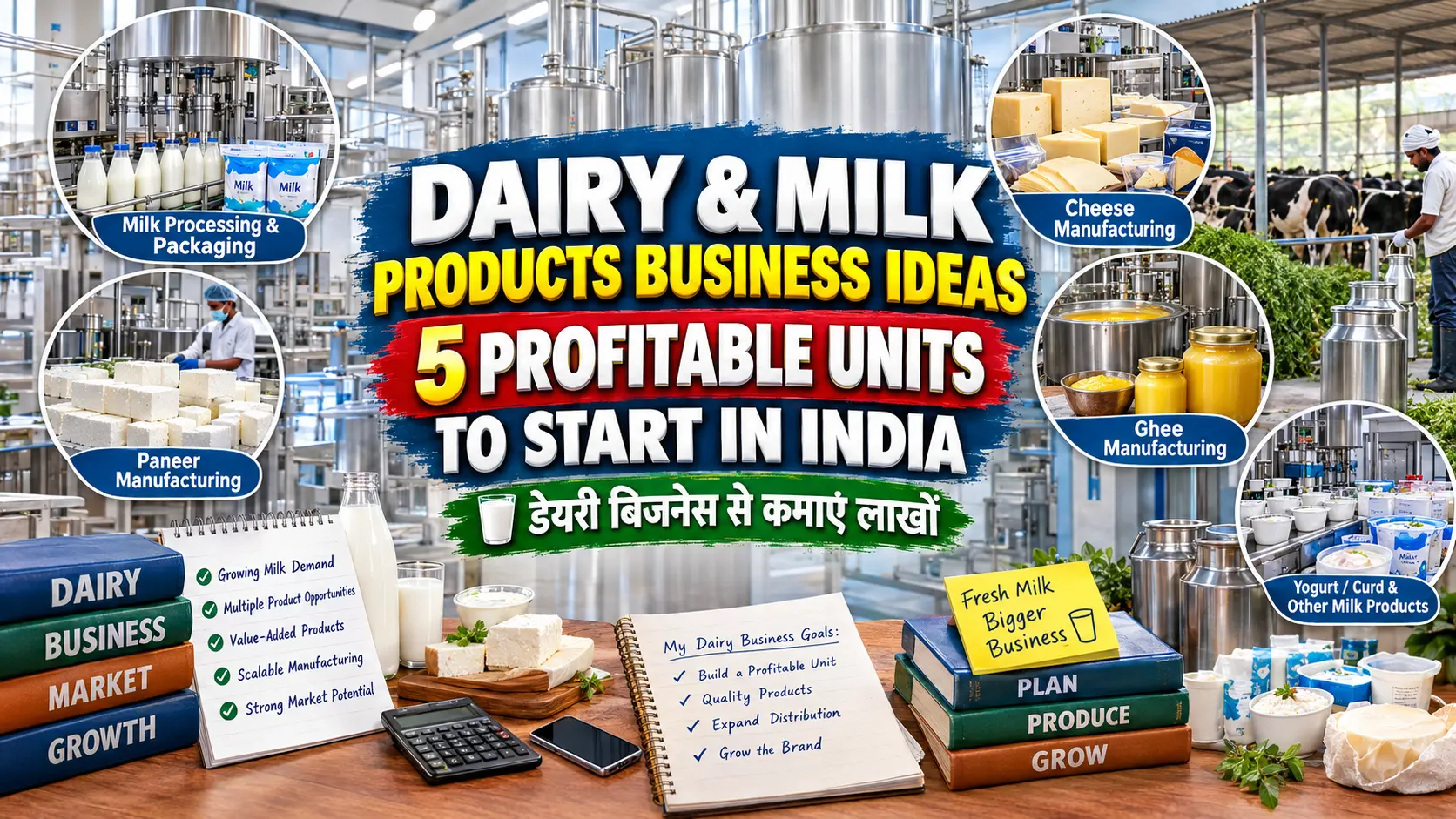
- Dairy processing (larger plant). Collecting milk and making products such as curd, paneer and ghee; needs cold storage and steady milk supply. Typical buyers: retailers, sweet shops and institutions.
For more ideas that suit your budget, see 50 profitable MSME business projects, and register your unit first with Udyam registration.
What this means for MSMEs and suppliers
If women-led units borrow more, someone must supply their machines, raw material, packaging, training and testing. Small manufacturers of food-processing machines, packaging, labels and cartons, and raw material suppliers may see more orders from SHG federations and bank-linked groups. This is our reading of the policy, not a promise in the release, so talk to your local SHG federation and bank branch before you plan stock or capacity.
How a women-led unit can start: five practical steps
- Pick one product. Choose something you can make well and sell nearby before you think of scale.
- Check demand and price. Visit shops and buyers, ask what they pay and in what pack size.
- Prepare a project report. Banks ask for costs, income and repayment plans. A detailed project report puts them in one place.
- Talk to your SHG, federation and bank. Ask which loans and the interest subvention rate apply to you now, and what papers are needed.
- Register and test first. Take Udyam, and food or product licences where needed, and run a small pilot batch before you scale up.
How NPCS can help
NPCS (NIIR Project Consultancy Services) prepares detailed project reports and market studies for manufacturers and women-led enterprises. Use Business Finder to explore ideas, read our market research reports, browse project reports and books, or talk to us on WhatsApp, call +91 90970 75054 or write to npcs.india@gmail.com.
Send us your enquiry
Questions people ask
What did DoRD and NABARD agree on interest subvention?
NABARD will be the single nodal agency for the interest subvention scheme for women SHGs and for WEAF, under DAY-NRLM, and will support the Department technically and in implementation. A new Interest Subvention Portal was also launched.
How much more credit is planned?
An additional ₹10 lakh crore for SHGs and ₹1 lakh crore for individual enterprises over the next five years. Over ₹14 lakh crore has already been mobilised as formal credit for SHGs.
What is the Women Enterprise Acceleration Fund?
A DAY-NRLM fund that, among other things, reimburses the credit guarantee fee that lenders pay, so that women-owned enterprises can get collateral-free credit.
Which banks are covered?
Public sector, private sector, small finance, regional rural and cooperative banks.
Can small manufacturers benefit from interest subvention for women SHGs?
Possibly, as suppliers of machines, raw material and packaging to women-led units. Check the buyer and your bank’s terms first.
Sources
- PIB press release, 25 November 2026 (Department of Rural Development and NABARD)
- PIB: Rural schemes implemented for SHGs, 11 August 2026 (92.30 lakh SHGs, 10.08 crore women)
- RBI Master Circular on DAY-NRLM (collateral limits, loans to SHG members)
- RBI DAY-NRLM Annex VI (interest subvention claim for 2025-26, 7% per annum up to ₹3 lakh)