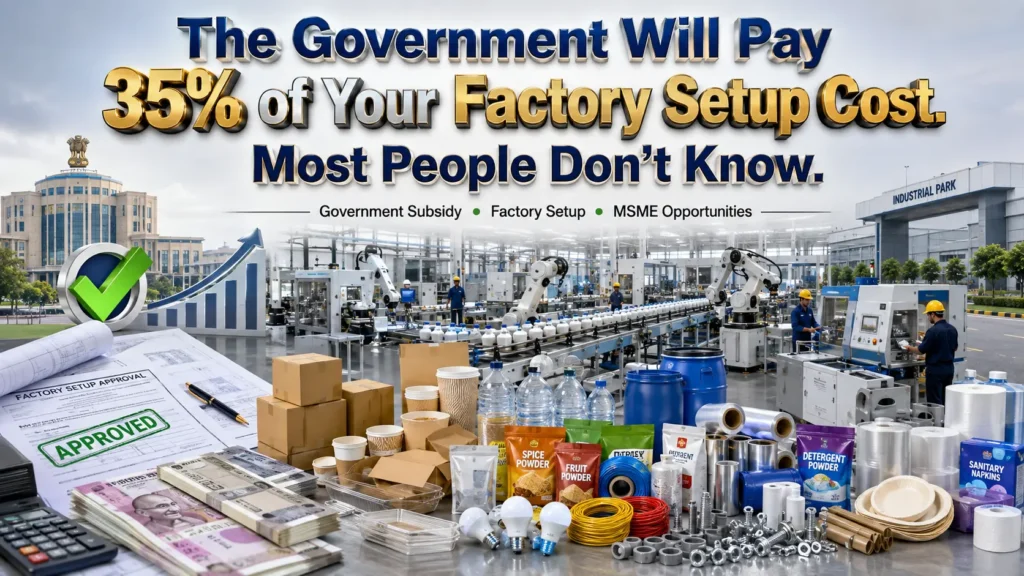

Government Pays 35% Factory Cost
India has one of the world’s most untapped pool of manufacturing business ideas and startup capital, and a significant portion of it is from the Government. Thousands of entrepreneurs are investing their savings, borrowing from relatives or borrowing money on high interest rates to establish a factory and do not know that the Prime Minister’s Employment Generation Programme (PMEGP) provides up to 35% of the project costs as a direct capital subsidy.
This works out to be a sum of ₹17.5 lakh of free government money for a manufacturing unit, valued at ₹50 lakh. However, many of the first-generation entrepreneurs have either never heard of it, or think they can’t be part of it. This article explains how the scheme works, who’s eligible to use it and which manufacturing business ideas have the greatest potential for success — with the government lining up on your side.
Why Manufacturing Remains the Smartest Business Entry Point in India
India is on the verge of witnessing the biggest change in decades for the manufacturing sector. The government has bitten off more than it can chew: it has set itself the ambitious target of increasing the contribution of manufacturing to GDP from 17% to 25%. All its policies, from tax breaks to investments in infrastructure, are geared toward this goal. This is an unusual confluence of circumstances: high demand, government support, export opportunity, and lower competition for the entrepreneur and investor.
Additionally, the Make in India initiative has been successful in not only securing investments in Indian supply chains but also in creating and expanding premium procurement chains involving domestic component manufacturers. This means that the window of opportunity for a first-generation manufacturer has been greater than ever before. The initial cost of setup in the factory is still competitive. Availability of raw material is good. The domestic middle class keeps on consuming manufactured goods faster than any other economy in the world.
Furthermore, with import substitution becoming a national priority, the government is actively encouraging local production under various overlapping schemes. If an entrepreneur really grasps this policy stack, he can significantly reduce his actual capital requirement by 35% to 50% prior to manufacturing even the first unit.
Government Policies That Can Fund 35% of Your Manufacturing Business Setup
PMEGP – The 35% Capital Subsidy You Are Missing
The Prime Minister’s Employment Generation Programme (PMEGP) is the flagship programme for manufacturing start-ups in India. It is the direct capital subsidy offered by Khadi and Village Industries Commission (KVIC), Ministry of MSME, for 15% to 35% of the project cost. The general category entrepreneurs in urban areas get 15% and the special category entrepreneurs (women, SC/ST, minorities, ex-servicemen, differently abled) in rural areas get 35% of the subsidy. Manufacturing Businesses – The maximum eligible project cost is ₹50 lakh.
Importantly, the funding from the applicant represents a small percentage (5-10%) of the total project cost. The remaining amount is financed by the bank. This translates to a capable businessman can establish a manufacturing business with ₹50 lakh with a mere investment of ₹2.5 lakh of his own funds. The bank finances ₹30 lakh and the government finances ₹17.5 lakh. That’s a capital efficiency ratio that hardly any private investment structure can beat.
Production Linked Incentive (PLI) Scheme for Scale Businesses
The Production Linked Incentive (PLI) Scheme provides performance-based financial incentives of up to 14 key sectors with 4% to 6% of incremental sales over a fixed base year for the entrepreneurs who are willing to scale up. PLI covers sectors like electronics, pharmaceuticals, food processing, textiles, automobiles and specialty steel. As of November, of the previous reported year, invested amount in committed PLI projects was ₹1.61 lakh crore which resulted in production and sales of around ₹14 lakh crore, and generated direct and indirect employment creation of 11.5 lakh.
CLCSS and CGTMSE – Technology and Credit Support
The Credit Linked Capital Subsidy Scheme (CLCSS) offers a capital subsidy of 15% on institutional finance received for technology upgradation in 51 specified sub-sectors with a maximum limit of ₹1 crore. At the same time, the Credit Guarantee Fund Trust for Micro and Small Enterprises (CGTMSE) has been introduced to provide collateral-free loans of up to ₹5 crore to MSMEs, which is a significant benefit for first-generation entrepreneurs who may not have an asset base.
Manufacturing Business Ideas for Startups: High-Profit Units You Can Start With PMEGP
1. Food Processing and Packaging Unit
Among all the business ideas in India, food processing is still one of the most resilient and least volatile businesses. The food processing industry has continued to grow in India, and the Ministry of Food Processing Industries is keen to encourage new food processing units by offering several capital and grant schemes. A start-up unit for grinding spices, milling pulses or manufacturing packaged snacks can be set-up in a project cost of Rs 30 lakh – Rs 50 lakh which falls within the project manufacturing limit of PMEGP.
The operational economics are also favourable for the entrepreneur as there is a ready availability of raw materials, a developed distribution system and increasing demand for Indian food products in foreign markets. This is one of the financially most approachable avenues in manufacturing for the women entrepreneurs who start rural food processing units receiving the full subsidy of 35% under PMEGP.
Get Detailed Project Report (DPR): Food & Beverage Packaging
2. Agarbatti (Incense Stick) and Dhoop Manufacturing
The manufacture of agarbatti is one of those few business ideas, where the demand is huge in the country, export market is good and the government is encouraging production in the country. India is the world’s major importer as well as exporter of incense products. The SFURTI Scheme (Scheme of Fund for Regeneration of Traditional Industries) is particularly supporting the agarbatti clusters with infrastructure and technology support.
The cost of setting up a basic mechanised agarbatti unit is in between ₹10 lakh to ₹20 lakh, which is perfect for first-time entrepreneurs to avail the benefits of the PMEGP and enter a product category that has assured shelf space. Distributing the raw material from Bengaluru and Ahmedabad markets is well-established and margin at the manufacturing level is healthy in this sector.
View Full Project Details: Agarbatti (Incense Sticks) Manufacturing
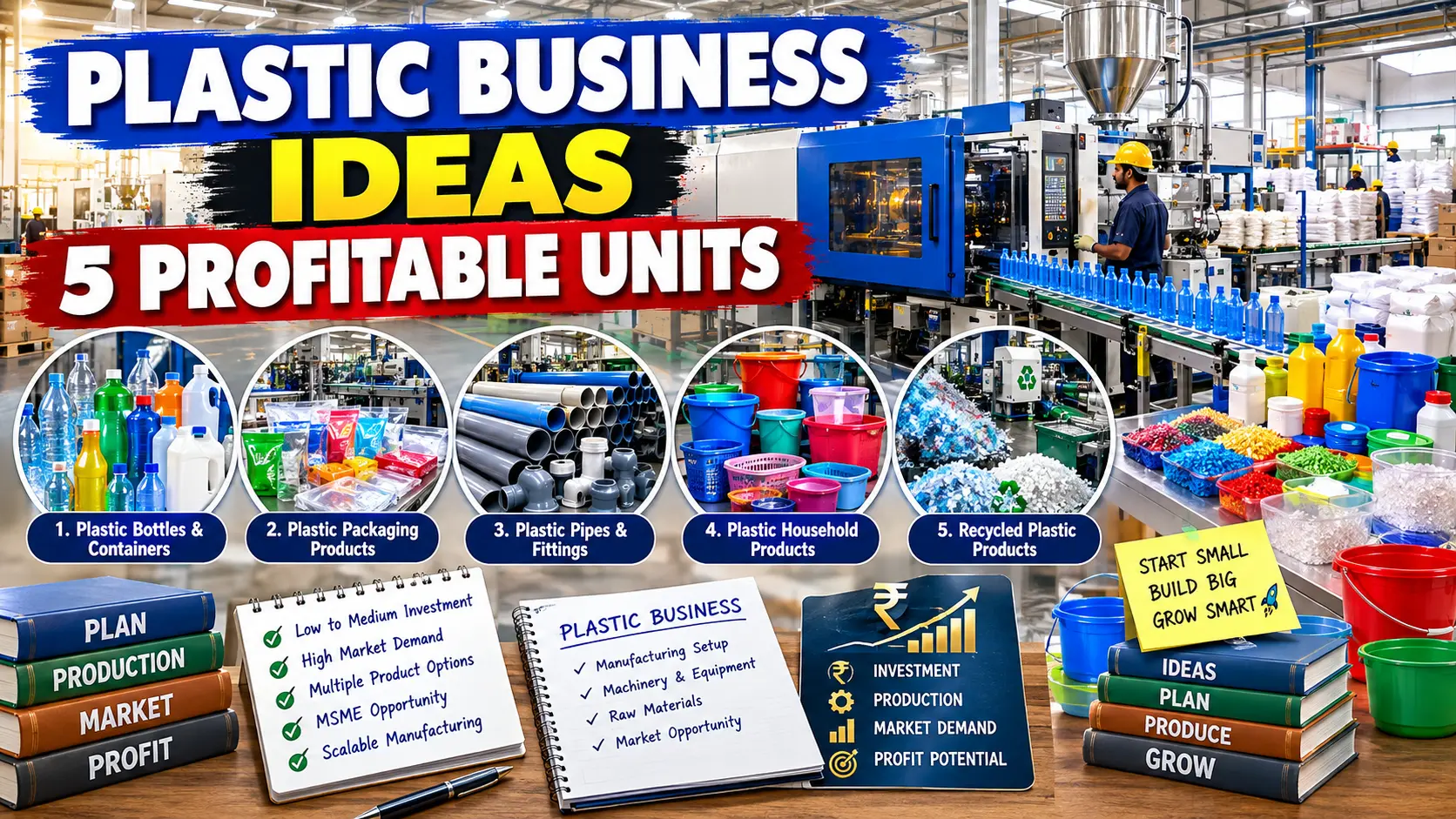
3. Plastic Injection Moulding Components
One of the biggest profit margins for manufacturing entrepreneurs is in the component manufacturing sector, which serves the automotive, electronics, and consumer goods industries. Plastic injection moulding is used to manufacture containers, housings, fittings and industrial parts and is used for several B2B customers at the same time. A plant of the order of ₹40 to ₹50 lakh can cater to the needs of local assembly units, packaging units and even for export orders through merchant exporters if properly configured.
4. Herbal and Ayurvedic Product Manufacturing
Furthermore, the MSMED Act provides for priority payments for entrepreneurs registered under Udyam and providing products/services to large manufacturers, which will lead to better cash flows for such entrepreneurs compared to that of other manufacturing enterprises. Skill intensity is acceptable and machinery ecosystem in India is developed and can provide reliable local services and parts.
Access Complete Business Plan: Plastic Injection Moulding Plant for Auto Parts – Detailed Project Report
Herbal and Ayurvedic products have had a structural demand increase that will most likely continue. India is becoming an even better global supplier of herbal formulations, nutraceuticals and wellness products. A small manufacturing unit with a project cost between ₹25 to ₹45 lakh can be operated with a profit with a focus on herbal hair oils, immunity boosters or skin care products.
The Ministry of AYUSH actively encourages the manufacturing of AYUSH products by providing the sector-specific support. Besides, the demanding Good Manufacturing Practice (GMP) certification process opens up the internal distribution of medicines in pharmacies as well as the export to other countries. The early establishment of AYUSH compliant units by entrepreneurs provides a defensible competitive position, which it takes time to duplicate.
Download the Full Guide: Herbal Cosmetics & Ayurvedic Medicines (EOU)
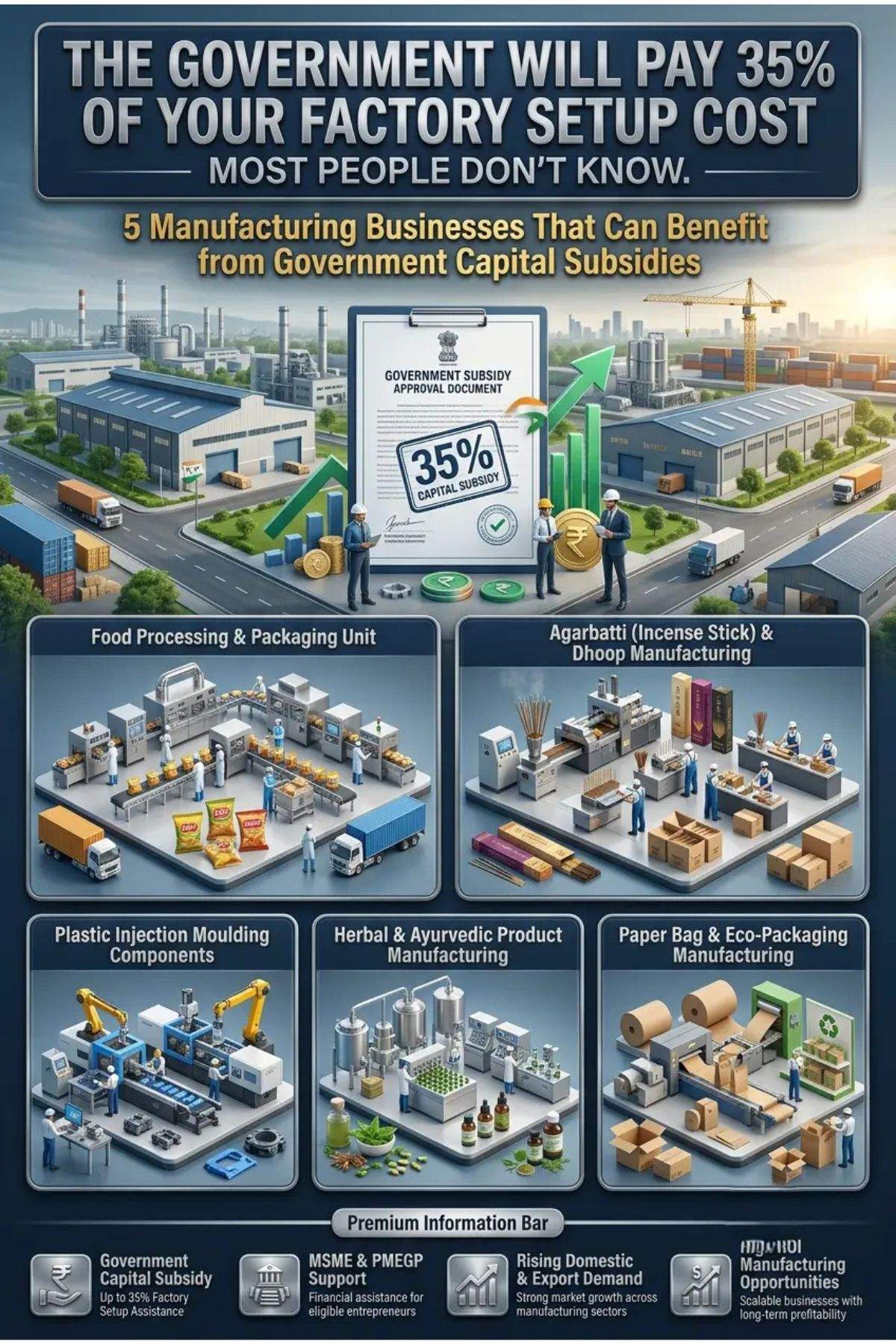
5. Paper Bag and Eco-Packaging Manufacturing
Single-use plastic ban by various states of India has generated a huge demand deficit in the field of sustainable packaging. Today, manufacturing of paper bags and biodegradable packaging is among the fastest growing manufacturing business ideas for start-ups. The cost of installation of a simple paper bag making line begins with about ₹15 to ₹30 lakh. Demand is generated by the retail chains, restaurants, pharmaceutical industry, and e-commerce packaging needs.
The business grows with the volume – Once there are business contracts in place with institutional suppliers (these are often made possible by distributors), then the business is predictable. Moreover, this sector is eligible for extra support from the state government under several schemes for eco- promotion, in addition to the support provided by PMEGP.
Related Article: The Green Manufacturing Revolution: Paper Water Bottles, Bioplastics & Biodegradable Products
Import–Export Opportunity Analysis for Manufacturing Startups
The India’s manufactured goods trade offers a double opportunity – to earn foreign exchange and to replace imports. India’s overall merchandise exports are maintaining a growth trajectory, especially the labour-intensive manufacturing segments, according to Directorate General of Foreign Trade (DGFT). Export markets, particularly in the Southeast Asian region, the Middle East, and Africa, provide premium prices to a startup manufacturer, which is the advantage it enjoys in the domestic market.
On the import substitution side, India is still spending a lot of money on the importation of machines, chemicals, and manufactured parts that can be made locally. For entrepreneurs targeting import substitution segments, policy support, priority sector classification and levels of export credit schemes provide added support. For instance, food processing units which export can benefit from the market development and quality certification funding of the Agricultural and Processed Food Products Export Development Authority (APEDA).
Moreover, the Confederation of Indian Industry (CII) and the Federation of Indian Export Organisations (FIEO) also provide support to the new MSME exporters in terms of buyer-seller meets, trade delegations and export advisory services, all of which are available to registered manufacturing units.
Indian MSME Manufacturing Success Stories Worth Studying
Patanjali Ayurved – Acharya Balkrishna and Baba Ramdev
Patanjali has grown to become a huge business, but its genesis is a great MSME manufacturing story in India. Baba Ramdev and Acharya Balkrishna grew a manufacturing empire from a basic start-up in an Ayurvedic pharmacy with little capital, by noting that the Indian people wanted genuine products that were not being provided by mass multinationals. The most important thing they did was vertical integration – that is, control over raw materials from the Himalayas, coupled with the creation of low-cost manufacturing facilities. The takeaway for new entrepreneurs: Product authenticity, distribution control and intense pricing offer lasting market gains, even where there are established competitors.
Vimal Agro Products – A Food Processing MSME Success
Originally established as a small edible oils processing plant in Gujarat by Vimal Shah, a first-generation entrepreneur, Vimal Agro Products developed into one of the most important food manufacturing enterprises in the country. The wisdom behind the growth was that they looked for commodities that have significant domestic demand, and they invest in establishing processing facilities that will ensure product quality, then establish trust with the retail distributors before scaling up to national markets. This success model of Shah throws light on how food processing with disciplined approach to sourcing and quality can grow from an MSME level to a national brand within the lifetime of one entrepreneur.
Cavin Kare – C.K. Ranganathan’s Sachets Revolution
CavinKare has been founded by C.K. Ranganathan with just one shampoo product in a sachet and primarily focused on the rural market which the big FMCG companies never focused on. His manufacturing mantra was simple – maintain the unit economics at the lowest price. Today he has expanded his business beyond personal care products, food products and dairy from a small manufacturing base in Tamil Nadu. Packaging innovation and market focus can generate an imbalance in factory investments, as Ranganathan has demonstrated as an entrepreneur. Growth is better done with a focused product line and expanding manufacturing capacity as customer demand is realized than with a massive start-up investment.
Find high-return business ideas based on your budget & ROI
How NPCS Helps Entrepreneurs Evaluate Manufacturing Projects Before They Invest
The most important phase of investment in any manufacturing enterprise is a thorough feasibility study. At Niir Project Consultancy Services (NPCS) we offer professional market survey cum detailed techno-economic feasibility reports (DPRs) for new industry/business establishment. In our reports, detailed manufacturing processes, market research and demand analysis, process flow diagrams, product mix and capacity planning, machinery and raw material details, and complete project financials with profitability analysis are included. We want to put in the work to assess viability, viability, and sustainability before investing.
A detailed DPR is equally an important factor to note in getting sanction for PMEGP. Banks and KVIC officers carefully consider project viability documents and the chances of having feasibility reports professionally prepared by entrepreneurs are better to get loans. Furthermore, with a robust DPR, businesses can better understand cost-cutting potential, best capital allocation, and machinery procurement plans to boost unit economics over time.
PMEGP Subsidy Structure for Manufacturing Business Setup
Table: PMEGP Capital Subsidy Rates for Manufacturing Units
| Beneficiary Category | Location | Subsidy Rate | Own Contribution | Max Project Cost | Max Subsidy (₹) |
| General Category | Urban | 15% | 10% | ₹50 Lakh | ₹7.5 Lakh |
| General Category | Rural | 25% | 10% | ₹50 Lakh | ₹12.5 Lakh |
| Special Category* | Urban | 25% | 5% | ₹50 Lakh | ₹12.5 Lakh |
| Special Category* | Rural | 35% | 5% | ₹50 Lakh | ₹17.5 Lakh |
| SC/ST / Women / NE | Rural | 35% | 5% | ₹50 Lakh | ₹17.5 Lakh |
Special Category includes: Women, SC/ST, OBC, minorities, ex-servicemen, differently abled, NE region residents, hill & border areas. Source: Ministry of MSME / KVIC official guidelines.
Frequently Asked Questions (FAQ)
Q1. Eligibility for 35% subsidy for PMEGP on manufacturing setup?
Any Indian citizen above 18 years of age can apply for PMEGP. But the 35% subsidy rate is restricted to manufacturing set up by women, SC/ST communities, minorities, ex-servicemen or differently abled people in rural areas. The general category applicants get 15% (Urban) or 25% (Rural).
Q2. Which is the maximum Project cost for manufacturing under PMEGP?
The upper limit of the project cost eligible under PMEGP for a manufacturing business is ₹50 lakh. The upper limit of ₹20 lakh applies to service sector projects. The applicant pays for 5% to 10% out of his own pocket and the bank pays out the balance, where the subsidy is included.
Q3. Is there any provision to use PMEGP along with other Government schemes such as CLCSS/ PLI?
The PMEGP is meant for fresh units and does not permit to be used along with other capital subsidy schemes for the same project. Once your unit is created and functioning, though, you can apply for technology upgrade support from CLCSS to invest in additional machinery. PLI functions on a broader level and aims at higher manufacturing investments offering production linked incentives.
Q4. Which are manufacturing businesses that can avail PMEGP?
The majority of manufacturing processes are covered by PMEGP, with the exception of the negative list of processes (mainly primary activities, such as agriculture, tobacco products, retail trade). Eligible: Food processing, Agarbatti, paper bags, Plastic components, Herbal products, Garments, Handicrafts, Electronics assembly, Chemical processing, and hundreds of other manufacturing categories.
Q5. What is the process of getting approval and subsidy for PMEGP?
The Udyam registration, preparation of a Detailed Project Report (DPR), applying through the KVIC online portal, bank sanction, and KVIC verification are the usual steps in the application process. The whole process normally takes 3-6 months. When the unit has been verified as operational (typically within the first year), the subsidy amount is credited to the loan account.
Q6. Is the manufacturing unit located in the rural areas necessary to avail PMEGP?
No, both manufacturing units in urban and rural areas are eligible. Rural location, however, pays a higher subsidy rate, 25% for general category and 35% for the special category, than do the urban rates of 15% and 25%, respectively. Flexible location entrepreneurs should consider subsidy differential as an important consideration in choosing the factory location.
Q7. What is the list of documents needed for PMEGP application?
Documents required are: Aadhaar card, educational qualification certificate (8th pass or above for manufacturing projects of more than ₹10 lakh), project report/DPR, bank account details, caste/Category certificate (if applicable), and Udyam Registration. A prepared DPR by a professional will have a higher likelihood of getting approved.
Q8. What is PLI scheme and who are the manufacturers benefiting from it?
Financial incentives under Production Linked Incentive (PLI) scheme are provided in the form of incentives of 4% to 6% on incremental sales to manufacturers in 14 critical sectors such as electronics, pharmaceuticals, food processing, automobiles, textiles and specialty steel. It is aimed at medium to large sized manufacturers. But, 176 micro, small and medium enterprises (MSMEs) have also got PLI approvals, especially in the pharmaceutical, medical device and food processing sectors.
Q9. Why is Detailed Project Report (DPR) important for PMEGP approval?
The DPR is an essential document. Before sanction of the loan and subsidy, the project is assessed by the DPR by the Bank and KVIC officials for viability. One of the most frequent causes of the rejection of PMEGP is a weak or generic DPR. Once the professional DPR covering manufacturing process, demand analysis, machinery specifications, financial projections and break-even analysis is submitted, then the chances of approval are significantly enhanced and the entrepreneur receives a genuine operating blueprint.
Q10. Is there any other benefit available other than PMEGP for a woman entrepreneur?
Yes. Women entrepreneurs are classified as special category beneficiaries and as per the PMEGP they are eligible for higher subsidy rates (25% urban and 35% rural). Also, Stand Up India Scheme provides loans to women entrepreneurs between ₹10 lakh and ₹1 crore for greenfield manufacturing units without any collateral. There are also other subsidies that are offered at the state level, priority allotment and industrial plot reservation for women manufacturers.
Q11. What are the steps to be taken for setting up a manufacturing business under PMEGP?
NPCS creates in-depth techno-economic feasibility report and detailed project report (DPR) based on the type of manufacturing business you want to start. Each of these reports provides market demand, manufacturing process, machinery specifications, raw material specifications, capacity planning, financial projections and profitability analysis that should be sufficient for a bank officer and KVIC officer to take a look at your project. By having a professionally drafted DPR by NPCS, you can make sure that your PMEGP application has the best possible start.
Conclusion: The Capital Advantage Is Real — But Most Entrepreneurs Never Claim It
The 35% capital subsidy, as part of the PMEGP, is no rumour or a mere technicality in government circulars. It is a well-sponsored, actively disbursed scheme which has established thousands of manufacturing business units in India. The problem is not that the scheme is not yet available, but that entrepreneurs who could use the scheme are not aware of it or ready for it.
It’s the numbers that are hard to ignore for a first-generation manufacturing entrepreneur. A 35% government subsidy, plus financing from banks of the remaining 55% to 60% of the total amount of a project, results in a personal investment risk of only 5% to 10% of the project. In India, no other startup model has that level of leverage on capital for a business with a physical manufacturing.
But the subsidy is insufficient to create a business. Whether he or she makes money in the factory or not depends on product selection, the understanding of the market, operational discipline and realistic financial planning. And it’s where detailed feasibility studies (the thing that NPCS specialises in) really come into play to distinguish between a good idea and a viable business.
It’s a real business opportunity. Government funds are available. So, the question is, are you ready to claim it? Begin with a comprehensive feasibility study, sign up on KVIC PMEGP portal and move forward knowing that the government is already providing a substantial portion of your manufacturing dream.