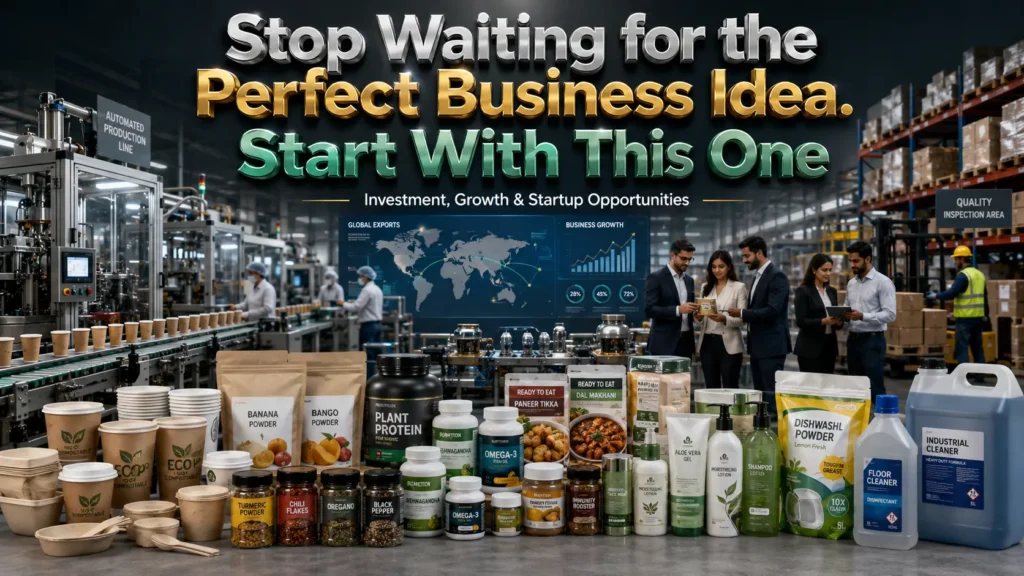

The first-time entrepreneurs start their own business, they wait years for the one “perfect” idea that’s risk-free, endlessly scalable and completely original. Meanwhile, thousands of smart manufacturing ideas quietly generate steady income, create jobs and build generational wealth for those who paused, and just took action. But the reality is, the Indian market does not honor the creative idea finder. It can pay off the one who can implement a successful concept with discipline and proper planning.
The manufacturing industry is at a tipping point in India. The opportunity is not merely theoretical; it is structural and has an impact on nearly 30% of GDP and 45% of total exports through more than 7.5 crore MSMEs. The government policy, credit access and trade infrastructure is aligned to actually favour new manufacturers. The issue isn’t this time around whether to establish a manufacturing venture. The challenge now is to choose the idea and to do it smartly.
Stop guessing—choose the right business with confidence
Why Manufacturing Business Ideas Are Winning Right Now
India’s expansion to become a viable option to the Chinese led supply chains has generated real demand deficits in a wide range of product categories. The MNCs are on the lookout for suppliers from India. The growth of domestic consumption is picking up pace in Tier 2 and Tier 3 cities. But e-commerce has created distribution channels that would have needed a lot of capital to reach before.
In addition, India’s local manufacturing production is steadily increasing. Government data shows that the contribution of the MSME industry to overall manufacturing is 36%. In a recent reporting period, the credit growth in MSME sector has expanded by 19.6% YoY, which signifies the growing demand for new businesses as well as the rise of lender confidence. Today, 2/3rd of Indian MSMEs is digitally prepared and can manage procurement, sales and export documentation without having to hire a large support team for the new founder.
The fact that it is a combination of rising domestic demand, export pull, government-backed credit, and robust digital infrastructure, makes manufacturing business ideas truly accessible for first-generation entrepreneurs rather than well capitalised conglomerates.
Government Policies That Are Actually Helping New Manufacturers
Manufacturing policy in India is now more pro-startup than ever. There are now multiple schemes layered on top of each other, thereby providing an actual capital advantage to new entrants.
Production Linked Incentive (PLI) Scheme
Under PLI Scheme, there are 14 priority sectors and cash incentive from 4% to 20% on increment sales over the base year. The actual investment made under PLI has surpassed ₹2.40 lakh crore, which has created more than 14 lakh direct and indirect employment. The secret to the PLI opportunity, for an MSME founder, is to be not only eligible to enter the fray but also be able to cater to the need of large manufacturers who are registered with PLI, a B2B play that most new entrepreneurs are not focusing on.
PMEGP — The First-Generation Entrepreneur’s Launchpad
The Ministry of MSME runs the Prime Minister’s Employment Generation Programme to provide credit linked subsidy for establishing micro manufacturing units. The subsidy for the general category applicants is 15% in urban areas and 25% in rural areas. For SC/ST and women entrepreneurs it is up to 35%. This will lead to a reduction in the breakeven risk for a new founder and the maximum government subsidy that could be availed will be between ₹6.25 lakh and ₹8.75 lakh for the manufacturing unit costing ₹25 lakh.
CGTMSE and Collateral-Free Lending
Credit Guarantee Fund Trust for Micro and Small Enterprises (CGTMSE) is a scheme between Ministry of MSME and SIDBI to provide banks with loans for micro and small manufacturers without requiring collateral. That’s very important for people who are first-generation entrepreneurs without property assets to put up as collateral. Having access to MUDRA loans for working capital, an MSME founder can easily start their business without needing to provide a single rupee of traditional collateral.
Startup India and DPIIT Recognition
Registered Startups under Startup India are offered with income tax exemption for three consecutive years, patent fee concessions and simplified exit norms. The Department for Promotion of Industry and Internal Trade (DPIIT) also eases the way for manufacturing startups by providing for fast-track regulatory clearances, thereby eliminating the typical delays that manufacturing entrepreneurs might face.
Manufacturing Business Ideas for Startups: Where to Actually Begin
The following business ideas are not dream concepts. They are current government policy priorities and categories of products that have proven to have market demand, viable startup economics, and documented. These are concepts that the market is talking about you, you just have to respond.
1. Food Processing and Value-Added Agricultural Products
India is one of the world’s biggest producers of fruits, vegetables, dairy and spices; however, a considerable amount of the agricultural produce is wasted because of lack of processing infrastructure in the country. This vacuum is one of the lucrative and scalable manufacturing business ideas that aspiring entrepreneurs have these days. A food processing unit can commence with a specific product, such as dehydrated vegetables, spice blends, ready to eat snacks or packaged pulses and generate sales both from domestic retail markets and export markets.
The investment cost starts from ₹10 lakh for micro processing unit to ₹40 lakh for mid-scale units. The Food Safety and Standards Authority of India (FSSAI) offers a clear regulatory roadmap and there are PLI incentives for several processed food categories. The average margin is 18-35% depending on the product and its value added. In addition, the Ministry of Food Processing Industries provides incentive for cold chain development to the sector.
Explore This Book: Handbook on Fruits, Vegetables & Food Processing with Canning & Preservation
2. Herbal and Ayurvedic Product Manufacturing
The Indian herbal and wellness product market is booming with increasing health awareness among Indians and people around the world. The cost of setting up a small-scale herbal manufacturing unit, where one produces hair oils, immunity supplement, skin care products, or therapeutic teas, is as little as ₹8 to ₹20 lakh. It is one of the most liquid consumer goods manufacturing business ideas because of its demand by domestic e-commerce platforms, modern trade and international markets. The Ayush Ministry offers special regulatory assistance, such as licensing under the Drugs and Cosmetics Act.
WHO-GMP certification also opens export opportunities to Southeast Asia, Middle East and Europe. In this class, the retail margin for an entrepreneur able to mix the real ingredient with the professional packaging and compliance can boast more than 40%.
Related Article: Herbal Cosmetics Manufacturing for MSMEs: High-Profit Business Ideas
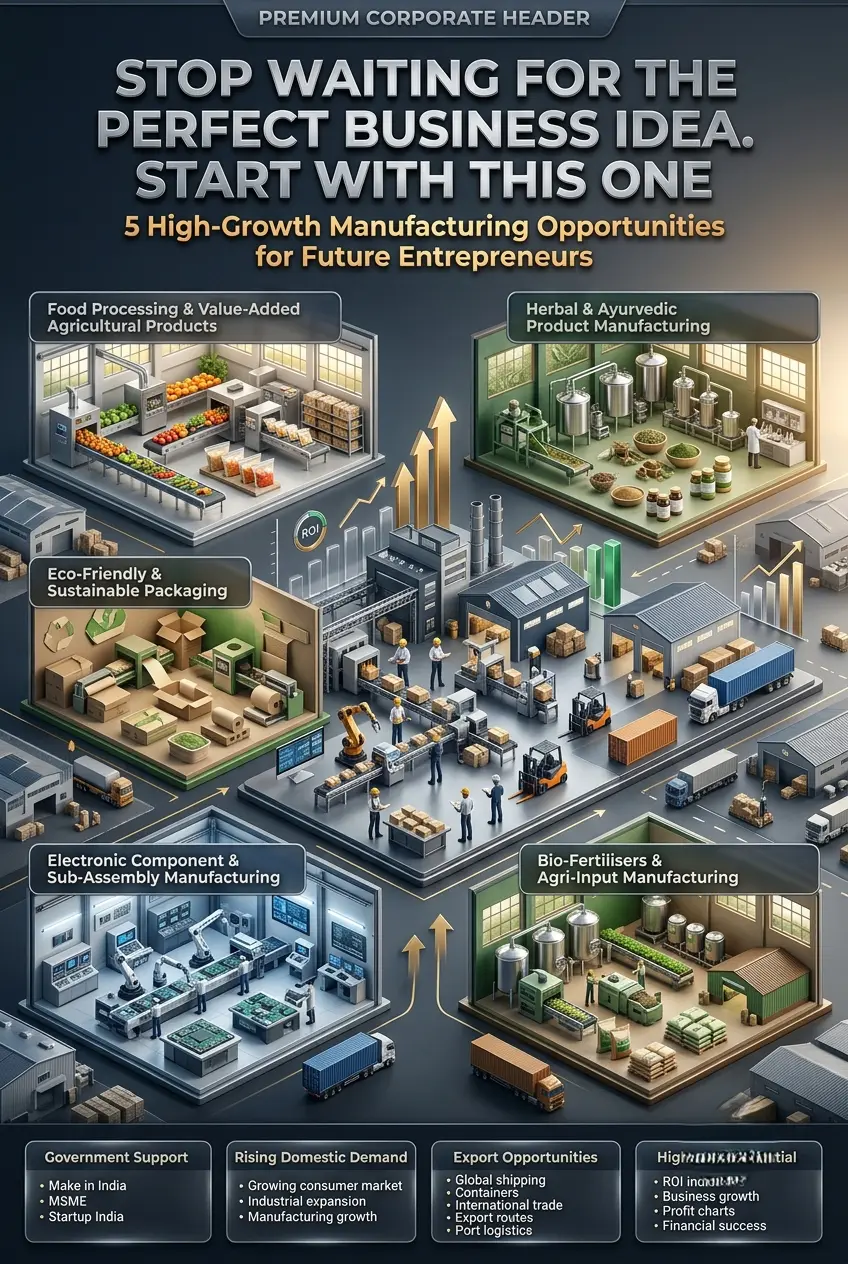
3. Eco-Friendly and Sustainable Packaging
The sustainable packaging market is not just getting more excited; it’s getting more structured as single-use plastic bans continue to be implemented in India and around the world. Manufacturing unit to produce paper-based packaging, biodegradable bags, jute products or moulded pulp containers can be utilized by FMCG companies, e-commerce companies and food brands. The investment required for the small-scale startup is between ₹15 lakh and ₹30 lakh.
The Government procurement platforms such as the Government e-Marketplace (GeM) are actively searching for eco-friendly packaging from the registered MSME suppliers and this serves as a B2B sales channel for new MSMEs. The sustainable packaging market is worth hundreds of billions of dollars across the globe and Indian exporters are becoming more competitive because of access to raw materials and economics of labour.
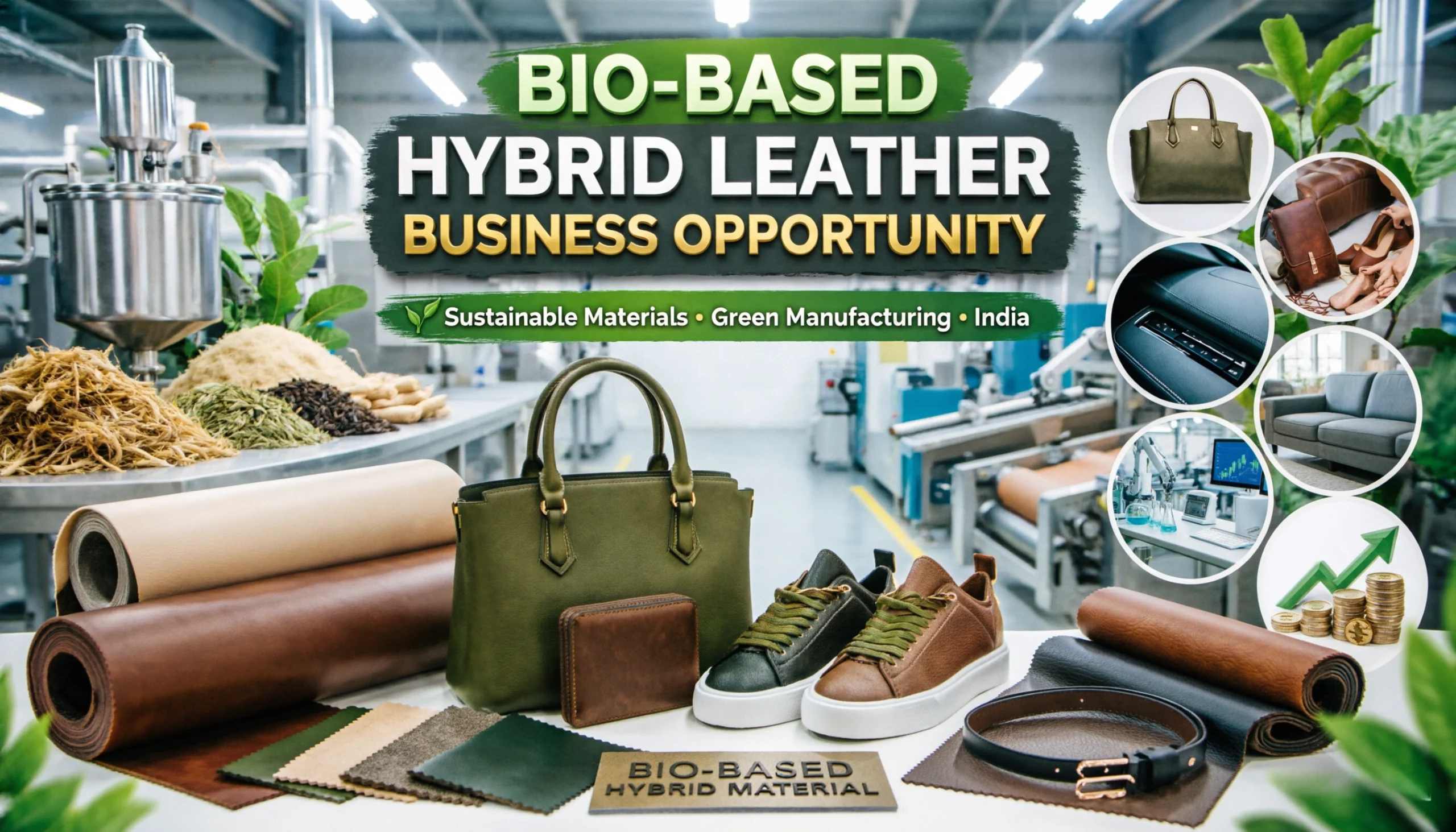
Access Complete Business Plan: Bio-based Polymers & Biodegradable Plastics Guide
4. Electronic Component and Sub-Assembly Manufacturing
The electronics manufacturing eco system in India is rapidly growing with huge demand for local suppliers to provide the required components. Major PLI registered electronics companies actively request local suppliers for PCBs, connectors, wire harnesses, sensor assemblies and packaging materials. The sub-assembly unit that supplies to these anchor manufacturers is investing a sum of ₹25 to ₹60 lakh for machinery and workspace; the units can get offtakes even before starting production. This is a B2B manufacturing approach that is inherently a lower-risk model than a consumer brand approach. The India Electronics and Semiconductor Association (IESA) brings together the large electronics Original Equipment Manufacturers (OEMs) and MSME component manufacturers, a resource which is too little used by new entrepreneurs.
5. Bio-Fertilisers and Agri-Input Manufacturing
The demand for bio-fertilisers, organic pesticides and vermicompost is increasing at double digits in Indian agriculture due to the increasing input cost of chemical fertiliser, and soil health issues among farmers. The manufacturing industry is one in which raw material availability is high, regulatory issues are medium and customer base is growing each crop season. The cost of establishing a bio-fertiliser production unit is as low as ₹5 to ₹15 lakh, which is one of the easiest manufacturing business ideas for the founders in the rural or semi-urban areas.
These units are actively encouraged and sometimes supported by state agricultural departments through soil health mission programmes. In addition, there is a secondary revenue stream possible from export demand for organic products from markets in Europe and North America, for the growth-oriented producers.
Import–Export Opportunity Analysis for Indian Manufacturers
India has been steadily improving its performance in categories related to manufacturing. The country has several export promotion incentives like duty drawback, advance authorisations and export promotion capital goods access in its Foreign Trade Policy, which directly benefit the manufacturing start-ups entering export markets, which are available through the Directorate General of Foreign Trade (DGFT).
Markets in the Gulf Cooperation Council (GCC) countries, UK and USA are emerging markets for food processing entrepreneurs for the imports of processed foods, spices and snacks from India. Southeast Asian and European regions are becoming more interested in importing Indian Ayurvedic formulations at an increasing rate for herbal product manufacturers. European brands subject to sustainable packaging regulations are in the driver’s seat when it comes to eco-friendly packaging suppliers.
It is recommended that new business founders make use of the various resources offered by the Agricultural & Processed Food Products Export Development Authority (APEDA) such as market development assistance, quality certification support and grants for participation in trade fairs, etc., as early as possible in the business planning process. Likewise, Federation of Indian Export Organisations (FIEO) provides market intelligence and buyer matching which brings down the cost of market entry for MSMEs abroad.
Import substitution is also a story of interest to component makers. In the current scenario, India is depending upon imports to acquire a considerable number of electronics components, specialty chemicals and precision engineered parts whose manufacture can be done by the MSME industry with competitive prices. One of the most successful strategies for establishing a defendable manufacturing company is to find product categories that have high import value and low complexity.
Indian MSME Success Stories That New Founders Should Study
Jaipur Rugs — From 2 Looms to India’s Largest Hand-Woven Carpet Manufacturer
N.K. Chandra Bothra began with two looms and nine artisan weavers and created Jaipur Rugs. His model was very basic and involved straight from the sources, rural crafts with global markets, via a vertically integrated supply chain. He held a principled approach to creating and telling stories and designs which was not based on price in a commoditised market. As of today, Jaipur Rugs has more than 40000 weavers in various Indian states and exports to more than 40 countries. Essentially, the lesson for new entrepreneurs is that you don’t need a disruptive product, because that is not a requirement. A defensible manufacturing model, with clear positioning logic in the market, and patience for systematic development.
Kimirica — From a 100 sq ft Room to Supplying International Hotel Chains
From a 100 square feet room in a neighbourhood of Mumbai, brothers Rajat and Mohit Jain started Kimirica – a new idea that more than 70% of the products that are used in hotel amenities in India are imported. They chose to make these luxury toiletries, soaps and bath products all locally and sell them to international brands of hotels in India. From a money-lacking start-up to a business providing luxury global hotel brands in various regions of the world. Their business model was based around quality production, compliance and B2B sales. For first generation entrepreneurs; quality manufacturing for replacement of imports is one of the least talked but one of the most proven business opportunities in India.
Patanjali Ayurved — Manufacturing at Scale from a Cultural Insight
By making Patanjali Ayurved’s manufacturing practices hit the sweet spot of culture and demand of the market, Baba Ramdev and Acharya Balkrishna built it. Founded as a small Ayurvedic products business, Patanjali grew into a pan-Indian FMCG brand without compromising on price competitiveness and distribution intensity. The manufacturing model was simple: manufacture high volume, well trusted formulations, at competitive costs and sell these products through a growing network of retail and institutional outlets. Today, Patanjali is one of the leading FMCG manufacturer companies in India. Lesson for new founders: Technology doesn’t have to be a high-tech operation to scale-up a manufacturing business. It requires product-market fit, cost-cutting, and distribution coverage.
How a Feasibility Report Can Protect Your First Investment
Niir Project Consultancy Services (NPCS) prepares detailed Market Survey cum Detailed Techno-Economic Feasibility Reports for First Generation Entrepreneurs, MSME investors and manufacturers and project planners who rely on substantially more than a guess to make an informed investment decision.
Key Manufacturing Business Segments: Market Snapshot
Table: Indicative Data for Selected Manufacturing Business Ideas in India
| Business Segment | Estimated Market Size | Avg. Startup Cost | CAGR (Approx.) | Export Potential |
| Food Processing Unit | ₹12–18 Lakh Crore | ₹10–25 Lakh | 8–12% | High |
| Herbal / Ayurvedic Products | ₹4–6 Lakh Crore | ₹8–20 Lakh | 15–18% | Very High |
| Eco-Friendly Packaging | ₹60,000–80,000 Cr | ₹15–30 Lakh | 10–14% | Growing |
| Electronic Component Mfg. | ₹2.5–4 Lakh Crore | ₹25–60 Lakh | 12–16% | High |
| Agri-Input / Bio-Fertiliser | ₹25,000–40,000 Cr | ₹5–15 Lakh | 13–17% | Moderate |
Note: Figures are indicative estimates based on industry data and government publications. Actual figures may vary by location, scale, and product mix.
Frequently Asked Questions (FAQ)
1. What is the starting capital required for manufacturing business in India?
It depends on product and size. The cost of starting a bio-fertiliser or food processing micro-unit is ₹5 to ₹15 lakh. The cost of an electronic component sub-assembly plant is in the range of ₹25 to ₹60 lakh. The government schemes such as PMEGP and MUDRA can finance a major segment of this investment and hence less need for the capital contribution by the investor.
2. What are the most promising manufacturing business concepts in these days?
Some of the fastest growing segments include food processing, herbal and Ayurvedic products, eco-friendly packaging and electronics component manufacturing. Both support specific priorities of government policy and export demand that are documented, mitigating market risk for new entrants.
3. Am I able to begin a manufacturing facility if I have no experience in the business?
Yes — many successful MSME founders have done this. The essential prerequisites are a detailed feasibility study before spending money and choosing a product that has proven demand as well as contacting industry associations and government advisory organizations. India also has MSME Development Institutes (MSMEDIs) that train and mentor first generation manufacturers.
4. What government schemes are available to make an Indian business?
PMEGP (Credit linked subsidy), CGTMSE (Collateral free credit guarantee), PLI (Production based incentives), Startup India (Tax benefits and regulatory assistance) and Lending programmes of SIDBI for MSMEs are some of the key schemes. Many of these schemes can be stacked, that is, you can take advantage of more than one scheme at a time.
5. What is the procedure for registering my manufacturing unit as MSME?
Registration under MSME is through MSME Udyam Registration on Udyam Portal. It is online, free of cost and based on aadhaar number. After registration your unit will be able to avail all the MSME government schemes, priority sector lending and GeM procurement opportunities.
6. Can a small-scale manufacturing unit export?
Absolutely. MSME manufacturers are able to export with success especially in food processing, textiles, handicraft, and agri-inputs. APEDA and FIEO are the direct market access support providers. The first step is getting an Importer Exporter Code (IEC) from DGFT followed by product specific quality Certifications like FSSAI, WHO-GMP or BIS as applicable.
7. What is a techno-economic feasibility report? and Do I need one?
A techno-economic feasibility report is a report that compares the technical and financial aspects of a manufacturing project. It includes manufacturing process, machine, raw materials, manpower, market demand, revenue estimation and break-even analysis. This document is usually required by banks and government scheme administrators before they consider granting loans or subsidies. It also insures you from investing in a project with poor structural economics.
8. What is the time taken to make a profit in a manufacturing unit?
Break even timelines are different for different industries and sizes. In general, Food Processing Units need between 18 to 30 months to achieve break-even status, while the Herbals need 12 to 24 months. It can take 24-36 months for the electronics component manufacturers. The best financial modelling is carried out prior to investment, and enables you to anticipate your working capital needs and prevent the shock of cash flow problems which are often responsible for early-stage failures.
9. What do you think are the most prevalent pitfalls in the initial phases of manufacturing business?
The most common errors are: Not conducting a demand validation, underestimating the working capital requirements, skipping steps in regulatory compliance, and attempting to grow too rapidly prior to becoming operationally stable. Most of these risks are addressed by a professionally prepared DPR, and a conservative 1st year operating plan, prior to becoming a problem.
10. Do there exist any manufacturing business ideas which are particularly suitable for women entrepreneurs?
Yes. In India, women-led MSMEs have established successful businesses in various sectors, including food processing, herbal products, handmade paper, eco-friendly packaging, and garment manufacturing. The loans are granted to women entrepreneurs for greenfield projects through schemes such as Stand-Up India, where the loan amount is between ₹10 lakh and ₹1 crore. The MUDRA loans comprising Kishor and Tarun are also applicable to women-led manufacturing units that do not require any collateral.
11. How to identify buyers for manufactured products?
Domestic buyers will be accessed via Government e-Marketplace (GeM), Industry trade fairs and B2B platforms. APEDA and FIEO assist in exporting buyer matching while Confederation of Indian Industry (CII) assists in exporting buyer matching. The early cultivation of relationships with buyers in your desired export markets can greatly shorten the time for a new manufacturer to generate revenue.
Conclusion: The Window Is Open — But Not Forever
Indeed, India’s manufacturing opportunity window is real, documented, and one that is accessible to first-generation entrepreneurs. The credit market, the policy of the government and the dynamics of the world supply chain have converged in a way that could not be repeated for at least a decade. This window, however, will close as more entrepreneurs enter and competition grows, and as policy priorities shift.
The entrepreneurs who will take the initiative today, at a right business idea, with a well-done feasibility report and government credit facilities, will set up their manufacturing units when conditions are ideal. If you wait and wait for some “perfect” idea, you will see that someone has already got it and just started.
Don’t look for the one perfect business opportunity. Begin with a tried one, make a careful plan and stick to it. This is all the formula.