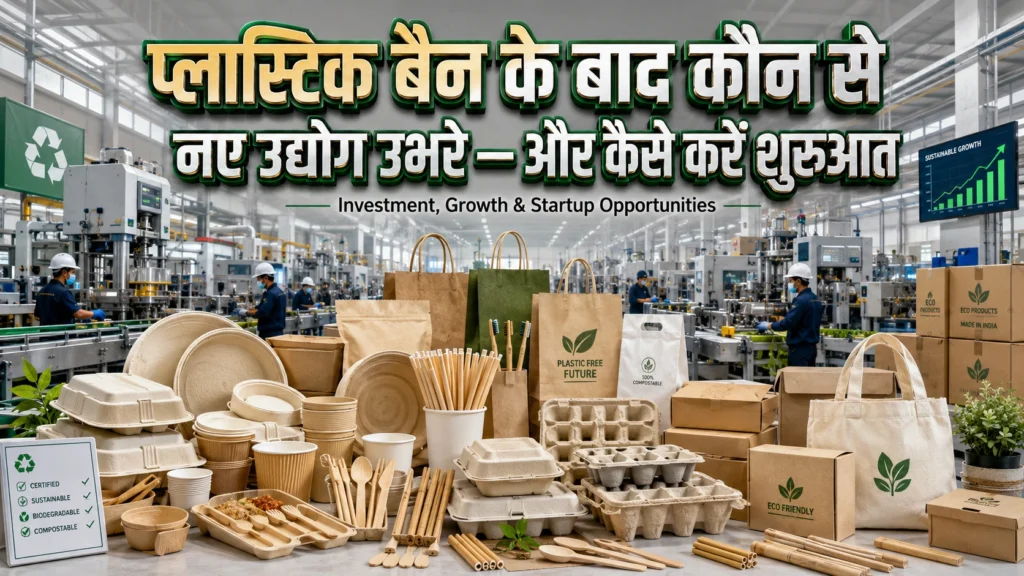
प्लास्टिक बैन के बाद कौन से नए उद्योग उभरे — और कैसे करें शुरुआत

प्लास्टिक बैन के बाद बिजनेस आइडियाज: 6 नए इको-फ्रेंडली

प्लास्टिक बैन के बाद बिजनेस आइडियाज

Single-use plastic पर ban एक ऐसा decision था जिसने एक साथ एक industry को बंद किया और कई नई manufacturing industries के दरवाज़े खोल दिए। जो लोग इस shift को समझ गए, उन्होंने नए business ideas में जल्दी कदम रखा। और अब वे अच्छा कमा रहे हैं।

इस आर्टिकल में हम देखेंगे — plastic ban के बाद कौन से नए उद्योग उभरे हैं, किसमें सबसे ज़्यादा demand है, और कैसे आप इस बड़े market opportunity का फायदा उठा सकते हैं।

Related Article: The Green Manufacturing Revolution: Paper Water Bottles, Bioplastics & Biodegradable Products

भारत में प्लास्टिक बैन — क्या बंद हुआ?

जुलाई 2022 से भारत सरकार ने single-use plastic के 19 items पर complete ban लगा दिया। Ministry of Environment, Forest and Climate Change के इस फैसले ने plastic alternatives की demand एकदम बढ़ा दी। Plastic bags (75 micron से कम), straws, cutlery, thermocol cups — सब बंद हो गए।

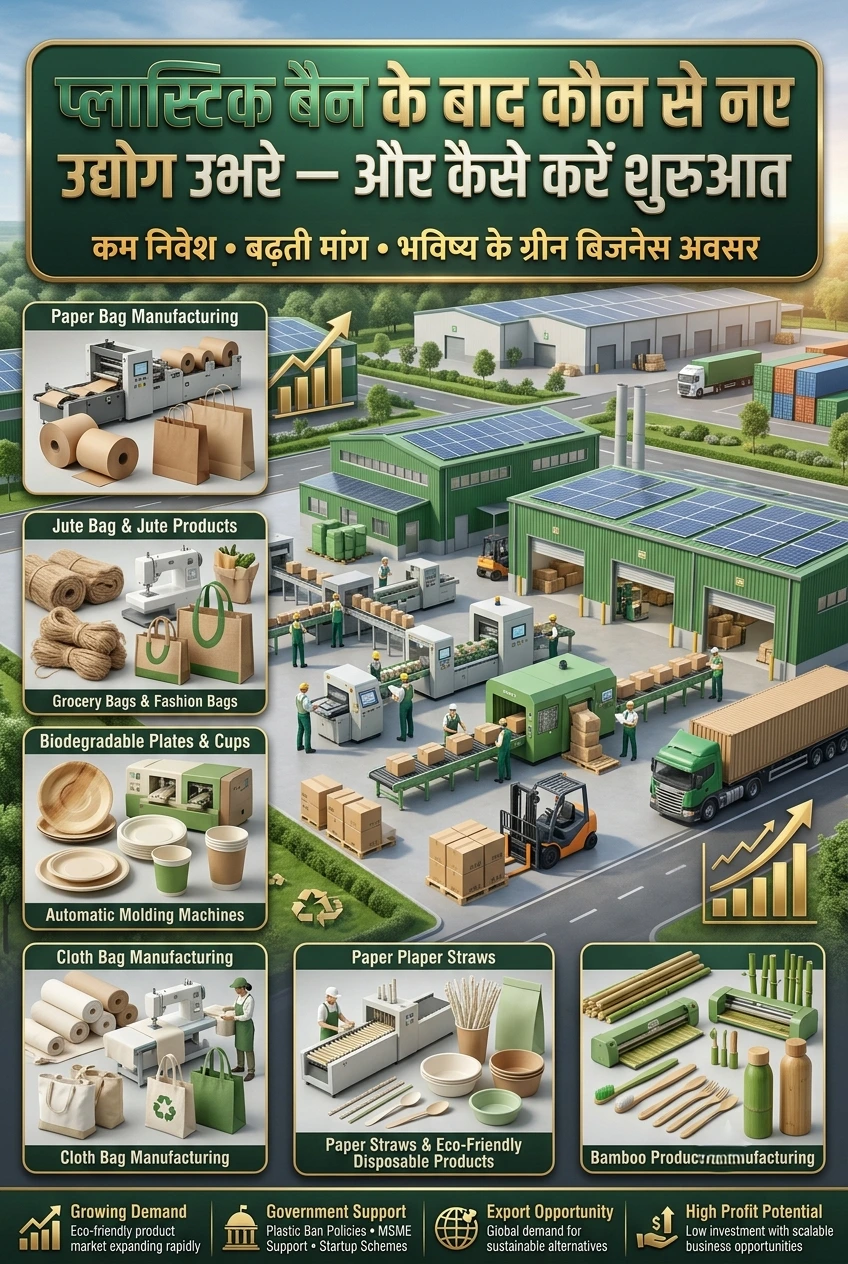
1. पेपर बैग मैन्युफैक्चरिंग

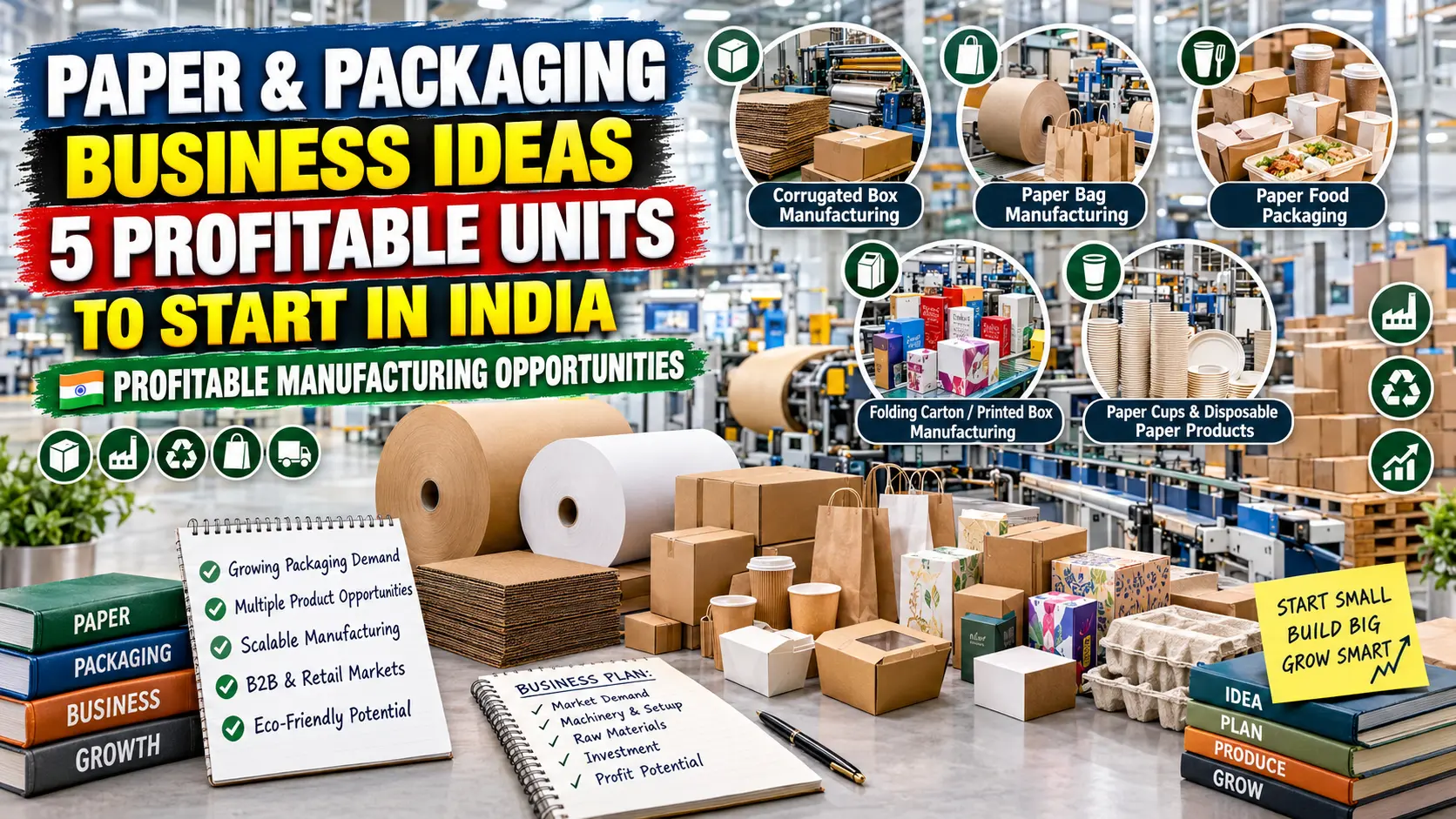
यह plastic bag का सबसे सीधा और popular alternative है। Shopping malls, grocery stores, restaurants, और pharmaceutical companies — सभी को paper bags चाहिए। Demand इतनी है कि छोटी paper bag units भी महीनों के orders advance में बुक हैं।

इस business की शुरुआत ₹5-15 लाख में हो सकती है। एक small machine से रोज़ 10,000-20,000 bags बन सकते हैं। और profit margin 25-35% तक होता है।

Access Complete Business Plan: Paper & Paper Products Manufacturing

2. जूट बैग और जूट प्रोडक्ट्स

Jute एक eco-friendly, biodegradable material है। National Jute Board कई support schemes चलाता है। Jute bags, rugs, और packaging India और export दोनों markets में खूब बिकते हैं। Jute manufacturing units को raw material आसानी से मिलता है, खासकर पश्चिम बंगाल, असम, और बिहार में।
प्लास्टिक बैन के बाद बिजनेस आइडियाज: 6 नए इको-फ्रेंडली
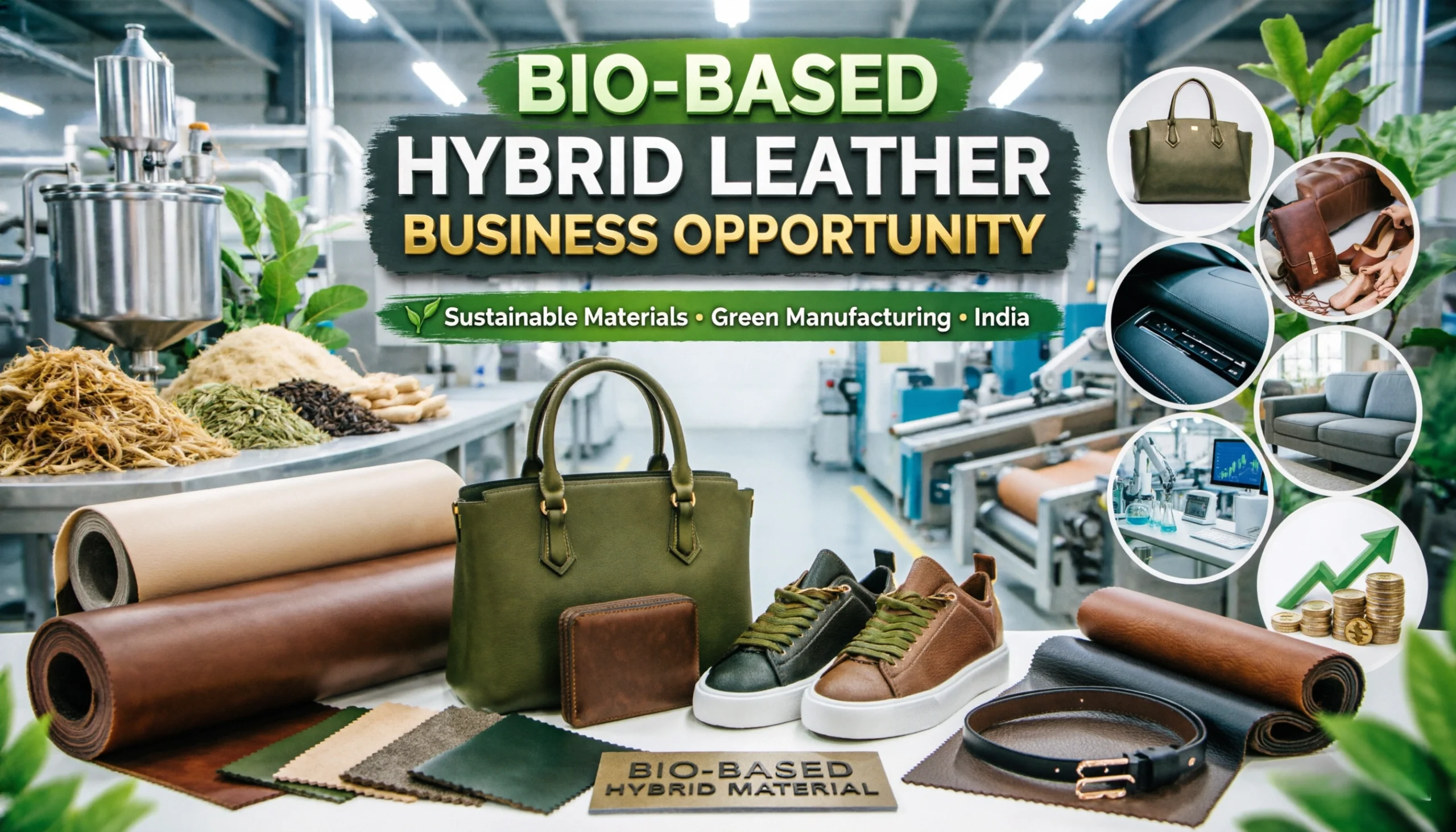
प्लास्टिक बैन के बाद पेपर बैग, जूट उत्पाद और बायोडिग्रेडेबल वस्तुओं जैसे नए उद्योगों की मांग बढ़ रही है।

Read the Complete Book Here: The Complete Book on Jute & Coir Products

3. बायोडिग्रेडेबल प्लेट और कप

Areca palm leaf, sugarcane bagasse, और bamboo से बनी plates और cups का market बहुत तेज़ी से बढ़ रहा है। Hotels, caterers, और food delivery companies इन्हें prefer करते हैं।

यह एक ऐसा business है जो rural areas में भी शुरू हो सकता है। Raw material local farms से मिलता है और machines की cost ₹3-10 लाख के बीच है।

4. कपड़े के थैले (Cloth Bag Manufacturing)

Cotton, canvas, और non-woven fabric से बने bags की demand retailers, FMCG companies, और government schemes में है। ये bags reusable हैं और premium segment में भी अच्छी कमाई है।

5. कागज़ के स्ट्रॉ और बर्तन

Paper straws, paper cups, और paper plates की demand cafes, QSR chains, और airlines में तेज़ी से बढ़ी है। एक small paper straw manufacturing unit ₹8-20 लाख में लग जाती है।

6. बांस के प्रोडक्ट्स

Bamboo toothbrushes, bamboo straws, bamboo cutlery — ये सब premium eco-friendly products की category में आते हैं। Export potential भी बहुत अच्छा है।

Identify high-growth industries before others do

बैन के बाद उभरे उद्योग — तुलनात्मक जानकारी

उद्योगशुरुआती लागत (₹)मुख्य बाज़ारProfit Margin
Paper Bags5–15 लाखRetail, Pharma25–35%
Jute Products8–25 लाखRetail, Export20–30%
Areca/Bagasse Plates3–12 लाखHotels, Catering30–40%
Cloth Bags2–8 लाखFMCG, Retail25–35%
Paper Straws/Cups8–20 लाखCafes, QSR20–30%
Bamboo Products5–18 लाखPremium, Export35–50%

शुरुआत कैसे करें — प्रैक्टिकल गाइड

सबसे पहले अपना product decide करें। फिर local market में demand check करें — nearby shops, hotels, restaurants से बात करें। Raw material suppliers identify करें और एक छोटे scale पर trial production करें।

Udyam registration और GST के बाद अपना product B2B channels पर list करें। IndiaMART और TradeIndia पर profile बनाना एक अच्छी शुरुआत है।

अक्सर पूछे जाने वाले सवाल (FAQ)

Q1. क्या plastic alternatives का business profitable है?

हां, यह highly profitable है। Demand बढ़ रही है और competition अभी उतना ज़्यादा नहीं है। Profit margin 25-50% तक होता है।

Q2. Biodegradable products के लिए कोई certification चाहिए?

BIS और CPCB certification आपके product को premium market में मदद करती है। हालांकि शुरुआत में FSSAI (अगर food packaging है) ज़रूरी है।

निष्कर्ष

Plastic ban ने एक नई manufacturing economy को जन्म दिया है। जो उद्यमी आज इन business ideas में निवेश कर रहे हैं, वे कल के market leaders बन सकते हैं। Environment-friendly होना अब सिर्फ नैतिकता नहीं, बल्कि एक smart business strategy भी है।

 

Picture of Sai Teja

Sai Teja

Sai Teja is a Process Engineer, Industrial Project Consultant, and Consulting Editor at Entrepreneur India, a monthly industrial magazine published since 1995. He holds a B.Tech in Mechanical Engineering and has 12 years of professional experience across multiple industries. His work covers process engineering, industrial project development, production operations, and technical consultancy, with a focus on helping startups, entrepreneurs, and manufacturers plan new ventures and improve existing operations. He combines engineering knowledge with practical project experience to explain how manufacturing ideas can be developed into workable industrial projects. As an industrial project consultant, Sai Teja supports startups and entrepreneurs in understanding the technical and operational requirements of a new business. His contribution to business planning includes assessing process feasibility, defining equipment requirements, evaluating machinery options, and preparing project proposals and technical reports. He helps founders examine how a proposed manufacturing operation will function, what resources it will need, and which engineering decisions must be addressed before implementation. This guidance helps entrepreneurs develop project plans that connect their business objectives with production capacity, plant requirements, and operational needs. His process engineering expertise includes process calculations, process simulation, and the development of heat and material balances (H&MB). He has experience in preparing and reviewing Process Flow Diagrams (PFDs) and Piping and Instrumentation Diagrams (P&IDs), which define process sequences, equipment connections, and control requirements. His technical work also covers equipment and line sizing, hydraulic calculations, and process datasheet preparation. He provides engineering support for Front-End Engineering Design (FEED) and Engineering, Procurement and Construction (EPC) activities, contributing technical inputs at different stages of project development. Sai Teja’s project experience extends to process and technical feasibility assessments, plant layout inputs, machinery and vendor evaluation, plant erection, and commissioning. He also works on process scale-up and the coordination of multidisciplinary project activities, helping align engineering requirements with installation and operational needs. His experience across these stages enables him to consider both the design of a manufacturing facility and the practical requirements of bringing it into operation. In production and industrial operations, his experience includes process optimization, new product development, maintenance, troubleshooting, and cost optimization. He applies analytical problem-solving to examine process difficulties, identify areas for improvement, and support more efficient plant operations. Risk management, process safety, and compliance form part of his approach to engineering and project work. He considers these requirements alongside production objectives when evaluating processes and recommending operational improvements. As Consulting Editor at Entrepreneur India, Sai Teja brings an engineering perspective to content on manufacturing, industrial opportunities, business planning, and project implementation. His writing draws on his technical and consultancy experience to make complex industrial subjects easier to understand. He explains the practical considerations behind process selection, machinery requirements, plant setup, commissioning, and production management, giving readers a clearer understanding of what developing and operating an industrial venture involves. Through his editorial contributions and blog articles, Sai Teja helps startups, first-time entrepreneurs, and established manufacturers understand the decisions involved in planning and running industrial businesses. His focus is on providing useful explanations that connect business ideas with engineering requirements and implementation steps. Whether discussing a new manufacturing opportunity or an existing plant’s operational challenges, he highlights the practical details that shape project planning, execution, and day-to-day performance.

Share

More Posts

Categories

FAQs

Contact Us

Contact Form Demo