
प्लास्टिक बैन के बाद कौन से नए उद्योग उभरे — और कैसे करें शुरुआत
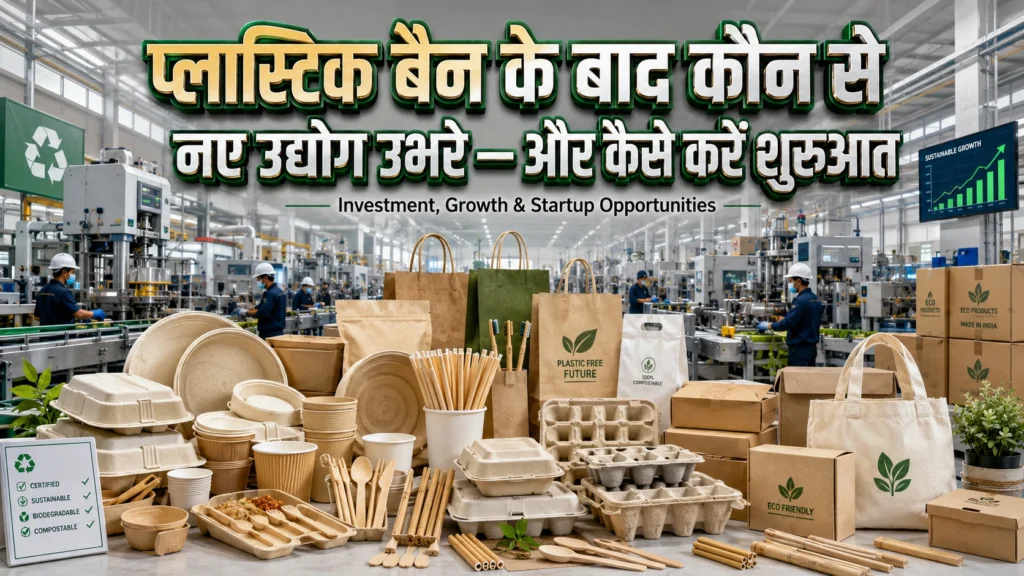
प्लास्टिक बैन के बाद बिजनेस आइडियाज Single-use plastic पर ban एक ऐसा decision था जिसने एक साथ एक industry को बंद किया और कई नई manufacturing industries के दरवाज़े खोल दिए। जो लोग इस shift को समझ गए, उन्होंने नए business ideas में जल्दी कदम रखा। और अब वे अच्छा कमा रहे हैं। इस आर्टिकल में हम देखेंगे — plastic ban के बाद कौन से नए उद्योग उभरे हैं, किसमें सबसे ज़्यादा demand है, और कैसे आप इस बड़े market opportunity का फायदा उठा सकते हैं। Related Article: The Green Manufacturing Revolution: Paper Water Bottles, Bioplastics & Biodegradable Products भारत में प्लास्टिक बैन — क्या बंद हुआ? जुलाई 2022 से भारत सरकार ने single-use plastic के 19 items पर complete ban लगा दिया। Ministry of Environment, Forest and Climate Change के इस फैसले ने plastic alternatives की demand एकदम बढ़ा दी। Plastic bags (75 micron से कम), straws, cutlery, thermocol cups — सब बंद हो गए। 1. पेपर बैग मैन्युफैक्चरिंग यह plastic bag का सबसे सीधा और popular alternative है। Shopping malls, grocery stores, restaurants, और pharmaceutical companies — सभी को paper bags चाहिए। Demand इतनी है कि छोटी paper bag units भी महीनों के orders advance में बुक हैं। इस business की शुरुआत ₹5-15 लाख में हो सकती है। एक small machine से रोज़ 10,000-20,000 bags बन सकते हैं। और profit margin 25-35% तक होता है। Access Complete Business Plan: Paper & Paper Products Manufacturing 2. जूट बैग और जूट प्रोडक्ट्स Jute एक eco-friendly, biodegradable material है। National Jute Board कई support schemes चलाता है। Jute bags, rugs, और packaging India और export दोनों markets में खूब बिकते हैं। Jute manufacturing units को raw material आसानी से मिलता है, खासकर पश्चिम बंगाल, असम, और बिहार में। Read the Complete Book Here: The Complete Book on Jute & Coir Products 3. बायोडिग्रेडेबल प्लेट और कप Areca palm leaf, sugarcane bagasse, और bamboo से बनी plates और cups का market बहुत तेज़ी से बढ़ रहा है। Hotels, caterers, और food delivery companies इन्हें prefer करते हैं। यह एक ऐसा business है जो rural areas में भी शुरू हो सकता है। Raw material local farms से मिलता है और machines की cost ₹3-10 लाख के बीच है। 4. कपड़े के थैले (Cloth Bag Manufacturing) Cotton, canvas, और non-woven fabric से बने bags की demand retailers, FMCG companies, और government schemes में है। ये bags reusable हैं और premium segment में भी अच्छी कमाई है। 5. कागज़ के स्ट्रॉ और बर्तन Paper straws, paper cups, और paper plates की demand cafes, QSR chains, और airlines में तेज़ी से बढ़ी है। एक small paper straw manufacturing unit ₹8-20 लाख में लग जाती है। 6. बांस के प्रोडक्ट्स Bamboo toothbrushes, bamboo straws, bamboo cutlery — ये सब premium eco-friendly products की category में आते हैं। Export potential भी बहुत अच्छा है। Identify high-growth industries before others do बैन के बाद उभरे उद्योग — तुलनात्मक जानकारी उद्योग शुरुआती लागत (₹) मुख्य बाज़ार Profit Margin Paper Bags 5–15 लाख Retail, Pharma 25–35% Jute Products 8–25 लाख Retail, Export 20–30% Areca/Bagasse Plates 3–12 लाख Hotels, Catering 30–40% Cloth Bags 2–8 लाख FMCG, Retail 25–35% Paper Straws/Cups 8–20 लाख Cafes, QSR 20–30% Bamboo Products 5–18 लाख Premium, Export 35–50% शुरुआत कैसे करें — प्रैक्टिकल गाइड सबसे पहले अपना product decide करें। फिर local market में demand check करें — nearby shops, hotels, restaurants से बात करें। Raw material suppliers identify करें और एक छोटे scale पर trial production करें। Udyam registration और GST के बाद अपना product B2B channels पर list करें। IndiaMART और TradeIndia पर profile बनाना एक अच्छी शुरुआत है। अक्सर पूछे जाने वाले सवाल (FAQ) Q1. क्या plastic alternatives का business profitable है? हां, यह highly profitable है। Demand बढ़ रही है और competition अभी उतना ज़्यादा नहीं है। Profit margin 25-50% तक होता है। Q2. Biodegradable products के लिए कोई certification चाहिए? BIS और CPCB certification आपके product को premium market में मदद करती है। हालांकि शुरुआत में FSSAI (अगर food packaging है) ज़रूरी है। निष्कर्ष Plastic ban ने एक नई manufacturing economy को जन्म दिया है। जो उद्यमी आज इन business ideas में निवेश कर रहे हैं, वे कल के market leaders बन सकते हैं। Environment-friendly होना अब सिर्फ नैतिकता नहीं, बल्कि एक smart business strategy भी है।
India-Oman CEPA: New Export Opportunities for MSMEs in Manufacturing & Business
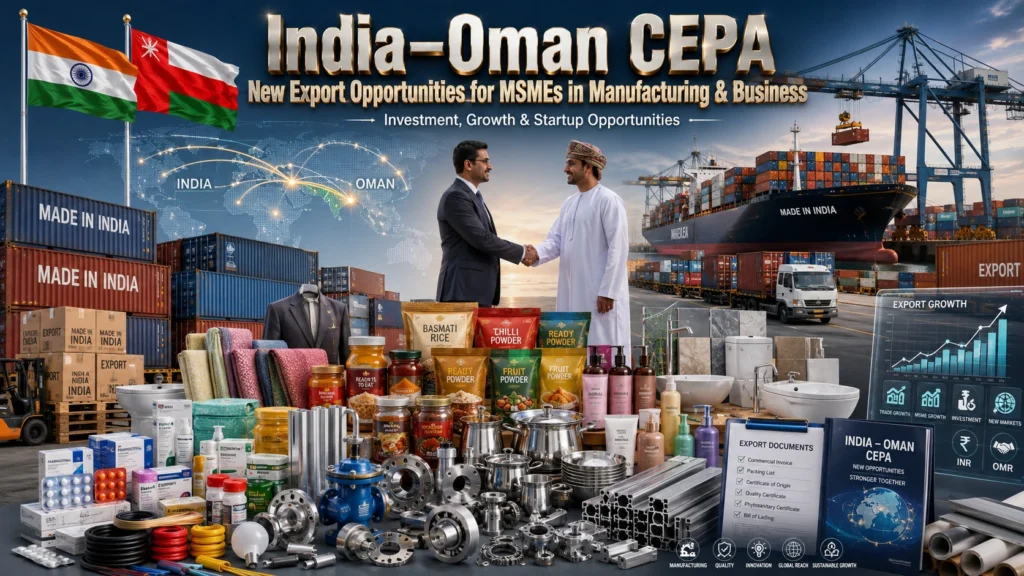
India Oman CEPA Export Opportunities A Trade Agreement That Changes the Manufacturing Math Trade pacts do not generally evoke excitement in the minds of MSMEs. Most of them are framed in bilateral diplomacy and not in terms of any practical business ideas for manufacturers/exporters on the ground. The India-Oman Comprehensive Economic Partnership Agreement (CEPA), however, is unique — and the difference is significant to anyone who operates or is considering a manufacturing unit in India. The CEPA was signed by India and Oman in a strategic setting. Oman is located at the mouth of the Arabian Sea, part of the Gulf Cooperation Council (GCC) trade corridor and is actively diversifying its economy from hydrocarbons. This deal is a boon to Indian manufacturers and exporters, especially MSMEs as they gain access to a high-income and import-dependent market on preferential tariffs. The timing coincides with India’s own desire to expand its exports of goods massively. This treaty is beneficial to several business sectors — processed foods, Pharma, Engineering Goods, Chemicals, Textiles and Handicrafts. In this article, we examine which sectors have the best export prospects for the MSMEs and what government initiatives can help magnify those benefits, and how Indian MSMEs can capitalise on the Oman corridor for long-term export success. Why the India-Oman Trade Corridor Is Gaining Strategic Importance Oman is not a big economy in the world. It is a strategic one, though. The country imports almost 80% of its food, most of its industrial raw materials and increasing amounts of its manufactured products. Such reliance leads to a permanent market for foreign suppliers. Traditionally, India has been a main source of imports for Oman, especially in the areas of Food Products, Textiles, Engineering Goods, and Construction Materials. The CEPA is an agreement that formalises and strengthens this relationship. The CEPA between India and Oman encompasses thousands of product lines as per the Ministry of Commerce and Industry, Government of India. The biggest advantage for India’s exporting companies is the gradual removal of customs duties on a host of manufactured products. This directly helps the price competitiveness, the main problem of Indian SME exporters in the Gulf countries where Chinese and SE Asian competition is dominating the market. Oman is also a re-export point to the wider GCC region outside of tariffs. A manufacturing company which develops a distribution chain up into Oman effectively places itself to distribute into Saudi Arabia, United Arab Emirates, Kuwait, Bahrain and Qatar. The corridor’s multiplier effect is the reason why the area is seriously considered by people monitoring business growth through exports. Related Article: India-Oman CEPA: The Trade Gateway Every Indian Exporter Has Been Waiting For Government Policies and Incentives Supporting MSME Exporters India has put together an effective package to facilitate Indian manufacturers from entering the export markets. These schemes work better under the CEPA framework as the pricing difference at the destination is decreased through preferential tariffs. Below are the most relevant policies for MSME exporters for Oman: MSME Export Promotion Schemes Small manufacturers directly get financial relief from Interest Subvention Scheme, Credit Guarantee Fund Trust for Micro and Small Enterprises (CGTMSE) and the Ministry of MSME’s ZED (Zero Defect Zero Effect) Certification Programme. Export-oriented units (EOU) are supported in a way that is very advantageous for an MSME with collateral-free credit of ₹2 crore provided by the CGTMSE. RoDTEP: Duty Refund for Exporters The Remission of Duties and Taxes on Exported Products (RoDTEP) scheme is implemented by Directorate General of Foreign Trade (DGFT) that will refund embedded taxes that exporters are unable to claim elsewhere. RoDTEP provides a 1–4% extra margin on FOB value for manufacturing industries such as processed foods, pharma, engineering goods, etc. which are some of the best beneficiaries of RoDTEP. That is a minimal amount but on an annual export order worth of ₹5 crore it’s ₹ 5 – 20 lakh of direct savings. ECGC and Export Credit The Export Credit Guarantee Corporation of India (ECGC) offers a risk cover to exporters who have dealings with foreign buyers. ECGC coverage is highly beneficial for new MSME exporters, who are entering into the market of Oman, as it reduces the risk of non-payment. It is coupled with post-shipment credit lines by the partner banks, which makes it possible even for an exporter with a turnover of ₹1-5 crore. Learn more at ECGC. PLI and Sector-Specific Incentives The PLI Scheme applies to 14 sectors such as food processing, pharmaceuticals, textiles, advanced chemistry cells, specialty chemicals, etc. for larger manufacturing plays. The PLI offers incentives of up to 20% on incremental production to MSMEs. When PLI is combined with preferential access to CEPA, a strong cost competitiveness can be gained. State-Level Export Incentives There are a few incentives available for export-oriented manufacturers in several states of India. Both Invest Rajasthan and Gujarat Industrial Development Corporation (GIDC) provide subsidy on land, power and infrastructure for MSMEs establishing export units. There are also MSME export promotion policies for Tamil Nadu, Karnataka and Maharashtra. Entrepreneurs should check with various state industrial development corporations to determine the best mix of central and state incentives. Manufacturing Business Ideas for MSMEs Under the India-Oman CEPA The CEPA brings concrete benefits to a number of manufacturing and export sectors. Specific business ideas are presented below that can be taken as action points by MSME entrepreneurs who wish to either start or expand their manufacturing businesses with the main export markets in Oman. 1. Processed and Packaged Food Products Oman is a net importer of food. The tariff concession in CEPA can have substantial benefits for Indian processed food manufacturers, especially in the spices, ready-to-eat foods, cereal-based foods, pickles and packaged snacks sector. Lowering or removing import taxes on complete food products makes Indian food more competitive than those from Thailand, Malaysia and Turkey, which have traditionally held a commanding position on the shelves of the Gulf countries. With an initial investment of about ₹50 lakh to ₹2 crore, an MSME entrepreneur setting up a food processing