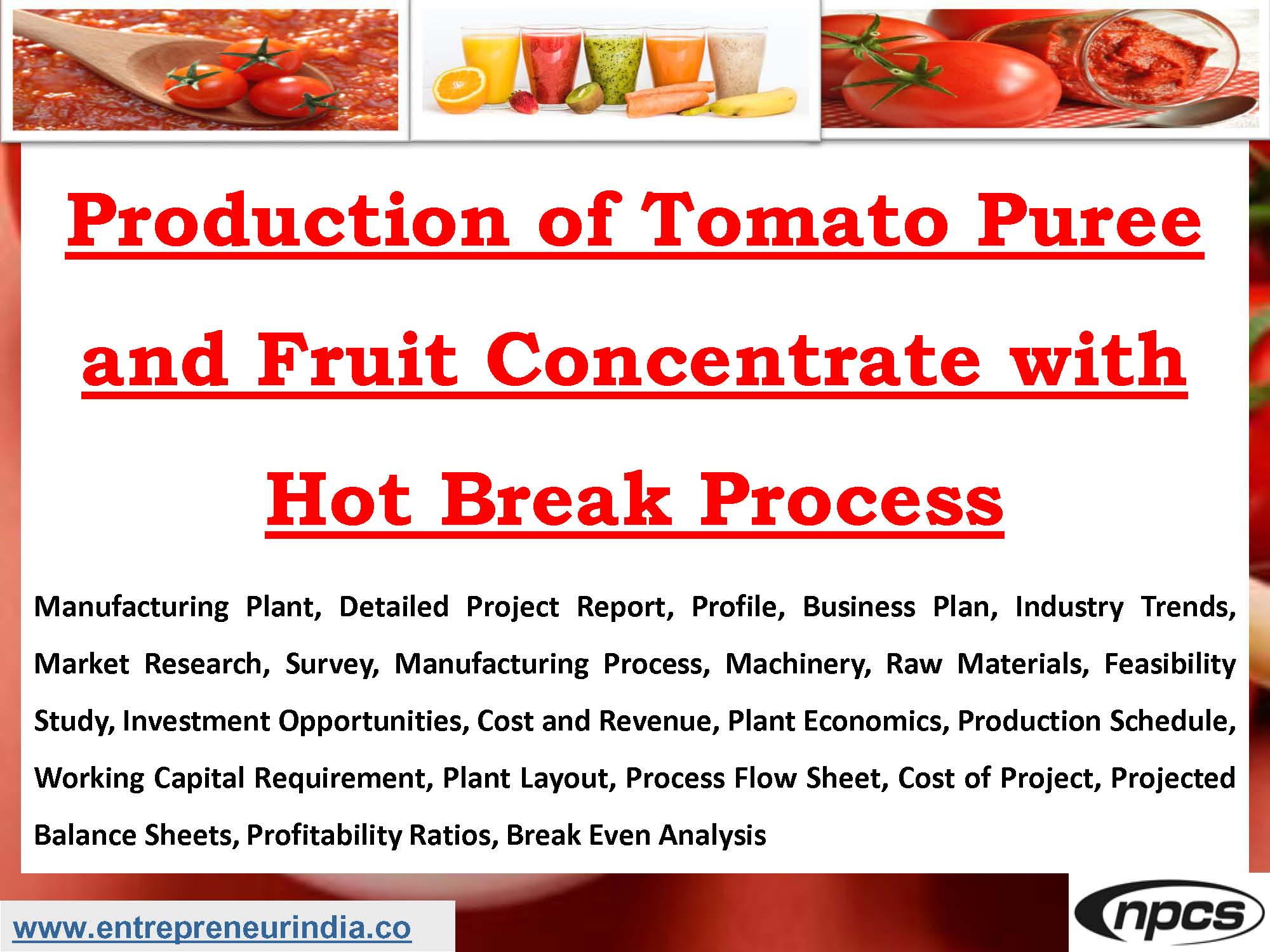
India’s vast fruit and vegetable production, especially tomatoes and tropical fruits, opens up a huge opportunity in food processing. One of the most profitable and scalable ventures is a Tomato Puree & Fruit Concentrate manufacturing plant. With growing demand in the foodservice, packaged foods, and export industries, setting up a puree and concentrate unit can ensure consistent returns, minimal waste, and long-term sustainability. Moreover, such units help reduce post-harvest losses by converting perishable produce into shelf-stable products.
Tomato Puree & Fruit Concentrate Plant | Setup Guide
Setting up a Tomato Puree & Fruit Concentrate plant requires an understanding of both technical processes and market demand. Tomato puree is widely used in sauces, soups, gravies, and ready meals. Fruit concentrates—from mango, guava, pineapple, to apple—are essential ingredients in juices, jams, syrups, and desserts. Moreover, the food and beverage industry’s growing reliance on processed ingredients ensures strong B2B and B2C markets. With proper machinery, quality control, and branding, this business can cater to both domestic and global buyers.
Types of Products You Can Manufacture
A versatile plant allows you to produce:
Tomato puree and paste
Mango, guava, banana pulp
Pineapple, orange, and apple concentrate
Mixed fruit base for beverages
Fruit pulp for baby food, bakery, or ice cream industries
Moreover, these products have a long shelf life and are often used in reconstitution for juices, sauces, and ready-to-eat meals.
Read Also :Quartz Slabs Manufacturing Business
Raw Material Sourcing and Seasonality
To ensure uninterrupted production, you must plan for seasonal fruit procurement:
Tomatoes: Best harvested between March and June
Mangoes: Summer (April to July)
Guava, banana: Available throughout the year
Apple and pineapple: Region-specific harvests
Procurement tips:
Partner with local farmers or cooperatives
Set up cold storage to handle seasonal surpluses
Use ripeness meters for quality consistency
Moreover, sourcing Grade B produce (visually imperfect but edible) lowers input costs without compromising product quality.
Manufacturing Process Overview
The production of Tomato Puree & Fruit Concentrate involves the following stages:
Sorting and Washing: Remove debris, rotten pieces, and dirt.
Peeling and Deseeding: For tomatoes and certain fruits using steam or chemical lye peeling.
Pulping: Extract puree/pulp using pulpers or finishers.
Preheating and Pasteurization: To deactivate enzymes and kill bacteria.
Evaporation (for concentrate): Remove water to thicken into 28–30% brix levels.
Filling and Packaging: In aseptic bags, cans, or PET bottles.
Cooling and Storage: Maintain hygiene to ensure long shelf life.
Moreover, modern plants use aseptic processing for better microbial control and retention of natural flavor.
Machinery and Plant Setup
Essential equipment for a typical processing line includes:
Fruit washer and grader
Destoner and pulper
Tubular or plate pasteurizer
Vacuum evaporator
Aseptic filler and sealing machines
Labeling and packaging unit
Cold storage or warehouse
Capacity options:
Small-scale: 500 kg/hour
Medium-scale: 1–2 tons/hour
Large-scale: 5+ tons/hour
Moreover, semi-automatic plants require lower investment and are ideal for rural clusters and FPOs.
Licensing and Legal Compliance
Starting a Tomato Puree & Fruit Concentrate business in India requires the following:
FSSAI License – Mandatory for food production
GST Registration – For tax and compliance
Udyam (MSME) Registration – To claim government schemes
Factory License – Based on plant size and workforce
Pollution Control Board Clearance – For water use and waste discharge
Export-Import Code (IEC) – For global trade
Moreover, HACCP or ISO 22000 certifications can enhance credibility, especially in export markets.
Investment and Profit Margin Analysis
The investment required depends on capacity, automation, and machinery source:
| Scale | Investment Range | Monthly Profit Potential |
|---|---|---|
| Small (500 kg/hr) | ?25 – ?35 lakhs | ?1 – ?2 lakhs |
| Medium (1–2 ton/hr) | ?60 – ?90 lakhs | ?3 – ?5 lakhs |
| Large (5+ tons/hr) | ?1.5 – ?3 crore+ | ?7 – ?12 lakhs+ |
Tomato puree and fruit concentrates offer high margins (30–50%), especially when sold to institutional buyers or under your own brand. Moreover, value-added variants like organic or preservative-free fetch premium prices.
Packaging and Shelf Life
Proper packaging preserves quality and meets market requirements:
Aseptic bags: 5–20 kg for B2B bulk sales
Glass jars/PET bottles: 200 ml to 1 litre for retail
Tin cans: Standard in export and horeca segments
Flexible pouches: Lightweight and cost-effective
Shelf life:
Tomato puree: 6–12 months (sealed, ambient)
Fruit concentrates: 1–2 years (if aseptic packed)
Moreover, packaging should include FSSAI details, nutritional facts, manufacturing/expiry date, and storage instructions.
Marketing & Sales Channels
To scale your Tomato Puree & Fruit Concentrate brand, target:
FMCG brands and food processing companies
Beverage manufacturers
Institutional buyers (hotels, restaurants, canteens)
Retail supermarkets and grocery chains
Export agents and international distributors
Your own D2C (Direct-to-Consumer) online store
Moreover, listing on platforms like Amazon, Flipkart, BigBasket, and IndiaMART increases visibility.
Branding and Growth Strategy
To stand out in a competitive market:
Emphasize “No Preservatives,” “Organic,” or “Cold-Processed” in your messaging
Offer sample kits to B2B buyers
Use attractive and eco-friendly packaging
Invest in a strong logo, brand story, and website
Highlight traceability and farmer connect (farm-to-pack model)
Moreover, participation in food expos and trade fairs can open large institutional deals and export tie-ups.
See Also :How to Start Rajnigandha Oil Extraction Unit
Conclusion
A Tomato Puree & Fruit Concentrate plant offers excellent scope for entrepreneurs looking to enter the value-added food processing space. It transforms seasonal perishables into high-demand, shelf-stable ingredients used in a wide range of culinary and beverage applications. Moreover, with India’s growing domestic consumption, rising exports, and government push for agro-processing, this business promises sustainability, profitability, and scalability. With the right setup, sourcing, branding, and quality control, your plant can become a reliable supplier in both B2B and retail markets.