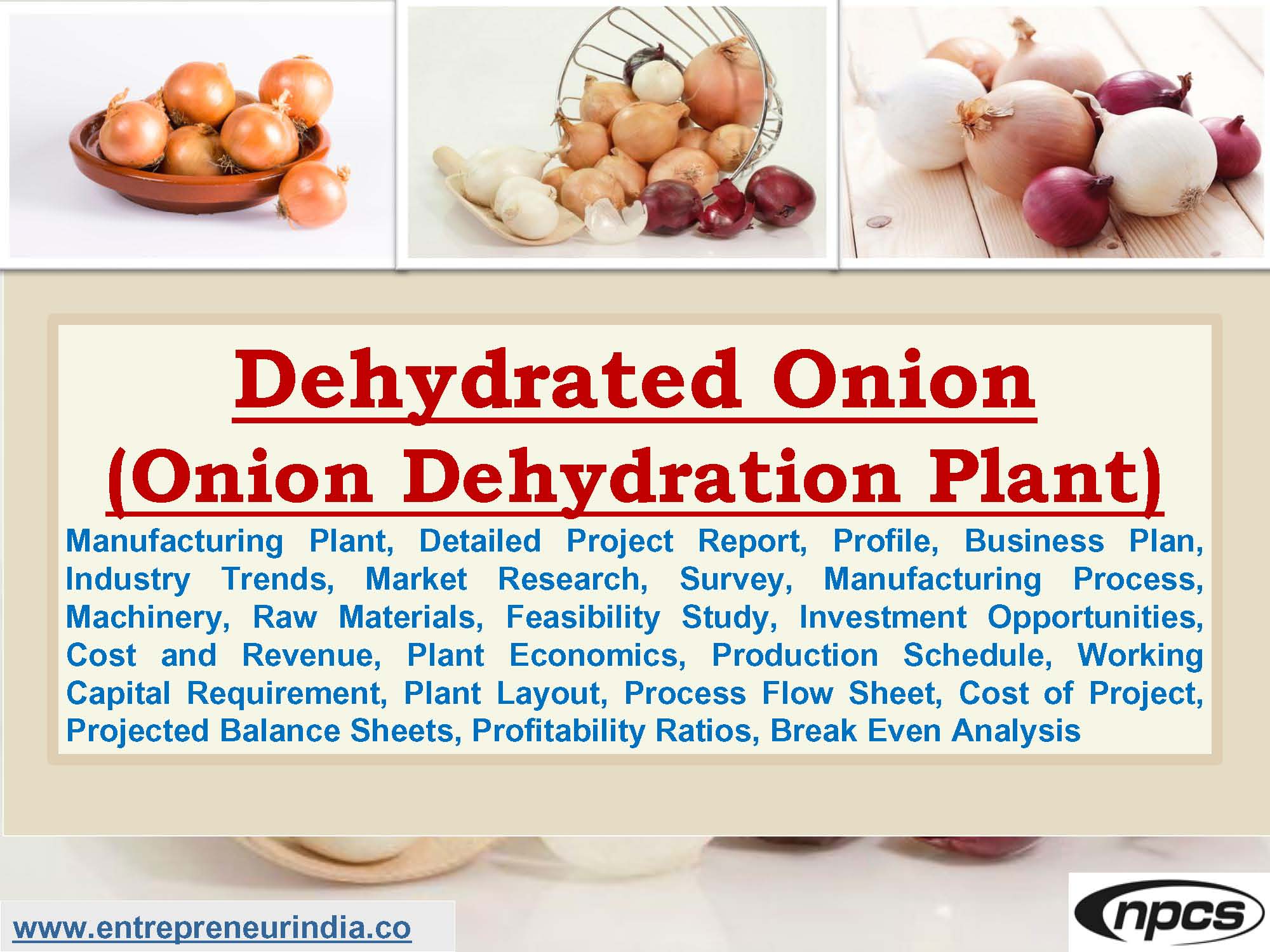
India is one of the largest producers of onions in the world, yet a significant portion of the crop is wasted due to poor storage and market fluctuations. This has paved the way for food processing ventures like Dehydrated Onion Plant Setup, which offers a sustainable and profitable solution. Dehydrated onions are widely used in instant foods, spices, seasonings, ready meals, and restaurant kitchens worldwide. Moreover, their long shelf life, ease of transport, and reduced weight make them ideal for both domestic and export markets.
Dehydrated Onion Plant Setup | Business Plan & Report
Setting up a Dehydrated Onion Plant Setup is a highly promising business in India’s growing agro-processing sector. With consistent demand from food processors, exporters, and bulk buyers, this project offers year-round production potential and attractive returns. Moreover, onions can be processed into flakes, granules, and powder—each serving a unique segment of the food industry.
Read Also :Aluminum Cans Production
Types of Dehydrated Onion Products
You can produce multiple value-added products based on market demand:
Onion flakes – commonly used in soups, ready-to-eat foods, and spice mixes
Onion granules – used in seasoning and spice blends
Onion powder – widely used in snacks, sauces, fast food, and bakery items
Moreover, red, white, and pink onions can be processed depending on flavor profile and customer requirements.
Raw Material Sourcing
For a successful Dehydrated Onion Plant Setup, consistent supply of good quality onions is essential. Here’s how to ensure that:
Source from major onion-producing states: Maharashtra, Gujarat, Madhya Pradesh, Rajasthan
Partner directly with farmers or APMC markets to avoid middlemen
Use storage facilities to maintain inventory during low-supply months
Opt for varieties with lower moisture and higher pungency for better dehydration yield
Moreover, timely procurement reduces cost and spoilage during processing.
Manufacturing Process of Dehydrated Onions
The step-by-step process for onion dehydration is as follows:
Sorting and Grading: Remove damaged or oversized onions.
Washing and Peeling: Clean and peel onions using automatic peelers.
Slicing: Slice onions uniformly using stainless steel slicers.
Blanching (Optional): Helps retain color and reduce microbial load.
Drying: Use hot air tray dryers or conveyor dryers at 55–65°C until moisture drops below 4%.
Milling (for granules/powder): Grind dried flakes into desired particle size.
Sieving: Ensure uniformity using mesh classifiers.
Packing: Pack products in moisture-proof, air-tight containers.
Moreover, using solar-assisted or hybrid dryers can reduce energy costs over time.
Machinery and Equipment Required
A basic Dehydrated Onion Plant Setup requires the following machinery:
Onion cleaning and peeling line
Slicing machines
Tray dryers / belt conveyor dryers
Pulverizer (for powder production)
Vibrating sieve
Packaging machines (manual or automatic)
Storage bins and conveyors
For large-scale production, you may also consider cold storage units for raw onion and nitrogen-flushed packaging systems.
Licensing and Government Approvals
To run a compliant onion processing business in India, secure these registrations:
FSSAI License – mandatory for food production
Udyam/MSME Registration – for subsidies and benefits
Factory License – based on manpower and production scale
Pollution Control Certificate – required for waste disposal
GST Registration – for tax compliance
Export-Import Code (IEC) – if targeting overseas markets
Moreover, availing subsidies under PMFME or NABARD food processing schemes can significantly reduce capital burden.
Investment and Profit Potential
Here’s an approximate investment and return breakdown:
| Plant Scale | Investment Range | Monthly Profit Potential |
|---|---|---|
| Small (100–150 kg/day) | ?15 – ?25 lakhs | ?60,000 – ?1.5 lakhs |
| Medium (300–500 kg/day) | ?35 – ?65 lakhs | ?2 – ?4 lakhs |
| Large (1 ton/day+) | ?1 crore+ | ?6 – ?10 lakhs+ |
Profit margins are higher for onion powder and export-quality flakes. Moreover, off-season sales or bulk contracts with B2B buyers improve cash flow.
Packaging and Storage
Proper packaging is critical to retain quality and avoid moisture absorption:
Use laminated pouches or HDPE containers
Vacuum or nitrogen flushing extends shelf life
Pack in 100g, 250g, 1 kg, or bulk 25 kg bags for wholesale
Store in a dry, insect-free, and temperature-controlled warehouse. Moreover, implementing FIFO (First-In-First-Out) inventory management reduces stock wastage.
Target Markets and Distribution Channels
There is a growing demand for Dehydrated Onion Plant Setup products across industries:
Spice and seasoning manufacturers
Instant food producers (soups, noodles, snacks)
Hotels, restaurants, and catering services
Retail stores (under your own brand)
Online marketplaces and health food stores
Exporters targeting USA, UAE, Russia, and Europe
Moreover, B2B partnerships offer repeat business and better pricing than retail.
Branding and Marketing Tips
To position your product effectively:
Highlight hygiene, low moisture, and no preservatives
Use labels with nutritional facts, FSSAI number, and batch codes
Create a website showcasing sourcing, process, and quality standards
Offer private labeling for retailers and exporters
Participate in food expos and trade fairs
Moreover, listing on B2B portals like IndiaMART, TradeIndia, and Amazon B2B can boost your business visibility.
See Also :How to Start an LPG Cylinder Manufacturing Plant
Conclusion
The Dehydrated Onion Plant Setup offers an efficient, profitable, and future-ready business opportunity for Indian entrepreneurs. With rising demand for ready-to-use ingredients and a strong export market, dehydrated onion products are poised for rapid growth. Moreover, the business requires moderate investment, benefits from government schemes, and promotes value addition in the agricultural sector. By ensuring consistent quality, smart branding, and modern packaging, you can build a sustainable and scalable business in this high-demand segment.
Frequently Asked Questions (FAQs)
FAQ 1: What is a dehydrated onion plant setup and why is it profitable?
A dehydrated onion plant setup is a food processing facility that converts fresh onions into dehydrated products like flakes, granules, and powder through a process of drying. These products are widely used in instant foods, spices, seasonings, ready meals, and restaurant kitchens worldwide.
Why it is profitable:
India is one of the largest onion producers globally
Significant crop wastage creates opportunity for value addition
Long shelf life and reduced weight make it ideal for export
Consistent demand from food processors and bulk buyers
Profit margins of 25-35%
Government support under food processing schemes
With rising demand for ready-to-use ingredients, a dehydrated onion plant setup offers excellent returns on investment.
FAQ 2: What is the minimum investment required for a dehydrated onion plant?
The investment for a dehydrated onion plant setup depends on the scale:
| Scale | Estimated Investment |
|---|---|
| Small (100-150 kg/day) | ₹15 – 25 lakhs |
| Medium (300-500 kg/day) | ₹35 – 65 lakhs |
| Large (1 ton/day+) | ₹1 crore and above |
Cost Breakdown (Medium-Scale):
| Expense Category | Estimated Cost (₹) |
|---|---|
| Machinery & Equipment | 20 – 40 lakhs |
| Land & Building | 10 – 15 lakhs |
| Raw Materials (Initial Stock) | 3 – 5 lakhs |
| Licensing & Compliance | 2 – 3 lakhs |
| Working Capital | 5 – 8 lakhs |
| Total Investment | 35 – 65 lakhs |
Government schemes like PMFME and NABARD can help reduce the initial burden.
FAQ 3: What are the different types of dehydrated onion products?
A dehydrated onion plant setup can produce various value-added products:
| Product Type | Application |
|---|---|
| Onion Flakes | Soups, ready-to-eat foods, spice mixes |
| Onion Granules | Seasoning blends, spice mixes |
| Onion Powder | Snacks, sauces, fast food, bakery items |
| Red Onion Products | Premium segment, export market |
| White Onion Products | Light color, mild flavor applications |
Diversifying product offerings helps cater to different market segments.
FAQ 4: What is the manufacturing process for dehydrated onions?
The dehydrated onion manufacturing process involves several steps:
| Step | Description |
|---|---|
| Sorting & Grading | Remove damaged or oversized onions |
| Washing & Peeling | Clean and peel using automatic peelers |
| Slicing | Uniform slicing using stainless steel slicers |
| Blanching (Optional) | Retains color, reduces microbial load |
| Drying | Hot air tray dryers at 55-65°C until moisture <4% |
| Milling | Grind dried flakes to desired particle size |
| Sieving | Ensure uniformity using mesh classifiers |
| Packing | Moisture-proof, airtight containers |
Each step requires careful monitoring for quality and consistency.
FAQ 5: What machinery is required for a dehydrated onion plant?
A dehydrated onion plant setup requires the following machinery:
| Machinery | Purpose |
|---|---|
| Cleaning & Peeling Line | Washing and peeling onions |
| Slicing Machines | Uniform slicing |
| Tray Dryers/Belt Conveyor Dryers | Drying at controlled temperatures |
| Pulverizer | Grinding for powder production |
| Vibrating Sieve | Particle size uniformity |
| Packaging Machines | Manual or automatic packing |
| Storage Bins & Conveyors | Material handling |
Large-scale plants may also require cold storage units and nitrogen-flushed packaging systems.
FAQ 6: What raw materials are required for onion dehydration?
The primary raw material for a dehydrated onion plant setup is fresh onions:
| Requirement | Specification |
|---|---|
| Onion Varieties | Red, white, pink onions |
| Quality | Lower moisture, higher pungency for better yield |
| Sources | Maharashtra, Gujarat, Madhya Pradesh, Rajasthan |
| Procurement | Direct from farmers or APMC markets |
Additional Materials:
Packaging materials (laminated pouches, HDPE containers)
Cleaning agents
Water for washing
Proper storage facilities help maintain inventory during low-supply months.
FAQ 7: What certifications and licenses are required?
To operate a dehydrated onion plant setup legally, you need:
| License/Certification | Purpose |
|---|---|
| FSSAI License | Food safety compliance |
| MSME/Udyam Registration | Access to subsidies |
| Factory License | Compliance with Factories Act |
| Pollution Control Certificate | Environmental compliance |
| GST Registration | Tax compliance |
| Import-Export Code (IEC) | For export operations |
| ISO/HACCP Certification | Quality assurance (recommended) |
Proper documentation ensures regulatory compliance and builds trust with buyers.
FAQ 8: How profitable is the dehydrated onion business?
The dehydrated onion plant setup business offers attractive profitability:
| Financial Metric | Value |
|---|---|
| Monthly Profit Potential (Small) | ₹60,000 – 1.5 lakhs |
| Monthly Profit Potential (Medium) | ₹2 – 4 lakhs |
| Monthly Profit Potential (Large) | ₹6 – 10 lakhs+ |
| Profit Margins | 25 – 35% |
| Break-even Period | 18 – 24 months |
Key Profitability Drivers:
Value-added products with premium pricing
Off-season sales and bulk B2B contracts
Export opportunities with higher margins
Government subsidies and support
FAQ 9: What are the target markets for dehydrated onion products?
The customer base for a dehydrated onion plant setup is diverse:
| Customer Category | Products |
|---|---|
| Spice Manufacturers | Flakes, granules, powder |
| Instant Food Producers | Soups, noodles, snacks |
| Hotels & Restaurants | Bulk ingredients |
| Retail Stores | Packaged products |
| Online Marketplaces | Direct-to-consumer sales |
| Export Markets | USA, UAE, Russia, Europe |
B2B partnerships offer repeat business and better pricing.
FAQ 10: What are the challenges in the dehydrated onion business?
| Challenge | Solution |
|---|---|
| Raw Material Seasonality | Storage facilities, contract farming |
| Quality Consistency | Standardized processes, quality control |
| Competition | Focus on quality, branding, certifications |
| High Energy Costs | Solar-assisted or hybrid dryers |
| Export Compliance | Obtain necessary certifications |
| Moisture Control | Proper packaging and storage |
Proper planning and technology adoption can mitigate these challenges.
FAQ 11: Can I start a dehydrated onion plant with government support?
Yes, the Indian government offers several schemes:
| Scheme | Benefit |
|---|---|
| PMFME Scheme | 35% subsidy for micro-entrepreneurs |
| NABARD | Financial support for food processing |
| MSME/Udyam Registration | Subsidies and benefits |
| PMEGP | Financial assistance |
| MUDRA Loans | Loans for small businesses |
| State-Level Subsidies | Power subsidies, land benefits |
FAQ 12: How can I market my dehydrated onion products?
| Channel | Strategy |
|---|---|
| B2B Portals | IndiaMART, TradeIndia |
| Direct Sales | Approach food processors and exporters |
| Government Tenders | Supply to institutional buyers |
| Online Marketplaces | Amazon, Flipkart |
| Trade Shows | Food expos and fairs |
| Digital Marketing | SEO and social media |
FAQ 13: What are the export opportunities?
| Target Market | Demand |
|---|---|
| USA | Large food processing industry |
| UAE | Re-export and food service market |
| Russia | Growing food processing sector |
| Europe | Premium quality demand |
Requirements: IEC code, FSSAI, ISO/HACCP, compliance with international standards.
FAQ 14: What is the shelf life of dehydrated onion products?
| Product Type | Shelf Life |
|---|---|
| Onion Flakes | 12 – 18 months |
| Onion Granules | 18 – 24 months |
| Onion Powder | 18 – 24 months |
Factors Affecting Shelf Life:
Moisture content (<4%)
Packaging quality
Storage conditions
Temperature control
FAQ 15: Why should I invest in a dehydrated onion plant setup?
| Reason | Benefit |
|---|---|
| Growing Demand | Ready-to-use ingredients market |
| High Profit Margins | 25-35% gross margins |
| Government Support | Subsidies, schemes |
| Scalable Operations | Start small and expand |
| Export Potential | Global demand |
| Value Addition | Reduce onion wastage |
| Sustainable Business | Agro-processing sector |