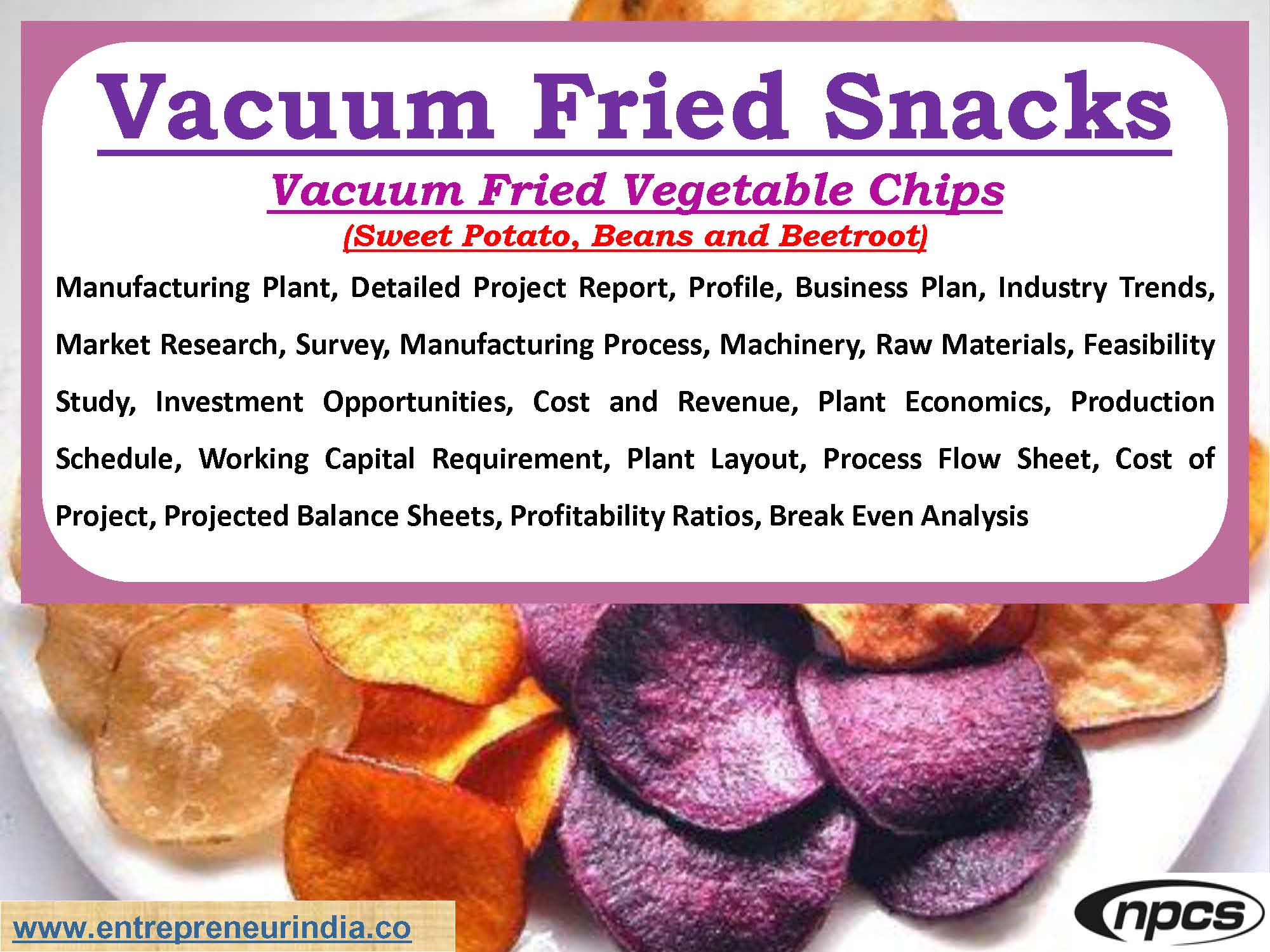
India’s snacking culture is evolving rapidly, with consumers now seeking healthier alternatives to deep-fried foods. One such rising trend is vacuum-fried snacks Business or chips Manufacturing made using low-temperature frying under vacuum to retain nutrients and flavor while using significantly less oil. The Vacuum-Fried Snacks Business is emerging as a profitable and modern food processing opportunity for startups and small manufacturers. Moreover, the unique selling point of these snacks lies in their crispiness, vibrant color, extended shelf life, and health appeal, making them a strong competitor to traditional fried products.
Vacuum-Fried Snacks Business | Chips Manufacturing Setup
Starting a Vacuum-Fried Snacks Business is a forward-looking investment in India’s food processing industry. From banana and jackfruit to beetroot and okra, vacuum frying transforms a wide range of fruits and vegetables into nutritious and tasty chips. As consumer demand shifts toward clean-label, non-GMO, and low-fat snacks, vacuum-fried products are gaining shelf space in supermarkets, health stores, and online platforms. Moreover, this segment is supported by government incentives under MSME and PMFME schemes, making it ideal for new entrepreneurs.
What Is Vacuum Frying?
Vacuum frying is an advanced method that involves frying food at low temperatures (80–120°C) under reduced pressure. This technique minimizes oil absorption and prevents oxidation, preserving the food’s natural color, texture, and nutrients.
Key benefits:
Up to 60% less oil than traditional frying
Retains original taste and color of raw material
Extends shelf life without added preservatives
Ideal for health-conscious and premium markets
Reduces acrylamide formation (a known carcinogen)
Moreover, vacuum frying is suitable for tropical fruits and vegetables that are sensitive to heat.
Read Also :How to Start Nail Factory
Best-Selling Vacuum-Fried Snack Products
India’s rich agricultural diversity allows year-round production of various vacuum-fried chips:
Banana chips (ripe and raw)
Sweet potato chips
Jackfruit chips
Beetroot and carrot chips
Okra (ladyfinger) chips
Apple and pineapple slices
Bitter gourd and yam chips
Mixed vegetable snack packs
Moreover, vacuum-fried snacks are gluten-free and suitable for vegan, keto, and diabetic diets.
Raw Material Procurement Strategy
To ensure quality and consistency in your Vacuum-Fried Snacks Business, source fresh, seasonal, and high-starch fruits and vegetables.
Sourcing tips:
Partner with local farmers or FPOs for direct supply
Choose organic or pesticide-free produce for premium branding
Set up cold storage for year-round availability
Focus on varieties that yield crispy textures after frying
Moreover, stable supply chains reduce production delays and pricing volatility.
Machinery and Setup Requirements
Setting up a vacuum-fried snacks unit involves specialized equipment:
Fruit/vegetable washer and peeler
Slicer (adjustable thickness)
Blancher (to preserve texture)
Vacuum fryer (main machine with oil heating system)
De-oiling unit or oil extractor
Cooling and drying conveyors
Seasoning and flavor mixing unit
Packaging line (form-fill-seal machine)
Capacity: A small-scale setup (50–100 kg/day) is ideal for pilot production. Medium to large-scale plants (200–500 kg/day) require advanced automation.
Moreover, cleanroom production areas are recommended to maintain food safety and hygiene standards.
Licensing and Compliance
Before starting your Vacuum-Fried Snacks Business, secure these essential registrations:
FSSAI License – Mandatory for food manufacturing
GST Registration – For tax and interstate sales
Udyam Registration – For MSME classification
Factory License – If employing more than 10 workers
Pollution Control NOC – For oil usage and waste management
Moreover, adhering to ISO 22000 or HACCP standards can enhance product credibility in export markets.
Investment and Profit Margin Analysis
Capital investment varies based on capacity and level of automation:
| Scale | Investment Range | Estimated Monthly Profit |
|---|---|---|
| Small (50–100 kg/day) | ?15 – ?25 lakhs | ?60,000 – ?1.5 lakhs |
| Medium (200–300 kg/day) | ?30 – ?60 lakhs | ?2 – ?4 lakhs |
| Large (500+ kg/day) | ?80 lakhs – ?1.5 Cr | ?5 – ?10 lakhs+ |
Premium pricing (?300–?600/kg retail) makes this a high-margin product. Moreover, value-added packaging and private labeling boost returns.
Packaging and Shelf Life
Proper packaging enhances shelf life and visual appeal. Ideal options include:
Vacuum-sealed pouches
Stand-up zip-lock kraft paper bags
Nitrogen-flushed foil packs
Resealable jars for premium segments
Shelf life: 6 to 9 months without refrigeration, thanks to low oil content and moisture control.
Moreover, adding QR codes for nutritional info or sourcing transparency can build trust among health-conscious buyers.
Marketing Channels and Target Audience
The Vacuum-Fried Snacks Business serves a health-driven audience looking for better snack choices. Target customer segments include:
Urban professionals
Fitness and gym-goers
Children and school snack packs
International buyers (USA, UAE, Europe)
Diet-specific consumers (gluten-free, low-carb)
Effective marketing channels:
D2C websites and Instagram shops
Online marketplaces (Amazon, Flipkart, BigBasket)
Gourmet and organic retail chains
Airport kiosks and vending machines
Corporate gifting and white-label opportunities
Moreover, brand storytelling (e.g., farm to pack) enhances appeal and builds customer loyalty.
Branding and Product Positioning
Stand out with:
Clean, minimalist packaging
Claims like “Less Oil,” “No Preservatives,” “100% Natural”
Story of locally sourced ingredients
Health certifications (Vegan, Organic, FSSAI, etc.)
Moreover, customer education through blogs, recipes, and influencer reviews will build trust and repeat purchases.
See Also :How to Start a Personal Care Products Manufacturing Business
Conclusion
The Vacuum-Fried Snacks Business is a smart, scalable opportunity in the health-focused food sector. With increasing consumer awareness around nutrition and clean eating, these snacks are carving a strong niche in the premium segment. Moreover, by combining innovative processing, hygienic production, and creative branding, entrepreneurs can build a long-term profitable business. Backed by government support and India’s rich produce diversity, vacuum-fried chips are truly the future of snacking.
Frequently Asked Questions (FAQs)
FAQ 1: What is the vacuum-fried snacks business and why is it profitable?
A vacuum-fried snacks business involves manufacturing chips using low-temperature frying (80–120°C) under reduced pressure. This advanced technique uses up to 60% less oil than traditional frying while preserving the food’s natural color, texture, and nutrients.
Why it is profitable:
Growing demand for healthy and clean-label snacks
Premium pricing (₹300–600/kg retail)
Profit margins of 20–35%
Extended shelf life (6–9 months)
Suitable for health-conscious consumers (gluten-free, vegan, keto)
With India’s snacking culture shifting toward healthier alternatives, the vacuum-fried snacks business offers excellent returns on investment.
FAQ 2: What is the minimum investment required for a vacuum-fried snacks unit?
The investment for a vacuum-fried snacks business depends on the scale:
| Scale | Estimated Investment | Monthly Profit |
|---|---|---|
| Small (50–100 kg/day) | ₹15 – 25 lakhs | ₹60,000 – 1.5 lakhs |
| Medium (200–300 kg/day) | ₹30 – 60 lakhs | ₹2 – 4 lakhs |
| Large (500+ kg/day) | ₹80 lakhs – 1.5 crore | ₹5 – 10 lakhs+ |
Key Cost Components:
Machinery (washer, slicer, vacuum fryer, de-oiling, packaging)
Raw materials (fruits and vegetables)
Licensing (FSSAI, GST, MSME)
Packaging and branding
Working capital
Government schemes like PMFME and MSME subsidies can help reduce initial costs.
FAQ 3: What raw materials are required for vacuum-fried snacks?
The vacuum-fried snacks business can process a wide variety of fruits and vegetables:
| Raw Material | Product |
|---|---|
| Banana (ripe/raw) | Banana chips |
| Sweet Potato | Sweet potato chips |
| Jackfruit | Jackfruit chips |
| Beetroot | Beetroot chips |
| Carrot | Carrot chips |
| Okra | Okra chips |
| Apple/Pineapple | Fruit slices |
| Bitter Gourd | Bitter gourd chips |
| Yam | Yam chips |
Sourcing Tips:
Partner with local farmers or FPOs
Choose organic or pesticide-free produce for premium branding
Set up cold storage for year-round availability
FAQ 4: What machinery is required for vacuum-fried snacks production?
A vacuum-fried snacks business requires specialized equipment:
| Machinery | Purpose |
|---|---|
| Washer & Peeler | Cleaning and peeling produce |
| Slicer | Adjustable thickness cutting |
| Blancher | Preserving texture and color |
| Vacuum Fryer | Main machine for low-temperature frying |
| De-Oiling Unit | Removing excess oil |
| Cooling Conveyor | Cooling fried chips |
| Seasoning Unit | Adding flavors |
| Packaging Machine | Form-fill-seal packaging |
Small-scale setups (50–100 kg/day) are ideal for pilot production before scaling up.
FAQ 5: What certifications and licenses are required?
To operate a vacuum-fried snacks business legally, you need:
| License/Certification | Purpose |
|---|---|
| FSSAI License | Food safety compliance |
| GST Registration | Tax compliance |
| MSME/Udyam Registration | Access to subsidies |
| Factory License | Compliance with Factories Act |
| Pollution Control NOC | Environmental compliance |
| ISO 22000/HACCP | Quality assurance (recommended) |
| Trademark Registration | Brand protection |
Proper documentation builds trust among buyers and ensures regulatory compliance.
FAQ 6: What are the best-selling vacuum-fried snack products?
Popular products in the vacuum-fried snacks business include:
| Product | Target Audience |
|---|---|
| Banana Chips | Mass market, traditional snack lovers |
| Sweet Potato Chips | Health-conscious consumers |
| Jackfruit Chips | Premium/export market |
| Beetroot & Carrot Chips | Health-focused, fitness enthusiasts |
| Okra Chips | Gourmet/niche segment |
| Mixed Vegetable Packs | Gift hampers, corporate gifting |
| Apple/Pineapple Slices | Kids, health snack segment |
These products are gluten-free and suitable for vegan, keto, and diabetic diets.
FAQ 7: What is the market potential for vacuum-fried snacks?
The vacuum-fried snacks business has strong growth potential:
| Metric | Value |
|---|---|
| Market Segment | Premium health snacks |
| Target Consumers | Urban professionals, fitness-goers, health-conscious |
| Price Range | ₹300 – 600/kg retail |
| Shelf Life | 6 – 9 months |
| Growth Drivers | Health awareness, clean-label trend, premiumization |
| Export Markets | USA, UAE, Europe |
With rising health consciousness, this business offers long-term scalability.
FAQ 8: How can I market my vacuum-fried snacks effectively?
Effective marketing strategies for a vacuum-fried snacks business include:
| Channel | Strategy |
|---|---|
| D2C Website | Direct-to-consumer online store |
| Online Marketplaces | Amazon, Flipkart, BigBasket |
| Social Media | Instagram, Facebook for visual appeal |
| Gourmet Retail | Premium stores, organic chains |
| Corporate Gifting | B2B white-label opportunities |
| Airport Kiosks | High-margin impulse sales |
| Export Channels | APEDA registration for international buyers |
Brand Positioning:
Claims like “Less Oil,” “No Preservatives,” “100% Natural”
Storytelling about locally sourced ingredients
Health certifications (Vegan, Organic, FSSAI)
FAQ 9: What are the challenges in the vacuum-fried snacks business?
| Challenge | Solution |
|---|---|
| High Machinery Cost | Start small, scale gradually, explore subsidies |
| Raw Material Seasonality | Cold storage, contract farming |
| Competition | Focus on quality, branding, unique flavors |
| Shelf Life Management | Proper packaging, moisture control |
| Consumer Awareness | Educational marketing, sampling |
| Export Compliance | Obtain necessary certifications |
Proper planning and quality control can mitigate these challenges.
FAQ 10: What are the emerging trends in the vacuum-fried snacks segment?
| Trend | Impact |
|---|---|
| Clean-Label Products | No artificial additives, preservatives |
| Plant-Based Snacks | Growing vegan and vegetarian demand |
| Functional Snacks | Added health benefits (protein, fiber) |
| Sustainable Packaging | Eco-friendly materials |
| D2C Models | Direct-to-consumer sales |
| Global Flavors | Fusion taste profiles for export |
| Snack Subscriptions | Recurring revenue models |
FAQ 11: How do I get FSSAI certification for my snack business?
| Step | Action |
|---|---|
| 1. Application | Apply online through FSSAI portal |
| 2. Document Submission | Business registration, facility layout, food safety plan |
| 3. Inspection | FSSAI officer inspects your facility |
| 4. Certification | License issued upon compliance |
Important: FSSAI certification is mandatory for all food businesses in India.
FAQ 12: Why should I invest in a vacuum-fried snacks business?
| Reason | Benefit |
|---|---|
| Growing Health Trend | Rising demand for healthy snacks |
| High Profit Margins | 20-35% gross margins |
| Premium Pricing | ₹300-600/kg retail |
| Government Support | MSME subsidies, PMFME |
| Scalable Operations | Can start small and expand |
| Export Potential | High demand in USA, UAE, Europe |
| Diverse Products | Multiple raw material options |
| Innovative Technology | Advanced processing method |
With proper planning, quality control, and strategic marketing, a vacuum-fried snacks business can become a highly profitable and sustainable venture.
Ready to Start Your Vacuum-Fried Snacks Business?
The vacuum-fried snacks market is booming, driven by growing demand for healthy, clean-label, and premium snacking options. With ₹15-25 lakh investment and 20-35% profit margins, there has never been a better time to enter this innovative food processing sector.
At NPCS (NIIR Project Consultancy Services), we help entrepreneurs turn their business ideas into reality:
✅ Detailed Project Reports – Comprehensive feasibility studies, market analysis, and financial projections
✅ Technology & Machinery Selection – Guidance on vacuum frying equipment and production processes
✅ Plant Setup Support – End-to-end assistance from planning to commissioning
✅ Regulatory Compliance – Expert advice on FSSAI licensing and quality certifications
✅ Market Intelligence – Insights into demand trends, pricing, and export opportunities
Take the first step toward building your vacuum-fried snacks business today!
📞 Call us now for a personalized consultation
📧 Email us to request a detailed project report
🌐 Visit our website to explore more business opportunities