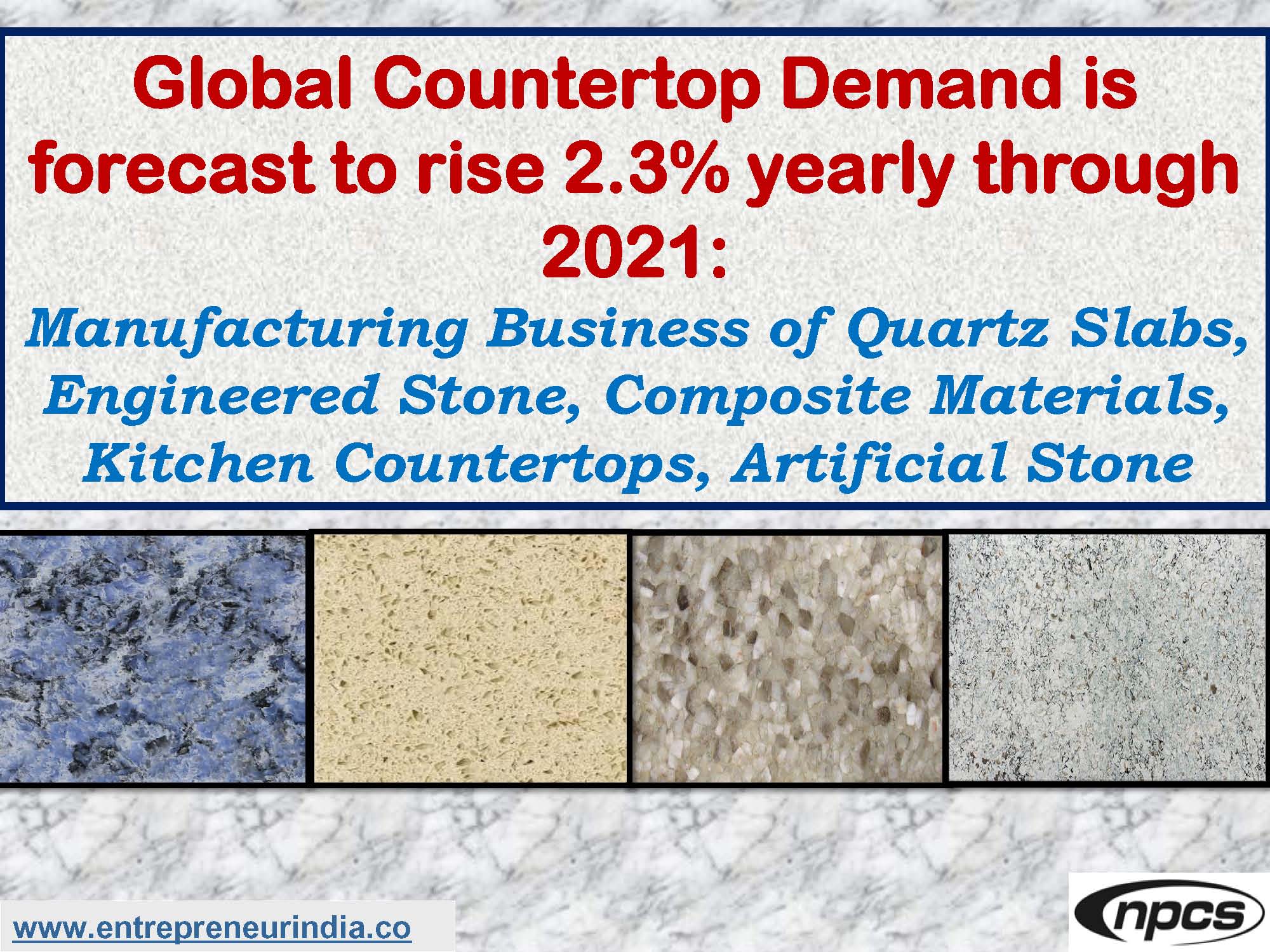
Quartz is one of the most durable and attractive materials used in modern construction and interior design. As demand for aesthetic yet strong surfaces grows in residential and commercial spaces, quartz slabs have become a preferred choice for countertops, flooring, and wall cladding. As a result, the quartz slabs manufacturing business has emerged as a highly profitable and scalable opportunity for entrepreneurs and investors alike. By tapping into rising construction trends, you can build a business that combines high-end aesthetics with industrial strength.
Quartz Slabs Manufacturing Business
The quartz slabs manufacturing industry is experiencing steady growth due to its diverse applications and increasing demand in both domestic and export markets. Moreover, with the global shift toward engineered stone, quartz slabs are rapidly replacing natural marble and granite in several applications. This trend makes the quartz slabs manufacturing business a future-forward investment with high return potential.
Read Also – How to Start Button Mushroom Farming
Understanding Quartz Slabs and Their Applications
Quartz slabs are engineered stone products made from approximately 90–95% crushed natural quartz combined with polymer resins and pigments. These slabs are molded, compressed, cured, and polished to create a hard, non-porous surface.
Popular Applications Include:
Kitchen Countertops
Bathroom Vanity Tops
Flooring
Wall Cladding
Staircases
Tabletops and Reception Desks
Because of their stain resistance, strength, and low maintenance, quartz slabs are gaining popularity over traditional natural stones.
Market Demand and Industry Potential
The global quartz market is projected to grow at a CAGR of 6–7%, fueled by demand in the housing, hospitality, and commercial construction sectors. In India, the growth is even more promising due to rapid urbanization, increasing disposable incomes, and rising demand for premium interior solutions.
Additionally, the export potential is immense. Countries like the USA, Canada, Australia, and those in Europe have a growing appetite for engineered quartz products. By setting up a quartz slabs manufacturing unit, you can cater to both domestic and international markets.
Manufacturing Process: From Raw Material to Finished Slab
Quartz slab production involves several controlled stages, ensuring consistent quality and strength. Here’s a step-by-step breakdown:
1. Raw Material Selection and Mixing
Quartz crystals, resins, pigments, and additives are precisely measured and mixed to form a uniform slurry.
2. Mold Filling and Compaction
The slurry is poured into molds and compacted under vacuum and vibration in a vibro-compression system. This process removes air bubbles and increases slab density.
3. Curing
Slabs are cured in a kiln at 85–100°C for a few hours to harden the surface and chemically bond the materials.
4. Trimming and Polishing
After curing, the edges are trimmed, and the surface is polished using automatic polishing machines to give a high-gloss or matte finish.
5. Quality Inspection and Packing
Each slab undergoes visual and mechanical testing to ensure consistency, durability, and aesthetics. The final slabs are then packed securely for shipping.
This streamlined process ensures scalability, which is a key advantage in the quartz slabs manufacturing business.
Required Machinery and Equipment
Setting up a quartz slabs plant requires heavy-duty, precision-based equipment. Common machines include:
Raw material mixers
Vibro-compression molding machine
Curing kiln or chamber
Edge cutting machine
Calibrating and polishing machine
Dust collection and filtration systems
Inspection and packaging units
Investing in reliable machinery ensures higher output quality and reduces long-term maintenance costs.
Investment and Cost Structure
The investment in the quartz slabs manufacturing business depends on plant capacity, location, and level of automation. Here’s a general breakdown for a medium-scale unit:
| Cost Component | Estimated Amount (INR) |
|---|---|
| Land and Building | ?1.5 – ?2.5 crore |
| Machinery and Equipment | ?3 – ?5 crore |
| Raw Materials (first 3 months) | ?50 – ?75 lakh |
| Working Capital | ?1 – ?1.5 crore |
| Labor and Admin Setup | ?25 – ?35 lakh |
| Licensing and Compliance | ?5 – ?10 lakh |
| Total Investment | ?6.5 – ?10 crore |
Though capital-intensive, the high margins and increasing demand justify the upfront cost.
See Also – How to Start an LPG Cylinder Manufacturing Plant
Raw Materials Used
Essential raw materials for quartz slab production include:
Crushed Quartz (main ingredient)
Polyester Resin
Color Pigments
Catalysts and Hardening Agents
Glass Chips or Mirror Fragments (for design)
Importantly, sourcing high-purity quartz and quality resins is critical for slab strength and surface finish.
Licensing and Regulatory Compliance
To legally operate your quartz slab manufacturing business in India, you’ll need the following:
MSME/Udyam Registration
GST Registration
Factory License
Pollution Control NOC
Import Export Code (IEC) – if you plan to export
BIS Certification (optional but adds credibility)
Additionally, maintaining workplace safety and environmental controls is important due to the dust-intensive nature of quartz processing.
Target Market and Distribution Channels
You can target both B2B and B2C customer segments:
Real Estate Developers
Interior Designers and Architects
Retail Showrooms
Kitchen and Bath Dealers
Export Traders and Wholesalers
Furthermore, establishing your own brand and marketing through social media, exhibitions, and trade shows can help create long-term visibility.
Profit Margins and ROI
With efficient production and a strong marketing strategy, profit margins in the quartz slabs business can be substantial.
Cost per Slab (standard 10×5 ft): ?3,000 – ?4,500
Wholesale Selling Price: ?6,000 – ?8,000
Retail Price (branded): ?8,000 – ?10,000
Gross Margin: 40–60%
Break-even: 24–36 months
Payback Period: 3–4 years
Moreover, introducing premium textures or custom designs can increase profit per unit significantly.
Sustainability and Environmental Impact
Quartz slabs offer long-term durability and require less mining compared to natural stones like marble and granite. Additionally, manufacturers can adopt sustainable practices like:
Using recycled glass or quartz
Implementing dust collection systems
Recycling water used in polishing
These steps not only reduce your environmental footprint but also improve your brand image in the eyes of eco-conscious buyers.
Conclusion
The quartz slabs manufacturing business is a robust and rewarding venture, particularly as the world moves toward engineered stone solutions. Its wide applications, growing domestic and export demand, and high-profit margins make it a top contender for investors and entrepreneurs. With the right infrastructure, raw material sourcing, and market positioning, you can build a scalable and reputable quartz slab brand.
If you’re ready to explore this business opportunity, now is the time to act. The market is expanding, the demand is rising, and with strategic planning, your investment can deliver exceptional returns.