
Dairy Whey Processing Business
Whey — India’s Most Wasted High-Value Food Industry By-Product
India is the world’s largest milk producer, with 220 million tonnes of milk being produced annually. The dairy processing industry generates huge quantities of Paneer, Cheese and Casein in the country and along with each of the above product comes a waste stream which is literally being dumped by most of the processors. The liquid end of cheese, paneer, and casein is called whey, which contains about 6.5 grams of protein (in the form of beta-lactoglobulin, alpha-lactalbumin, immunoglobulins and lactoferrin) that are among the most highly nutritious and most rapidly absorbed proteins in human nutrition.
About 13-15 MT of whey is produced in India every year due to paneer, chhena and cheese production. If whey protein concentrate (WPC-80) prices are Rs. The protein content in India’s wasted whey is Rs. 400-600 per kg. 5,000 crore+ annual opportunity. The opportunity for specialised whey processing entrepreneurs who can collect, process and supply to the booming sports nutrition, infant formula and pharmaceutical market in India is created by most of the small and medium dairy processors lacking in capital and technology to recover this value.
Get Detailed Insights from This Book: Milk Processing & Dairy Products in India Market Research Report
The Whey Processing Chain and Entry Points
The technological development of whey processing includes collection from the dairy processors (sweet whey or acid whey), pasteurisation, pre-treatment, ultrafiltration (UF) to concentrate protein, spray drying for whey protein concentrate (WPC-35, WPC-70, WPC-80) or further ion exchange chromatography for whey protein isolate (WPI-90). The protein content as well as market value increases significantly at each step. Lactose from the UF (permeate) will be a separate product stream, as lactose powder for pharmaceutical and food applications. This can be done by entrepreneurs at any stage of their business, whether they are interested in selling the semi-processed concentrate to existing driers or they would like to participate as fully-fledged companies and generate finished products for the consumer-market.
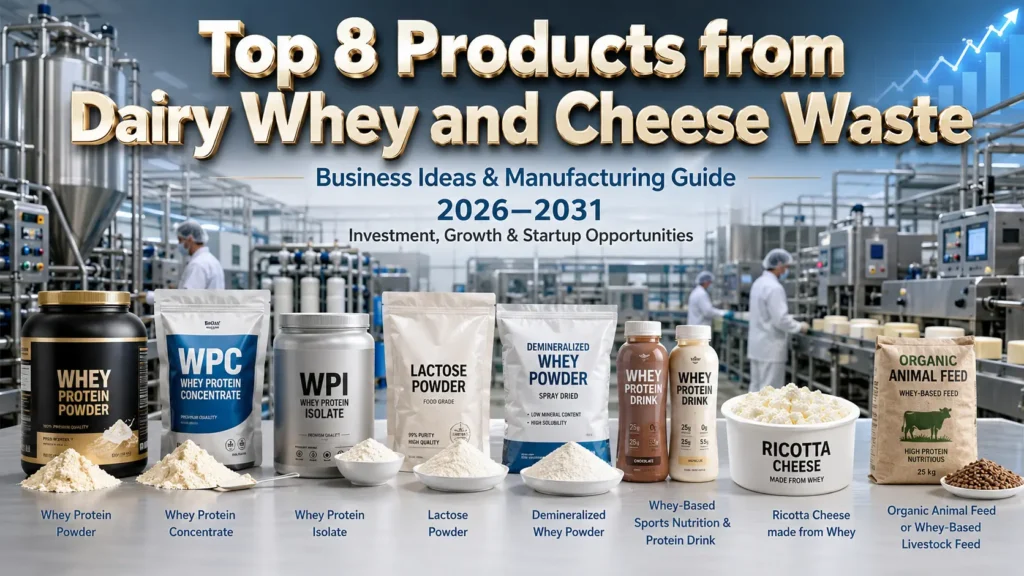
Top 8 Products from Dairy Whey
1. Whey Protein Concentrate (WPC-80)
WPC-80, which contains 80% protein, is the most popular sports nutrition ingredient on the world market, and the main raw ingredient in protein bars, shakes, meal replacement powders and functional foods. Currently, India sources most of its WPC-80 imports from New Zealand, Australian, Europe and the USA. Reprocessing Indian dairy whey domestically would be extremely cost competitive. The cost of a 5 MTPD WPC-80 plant (ultrafiltration + spray dryer) is around Rs. The revenue that the 5–15 crore earns is Rs. 400–600 per kg.
2. Whey Protein Isolate (WPI-90)
The highest quality sports nutrition ingredient, WPI-90 is protein-rich, with 90% protein or higher and is faster digested than WPC, low in lactose, and virtually fat-free. An extra ion exchange chromatography/microfiltration step is needed for production in addition to the step required for WPC production. WPI sells at Rs. India’s sports nutrition market (estimated Rs. The value of the market (12,000crore by 2026) is expanding by 15-20 per cent per year, and it is highly import-dependent thereby offering significant opportunity for domestic manufacturing.
Build a profitable business with the right idea
3. Whey Powder (Food Industry Grade)
Sweet whey powder (12% protein, 70% lactose) is obtained by the simple spray drying of the concentrated whey without protein separation. It is used in bakery products, confectionery, infant formula, animal feed and processed cheese. At Rs. Whey powder is the cheapest product available but is the lowest value product with requirement of Rs. 80-150 per kg. Installing a spray dryer unit for Rs 80-200 lakh, which is an entry point for dairy processors producing whey.
4. Pharmaceutical Lactose
Lactose concentration in the permeate from whey ultrafiltration is 4-5%. Crystallised and dried lactose is used in the manufacturing of pharmaceutical tablets as an excipient, in infant formula as well as confectionery and as a fermentation substrate. Lactose is sold at a price of Rs. per unit in Pharmaceutical Grade. The import prices of 150-250 per kg are high and India is importing a huge amount. The cost of a lactose crystallisation and drying unit is Rs. The market is large and import-substitutable, and they are at 2-5 crore.
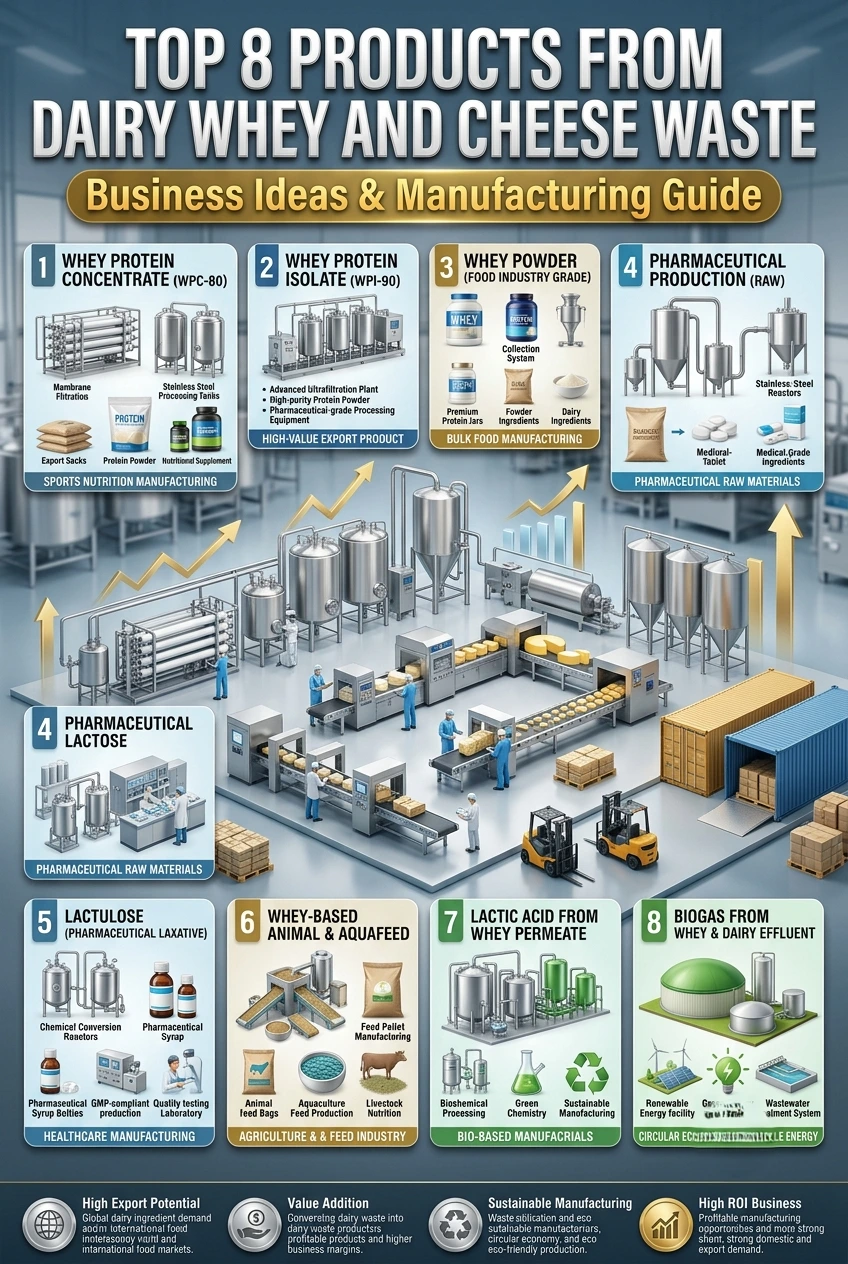
5. Lactulose (Pharmaceutical Laxative)
Lactulose is formed by alkaline isomerization of whey lactose. A pharmaceutical grade laxative and prebiotic for treating hepatic encephalopathy, selling more than USD 500 million world-wide each year. Currently, India depends on the imports of lactulose from Europe. A lactulose synthesis unit (Rs.) The market potential of 3-6 crore for converting lactose from whey into the pharmaceutical product is a very high margin specialty chemical opportunity with good import substitution potential.
6. Whey-Based Animal and Aquafeed
Liquid whey can be spray dryed into whey-enriched animal feed pellets without protein concentration for poultry, swine and aquaculture. A fishmeal replacement ingredient which has been shown to improve fish growth. Due to the trend towards dairy and plant protein-based fishmeal alternatives, whey-based aquafeed is becoming an increasing share of the market. Investment: Rs. For blending and pelletising Rs 20-60 lakh.
7. Lactic Acid from Whey Permeate
Whey permeates, containing abundant lactose, can be subsequently fermented by Lactobacillus species to yield lactic acid, which can be used in bioplastic (PLA) production, food acidulants, personal care products and pharmaceuticals. The price of lactic acid is Rs. 80–150 per kg. The price of a 100L whey fermentation and lactic acid recovery unit is Rs. 1-3 crore and is linking dairy waste processing to the rapidly expanding bioplastics value chain.
8. Biogas from Whey and Dairy Effluent
Whey and wash water from dairy are good substrates for biogas digestion as they have very high BOD value (35,000-60,000mg/l). The effluent from dairy processing plants must be processed legally before discharge. The biogas digester helps in reducing electricity bill and energy cost in ETP compliance by using whey and dairy effluent as raw material to generate biogas as a fuel to provide energy for boilers. Dairy wastes produce biogas, which is also eligible for benefits under Satat Scheme by oil marketing companies.
Get Detailed Project Report (DPR): Dairy Processing & Value-Added Products
Investment and Return Overview
| Product | Investment (Rs.) | Selling Price | Key Buyer |
| WPC-80 | 5–15 crore | Rs. 400–600/kg | Sports Nutrition Brands |
| WPI-90 | 8–20 crore | Rs. 700–1,200/kg | Premium Nutrition, Pharma |
| Whey Powder | 80 lakh–2 crore | Rs. 80–150/kg | Bakery, Animal Feed, Infant |
| Pharmaceutical Lactose | 2–5 crore | Rs. 150–250/kg | Pharma Formulators |
| Lactulose | 3–6 crore | Rs. 300–600/kg | Pharmaceutical Companies |
| Whey Animal/Aquafeed | 20–60 lakh | Rs. 25–50/kg | Poultry, Aquaculture Feed |
| Lactic Acid | 1–3 crore | Rs. 80–150/kg | Food, Bioplastics, Pharma |
The Sports Nutrition Market Opportunity
Indian sports and fitness nutrition market is set to reach a mark of 12,000 crore by 2026 with a CAGR of 15-20%. At present, imported products account for the bulk of the market and home-bred products use WPC-80 from imported concentrate. Imported WPC-80 retail price in India is 30-40% more than the actual price of WPC-80. The production from whey in Indian farms would be very competitive cost wise and would help in sustaining the value chain of the dairy sector. The fact that the import substitution policy, expansion of domestic market and huge underutilised raw material pool makes production of WPC-80 from Indian whey as one of the most appropriate and strategic dairy investments, deserves to be considered.
Related Article: Dairy Processing Business in India: Complete Investment & Profit Guide
Frequently Asked Questions (FAQ)
Q1. Is sweet whey or acid whey better for WPC production?
Sweet whey (from rennet cheese and some paneer production) has higher protein quality and is preferred for WPC manufacturing. Acid whey (from acidified paneer and yoghurt) has lower pH and higher mineral content that complicates processing. Most WPC plants prefer sweet whey sourcing.
Q2. How do I source sufficient whey volume for a WPC plant?
A 5 MTPD WPC-80 plant requires 300–400 tonnes of liquid whey per day. Establishing collection agreements with 10–20 mid-size dairy processors within 50 km using refrigerated tanker collection is the standard supply model. Fresh whey quality is essential for product consistency.
Q3. What certifications are required for WPC export?
According to international standards (export quality) WPC-80 needs to attain the FSSAI standard, ISO 22000/FSSC 22000 standards on Food safety management systems and Informed Sport for exports in controlled sport’s regulated regions and also Halal for some of MEA andSEA market.
Q4. Is there government support for whey processing investment?
The Ministry of Food Processing Industries (MoFPI) PLI scheme for food processing supports dairy value-addition. NDDB provides technical and financial support for dairy by-product processing. Some state dairy departments provide capital subsidies for dairy waste value-addition projects.
Q5. What is the minimum plant size for WPC-80 production?
Ultrafiltration membranes and spray dryers have minimum viable scales of approximately 5,000 litres/day input (producing 60–80 kg WPC-80 per day). Below this scale, fixed costs per kg make the business uneconomical. Minimum viable investment is approximately Rs. 2–5 crore.
Q6. Can whey biogas replace purchased fuel in a dairy plant?
Yes. For mid-size dairy processors generating 5,000–50,000 litres of whey daily, biogas from whey digestion can replace 30–60% of purchased LPG or coal for boiler fuel. ROI on a whey biogas digester is typically 2–4 years, with the added benefit of meeting effluent treatment requirements.
How NPCS Helps Entrepreneurs Enter This Sector
Niir Project Consultancy Services (NPCS) offer professional advice on the preparation of Market Survey cum Detailed Techno-Economic Feasibility Report (DPR) on Dairy Whey Processing Plant and Production of Whey protein We prepare detailed feasibility study reports encompassing: Production Process, Market Analysis, Machinery & raw material, financial viability, Profitability analysis, and so on.
For entrepreneurs looking to enter waste-based manufacturing, NPCS project reports give you the technical and financial foundation to approach banks, investors, and government agencies with confidence. Visit www.niir.org to explore our full library of waste-based project reports.
Key References and Useful Links
- Ministry of MSME — Government of India
- Make in India — Official Portal
- DPIIT — Dept. for Promotion of Industry
- APEDA — Agricultural Export Development
- NPCS — Waste-Based Project Reports
- Ministry of Environment, Forest & Climate
Conclusion: The Business Case for Dairy Whey Processing
India’s dairy sector ends up dumping billions of liters of milk whey that contains arguably the most nutritional complete proteins in the world. For any entrepreneur with access to milk whey (either through contract manufacturing with dairy units, or locating a facility in any of India’s vast paneer making centers across UP, Punjab, Gujarat, or Maharashtra), a business catering to India’s whey protein demand provides opportunity from several perspectives – rise in demand and scope for import substitution; utilizing a waste stream that results in an output worth more than its input (a waste to value venture).
Entrepreneurs who act first on waste-based industries establish critical early linkages that first movers find impossible to duplicate – such as customer channels, raw-material relationships and regulatory approval. The best time to act on these business ideas is before the sector becomes crowded — and for most waste streams profiled here, that window is still open.
Raw Material Supply Chain: Securing Consistent Whey
The most critical operational challenge in a whey processing business is securing consistent, quality-controlled whey supply. Sweet whey from paneer produced with rennet coagulation is preferred over acid whey from citric acid coagulation. A 5 MTPD WPC-80 plant requires 300–400 tonnes of liquid whey daily, requiring formalised supply agreements with 10–20 mid-size paneer or cheese manufacturers within 50 km. Refrigerated tanker collection is essential — liquid whey must be processed within 24 hours of generation to prevent protein denaturation and microbial growth that degrade product quality.
Entrepreneurs should audit potential dairy supplier hygiene practices before committing to supply agreements, since contaminated whey inputs produce off-specification WPC unmarketable in food or nutrition channels. Building in a 20–30% supply buffer by contracting more volume than minimum plant requirements provides protection against seasonal dairy production fluctuations. Supplier diversity — across geography and ownership — reduces single-point supply disruption risk.