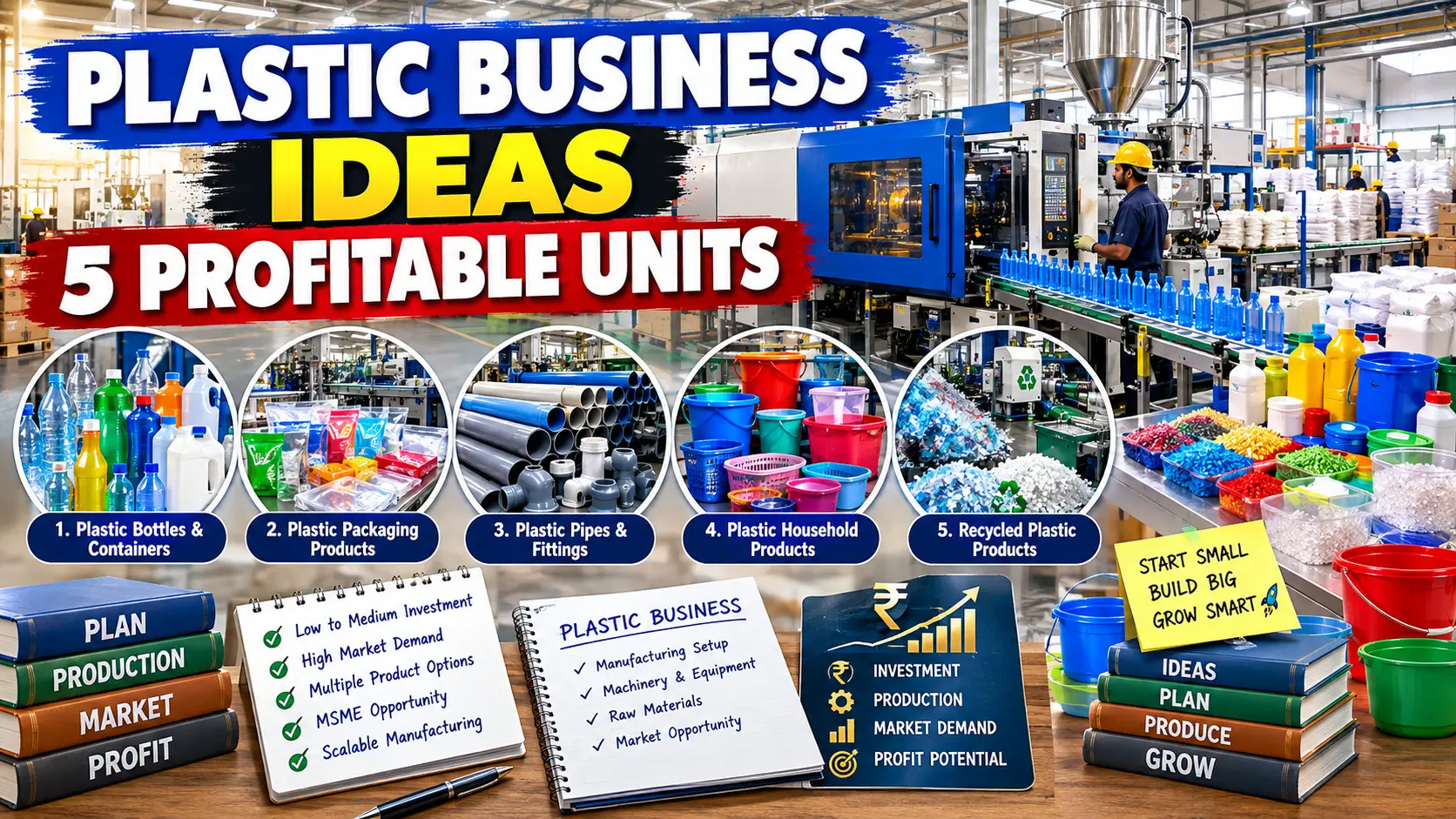

In today’s rapidly evolving industrial landscape, Plastic & Rubber Manufacturing remains one of the most dynamic and profitable sectors. With increasing demand across industries such as automotive, construction, packaging, healthcare, and consumer goods, there’s no shortage of opportunities for entrepreneurs and manufacturers to carve a niche in this evergreen field. The versatility of plastic and rubber materials—coupled with ongoing innovations in sustainability and recycling—has opened doors to a wide array of business models. Whether you’re a seasoned industrialist or a new entrepreneur, investing in this sector can bring strong returns, scalability, and market relevance.
Contents
- 1. Exploring the Most Profitable Plastic & Rubber Manufacturing Ideas
- 1.1. 1. PVC Pipe and Fittings Manufacturing
- 1.2. 2. Rubber Gaskets and Seals Production
- 1.3. 3. Plastic Recycling Plant
- 1.4. 4. Rubber Sheet Manufacturing
- 1.5. 5. Disposable Plastic Products
- 1.6. 6. Rubber Tyre Retreading
- 1.7. 7. HDPE and LDPE Bag Production
- 1.8. 8. Silicone Rubber Products
- 1.9. 9. Plastic Water Tank Manufacturing
- 1.10. 10. EVA Foam Sheet Production
- 1.11. 11. Plastic Furniture Manufacturing
- 1.12. 12. Conveyor Belt and Rubber Roller Production
- 1.13. 13. Medical-Grade Plastic Components
- 1.14. 14. Polycarbonate and Acrylic Sheet Manufacturing
- 1.15. 15. Rubber Gloves Production
- 1.16. Conclusion
- 2. Related guides
- 3. More in Plastics, Paper & Packaging
Exploring the Most Profitable Plastic & Rubber Manufacturing Ideas
1. PVC Pipe and Fittings Manufacturing
The growing demand for plumbing and irrigation systems in both urban and rural areas has fueled the PVC pipe industry. These pipes are used for water supply, drainage systems, and electrical conduit systems. Manufacturing PVC pipes and fittings is capital-intensive initially, but once set up, it offers high-profit margins and low maintenance. With a proper marketing strategy and distribution network, PVC pipe units can scale quickly.
2. Rubber Gaskets and Seals Production
Rubber gaskets and seals are crucial components in automotive, aerospace, and machinery industries. They provide insulation, prevent leaks, and ensure safety and functionality. A small to medium-scale setup with basic molding and finishing equipment can be started with moderate investment. Customized rubber sealing products for industrial and commercial applications offer great value and steady client relationships.
3. Plastic Recycling Plant
With sustainability at the forefront, plastic recycling is not just profitable—it’s essential. Setting up a recycling unit for used plastics like PET bottles, LDPE sheets, or HDPE containers can be a game-changer. The collected waste is cleaned, shredded, melted, and reshaped into pellets or new products. Recycled plastic can be used in manufacturing containers, pipes, furniture, and more. Governments and environmental agencies often support such eco-friendly Plastic & Rubber Manufacturing ventures through subsidies and schemes.
4. Rubber Sheet Manufacturing
Rubber sheets are used extensively in industrial, commercial, and consumer applications. These include flooring, gaskets, mats, and insulation layers. The demand is particularly high in construction and transportation sectors. Raw materials like natural rubber, synthetic rubber, and additives are processed through calendering or extrusion to produce durable sheets. This manufacturing idea allows diversification into customized sizes and grades for various markets.
5. Disposable Plastic Products
Despite ongoing debates around plastic use, the demand for disposable plastic items like spoons, plates, cups, and packaging trays remains strong—especially in the food and event industries. A disposable plastic product manufacturing unit, using injection molding or thermoforming machines, can be highly profitable with a reliable supply chain. This Plastic & Rubber Manufacturing idea is suitable for entrepreneurs looking to tap into high-volume, low-cost production.
6. Rubber Tyre Retreading
Tyre retreading is a cost-effective and eco-friendly solution used widely by transport companies. Retreading involves refurbishing old and worn-out tyres with new tread using heat and pressure. This business requires relatively lower investment compared to new tyre manufacturing and offers consistent returns. Given the high cost of new tyres, many logistics and commercial vehicle operators prefer retreaded ones for their fleets.
7. HDPE and LDPE Bag Production
Plastic bags, despite restrictions in many areas, still find use in packaging, retail, and agriculture. High-Density Polyethylene (HDPE) and Low-Density Polyethylene (LDPE) bags are light, strong, and flexible. These can be manufactured in varying thicknesses, sizes, and designs. While restrictions in single-use plastic exist, biodegradable versions or bags used for industrial packaging are still viable markets. Entrepreneurs can explore sustainable alternatives within this Plastic & Rubber Manufacturing niche.
8. Silicone Rubber Products
Silicone rubber is known for its heat resistance, non-reactivity, and durability. It is widely used in medical devices, kitchenware, automotive components, and electronics. Manufacturing silicone rubber products requires precision molds and quality control mechanisms. Though the setup cost is higher, the high-value market and lower competition can yield substantial profits.
9. Plastic Water Tank Manufacturing
With rising urbanization and rural infrastructure development, plastic water tanks are in huge demand. Using rotational molding technology, entrepreneurs can produce tanks in various sizes and capacities. The tanks are lightweight, rustproof, and easy to transport, making them ideal for domestic and industrial use. Starting a Plastic & Rubber Manufacturing unit for water tanks ensures a steady demand, especially in regions with water scarcity or unreliable supply chains.
10. EVA Foam Sheet Production
Ethylene-Vinyl Acetate (EVA) foam is a soft, flexible, and durable material used in footwear, packaging, sports goods, and children’s toys. The production involves mixing resins, blowing agents, and additives to form sheets of different densities. With its application in everyday consumer products, EVA foam manufacturing is a lucrative business idea.
11. Plastic Furniture Manufacturing
Plastic furniture is preferred in homes, offices, schools, and outdoor areas due to its affordability, light weight, and durability. From chairs and tables to storage units, these products can be manufactured using injection molding machines. A creative approach in design, color, and branding can help position your brand strongly in the consumer market.
12. Conveyor Belt and Rubber Roller Production
In industries such as mining, agriculture, packaging, and warehousing, conveyor belts and rubber rollers are essential for material handling. These are made using a combination of natural or synthetic rubber with fabric or metal reinforcement. The market for high-quality, abrasion-resistant belts and rollers is vast and still growing. This Plastic & Rubber Manufacturing business idea can cater to a niche yet highly profitable market.
13. Medical-Grade Plastic Components
Healthcare and diagnostics sectors increasingly use medical-grade plastics for syringes, IV tubes, inhalers, surgical instruments, and more. These require clean-room environments and strict adherence to quality standards like FDA or ISO certifications. Although technical and regulation-heavy, the returns in this space are high due to consistent demand and premium pricing.
14. Polycarbonate and Acrylic Sheet Manufacturing
Polycarbonate and acrylic sheets are used in signage, roofing, partitions, and security panels. These materials are lightweight, transparent, and impact-resistant. With urban development and aesthetic architecture on the rise, there’s a growing market for customized, UV-resistant, and fire-retardant sheets. The manufacturing process involves extrusion or casting and requires precision machinery.
15. Rubber Gloves Production
Rubber gloves are essential in healthcare, cleaning, industrial handling, and chemical laboratories. Latex, nitrile, or neoprene rubber is used depending on the application. With hygiene awareness rising post-pandemic, the global demand for high-quality disposable and reusable gloves has skyrocketed. Setting up a Plastic & Rubber Manufacturing unit for gloves can be highly lucrative with both local and export market opportunities.
Conclusion
The Plastic & Rubber Manufacturing industry presents a wide array of profitable opportunities, thanks to its diverse applications across almost every sector. Entrepreneurs must, however, keep in mind the growing need for sustainability and compliance with environmental regulations. Investing in recycling, biodegradable materials, and energy-efficient production can not only enhance profitability but also ensure long-term viability. Whether you start with PVC pipes, silicone products, or recycled plastic goods, this industry promises scalability, innovation, and impact. The key is to identify a niche that matches your investment capacity, market knowledge, and passion—and then build a brand that delivers quality and value.
Visit the page Select and Choose the Right Business Startup for You for sorting out the questions arising in your mind before starting any business and know which start-up you can plan. We, at NPCS, endeavor to make business selection a simple and convenient step for any entrepreneur/startup. Our expert team, by capitalizing on its dexterity and decade’s long experience in the field, has created a list of profitable ventures for entrepreneurs who wish to diversify or venture. The list so mentioned is updated regularly to give you a regular dose of new emerging opportunities.