
plastic waste recycling plant India
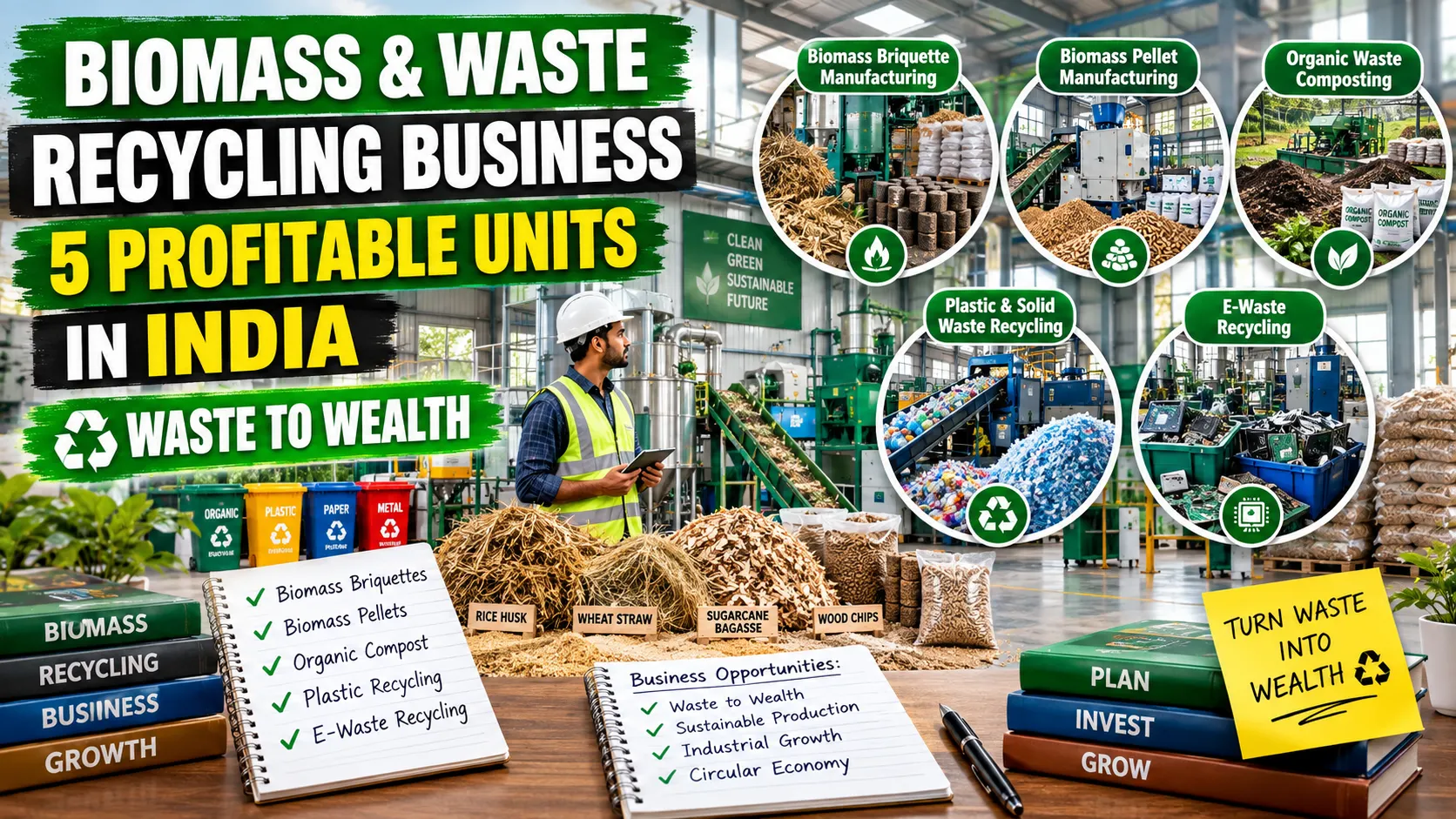
India produces over 3.5 million tones of plastic waste annually, with less than 5% of it being recycled via formal processes. The rest of the waste goes into the rivers, drains, landfills and open dump sites. This is a problem that is increasingly emerging across the environment, but also a huge business opportunity for those who wish to join the recycling industry.
The plastic waste recycling plant India market is witnessing a rapid growth as industries actively look for recycled plastic material and the plastic waste is faced as a problem. Now recycled PET, HDPE and PP are being purchased on a large scale by packaging companies, textile manufacturers, pipe manufacturers, and automotive suppliers.
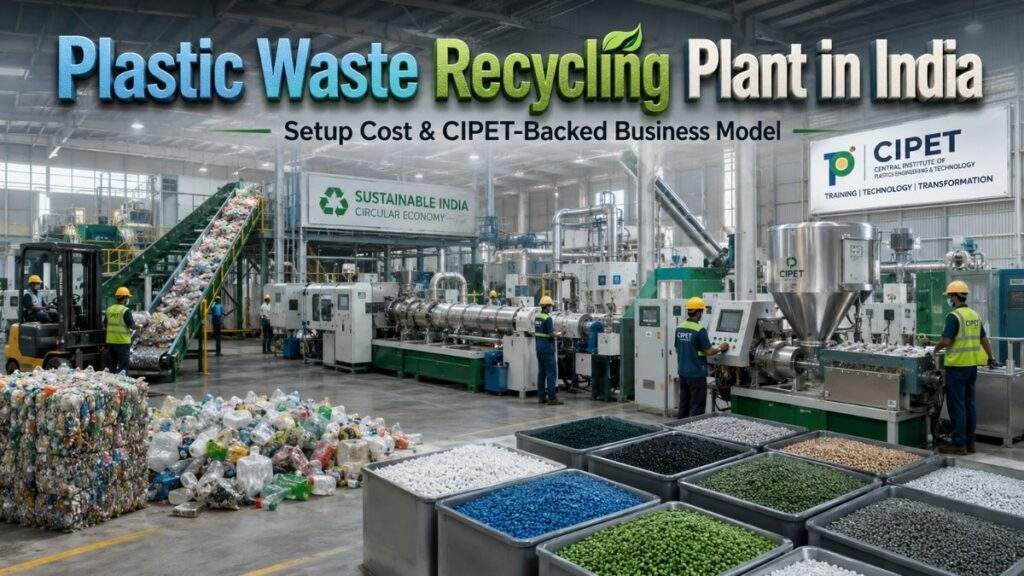
Government support is one of the biggest factors contributing to this growth. The Annual Report 2025-26 issued by Ministry of Chemicals and Fertilizers, Government of India, states that CIPET has established Plastic Waste Management Centres in Bengaluru, Bhagalpur and Varanasi with another center being set up at Sanand, Gujarat. This indicates India is investing in long term infrastructure for recycling sector.
Related Article: How to Start Pulp-Based Beverage Packaging Unit in India (Plastic Ban Opportunity)
Why Plastic Recycling is a Huge Company Opportunity.
The demand for recycled plastic has grown rapidly, due to:
- India has experienced a significant increase in the use of plastics.
- EPR (Extended Producer Responsibility) rules
- Export market sustainability requirements
- Increasing industrial demand for recycled raw material
- Government focus on circular economy
In today’s day and age, certified recycled plastic is needed to comply with environmental regulations. This has established a consistent industrial buyers’ market for recycling units.
Concurrently, the availability of raw materials has also increased, thanks to the scrap dealers and municipal waste collection systems as well as the waste collection in Housing Societies.
Setup Cost of Plastic Recycling Plant in India
The investment amount varies according to the types of plastic waste and production capacity.
Approximate Investment Range
| Plant Type | Capacity | Investment |
| HDPE/PP Recycling Unit | 500 kg/hour | Rs. 1.5–2.5 Crore |
| PET Bottle Recycling Plant | 3–5 MT/day | Rs. 2.5–4 Crore |
| Multi-Layer Plastic Unit | 2–5 MT/day | Rs. 80 Lakh–1.5 Crore |
| E-Waste Plastic Recycling | 500 kg/hour | Rs. 1.8–3 Crore |
The main machinery is basically comprised of:
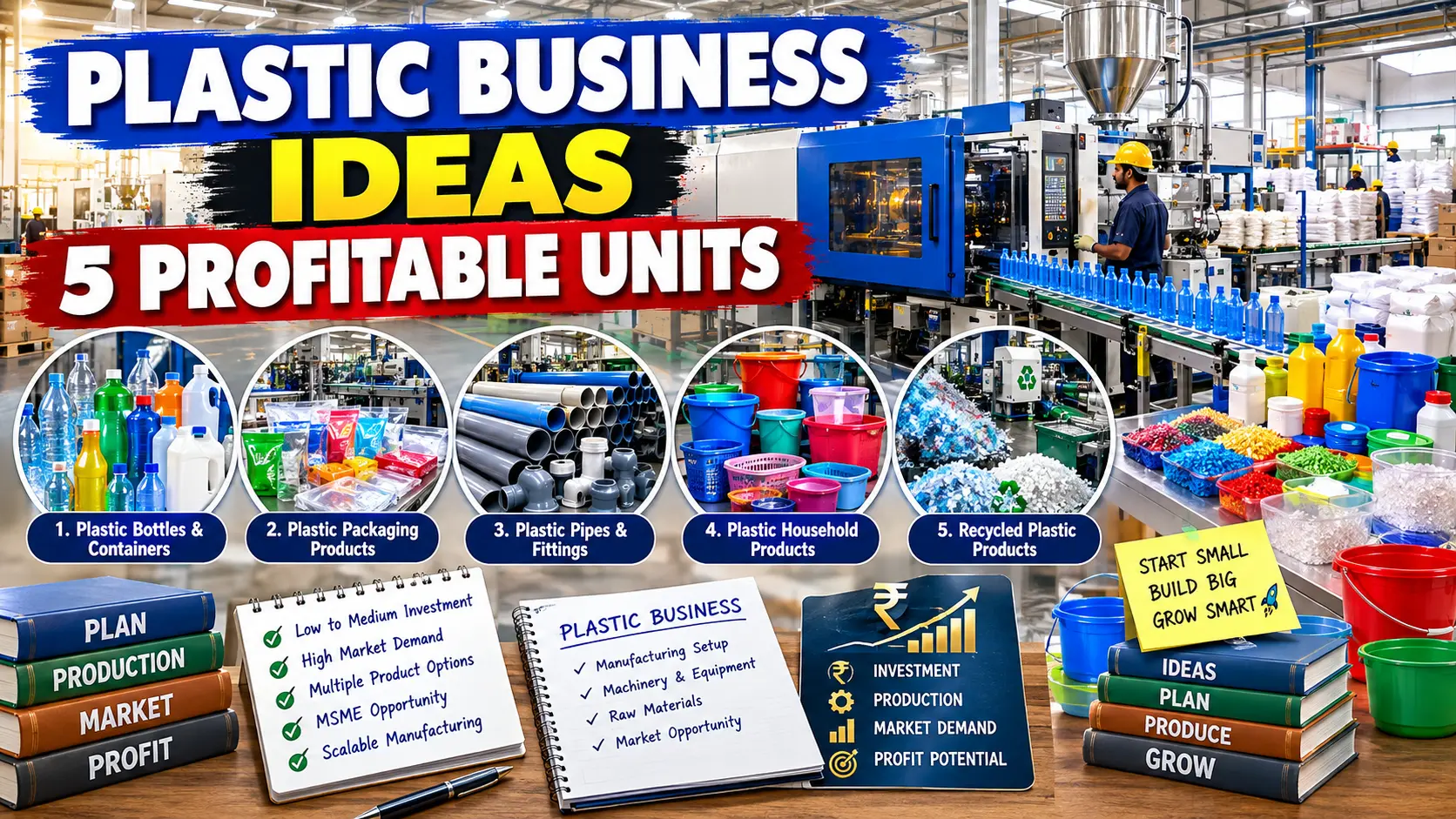
- Plastic shredder
- Washing system
- Dryer machine
- Extruder
- Pelletizer
- Sorting conveyor
- Testing equipment
The first step taken by most entrepreneurs is to lease industrial property instead of buying so as to avoid the strain of capital.
Get Detailed Insights from This Book: Just For Starters: How To Start Your Own Export Business
Most Profitable Plastic Recycling Segments
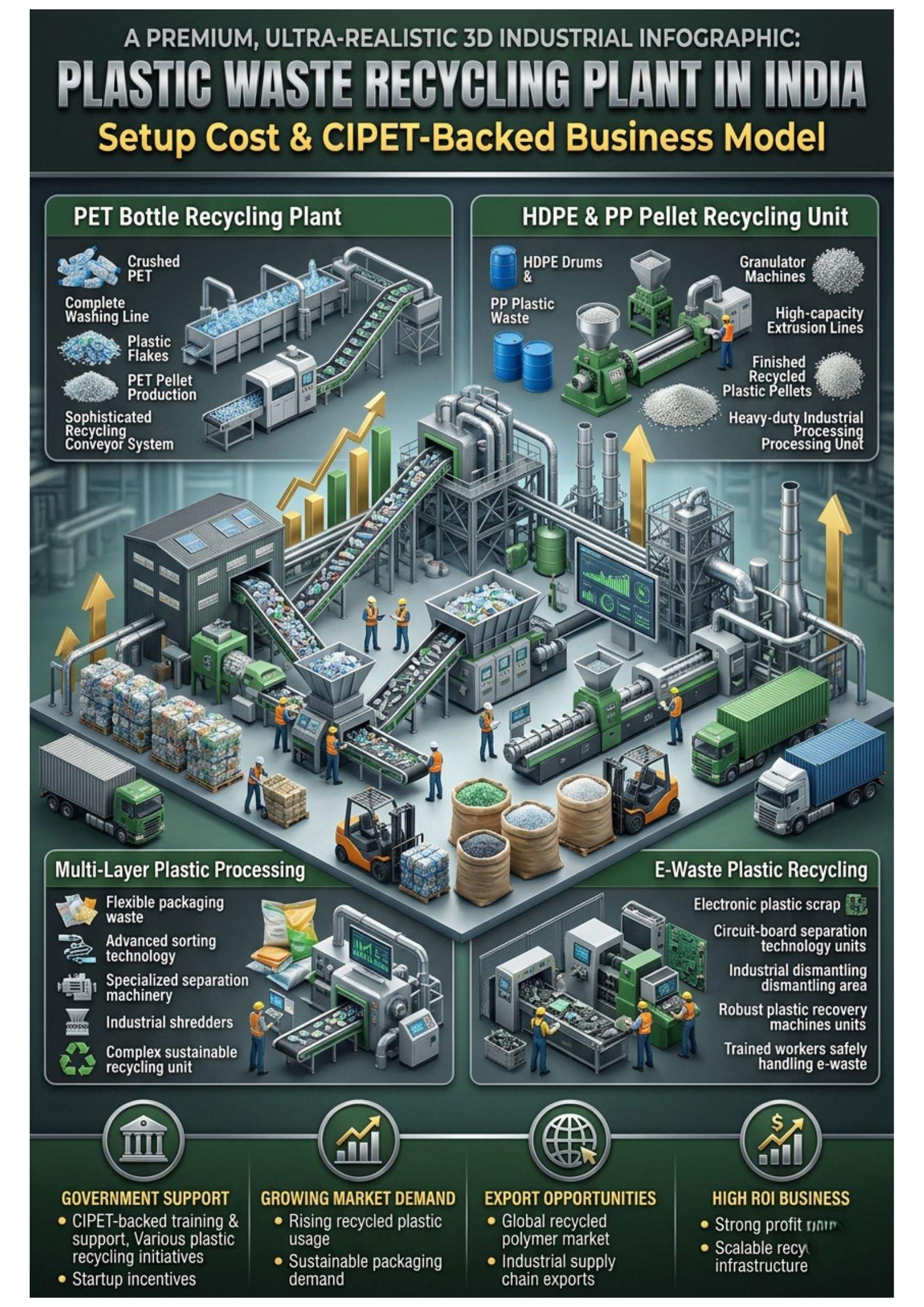
PET Bottle Recycling Plant
PET recycling is one of the best opportunities in India as the demand for recycled polyester is growing swiftly in the textile industry.
Main buyers include:
- Textile manufacturers
- Polyester fibre companies
- Packaging manufacturers
- rPET film producers
Surat, Tirupur, and Panipat are promising cities due to their high demand for textiles.
Get Detailed Insights from This Book: Speciality Plastics, Foams (Urethane, Flexible, Rigid) Pet & Preform Processing Technology Handbook
HDPE & PP Pellet Recycling Unit
One of the top-rated MSME manufacturing enterprises is that it has moderate setup cost and a stable demand in the industry.
The recycled HDPE and PP pellets are widely used in:
- Pipe manufacturing
- Plastic furniture
- Packaging products
- Automotive components
If raw material sourcing is done in an efficient manner, a healthy profit margin can be achieved in the recycling unit.
Multi-Layer Plastic Processing
Multi-layer plastic waste consists of:
- Chips packets
- Biscuit wrappers
- Flexible packaging waste
They are hard to recycle using traditional methods, and can be turned into:
- Alternative fuel
- Cement kiln feedstock
- Pyrolysis oil
This segment is expanding due to the generation of tremendous amount of plastic packaging waste in India, which have lower value.
E-Waste Plastic Recycling
E-waste plastic recycling is a lucrative industry due to engineering plastics’ high market value.
These plastics include:
- ABS
- HIPS
- Polycarbonate
The recycled material is utilized by the electronics manufacturers and industrial component suppliers.
Get Detailed Project Report (DPR): E-Waste Recycling Plant Business Plan
How CIPET Supports Plastic Recycling Entrepreneurs
CIPET has a significant contribution towards India recycling ecosystem.
It’s Plastic Waste Management Centres offer:
- Material testing
- Quality certification
- Technical consultancy
- Skill development training
- Recycling technology support
The new Sanand center in Gujarat will further bolster the western recycling network.
This is crucial for MSMEs, as their initial stage might involve the establishment of an in-house testing laboratory, which can be costly.
Licenses Required for Plastic Recycling Plant
For a recycling plant to be legally running in India the entrepreneurs need:
- Consent to Establish (CTE)
- Consent to Operate (CTO)
- Pollution Control Board approval
- GST registration
- MSME Udyam registration
- Plastic Waste Management registration
Other approvals may be needed for pyrolysis and/or fuel recovery projects.
Build a profitable business with the right idea
Importance of NPCS Before Starting the Project
NPCS (Niir Project Consultancy Services) will assist to prepare Detailed Project Reports (DPRs) and feasibility study for manufacturing businesses.
The typical NPCS reports contain the following:
- Market demand analysis
- Machinery selection
- Manufacturing process flow
- Plant layout planning
- Financial projections
- Break-even analysis
- Profitability calculations
These reports can be helpful for entrepreneurs during the application process for:
- Bank loans
- MSME schemes
- Government approvals
- Investor funding
A well prepared DPR helps mitigate business risk and enhances project planning.
Future of Plastic Recycling Industry in India
The future of the plastic recycling business India market looks extremely strong because sustainability regulations are becoming stricter every year. Large companies now require recycled content in packaging and manufacturing processes.
There is not enough organized recycling capacity in India, and as a result demand will probably continue at a high level for many years.
Entrepreneurs who focus on:
- Quality certification
- Stable raw material sourcing
- EPR compliance
- Industrial buyer networks
Will be significantly better than the long-term in this industry.
It can be easily understood with the increase of CIPET infrastructure and governmental backing that plastic recycling has developed into a significant industry in India.
FAQs
Q1. What is the minimum investment to be made in a plastic recyclers plant in India?
The estimated cost of a small semi-mechanized recycling plant is Rs. Equity worth Rs. 2-3.5 crores along with the machinery, setup and working capital.
Q2. Are plastics recyclable in India?
Yes. The demand for recycled plastic in the industries is rapidly growing and the recycling businesses can get good profits.
Q3. Which recycling segment makes the most money?
The e-waste recycling business and plastic compounding have high margins, and PET and HDPE recycling have a stable demand.
Q4. Can CIPET support recycling start-ups?
Yes. CIPET offers testing, certification, training and technical support to recycling businesses.
Q5. Is it possible to export recycled plastic from India?
Yes. PET, HDPE and PP recycled materials are sent abroad to a number of Asian and Middle Eastern countries.
Q6. Why is it important to have NPCS before beginning the project?
Before investing capital, NPCS assists entrepreneurs to create professional project reports and financial feasibility studies.
Q7. Which are the most suitable states for plastic recycling plants?
Best States are Gujarat, Maharashtra, Tamil Nadu, Karnataka, Uttar Pradesh due to a strong industrial demand and infrastructure.