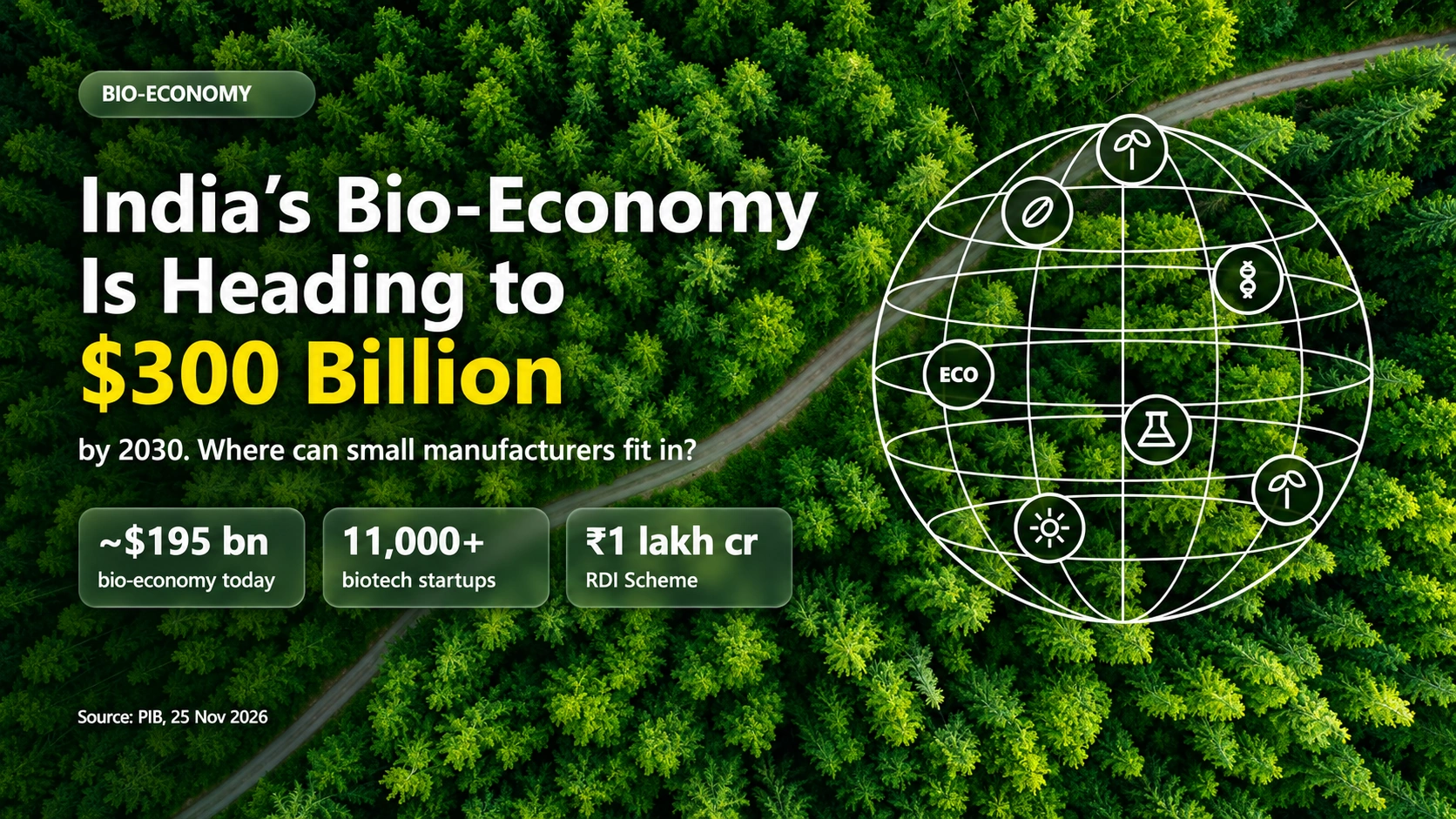
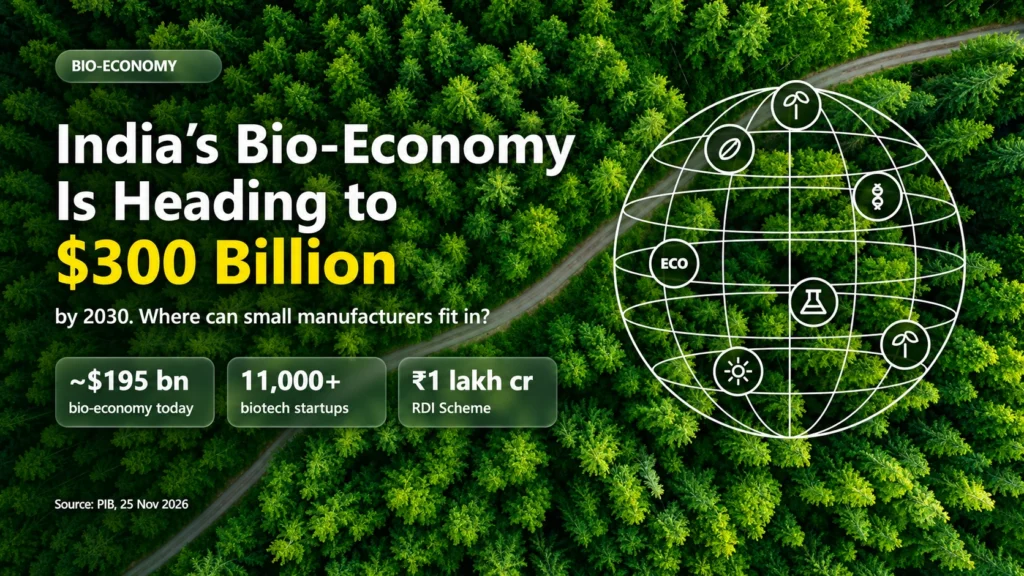

New Delhi, 25 November 2026: Union Minister Dr Jitendra Singh told the CII Global Genomics Summit 2026 that the India bio-economy has grown from about $10 billion to nearly $195 billion, and that India is aiming for $300 billion by 2030. The theme of the summit was “Powering the Next Bioeconomy Through Genomics and Multi-omics”.
For a small manufacturer the question is simple: which parts of this growth can a factory with a few crores of investment actually supply? We cover everything the minister said first, and then answer that.
Contents
- 1. India bio-economy: the key numbers
- 2. What Dr Jitendra Singh said
- 3. What he asked industry to do
- 4. The policy support behind the push
- 5. What the India bio-economy actually covers
- 6. India bio-economy opportunities for small manufacturers
- 7. How a small unit can start: six practical steps
- 8. How NPCS can help
- 9. Questions people ask
- 10. Sources
- 11. Related guides
- 12. More in Pharma, Herbal & Cosmetics
India bio-economy: the key numbers
| Number | What it is |
|---|---|
| About $10 bn → nearly $195 bn | Size of the India bio-economy, 2014 compared with now |
| $300 bn | Target for 2030 |
| 50–60 → 11,000+ | Biotech startups, 2014 compared with now |
| ₹1 lakh crore | RDI Scheme, meant to bring private money into high-impact technologies |
| 10,000 | Genomes sequenced under Genome India, from 80 population groups |
| 30 countries | Supplied with India’s COVID-19 DNA vaccine |
A note on the figures. The PIB headline says “$300 million”, but the text of the release says $300 billion, so the headline is a typo. You may also see $165.7 billion in other articles. That is the government’s figure for 2024; about $195 billion is the figure for 2025.
What Dr Jitendra Singh said
- Biotech is the next industrial revolution. He compared its role to what IT played in the last one, and called it a strategic platform for healthcare, agriculture and global competitiveness.
- Adapt or fall behind. Businesses that do not take up emerging technologies, he warned, risk becoming irrelevant.
- Genomics, AI and omics are converging. DNA sequencing, computational biology, AI and omics (metabolomics, transcriptomics and proteomics) will change how complex diseases are understood and make personalised healthcare possible, since the same disease may need different treatment for different people.
- India’s diversity is an advantage. The country’s genetic diversity and wide range of diseases are a major asset for global R&D. The Genome India Project has already sequenced the whole genomes of 10,000 individuals from 80 population groups.
- Farms and livestock benefit too. Biotechnology can improve crop productivity, nutrition, pest and disease resistance and climate resilience, and can help livestock breeding and disease surveillance.
- Indian products are winning acceptance abroad. The examples he gave: India’s COVID-19 DNA vaccine, supplied to 30 countries; low-cost CAR-T cell therapy for cancer from Tata Memorial Centre; HPV vaccine developments; and haemophilia treatment research.
- Mindset is the biggest bottleneck. In his view, what stops India from becoming a genomic powerhouse is mindset, not capability.
What he asked industry to do
- Industry leaders, startups and investors: invest and take part in genomics, multi-omics and advanced biotechnology; keep pace with fast-changing technology; partner with government initiatives such as Genome India; specialise in a sector and build sustainable, innovation-driven businesses.
- The private sector: spend more on R&D, partner with government institutions, research organisations and startups, and use CSR funds for research, especially in cancer and diabetes.
- Industry representatives: share specific regulatory problems with practical suggestions, which can be examined through institutional coordination. The release says the Health Ministry and ICMR are being consulted on simpler rules for biotech and advanced therapies.
- CII: act as the bridge between government and industry for investment, research partnerships and wider participation.
He closed by saying success should be measured by lives improved, products developed and economic opportunities created, not only by genomes sequenced or papers published, and called for collective effort towards Atmanirbhar Bharat and Viksit Bharat 2047.
The policy support behind the push
- BioE3 policy (Biotechnology for Economy, Environment and Employment): approved in August 2024. It backs bio-foundries and other infrastructure that help turn research into products.
- RDI Scheme: ₹1 lakh crore, meant to bring private-sector participation into high-impact technologies.
- 21 bio-enabler hubs: announced in September 2025.
- Biopharma SHAKTI: ₹10,000 crore over five years, announced in February 2026. Its guidelines were still awaiting Cabinet clearance when we last checked in July 2026.
- IBER 2026: the March 2026 report put the bio-economy at roughly 5% of GDP.
- Biotech startups: up from 50–60 in 2014 to over 11,000.
What the India bio-economy actually covers
The term sounds technical, but it simply means all economic activity that uses biological resources or biotechnology: medicines and vaccines, enzymes and bio-based chemicals, crop inputs, biofuels, and the research services behind them. India’s official report groups it into four segments. The figures reported for 2025 are:
- BioIndustrial, about $90.2 billion: enzymes, biofuels such as ethanol, bio-based chemicals and materials.
- BioPharma, about $64.5 billion: vaccines, biologics, diagnostics and medical devices.
- BioServices, about $26 billion: contract research, clinical trials, bioinformatics and biotech software.
- BioAgri, about $14.6 billion: bio-fertilisers, bio-pesticides, seeds and agricultural biotech.
BioSpectrum India reports that the sector added $29.6 billion in 2025, about 18% growth, and that its share in GDP rose to about 4.8%. In the 2024 report, Maharashtra (about $35.5 billion), Karnataka (about $32.4 billion) and Telangana (about $19.9 billion) were the leading states.
Why this matters for a small factory: the two biggest segments, BioIndustrial and BioPharma, are made of physical products that must be manufactured, packed and supplied, and that is where MSMEs can fit in.
India bio-economy opportunities for small manufacturers
Nothing in the release is a ready-made scheme for a small factory, and the biggest money named is for research. Our reading: very few small units will be “bio-economy businesses” by label. Most will be ordinary factories whose raw material, or customer, is moving towards bio-based. These are the nearest ones.
Fermentation and bio-based inputs
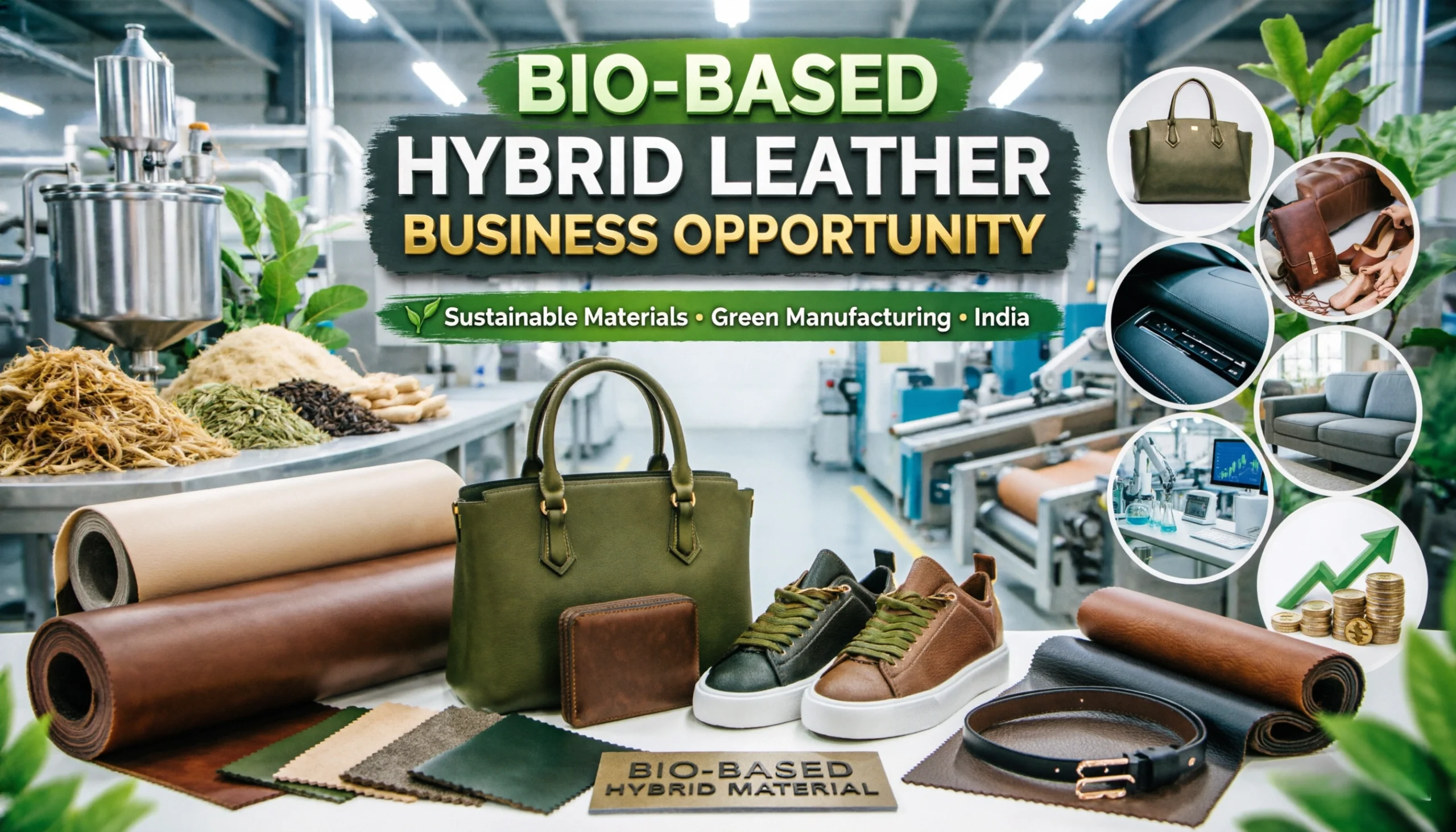
Citric acid is the classic fermentation product, and brewery and distillery by-products are being put to new use. On the farm side, biopesticides and biogas digestate products sell a biological input to farmers who already buy a chemical one.
Medical consumables and pharma inputs
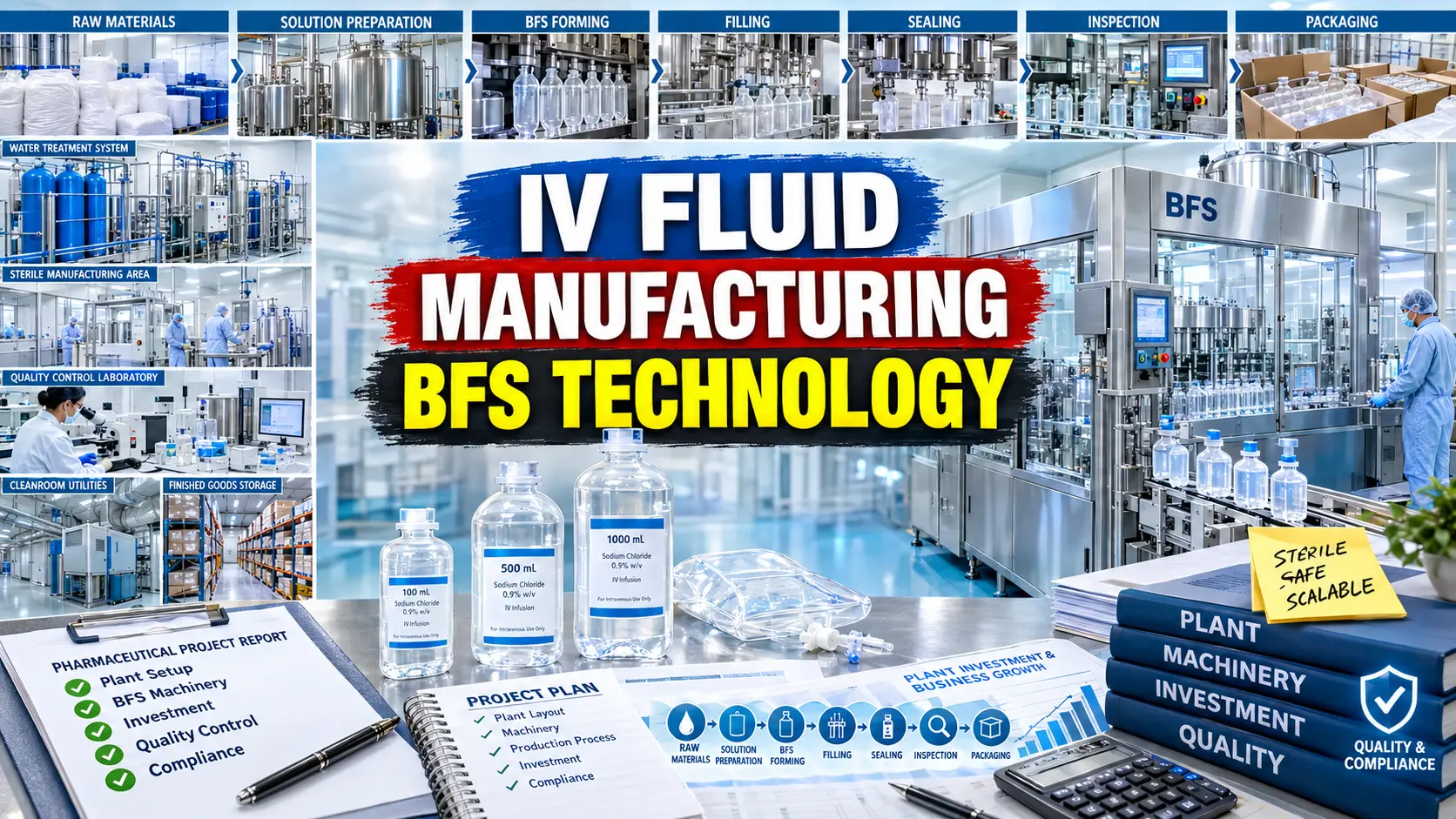
Hospitals keep buying whatever the headlines say. IV fluids made with BFS technology and blood bags are two products where small and mid-sized units compete. For the chemistry side, see our API product ideas, India’s biotechnology sector and investment opportunities in the pharma sector.
Packaging and plastics
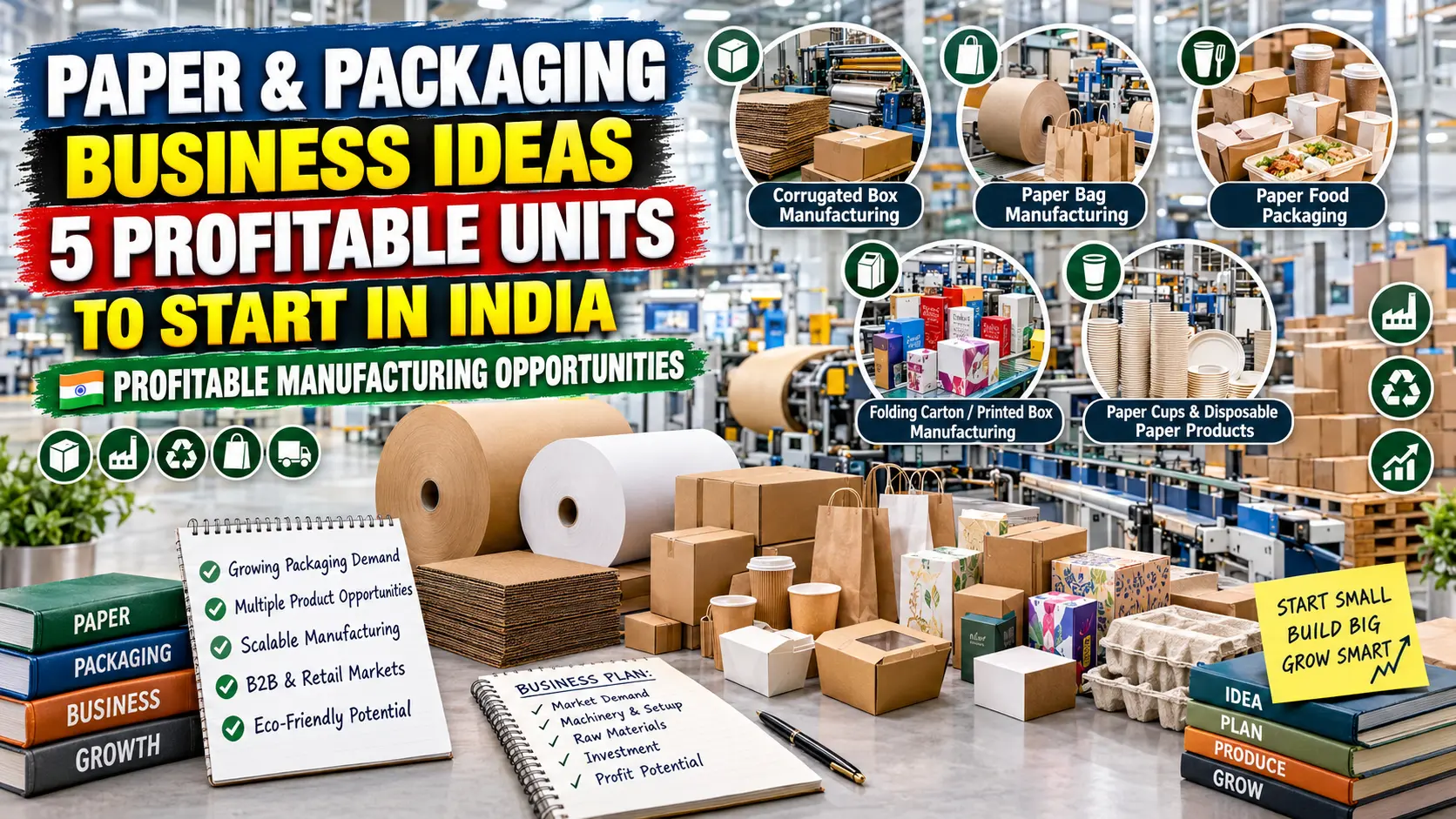
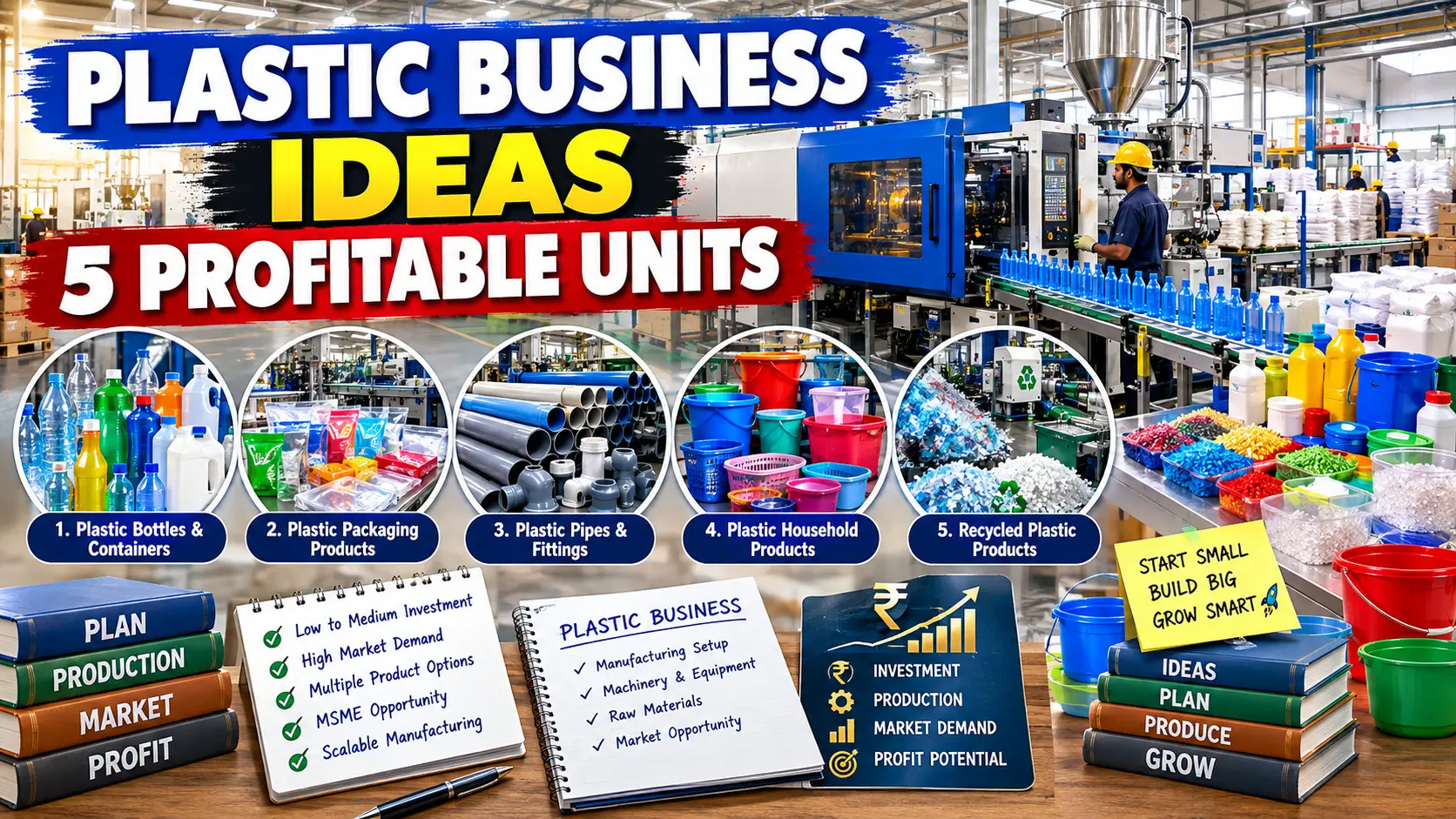
Buyers are asking for alternatives to fossil-based material, and a unit that can supply them early has a head start. Browse plastic business ideas and paper and packaging ideas. More ideas are in our list of 38 MSME manufacturing ideas, and 35% factory cost support can change the maths for a first unit. See also our government schemes and pharma, herbal and cosmetics sections.
Before you invest, confirm three things: a real buyer, the licence route for your product (drug, medical device, pesticide or food), and the current status of any scheme you are counting on. Do not size a plant from the $195 billion India bio-economy figure, because the statement did not split it by segment.
How a small unit can start: six practical steps
- Pick one product, not a sector. “Bio-economy” is too wide to invest in. Choose one product where raw material is available near you, such as a bio-fertiliser, an enzyme-based cleaner, a herbal extract or a biodegradable packaging item.
- Check demand and buyers first. Find out who will buy, at what price and in what pack size before you fix capacity. A market survey costs far less than an idle plant.
- List the licences for that product. They differ by product. Udyam and GST apply to any unit, most factories need state pollution board consent, food and nutraceuticals need FSSAI, bio-fertilisers need registration under the Fertiliser Control Order, and bio-pesticides need CIB&RC registration. Confirm with the concerned department before you buy machinery.
- Cost the plant honestly. Count machinery, building, working capital, testing equipment and a quality-control person, and take at least two supplier quotes. A detailed project report puts these numbers in one place.
- Look for finance and support. Ask your bank about MSME credit, and ask the state industries department and BIRAC which schemes you may qualify for. Do not build a scheme into your plan until it is confirmed in writing.
- Run a pilot batch. Make a small lot, get it tested, show it to two or three buyers, and scale up only after that.
How NPCS can help
If you are still deciding what to make, our Project Identification service shortlists products for your budget and location. Our market research reports show demand, a project report puts cost, machinery, raw material and profit on one page, and our books cover hundreds of manufacturing processes. To talk it through, message us on WhatsApp, call +91-9097075054 or write to npcs.india@gmail.com.
Send us your enquiry
Tell us the product you are thinking of and our team will contact you.
Questions people ask
How big is the India bio-economy?
About $195 billion, according to the minister’s statement on 25 November 2026. The target is $300 billion by 2030.
What is the BioE3 policy?
Biotechnology for Economy, Environment and Employment. It was approved in August 2024 and supports bio-foundries and similar infrastructure.
Is there a scheme for small manufacturers in the India bio-economy?
Not one with that name. The big programmes are for research (the ₹1 lakh crore RDI Scheme) or pharma (Biopharma SHAKTI, whose guidelines were pending at our last check). Small units usually benefit through general MSME support.
Which small units are closest to the opportunity?
Fermentation products, bio-based farm inputs, medical consumables and packaging. None is guaranteed, so check the buyer and licence first.
What does the bio-economy include?
Four segments: BioIndustrial, BioPharma, BioServices and BioAgri. In the 2025 figures, BioIndustrial is the largest at about $90.2 billion, followed by BioPharma at about $64.5 billion.
Which states lead the India bio-economy?
In the 2024 report, Maharashtra, Karnataka and Telangana were the top three, with about $35.5 billion, $32.4 billion and $19.9 billion respectively.
Sources
- PIB press release, 25 November 2026 (Dr Jitendra Singh at the CII Global Genomics Summit 2026)
- PIB release on the IBER 2026 report
- PIB document, September 2025 (the $165.7 billion figure)
- PIB release on Biopharma SHAKTI components
- BioSpectrum India: India’s BioEconomy grows over $195 B in 2025 (2025 segment figures, GDP share)
- BioSpectrum India: India’s BioEconomy hits $165.7 B in 2024 (state-wise figures)