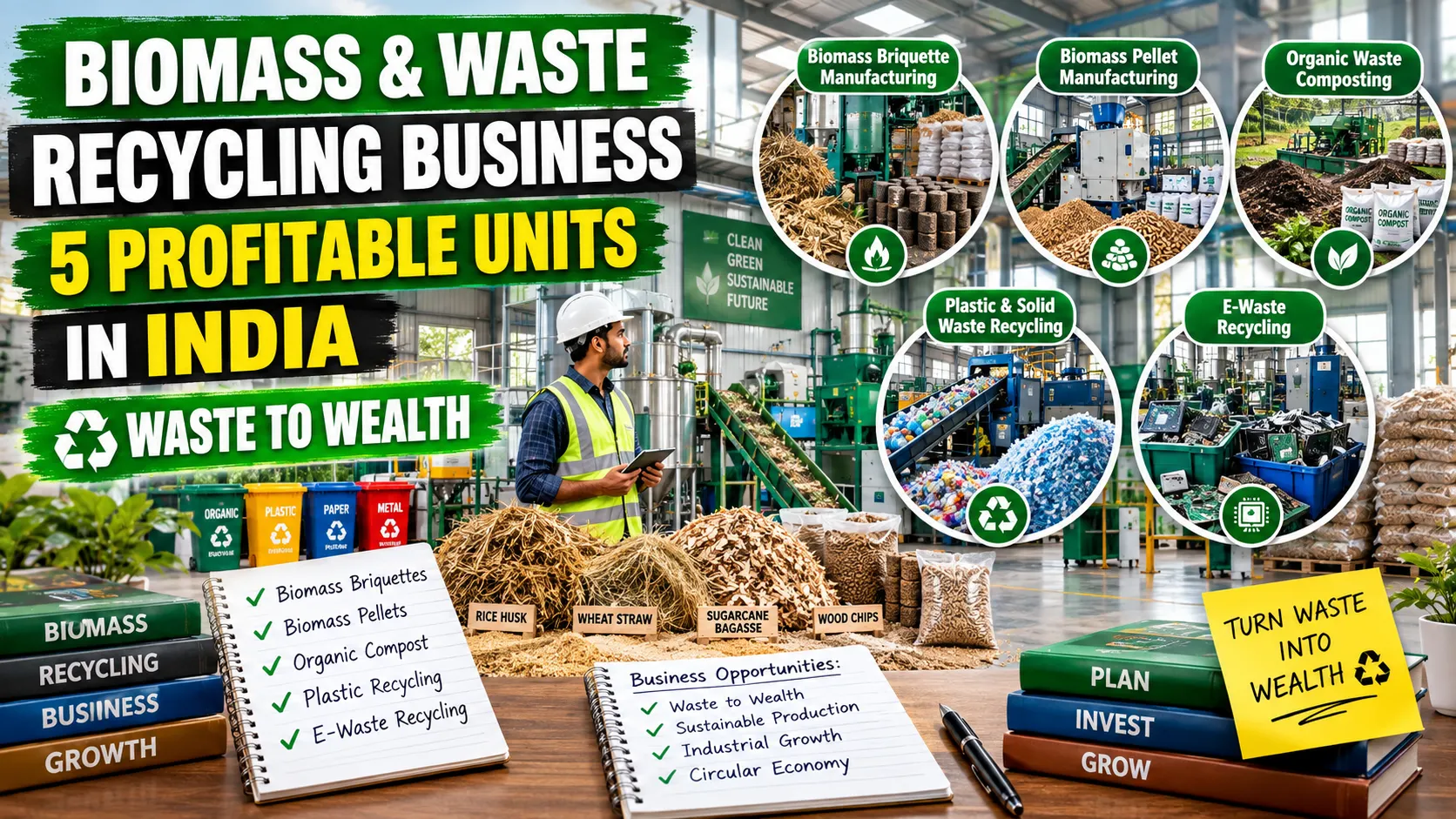
In the modern industrial age, turning waste into wealth has become a critical component of sustainable development. Among the many agricultural byproducts, rice husk stands out as an underutilized resource with vast potential. One of the most valuable derivatives of this waste is Rice Husk Ash Silica—a highly useful compound employed in several industries ranging from construction to electronics. As rice remains one of the most consumed grains globally, its byproducts are available in abundance, making the business of producing silica from rice husk ash a promising and profitable venture.
Contents
- 1. The Potential of Rice Husk Ash Silica Production
- 1.1. Understanding the Source and Availability
- 1.2. The Process of Rice Husk Ash Silica Production
- 1.3. Applications of Rice Husk Ash Silica
- 1.4. Market Demand and Profitability
- 1.5. Setup and Investment
- 1.6. Environmental Benefits and Sustainability
- 1.7. Challenges and Risk Mitigation
- 1.8. Government Support and Export Potential
- 1.9. Final Thoughts
The Potential of Rice Husk Ash Silica Production
Rice husk is the outer covering of the rice grain that is removed during the milling process. It constitutes about 20% of the weight of harvested rice. When rice husks are burned, they produce rice husk ash (RHA), which can contain up to 85–95% amorphous silica under controlled combustion conditions. Rice Husk Ash Silica is a fine, white to grey powder that has versatile applications and commercial value. From serving as a pozzolanic material in cement to being used in high-tech industries, silica derived from rice husk ash has a lucrative market globally.
Understanding the Source and Availability
Asia, especially countries like India, China, and Vietnam, is the largest producer of rice, which makes rice husk an abundantly available agro-waste. For every 1 ton of rice paddy milled, approximately 200 kg of rice husk is produced. If burned under controlled temperature (typically around 600°C), this husk yields about 20% ash. This means that from every ton of rice paddy, nearly 40 kg of silica-rich ash can be generated. With millions of tons of rice cultivated annually, the resource availability is virtually endless.
The Process of Rice Husk Ash Silica Production
The process of producing Rice Husk Ash Silica involves several well-defined steps, and it requires minimal but strategically placed investments in machinery and control systems. Here’s a step-by-step overview of the production process:
Collection of Rice Husk: Gathered from rice mills.
Drying and Cleaning: They dry the husk to remove moisture and clean it to eliminate impurities.
Controlled Burning: Operators burn the dried husk in a furnace or boiler while controlling the temperature and airflow to ensure complete combustion and obtain amorphous silica.
Ash Collection: After burning, the system collects and cools the ash.
Silica Extraction: Industries separate silica from the ash using acid leaching, alkali extraction, or thermal methods, depending on the required purity.
Washing and Drying: They then wash the silica to remove residual chemicals and dry it.
Packaging: Final product is packaged as per industrial standards and specifications.
Applications of Rice Husk Ash Silica
The success of any industrial product depends on the diversity and demand for its applications. Rice Husk Ash Silica has a wide variety of applications that span across industries, which contributes significantly to its profitability:
Construction Industry: Used as a pozzolanic material in cement and concrete, it enhances strength and reduces permeability.
Rubber and Plastic Industry: Acts as a reinforcing agent improving durability and resistance.
Steel Industry: Used as a slag conditioner during steel manufacturing.
Ceramics and Refractories: Acts as an essential raw material in creating thermal insulating products.
Paints and Coatings: Enhances strength and abrasion resistance.
Electronics and Solar Panels: High-purity silica is utilized in silicon wafer production for solar cells.
Agriculture: Used in soil conditioners and fertilizers due to its silicon content which is beneficial for plant health.
Market Demand and Profitability
The demand for amorphous silica is growing rapidly. With the world shifting towards green technologies and sustainable materials, industries are seeking alternatives to traditional silica sources like mined quartz. Rice Husk Ash Silica, being eco-friendly and cost-effective, presents a superior option.
The global precipitated silica market generated over USD 2 billion in revenue in recent years and is expected to grow annually. Silica extraction from rice husk ash can yield significant profit margins, especially when businesses procure the source material at minimal or no cost. Many rice mills are willing to part with rice husk as waste or even pay for its disposal, turning the collection phase into a cost-saving opportunity.
Setup and Investment
Setting up a Rice Husk Ash Silica production plant involves a moderate capital investment, which makes it suitable even for small to medium enterprises. You need the following basic components to establish the plant:
Land and Building: 5,000–10,000 sq. ft. area depending on capacity.
Furnace/Boiler System: For controlled combustion of husk.
Extraction Units: For chemical or mechanical extraction of silica.
Washing and Drying Units: To refine the final product.
Power Supply and Utilities: Regular electricity and water supply.
Labor and Workforce: Skilled and semi-skilled operators.
An initial investment of ?1.5 to ?2 crore (approximately USD 200,000 to 250,000) can set up a unit capable of processing several tons of rice husk per day, yielding high-purity silica for domestic and export markets.
Environmental Benefits and Sustainability
One of the major appeals of Rice Husk Ash Silica is its environmental benefit. Miners conventionally extract silica from quartz, which causes extensive ecological damage. In contrast, extracting silica from agricultural waste not only conserves natural resources but also mitigates air pollution from the open burning of rice husk—a common practice in many rice-producing countries.
Additionally, by reducing waste accumulation and providing a value-added product, this business aligns with circular economy principles and supports national sustainability goals. In carbon-sensitive industries, using RHA silica can even contribute to carbon credit accumulation.
Challenges and Risk Mitigation
Although Rice Husk Ash Silica production is highly rewarding, it comes with its own set of challenges:
- Consistency in Raw Material Quality: Different types of rice and burning conditions yield different ash properties.
- Combustion Control: Ensuring complete and clean combustion is essential for quality output.
- Chemical Handling: When using acid leaching or similar methods, operators must maintain proper chemical safety
- Market Competition: Entry of larger players can affect price points and market access.
Companies can mitigate these challenges by investing in quality control systems, securing reliable supply chains, implementing standard operating procedures, and focusing on niche or high-value segments like high-purity silica for electronics or pharmaceuticals.
Government Support and Export Potential
Many governments, especially in rice-producing nations, are now supporting agro-waste utilization projects through subsidies, grants, and technical assistance. The Indian government, for instance, under its Startup India and MSME development programs, encourages eco-friendly manufacturing initiatives.
Furthermore, the international market is highly receptive to Rice Husk Ash Silica, particularly in countries where eco-conscious manufacturing is a priority. Export potential exists in Southeast Asia, Europe, and North America, where demand for sustainable raw materials is surging.
Final Thoughts
Rice Husk Ash Silica production is not just an industrial process; it is a smart, sustainable, and scalable business opportunity. It taps into an abundant, renewable resource and converts waste into a commercially viable product. With growing applications across various sectors, increasing global demand for eco-friendly materials, and favorable government policies, this industry holds enormous promise for entrepreneurs, investors, and environmentalists alike.
Modern tech, quality, and sustainability unite agriculture and industry to drive growth, innovation, and shared prosperity.