
Diaper (Baby and Adult) and Sanitary Napkins Manufacturing Plant
The demand for diapers and sanitary napkins has seen consistent growth over the years, driven by factors such as population growth, increasing awareness of hygiene, and a growing middle class in developing countries. These products are essential for maintaining health and hygiene, especially for infants, the older people, and women. As the awareness around hygiene and health continues to rise, establishing a manufacturing unit for diapers and sanitary napkins can be a highly profitable venture. This article provides a comprehensive feasibility report on setting up a Diaper and Sanitary Napkin Manufacturing Unit. See Also: Business to Start in Arunachal Pradesh Market Overview The global market for diapers and sanitary napkins has witnessed significant growth due to the rising population and the increasing demand for personal hygiene products. In particular, developing nations are showing increased demand for sanitary napkins, driven by the rising awareness of menstrual hygiene management. This has created a unique opportunity for entrepreneurs to enter this business. Additionally, the aging population in many countries has contributed to the demand for adult diapers. In the case of diapers, the growth is mainly driven by the increasing birth rate and the preference for disposable diapers, which are considered more convenient than cloth ones. Sanitary napkins, on the other hand, are widely used by women of menstruating age and have become an essential part of personal care. Key Factors Driving Demand Population Growth: Both infants and adult populations contribute to the increased demand for diapers and adult incontinence products. Awareness Campaigns: Government and NGO-led awareness campaigns on menstrual hygiene have increased the adoption of sanitary napkins among women in developing countries. Convenience: Disposable diapers and sanitary napkins offer unmatched convenience, which drives their demand. Changing Lifestyles: Busy lifestyles and rising disposable incomes have increased the preference for disposable hygiene products. Manufacturing Process The manufacturing of diapers and sanitary napkins involves several stages, from raw material selection to the final product packaging. The key stages in this process are outlined below: 1. Raw Material Selection The primary raw materials used for manufacturing diapers and sanitary napkins include non-woven fabric, super absorbent polymer (SAP), fluff pulp, and adhesives. For sanitary napkins, additional materials like a breathable film and cotton sheets are also used to provide comfort and absorbency. 2. Production Machinery The production of diapers and sanitary napkins requires specialized machinery, such as: Non-woven fabric making machine Fluff pulp and SAP mixing equipment Diaper forming machines Sanitary napkin production lines Packaging machines The machinery required depends on the scale of the unit and the type of products being manufactured. 3. Manufacturing Process The manufacturing process typically involves the following steps: Material Preparation: Raw materials are process, and the non-woven fabric is cut into sheets for diapers or sanitary napkins. Core Formation: For diapers, the fluff pulp and SAP are mixe and place inside a central core, while sanitary napkins have a similar absorbent core. Assembly: The absorbent core is seal within the non-woven fabric, and additional layers like the outer film are add. Cutting and Shaping: Diapers and sanitary napkins are then cut into specific sizes and shapes. Packaging: The finish products are pack in hygienic conditions to avoid contamination. 4. Quality Control To ensure that the products meet the required standards, a stringent quality control process is necessary. Each stage of production, from raw material sourcing to the final packaging, requires regular checks for consistency in absorption, fit, and comfort. Investment and Capital Requirements The capital investment for setting up a diaper and sanitary napkin manufacturing unit varies depending on the scale of production and the type of machinery used. A small-scale unit may require an initial investment ranging from INR 20-30 lakhs, while larger units may need an investment upwards of INR 1 crore. The capital investment includes costs for land, machinery, raw materials, utilities, and labor. Key Components of Capital Investment Land and Infrastructure: The cost of land varies depending on location. You will also need to set up a factory building with proper ventilation, sanitation, and safety measures. Machinery and Equipment: The cost of machinery can vary, but for a fully automated unit, the cost of production lines can range from INR 50 lakhs to INR 2 crore. Raw Materials: The initial cost of purchasing raw materials such as non-woven fabric, absorbent materials, and packaging materials should also be consider. Labor and Staff: You will need skilled workers, including machine operators, quality control specialists, and administrative staff. Legal and Regulatory Requirements Setting up a diaper and sanitary napkin manufacturing unit requires adherence to several legal and regulatory requirements, including: Business Registration: Register your business under the relevant business laws, such as a Private Limited Company or a Limited Liability Partnership (LLP). Environmental Clearances: Depending on the scale of your operation, you may need to obtain environmental clearances for waste disposal and air and water pollution control. Food and Drug Administration (FDA): In some regions, sanitary napkins and diapers may fall under the FDA’s purview, and you may need their approval for the product’s safety and hygiene standards. Health and Safety Standards: Ensure your facility adheres to health and safety standards to maintain a safe working environment for employees and high-quality products. Profitability and Market Potential The profitability of a diaper and sanitary napkin manufacturing unit depends on several factors, including production costs, marketing strategies, and the demand for your products. The market potential is substantial, given the growing need for hygienic products. The cost of manufacturing a diaper or sanitary napkin is relatively low, but due to the high demand, the markup can be quite significant. Profit Margins Diapers: The cost of producing a single diaper is low, but they are sell at a premium, especially in the retail market. Sanitary Napkins: Sanitary napkins also have a high-profit margin, especially when marketed as premium products that focus on comfort, absorbency, and eco-friendliness. See Also: Business to Start in Chhattisgarh Conclusion In conclusion, establishing a diaper and sanitary napkin manufacturing unit is a lucrative business opportunity with immense potential. The increasing
Toughened Glass Manufacturing Plant | Tempered Glass Production for Commercial Purpose
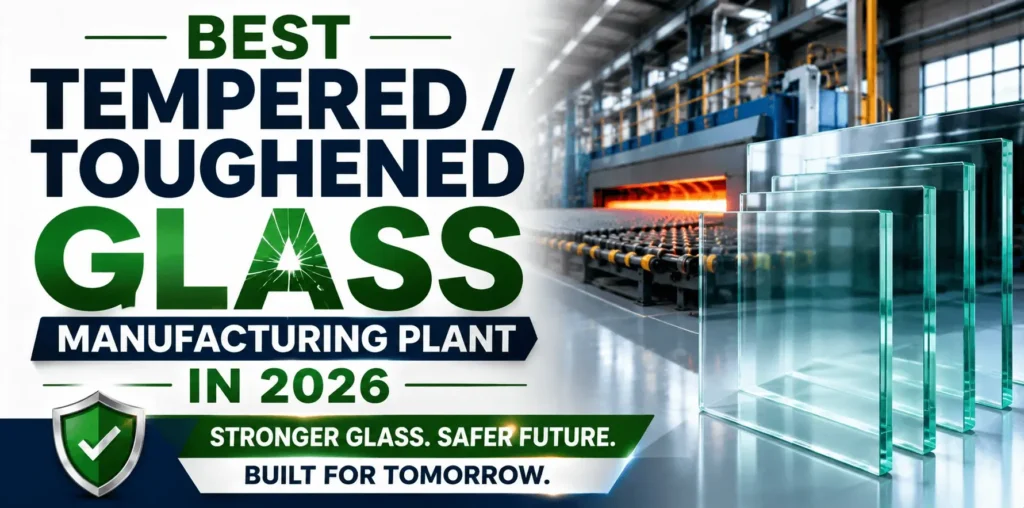
Toughened glass, also known as tempered glass, is a type of safety glass processed by controlled thermal or chemical treatments to increase its strength compared with normal glass. It is widely used in architectural, automotive, and interior applications due to its durability, resistance to breakage, and enhanced safety features. With the rapid growth in the construction and automotive sectors, the demand for toughened glass has surged, making toughened glass manufacturing plant is a highly profitable business opportunity. If you are looking to establish a plant in this domain, this detailed DPR (Detailed Project Report) guide will walk you through everything from market potential to plant setup. Market Scope and Investment Potential of Toughened Glass Manufacturing Plant The global demand for toughened glass is steadily increasing, fueled by urbanization, modernization of infrastructure, and growing awareness of safety in construction. India, being one of the fastest-growing construction markets, offers immense potential for toughened glass manufacturing ventures. In residential and commercial projects, toughened glass is used in facades, doors, windows, partitions, and even furniture. Likewise, in the automotive sector, it finds application in windshields, windows, and sunroofs. Additionally, modern interior design trends have leaned heavily toward using glass to enhance aesthetics. As a result, architects and designers are increasingly recommending toughened glass for both structural and decorative purposes. This trend ensures a consistent and long-term demand for this material, making it a lucrative segment for new entrepreneurs and industrial investors. See Also: Bitumen Emulsion Steps to Set Up a Toughened Glass Manufacturing Plant 1. Project Planning and Feasibility Analysis Begin by conducting a thorough market survey and preparing a feasibility report. This report should cover the scope of demand in your target region, competitor analysis, potential buyers, pricing strategy, and required investment. Establishing the size and scale of your unit will also depend on your findings. Estimate the required land area (generally 10,000–25,000 sq. ft. depending on plant capacity), initial investment (which can range between ?1.5 crore to ?5 crore), and the expected return on investment (ROI). Detailed financial planning will give clarity on capital requirements, break-even analysis, and working capital needs. 2. Company Registration and Legal Compliance Register your business as a Private Limited Company, LLP, or proprietorship, depending on your expansion plans. Obtain the necessary licenses such as: Factory License Pollution Control Board (PCB) Clearance Fire Safety Certification GST Registration MSME Udyam Registration Import-Export Code (if you intend to trade internationally) You must also comply with labor laws, safety regulations, and building codes applicable in your region. 3. Location and Infrastructure Choosing the right location is crucial. Your plant should be close to raw material suppliers, transportation networks, and major markets to reduce logistical costs. An industrial zone is ideal as it will already have necessary utilities like power, water, and roads. The infrastructure should include production halls, administrative offices, storage rooms, power backup units, and R&D labs if you plan to innovate or customize glass for niche sectors. 4. Machinery and Technology Modern toughened glass manufacturing depends heavily on automation and precision machinery. The core machines required are: Glass Cutting Machine Glass Washing and Drying Machine Tempering Furnace (Toughening Furnace) Edge Grinding and Polishing Machine Drilling and Bevelling Machines Inspection Conveyor Systems Quality Control Equipment It is advisable to purchase high-quality, energy-efficient equipment either domestically or through reputed international suppliers. Investing in CNC-based or AI-assisted technology can further improve productivity and reduce material waste. 5. Raw Material Procurement The essential raw material for toughened glass manufacturing is float glass. Other required materials include: Energy (electricity and natural gas) Deionized water Cleaning chemicals Packing materials such as wooden crates, plastic corners, and thermocol sheets Establish contracts with reliable float glass manufacturers or distributors to ensure uninterrupted supply. 6. Production Process Overview The toughened glass manufacturing process involves several stages: a. Cutting and Pre-processing: Large sheets of float glass are cut to size and shaped as per customer specifications. b. Washing and Drying: The glass is cleaned thoroughly to eliminate impurities that may affect the quality of tempering. c. Edge Processing: The edges are ground and polished to remove sharpness and reduce the risk of breakage. d. Heating and Quenching: The clean and polished glass is heated in a tempering furnace at about 650°C and then rapidly cooled using air jets. This strengthens the glass and induces stress for toughness. e. Quality Inspection: Each batch undergoes rigorous checks for optical distortion, surface defects, and structural integrity before packing and dispatch. 7. Manpower and Staffing Running a mid-sized plant efficiently will require a workforce of 20 to 40 people, including: Production Engineers Furnace Operators Maintenance Technicians Quality Inspectors Machine Operators Warehouse Staff Administrative and Sales Personnel Ensure proper training and safety drills, especially for furnace operations and material handling. 8. Marketing and Distribution A strong B2B sales strategy is key in this industry. Your target customers include: Architects and Builders Real Estate Developers Furniture Manufacturers Automobile Companies Glass Retailers You can participate in trade shows, collaborate with construction companies, or list your business on industrial B2B portals. Build a strong digital presence through a website, social media, and search engine marketing to reach broader clients. Offering customized solutions or on-site delivery services can give your brand a competitive edge. 9. Quality Assurance and Certifications Quality plays a pivotal role in building trust with clients. Secure certifications such as: IS 2553 (Part I) – Indian Standards for Toughened Safety Glass ISO 9001 – Quality Management System CE Certification (if targeting the European market) Implementing a robust quality control system ensures consistent product standards and reduces rejection rates. 10. Profitability and ROI On average, a well-optimized toughened glass manufacturing unit can generate a 20% to 30% profit margin. With high initial investment and setup costs, the ROI might take 2 to 3 years, but once the plant stabilizes, it can provide steady revenue with minimal overhead. Profitability can be further increased by diversifying into related products such as laminated glass, insulated glass units (IGUs), decorative glass, or mirror coating services. See Also: Food Processing Business Frequently
Poly Aluminium Chloride Manufacturing Plant
Poly Aluminium Chloride (PAC) is a highly effective coagulant widely used in water treatment, paper manufacturing, and various industrial processes. As water scarcity and environmental concerns increase globally, the demand for efficient water treatment solutions like PAC has grown significantly. Establishing a Poly Aluminium Chloride manufacturing plant presents a profitable and sustainable business opportunity, especially in countries like India where industrialization and urbanization are expanding rapidly. This article offers a comprehensive guide to setting up a Poly Aluminium Chloride manufacturing unit, covering everything from market potential to machinery, raw materials, and financial projections. Understanding the Poly Aluminium Chloride Industry Poly Aluminium Chloride, chemically represented as [Al?(OH)nCl?-n]m, is a type of aluminum salt used extensively as a coagulant in water and wastewater treatment. It is more effective than traditional coagulants like alum and ferric chloride due to its higher charge density and lower sludge generation. It also finds applications in paper sizing, deodorants, and certain textile processes. The increasing emphasis on environmental safety, water purification, and industrial waste treatment has amplified the need for advanced coagulation chemicals. Poly Aluminium Chloride, with its versatility and efficiency, has emerged as a preferred choice in various industrial and municipal operations. The global market size for PAC is projected to grow steadily, driven by regulatory norms on water treatment and industrial waste discharge. See Also: Small Scale Food Processing Market Demand and Opportunities The demand for Poly Aluminium Chloride is primarily driven by municipal water treatment plants, industrial effluent treatment facilities, paper industries, and textile processing units. Developing countries are investing heavily in water infrastructure, opening up new avenues for PAC manufacturers. In India, the Central Pollution Control Board (CPCB) and other agencies have mandated stricter norms for effluent discharge, further boosting the demand for high-quality coagulants like PAC. Apart from domestic consumption, there is considerable export potential to regions like the Middle East, Southeast Asia, and Africa, where water treatment systems are being upgraded. Thus, setting up a PAC plant not only meets domestic requirements but can also position the entrepreneur as a global supplier. Types of Poly Aluminium Chloride PAC is available in various grades, primarily differentiated based on the application and concentration. The most common types include: PAC Liquid Grade – Used in large-scale water treatment facilities PAC Powder Grade – Preferred in industries due to ease of storage and transportation Food Grade PAC – Used in the treatment of drinking water and in food processing industries Each of these grades requires different levels of purity and processing, which should be factored into the production line setup. Raw Materials Required The main raw materials used in the production of Poly Aluminium Chloride are: Aluminium Hydroxide or Aluminium Sulphate Hydrochloric Acid (HCl) Sulphuric Acid (in some variants) Water Aluminium hydroxide reacts with hydrochloric acid under controlled conditions to form Poly Aluminium Chloride. The selection and quality of raw materials directly influence the quality of the final product, hence suppliers must be chosen carefully. Manufacturing Process of Poly Aluminium Chloride The production process of Poly Aluminium Chloride involves chemical reactions under controlled temperature and pH conditions. The steps typically include: Preparation of Aluminium Source: Aluminium hydroxide is first prepared in slurry form. Acid Reaction: Hydrochloric acid is slowly added to the slurry while stirring. Polymerization: The reaction is allowed to continue under specific conditions to ensure polymerization. Filtration and Concentration: The solution is filtered and then concentrated using evaporators. Cooling and Storage: The product is cooled and stored in HDPE tanks or filled into drums for dispatch. This process needs to be carefully monitored to maintain consistency in product quality and to ensure compliance with industrial standards. Machinery and Equipment Needed Setting up a Poly Aluminium Chloride manufacturing unit requires a range of machinery. Some of the essential equipment includes: Reaction Vessels (MS/SS with agitation system) Chemical Storage Tanks Acid Dosing System Filtration Unit Evaporator System Cooling Tower Laboratory Testing Equipment Packing Machinery (if producing powder form) The choice between semi-automatic and fully automatic plants depends on investment capability and desired production capacity. A small to medium-scale unit may cost between ?50 lakhs to ?2 crores, depending on the scale and automation level. Location and Infrastructure Choosing the right location for your PAC plant is critical. Proximity to industrial hubs, easy availability of raw materials, and access to utilities like water, electricity, and transportation are key factors. Additionally, environmental clearance and pollution control approvals are mandatory. Industrial areas with existing chemical manufacturing clusters can be ideal, as they often have shared effluent treatment plants (CETPs) and ready access to skilled labor and logistics networks. Licenses and Approvals Several regulatory approvals are needed to start a Poly Aluminium Chloride manufacturing plant in India. These include: Company Registration Factory License Consent to Establish and Operate from the Pollution Control Board Explosive and Hazardous Chemicals Storage Permit GST Registration ISO Certification (for quality assurance, optional but beneficial) Following compliance guidelines ensures smooth operations and builds credibility with institutional buyers. Financial Projections A medium-sized Poly Aluminium Chloride manufacturing unit with a capacity of 10 MT/day can yield impressive returns. Here is a rough estimate: Initial Investment Land & Building: ?30 – 40 Lakhs Machinery & Equipment: ?50 – 70 Lakhs Working Capital: ?20 – 30 Lakhs Total: ?1 – 1.5 Crores Operational Costs (Monthly) Raw Materials: ?15 – 25 Lakhs Salaries & Wages: ?3 – 5 Lakhs Utilities & Maintenance: ?2 – 3 Lakhs Marketing & Distribution: ?1 – 2 Lakhs Revenue Potential Selling Price (avg): ?20,000 – ?30,000 per MT Monthly Production: 250 – 300 MT Monthly Revenue: ?50 – ?90 Lakhs Net Profit MarginTypically ranges from 15% to 25% depending on efficiency and market conditions. With such margins, the break-even point is usually reached within 12 to 18 months of operations, making it a viable and lucrative business option. Challenges and Risk Factors While the Poly Aluminium Chloride business is profitable, it does come with its share of challenges: Fluctuating Raw Material Prices: Price volatility of hydrochloric acid and aluminium can affect margins. Stringent Regulations: Regular