
Profitable Food Processing Small Business
The global food industry is undergoing a remarkable transformation, and India is playing a pivotal role in this shift. With increasing consumer demand for convenience, health-conscious products, and sustainable packaging, the food processing sector is booming. The year 2025 is expected to bring a wave of innovation and opportunity, especially for entrepreneurs aiming to capitalize on changing dietary patterns and market trends. This is the perfect time to explore the most lucrative food processing business ideas for 2025 and take a deep dive into a sector that promises high returns and scalable growth. Top Food Processing Business Ideas 2025 to Consider The Food Processing Business in India is supported by favorable government policies, increased foreign investments, and a growing middle-class population with evolving consumption habits. Entrepreneurs looking to establish themselves in this dynamic industry can explore a variety of niche segments that not only offer profitability but also long-term sustainability. 1. Ready-to-Eat (RTE) and Ready-to-Cook (RTC) Meal Production As urban lifestyles become busier, demand for ready-to-eat and ready-to-cook meals continues to soar. From traditional Indian curries to continental meal kits, consumers are gravitating toward food options that save time without compromising on taste and nutrition. Establishing a Food Processing Business that offers RTE or RTC products, especially with organic or preservative-free tags, can fetch premium prices in both domestic and international markets. 2. Cold-Pressed Juice and Smoothie Manufacturing Health and wellness trends are not slowing down anytime soon. Cold-pressed juices and smoothie packs are becoming staple products in urban households. Launching a cold-pressed juice manufacturing unit can be a promising food processing business idea in 2025. The focus should be on fresh, natural, and immunity-boosting ingredients, which appeal strongly to health-conscious millennials and Gen Z consumers. 3. Organic and Gluten-Free Snack Production With the surge in food allergies and lifestyle diseases like celiac and diabetes, gluten-free and organic snacks are carving out a significant market share. Products like baked chips, granola bars, millet-based puffs, and roasted legumes offer high margins and wide consumer acceptance. A Food Processing Business centered around this niche can cater to both the domestic market and export segments, where demand for healthy Indian snacks is rising. 4. Frozen Food Processing Frozen foods are no longer limited to peas and corn. From frozen parathas, samosas, idlis, and kebabs to entire gourmet meals, consumers are embracing the convenience of frozen food without compromising on flavor. In 2025, this segment is expected to witness exponential growth, especially as cold chain logistics improve across India. Investing in frozen food processing infrastructure, backed by efficient packaging and storage, can be highly profitable. 5. Plant-Based and Vegan Food Products The plant-based food industry is exploding worldwide, and India—with its large vegetarian population—is uniquely positioned to lead this space. Plant-based meats, dairy alternatives, and egg substitutes are seeing increased demand among vegans, flexitarians, and environmentally-conscious consumers. Entrepreneurs can start a Food Processing Business that specializes in plant-based protein sources using pulses, soy, jackfruit, or mushrooms. 6. Pickle and Chutney Manufacturing Traditional Indian pickles and chutneys have always enjoyed popularity, but with modern packaging and hygienic processing methods, they are finding takers globally. Launching a Food Processing Business focused on regional varieties of pickles—like mango, lemon, garlic, or mixed vegetable—and chutneys can lead to a thriving export-oriented venture. Innovations in flavors, spice blends, and packaging can further enhance market penetration. 7. Dairy Processing Unit India is one of the largest producers of milk, and dairy processing remains a strong pillar of the Food Processing Business ecosystem. In 2025, the focus will shift towards value-added dairy products such as flavored yogurts, probiotic drinks, artisan cheeses, and lactose-free milk. Automation, cleanliness, and quality assurance will be key to building brand loyalty in this segment. 8. Pulses and Spices Processing The demand for pre-cleaned, packaged, and branded pulses and spices is growing rapidly. Consumers are leaning toward products that offer hygiene, consistency, and authenticity. A Food Processing Business focusing on sorting, grading, roasting, or grinding of pulses and spices can benefit from both B2C and B2B channels. There’s also scope for export, especially for Indian masalas and lentils, which are in high demand globally. 9. Dehydrated Fruits and Vegetables Dehydrated foods offer long shelf life and retain most nutrients, making them popular among health-conscious buyers and survival food companies. Bananas, carrots, apples, onions, and tomatoes are ideal candidates for dehydration. With the right drying and packing technology, an entrepreneur can build a scalable Food Processing Business that caters to snack companies, hotels, and catering services. 10. Baby Food Manufacturing Parents today are highly discerning about what they feed their children. Organic, additive-free, and preservative-free baby food is becoming a must-have for young parents. Starting a baby food processing business that offers purees, cereals, and snacks made from millet, rice, pulses, and vegetables can be a smart niche entry in 2025. Quality control, trust, and certifications will be critical in this highly sensitive market. 11. Health Supplements and Nutraceuticals From protein powders to dietary supplements made with herbs and natural extracts, the nutraceutical segment is flourishing. Products that boost immunity, digestion, or energy are especially popular post-COVID. Creating a Food Processing Business focused on functional foods or nutritional powders (like spirulina, moringa, or ashwagandha blends) can cater to both fitness enthusiasts and wellness consumers. 12. Traditional Sweets and Snack Packaging Indian sweets like rasgulla, soan papdi, and besan laddoo have a huge market, both domestically and overseas. However, with modern packaging solutions such as vacuum sealing and modified atmosphere packaging, these traditional products can now have extended shelf lives and better transportability. Starting a Food Processing Business that revamps the way Indian snacks and sweets are packaged and preserved can create significant brand value. 13. Ethnic Ready Spice Mixes Spice blends like garam masala, pav bhaji masala, biryani masala, and sambhar powder are household staples. With increasing demand for convenience cooking, pre-mixed and ready-to-use spice blends are flying off the shelves. This is a perfect food processing business idea for small-scale entrepreneurs, especially those with access to
Food Processing Trends and Insights for 2025
The global food processing industry is undergoing a significant transformation as it responds to changes in consumer behavior, environmental concerns, and technological advancements. In 2025, this sector is expected to grow exponentially, driven by demand for healthier, sustainable, and ready-to-eat food products. As food security and food quality become increasingly important to governments and consumers alike, companies in this field must stay abreast of emerging trends and innovations to stay competitive and relevant. This article delves deep into the key developments shaping the future of food processing, offering valuable insights for entrepreneurs, manufacturers, investors, and policymakers. Major Food Processing Trends and Insights for 2025 1. Sustainable and Clean Label Ingredients Consumers are becoming more conscious of what they eat, and they are actively seeking products with clean labels — those free from artificial additives, preservatives, and synthetic ingredients. This has driven a major shift in the food processing industry toward the use of natural, organic, and plant-based ingredients. In 2025, transparency will be key; food labels will not just list ingredients but also trace their origin and sustainability credentials. Brands that adopt clean label practices will enjoy higher consumer trust and loyalty. 2. Plant-Based and Alternative Proteins The rise of plant-based diets continues to influence the direction of the food processing sector. Consumers are shifting from traditional meat and dairy to plant-based and alternative protein sources such as pea protein, soy, lentils, and lab-grown meat. This shift is not only driven by ethical and environmental concerns but also by dietary preferences and health benefits. Companies in the food industry are investing heavily in R&D to innovate and develop textures and flavors that mimic animal-based products. 3. Automation and Smart Technologies Automation has long played a role in food processing, but 2025 will see a much broader application of smart technologies such as AI, machine learning, robotics, and IoT. These technologies will help optimize supply chains, reduce food waste, improve food safety, and ensure consistency in production. Smart sensors and data analytics will enable real-time monitoring and control, minimizing human error and enhancing overall efficiency. 4. Personalized Nutrition One of the most exciting trends in food processing for 2025 is the rise of personalized nutrition. With the help of data-driven solutions and DNA-based diet recommendations, companies are developing food products tailored to individual health needs, allergies, and preferences. From supplements to meal kits, the food industry is poised to provide highly customized dietary solutions that promote wellness and prevent lifestyle diseases. 5. Circular Economy and Waste Reduction Sustainability is no longer optional; it’s a necessity. In the food processing industry, this translates into reducing food waste, reusing by-products, and adopting circular economy models. Innovations in upcycling — turning food waste into usable products — are becoming mainstream. For instance, discarded fruit peels are now being processed into fiber-rich powders for baking and beverages. Packaging innovations, including biodegradable and edible packaging, are also gaining traction. 6. Enhanced Food Safety and Traceability The pandemic highlighted the importance of robust food safety and traceability systems. In 2025, food processing companies will increasingly rely on blockchain technology to ensure transparency throughout the food supply chain. This will not only help in quickly identifying the source of contamination during recalls but also assure consumers of the safety and authenticity of their food. 7. Cloud Kitchens and Ready-to-Eat Products Urbanization and changing lifestyles are boosting the demand for ready-to-eat (RTE) and convenience foods. Cloud kitchens, or delivery-only restaurants, are emerging as major players in this trend. The food processing sector is responding with innovative solutions such as shelf-stable meals, vacuum-sealed packs, and frozen gourmet meals that offer both convenience and nutrition. This market segment is expected to witness robust growth in 2025, especially in metropolitan regions. 8. Rise of Functional Foods and Beverages Health-conscious consumers are increasingly turning to functional foods and beverages that offer more than basic nutrition. These include items enriched with probiotics, omega-3 fatty acids, antioxidants, and adaptogens. The food processing industry is exploring new ways to incorporate these health boosters into daily consumables like snack bars, dairy alternatives, and even carbonated drinks. The integration of Ayurvedic and traditional herbs into modern processed foods is also gaining popularity. 9. Regulatory Compliance and Global Standards With globalization and cross-border trade on the rise, adhering to international food safety and quality standards is critical. In 2025, food processing companies will need to comply with increasingly stringent regulations related to ingredients, labeling, and sustainability. Certifications such as ISO 22000, FSSAI (in India), and FDA (in the USA) will be more important than ever, influencing buyer decisions and market access. 10. Local Sourcing and Hyper-Localization Consumers are showing a strong preference for locally sourced food, not just for its freshness but also for supporting community economies and reducing carbon footprints. The food processing industry is adapting by building more localized supply chains and collaborating with local farmers and cooperatives. Hyper-localized processing facilities and on-demand food production units will redefine how food is produced and consumed in specific regions. Challenges Faced by the Industry Despite these promising trends, the food processing industry in 2025 is not without challenges. Rising raw material costs, global supply chain disruptions, and labor shortages are likely to affect profitability. Moreover, integrating new technologies requires significant capital investment and upskilling of the workforce. Ensuring data privacy and security in smart processing plants will also be crucial. Opportunities for Startups and Entrepreneurs For startups and emerging players, 2025 is a year of immense opportunity in the food processing domain. Niche segments like fermented foods, ethnic cuisine RTE meals, vegan snacks, and clean energy bars are ripe for innovation. With funding flowing into agri-tech and food-tech ventures, there is ample scope to create sustainable and scalable business models that cater to the evolving consumer demands. The Indian Perspective India, with its rich agricultural base and rising middle class, is poised to become a global hub for food processing. Government schemes like PMKSY (Pradhan Mantri Kisan SAMPADA Yojana) and PLI (Production Linked Incentive) are encouraging private sector
Best Industries to Start a Startup in 2025
In today’s fast-paced, innovation-driven economy, choosing the right sector is crucial for the success of a new business. Aspiring entrepreneurs must stay ahead of emerging trends and analyze high-growth sectors to tap into opportunities with maximum potential. With technology evolving rapidly and global demands shifting, the search for profitable industries for startups has become more critical than ever. Startups that enter the right market at the right time can scale quickly, disrupt traditional sectors, and build sustainable business models. Exploring the Most Profitable Industries for New Ventures This article identifies the Top 10 Profitable Industries for Startups, based on market trends, investor interest, and long-term growth projections. These industries offer robust returns, innovation potential, and a supportive ecosystem for startups. 1. Health Tech and Telemedicine The global healthcare landscape has experienced a dramatic transformation, especially after the COVID-19 pandemic. Telemedicine, wearable health devices, AI-powered diagnostics, and virtual care platforms are booming. Startups in the profitable industries of health tech benefit from a rising demand for remote medical services and personalized health monitoring. With an aging population and increasing lifestyle diseases, this industry promises exponential growth. 2. Financial Technology (FinTech) FinTech has disrupted traditional banking by introducing user-friendly, efficient, and secure financial services. Mobile wallets, digital lending, investment platforms, and blockchain-based systems are just a few innovations. The FinTech sector is one of the most profitable industries due to its scalability, relatively low entry barriers, and immense customer base. Governments worldwide are also creating regulatory sandboxes to encourage FinTech startups. 3. E-commerce and D2C Brands The e-commerce sector continues to expand, bolstered by smartphone penetration, digital payments, and changing consumer behaviors. Direct-to-consumer (D2C) brands are leveraging social media, influencer marketing, and personalized experiences to grow rapidly. Whether it’s fashion, health supplements, or home goods, this sector remains one of the most profitable industries for startups with strong branding strategies and niche targeting. 4. Renewable Energy and Sustainability As the world shifts toward clean energy, renewable energy startups are at the forefront of a major transformation. Solar energy, wind power, biofuels, and green hydrogen are gaining attention from investors and governments alike. In addition, climate-focused innovations such as carbon capture, electric vehicles, and sustainable packaging fall under this umbrella. The profitable industries of the future will almost certainly include green tech, as both profitability and environmental impact align in this space. 5. EdTech and Online Learning The pandemic accelerated the shift toward digital education, but the trend is far from temporary. Startups offering remote learning platforms, upskilling programs, and personalized education tools have captured global audiences. From K-12 tutoring to corporate training, EdTech is proving to be one of the profitable industries with a long-term future. There is a significant demand for flexible, cost-effective, and quality learning solutions worldwide. 6. Artificial Intelligence and Machine Learning AI is transforming how businesses operate—from automating customer support to enhancing logistics and personalizing user experiences. Startups in this industry are developing solutions across domains like healthcare, finance, retail, and cybersecurity. With AI adoption projected to contribute trillions to the global economy in the coming years, this is undeniably one of the most profitable industries for startups aiming to lead in innovation. 7. FoodTech and Alternative Proteins Consumer preferences are shifting toward healthier, sustainable, and convenient food options. Startups in FoodTech are revolutionizing how food is grown, prepared, and delivered. From cloud kitchens and meal delivery apps to lab-grown meat and plant-based proteins, this sector is on the rise. With conscious consumption becoming mainstream, FoodTech has emerged as one of the profitable industries where both innovation and impact matter. 8. Cybersecurity and Data Privacy With businesses and individuals storing more data online, the threat of cyberattacks has grown significantly. Startups offering cybersecurity tools, threat detection systems, and data encryption services are in high demand. As governments implement stricter data protection laws and companies increase their cybersecurity budgets, this sector is poised to be one of the most profitable industries in the tech landscape. 9. SaaS and Enterprise Software Software-as-a-Service (SaaS) allows companies to access tools and services on a subscription basis, making them more agile and cost-effective. Whether it’s CRM, HR management, marketing automation, or workflow optimization, SaaS solutions are in high demand. This sector is one of the most profitable industries because of its scalability, recurring revenue models, and global applicability. 10. Gaming and Virtual Reality (VR) Gaming is no longer just entertainment; it’s a massive industry with loyal user bases and high engagement levels. Add to this the rise of virtual and augmented reality, and you have a sector that is ripe for disruption. VR is also being used in education, real estate, healthcare, and design—beyond just games. Startups entering the VR and gaming space are tapping into one of the most rapidly growing and profitable industries of the digital age. Final Thoughts Choosing the right industry can set the foundation for startup success. Each of the sectors mentioned above represents more than just current trends—they offer long-term opportunities aligned with global shifts in consumer behavior, technology adoption, and policy changes. For aspiring entrepreneurs, tapping into profitable industries means doing thorough market research, understanding user pain points, and innovating with purpose. While the startup journey is never without challenges, entering a high-growth industry dramatically increases the odds of success. With the right product-market fit, customer-centric approach, and commitment to agility, startups can scale faster than ever before. For anyone looking to launch a business in 2025 and beyond, these profitable industries provide a robust launchpad for growth, impact, and sustained success. Visit the page Select and Choose the Right Business Startup for You for sorting out the questions arising in your mind before starting any business and know which start-up you can plan. We, at NPCS, endeavor to make business selection a simple and convenient step for any entrepreneur/startup. Our expert team, by capitalizing on its dexterity and decade’s long experience in the field, has created a list of profitable ventures for entrepreneurs who wish to diversify or venture. The list so mentioned is
Profitable Investment Opportunity in LPG Filling Plant, LPG Gas Cylinder Filling Plant
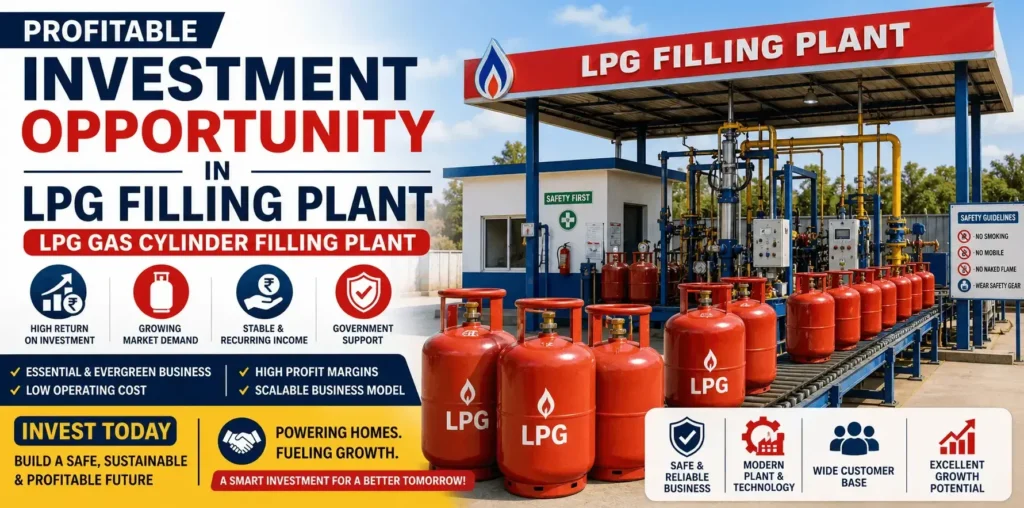
The demand for Liquefied Petroleum Gas (LPG) in India and across the globe is increasing steadily, driven by rising energy needs, urbanization, and the shift towards cleaner fuels. With this surge, the LPG gas filling plant or LPG Gas Cylinder Filling business has emerged as a highly profitable and sustainable investment opportunity. Entrepreneurs looking for a venture with long-term potential and government support should seriously consider setting up an LPG gas filling plant. This article provides a detailed guide on how to start, operate, and profit from an LPG gas filling plant business. Why Start an LPG Gas Filling Plant Business? The LPG gas filling plant business is not only capital intensive but also strategically important in contributing to national energy supply and sustainability. As households, hotels, industries, and transportation sectors increasingly rely on LPG, the need for localized, efficient gas distribution systems grows. Investing in an LPG gas filling plant can yield significant returns due to consistent demand and scope for B2B as well as B2C sales models. Market Demand and Opportunities India’s LPG consumption crossed 28 million metric tonnes in the last fiscal year, with major usage in domestic, commercial, and industrial sectors. The Pradhan Mantri Ujjwala Yojana (PMUY) and other government subsidies have added millions of LPG users from rural and semi-urban areas. Additionally, the growth of urban housing and food processing sectors ensures an ever-expanding market for LPG. This presents a golden opportunity for investors to start their own LPG gas filling plant and become an authorized distributor or independent service provider in the gas supply chain. The margins are attractive, and the ability to expand into LPG cylinder distribution, auto LPG, and even micro bottling units enhances long-term profitability. Types of LPG Gas Filling Plants There are primarily two types of LPG gas filling plants: Bulk LPG Filling Plant: These are large-scale units that receive LPG in bulk through tankers and refill into smaller cylinders of various sizes (5 kg, 14.2 kg, 19 kg, etc.). Mini LPG Filling Plant: These are smaller setups, suitable for rural or semi-urban areas, and often involve semi-automatic or manual filling operations. Both models have their own pros and cons depending on target market, budget, and operational goals. However, the LPG gas filling plant setup, regardless of scale, can generate steady revenue when planned strategically. Licenses and Legal Requirements Establishing an LPG gas filling plant requires multiple licenses and approvals from various government bodies. Here are the key requirements: Explosive License from the Petroleum and Explosives Safety Organization (PESO) NOC from Fire Department Environmental Clearance Factory License Trade License from local authorities Approval from the State Pollution Control Board Weights and Measures Certification for filling equipment All these permits ensure that your LPG gas filling plant meets safety, environmental, and quality standards. Complying with these regulations not only minimizes legal risks but also builds trust with customers and partners. Infrastructure and Equipment Needed Setting up a fully functional LPG gas filling plant involves considerable investment in land, machinery, and infrastructure. Here are the key components: Land Area: Minimum 1 to 2 acres depending on plant size Storage Bullets or Tanks: For bulk storage of LPG Filling Carousel System: Semi or fully automatic depending on capacity LPG Pumps and Compressors Cylinder Testing and Washing Units Safety Equipment: Fire suppression system, alarms, pressure gauges, etc. Admin Office and Control Room The infrastructure must follow safety norms and be designed to handle emergency situations. Automation in filling processes ensures accuracy and reduces labor dependency, which boosts operational efficiency in the LPG gas filling plant. Cost of Starting an LPG Gas Filling Plant The investment required varies depending on the scale and automation level of the plant. Here’s a rough breakdown: Mini Plant Setup: ?50 lakhs to ?1 crore Medium-Scale Plant: ?1 crore to ?2.5 crore Large-Scale Plant: ?3 crore to ?6 crore Additional working capital for staff salaries, licenses, fuel, maintenance, and marketing should also be factored in. While the capital requirement is significant, the LPG gas filling plant offers fast ROI due to bulk demand and margin opportunities. Profit Margin and Revenue Potential Profitability in this business depends on several factors such as plant capacity, distribution reach, operational efficiency, and pricing. Typically, margins in LPG filling range from ?30 to ?80 per cylinder depending on volume and B2B contracts. A plant that fills 3,000–5,000 cylinders per day can earn between ?1 lakh to ?2.5 lakh in daily profits. Adding services like cylinder delivery, auto LPG dispensing, or industrial supply can further increase revenue streams. This makes the LPG gas filling plant a high-margin business when operated with efficiency and scale. Manpower and Management Efficient staffing is crucial to operate a plant smoothly. A typical LPG gas filling plant requires: Plant Manager Technical Supervisors Operators and Filling Staff Safety and Maintenance Officers Administrative and Logistics Personnel All staff should be trained in fire safety, emergency protocols, and machinery handling. Continuous skill development and a strong safety culture will help your LPG gas plant maintain regulatory compliance and operational excellence. Challenges in LPG Gas Filling Plant Business Despite its lucrative nature, the business does come with challenges such as: High Initial Capital Strict Safety Regulations Regular Maintenance Requirements Market Competition from Established Brands Supply Chain Disruptions However, with proper planning, risk mitigation strategies, and adherence to regulations, these challenges can be effectively managed. Partnering with experienced consultants or hiring skilled managers can help overcome operational bottlenecks. Future Outlook and Expansion Possibilities With increasing energy demand and government push for clean fuel, the future of the LPG gas plant business is promising. Entrepreneurs can diversify into: Auto LPG Dispensing Stations Commercial Kitchen Supplies Mobile Micro LPG Filling Units Industrial LPG Supply Franchise or Dealer Networks By tapping into these segments, plant owners can scale their business and multiply revenues. Moreover, upcoming technologies such as IoT-based filling systems, automated leak detection, and AI-enabled logistics will transform the LPG industry further, providing more opportunities for innovation and expansion. Conclusion The LPG gas plant business is undoubtedly