
How to Start a Profitable Polylactic Acid (PLA) Production Business: Complete 2026 Guide
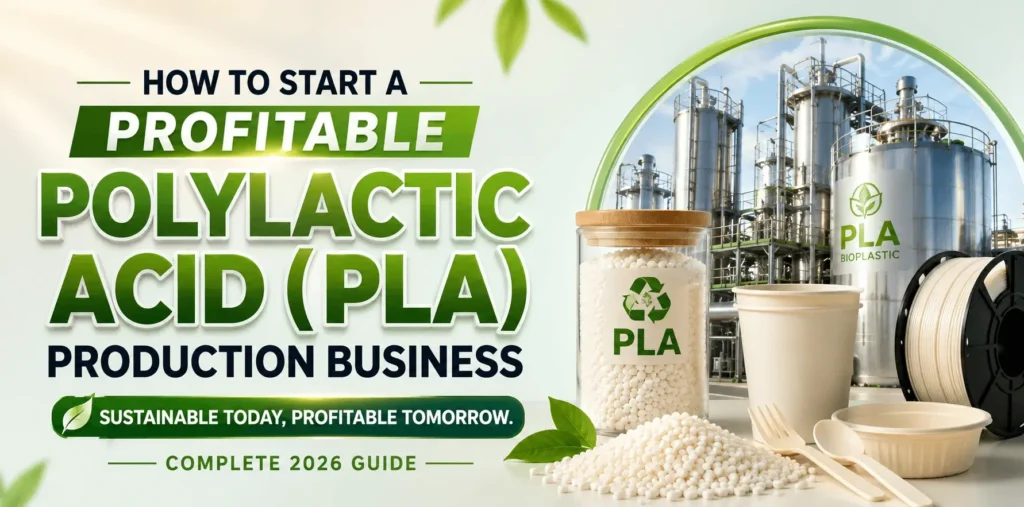
In recent years, the demand for sustainable and eco-friendly materials has increased drastically across various industries. Among the many biodegradable alternatives to conventional plastics, Polylactic Acid (PLA) stands out as one of the most promising. Derived from renewable resources such as corn starch, sugarcane, or cassava, PLA is widely used in packaging, agriculture, textiles, medical devices, and especially 3D printing. But how exactly is this environmentally conscious polymer created? Understanding the manufacturing process of Polylactic Acid (PLA) is essential to appreciate its significance and widespread adoption. Step-by-Step Process of Polylactic Acid (PLA) Production The production of Polylactic Acid (PLA) involves several key steps, beginning with the extraction of natural sugars and ending with the polymerization into a plastic-like material. Let us explore each phase in detail: 1. Raw Material Selection and Preparation The first step in producing Polylactic Acid (PLA) is sourcing the raw materials. PLA is synthesized from fermentable sugars, most commonly derived from corn starch in the United States or sugarcane in countries like Brazil. These raw materials are selected for their high carbohydrate content, which serves as the foundation for lactic acid production. The crops are harvested and then mechanically processed to extract the starch or sugar. In the case of corn, the kernels are ground, and the starch is separated through a wet milling process. This starch is then enzymatically hydrolyzed to release simple sugars, primarily glucose. 2. Fermentation of Sugars into Lactic Acid Once the fermentable sugars are extracted, they undergo microbial fermentation. In this biological process, specific strains of bacteria (such as Lactobacillus) are introduced to the sugar solution. These bacteria consume the glucose and convert it into lactic acid through anaerobic fermentation. Temperature, pH, and oxygen levels are carefully regulated to maximize lactic acid yield. This process typically takes between 24 to 48 hours. Once complete, the lactic acid is separated from the fermentation broth, purified through filtration and distillation, and then concentrated for further processing. 3. Lactic Acid to Lactide Conversion The next phase in manufacturing Polylactic Acid (PLA) involves transforming lactic acid into a more reactive intermediate compound called lactide. This is achieved through a condensation reaction, where two molecules of lactic acid combine and lose water to form lactide – a cyclic dimer of lactic acid. The reaction must be precisely controlled to prevent unwanted side reactions and to ensure high-purity lactide. The resulting lactide mixture typically contains different isomers (D-lactide, L-lactide, and meso-lactide), and the selection of specific isomers influences the properties of the final PLA material, such as its crystallinity and melting temperature. 4. Polymerization of Lactide into PLA Lactide is then polymerized through a process called ring-opening polymerization (ROP). This chemical reaction involves the use of catalysts such as tin(II) octoate or other metal complexes. Under controlled heat and vacuum conditions, the lactide molecules open up and link together to form long chains of Polylactic Acid (PLA). The molecular weight of the resulting PLA polymer can be adjusted by varying the reaction time and conditions. High molecular weight PLA is generally more durable and suitable for industrial applications, while lower molecular weight PLA is used in applications like biomedical implants where biodegradability is a priority. Handbook On Chemical Industries (Alcohol Based) 5. Pelletizing and Drying Once the polymerization is complete, the PLA resin is cooled and cut into small pellets. These pellets are then thoroughly dried to remove any residual moisture, as PLA is highly sensitive to hydrolysis. Drying is essential for preserving the polymer’s mechanical strength and thermal stability during processing. These dried PLA pellets are the final product of the manufacturing process and can be shipped to converters and manufacturers who mold, extrude, or 3D-print them into various end-use products. 6. PLA Fabrication and Applications Manufacturers use the PLA pellets to produce a wide array of products, often through methods like injection molding, thermoforming, or extrusion. PLA is particularly valued for its transparency, biocompatibility, and ability to degrade under industrial composting conditions. Some of the common applications of Polylactic Acid (PLA) include: Disposable food packaging (cups, cutlery, containers) Medical implants and sutures Agricultural films 3D printing filaments Textiles and nonwoven fabrics Its versatility and biodegradability make it a highly preferred material in both commercial and industrial contexts. 7. Environmental Impact and Sustainability A crucial reason for the growing interest in Polylactic Acid (PLA) is its positive environmental profile. Unlike petroleum-based plastics, PLA is derived from renewable resources and has a significantly lower carbon footprint. It also decomposes under industrial composting conditions into water and carbon dioxide within a few months, making it an attractive alternative in efforts to reduce plastic pollution. However, it’s important to note that PLA does not readily degrade in standard landfills or natural environments. Proper composting infrastructure is necessary to fully realize its environmental benefits. Moreover, there are ongoing innovations in improving PLA’s performance in terms of heat resistance and mechanical properties to broaden its applicability. Challenges in PLA Production Despite its benefits, the production of Polylactic Acid (PLA) is not without challenges. Some of the issues include: The cost of raw materials, which can be affected by agricultural crop prices. The energy requirements for fermentation and polymerization. The need for efficient composting systems to manage PLA waste. Researchers and companies are actively working on overcoming these obstacles by developing more cost-effective processes, genetically engineered bacteria for better lactic acid yield, and novel catalysts that reduce environmental impact during polymerization. Future Outlook The future of Polylactic Acid (PLA) looks promising as both regulatory bodies and consumers push for greener alternatives to traditional plastics. Advances in biotechnology, synthetic chemistry, and industrial processing are continually enhancing the quality and efficiency of PLA production. With better recycling and composting technologies, PLA could become a mainstream material across a variety of sectors. Additionally, hybrid composites and blends with other biodegradable materials are being explored to address PLA’s limitations and expand its usability in high-performance applications such as automotive parts, electronics casings, and durable consumer goods. Conclusion In summary, the production of Polylactic Acid (PLA)
HDPE and uPVC Pipes Production
The demand for efficient and long-lasting piping solutions has led to a significant rise in the manufacturing of HDPE & UPVC pipes across the globe. These pipes are widely used in agriculture, construction, water supply, sewage systems, and various industrial applications due to their durability, corrosion resistance, lightweight nature, and cost-effectiveness. Entrepreneurs and investors looking for a promising manufacturing business can consider venturing into the HDPE & UPVC pipes segment. This article explores the essential steps to start an HDPE & UPVC pipes manufacturing unit, covering raw materials, machinery, production process, market outlook, and regulatory requirements. Overview of HDPE & UPVC Pipes Manufacturing Industry The HDPE & UPVC pipes industry in India and globally is growing steadily, fueled by infrastructure development, increasing urbanization, and government investments in irrigation and sanitation projects. HDPE (High-Density Polyethylene) pipes are known for their flexibility, high strength, and chemical resistance, making them suitable for water distribution, gas pipelines, and underground cabling. On the other hand, UPVC (Unplasticized Polyvinyl Chloride) pipes are rigid, cost-effective, and used in building construction, drainage systems, and electrical conduits. Starting a manufacturing unit for HDPE & UPVC pipes requires proper planning, technical know-how, and a clear understanding of the production process. This sector offers high potential for profitability due to consistent demand in rural and urban areas. Step-by-Step Guide to Start HDPE & UPVC Pipes Manufacturing 1. Market Research and Feasibility Study Before setting up a plant, conduct a detailed market study to understand the demand trends, target customers, local competition, and pricing strategy. Identify the most required pipe sizes and applications in your intended market—agriculture, plumbing, sewerage, or industrial use. A feasibility report helps determine the financial viability and expected ROI from the business. 2. Choose a Suitable Location Select a location with good transportation access, availability of skilled labor, and proximity to raw material suppliers. Industrial zones with infrastructure facilities like power, water, and logistics are ideal. The location must comply with local zoning and pollution control regulations. 3. Company Registration and Legal Compliance Register your business under the applicable structure—Proprietorship, Partnership, LLP, or Private Limited Company. Apply for necessary licenses such as: GST Registration UDYAM (MSME) Registration Factory License Pollution Control Board NOC Fire Safety Certificate You may also need BIS certification for quality assurance and to legally market HDPE & UPVC pipes in India. 4. Investment and Project Costing The initial investment for setting up a HDPE & UPVC pipes manufacturing unit depends on production capacity, automation level, and scale. A small-scale plant may need an investment of INR 25–50 lakhs, while medium to large-scale operations may require INR 1–5 crore or more. The main cost components include: Land and Building Machinery and Equipment Raw Materials Power and Utilities Labor and Salaries Working Capital 5. Machinery and Equipment Selection Selecting the right machinery is crucial for high productivity and quality output. Some of the essential machines used in HDPE & UPVC pipes manufacturing are: Extrusion Machine (HDPE and UPVC compatible) Pipe Die Heads (of varying sizes) Vacuum Calibration Tanks Cooling Tanks Haul-off Unit Cutter Machine Printing and Marking Unit Socketing Machine Testing Equipment (Hydro test, pressure test, etc.) Choose machines based on your targeted production volume (kg/hr or meters/day) and automation preference. Local and imported options are available in the market. 6. Raw Materials Procurement The quality of raw materials greatly influences the final product. The major raw materials include: HDPE Granules (PE 63, PE 80, PE 100 grades) UPVC Resin (K-67 grade) Additives like stabilizers, lubricants, pigments, fillers, and processing aids Reliable suppliers and quality checks are essential to ensure consistency. Bulk procurement can help reduce material costs. 7. Manufacturing Process The manufacturing of HDPE & UPVC pipes involves the following steps: Raw Material Preparation: The polymer resin and additives are mixed in proper ratios. Extrusion: The mixture is fed into the extruder, where it melts and is shaped into pipes through die heads. Vacuum Calibration and Cooling: Pipes are cooled and solidified in a vacuum tank to maintain shape and dimension. Haul-off and Cutting: Pipes are pulled out at uniform speed and cut to required lengths using an automatic cutter. Socketing and Printing: Pipes are heated to form sockets and printed with size, type, and manufacturer information. Testing and Quality Check: Finished pipes undergo pressure testing, impact resistance, and dimensional accuracy checks. Efficient quality control ensures your HDPE & UPVC pipes meet IS standards and customer expectations. 8. Packaging and Dispatch Pipes are bundled, labeled, and packed for safe handling and transportation. Use protective coverings to avoid damage during shipping. Maintain an organized dispatch process for timely deliveries. 9. Workforce Requirements Depending on the scale, you may need 10–30 employees to manage production, quality control, administration, and logistics. Ensure they are trained in equipment handling, safety protocols, and maintenance. 10. Marketing and Distribution Strategy Develop a multi-channel marketing strategy to reach builders, contractors, irrigation departments, dealers, and plumbing companies. Participate in trade fairs, industry expos, and use digital platforms to increase visibility. Partner with distributors in different regions to expand your market reach. 11. Profitability and ROI The HDPE & UPVC pipes industry promises good margins, especially with bulk production. Profitability depends on efficient operations, minimal wastage, quality product delivery, and competitive pricing. On average, ROI can be achieved within 2–3 years of consistent production and sales. 12. Sustainability and Waste Management Incorporate sustainable practices like recycling scrap materials, optimizing energy use, and maintaining clean operations. Set up systems to manage pipe rejections and reprocess defective units, reducing overall waste. Future Outlook of HDPE & UPVC Pipes Industry The future of HDPE & UPVC pipes manufacturing appears robust due to ongoing infrastructure development and the need for reliable water supply and waste management systems. Government initiatives like Jal Jeevan Mission, AMRUT, and Smart City projects are major demand drivers. Technological advancements in extrusion and raw material quality will further enhance product durability and cost-efficiency. As more sectors opt for non-corrosive and long-life piping systems, manufacturers who deliver quality and scale operations can build a