
Start an NC Thinner Manufacturing Business Plant in 2026
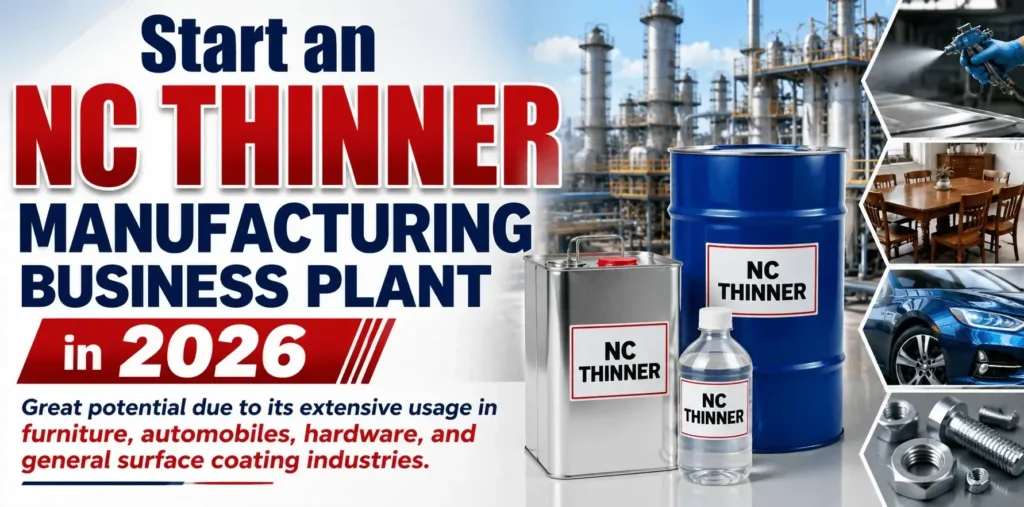
Starting a manufacturing business that caters to the growing demand of the paint and coating industry is a smart entrepreneurial move in today’s rapidly expanding industrial sector. One such high-demand product is NC thinner, which is widely used as a solvent to dilute nitrocellulose-based paints, lacquers, and varnishes. It plays a vital role in achieving the desired viscosity for smooth application and optimal drying time. The NC thinner manufacturing business offers great potential due to its extensive usage in furniture, automobiles, hardware, and general surface coating industries. Why Start an NC Thinner Manufacturing Business? India’s construction and automobile sectors are growing at a substantial rate, and so is the paint and surface finishing industry. This growth has led to increased demand for solvents like NC thinner. Entrepreneurs looking for a cost-effective and scalable business idea should consider entering the NC thinner manufacturing business. The business requires moderate capital investment, a manageable level of technical knowledge, and relatively easy regulatory compliance, making it accessible to new manufacturers. The NC thinner manufacturing business also enjoys an evergreen demand, as its primary application is in finishing products, which are used in new constructions, renovations, and product maintenance. It is also essential for spray painting and brush painting jobs. Additionally, NC thinner acts as a cleaner for paintbrushes and spray equipment, making it a dual-utility product. Market Potential and Industry Demand The NC thinner market is closely tied to the paint and coatings industry, which in India is projected to grow at a CAGR of over 7% in the coming years. With the increase in infrastructure development and housing projects, demand for paints—and therefore, NC thinners—is expected to rise proportionately. Small paint manufacturers, auto workshops, furniture polishers, and general hardware stores are constant buyers of NC thinner. Thus, starting an NC thinner manufacturing business presents an excellent opportunity to tap into this consistent demand. Many businesses seek local suppliers to reduce procurement time and costs, so manufacturing units located in industrial or semi-urban zones often enjoy an edge due to proximity and competitive pricing. Raw Materials and Formulation Process The production of NC thinner primarily involves the blending of various solvents in precise proportions. Common raw materials include: Toluene Acetone Butyl Acetate Methyl Ethyl Ketone (MEK) NC-based Resins (optional) Ethyl Alcohol The process of making NC thinner is relatively straightforward. It involves measuring, blending, and filtering the solvents to achieve a clear and homogeneous solution. The final product must meet the standards of quick drying, proper dilution capability, and low residue after evaporation. A small-scale NC thinner manufacturing business can begin operations with a mixing tank, solvent-resistant containers, measuring equipment, a filtration unit, and appropriate storage infrastructure. All raw materials must be stored safely, considering their flammability. Licensing and Legal Compliance Starting an NC thinner manufacturing business in India involves obtaining several licenses and permissions, especially since the raw materials involved are flammable and fall under hazardous substances. Key requirements include: Company Registration (as LLP, Pvt. Ltd., or Proprietorship) Trade License from local authorities GST Registration Factory License (if operating on a larger scale) No Objection Certificate (NOC) from the State Pollution Control Board Fire Department clearance Explosive License from PESO (Petroleum and Explosives Safety Organization), depending on scale It is highly recommended to consult legal advisors or experts to ensure full compliance with central and state-specific regulations. Setting Up the Manufacturing Unit To start your NC thinner manufacturing business, selecting the right location is crucial. Industrial areas with easy access to transportation and raw material supply chains are ideal. Your unit should have a well-ventilated area for mixing and blending, chemical-resistant flooring, proper drainage systems, and strict safety protocols, including fire extinguishers and spill kits. The equipment required includes: Stainless steel or HDPE mixing tanks Agitators or stirrers Solvent measuring and dispensing system Filtration system Bottling and packaging machinery Storage drums or barrels Staff training is essential to ensure safe handling of solvents. Adequate use of PPE (gloves, safety glasses, aprons) should be mandatory in your manufacturing facility. Cost of Starting the Business The initial investment in an NC thinner manufacturing business depends on the scale of operations. A small unit with a daily capacity of 500–1000 liters may require ?8–15 lakhs, while a medium-scale unit might need up to ?30 lakhs or more. Cost breakup includes: Land/Lease or rent for the factory unit Machinery and equipment Raw materials (initial stock) License and registration fees Safety equipment and fireproof infrastructure Labor and staff salaries Marketing and branding By opting for efficient machinery and locally sourced raw materials, the production cost per liter can be minimized, making the business highly profitable over time. Packaging and Branding The packaging of NC thinner should be both practical and compliant with safety standards. Use high-quality, leak-proof HDPE containers or metal drums of varying sizes (500 ml, 1 liter, 5 liters, 20 liters, etc.). Proper labeling with safety instructions, batch numbers, manufacturing date, and storage guidelines is mandatory. A strong brand presence and product reputation can drive recurring sales. To build brand value in the NC thinner manufacturing business, focus on consistent quality, fast delivery, competitive pricing, and customer service. Offering customization in viscosity or solvent strength for specific clients can also enhance customer loyalty. Marketing and Distribution Strategy Marketing plays a vital role in the success of your NC thinner manufacturing business. Traditional distribution channels such as hardware stores, paint shops, automobile workshops, furniture manufacturers, and wholesalers are your key targets. Strategies to promote your product: Appoint local distributors and retailers Provide trade margins and volume discounts Offer free samples or initial trial packs Create a basic website and list your product on trade portals like IndiaMART, TradeIndia, and Justdial Run local ads in industrial magazines or directories Attend industrial expos or B2B events related to paints and coatings With a well-thought-out marketing strategy, your business can scale quickly, especially if your product proves reliable and cost-effective. Profitability and Growth Potential The NC thinner manufacturing business can be highly profitable due to relatively low production costs